Write to the booksellers
-
Type
Art print (3)
Autograph (1)
Book (3227)
Engraving (2)
Magazine (66)
Manuscript (1)
Music sheets (35)
Old papers (2)
Photographs (40)
-
Latest
Last 24h (2)
Last 3 days (2)
Last month (95)
Last week (5)
-
Language
Dutch (2)
English (1)
French (3367)
Italian (1)
Latin (6)
-
Century
16th (4)
17th (26)
18th (97)
19th (380)
20th (831)
21st (132)
-
Countries
Belgium (348)
Canada (1)
Côte d'Ivoire (3)
France (2951)
Switzerland (74)
-
Syndicate
ALAC (1)
CLAM (94)
CNE (2)
ILAB (908)
NVVA (48)
SLACES (48)
SLAM (765)
SNCAO (15)
Le barreau. Collection : Les chemins de la vie.
Tours, Maison Alfred Mame et Fils, s.d. (ca 1880). "17 x 24, 192 pp., reliure dos cuir, état moyen (page de faux-titre et dernière pages défraîchies; reliure état d'usage))."
Illustrations par Louis Malteste
Arrest de la Cour du Parlement.-
Portant Envoi en possession du Collège Wallon de Saint-Omer, des Biens qui lui appartiennent, en exécution de l'Edit du mois de septembre 1768. P. Simon. 1769. 8pp. in-4 sans couv.
RASPOUTINE Le fol en Christ.
Albin Michel Paris 2004 In-8 ( 230 X 140 mm ) de 375 pages, broché sous couverture illustrée. Intérieur très frais. Très bel exemplaire.

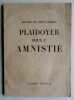
PLAIDOYER POUR L ' AMNISTIE
1963 PLAIDOYER POUR L ' AMNISTIEEsprit nouveau, 1963 petit in4° broché,101pp.Couverture tachée , très bon état intérieur .
MATA-HARI espionne et danseuse nue. Le crime ne paie pas.
Gallimard Paris 1959 In-12 ( 165 X 110 mm ) de 191 pages, broché sous couverture illustrée. Bon exemplaire.

La loi de quel droit
Flammarion 1977 in8. 1977. Broché.

Bon Etat couverture un peu défraîchie intérieur propre
El derecho penal socialista y el congreso penitenciario de Berlin
Reus 1936 in8. 1936. Cartonné.
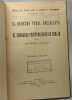
couverture défraîchie tachée intérieur propre
L'individualisation de la peine - étude de criminalité sociale
FELIX ALCAN (1927), 3ème édition, broché, 287 pages, très bon état
Préface de G. Tarde
Fragmente der Staats-Geschichte des Thals Veltlin und der Graffschaften Clefen und Worms, aus Urkunden, Bde. 1 bis 4 in 2 Bdn. gebunden
O.A.: Wilhelm Haas Sohn, Basel, 1792, kl. in-8vo, 2 Titelbl. (mit wiederholter allegor. Vignette gest. v. Heiz) + XXX + 371 S., 2. Titelbl. etwas fleckig, ansonsten sehr frisch / Titelbl. mit gest. Vign. + 187 S. ; Titelbl. + + 258 S. + 1 Bl. Druckfehler, hs. Besitzervermerk ‘Richard Kirchgraber’ auf Titelbl., Gebunden in Halbleder d. Zeit, Lederrückenschildchen. Schönes Exemplar
Bd. 1 bis 4 in 2 Bde gebunden, des bedeutenden staatsrechtlichen Werkes zu den Bündner Herrschaftsrechten über die Täler Veltlin, Clefen (Chiavenna) und Worms (Bormio). Es erschien gleichzeitig auch in italien. Sprache beim gleichen Verleger und enthält neben den beiden hier vorliegenden Textbänden noch einen Band 'Anmerkungen' und einen Band 'Materialien' (Bd. 3 & 4), welcher die Urkunden wiedergibt. Der Autor Ulysses von Salis-Marschlins (1728 - 1800) war einer der einflussreichsten Politiker Graubündens seiner Zeit, u.a. Gesandter in Italien und Frankreich. Seine 'Staatsgeschichte' publizierte er als eine Rechtfertigung der Herrschaftsansprüche der III Bünde in einer Zeit, als grosse Unruhe und Unzufriedenheit in den Untertanengebieten herrschte. Die Veltliner hatten schon 1786 15 Beschwerden am Bundestag von Ilanz vorgebracht, um gegen Willkürherrschaft und Unrecht zu protestieren und während 10 Jahren wurde nun um Rechte und Freiheiten gestritten, bis sich die Veltliner 1797 von Bünden lossagten und mit Hilfe Bonapartes der cisalpinischen Republik anschlossen (F. Pieth, Bündner Geschichte, 309ff; HBLS VII, 211-213). Von Salis 'Staatsgeschichte' war eine Reaktion auf die Ansprüche und Streitschriften der Veltliner, so schreibt er im Vorwort: "Ich trette auf, um alle diese, meinem Vaterlande schimpfliche und schädliche Ausstreuungen zu beleuchten und zu widerlegen." Möller, Graubünden: 1042; Barth 21871 : Bd. 3 enthält die historischen und rechtlichen Beweise; Bd. 4 die Urkunden. Schönes Exemplar.; Bibl. Veltl. 1959. - 1960 (ital. Ausg.). Image disp.

(SLACES, NVVA)
Phone number : 41 (0)26 3223808
[Valtellina, Chiavenna, Bormio] Fragmente der Staats-Geschichte des Thals Veltlin und der Graffschaften Clefen und Worms, aus Urkunden, Bde. 1 und 2 in einem Bd. gebunden (1 & 2 reliées ens.)
O.A.: Wilhelm Haas Sohn, Basel, 1792, kl. in-8vo, 2 Titelbl. (mit wiederholter allegor. Vignette gest. v. Heiz) + XXX + 371 S., 2. Titelbl. etwas fleckig, ansonsten sehr frisch hs. Besitzervermerk ‘Richard Kirchgraber’ auf Titelbl., Original-Pappband d. Z., Ecken und Rücken leicht beschabt, hs. Rückenschildchen, insgesamt guter Zustand.
Bd. 1 und 2 (von 4) des bedeutenden staatsrechtlichen Werkes zu den Bündner Herrschaftsrechten über die Täler Veltlin, Clefen (Chiavenna) und Worms (Bormio). Es erschien gleichzeitig auch in italien. Sprache beim gleichen Verleger und enthält neben den beiden hier vorliegenden Textbänden noch einen Band 'Anmerkungen' und einen Band 'Materialien', welcher die Urkunden wiedergibt. Der Autor Ulysses von Salis-Marschlins (1728 - 1800) war einer der einflussreichsten Politiker Graubündens seiner Zeit, u.a. Gesandter in Italien und Frankreich. Seine 'Staatsgeschichte' publizierte er als eine Rechtfertigung der Herrschaftsansprüche der III Bünde in einer Zeit, als grosse Unruhe und Unzufriedenheit in den Untertanengebieten herrschte. Die Veltliner hatten schon 1786 15 Beschwerden am Bundestag von Ilanz vorgebracht, um gegen Willkürherrschaft und Unrecht zu protestieren und während 10 Jahren wurde nun um Rechte und Freiheiten gestritten, bis sich die Veltliner 1797 von Bünden lossagten und mit Hilfe Bonapartes der cisalpinischen Republik anschlossen (F. Pieth, Bündner Geschichte, 309ff; HBLS VII, 211-213). Von Salis 'Staatsgeschichte' war eine Reaktion auf die Ansprüche und Streitschriften der Veltliner, so schreibt er im Vorwort: "Ich trette auf, um alle diese, meinem Vaterlande schimpfliche und schädliche Ausstreuungen zu beleuchten und zu widerlegen." Möller, Graubünden: 1042; Barth 21871; Bibl. Veltl. 1959. - 1960 (ital. Ausg.). Image disp.
(SLACES, NVVA)
Phone number : 41 (0)26 3223808
Le long martyre de Françoise Salmon.
P., Perrin (Collection "Enigmes et Drames Judiciaires d'Autrefois"), 1927, in 12 broché, 228pp. ; portrait en frontispice. Envoi autographe signé sur le faux-titre.
PHOTOS sur DEMANDE. ...................... Photos sur demande ...................

Phone number : 04 77 32 63 69
PROVERBIA REGUM SAPIENTISSIMI SALOMONIS, cum cura enucleata a Martino Geiero, [etc.].
1653 Lipsiae [Leipzig], Impensis Haered. Henningi Grosfii, Literis Friderici Lanckisii Exscribebat, Chriftophorus Cellarius, 1653. Fort volume petit in-quarto (170 X 200 mm) vélin rigide, plats ornés d'un encadrement de filets avec fleurons d'angles à froid, dos lisse cloisonné de filets avec fleurons à froid dans les compartiments, titre calligraphié à l'encre noire, tranches teintées en bleu (reliure de l'époque) ; frontispice, (5) ff., 1724 pages, (11) ff. d'index et errata. Accroc avec petite fente de deux centimètres en queue du mors supérieur, tache d'encre sur le titre, feuillets brunis, infime travail de ver (trou de la taille d'une tête d'épingle) affectant les 19 premiers feuillets, cerne de mouillure dans la marge inférieure de quelques feuillets. Initiale manuscrite «F. » répétée sur les 3 premiers feuillets.
![PROVERBIA REGUM SAPIENTISSIMI SALOMONIS, cum cura enucleata a Martino Geiero, [etc.]. . SALOMON - GEIER (Martin).](https://static.livre-rare-book.com/pictures/CTE/002614_1_thumb.jpg)
![PROVERBIA REGUM SAPIENTISSIMI SALOMONIS, cum cura enucleata a Martino Geiero, [etc.]. . SALOMON - GEIER (Martin).](https://static.livre-rare-book.com/pictures/CTE/002614_2_thumb.jpg)
![PROVERBIA REGUM SAPIENTISSIMI SALOMONIS, cum cura enucleata a Martino Geiero, [etc.]. . SALOMON - GEIER (Martin).](https://static.livre-rare-book.com/pictures/CTE/002614_3_thumb.jpg)
PREMIÈRE ÉDITION des proverbes du roi Salomon réalisée par le théologien luthérien allemand Martin GEIER (1614-1680). Texte imprimé en latin et en hébreu. BEAU FRONTISPICE ALLÉGORIQUE gravé sur acier représentant le roi Salomon rendant justice en plein air, sur son trône et sous un palmier. SÉDUISANT EXEMPLAIRE, dans sa fraîche reliure en vélin de l'époque. NICE COPY. PICTURES AND MORE DETAILS ON REQUEST.
Stipulation and the theory of contract
A.A. Balkema 1957 in8. 1957. Cartonné.

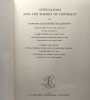
Bon état couverture marquée intérieur propre bonne tenue
SALVIAT (M. DE)(Conseiller au Préfidial de Brives, Secrétaire perpétuel de la Société d'Agriculture de la même Ville, membre honoraire de l'Académie d'Arras, & du Musée de Paris.
Reference : 7823
(1787)
La Jurisprudence du Parlement de Bordeaux, avec un recueil de questions importantes, agitées en cette Cour, & les arrêts qui les ont décidées.
1787 A Paris, Chez Buisson, Libraire, M.D.CC.LXXXVII (1787) avec approbation et privilège du Roi, reliure pleine peau d'époque, dos à 5 nerfs, pièce de titre maroquin rouge, titre et caissons dorés, VIII+512 pages, suivi de Recueil d'Arrêts rendus au Parlement de Bordeaux, 154 pages, 20x26x4,5 cm. Bon état, rares rousseurs (voir photos).
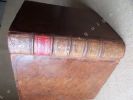
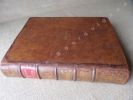
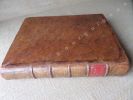
Libéral François de Salviat (1746-1820) première édition de cet ouvrage du vivant de l'auteur, la seconde étant posthume. RARE.
[Samuel Hoare] [Society for the Improvement of Prison Discipline, and for the Reformation of Juvenile Offenders.]
Reference : AMO-2714
(1820)
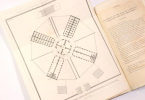
Rules proposed for the government of gaols, houses of correction, and penitentiaries. Compiled from various acts of parliament for the regulation of prison, and selected from rules in force at the best conducted gaols in Europe : to which are added, plans of prisons on improved principles ; and a description, with plates, of A Corn Mill and Water Mill, adapted for the employment of prisoners. Published by the Society for the Improvement of Prison Discipline, and for the Reformation of Juvenile Offenders.
London, Printed by T. Bensley, 1820 1 vol. in-8 (23 x 14 cm) de VI-(1)-65 pages. 10 planches hors-texte (la plupart dépliantes). Voir le détail des sujets ci-après. Cartonnage de l'époque plein papier gris, relié sur brochure, non rogné, étiquette de titre imprimée au dos (d'origine). 1 planche détachée. Quelques rousseurs et feuillets jaunis, néanmoins excellent papier de qualité (papier vélin de cuve). légères usures au cartonnage néanmoins solide. First edition. "The society for the improvement of Prison Discipline, in submitting to the public the following suggestions respecting the proper regulations to be adopted in Prisons, deem it superfluous to detain their readers by endeavouring to prouve what is already obvious, that the judicious mangement of Gaols is a subject of the utmost importance. An intention has been imputed to this society, than which nothing can be more foreign from its real purpose, that of making the interior of a prison a more desirable residence than the habitations of the poor ; the motives which actuate the members of the society are allowed to be benevolent, but the consequences of carrying their views of reform or improvement into effect, are supposed by some persons to be mischievous ; it is presumed that offenders are intimidated, by the miseries and privations they have experienced or anticipate ; if prisons, it is said, are rendered places of comfort, where food and lodging are gratuitously provided, they become incentives to crime and a recompence for its commission. In this view of the subject, however, the society cannot coincide : it is true, they consider it desirable that prisons should be clean, and the food given to the prisoners, plain, wholesome, and sufficient ; but they are equally anxious that everything which borders on sensual gratification or unnecessary comfort should be entirely prohibited. They are of opinion that the punishment contemplated by the law should alone be inflicted, and that no collateral evils, the horrors of disease, and the corruption of principle, should be superadded ; but they are decidedly adverse to any permission of idleness, dissolute behaviour, or to any indulgencies, excepting those conferred as the reward of good conduct ; they are desirous that constant and imperative labour should occupy the prisoners, and prepare their minds for such instruction as may eradicate evil habits, and substitute good dispositions: a prison thus regulated offers no attraction to the vicious, and the society confidently appeal to the evidence of facts as confirming the deductions of reason, wherever this experiment has been fairly tried. It must be apparent to all who have directed their attention to this subject, that the system of Prison Discipline too. generally prevalent in England was confined to a single object, the safe custody of the prisoner ; and to one method of accomplishing that object, severe and sometimes unnecessary coercion : if the prisoner could be retained within the walls of a gaol by bars, by chains, or by subterraneous and unventilated dungeons, by the use of any rigour or privation ; this plan, aiming only at his personal security, was deemed sufficient: the possibility of reforming the criminal seems never to have been contemplated ; no rule was in force, no arrangement existed which could be referred to such a purpose: the attempt to disengage the culprit from long formed habits of vice, and to rekindle in his breast the latent sparks of virtue, were schemes known indeed by the writings of Howard, but generally regarded as the visionary efforts of an excessive philanthropy. Such has been the progress of public opinion, that it is not now requisite to dwell upon the expediency of making these attempts, or to contend against a system calculated to multiply offences, and to ripen indiscretion into crime; a new plan has been gradually developed, in which moral restraint removes the necessity of brutal violence ; in which the prisoner is justly considered as possessing rights which we must not v violate, and feelings which we must not wound, beyond what the sentence of the law demands: a system equally opposed to that dangerous indulgence which permits scenes of vice, drunkenness, or debauchery to be exhibited ; and to that useless cruelty, which, producing no beneficial effect in the way of example, tends to harden the character of those who are subjected to its operation ; a system, in short, which suppresses for a time at least many evil habits, and substitutes those of industry, decency, sobriety, and order. The strong interest taken by the public in this momentous question, the examples which have been adduced of the successful application of these principles to practice ; the zeal manifested by the magistrates in general throughout the country, and the appointment of committees in both houses of Parliament, furnish a well-grounded confidence that the improved system of Prison Discipline will now be fairly and fully tried. The society for the improvement of Prison Discipline have received so many applications for information respecting numerous particulars, that they apprehend they cannot more effectually consult the wishes or convenience of the public, than by an endeavour to collect and arrange those recommendations which the result of reflection and experience enables them to offer. Much consideration has been bestowed upon the plans which accompany this tract, and great assistance has been derived from the architectural skill of Mr. Ainslie, and Mr. Bullar, in the arrangement and illustration of these designs: these gentlemen have gratuitously afforded the Society most valuable aid, for which the Committee beg to express their sincere acknowledgments ; the object in view was to give such plans, as might best combine the advantages of inspection and classification, leaving it to the discretion of different districts to accommodate the same to their own local circumstances. With regard to the rules which are suggested, there is no pretension to originality ; the first aim of the society has been to obtain an accurate acquaintance with the actual management of the best regulated gaols ; to compare attentively the course pursued in each, with their practical consequences ; and then to select and combine, under one arrangement, those rules which appeared upon the whole most judicious and effective. The importance of providing employment for prisoners, and the difficulty of procuring it, have deeply engaged the attention of the society, but hitherto without enabling them to arrive at any conclusion which is universally applicable ; but there is one species of labour obtained by the introduction of mills, and especially of stepping mills, which may furnish constant occupation to a determinate proportion of the prisoners. The advantages derived from the use of mills in several prisons, have been very conspicuous, not so much perhaps in a pecuniary point of view, as in the moral benefits resulting to the prisoner. A stepping mill of a superior description, and which the Committee cannot too earnestly recommend for the employment of prisoners, has been lately constructed, on very ingenious principles, by Mr. Cubitt, Civil Engineer, of Ipswich. To the liberality and kind attention of this gentleman, the Committee are indebted for the annexed illustrations of the machinery, and explanation of its power and effects. . Should the recommendations here collected, be found useful in assisting those gentlemen, who unite the power with the inclination to promote the grand and progressive work of improvement in Prison Discipline, the object of the society will be fully attained. (Preface, London, 1st January, 1820, Samuel Hoare, Jun., Chairman of the Committee). Samuel Hoare Jr (9 August 1751 – 14 July 1825), chairman of the committee was a wealthy British Quaker banker and abolitionist born in Stoke Newington, then to the north of London. His London seat was Heath House on Hampstead Heath. He was one of the twelve founding members of the Society for the Abolition of the Slave Trade. The engravings are : 1. Plan of a County Gaols for 400 prisoners. Designed by George Ainslie. 2. Plan of a Gaol for on hundred and twenty prisoners. G.T. Bullar architect. 3. Plan of the Chapel and sleeping cells. 4. Plan of a house of correction for sixty prisoners. G.T. Bullar architect. 5. House of correction for twenty eight prisoners. G.T. Bullar architect. 6. Ground Plan of a design for a Prison Corn Mill. 7. Crofs section of design for Prison Mill shewing the elevation of Machinery. 8. Crofts sectiloln of design for Prison Mill, shewing the elevation of the tread wheels and method of working. 9. Longitudinal section of design for Prison Mill, shewing elevation of Machinery. 10. Plan and section for a Pump Mill. (complete). Very rare.
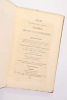
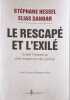
Sanbar Elias Hessel Stéphane Mardam-Bey Farouk
Reference : 12498
(2012)
ISBN : 2359490591
Le Rescapé et l'Exilé: Israël-Palestine une exigence de justice
DON QUICHOTTE 2012 192 pages 14x20 4x1 7cm. 2012. Broché. 192 pages. Dans cet essai Stéphane Hessel et Elias Sanbar analysent les causes du conflit israélo-palestinien et les obstacles aux négociations tout en proposant une vision humaniste de l'avenir. Ils posent comme préalable à la création d'un État palestinien le retrait des colonies en Cisjordanie et interrogent le rapport entre légalité internationale et justice historique
Bon état
ENLEVEES Le combat d'une mère pour retrouver ses enfants
Broché - 14 x 22,5 - 235 pp - année 1994 - Editions Belfond -
ANTHROLOGIE HISTOIR PHILOSOPHIE LITTERATURE PARADES
Essai sur la Jurisprudence universelle où l'on examine quel est le premier principe de la Justice, et le fondement de l'obligation morale.
A Paris, chez la Veuve Desaint, 1779. Un vol. in-12 (177 x 103 mm) de 1 f. bl., xxiv - 458 pp., 2 ff. n.fol. et 1 f. bl. Reliure de pleine basane racinée blonde, filet, filet dentelés et chaînette d'encadrement dorés encadrat les plats, dos lisse orné de doubles filets dorés, filets sinusoïdaux dorés, larges fleurons dorés, semis de points et de cercles dorés, pièce de titre de maroquin vieux-rouge, titre doré, filet doré sur les coupes, toutes tranches dorées, dentelle intérieure dorée.

Edition originale. ''L'ouvrage est certainemetn du Père Lambert, qui le composa pour servir d'Introduction aux Oeuvres du chancelier d'Aguesseau. Suivant de bons critiques, l'auteur découvre avec plus de succès que la plupart des publicistes et des philosophes le fondement de la loi naturelle. Aucun ouvrage peut-être ne fait mieux connaître les méprises des philosophes anciens et modernes sur cet important objet. L'élégance du style s'y trouve unie à la force des raisonnements''. (in Barbier). Table : Exposition de divers systèmes anciens et modernes sur le premier fondement de la Justice - Etablissement des vrais principes sur le premier fondement de la Justice et de la Morale - Source originale où réside le premier principe de la Justice et de la Morale - Développement des rapports qui sont entre les obligations particulières et la règle primitive de la Justice - Examen de la sanction de la législation naturelle - Comment parvenir à connaître exactement ce qui est prescrit par la législation naturelle. Barbier II, Dictionnaire des ouvrages anonymes, 240-e - Quérard IV, La France littéraire, p. 485. Angles légèrement élimés. Petites marques d'usage affectant par ailleurs la reliure. Rares rousseurs dans le texte. Nonobstant, belle condition. Peu courant.
Le procès de Galilée
club du meilleur livre 1955 In-8 relié. Très bon état d’occasion.
Très bon état d’occasion
Contre-Enquête Sur Trois Assassinats : Érignac , Rossi , Fratacci
Paris Denoël 2001 Grand In 8 Collection " Impacts " . - 176 p. , 400 gr.

Couverture rigide Comme neuf 1ère Édition
Le Crime Des Puissants : L'affaire Mis et Thiennot
Paris France Loisirs 1995 In 8 En Brenne , en 1946 ; huit jeunes gens innocents sont accusés du meurtre d'un garde-chasse au service des Lebaudy , puissants industriels du Nord qui règnent sur 3000 hectares . Ils sont condamnés après avoir avoués sous la torture . Cette enquête démontre leur innocence et révèle les vrais coupables . - 320 p. , 500 gr.

Couverture souple Parfait État . Jaquette en parfait état 1° Édition Chez Cet Éditeur
L'ERREUR JUDICIAIRE
Format moyen, cartonné. 247 pages. Imperfections sur la couverture. Un tampon sur la page de garde.Intérieur en bon état. Une expédition par Mondial Relay vous sera proposée 1966 la table ronde

Le Barreau de Rouen hier et aujourd'hui. (1788-1898). Discours prononcé le mardi 29 novembre 1898, dans la séance d'ouverture de la conférence des avocats stagiaires
Rouen, Brière, 1899 gr. in-8, 134 pp., front., ill. in-t., broché. Petits manques à la couverture, dos factice.
- - VENTE PAR CORRESPONDANCE UNIQUEMENT - LIEN DE PAIEMENT, NOUS CONSULTER.
Un procès de sorcière.
Editions Jean-Paul Gisserot Paris 2006 In-8 ( 190 X 120 mm ) de 314 pages, broché sous couverture illustrée. Très bel exemplaire enrichi d'in envoi autographe signé de l'auteur.
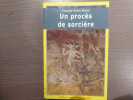
Un procès de sorcière.
Le Grand Pin Aix en Provence 1999 In-8 ( 235 X 160 mm ) de 228 pages, broché sous couverture illustrée. Bel exemplaire enrichi d'in envoi autographe signé de l'auteur.