 Write to the booksellers
-
Type
Any type (1)
Autograph (1)
Book (27153)
Disk (1)
Drawings (1)
Engraving (2)
Magazine (47)
Manuscript (16)
Old papers (14)
Posters (1)
-
Latest
Last 24h (3)
Last 3 days (4)
Last month (97)
Last week (3)
-
Language
Dutch (8)
English (7)
French (27152)
German (9)
Italian (2)
Latin (56)
Portuguese (1)
Spanish (2)
-
Century
16th (66)
17th (349)
18th (1337)
19th (3359)
20th (6965)
21st (1876)
-
Countries
Belgium (2000)
Brazil (4)
Canada (102)
China (12)
Côte d'Ivoire (40)
Denmark (977)
France (21633)
Germany (3)
Greece (10)
Italy (1)
Netherlands (118)
Switzerland (2337)
-
Syndicate
ALAC (101)
CLAM (44)
CLAQ (92)
CNE (5)
ILAB (16903)
NVVA (1355)
SLACES (1285)
SLAM (14448)
SNCAO (66)
Le Bureau de la Chancellerie d'après les arrêts rendus de l'avis de Monsieur le Garde des Sceaux de l'année 1777
Presses Universitaires de France Dos carré collé 1981 In-8 (15,5 x 24 cm), dos carré collé, 123 pages ; quelques marques d'usage sur les plats, bon état général. Livraison a domicile (La Poste) ou en Mondial Relay sur simple demande.
Conférence des édicts de pacification des troubles esmeus au Royaume de France, pour le faict de la religion ;. & traittez ou règlemens faicts par les Rois Charles IX & Henri III & de la déclaration d'iceux, du Roy Henri IIII de France & de Navarre. Publiée en Parlement le 25 février 1599. Avec l'explication du contenu en chascun article par l'histoire ecclésiastique & profane, droicts civil & canonique, Ordonnances & coustumes de ce Royaume
Paris, Pierre L'Huillier & Jamet Mettayer, 1600 in-8, [8] ff. n. ch. (titre, dédicace à Henri IV, liste des auteurs consultés), 326 ff., [25] ff. n. ch. de table et de privilège, vélin souple, dos lisse muet (reliure de l'époque).
Seconde édition de ce recueil de Pierre de Belloy achevé d'imprimé pour la première fois " le huictiesme jour de Mars, mil six cents ". Catholique et loyaliste, Pierre de Belloy (ou du Belloy) prit fougueusement le parti de Henri de Navarre et démontra l'incompétence du pape à juger les prétentions de Henri IV à la couronne, ce qui lui attira la haine des ligueurs qui le traitèrent d'hérétique et d'athée. Par ordre des Guise, il fut jeté en prison en 1587 à la Bastille dont il s'évada deux ans plus tard. Lorsque Henry IV devint roi, il nomma Belloy avocat général au parlement de Toulouse. Pour ce recueil, il rassemble et commente les documents publiés depuis 1561 relatifs aux guerres de religion.Cioranescu, XVI, 3466 (notre édition). SHF, Bourgeois et André, 5113, ne signale en revanche pas cette édition dont la pagination est identique à la première édition publiée en 1599 ; inconnu de Brunet. - - ACTUELLEMENT EN CONGÉS, DE RETOUR LE 17 AOÛT - VENTE PAR CORRESPONDANCE UNIQUEMENT - LIEN DE PAIEMENT, NOUS CONSULTER.
THE GENERAL SAYS NO. Britain’s Exclusion from Europe. coll. Penguin Special
, Harmondsworth, Penguin Books. Ltd. 1963, in-8, br., bon état, 182p.



Phone number : 01 43 29 46 77
LA DECLARATION DES DROITS DE L'HOMME ET DU CITOYEN - 1ER LIVRET D'EDUCATION CIVIQUE ET SOCIALE
"CH. DELAGRAVE. NON DATE. In-16. Broché. Bon état, Couv. convenable, Dos satisfaisant, Intérieur frais. 48 pages.1 Tampon en page de titre ""Hommage de l'éditeur"".. . . . Classification Dewey : 340-Droit"
Classification Dewey : 340-Droit
Arrest de la Souveraine Cour de Parlement. du vingt-unième avril mil sept cens seize, dans la Grand-Chambre. Extrait des registres de Parlement
Aix, veuve de Charles David, & Joseph David, s.d. (1716) petit in-4, 6 pp., en feuilles.
Arrêt du Parlement d'Aix en procédure d'appel comme d'abus contre un mandement de l'évêque de Marseille (déjà le trop fameux Belsunce de Castelomoron, depuis 1709) jugé attentatoire à la justice royale dans sa formulation et son contenu. - - ACTUELLEMENT EN CONGÉS, DE RETOUR LE 17 AOÛT - VENTE PAR CORRESPONDANCE UNIQUEMENT - LIEN DE PAIEMENT, NOUS CONSULTER.
"Encyclopédie du droit civil belge, quatrième partie : code de procédure civile, annoté d'après 1° Le principe juridique; 2° La doctrine des auteurs; 3° Les décisions des cours et tribunaux."
Liège, Jacques Godenne/Paris, Marchal, Billard et Cie, Librairies, 1897. 17 x 26, 2 volumes, 950 + 906 pp., reliure dos toilé, bon état.
ouvrage complet en lui-même.
LE CODE CIVIL N°107
SEUIL. 2003. In-8. Broché. Bon état, Couv. convenable, Dos satisfaisant, Intérieur frais. 187 pages.. . . . Classification Dewey : 340-Droit
Classification Dewey : 340-Droit
DROIT CIVIL LA FAMILLE /3E EDITION.
LITEC. 1988. In-8. Broché. Etat d'usage, Couv. légèrement passée, Dos satisfaisant, Intérieur acceptable. 530 pages - coins frottés- petites annotations au stylo noir sur la page de garde et les 2ème contre plat - nombreux mots soulignés au crayon de papier et au stabilo vert sans réelle conséquence sur la lecture.. . . . Classification Dewey : 346-Droit privé, civil
Classification Dewey : 346-Droit privé, civil
DROIT CIVIL. LA FAMILLE. 7eM EDITION. A JOUR AU 10 AOUT 1995. EXEMPLAIRE DE TRAVAIL.
LITEC.. 1995. In-8. Broché. Etat d'usage, Couv. convenable, Dos frotté, Intérieur acceptable. 600 pages. De nombreuses phrases soulignées au fluo ainsi que quelques notes en marge du texte.. . . . Classification Dewey : 346-Droit privé, civil

Classification Dewey : 346-Droit privé, civil
DROIT CIVIL - LA FAMILLE - 7eme EDITION.
LITEC. 1995. In-8. Broché. Etat d'usage, Couv. convenable, Dos satisfaisant, Intérieur frais. 600 pages - 1 etiquette collée au dos.. . . . Classification Dewey : 346-Droit privé, civil
Classification Dewey : 346-Droit privé, civil
CODE CIVIL - LES GRANDS ARTICLES DU CODE CIVIL
DALLOZ. 2012. In-18. Broché. Bon état, Couv. convenable, Dos satisfaisant, Intérieur frais. 78 pages -. . . . Classification Dewey : 346-Droit privé, civil
Classification Dewey : 346-Droit privé, civil
La Prostitution et la police des murs au XVIIIe siècle.
Perrin Paris 1987 In-8 ( 240 X 150 mm ) de 547 pages, broché sous couverture illustrée. Intérieur frais. Bon exemplaire.
PACS, MARIAGE ET FILIATION: Étude de la politique familiale, Préface de Bernard Beignier, coll. de Thèses, t.27
, Paris, Defrénois 2007, in-8, br., ENVOI DE L’AUTEUR, bon état, XIV-377p.
Phone number : 01 43 29 46 77
Au nom de ma sur. Collection La Noria.
Bruxelles, Labor, 1997. 15 x 22, 132 pp., broché, état neuf.
Le salaire effectif. Sa protection par la loi. Préface de M. Le professeur Paul Pic.
P., Rousseau, Lyon, Cote, sans date (vers 1900), grand in 8° broché, 182 pages ; couverture défraichie.
Fermeture du 1er au 23 Août
Phone number : 04 77 32 63 69
Het recht - rechtsphilosophische verhandelingen
, Standaard-Boekhandel 1948 317pp., linnen band, lichte geruiksslijtage, goed
"Procédure civile (Collection ""Le droit en plus"")"
Presses Universitaires de Grenoble. 2001. In-8. Broché. Bon état, Couv. légèrement passée, Dos satisfaisant, Intérieur frais. 191 pages.. . . . Classification Dewey : 346-Droit privé, civil
"Collection ""Le droit en plus"", dirigée par Patrick Maistre du Chambon et Bruno Petit. Classification Dewey : 346-Droit privé, civil"
DE L'EMPLOI ET DU REMPLOI DE LA DOT SOUS LE RÉGIME DOTAL
Paris Alphonse Leclère, libraire-éditeur 1847 in 8 (21,5x13,5) 1 volume reliure demi chagrin vert de l'époque, dos lisse orné de faux nerfs à froid, 416 pages. Bel exemplaire ( Photographies sur demande / We can send pictures of this book on simple request )
Bon Reliure
PROGRAMME D'UN COURS DE DROIT ROMAIN
Imprimerie de Phe Montaubin, Toulouse. 1837. In-4. Broché. Etat d'usage, Couv. légèrement passée, Dos abîmé, Intérieur acceptable. 116 pages. Dos manquant.. . . . Classification Dewey : 340.54-Système de droit ancien (droit romain)
(Très rare) 4e et dernière livraison de la 2e partie du cours, Contenant l'exposé hostorique des principales règles du Droit romain relatives aux actions et à l'extinction des obligations, etc. Classification Dewey : 340.54-Système de droit ancien (droit romain)
Toulouse cité latine, ou du droit de latinité dans la Narbonnaise et dans les provinces romaines en général.
Toulouse, Douladoure, 1853 in-8, 48 pp., broché.
Hommage autographe de l'auteur sur la première couverture. - - ACTUELLEMENT EN CONGÉS, DE RETOUR LE 17 AOÛT - VENTE PAR CORRESPONDANCE UNIQUEMENT - LIEN DE PAIEMENT, NOUS CONSULTER.
Ordo iudicalis processus canonici super nullitate matrimonii instruendi iuxta instructionem a S. Congr. De Sacramentis,e ditam in pertractandis causis de nullitate matrimoniorum cum commentariis et formulis
Taurini, Marietti 1938 249pp., text in latin, pages uncut, 22cm., "Novissima editio"
Matérialisme historique et économie marxiste
V. Giard E. Figuière | Paris 1901 | 12 x 19 cm | broché
Edition originale de la traduction française établie par A. Bonnet. Ex-dono à la plume sur la page de faux-titre. Agréable exemplaire. - Photographies et détails sur www.Edition-Originale.com -
La Police extérieure du Culte. Etude de Jurisprudence sur les droits de police des Maires depuis la loi du 9 Décembre 1905 sur la Séparation des Eglises et de l'Etat [ Livre dédicacé par l'auteur ]
1 vol. in-8 br., Typ. Gabelle, Carcassonne, s.d. (circa 1912), 148 pp.
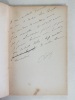

Bel envoi de l'auteur.
Declaration of the Establishment of the State of Israel [in Hebrew]. In: Iton Rishmi [in Hebrew],Official Gazette of Israel. - [THE BIRTH OF ISRAEL]
Tel Aviv, 14 May 1948. Folio. (4) pp. Unbound as issued. In near perfect condition.
![Declaration of the Establishment of the State of Israel [in Hebrew]. In: Iton Rishmi [in Hebrew],Official Gazette of Israel. - [THE BIRTH OF ISRAEL]. ...](https://static.livre-rare-book.com/pictures/LLX/60258_1_thumb.jpg)
Scarce first printing of the Israeli Declaration of Independence, the seminal historical document that establishes the first Jewish state in 2.000 years. Contained in the first issue of the Official Gazette of the Israeli provisional government, this landmark publication was printed on the first day of the birth of Israel. A bound set of ""Iton Rishmi"" reprinting this historic publication was issued later the same year. Formally entitled the Declaration of the Establishment of the State of Israel, the Israeli Declaration of Independence was proclaimed on May 14 1948, by David Ben-Gurion, the executive head of the World Zionist Organization, chairman of the Jewish Agency for Palestine, and, shortly after, the first Prime minister of Israel. It declared the establishment of a Jewish state in Eretz-Israel, to be known as the State of Israel. ""The Land of Israel was the birthplace of the Jewish people. Here, their spiritual, religious, and national identity was formed. Here, they achieved independence and created a culture of national and universal significance. Here, they wrote and gave the Bible to the world.Exiled from Palestine, the Jewish people remained faithful to it in all the countries of their dispersion, never ceasing to pray and hope for their return and the restoration of their national freedom."" Thus begins the seminal historical document that constitutes one of the most important political ones of recent times. Immediately following the British army withdrawal earlier on May 14, war broke out between Jews and Arabs. Egypt launched an air assault against Israel that same evening. Despite a blackout in Tel Aviv-and the expected Arab invasion-Jews celebrated the birth of their new nation, especially after word was received that the United States had recognized the Jewish state. At midnight, the State of Israel officially came into being upon termination of the British mandate in Palestine. ""Using the American Declaration of Independence and the U.S. Constitution as philosophical frameworks, a small group of attorneys and politicians pieced together Israel's Declaration of Independence. Other important political decisions pertaining to Jewish statehood were left until the last minute: the location of the State's capital, its final name, and how to bring together several Jewish military organizations under one command. Military operations, particularly those around the Jewish settlement at Kfar Etzion, south of Jerusalem, diverted attention from final decisions about these matters. Also pressing on David Ben-Gurion, the head of the Jewish Agency and future first Prime Minister of Israel,was the request by President Truman's White House asking for a formal written request for recognition.On Friday, May 14, following some debate, the National Council, established to oversee the political needs of the Jewish community in Palestine, voted to accept the final text of the Declaration. That afternoon at 4 pm, David Ben-Gurion, head of the National Council, read the Declaration at the Tel Aviv Museum. Without electricity in Jerusalem, few there heard Ben-Gurion's words or the singing and playing of 'Hatikvah,' Israel's national anthem. That morning, Ben-Gurion, uncertain about the coming war with Arab states, had his secretary secure a safety deposit box at a local bank so that the Declaration could be immediately placed there for safekeeping. The Declaration was a synopsis of Jewish history to 1948 and a statement of Israel's intent toward its inhabitants, neighbors, and the international community. It was divided into four parts: 1) a biblical, historical, and international legal case for the existence of a Jewish state in the Land of Israel" 2) the self-evident right of the Jewish people to claim statehood 3) the actual declaration of statehood" and 4) statements about how the state would operate, including an enumeration of citizen rights. In keeping with the UN Resolution that provided international legitimacy for Jewish and Arab states in Palestine, the requirement to have a constitution was stated. Israel's objective to institute a constitution was postponed indefinitely in June 1950. Noteworthy similarities and differences exist between the American and Israeli Declarations of Independence. Both declarations assert independence and the right of their populations to control their own destinies, free from legislative impositions and despotic abuses. In the Israeli case, however, immediate past history was included, and it reflected earlier Jewish catastrophes and the prospects of potential physical annihilation. Both declarations sought self- determination, liberty, and freedom derived their claims based on human and natural rights, promised safeguards for the individual, and proclaimed an interest in commerce or economic growth. The Israeli Declaration of Independence contained a list of historical claims to the land of Israel. The Declaration cited benchmark historical events when the international community sanctioned the Jewish state's legitimacy, particularly the acknowledgement to build a national home given by the League of Nations (1922) and by the United Nations (1947) to establish a Jewish state. While there were skirmishes going on between Americans and the British when the American Declaration of Independence was signed in 1776, when Israel declared its independence it was in the midst of a full-fledged war for survival with the local Arab population and surrounding Arab states. The on-going war notwithstanding, the Israeli Declaration of Independence includes a declaratory statement offering ""peace and amity"" to its neighbors and the request ""to return to the ways of peace."" Both declarations made reference to a higher authority: the Israeli Declaration of Independence does not mention religion, but it closes with the phrase ""with trust in the Rock of Israel [Tzur Yisrael].""1 The choice of this phrase was Ben-Gurion's verbal compromise, made to balance strong secular and religious pressures. Any precise mention of religion might have required mention of religious practice, which could have created enormous social fragmentation in the early fragile years of the state. By contrast, the American Declaration of Independence appealed to the ""Supreme Judge, protection of the Divine."" (Ken Stein, 2008, from: israeled.org).
Opinion sur le rapport du comité de constitution. qui a pour objet l'établissement des bases de la représentation personnelle, & l'organisation des assemblées administratives & des nouvelles municipalités ; lue à la séance du jeudi 5 novembre 1789 ; et imprimée sur la demande de l'Assemblée nationale
Paris, Baudouin, s.d. (1789) in-8, 38 pp., dérelié.
Il ne faut pas confondre Charles-Austrégésile de Bengy (1778-1836) avec son père Philippe-Jacques (1743-1823), qui fut également député à l'Assemblée nationale. Le père et le fils votèrent avec la droite en faveur du maintien de l'Ancien régime. - - ACTUELLEMENT EN CONGÉS, DE RETOUR LE 17 AOÛT - VENTE PAR CORRESPONDANCE UNIQUEMENT - LIEN DE PAIEMENT, NOUS CONSULTER.

