 Write to the booksellers
-
Type
Book (762)
Magazine (8)
Music sheets (1)
-
Language
English (2)
French (769)
-
Century
18th (19)
19th (31)
20th (302)
21st (154)
-
Countries
Belgium (178)
Canada (5)
Côte d'Ivoire (2)
Denmark (39)
France (501)
Netherlands (17)
Switzerland (29)
-
Syndicate
ALAC (5)
ILAB (102)
NVVA (24)
SLACES (7)
SLAM (41)
Kandinsky
Centre Georges Pompidou 1984 non paginé pages IN4. 1984. agrafé. non paginé pages.
État correct intérieur propre
Ecrits complets, Tome 2 : La Forme
Denoël/Gonthier Cartonné avec jaquette 1970 In-8 (14,5 x 22,5 cm), cartonné avec jaquette, 408 pages ; traces sur la jaquette, quelques rousseurs aux tranches, par ailleurs assez bon état. Livraison a domicile (La Poste) ou en Mondial Relay sur simple demande.


Wielopole, Wielopole de Tadeusz Kantor par le Théâtre Cricot 2. Programme de théâtre
Paris, Théâtre de Paris, 1983-1984, in-8, broché, 32 pages. Bon état. Photographies NB. Livret de la représentation au Théâtre de Paris.
NB. La librairie est fermée jusqu'à fin septembre. Les questions et commandes seront traitées début octobre.
2017/2022 Il est urgent d'agir
Michel de Maule 2017 12 4x19 5x1cm. 2017. Broché.
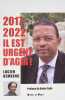
Très bon état - livre issu de destockage - pouvant présenter d'infimes traces de stockage - Expédié soigneusement dans emballage adapté
2017/2022 Il est urgent d'agir
Michel de Maule 2017 12 4x19 5x1cm. 2017. Broché.
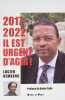
TRES BON ETAT
L' Identité palestinienne: Construction d'une conscience nationale moderne
FABRIQUE 2003 402 pages 19 8x2 6x12 8cm. 2003. Broché. 402 pages.
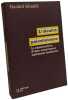
Bon état proche du très bon état intérieur propre bonne tenue
De l’Art Moderne adaptation française de Pierre Algaux
in 8 carré couverture illustrée,54 pages,24 illustrations de Paul KLEE éditions de la Connaissance Bruxelles 1948 très bon état
Klossowski (Pierre) - Grabska (Elzbieta) - Ducros (Françoise) - Kobry (Yves) - Kra (Petr) - Fauchereau (Serge) - Deryng (Xavier) - Porebski (Mieczyslaw) - Blonski (Jan) - Deryng (Xavier)
Reference : 92545
(1983)
Les Cahiers du Musée National d’Art Moderne, N° 83/12
Centre Georges Pompidou 1983 In-4. Broché, couverture illustrée en noir & blanc, environ 127 pp. texte sur 2 colonnes, illustrations en noir & blanc. Intérieur du livre parfait couverture abîmée. en bon état.
Pologne - Présences polonaises centre pompidou 23 - juin 26 septembre 1983 - Abscences polonaises - Une littérature antimoderne ? - Strzeminski Klein - Ozenfant et l’esthétique puriste - Art et coexistence - Ernst Fischer - Styrsky le précurseur - Balthus Bon état d’occasion
Rubens's Questions, Religion, Paragone, and the Ontology of Painting
, Brepols - Harvey Miller, 2026 Hardback, Pages: 320 p. Size:190 x 255 mm, Illustrations:176 col., Language :English **NEW. ISBN 9781915487704.
Summary Rubens?s Questions: Religion, Paragone, and the Ontology of Painting explores the pivotal role of doubt in understanding the work of Peter Paul Rubens. Focusing on his easel paintings from the 1610s, this book argues that Rubens engaged with the era?s most pressing intellectual debates without resorting to overt dogma. His works served as open-ended invitations, encouraging viewers to grapple with complex issues of religion, art, and philosophy, offering no definitive answers but instead providing space for personal reflection and recalibration. In contrast to the more direct, polemical writings of his contemporaries, Rubens subtly used his compositional mastery to question the very nature of art?its visual and tactile properties?while navigating the tensions between idolatry and iconoclasm. Rather than aligning with one side of these heated debates, Rubens? paintings proposed a nuanced middle ground, engaging with the ontological questions of his day and affirming the enduring value of painting itself. Additionally, this book addresses a significant gap in Rubens scholarship: the almost total absence of Dutch-language sources in the existing literature. By examining these overlooked materials, it reveals a paradigmatic shift in Rubens' artistic approach, one that was deeply informed by the intellectual climate of the Netherlands. TABLE OF CONTENTS Preface Introduction Chapter One: A Twisted Hand, a Turn of Mind Chapter Two: Questies Chapter Three: A Visual Quaestio Syntax Chapter Four: Confluent Epistemes Chapter Five: Questions in and of Art in Ruben?s Time Chapter Six: The Ontological Question Chapter Seven: Allegory: Thinking Inside the Box Chapter Eight: The Question of Use Chapter Nine: Painting as Ontology Coda: Appearance without Substance, Form without Matter Notes List of Illustrations and Credits Bibliography Index
Théâtre Russe et Soviétique
Paris, Editions du Regard, Relié-Jaquette éditeur,
NB. La librairie est fermée jusqu'à fin septembre. Les questions et commandes seront traitées début octobre.
Un demi siecle de purgatoire
Noir Blanc 1993 424 pages in8. 1993. Broché. 424 pages.
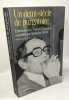
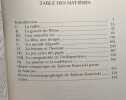
Très bon état couverture un peu défraîchie intérieur propre
The Memory of the Body: Essays on Theater and Death
Northwestern University Press 1992 153 pages 14x21 5x1 7cm. 1992. Broché. 153 pages.
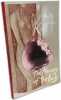
Très bon état bonne tenue intérieur propre
L'Affaire K. Moscou 1973 Confession D'Un Repenti
Editions André Balland 1990 1990. Broché.

Bon état
Les Historiens Et La Monarchie Tome 2 - La Défaite De L'érudition
PUF 1988 352 pages 14 86x21 41x1 85cm. 1988. Broché. 352 pages.


Bon état
WAS DIE SCHONHEIT SEI, DAS WEIS ICH NICHT. KUNSTLER. THEORIE. WERK. KATALOG ZUR ZWEITEN BIENNALE NURNBERG 1971.
, Schauberg, DuMont, 1971, Brochiert, 200 x 245mm., 352S., illustriert. 3 7701 0569 9. ISBN 9783770105694.
Kompendium und Nachschlagewerk zum Thema Kunstlertheorie und Werk. Guter Zustand.
Political and Social Vocabulary of John the Deacon's 'Istoria Veneticorum',
Turnhout, Brepols, 2012 Hardback, approx. X+269 p., 2 b/w line art, 156 x 234 mm. ISBN 9782503531595.
The Istoria Veneticorum, a chronicle attributed to John the Deacon, chaplain and ambassador of the Venetian Duke Peter Orseolo II (991-1008), is of fundamental importance for the reconstruction of early medieval Venetian history. In addition to being the only historical narrative of that period, it covers the entire early Middle Ages, from the invasion of the Lombards in 569, an action that forced a part of the Veneto's population to seek refuge on the islands of the Venetian lagoon, to the beginning of the eleventh century. Its importance is further emphasized by the limited number of the surviving early medieval Venetian sources. Berto's study of the political and social vocabulary of this work analyses the chronicler's use and contextualization of key words and provides the reader with an enhanced understanding of the Istoria Veneticorum. The attentive and skilful use of terminology by the chronicler confirms that the author was, in all likelihood, a member of the Orseolo entourage, that he was acquainted with the art of diplomacy, and that he was, in fact, John the Deacon. Furthermore, he did not limit himself to a mere recording of dates and events; rather, by a careful use of terminology-probably in order to avoid reopening recent wounds-he was able to express his opinions about the Dukes who had ruled his country. Languages : English.
PLEIADES DE YANNIS XENAKIS (LES)
Michel de Maule 2001 13 716x1 016x18 034cm. 2001. Broché.
Très bon état - légères marques de lecture et/ou de stockage mais du reste en très bon état- expédié soigneusement depuis la France
PLEIADES DE YANNIS XENAKIS (LES)
Michel de Maule 2001 13 716x1 016x18 034cm. 2001. Broché.
Très bon état
PLEIADES DE YANNIS XENAKIS (LES)
Michel de Maule 2001 13 716x1 016x18 034cm. 2001. Broché.
Très bon état - légères marques de lecture et/ou de stockage mais du reste en très bon état- expédié soigneusement depuis la France
PLEIADES DE YANNIS XENAKIS (LES)
Michel de Maule 2001 13 716x1 016x18 034cm. 2001. Broché.
Très bon état - légères marques de lecture et/ou de stockage mais du reste en très bon état- expédié soigneusement depuis la France
PLEIADES DE YANNIS XENAKIS (LES)
Michel de Maule 2001 13 716x1 016x18 034cm. 2001. Broché.
Très Bon Etat
- De l'Unité Tonique et de la fixation d'un diapason universel.- Notes additionnelles à l'opuscule intitulé de l'Unité Tonique et de la fixation d'un diapason universel.
P. Dentu 1859 demi-rel. chagrin noir. in-8, 16pp., 1 tableau dépl., et II-140pp., 1 tableau dépl.
Deux tableaux sur la variation du La à travers les ages.
R.T.FABLES (7 A 12) (Retour au texte)
Ellipses 1996 128 pages 1x24x15cm. 1996. Broché. 128 pages.
Bon état
LAGARDE André, MICHARD Laurent, LEMAITRE Henri, VAN DER ELST Thérèse, PAGOSSE Roger
Reference : 62763
"La littérature française (5 volumes); 1 : Du moyen Âge à l'âge baroque; 2 : Des classiques aux philosophes; 3 : Les évolutions du XIXe siècle; 4 : Les métamorphoses du XXe siècle; 5 : La littérature aujourd'hui. Collection : Bibliothèque des connaissances essentielles."
Paris, Bordas/Laffont, 1970-1972. "18 x 25, 5 volumes, 637 + 639 + 639 + 640 + 618 pages, nombreuses illustrations en N/B et en couleurs dans chaque volume, reliures d'édition pleine toile + jaquettes (certaines jaquettes défraîchies; jaquette du tome 4 réparée)."

