 Write to the booksellers
-
Type
Book (1194)
Magazine (26)
Maps (3)
Photographs (2)
-
Latest
Last month (109)
Last week (5)
-
Language
English (2)
French (1223)
-
Century
16th (1)
17th (1)
18th (25)
19th (136)
20th (292)
21st (103)
-
Countries
Belgium (142)
Canada (3)
Denmark (106)
France (889)
Switzerland (85)
-
Syndicate
ALAC (2)
ILAB (236)
NVVA (61)
SLACES (61)
SLAM (66)
Voyage et aventures de trois jeunes français en Californie,Le fossoyeur de Kerbiane,Voyage de François Levaillant aux pays des grands et des petits Namaquois- l’Afrique Australe à notre époque.Histoire de Russie depuis les temps les plus reculés continuée jusqu’à nos jours par M de M.les petits-fils d’Emaïou la Nouvelle Zélande à notre époque.
1)Voyage et aventures de trois jeunes français en Californie suivi de Le fossoyeur de Kerbiane, suivi de Voyage de François Levaillant aux pays des grands et des petits Namaquois-l’Afrique Australe à notre époque. 2) Histoire de Russie depuis les temps les plus reculés continuée jusqu’à nos jours par M de M. 3) les petits-fils d’Emaï ou la Nouvelle Zélande à notre époque.Trois titres en un volume in 4 pleine toile rouge d’éditeur à décor passe-partout,titre au dos fers à froid, J Lefort Lille Paris 1878 1879 1885.1) Faux-titre titre illustré 196 pages, 1 illustration pleine page Lefort 1885, 2) faux-titre, frontispice, titre 192 pages 3)faux-titre, frontispice, titre, 192 pages Lefort 1878. Coiffe supérieure et coin supérieur droit dur premier plat réparés
Pionners of France in the new world - Huguenots in Florida - Samuel de Champlain
BOSTON, Little, Brown and company - 1907 - In-12 - Reliure éditeur légèrement frottée, illustrée au 1er plat - Frontispice, carte, index - Texte en anglais - 491 pages - Très propre
Conformément à nos conditions générales de vente :Les frais de port sont affichés à titre indicatif. Il se peut que nous devions vous contacter pour vous informer du coût de laffranchissement supplémentaire en fonction du poids et du nombre de livres, surtout pour les envois internationaux Cependant vu l'augmentation des tarifs postaux à l'internationale, nous pouvons expédier les ouvrages en point relais MONDIAL RELAY pour les pays suivants : Allemagne, Autriche, Belgique, Espagne, Italie, Luxembourg, Pays-Bas, Pologne, et Portugal. Merci de nous indiquer en retour le point relais choisi ainsi que votre numéro de téléphone mobile & adresse Courriel pour assurer le suivi du colis.N'hésitez pas à nous interroger.In accordance with our general terms and conditions of sale:Shipping costs are displayed for informational purposes only. We may need to contact you to inform you of the additional postage costs depending on the weight and number of books, especially for international shipments.However, given the increase in international postal rates, we can ship books via Mondial Relay to the following countries: Germany, Austria, Belgium, Spain, Italy, Luxembourg, Netherlands, Poland, and Portugal. Please provide us with your chosen Mondial Relay point, as well as your mobile phone number and email address to ensure package tracking.Please feel free to contact us with any questions
"PASTEUR, LOUIS. - ANNOUNCING THE DISCOVERY OF ""MOLECULAR ASSYMETRY""
Reference : 47149
(1848)
Mémoire sur la relation qui peut exister entre la forme cristalline et la composition chimique, et sur la cause de la polarisation rotatoire"" (Extrait). (Séance du Lundi 22 Mai 1848).
(Paris, Bachelier), 1848. 4to. No wrappers. In: ""Comptes Rendus Hebdomadaires des Séances de L'Academie des Sciences"", Tome 26, No 21. Pp. (529-) 548. (Entire issue offered). Pasteur's paper: pp. 535-538.
First appearance of the announcement of Pasteur's momentous and revolutionary discovery of ""molecular assymetry"" and founding the science of Polarimetry.The discovery was first announced by Pasteur in may 1848 by the printing of the preliminary report of only 4 short pages, in order to establish priority (the paper offered). A more full exposition was published the same year in ""Annales de Chimie et de Physique"", 3me Series - Tome XXIV.""In 1848....Pasteur studied the crystals of tartrates (one of the substances that exhibited the now-clockwise, now-counterclockwise effect) under the microscope and found that the xcrystasls were mirror images of the others. The two crystals resemmbled each other as a right-hand glove resembles a left-hand glove....This was a revolutionary discovery and it took some courage to announce it. A few years before, the well-known chemist Mitscherlich had studies the same tartrate crystals and declared them all to be identical. Pasteur was only a twenty-sic-year-old unknown. neverthelless he announced his findings and went before Biot to repeat the separation ofthe crystals before the eyes of the aged authority in the field. Biot was convinced and Pasteur received the Rumford medal of the Royal Society for his work....Pasteur had thus founded the science of polarimetry in which the measurements of the manner in which the plane of polarized light was twisted could be used to help to determine the structure of organic substance, to follow various chemical reactions, and so on.""(Asimov). Leicester & Klickstein ""A Source Book of Chemistry"", p. 374-379).
"PASTEUR, LOUIS. - ANNOUNCING THE DISCOVERY OF ""MOLECULAR ASSYMETRY""
Reference : 49456
(1848)
Mémoire sur la relation qui peut exister entre la forme cristalline et la composition chimique, et sur la cause de la polarisation rotatoire"" (Extrait). (Séance du Lundi 22 Mai 1848).
(Paris, Bachelier), 1848. 4to. No wrappers. In: ""Comptes Rendus Hebdomadaires des Séances de L'Academie des Sciences"", Tome 26, No 21. Pp. (529-) 548. (Entire issue offered). Pasteur's paper: pp. 535-538. Clean and fine.
First appearance of the announcement of Pasteur's momentous and revolutionary discovery of ""molecular assymetry"" and founding the science of Polarimetry.The discovery was first announced by Pasteur in may 1848 by the printing of the preliminary report of only 4 short pages, in order to establish priority (the paper offered). A more full exposition was published the same year in ""Annales de Chimie et de Physique"", 3me Series - Tome XXIV.""In 1848....Pasteur studied the crystals of tartrates (one of the substances that exhibited the now-clockwise, now-counterclockwise effect) under the microscope and found that the xcrystasls were mirror images of the others. The two crystals resemmbled each other as a right-hand glove resembles a left-hand glove....This was a revolutionary discovery and it took some courage to announce it. A few years before, the well-known chemist Mitscherlich had studies the same tartrate crystals and declared them all to be identical. Pasteur was only a twenty-sic-year-old unknown. neverthelless he announced his findings and went before Biot to repeat the separation ofthe crystals before the eyes of the aged authority in the field. Biot was convinced and Pasteur received the Rumford medal of the Royal Society for his work....Pasteur had thus founded the science of polarimetry in which the measurements of the manner in which the plane of polarized light was twisted could be used to help to determine the structure of organic substance, to follow various chemical reactions, and so on.""(Asimov). Leicester & Klickstein ""A Source Book of Chemistry"", p. 374-379).
Recherches sur les relations qui peuvent exister entre la forme cristalline, la composition chimique et le sens de la polarisation rotatoire. (+) Note sur la Cristallisation du soufre. (Memoir on the relation that can exist between crystalline form an...
Paris, Victor Masson, 1848 a. 1851. 8vo. 2 contemp. hcalf, raised bands, gilt spine. Light wear along edges. Small stamps on verso of titlepages and on verso of 1 plate. In ""Annales de Chimie et de Physique"", 3me Series - Tome XXIV and XXXI. (6),512 pp. and 2 plates + 512 pp. a. 4 plates.(2 entire volumes offered). Pasteur's papers: pp. 442-459 a. pp. 459-460, 1 double-page folded engraved plate + pp. 67-102 a. 1 plate. Some scattered brownspots to first part of the first volume, not affecting P's papers.
First full exposition of Pasteur's momentous and revolutionary discovery of ""molecular assymetry"" and founding the science of Polarimetry.The discovery was first announced by Pasteur in may 1848 by the printing of the preliminary report of only 4 short pages, in order to establish priority. The announcement - 4 pages - was published in Comptes rendus hebdomadaires de l’Académie des Sciences, Paris, Seance of May 15, 1848, 26 (21), 535-538 (Published on May 1848).""In 1848....Pasteur studied the crystals of tartrates (one of the substances that exhibited the now-clockwise, now-counterclockwise effect) under the microscope and found that the crystals were mirror images of the others. The two crystals resembled each other as a right-hand glove resembles a left-hand glove....This was a revolutionary discovery and it took some courage to announce it. A few years before, the well-known chemist Mitscherlich had studies the same tartrate crystals and declared them all to be identical. Pasteur was only a twenty-sic-year-old unknown. neverthelless he announced his findings and went before Biot to repeat the separation ofthe crystals before the eyes of the aged authority in the field. Biot was convinced and Pasteur received the Rumford medal of the Royal Society for his work....Pasteur had thus founded the science of polarimetry in which the measurements of the manner in which the plane of polarized light was twisted could be used to help to determine the structure of organic substance, to follow various chemical reactions, and so on.""(Asimov). Leicester & Klickstein ""A Source Book of Chemistry"", p. 374-379).
"PASTEUR, (LOUIS) et (JULES) JOUBERT - THE FIRST DOCUMENTED DISCOVERY OF AN ANTIBIOTIC.
Reference : 48136
(1877)
Charbon et septicémie.
(Paris, Gauthier-Villars), 1877. 4to. No wrappers. In: ""Comptes Rendus Hebdomadaires des Séances de L'Academie des Sciences"", Tome 85, No 3. Pp. (101-) 168. (Entire issue offered). Pasteur & Joubert's paper: pp. (101-) 115.
First appearance of one of the founding papers in the realm of antibiotics, being the discovery of ""Vibrion septique"" (Cl. septicum), the first pathogenic anaerobe to be found. ""Pasteur and Joubert were probably the first to realize the practical implications of antibiosis. They noted the antagonism between Bacillus anthracis and other bacteria cultures (in the paper offered)""(Garrison & Morton: No. 1932.1 and 2490).
Animalcules infusoires vivant sans gaz oxygène libre et déterminant des fermentations.
(Paris, Mallet-Bachelier), 1861. 4to. No wrappers. In: ""Comptes Rendus Hebdomadaires des Séances de L'Academie des Sciences"", Tome 52, No 8. Pp. (321-) 368. (Entire issues offered). Pasteur's paper: pp. 344-347. Minor marginal brownspots.
First printing of a milestone paper in microbiology, being the paper in which Pasteur disclosed his discovery of organisms that lived without oxygen. Two years later he named them anaerobic or zymics, contrasting to aerobic which only lived in the presence of free oxygen.""In 1861 he turned his attention to the butyric fermentation and made another importent discovery, viz. that this fermentation proceeds in the absence of oxygen. In the fermented material he found cylindrical rods, which he showed were the cause of the fermentation. Following the nomenclature and ideas of the time he regarded them as animal in character and named them Vibrio..."" (Bullock ""The History of Bacteriology"", p. 61).
Escale à Pont-Réan
Editions Danclau 1995 in4. 1995. Broché.
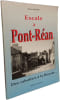
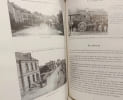
Bon état couverture défraîchie intérieur propre
Oeuvres complètes.
Paris, Cercle du Livre Précieux, 1966. 5 volumes in-8, format oblong, pleine reliure verte, 312-341-436-545 et 524 pages, plus une table et des notes par volume.
Edition originale des Oeuvres complètes réalisée d'après les maquettes de Bruno Pfäffli pour le compte des Editions Tchou. Exemplaire sur numéroté sur vélin. Trsè bel exemplaire en PARFAIT état. Tome 1 : Récits. Les instants bien employés suivis de Jean Paulhan, voyageur et conteur ou le Monde inconnu par André Dhôtel. (Lalie. - Progrès en amour assez lents - Le Pont traversé. - Le Guerrier appliqué.- La guérison sévère. - Aytré qui perd l'habitude. - La métromanie ou les dessous de la capitale.- Les Causes célèbres. - Guide d'un petit voyage en Suisse. - L'aveuglette. - De mauvais sujets. - Une semaine au secret. - 13 Entretien à la radio avec Robert Mallet. Etc., etc...)
Óð Cúailnge
Voies itinérairantes 2005 456 pages in8. 2005. Broché couverture rempliée. 456 pages. Un couple Françoise et Paul Mirabile partage son expérience de vie itinérante à travers l'Eurasie de l'Afrique à la Chine en passant par la Turquie l'Inde et la Russie. Le récit explore comment ce mode de voyage a profondément transformé leur être intérieur et leur vision du monde
Très bon état
"PAYEN, A. et J.F. PERSOZ - DISCOVERY OF THE FIRST ENZYME, DIASTASE.
Reference : 51493
(1833)
Mémoire sur la diastase, les principaux produits de ses réactions et leurs applications aux arts industriels"" (Memoir on diastase, the principal products of its reactions, and their applications to the industrial arts),
Paris, Crochard, 1833. Contemp. hcalf. Raised bands, gilt spine with gilt lettering. A few scratches to spine. Stamps to verso of titlepage. In: ""Annales de Chimie et de Physique, Par MM. Gay-Lussac et Arago."", Series 2, tome 53. Entire volume offered. 448 pp. Payen & Persoz's paper: pp. 73-92. Clean and fine.
First printing of a pioneering paper in industrial chemistry and microbiology, being the discovery of the first Enzyme, Diastase. It catalyses the breakdown of starch into maltose.
Terre de paysans. Découverte d'une planète rurale. Héliogravures dans le texte.
Ed. Cabédita 1994. Bel exemplaire broché, in-8, 175 pages.
La Découverte du pôle Nord en 1909, sous le patronage du Club arctique Peary. […] Introduction de Théodore Roosevelt.
Paris, Pierre Laffitte, 1911. In-4° de 341, 1 bl., [2] pp. Portrait en phototypie de l'auteur en front., 32 pages d'illustration photographique en 2 couleurs et 32 pages de photographies en noir. Demi-toile bleue, pièce de titre en maroquin brun, couverture et dos conservés Ex-libris ms. « Hasselmann ».
![La Découverte du pôle Nord en 1909, sous le patronage du Club arctique Peary. […] Introduction de Théodore Roosevelt.. PEARY (Robert).](https://static.livre-rare-book.com/pictures/PHO/pho-2079_1_thumb.jpg)
![La Découverte du pôle Nord en 1909, sous le patronage du Club arctique Peary. […] Introduction de Théodore Roosevelt.. PEARY (Robert).](https://static.livre-rare-book.com/pictures/PHO/pho-2079_2_thumb.jpg)
![La Découverte du pôle Nord en 1909, sous le patronage du Club arctique Peary. […] Introduction de Théodore Roosevelt.. PEARY (Robert).](https://static.livre-rare-book.com/pictures/PHO/pho-2079_3_thumb.jpg)
Première édition française du récit de l’expédition polaire conduite par l’explorateur américain Robert Edwin Peary (1856-1920), qui revendiqua la conquête du pôle Nord le 6 avril 1909, accompagné de Matthew Henson et de quatre Inuits. Traduit de l’édition américaine de 1910 (The North Pole), l’ouvrage relate les préparatifs, les conditions extrêmes de la traversée de la banquise arctique et la marche finale vers le 90° nord. Illustré de nombreuses cartes et photographies, il est précédé d’une introduction élogieuse de l’ancien président Theodore Roosevelt, soutien de Peary. Témoignage majeur de l’histoire des explorations polaires et pièce importante de la controverse sur la véritable découverte du pôle Nord. M8-B
"PELLETIER, PIERRE et JOSEPH CAVENTOU. - THE DISCOVERY OF STRYCHNINE.
Reference : 43871
(1818)
Note sur un nouvel Alcali (Lu à l'Academie des Sciences le 10 août 1818. (+) Mémoire Sur un nouvel Alcali végétal (la Strychine) trouvé dans la fève de Saint-Ignace, la noix vomique, etc. (Lu à l'Academie des Sciences le 14 décembre 1818).
(Paris, Crochard, 1818,1819). No wrappers. In: ""Annales de Chimie et de Physique, Par MM. Gay-Lussac et Arago."", tome 8 (Cahier 3) a. 10 ( Cahier 2), pp. 225-336 and pp. 129-240. (Entire issues offered). Pelletier & Caventou's papers: pp. 323-324 (tome 8) and pp. 142-176 (tome 10). A few scattered brownspots.
First printing of these classic papers in chemistry in which the authors announced their discovery of Strychnine. This was the first alkali of vegetable origin to be discovered after morphine. This discovery (and their discovery of chlorophyll) brought them international fame. The first small paper contains the announcement of the discovery and the second long memoir contains the elaborate exposition of the discovery.""Strychnine was only the second alkaloid to be extracted, the first was morphine. Pelletier and Caventou wanted to name their new alkaloid vauqueline after Nicolas Vauquelin, one of their associates who had refined the technique of ether extraction for use in isolating alkaloids. However, the officers of the Académe des Sciences in Paris rejected the idea on the grounds that a respected scientist’s name should not be paired with a deadly poison. In addition to strychnine the pair isolated other important compounds from plants including caffeine, chlorophyll and the anti-malaria drug quinine. (Paul L. Burnham).Parkinson:""Breakthroughs"", 1818 C. - Garrison & Morton: 1846.The first issue also contains their importent memoir ""Examen chimique de la Cochenillee et de sa matière colorante"", pp. 250-287 which describes how they obtained crotonic acid from croton oil and analyzed carmine in the cochineal.
"PELTIER, JEAN CHARLES A. - DISCOVERY OF THE ""PELTIER-EFFECT""
Reference : 43654
(1834)
Nouvelle Expériences sur la Caloricité des courans électriques.
(Paris, Crochard, 1834). No wrappers. In: ""Annales de Chimie et de Physique"", 2. Series, Tome 56, Cahier 4 (last issue of tome 56). Entire issue offered. Pp. 337-444. Peltier's paper: pp. 371-386. The text calls for a plate, but not present here.
First printing of the paper in which Peltier describes his discovery of the ""Peltier-Effect"", the thermo-electric cooling and heating of an electrical junction dependent on the direction of the current.""Stimulated by the work of Nobili, Peltier constructed a sensitive galvanometer to measure the conductivities of antimony and bismuth for small currents. Peltier's use of small samples of these nonductile materials was fortunate because the anomalous behavior of these materials led him to construct a thermoelectric thermoscope and to measure the temperature distribution along a series of thermocouple circuits. He discovered that a cooling effect can take place at one junction and an excessive heating at the other. He then confirmed this discovery by using an air thermometer in place of the thermoscope. Peltier did not pursue the effect he had discovered, and its importence was not fully recognized until after the thermodynamic work of William Thomson twenty years later.""(DSB X, p. 500).Wheeler Gift no 2684. - Ronald's Library, p. 389. - Parkinson ""Breakthroughs"" 1834 P.
Sur les traces de La Pérouse : Carnets d'expédition à Vanikoro
Glenat 2006 in4. 2006. Cartonné jaquette.
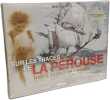
Comme neuf encore sous son plastique d'emballage
Vie du Bienheureux Jean-Gabriel Perboyre, prêtre de la Congrégation de la Mission, par un prêtre de la même Congrégation.
Lille, Desclée, de Brouwer & Cie, s. d., env. 1900, in-8vo, front. + 180 p., + 13 planches (illustrant des supplices chinois et avec un vue de Macao), reliure demi-cuir, abîmée.

(SLACES, NVVA)
Phone number : 41 (0)26 3223808
L'énigme des Cérès
1975 Nouvelles Editions Debresse - 1975 - In-8 broché, couverture illustrée - 190 pages
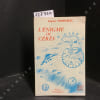
Menus frottements et traces de pli à la couverture - Texte collé sur la page de garde, la page faux-titre, la page de titre et la 3ème de couverture Assez bon
L'ADN decrypté . La découverte et les preuves du langage caché de l'ADN
1999 1999, preface de Jean Marie Pelt president de l'institut Europeen d'ecologie Marco Pietteur , Resurgence , broché 398 pages comme neuf .
Ray F1*
Isabelle et Ferdinand, Rois Catholiques D'Espagne
Paris Le Grand Livre Du Mois 1988 Fort In-8 483 pp
Correct Reliure Souple Éditeur
Rome, de sa fondation jusqu'à nos jours. Collection : Cités d'Art.
Paris, Albin Michel, 1972. 20 x 28, 246 pp., 26 planches en couleurs, 180 illustrations en N/B, cartonnage d'édition pleine toile + jaquette en couleurs, très bon état.
"Photos : Edwin Smith; traduction de l'anglais : Robert Latour."

