 Write to the booksellers
-
Type
Book (1194)
Magazine (26)
Maps (3)
Photographs (2)
-
Latest
Last month (122)
Last week (5)
-
Language
English (2)
French (1223)
-
Century
16th (1)
17th (1)
18th (25)
19th (136)
20th (292)
21st (103)
-
Countries
Belgium (142)
Canada (3)
Denmark (106)
France (889)
Switzerland (85)
-
Syndicate
ALAC (2)
ILAB (236)
NVVA (61)
SLACES (61)
SLAM (66)
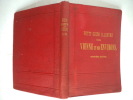
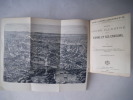
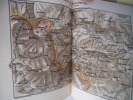
Petit guide illustré dans Vienne et ses environs
in 12 pleine toile rouge de l’éditeur, titre doré au dos et sur le premier plat.Vienne à vol d’oiseau… en frontispice- titre, IV, 100 pages,42 gravures 2 petits plans, une petite carte du chemin de fer du Semmering, 2ème édition.A Hartleben éditeur 1898,sans le plan de Vienne.Très bon état. Guide illustré Hartleben n°39
L'Orient dans un miroir.
Paris, Hachette, 1983. 25 x 21, sans pagination, très nombreuses illustrations en couleurs, broché, très bon état.
Michelin Travel Publications Pneu Michelin
Reference : 500308146
(1992)
ISBN : 9782067004276
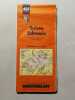
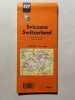
Switzerland (Michelin Main Road Maps Band 427)
Michelin Maps 1992 11 6x24 6x0 6cm. 1992. map. Guide de voyage consacré à la Suisse publié par Michelin Travel Publications spécialisé dans les cartes et guides touristiques. Il propose des informations pratiques des itinéraires et des recommandations pour découvrir le pays
Bon état
De la recherche de soi
Exposition festival d'avignon 1986 48 pages in8. 1986. broché. 48 pages.
Très bon état
Le secret des Rêves - Messages de l'inconscient et Découverte de Soi .
Flammarion Broché au format 15x22cm,bel ensemble un peu fané tout de même, aacroc de qq millimètre sur la page de faux titre, 334 pages.
Ce livre aborde le rêve dans son contenu psychologique et envisage, par la connaissance de soi, une meilleure harmonie dans le mondequi nous entoure. Bon Etat Mise à jour du Samedi 27 Juin 2026. Paiement PayPal immédiat, Mondial Relay pour : France, Allemagne, Autriche, Belgique, Espagne, Italie, Portugal, Luxembourg, Pays-Bas, Pologne (Communiquer votre point ou locker si connu). Une participation supplémentaire peut être demandée pour les colis lourds hors France où les envois compris entre 5 et 25 kg sont dégressifs : 2 à 4 kilogrammes - 7.99 / 5 à 10 kg - 15.99 / 15 -25 kg - 25.99. Certaines de nos collections ( Vian, Céline, Camus (...) peuvent être expédiées en Franco de port. Pour linternational hors Europe (Suisse, Canada, Japon, Etats-Unis, les frais dexpéditions peuvent varier selon le poids (mise à jour : 1 juin 2026).
Nouveau Voyage d'Italie.
Avec un Mémoire contenant des avis utiles à ceux qui voudront faire le même voyage. Cinquième édition, plus ample & plus correcte que les précédentes; & enrichie de nouvelles Figures. 79 planches, dont certaines dépliantes. A. La Haye, Chez Henry van Bulderen, Marchand Libraire, dans le Pooten, à l'Enseigne de Mezeray, 1731-1743. 3 volumes in-12 composite de (17,5x9,5cm) pour le 1 et 3 et de (16,8x9,5cm) reliés en plein veau, dos à nerfs ornés de caissons et de fleurons dorés, titre sur maroquin rouge, tranches rouges, fentes sur les charnières du tome 2 et coiffes supérieures faibles. ff-avis,339pp,ff-table + 364pp. + 414 ff-table.
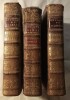
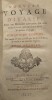
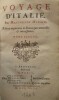
Trois volumes composés, Tome 1:31 planches. Tome 2:42 planches. Tome 3:6 planches. Misson Maximilien, Protestant exilé en Angleterre par la révocation de l'Édit de Nantes, il abandonna sa carrières ecclésiastique et devint précepteur d'un jeune aristocrate Britanique, avec qui il fit le Grand Tour. La première édition fut en 1691, avec succès de ses récits de voyage, et plusieurs fois réédités.
La vie privée à Venise depuis les premiers Temps jusqu’à la chute de la République.
Petit in 8 demi-chagrin marron à nerfs et à coins;titre,caissons roulette dorés;double filet doré sur les plats.Faux-titre,frontispice,titre avec vignette,X, 554 pages non rogné Venise Librairie Ancienne et Moderne Ferdinand Ongania 1882 première édition française.Presses Kirchmayr et Scozzi Venise Les illustrations hors-texte ainsi que le frontispice sont contrecollés sur papier fort. quelques traces de rousseurs habituelles
LE NÉO-PLASTICISME
Paris Editions de l'Effort Moderne, Léonce Rosenberg 1920 In-8 Agrafé Edition originale
Rare plaquette dédiée aux hommes futurs dans laquelle Mondrian y expose ses théories, et en particulier le principe général de l'équivalence plastique. C'est la première publication en français de l'artiste, dont ce texte avait paru en 1919 en Hollande. Mondrian s'installe en 1912 à Paris et approfondit son approche du cubisme. Après la découverte de Cézanne, Braque et Picasso, il travaille en 1913 en séries et crée ses premières toiles abstraites avant de repartir en 1914 en Hollande. Contraint d'y rester deux ans à cause de la guerre, il travaille alors sur l'opposition des éléments et la combinaison des notations géométriques En 1917, Composition avec lignes noires est le point d'aboutissement de cette recherche de l'abstraction. De retour à Paris en 1919, il se tourne vers le néo-plasticisme, une esthétique basée sur des motifs à angle droit et l'utilisation des trois couleurs primaires auxquelles s'ajoutent le blanc, le noir et le gris. Parallèlement, ses textes évoquent une société future parfaitement équilibrée où chaque élément trouve sa justification. Son utopie architecturale, basée sur une fusion généralisée de la maison avec la rue, de la rue avec la ville ...va dans le même sens. Bon exemplaire 0
Aventures de mer.
Paris, Bernard Grasset, 1935. 14 x 19, 296 pp., quelques illustrations en N/B, reliure dos/coins toilés, couverture avant conservée, très bon état.
Couverture de G. Cochet.
La poursuite du Kaïpan.
Paris, Grasset, 1934. 14 x 19, 286 pp., 32 illustrations hors-texte, demi-reliure dos/coins toilé, tranches mouchetées, couverture conservée, très bon état.
Couverture : bois gravé de G. Cochet.
Le croisière de Hachich.
Paris, Bernard Grasset, 1935. 14 x 19, 312 pp., quelques illustrations en N/B, reliure dos/coins toilés, couverture avant conservée, très bon état.
Couverture de G. Cochet.
"L'Islam au péril des femmes; une anglaise en Turquie au XVIIIe siècle. Collection : La Découverte, N° 41."
Paris, François Maspero/La Découverte, 1981. 11 x 18, 254 pp., 1 carte, broché, bon état (couverture légèrement défraîchie).
introduction, traduction et notes d'Anne-Marie Moulin et Pierre Chuvin.
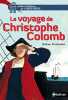
Le voyage de Christophe Colomb
FERNAND NATHAN 2015 64 pages 13x18 8x0 7cm. 2015. Broché. 64 pages.
Très bon état
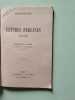
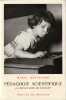
Pédagogie Scientifique . La découverte de l'enfant.
Desclée De Brouwer In-8, broché, couverture souple titrée en noir complète de sa jaquette ill en noir et Blanc (petite fille penchée sur un casier en bois), portrait frontispice de Maria Montessori, 27 photographies de Jean-Marie Marcel dont 24 planches hors texte en noir et blanc, très bel exemplaire de cette Édition Originale de l'adaptation française.
Très Bon Etat Mise à jour du Samedi 27 Juin 2026. Paiement PayPal immédiat, Mondial Relay pour : France, Allemagne, Autriche, Belgique, Espagne, Italie, Portugal, Luxembourg, Pays-Bas, Pologne (Communiquer votre point ou locker si connu). Une participation supplémentaire peut être demandée pour les colis lourds hors France où les envois compris entre 5 et 25 kg sont dégressifs : 2 à 4 kilogrammes - 7.99 / 5 à 10 kg - 15.99 / 15 -25 kg - 25.99. Certaines de nos collections ( Vian, Céline, Camus (...) peuvent être expédiées en Franco de port. Pour linternational hors Europe (Suisse, Canada, Japon, Etats-Unis, les frais dexpéditions peuvent varier selon le poids (mise à jour : 1 juin 2026).
To the Mountains of the Moon. Being an account of the modern aspect of Central Africa, and of some little known regions traversed by the Tanganyika Expedition, in 1899 and 1900.
London, Hurst and Blackett, 1901, in-8vo, XVI + 350 p. + 2 leaves, richly ill. with photogr. and map in-text + 1 large colored map at the end, off-setting from colored front to title-page, small legacy stamp ‘Guggisberg’, original pictorial green clothbound, inner joints cracked. Very good copy. (First edition).
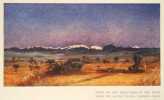
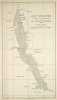
Image disp.

(SLACES, NVVA)
Phone number : 41 (0)26 3223808
TROYES et l’Aube
in 12 broché couverture illustrée en couleurs.faux-titre, titre,XXX,327 pages,plan dépliant,nombreuses illustrations dans le texte et hors-texte,J.L PATON imprimeur éditeur 10Août 1929.Très bon état
l’assaut du pôle nord
in 8 pleine toile verte titre doré et filets à froid au dos,faux-titre,titre,210 pages,illustrations dans et hors-texte Jouve & Cie sans date petite décoloration angle inférieur droit du premier plat
Exploration dans la presqu'île Malaise : royaumes de Pérak et de Patani. Réédition en fac-similé de Paris, A. Lahure, 1886]
Bangkok, Prince of Songkla University, coll. « Grand Sud. Hommes et Sociétés d’Asie du Sud-Est », n° 3 1993 In-8 24 x 16 cm. Broché, couverture blanche, auter & titre en noir sur le dos et le premier plat illustré, XV-420 pp., notes en bas de page, illustrations, 1 carte repliée, table des matières. Exemplaire en très bon état.
![Exploration dans la presqu'île Malaise : royaumes de Pérak et de Patani. Réédition en fac-similé de Paris, A. Lahure, 1886]. MORGAN, Jacques de](https://static.livre-rare-book.com/pictures/AVE/130912_1_thumb.jpg)
Très bon état d’occasion
L'aventure monothéiste: judaïsme, christianime et islam: ce qui les rapproche, ce qui les distingue
2011 La découverte - 2011 - petit In-8 broché - 309 pages
Bon état
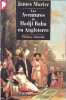
Les aventures de Hadji Baba en Angleterre (0002)
LIBRETTO 2002 448 pages 12 2x2 4x17 4cm. 2002. Poche. 448 pages. Hadji Baba devenu un personnage important en Perse est chargé par le Shah de préparer la première ambassade perse en Europe. Le roman raconte ses aventures en Angleterre mêlant satire sociale et observations sur les différences culturelles dans un style inspiré des Mille et une nuits et de Montesquieu
Bon état
MOUTIE, A. (Correspondant du Ministère de l'Instruction publique, de la Société des Antiquaires de France, de la Société des Sciences morales, Lettres et Arts de Versailles, Membre de la Société Archéologique de Rambouillet, etc., etc.
Reference : 111969
(1851)
Voyage historique de Paris à Chartres. Chemin de fer de l'Ouest. Première Section
1851 A Chartres, Chez Noury-Coquard, Libraire-Editeur et à Paris, Chez Chamerot, Libraire-Commissionnaire et dans les principales stations du chemin de fer de l'Ouest - 1851 - In-8, broché - 171 p. - 4 gravures hors texte
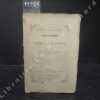
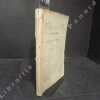
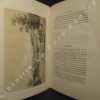
Assez bon état - Couverture légèrement passée (voir photos), dos fendu - 2 gravures avec rousseurs
La Lanterne verte.
1939 Editions Tallandier, collection "Le Lynx" N° 3 - 1939 - In-8, broché couverture illustrée - 61 pages
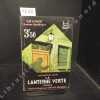
Dernier plat un peu sali, plis sur le mors externe du premier plat, couverture légèrement décolorée par endroits, sinon bon état.
La Porte de Bronze
1940 Editions Tallandier, collection "Le Lynx" N° 9 - 1940 - In-8, broché couverture illustrée - 62 pages
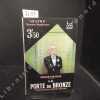
Bon état.

