 Write to the booksellers
-
Type
Book (1196)
Magazine (26)
Maps (3)
Photographs (2)
-
Latest
Last month (122)
Last week (5)
-
Language
English (2)
French (1225)
-
Century
16th (1)
17th (1)
18th (25)
19th (136)
20th (292)
21st (103)
-
Countries
Belgium (142)
Canada (3)
Denmark (106)
France (891)
Switzerland (85)
-
Syndicate
ALAC (2)
ILAB (236)
NVVA (61)
SLACES (61)
SLAM (66)
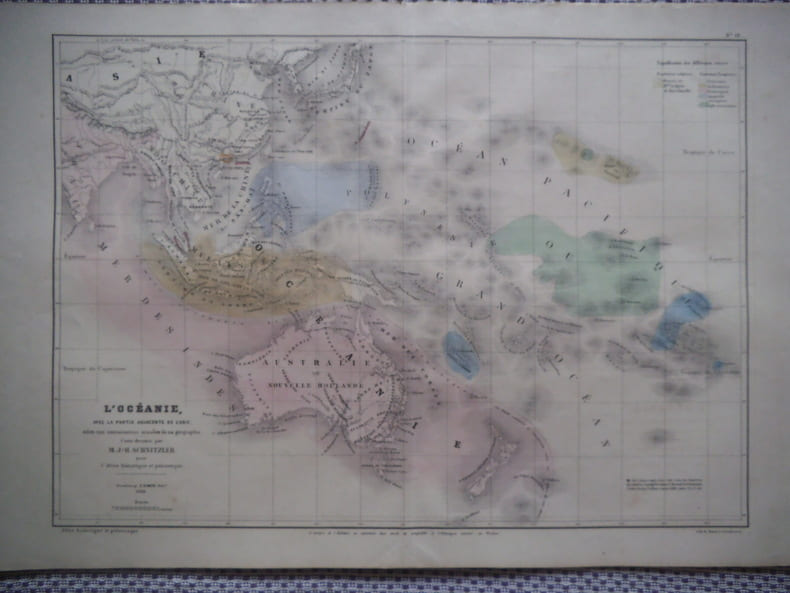
Carte de l’Océanie avec les marges
Carte en couleurs, dressée par SCHNITZLER J.H pour l’atlas historique et pittoresque, E. SIMON éditeur 1860. 330x480 mm et 380x580mm avec les marges
Excursions scientifiques (géographie, géologie, botanique, zoologie) tome 2 : En Brabant.
Bruxelles, H. Lamertin, 1913. 17 x 25, 355 pp., 100 figures, 32 planches (62 photos), broché, bon état (couverture défraîchie).
2e édition revue et complétée.
Vienne. Collection : Visages du monde.
Paris, Horizons de France, 1959. 18 x 24, 153 pp., 105 photographies, broché, couverture à rabats, bon état.
Sous le soleil d'Afrique. Collection : La Croix du Sud.
Paris, Julliard, 1955. 14 x 19, 319 pp., plusieurs illustrations en N/B, broché, bon état.
NANCY
in 12 carré broché,couverture rempliée,faux-titre, frontispice de DUFRENOY titre,101 pages,1 page de justificatif de tirage.Editions Emile Paul Frères,4 novembre 1926.un des exemplaires numérotés sur vélin Lafuma,collection "Portraits de France"
"SCHWANN, THEODOR. - THE DISCOVERY OF PEPSIN, THE FIRST KNOWN ANIMAL ENZYME.
Reference : 43417
(1836)
Ueber das Wesen des Verdauungsprocesses. (On the essence of digestion).
(Leipzig, Johann Ambrosius Barth, 1836). Without wrappers. In ""Annalen der Physik und Chemie. Hrsg. von J.C. Poggendorff"", Band 38, No. 6 (= Zweyte Stück). Titlepage to Vol. 38. Pp. 241-450 a. 3 engraved plates.(Entire issue offered, Heft No. 6, Bd. 38). Schwann's paper: pp. 358-364. Clean and fine.
First appearance of an importent paper in the history of biology, in which Schwann describes his discovery and isolation of pepsin, the substance in the stomach that aids digestion of eggwhite. It is the FIRST KNOWN ANIMAL ENZYME. The paper appeared at the same time in ""Archiv für Anatomie, Physiologie und Wissenschaftliches Medicin""Theodor Schwann (1810-1882) was a great German physiologist, pathologist, and experimenter. One of the founders of the cell doctrine and of the idea of the living nature of yeast. Born at Neuss, near Düsseldorff. A catholic, educated in the Jesuit Gymnasium in Cologne. Intended for the church but took to medicine. He was a pupil of Johannes Müller and a collegueand lifelong friend of J. Henle, the anatomist. In Berlin Schwann was Johannes Müller's assistent for five years, and it was then that he discovered pepsin in 1836 (the paper offered).Parkinson ""Breakthroughs"" 1836 B.The issue contains other importent papers by Seebeck, Matteucci, Marchand, G. Magnus ""Ueber die Wirkung des Ankers auf Elektromagnete und Stahlmagnete"", Schönbein, J. Müller ""Ueber die Structur und die chemischen Eigenschaften der thierischen Bestandtheile der Knorpel und Knochen"" + Nachtrag., Forchhammer ""Der kopaische See und seine unterirdischen Abzugskanäle.."" with a map.

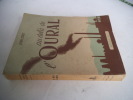
Au-delà de l’Oural
in 8 broché couverture illustrée,faux-titre,titre,249 pages,Marguerat éditeur collection le Beffroi.Un travailleur Américain dans la cité Russe de l’acier.5 juillet 1945.Bon exemplaire.
Découverte de la sculpture moderne. Origines et évolution. Richement documenté (planches en couleurs, héliogravures).
Guilde du Livre et les Fauconnières 1963. Bel exemplaire relié, cartonnage orné d'éd., fort in-4 numéroté, 298 pages.
"SEFSTRÖM, N.-G. (NILS GABRIEL). - THE DISCOVERY OF VANADIUM.
Reference : 49631
(1831)
Sur le Vanadium, métal nouveau, trouvé dans du fer en barres de Eckersholm. forge qui tire sa mine de Taberg, dans le Smaland.
(Paris, Crochard, 1831). No wrappers. In: ""Annales de Chimie et de Physique, Par MM. Gay-Lussac et Arago."", tome 46, Cahier 1. Pp. 5-112. (Entire issue offered). Sefström's paper: pp. 105-111.
First printing of the paper in which Sefström announced his discovery of a new element in iron from the Taberg mine in Småland. He named it Vanadium from the goddess Vanadis.Parkinson ""Breakthroughs"" 1831 C.The discovery and isolation of Vanadium has a long story to tell. In reality it was found by del Rio in 1801, he named it Erythronium, but upon further study he decided that he was mistaken as his further studies showed that it was made up of a basic lead chromate.
ECHANGER SA MAISON - UNE NOUVELLE PHILOSOPHIE DU: VOYAGE
Des Equateurs 2010 239 pages 20 2x1 8x12 4cm. 2010. Broché. 239 pages.
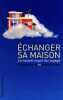
Très bon état - légères marques de lecture et/ou de stockage mais du reste en très bon état- expédié soigneusement depuis la France
Le Décaméron. Illustré de compositions originales de Raoul SERRES.
Paris, La Belle édition, s.d. 3 volumes petits in-4 (19,5 x24,5 cm),299 - 269 - 231 pp étui individuel.
Un des 800 exemplaires numérotés sur vélin de Lana. Les aquarelles ont été reproduites par Duval et coloriés dans les Ateliers de Maurice Beaufumé. Bel exemplaire.
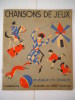
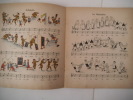
Chansons de jeux musiques et images
recueillies par S.SESTIER.In 4 cartonné souple,couverture illustrée en couleurs.Titre illustré, 20 pages y compris la page de titre. 16 pages illustrées par G.TCHERKESSOF, dont 8 en couleurs. Paris, Flammarion éditeur, sans date. (1933) Bon exemplaire
Plages Normandes.
Plages Normandes. Cabourg-Dives-Beuzeval- Houlgate- Villers- Le Homme- Ouistreham. In 8 demi –toile rouge, pièce de titre cuir marron, filets à froid sur les plats. Préface III, faux-titre, frontispice (une rue à Lisieux) titre, 245 pages, , 60 dessins par l’auteur et une carte dépliante en fin de volume. Paris Librairie d’éducation nationale sans date. Une déchirure angle inférieur droit page III de la préface. Sinon bon exemplaire
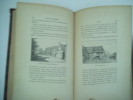
CHAMPAGNOLE et ses environs
La Franche Comté pittoresque,in 8 broché, couverture illustrée,titre,117 pages,1 feuillet de table illustrations dans le texte, 1 carte, publicités en fin de volume. Editions et publications artistiques J Sicard sans date
L'or des gouffres : découvertes dans les jungles mayas.
Flammarion, 1979, 232 p., broché, haut du dos frotté, légères traces d'adhésif sur la pagede faux-titre, une petite signature sur le haut de la page de garde, bon état pour le reste.
Merci de nous contacter à l'avance si vous souhaitez consulter une référence au sein de notre librairie.
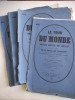
De Washington à San Francisco
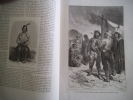
A travers le continent américain.Ouvrage complet en 5 livraisons de 16 pages chacune, texte sur 2 colonnes, 7 cartes 67 illustrations dans le texte et à pleine page. Librairie Hachette & Cie 1874, Le tour du monde. avec couverture bleue de livraison, 688-689-690-691-692, (couvertures avec dos fatigués, plissures)
Récits de la découverte et de l'exploration du monde.
Couverture souple. Broché. 112 pages.
Livre. Classe de 6 e des lycées et collèges. Collection nouvelle d'humanités françaises publiées sous la direction de Maurice Rat. Fernand Nathan, 1952.
Dictame. Tome I : Les Jargonautes et les Oxydés - Tome II : La Brèche
1990 Editions SPADEM - Collection "Renaissance et Vulgarisation du Spiritualisme dans le Cadre de l'Alliance de vie et de Vérité" - 1990 - 2 volumes in-12 broché, feuillets non coupés (ouvrage jamais lu) - 214 + 395 pages
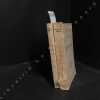
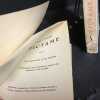
Bon état général - Coins légèrement émoussés - Plis de lecture au dos - Petites déchirures aux coiffes sans manque - Déchirure avec manque de matière au dos du tome II (voir photo) - Intérieur frais Bon
Ur histoire d'une découverte 136 photographies 2 hors-texte en couleurs 3 plans 1 carte 23 culs-de-lampe
Albert Guillot 1957 163 pages in4. 1957. pleine toile éditeur avec jaquette. 163 pages.


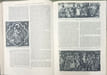
jaquette abimée ouvrage en bon état
Great Breakthroughs in Mathematics: From Counting to Chaos Theory - How Numbers Changed the World
Arcturus Publishing Ltd 2020 192 pages 17 4x24 8x2 6cm. 2020. Relié. 192 pages.
Très bon état
Sur plusieur composés détonants produits avec l'acide nitrique et le sucre, la dextrine, la lactine, la mannite et la glycérine.
(Paris, Bachelier),1847. 4to. No wrappers. In: ""Comptes Rendus Hebdomadaires des Séances de L'Academie des Sciences"", Tome XXIV, No. 7. Pp. (209-) 252. (Entire issue offered). Sobrero's paper: pp. 247-248. Clean and fine.
First appearance of the paper in which Sobrero announced his discovery of nitroglycerin.""When I think of all the victims killed during nitroglycerine explosions, and the terrible havoc that has been wreaked, which in all probability will continue to occur in the future, I am almost ashamed to admit to be its discoverer."" (Sobrero)""Nitroglycerin was synthesized by the chemist Ascagne Sobrero in the middle of the nineteenth century. When he tasted it, as all good nineteenth century chemists did when they discovered a new compound, it gave him what he called a migraine, because of its vasodilatory effect, which was later harnessed in the treatment of angina by William Murrell (1879), following the experience of a distinguished British clinician, Lauder Brunton, using amyl nitrite (1867) Later in the nineteenth century, Alfred Nobel discovered how to stabilize nitroglycerin, using kieselguhr (diatomite) clay"" this led to highly successful industrial applications of dynamite and created the fortune that eventually funded the eponymous prizes. For medical purposes nitroglycerin was subsequently renamed glyceryl trinitrate, to hide the fact that it was literally dynamite as well as metaphorically.""
L'Espagne mauresque: Cordoue, Séville, Grenade. Collection : Cités d'Art.
Paris, Albin Michel, 1964. 20 x 28, 220 pp., 32 planches en couleurs, 18 illustrations en N/B, cartonnage d'édition pleine toile + jaquette en couleurs, très bon état.
"Photos : Wim Swaan; traduction : Claude Couffon."
Recherches sur quelques Combinaisons du Chlore.
Paris, Crochard, 1831. No wrappers as extracted from ""Annales de Chimie et de Physique"", 2. Series, Tome 48. Titlepage to vol. 48. Pp. 113-157. A few brownspots, but fine. Small stamps on verso of titlepage.
First appearance of an importent paper in chemistry and medicine as it for the first time relates the finding of Chloroform, which some years later was proved to have anaesthetic effects and was introduced in chirurgy in 1848 by Simpson.Justus von Liebig, Souberain and Guthrie independently discovered Chloroform in 1831, but Souberain was the first to publish his results. - Garrison & Morton No. 1851. - Gedeon ""Science and Technology in Medicine"" 36.7.
Recherches sur quelques Combinaisons du Chlore. (Communiqué par l'auteur).
Paris, Crochard, 1831. Contemp. hcloth. Some scattered brownspots. ""Annales de Chimie et de Physique"", 2. Series, Tome 48. 448 pp., 1 engraved plate. (Entire volume offered). Soubeiran's paper: pp. 113-157. Scattered brownspots.
First appearance of an importent paper in chemistry and medicine as it for the first time relates the finding of Chloroform, which some years later was proved to have anaesthetic effects and was introduced in chirurgy in 1848 by Simpson.Justus von Liebig, Souberain and Guthrie independently discovered Chloroform in 1831, but Souberain was the first to publish his results. Garrison & Morton No. 1851. - Gedeon ""Science and Technology in Medicine"", 36.7.The volume contains other notable papers by LIEBIG, DUMAS, DUTROCHET, WÖHLER, LECANU, BECQUEREL etc.

