 Write to the booksellers
-
Type
Book (552)
Magazine (3)
-
Latest
Last 3 days (1)
Last month (155)
Last week (2)
-
Century
19th (1)
20th (217)
21st (185)
-
Countries
Belgium (92)
Canada (1)
France (458)
Switzerland (4)
-
Syndicate
ALAC (1)
ILAB (8)
NVVA (3)
SLACES (3)
SLAM (4)
Cachemires. L'art et l'histoire des châles en France au XIXe siècle. Photographies de Massimo Listri.
Paris, Adam Biro 1987, in-4to, 23,5 x 30,5 cm, 196 p., nombreuses illustrations couleurs. reliure toile éditeur avec jaquette illustrée et emboîtage en toile cachemire. Bon état.
(Leinen gebunden im Schuber. 10 S/W Abb. und 170 farbige. 196 S. Paris 1987 Die Geschichte und die Kunst des Schals im Frankreich des 19. Jahrhunderts).

(SLACES, NVVA)
Phone number : 41 (0)26 3223808
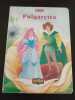
Pulgarcita (pequeclasicos)
Libsa Editorial 2006 12 pages 13 8x0 6x18 8cm. 2006. board_book. 12 pages.
Bon état
Notice sur cinq anciennes étoffes tirées de la collection de M. Félix Liénard.
1866 1866 Imprimerie Impériale, 1866. 1 cahier in-8 de 28 pages + planches. Rousseurs, néanmoins bon état.
La librairie est ouverte du mardi au samedi de 9h30 à 12h30 et de 13h30 à 19h00. Commandes par courriel ou téléphone. Envoi rapide, emballage soigné. La librairie est ouverte du mardi au samedi de 9h30 à 12h30 et de 13h30 à 19h00. Commandes par courriel ou téléphone. Envoi rapide, emballage soigné.

Dura-Europos: Past, Present, Future
, Brepols, 2025 Paperback, Pages: xvi + 245, Size:216 x 280 mm, Illustrations:33 b/w, 53 col., 2 tables b/w., Languages: English, Arabic. ISBN 9782503616049.
Summary This volume brings together an international and interdisciplinary host of scholars to reflect on the complicated legacies of exploration at the archaeological site of Dura-Europos, situated on the western bank of the Euphrates River near modern Salihiyeh (Syria). A chance discovery after World War I kicked off a series of excavations that would span the next century and whose finds are today housed in collections worldwide, including the Yale University Art Gallery, the Louvre, and the National Museum in Damascus. Dura-Europos exemplifies a multiethnic frontier town at the crossroads of major trade routes. Its textual remains and remarkably-preserved Christian, Jewish, and polytheist religious sanctuaries provide key resources for the study of antiquity and attest to the cross-cultural interconnectivity that was demonstrably central to the ancient world but which has been too often obscured by Eurocentric historiographic traditions and siloed disciplinary divisions. Foreign-run, large-scale archaeological campaigns of the early twentieth century, like those at Dura-Europos, have created narratives of power and privilege that often exclude local communities. The significance of these imbalances is entangled with the destruction the site has experienced since the 2011 outbreak of conflict in Syria. As a step toward making knowledge descendant of early excavations more accessible, this volume includes Arabic summaries of each paper, following up on the simultaneous Arabic interpretation provided at the 2022 hybrid conference whose proceedings form the core of this publication. The papers address topics connected to essential themes in relation to Dura-Europos: long-distance trade relations and cross-border interactions in antiquity, including the exchange of technologies, people, and materials; Christianity, Judaism, and other religious practices, and their relations to one another; contemporary trafficking of looted artifacts; cultural heritage and the Islamic State; and the evolving role of museum collections, technologies, and archival materials for research. TABLE OF CONTENTS Table of Contents List of Illustrations List of Contributors 1. Introduction Lisa R. Brody, and Anne Hunell Chen 2. Rostovtzeff's Dura Ja? Elsner 3. 'Dura and the Problem of Parthian Art' (almost) a Hundred Years Later Henry P. Colburn 4. The Bloody Genesis of Dura-Europos Studies: Archaeology, Colonialism, and Violence at Salhiyeh, 1916-1920 and Beyond Simon James 5. The So-Called Semitic Population of the Roman Near East with Special Reference to Dura-Europos Kevin van Bladel 6. A Few Notes on Parthian Dura-Europos Leonardo Gregoratti 7. Monuments and Memory at Dura-Europos Ted Kaizer 8. The Bone Dolls from Dura-Europos: Embodying Childhood Experience Juliet Samson-Conlon 9. Touching and Inscribing the Dura- Europos Synagogue Karen Stern 10. New Trends in Mithraic Studies: Experiencing the Dura-Europos Mithraeum Lucinda Dirven 11. Staying at Home or Taking Away: Palmyrene Priestly Iconography as Expressions of Local Religious Traditions and Societal Status Rubina Raja Arabic abstract 12. Military Communities from East to West: Understanding Local Contexts and Responses at Dura-Europos and Vindolanda Elizabeth M. Greene, and Craig A. Harvey 13. The Ruins that Remain: Remembering Dura-Europos in Salhiyeh J. A. Baird, and Adnan Almohamad with Asaad Alsaleh 14. The Pillaging of Dura-Europos: ISIS and the Illicit Trade in Antiquities Amr Al Azm 15. A Legal Framework for Protecting Heritage Against Destruction and Looting Leila A. Amineddoleh
Cahier de francais 6e Cahier eleve
Editions Hatier 2016 128 pages 20 8x1 2x29 4cm. 2016. Broché. 128 pages.
Bon état
NAT. Etoffes égyptiennes de l'Antiquité tardive du musée Georges-Labit.
Paris, Somogy / Toulouse, Musée Georges-Labit, 1999. In-4, reliure toilée de l'éditeur, illustrations, jaquette.
[6255]

Lucas Jean-Claude Leclec'h-Lucas Janine Meuier Robert
Reference : 500129652
(2003)
ISBN : 9782011163790
Francais Cm2 a Portee De Mots
Hachette 2003 239 pages 19 8x1 4x26cm. 2003. Relié. 239 pages.

Bon état
Funeral Rites of the Yotvingians Excavations from a Cemetery in North-eastern Poland
, brepols, 2026 Hardback, Pages: 353 pages, Size:216 x 280 mm, Illustrations:57 b/w, 227 col., 27 tables b/w. Language(s):English, Polish. *NEW. ISBN 9782503618593.
Summary The burial rites of the Yotvingians, a people who inhabited the Suwa?ki region of north-eastern Poland, were until recently almost completely unknown to archaeologists. For a long time, it was considered that the funeral rites of this people could not be identified archaeologically, and while finds such as settlement complexes have been excavated, related necropolises were not found. This changed with the identification of the Mosi??ysko burial ground in the Szurpi?y settlement complex, dated to the twelfth and thirteenth centuries AD, which is the first sepulchral site of the early medieval Yotvingians to have been discovered and surveyed using state-of-the-art archaeological methods. The results from these excavations are presented for the first time in this monograph. The excavations at the site yielded traces of collective cremation burials discovered scattered on the surface of the site, accompanied by stone structures. The equipment of the deceased, intentionally destroyed and burnt, included numerous fragments of ornaments, parts of costume and tools, as well as sporadically occurring weapons and horse riding gear. In addition to finds of artefacts characteristic of the early medieval Suwa?ki region, it was also possible to distinguish interregional varieties akin to finds from Sambia, Curonia, and other lands inhabited by the Balts. The results of this ground-breaking find, documented here, have now made it possible to expand research into the Yotvingians, and to identify similar sites. TABLE OF CONTENTS List of Illustrations Acknowledgements Translator?s note Chapter 1. Introduction Subject of Study Aim of the Work Geographical Scope Chronological Scope Methodology Chapter 2. Settlement Complex in Szurpi?y History of Research History of Settlement Chapter 3. State of Research on the Funeral Rite Szurpi?y Micro-region The Czarna Ha?cza Group Chapter 4. Natural Environment of the Szurpi?y Area Location Geological Structure Climate Vegetation Chapter 5. Archaeological Investigation at Mosi??ysko Field Surveys Excavations Geophysical Surveys Chapter 6. Analysis Archaeological Sources Archaeological Features Bones Grave Goods Topography of the Cemetery within the Settlement Complex in Szurpi?y Extent of the Cemetery and the Distribution of Finds Burial of the Dead Chronology Chapter 7. The Context of Mosi??ysko Cemetery Funeral Rites of the Settlement Micro-region of Szurpi?y and the Czarna Ha?cza Group Funeral Rites in Selected Regions of Central and North-Eastern Europe Chapter 8. The Funeral Rites of the Old Prussians in the Light of Historical and Ethnographic Sources Chapter 9. Conclusions and Desiderata Works Cited Plates Appendix A. Analysis of Cremated Human Remains El?bieta Jaskulska Appendix B. Metalographical Analysis Grzegorz ?abi?ski, Tomasz Goryczka, and Krzysztof Anio?ek Appendix C. Microscopic Analysis of Non-ferrous Metal Artefacts Karol ?o??dziowski Appendix D. Results of Metallographic Analysis of Non-ferrous Alloys Ewelina Mi?ta-Jakubowska Appendix E. Archaeometric Analyses of Ceramic Vessel Samples from the Cemetery in Szurpi?y and Local Clay Samples Ma?gorzata Daszkiewicz Index
analyse des textes courts
L école 1986 64 pages 43x546x386cm. 1986. Broché. 64 pages.

Bon état
Lectures interpretatives
L école 64 pages 17x0 8x23 6cm. Sans date. Broché. 64 pages.

Bon état
Aramaeische Pflanzennamen
Nabu Press 2010 506 pages 18 796x3 048x24 638cm. 2010. Broché. 506 pages.
Bon état tranche ternie note au feutre sur le dos intérieur propre bonne tenue facsimile de l'édition de 1881
Material Exchanges in Medieval and Early Modern Europe. Archaeological Perspectives
, Brepols, 2021 Hardback, 264 pages, Size:156 x 234 mm, Illustrations:26 b/w, 17 col., 2 tables b/w., 15 maps b/w, Language: English. *NEW ISBN 9782503593999.
Summary The study of the movement of 'things' - the exchange of objects as gifts or through trade, the itineraries that they followed when on the move, and their changing importance from location to location - can offer unique insights into our understanding of past societies; and archaeology plays a vital role in allowing such movements to be traced. Nonetheless the circulation of objects across time, and between peoples and places, has long been neglected as a field of research in its own right. This volume aims to address this gap in scholarship by drawing on recent archaeological research to provide a detailed study of the moment of objects across Europe in the late medieval and early modern period. The contributions gathered here trace the interactions between peoples, ideas, and objects in order to explore the impact of movement both on the material things themselves, and on the people who manufactured, exchanged, or used such goods. The volume draws on a wide range of archaeological evidence to explore subjects as varied as production and transport, modes of trade, the connections between trade and religion, and the emotional connections between things and people. Together, they offer a pioneering approach to our understanding of objects and their movement in the past. TABLE OF CONTENTS List of Illustrations Introduction - SERGIO ESCRIBANO-RUIZ, MAGDALENA E. NAUM, JETTE LINAA The Same, but Different: Reflections on Some Medieval Stoneware Vessels Found in Norway - VOLKER DEMUTH On How to Keep the Monopoly of Diversity: Itineraries of Foreign Pottery in the Basque Country, AD 1300-1700 - SERGIO ESCRIBANO-RUIZ Memorable, Modern or Mundane? Investigating the Place of Porcelain and Majolica in the Homes and the Hearts in Early Modern Denmark - JETTE LINAA A Mandatory Stop: The Trade of Imported Pottery in Asturias (NW Iberian Peninsula) during the Early Modern Period - MIGUEL BUSTO ZAPICO Pilgrim Badges and the Magical Middle Ages: Aspects of the Cult of Saints, Magical Thinking, and Religious Identity - RACHEL FACIUS ANDERSEN Producers, Intermediaries, and Consumers: The Role of Adriatic Ports in the Venetian Glass Trade - SAMANTHA GARWOOD Clothing Cultures in the Seventeenth-Century Polish-Lithuanian Commonwealth: The Male Footwear from Elblag as an Example of Western-Type Fashion - ALEKSANDRA KULESZ Kilian Stob us and his Fossil Collections: Science, Aesthetics, and Emotions - MAGDALENA E. NAUM, CAJSA SJ BERG, H KAN H KANSSON, ANDERS LINDSKOG, MATS E. ERIKSSON AND PER AHLBERG
Oser résister
CNRS Editions 2018 282 pages 14 2x20 8x2cm. 2018. Broché. 282 pages.
Très Bon Etat intérieur propre bonne tenue
Décret royal en faveur du développement des manufactures de soie et de laine.
s.l., s.d. (XVIIme ou XVIIIme), 1 1 feuillet in-8, manuscrit ;
"Son Altesse promet à ceux qui entreprendront d'établir quelque manufacture dans son pays de choisir leur ville et place qu'ils trouveront les plus commodes pour l'exercice de leurs talents.......S. A. Fera avoir de sa Grace spéciale à ses nouveaux manufacturiers en soy & laine, leur lit dras et couvertures.....Il sera deslivré à son Altesse une spécification des emplaittes nécessaires que les dit manufacturiers voudront faire en France des soyes laines vin huile et quand S. A. Envoyera quelque bateau elle leur fera charger et apporter franc. Son Altesse donnera à ces nouveaux amis une église dans leur lieux ou ils seront établis et leur entretiendra un ministre.
Français - 2de (2015): Manuel élève
BELIN EDUCATION 2015 452 pages 17 8x2 8x25cm. 2015. Broché. 452 pages.
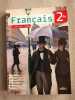
Bon état


Hoards from the European Bronze and Iron Ages. Current Research and New Perspectives
, Brepols, 2025 Paperback, 175 pages, Size:216 x 280 mm, Illustrations:42 b/w, 72 col., 6 tables b/w., 17 maps b/w, 3 maps color, Language: English. *new ISBN 9782503607511.
Summary Hoards are among the most enigmatic of archaeological finds. The term 'hoard' itself has been applied to different assemblages across space and time, from the Stone Age into the modern era, with an inventory that typically includes artefacts made of valuable raw materials, to which significant symbolic meanings can also be assigned. Archaeologists have been trying to understand this phenomenon for much of the last century, sometimes emphasizing the universal nature of hoards, but more typically focusing on specific regions, chronologies, and finds. They have, for the most part, used results derived from typolo-chronological methods. Contemporary archaeology has, however, developed a broad spectrum of paradigms and methods, and hoardresearch in the twenty-first century draws on an increasingly wide range of approaches. This volume presents examples of research that make use of these multi-faceted approaches through a focus on European hoards of metal objects dating to the Bronze and Iron Ages. The contributors to this volume make use of diverse methods, among them archaeometallurgical analyses, studies of use- and production-wear, destruction patterns, and landscape archaeology, but together, their common denominator is the search for a methodological toolkit that will allow researchers to better understand the phenomenon of hoard-deposition more broadly. TABLE OF CONTENTS List of Illustrations 1. Hoards Research - Past, Present, Future. A Few Words of Introduction Marcin Maciejewski, J nos G bor Tarbay, and Kamil Nowak 2. In an Interpretive Triangle. Main Trends in Research on Hoards in the Nineteenth and Twentieth Centuries: A Central European Perspective Wojciech Blajer 3. The Cognitive Development of Prehistoric Wetland Deposition Tradition Through Mnemonics. Case Studies of Iron Age Wales and Scotland Tiffany Treadway 4. There is a Light that Never Goes Out! New and Old Hoards from the Northern Adriatic Martina Ble?i? Kavur 5. The Urnfield Period Metal Hoards in South Bohemia. Find Circumstances, Topography, and Analyses Ond?ej Chvojka, Jan John, Ji? Kmo?ek, and Tereza ? lkov 6. An Active Search for Hoards? Contributions of a Systematic Field Survey to the Knowledge of Bronze Age Metal Hoarding. The Case Study of Salins-les-Bains, Jura, France Estelle Gauthier and Jean-Fran ois Piningre 7. Ice-marginal Valleys and Hoards. Natural Landscapes, Cultural Practices and their Amazing Convergence in Different Regions of Central Europe (Poland) Marcin Maciejewski 8. Twin Hoards and Hoard Selections from the Late Bronze Age Transdanubia J nos G bor Tarbay 9. Late Bronze Age Hoard from Nowe Kramsko. Is there a Method in Fragments? Kamil Nowak and Nicola Ialongo 10. Comparative Technological Analysis of Middle Bronze Age Bronze Objects from Hoards and Burials Szilvia Gy ngy si, P ter Bark czy, Julianna Cseh, Laura Juh sz, and G za Szab 11. Re-theorizing Deposition in Bronze Age Europe Kristian Kristiansen
Hoards from the European Bronze and Iron Ages Current Research and New Perspectives
, Brepols - Harvey Miller, 2025 paperback, Pages: 175 pages, Size:216 x 280 mm,Illustrations:42 b/w, 72 col., 6 tables b/w., 17 maps b/w, 3 maps color. Language(s):English. *new. ISBN 9782503607528.
Hoards are among the most enigmatic of archaeological finds. The term ?hoard? itself has been applied to different assemblages across space and time, from the Stone Age into the modern era, with an inventory that typically includes artefacts made of valuable raw materials, to which significant symbolic meanings can also be assigned. Archaeologists have been trying to understand this phenomenon for much of the last century, sometimes emphasizing the universal nature of hoards, but more typically focusing on specific regions, chronologies, and finds. They have, for the most part, used results derived from typolo-chronological methods. Contemporary archaeology has, however, developed a broad spectrum of paradigms and methods, and hoardresearch in the twenty-first century draws on an increasingly wide range of approaches. This volume presents examples of research that make use of these multi-faceted approaches through a focus on European hoards of metal objects dating to the Bronze and Iron Ages. The contributors to this volume make use of diverse methods, among them archaeometallurgical analyses, studies of use- and production-wear, destruction patterns, and landscape archaeology, but together, their common denominator is the search for a methodological toolkit that will allow researchers to better understand the phenomenon of hoard-deposition more broadly.
Le Jeu De l'Amour Et Du Hasard
Dessain et Tolra 1993 10 79x2 54x17 14cm. 1993. Broché.
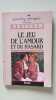
Bon état
Conceptualizing Bronze Age Seascapes. Concepts of the Sea and Marine Fauna in the Eastern Mediterranean in the Second Millennium BCE
, Brepols - 2023, 2023 Paperback, x + 218 pages, Size:216 x 280 mm, Illustrations:20 b/w, 7 col., 13 tables b/w., 3 maps b/w, Language: English. ISBN 9782503606477.
Summary The Mediterranean has, for millennia, formed the heart of an intensive trading network of ideas, goods, and people. For the ancient populations of the Levant, Cyprus, and Southern Anatolia, interactions with the sea ? from fishing to seafaring, and from trade to dye production ? were a constant presence in their life. But how did the coastal peoples of the Bronze Age understand the sea? How did living on the shore influence their lives, from daily practices to mythological beliefs? And what was the impact on their conceptual world? This volume seeks to engage with these questions by addressing the relationship between environment, diet, material production, perception, and thought formation through a combination of archaeological analysis and engagement with primary sources, and in doing so, it offers unique insights into the conceptual world of the ancient Mediterranean maritime cultures of the 2nd millennium BCE. TABLE OF CONTENTS Acknowledgements List of Abbreviations List of Common and Scientific Names of Fish and Molluscs Mentioned in the Text Part I: Framework Chapter 1. Introduction Objectives Organization of the Book Chapter 2. History, Theory, and Methods State of the Art Theoretical Framework Chronological Framework The Evidence Part II: Regional Chapters Chapter 3. Levant Faunal and Material Cultural Evidence Textual Evidence Discussion Chapter 4. Cyprus Faunal and Material Cultural Evidence Textual Evidence Discussion Chapter 5. Southern Anatolian Coast Faunal and Material Cultural Evidence Textual Evidence Discussion Part III: Overarching Analysis Chapter 6. Concepts of Marine Fauna Marine Fauna as Food Fish and Molluscs: Offerings and Purity Marine Fauna as Status or Commodity Visual Concepts of Marine Fauna Chapter 7. Concepts of the Sea The Sea as a Place The Sea as a Supernatural Force The Sea as a Divine Entity Chapter 8. Conclusions: Concepts of Seascapes Works Cited Index
Soierie... WILART. 25 place Vendôme Paris"Qui peut affirmer posséder les tissus les meilleurs, en qualité, variété, prix"
s.n., Paris, s.d. (années 20 ou 30), 1 marque-page cartonné de 6 x 16 cm, illustré en couleurs.

