 Write to the booksellers
-
Type
Book (546)
Magazine (3)
-
Latest
Last 3 days (1)
Last month (149)
Last week (2)
-
Century
19th (1)
20th (213)
21st (183)
-
Countries
Belgium (92)
Canada (1)
France (452)
Switzerland (4)
-
Syndicate
ALAC (1)
ILAB (8)
NVVA (3)
SLACES (3)
SLAM (4)
Prepabac Cours ET Entrainement: Philosophie Terminale L Es S
Editions Hatier 2012 320 pages 14x1 2x18 8cm. 2012. Broché. 320 pages.
Très bon état - légères marques de lecture et/ou de stockage mais du reste en très bon état- expédié soigneusement depuis la France
Katrin Kogman-Appel, Elisheva Baumgarten, Elisabeth Hollender, Ephraim Shoham-Steiner (eds)
Reference : 63153
Perception and Awareness: Artefacts and Imageries in Medieval European Jewish Cultures
, Brepols, 2024 Paperback, 360 pages, Size:216 x 280 mm, Illustrations:57 b/w, 65 col., 1 tables b/w., Language: English. ISBN 9782503583945.
Summary What did the world look like for Jews living in medieval Europe? How did they perceive and make use of the elements of their daily life, from items on the street to religious iconography within holy spaces ? in particular synagogues and at the exterior of churches ? and profane elements from the home? And how did they experience the visual and material cultures of their non-Jewish neighbours? These questions form the core of this volume, which explores pre-modern Jewish approaches to images and material objects from a variety of perspectives. From clothing to manuscripts, and from lighting devices to the understanding of the invisible, the chapters gathered together in this multifaceted volume combine analyses of images and artefacts together with in-depth analyses of texts to offer fresh insights into the visual cultures that informed the world of European Jews in the Middle Ages. TABLE OF CONTENTS Preface and Acknowledgements List of Illustrations Introduction Elisheva Baumgarten, Elisabeth Hollender, Katrin Kogman-Appel, and Ephraim Shoham-Steiner Part One: The Perception of the Visual, the Material, and the Tangible in Shared Public Spaces 1. The Writing on the Wall ? A Mahzor, a Bimah, and a Privilege. A Look at Social Processes in the 13th-Century Jewish Community of Cologne Ephraim Shoham-Steiner 2. Illuminations: Lights, Identities, and the Society of Spectacle in the Late Middle Ages Eleazar Gutwirth 3. Materialization of Memoria Memory and Remembrance of Benefactors in Building Inscriptions in Medieval Ashkenaz Rainer Josef Barzen 4. Differing Perceptions of Church Garments and Worship Implements in the Writings and Thought of the Tosafists Ephraim Kanarfogel 5. Not Black and White Clothes and Difference in Medieval Ashkenaz Elisheva Baumgarten Part Two: Utilizing the Faculties of Visual Means 6. Jewish Chivalry in Late Medieval Illuminated Manuscripts Sara Offenberg 7. The Handling of Diagrams in Medieval Scientific Manuscript Transmission The Sefer ha-mar?im le-Eqlides and its First Proposition Sabine Arndt 8. Non-Verbal Aspects of Astrolabe Knowledge (Fifteenth- to Eighteenth-Century Hebrew Manuscripts) Josefina Rodr guez-Arribas 9. Artifacts that Desire Medieval Perspectives Kalman P. Bland (OBM) 10.The Agency of Images The Temple Vessels in Hebrew Bibles from Roussillon (c. 1300) Katrin Kogman-Appel 11.Visualizing the Invisible: Portrayals of Elijah the Prophet in Fifteenth-Century Ashkenazi Haggadot Chana Shaham-Rosby 12.Visualizing Divine Communication in Medieval Jewish Art Shulamit Laderman Index About the Authors
Kl ra Dolezalov , Ivan Foletti, Katar na Kravc kov , Pavla Tich (eds)
Reference : 65040
Means of Christian Conversion in Late Antiquity. Objects, Bodies, and Rituals
, Brepols, 2022 Paperback, 172 pages, Size:210 x 270 mm, Language: English. ISBN 9788021099791.
Summary This volume presents the proceedings of the conference Materiality and Conversion: The Role of Material and Visual Cultures in the Christianization of the Latin West organized by the Centre for Early Medieval Studies in 2020. Its contributions thus focus on the Christianization of the Roman Empire between the fourth and sixth centuries. The studies examine the religious change through the ?material turn? approach, building on the material and sensorial dimension of Christian conversion and especially the baptismal rite as one of the key components of the process. The material and visual cultures are regarded as vectors and witnesses of conversion to Christianity, while human body is viewed as one of the agents in ritual actions. The volume covers a wide range of topics, including the prebaptismal purification, the moment of immersion in the baptismal font, the postbaptismal alteration of perception, as well as the continuous changes in funeral forms. As such, the papers attempt to shed more light on the role of materiality in the complex and rapid conversion to Christianity in Late Antique West. TABLE OF CONTENTS Introduction Kl ra Dole?alov , Ivan Foletti, Katar na Krav? kov , & Pavla Tich , Articles Barbara Bruderer, A Prolegomenon to the Evolution of the Consecration of Baptismal Water in the Latin West as a Performative and Sensorial Activation of the Invisible: The Roman Rite (3rd-9th centuries) Mark ta Kulh nkov and Pavla Tich , The Phrygianum Neighboring Old Saint Peter's on Vatican Hill in the Time of Conversion Robin Jensen, Conversion to Jesus as a Healer God: Visual and Textual Evidence Gajane Achverdjanov and Ivan Foletti, Purifying Body and Soul: Late Antique Combs, Their Use and Visual Culture Zuzana Frantov , Luxury for Everyone (?): Ivory Diptychs and Their Use in the Baptismal Liturgy Juliette Day, Materiality and the Sensation of Sin in Late Antique Pre-Baptismal Rituals. The Short-Lived ?Rite of the Cilicium? Megan Bunce, Shrines, Special Burials, and the Christianization of Britain Al?b?ta Filipov and Adrien Palladino, Converting Minds, Eyes, and Bodies? The Early Cult of Relics between Rhetoric and Material Practices in Northern Italy and Gallia
Knut Ivar Austvoll, Marianne Hem Eriksen, Per Ditlef Fredriksen, Lene Melheim, Lisbeth Pr sch-Danielsen, Lisbeth Skogstrand (eds)
Reference : 65484
Contrasts of the Nordic Bronze Age. Essays in Honour of Christopher Prescott
, Brepols, 2021 Paperback, 284 pages, Size:215 x 280 mm, Illustrations:61 b/w, 30 col., 16 tables b/w., Language: English. ISBN 9782503588773.
Summary The Bronze Age in Northern Europe was a place of diversity and contrast, an era that saw movements and changes not just of peoples, but of cultures, beliefs, and socio-political systems, and that led to the forging of ontological ideas materialized in landscapes, bodies, and technologies. Drawing on a range of materials and places, the innovative contributions gathered here in this volume explore the disparate facets of Bronze Age society across the Nordic region through the key themes of time and trajectory, rituals and everyday life, and encounters and identities. The contributions explore how and why society evolved over time, from the changing nature of sea travel to new technologies in house building, and from advances in lithic production to evolving burial practices and beliefs in the afterlife. This edited collection honours the ground-breaking research of Professor Christopher Prescott, an outstanding figure in the study of the Bronze Age north, and it takes as its inspiration the diversity, interdisciplinarity, and vitality of his own research in order to make a major new contribution to the field, and to shed new light on a Bronze Age full of contrasts and connections. TABLE OF CONTENTS List of Illustrations Preface Contrasts of the Bronze Age - Time, Ritual and Encounters in the Nordic World: An Introduction - IVAR AUSTVOLL, MARIANNE HEM ERIKSEN, PER DITLEF FREDRIKSEN, LENE MELHEIM, LISBETH PR SCH-DANIELSEN AND LISBETH SKOGSTRAND Part I. Time and Trajectory in the Nordic Bronze Age The Nordic Bronze Age Rose from Copper Age Diversity: Contrasts in the Cimbrian Peninsula -JOHANNES M LLER AND HELLE VANDKILDE On the Periphery of an Agricultural Society: Traces From the Formative Agricultural Period in Norway - A Case Study From ygarden in Hordaland, Western Norway - ARNE JOHAN N R Y The Contrasting Region of Hedmark, Southeast Norway: A Border Zone Through Three Millennia - BERNT RUNDBERGET AND HILDE RIGMOR AMUNDSEN Lithic Production in Bronze Age Norway: The Legacy of a Neolithic Mosaic - ASTRID J. NYLAND Places to Be, or Places to Live? Transformations in Prehistoric Dwellings in the North-western Iberian Peninsula - M. PILAR PRIETO-MART NEZ A History in Prehistory: The Making of a Migration Period 'Technology of Remembrance' in South-West Norway - PER DITLEF FREDRIKSEN AND ELNA SIV KRISTOFFERSEN Part II. Ritual and Everyday Life: Ontologies, Images, and Place-making Practices Together or Apart? Identifying Ontologies in the Nordic Bronze and Iron Age through the Study of Human-Horse Relationships - JACOB KVEIBORG The Stacked, the Partial and the Large. Visual Modes of Material Articulation in M laren Bay Rock Art - FREDRIK FAHLANDER Ritual or Mundane? Scandinavian Tar Loaves from the Bronze Age - CAMILLA C. NORDBY AND KRISTINE ORESTAD S RGAARD Identifying and Investigating Diversity: New Perspectives and Possibilities Within Scandinavian Rock Art Research - JAMES DODD Patterns or Contrast? A GIS-based Study of the Landscape Context and Localization of Southern Rock Art Tradition in Stj rdal, Mid-Norway - ARNE ANDERSON STAMNES AND HEIDRUN STEBERGL KKEN Knapped Quartz in Finnish Bronze Age Cairns - JARKKO SAIPIO Bridging Perspectives: Social Dynamics of Houses and Households in the Nordic Bronze Age - MARIANNE HEM ERIKSEN AND KNUT IVAR AUSTVOLL Part III. Encounters: Identity, Things, and People on the Move A Safe Harbour: Identifying and Theorizing Harbours in Late Neolithic and Bronze Age Norway - H VARD KILHAVN What Can Artefacts Tell Us About Societies? Foreign Objects in Bronze Age Central Europe and Scandinavia - LUKAS WIGGERING Clay, Burial Urns, and Social Distinction in Late Bronze Age Southern Scandinavia - SERENA SABATINI, TORBJ RN BRORSSO, AND PETER SKOGLUND The Contrasts Within: Intersecting Identities in the Luseh j Mound, Denmark - LISBETH SKOGSTRAND Contrasting the Women in the Rege and Molkhaug Mounds: Poised Between the Here and the Beyond - KRISTIN ARMSTRONG OMA Thy at the Crossroads: A Local Bronze Age Community's Role in a Macro-Economic System - KRISTIAN KRISTIANSEN, LENE MELHEIM, JENS-HENRIK BECH, MORTEN FISCHER MORTENSEN, AND KARIN MARGARITA FREI
Le Cœur fou
TEXTES GAIS 2011 186 pages 2x21x15cm. 2011. Broché. 186 pages.
Bon état couverture un peu défraîchie intérieur propre
FINANCIAL MARKETS
John wiley & sons 1996 368 pages 19x2 4x23 2cm. 1996. Broché. 368 pages.
Bon Etat couverture un peu défraîchie intérieur propre
Ko Mireille Boehrer Paul Debleds Evelyne Delmas-Massouline Marie-Francoise
Reference : 500125089
(2001)
ISBN : 9782011352606
Introduction to Classical Ethiopic (GE'EZ) - harvard semitic studies 24
Scholars Press 1978 452 pages 16 2x23 9x3 3cm. 1978. Cartonné. 452 pages.
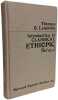
bon état couverture un peu défraîchie intérieur propre
Objectif Lecture - Exercices d'entraînement à la lecture CE2: Fichier
Hatier 1997 43 pages 17x0 6x24 6cm. 1997. Broché. 43 pages.
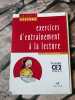

Bon état
Larousse de poche : 40 000 Noms communs 8 000 noms propres
Larousse 2005 1041 pages 10 4x4 6x17 8cm. 2005. mass_market. 1041 pages.
Bon état
Techniques du Français --- TOME 1: Argumenter lire rédiger + TOME 2: langages littéraires
Bertrand-lacoste 1998 224 pages 16 764x1 27x24 384cm. 1998. Broché. 2 volume(s). 224 pages.
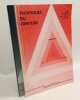
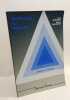
couvertures défraîchies intérieurs propres
Profil d'une oeuvre: La dissertation
Editions Hatier 2006 10 8x1 2x17 2cm. 2006. Broché.
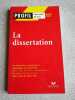
Bon état
Magellan Histoire-Géographie CE2 éd. 2009 - Fichier de trace écrite
Hatier 2009 72 pages 20 8x1 2x29 4cm. 2009. Broché. 72 pages.
Bon état
Magellan Histoire-Géographie CE2 éd. 2009 - Manuel de l'élève + Atlas
Hatier 2009 176 pages 19 8x1 2x26 6cm. 2009. Broché. 176 pages.
Bon état
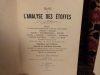
Traité de l'analyse des étoffes, indiquant les moyens pratiques d'analyser en vue de leur reproduction ou dans tout autre but les étoffes de toute nature...
Lille, Lecointre, 1905. In-8, pleine toile éditeur, dos lisse, titre doré au plat supérieur, titre à froid au dos, 230 pp. Ouvrage illustré de 89 figures in texte en noir et blanc, catalogue de vente en fin de volume. Coiffes légèrement usées, papier jauni, rousseurs, dorures au plat supérieur passées.
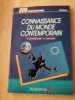
Connaissance du monde contemporain: Bac professionnel première
Casteilla 1994 1994. Broché.
Bon état
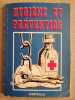
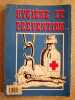
Accidents du travail et prévention hygiène générale et professionnelle
Casteilla 1992 1992. Broché.
Bon état
Lestrade Agnès de Plantevin Guillaume
Reference : 500198311
(2016)
ISBN : 9782210501928
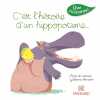
Que d'histoires ! CP Série 3 - C'est l'histoire d'un hippopotame (2016)
Magnard 2016 32 pages 18 6x1x18 6cm. 2016. Broché. 32 pages.
Bon état

