 Write to the booksellers
-
Type
Book (546)
Magazine (3)
-
Latest
Last 3 days (1)
Last month (149)
Last week (2)
-
Century
19th (1)
20th (213)
21st (183)
-
Countries
Belgium (92)
Canada (1)
France (452)
Switzerland (4)
-
Syndicate
ALAC (1)
ILAB (8)
NVVA (3)
SLACES (3)
SLAM (4)
Squarzoni Philippe Ponchard Grégory
Reference : 500141297
(2005)
ISBN : 9782849610237
Drancy-Berlin-Oswiecim
Requins marteaux 2005 36 pages 19 4x0 6x19 6cm. 2005. Broché. 36 pages. Exemplaire de bibliothèque déclassé
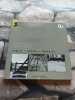

Etat correct
Sympozjum Egejskie, vol. 4. Papers in Aegean Archaeology
, Brepols, 2024 Paperback, 178 pages, Size:210 x 297 mm, Illustrations:12 b/w, 41 col., 5 tables b/w., 2 maps b/w, 7 maps color, Language: English. ISBN 9782503610375.
Summary Sympozjum Egejskie. Papers in Aegean Archaeology is a peer- reviewed series that has been designed to fulfil the role of a platform for presenting and introducing a wide range of new research approaches and themes within the broad area of Aegean Archaeology. This is primarily achieved through showcasing the work of newcomers to the discipline, in other words those scholars who are currently at the beginning of their research career in the field of Aegean Archaeology, as well as scholars working outside the traditional university structure such as independent scholars, professional field archaeologists, museum curators and conservators. It is our hope that this series will serve as a concise guide to the most recent research undertaken by early career scholars and the diverse and inspiring new trends in the archaeology of the Prehistoric Aegean, as well as shining a light on the future direction of the discipline. TABLE OF CONTENTS Introduction STEPHANIE AULSEBROOK, KATARZYNA ?EBROWSKA & AGATA ULANOWSKA Metal ?Ring Idols?: a Material Approach to Metalworking in the Aegean Neolithic VALENTINE MARTIN The Cultural Practices of Bronze Age Aegean Societies as Demonstrated by Chipped Stone Assemblages: the North/South Debate Revisited GEORGIOS STERGIOU Early and Middle Bronze Age Zoomorphic Figurines and Depictions from the Present-Day Area of Bulgaria PETAR MINKOV The Settlement of the Trapeza (Eastern Achaea, Greece): an Insight into the Beginning of the Middle Helladic Period in Achaea ASSUNTA MERCOGLIANO Exploring the Social Fabric of Ceramics Trough Firing Treatment. The Case of Middle Helladic Pottery POLINA KAPSALI Storage Determines Design. The Example of the Minoan Hall ANASTASIA M.A. VERGAKI Naturalism and Movement in Bird Imagery from Minoan Crete and Thera JULIA BINNBERG Between Crete and the Mainland: From the Neopalatial to the Mycenaean Cyclades ANNA BELZA A Tale of a Mycenaean Palatial Town. Development of the Late Bronze Age Site of Mycenae PIOTR ZEMAN, KATARZYNA DUDLIK An Archaeological Perspective on Food Storage on the Mycenaean Mainland (13th-12th Centuries BC) RUSSELL WEBB Tracing the Distribution of 'Aegean-Type Hearths'. Type and Construction Techniques Trough Space and Time DIMITRIS PAPAGEORGIOU

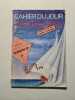
Math livre outil: Cycle des apprentissages 3e année CE1
Magnard 1990 1990. Relié.
Très bon état - légères marques de lecture et/ou de stockage mais du reste en très bon état- expédié soigneusement depuis la France
Les fêtes de Dieu: Douze méditations accompagnées d'hymnes et poèmes spirituels
Bayard 1991 1991. Broché.
Très bon état
Taquechel Louise Bergeron Jacques Hervé Jean-Claude Hourquin Didier Bignaux Jeanne-France Carrasco Joël Sutour Francoise Bronsart Christine Noury Vincent Hascoet Christine
Reference : 500252353
(2015)
ISBN : 9782218988929
Collection Chouette: Tout Savoir 2de
Editions Hatier 2015 19 6x2 8x28cm. 2015. Broché.

Etat correct
Paris & La Bourgogne
Cpe 2000 240 pages in4. 2000. Broché. 240 pages.
Bon Etat bonne tenue intérieur propre
La condition publique des soies de Lyon.
Lyon, Rey, 1906, 1 br. in-4 de 40 pp., illustrations, tableaux, dont 2 en couleurs, ex-libris de l'historien ardéchois Auguste Roche ;
Association française pour l'avancement des sciences, congrés de Lyon 1906. Extrait de "Lyon en 1906" publié par le comité local du congrés.
El-Qitar. A Bronze Age Fortress on the Euphrates
, Brepols, 2019 Paperback, xxiv + 516 pages, Size:216 x 280 mm, Illustrations:322 b/w, 47 tables b/w., Language: English. ISBN 9782503579955.
Summary Located along the River Euphrates, in modern-day Syria, el-Qitar was a mountain fortress of the Middle Bronze Age. Excavations, fully analysed in this volume for the first time, revealed extensive fortifications, with two city gates, multiple towers, a fosse, an earthen rampart, and casemate walls, in addition to a public building lined with orthostats of the Middle Bronze Age. After a short time, the site was abandoned and, following a gap of several centuries, re-settled in the Late Bronze Age. It was then that upper and lower settlements were established within the old fortifications, possibly in the wake of Hittite campaigns in Northern Syria that destroyed nearby towns.?Detailed analyses of ceramics and objects explore the possibility that el-Qitar was re-occupied by local refugees. This volume traces the changing function of the site over time, arguing that el-Qitar might have been the site known as Dur Samsi-Addu during the Middle Bronze Age, and Til-Abnu of the Late Bronze Age. The latest construction episode belongs to the modern-day Tishreen Dam.
A Practical English Grammar (4th Edition) (Paperback)
Oxford University ELT 1986 383 pages 13 7x21 1x2 1cm. 1986. Broché. 383 pages.
Bon état
Chefs d'oeuvre de l'impression sur étoffes, Mulhouse [3 volumes]. Publication dirigée par Jacqueline Thomé-Jacqué conservateur du Musée de l’Impression sur étoffes, Mulhouse avec la collaboration de Véronique de Bruignac conservateur-adjoint du Musée. Rédacteur responsable : Takahiko Sano
Tokyo, Gakken 1978 3 volumes. In-folio. Reliures éditeur pleine percaline bleu-roi, jaquettes rodhoïd, étuis en percaline bleue ornés d'une vignette contrecollée polychrome reproduction d’étoffe, dos titrés en lettres japonaises et tomaison en chiffre arabe dorés, 4e plats titrés en français et lettres dorées avec un motif gaufré de bouquet bleu roi ce 4eme plat étant aussi le premier plat puisque l'ouvrage peut se lire indifféremment en japonais ou en français, contreplats et pages de garde en papier façon toile de Jouy, XXVII-243 pp., 234 planches en couleurs, 8 planches en noir & blanc - XXIV-247 pp., 221 pl. coul., 25 pl. n.b. - XXVII-233 pp., 247 pl. coul., 18 pl. n.b. Notices des planches, bibliographie. Bel ensemble. - Avec la collaboration de Véronique BRUIGNAC
![Chefs d'oeuvre de l'impression sur étoffes, Mulhouse [3 volumes]. Publication dirigée par Jacqueline Thomé-Jacqué conservateur du Musée de ...](https://static.livre-rare-book.com/pictures/AVE/90793_1_thumb.jpg)
![Chefs d'oeuvre de l'impression sur étoffes, Mulhouse [3 volumes]. Publication dirigée par Jacqueline Thomé-Jacqué conservateur du Musée de ...](https://static.livre-rare-book.com/pictures/AVE/90793_2_thumb.jpg)
Textes en français et en japonais. Vol. I : Alsace et France autre que Jouy - Vol. II : France, Jouy et Nantes, Grande-Bretagne, Europe, Inde et Perse, Asie centrale - Vol. III : Dessins alsaciens, de Jouy et atelier de Schaub, Empreintes d'Alsace de Zuber, de Jouy et de Grande-Bretagne. Très bon état d’occasion
At the Table. Metaphorical and Material Cultures of Food in Medieval and Early Modern Europe,
Turnhout, Brepols, 2007 Hardback, XX+228 p., 1 b/w ill., 150 x 230 mm. ISBN 9782503523989.
This volume surveys recent studies of the metaphorical and material facets of food in medieval and early modern Europe. Ranging from literary, historical, and political analyses to archaeological and botanical ones, this collection explores food as a nexus of pre-modern European culture. Food and feasting are understood not simply as the consumption of material goods but also as the figurative and symbolic representations of culture, which Mauss has termed a 'total social fact'. To understand the myriad ways in which discourses about food and feasting are mobilized during this period is to better understand the fundamental role food and feasting played in the development of Europeans' habitual patterns of behaviour and of thought. New.
Discorso sulla dignità dell'uomo (Paedagogica/Testi)
La Scuola SEI 1989 136 pages in8. 1989. Broché. 136 pages.
Bon Etat de conservation trace d'étiquette sur la 4e de couverture intérieur propre
La première fois ma première expérience homosexuelle
TEXTES GAIS 2008 15x1x20 4cm. 2008. Broché.
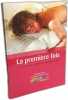
Très Bon Etat proche du neuf
HISTOIRES CHAUDES POUR NUITS FROIDES
QUEBECOR 2009 139 pages in8. 2009. Broché. 139 pages.
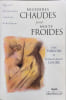
Très bon état
Common Thread. Collected Essays in Honour of Eva Andersson Strand
, Brepols, 2024 Paperback, xii + 272 pages, Size:216 x 280 mm, Illustrations:42 b/w, 79 col., 9 tables b/w., Language: English.*new ISBN 9782503612775.
Summary The Ancient Egyptians used it for both the living and the dead, the Greeks and Romans used it to signal their status, and it aided the Vikings in reaching the far shores of Europe and Eurasia. Textiles have surrounded us, literally and figuratively for millennia, but this common thread has long been ignored in scholarly research. With the inception of the Centre for Textile Research at the University of Copenhagen in 2005, however, this approach changed fundamentally, and today, every type of research discipline comes together to begin unravelling the stories told by textiles. How do we understand textiles and how do we talk about them? Who produced textiles, where, and for what purposes? How do we conduct research into the origins of materials? How did cultivating flax or raising sheep change the ancient landscape? How have we researched textiles so far? What can we learn from textiles about society, gender, and production? This volume engages with these questions and explores how the fabric of society has changed through researching textiles in all its facets, from archaeology and history to natural sciences. Taking as its starting point the research interests and career of its honorand, Eva Andersson Strand, this meticulously researched volume consists of three parts, covering the tools and techniques that form the basis of all research explores; how craftspeople made use of tools and techniques; and how textiles have been used over millennia to signify identity and status. TABLE OF CONTENTS Preface 1. In the beginning... Anne Drewsen, Mary Harlow, Ulla Mannering, and Marie-Louise Nosch I. Textile and Tools 2. Ragpickers. Critiquing the Third Science Revolution with Walter Benjamin Tim Flohr S rensen 3. Textile Analysis in Europe. Current practices and Future Prognosis Margarita Gleba, Susanna Harris, and Jane Malcolm-Davies 4. From Fleece to Thread. Interdisciplinary Evidence for the Origins of Sheep Wool Laura C. Vi as-Caron, Mikkel N rtoft, Jonas Holm J ger, Peder Flemestad, and Christina Margariti 5. An Arctic Thread Mikkel S rensen 6. The Beginnings of Clothing Experiments in Near Eastern Archaeology Catherine Breniquet and C cile Michel 7. Fl jstrup ? A Viking Age Grave with Early Silk Charlotte Rimstad, Irene Skals, and Ina Vanden Berghe 8. The Importance of Understanding Textile Tools Francesco Meo 9. Making Visible the Invisible. The Case Study of Clay Sealings from Arslantepe (Turkey) Romina Laurito II. Craft and Cratf Traditions 10. Textile Workshops in the Nile Valley? Questioning the Concepts and Sources Chiara Spinazzi-Lucchesi and Elsa Yvanez 11. Sprang Hairnets from Prehistoric Denmark and Byzantine Egypt. Experimental Research Anne Kwaspen, Ida Demant, and Johanne H gh 12. Spinning Fates and the Fate of Spinning. Towards a Nordic Textile Technical Terminology Morten Grymer-Hansen and Susanne Lervad 13. Teaching and Disseminating Textile Archaeology in University and Museum Contexts Lise Bender J rgensen and Karina Gr mer 14. Weaving Pictures. Evoking a World from Threads Ulrikka Mokdad (with a helpin hand from Mark Schram Christensen) 15. Beyond Traditions. Rethinking Textile Crafts and Heritage Magali-An Berthon III. Identity and Status 16. Stitch and Status. An Analysis of the Expression of Worldviews through Knitted Garments Maj Ringgaard and Tove Engelhardt Mathiassen 17. The Combat Agate and the Tartan-like Textiles of the Aegean Kalliope Sarri 18. Textiles in Etruscan Dance. The Case of the Tomba del Triclinio in Tarquinia Audrey Gouy 19. Reading the Roman Toga from Sculpture Mary Harlow and Lena Larsson Lov n 20. Two Donkey Burials Ulla Lund Hansen and Anne Drewsen 21. Embellished Clothing in the Mesolithic Based on Finds from two Cemeteries in Sweden Lars Larsson 22. Sequins and other 'Bling' in Viking Age Fashion Charlotte Hedenstierna-Jonson, Marianne Vedeler, and Amica Sundstr m 23. One Silk Textile ? Multiple Histories and Her-Stories Ulla Mannering and Marie-Louise Nosch
Le Serviteur marocain
TEXTES GAIS 2011 162 pages 2x21x15cm. 2011. Broché. 162 pages.
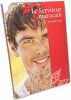
Bon Etat couverture défraîchie intérieur propre
Games and Visual Culture in the Middle Ages and the Renaissance
, Brepols, 2021 Hardback, 356 pages, Size:156 x 234 mm, Illustrations:62 b/w, 25 col., 2 tables b/w., Language: English. ISBN 9782503588728.
Summary During the Middle Ages and the Renaissance, games were not an idle pastime, but were in fact important tools for exploring, transmitting, enhancing, subverting, and challenging social practices and their rules. Their study, through both visual and material sources, offers a unique insight into medieval and early modern gaming culture, shedding light not only on why, where, when, with whom and in what conditions and circumstances people played games, but also on the variety of interpretations that they had of games and play. Representations of games, and of artefacts associated with games, also often served to communicate complex ideas on topics that ranged from war to love, and from politics to theology. This volume offers a particular focus onto the type of games that required little or no physical exertion and that, consequently, all people could enjoy, regardless of age, gender, status, occupation, or religion. The representations and artefacts discussed here by contributors, who come from varied disciplines including history, literary studies, art history, and archaeology, cover a wide geographical and chronological range, from Spain to Scandinavia to the Ottoman Turkey and from the early medieval period to the seventeenth century and beyond. Far from offering the 'last word' on the subject, it is hoped that this volume will encourage further studies. TABLE OF CONTENTS List of Illustrations Introduction - VANINA KOPP AND ELIZABETH LAPINA Rhetoric and Reality in the Visual Culture of Medieval Celtic Board Games: Literary and Archaeological Evidence Combined - KATHERINE FORSYTH AND MARK A. HALL 'Turne Over the Leef': Games and Interpretation on Misericords - PAUL HARDWICK Gambling Miners - LENA ASRIH AND JENNIFER GARNER Chess and Cultural Crossings in Boccaccio - AKASH KUMAR Visualizing Chess and Love in Les Esch z d'Amours - DANIEL E. O'SULLIVAN Game as a Sign of Social Status: Backgammon in the Ottoman Literature and Visual Culture - T L N DE?IRMENCI Chess of the Gnostics: The Sufi Version of Snakes and Ladders in Turkey and India - ?RVIN CEMIL SCHICK Playthings: Ivory on Ivory - ELINA GERTSMAN The Playing Eye: On the Transfer of Game-related Knowledge through Miniatures in Alfonso X's Book of Games (1283/84) - MICHAEL A. CONRAD Children's Toys in Italy, 1350-1550 - ANNEMARIEKE WILLEMSEN The Printed Book and the Visual Culture of Chess in the Late Middle Ages: William Caxton's 1483 Edition of The Game and Playe of Chess - LOUISE FANG Graffiti as Gaming: Vikings at Play in the Orkney Islands - JULIE MELL Scratching the Surface: Graffiti Games in the Byzantine Empire - WALTER CRIST
English File 2: Workbook With Answer Key (English File First Edition)
Oxford University Press España S.A 1997 88 pages 20 4x1x29 2cm. 1997. Broché. 88 pages.
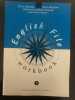
Très bon état
English File Intermediate Student's Book (English File First Edition)
Oxford University Press España S.A 1999 160 pages 21 4x0 8x27 4cm. 1999. Broché. 160 pages.
Très bon état
Headway Elementary Workbook Without Answer Key
Oxford University Press España S.A 1993 80 pages 20 6x1x27 2cm. 1993. Broché. 80 pages.
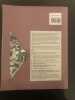
Très bon état
Oxford Student's Dictionary
Oxford University Press España S.A 1988 748 pages 13x3 8x19 4cm. 1988. Broché. 748 pages.
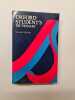
Bon état
Stream Destinations Teacher's Book (Streamline)
Oxford University Press España S.A 1982 84 pages 43x752x536cm. 1982. Broché. 84 pages.
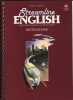
Bon état

