 Write to the booksellers
-
Type
Book (546)
Magazine (3)
-
Latest
Last 3 days (1)
Last month (149)
Last week (2)
-
Century
19th (1)
20th (213)
21st (183)
-
Countries
Belgium (92)
Canada (1)
France (452)
Switzerland (4)
-
Syndicate
ALAC (1)
ILAB (8)
NVVA (3)
SLACES (3)
SLAM (4)
Portraying the Individual in the Roman East Local Imperial Entanglements in Sculpture, Mosaics, and Paintings (1st?4th Centuries AD)
, Brepols - Harvey Miller, 2026 Hardback, Pages: xxii + 345 p. Size:216 x 280 mm, Illustrations:81 b/w, 282 col., 1 tables b/w. Language(s):English. new. ISBN 9782503622750.
Summary While the statues and busts of Rome have long captivated scholarly attention, the extraordinary diversity of portraits produced across the empire's so-called peripheries has remained underexplored. As new discoveries and research projects, such as the Palmyra Portrait Project, expand our understanding of provincial visual culture, fresh questions emerge about the nature, function, and interpretation of Roman period portraiture. This volume revisits portraiture by looking beyond the Roman empire?s core to its vibrant borderlands, revealing how traditions of representing the individual varied dramatically across cities, regions, and time. The contributions gathered here examine both adherence to, and departures from, mainstream portrait conventions, highlighting the creative negotiations between local identities and imperial visual norms, engaging with a wide range of media ? sculpture, mosaics, and paintings ? and addressing issues such as workshop practices and the circulation of resources. Case studies explore reworking and reuse, the reconstruction of display contexts, and the development of regional visual languages over time. In shifting the lens from centre to regional situations, this volume reveals portraits as powerful expressions of identities and cultural entanglement across the ancient Mediterranean and West Asia. TABLE OF CONTENTS List of Illustrations Portraying the Individual in the Roman East: Local?Imperial Entanglements in Sculpture, Mosaics, and Paintings (1st?4th Centuries AD) Rubina Raja 1. Roman ?Mummy Portraits? ? Panel Paintings, Painted Shrouds, and Stucco Masks: The Appropriation of the Graeco-Roman ?Individual Portrait? by the Death Industry of Roman Egypt Christopher H. Hallet 2. Portrait Mummies from Antino polis as Evidence for lite Interaction between Egypt and Syria Barbara E. Borg 3. Locally Crafted Empires: The Case of the Palmyrene Portrait Habit and the Legacy of Greek Art Rubina Raja 4. Putting Portraits in the Big Picture: Otacilia Severa and Faustina the Elder in Palmyra Olympia Bobou, Dario Calomino, Julia Lenghan, and Rubina Raja 5. Theoi Sebastoi Olympioi: Hellenising Imperial Images in the Greek East R. R. R. Smith 6. Portraying the Emperor ? Seeing the Emperor: Between Typology and Individuality in a Colossal Portrait in Sagalassos Jane Fejfer, Jeroen Poblome, anf Peter Talloen 7. The Portrait Statues from the Artemision at Messene ? Expressing Identity and Representing Power Olympia Bobou and Christopher Dickenson 8. Funerary Portraits from Hierapolis in Syria Michael Bl mer 9. The Other Half of the Empire: On Early Depictions of Individuals in Sepulchral Art in the West Dietrich Boschung 10. Funerary Portraits on the Rhine in the First Half of the First Century AD: Sartorial Expressions of Cultural Awareness and Ethnic Belonging Maureen Caroll 11. Citizens, Emperors, and Gods: Portraiture in the Roman Central Balkans Nade?da Gavrilovi? Vitas 12. From Periphery to Centre Stage: ?Zenobia in Chains? (1859) by Harriet Hosmer and ?The Death of Cleopatra? (1876) by Edmonia Lewis Amalie Skovm ller
Shaping Archaeological Archives. Dialogues between Fieldwork, Museum Collections, and Private Archives
, Brepols, 2023 Paperback, xxii + 424 pages, Size:216 x 280 mm, Illustrations:149 b/w, 166 col., 4 tables b/w., 1 maps b/w, 7 maps color, Language: English. ISBN 9782503605647.
Summary Archaeology as a discipline has undergone significant changes over the past decades, in particular concerning best practices for how to handle the vast quantities of data that the discipline generates. Much of this data has often ended up in physical ? or, more recently, digital ? archives and been left untouched for years, despite containing critical information. But as many recent research projects explore how best to unleash the potential of these archives through publication, digitization, and improved accessibility, attention is now turning to the best practices that should underpin this trend. In this volume, scholars turn their attention to how best to work with and shape archaeological archives, and what this means for the field as a whole. The majority of case studies here explore archaeological sites in the eastern Mediterranean and the Middle East, some of which are conflict zones today. However, the contributions also showcase more broadly the depth of research on archaeological archives as a whole, and offer reflections upon the relationship between archaeological practices and archival forms. In so doing, the volume is able to offer a unique dialogue on best practices for the dissemination and synthetization of knowledge from archives more generally, whether physical or digital. TABLE OF CONTENTS List of Illustrations Abbreviations 1. Shaping Archaeological Archives: Fieldwork, Collections, and Private Archives ? Issues of Curation and Accessibility Rubina Raja 2. Who Can Access the Past? Archives, Technological Solutionism and Digital Colonialism in (Post-) Conflict Syria Zena Kamash 3. Unclassified: Structured Silences in the Archaeological Archive Jen A. Baird 4. Collaborative Curation of Digital Archaeological Archives: Promise, Prospects, and Challenges Anne Hunnell Chen 5. Archiving Palmyra: Outcomes of Inquiry into Archaeological Legacy Data Olympia Bobou, Amy C. Miranda, Rubina Raja, and Julia Steding 6. Considerations in Archive Archaeology: Past and Present Colonialism in the Study of Palmyra's Archaeology and History Amy C. Miranda and Rubina Raja 7. Revisiting Harald Ingholt's Excavation Diaries: Zooming in on Two Graves in the South-West Necropolis of Palmyra and their Inscriptions Rubina Raja and Julia Steding 8. Pompeii as an Archive Eric Poehler 9. Digitizing Knossos Using the Sir Arthur Evans Archive John Pouncett and Andrew Shapland 10. Using Legacy Data to Reconstruct the University of Michigan's Early Twentieth-Century Excavation Methodology at Karanis Andrew T. Wilburn 11. Placing the Container before the Content: The Cases of the 'Iron Field' and 'Mosaic Field' at Eski K?hta at the D rner Archive - Forschungsstelle Asia Minor, M nster Emanuele E. Intagliata 12. Excavating Time and Space: The Archive of the Hama Expedition in the National Museum of Denmark Anne Haslund Hansen and John Lund 13. The Mosaics from the 1928-1929 Campaigns of the Joint British-American Expedition to Gerasa: Drawings by Grace and Dorothy Crowfoot Lisa Brody and Rubina Raja 14. Digitizing the Archaeological Finds and the Photographic Archive of the German Excavation Campaigns in Samarra (1911-1913) at the Museum f r Islamische Kunst in Berlin Miriam K hn 15. Analogue Problems Through a Digital Lens: Reconsidering Underlying Issues with Archaeological Archival Practice Using the Digitization of the Samarra Archives Rhiannon Garth Jones 16. Digital Data and Recontextualization: The Case of South Italian Pottery Vinnie N rskov and Marie H l ne van de Ven 17. From Paper to Open-Air Archive: Reconstructing Illegal Excavations and Art-Market Circulations of Archaeological Objects in the Case of the Archaic Sanctuary on Timpone della Motta, Southern Italy Gloria Mittica, Carmelo Colelli, and Jan Kindberg Jacobsen 18. The History and Implications of the American Center of Research's (ACOR) Archival Digitization Pearce Paul Creasman and Ryder Kouba 19. From Legacy Data to Urban Experiences: Reconstructing the Byzantine Athenian Agora Fotini Kondyli 20. The Future of Corinth's Archaeological Archive: Toward an Inclusive and Interactive Heritage Ioulia Tzonou 21. The Challenge of Spatial Ambiguity in Geographic Information Systems Using Legacy Archaeological Records Jon M. Frey 22. Digitized Archives of Illicit Antiquities: Academic Research, Dissemination, and Impact Christos Tsirogiannis Indices
Small Stuff of the Palmyrenes. Coins and Tesserae from Palmyra
, Brepols, 2022 Paperback, xvi + 177 pages, Size:216 x 280 mm, Illustrations:1204 b/w, 2 col., 7 tables b/w., 2 maps b/w, Language: English. * NEW ISBN 9782503597607.
Summary The ancient city of Palmyra is, rightly, famous for its major monumental architecture and its vast corpus of funerary portraiture, most of which dates from the first three centuries AD. This material has long been central to art-historical, archaeological, and epigraphical studies of the region. However, up to now, relatively little attention has been paid to the 'small stuff' from Palmyra ? seemingly minor items such as the enigmatic local coinage and the richly iconographic banqueting tesserae found scattered across the city's sanctuaries ? which has never been comprehensively studied, but may have had huge importance for the people who lived in Roman Palmyra. This volume, which arises from the research project Circular Economy and Urban Sustainability in Antiquity headed by Prof. Rubina Raja, aims to redress the balance by giving new focus to these small finds with a view to studying them and better understanding their significance in Palmyrene social and religious life. Drawing together experts on Palmyra's archaeology, history, and language, the volume offers insights and reflections into various aspects of the city's coins and tesserae in both their local setting and their wider regional context. In doing so, the contributions gathered here open up new lines of enquiry, and at the same time underline how much we still have to learn from studying even the smallest items. TABLE OF CONTENTS The Small Stuff of the Palmyrenes: Coins and Tesserae from Palmyra ? RUBINA RAJA Revisiting the Palmyrene Banqueting Tesserae: Conceptualization, Production, Usage, and Meaning of the Palmyrene ? RUBINA RAJA Tesserae and Prosopography ? JEAN-BAPTISTE YON Palmyrene Tesserae in the Context of Temple Administration ? ALEKSANDRA KUBIAK-SCHNEIDER Some Thoughts on Divine Representations on Palmyrene Coins and Tesserae ? TED KAIZER Caravan Trade in Palmyrene Tesserae and Coins? ? EIVIND H. SELAND Three Forgotten Tesserae and a Coin from Palmyra in the Oriental Museum at Durham University ? TED KAIZER AND JEREMY HUTTON The Production, Circulation and Function of the Local Palmyrene Coinage ? NATHALIA KRISTENSEN Palmyra's Small Coins and their Dies: Preliminary Results ? NATHANAEL ANDRADE Civic Coins and Urban Networks: Palmyra and its Coinage in a Regional Perspective ? MICHAEL BL MER Bigger Stuff Beyond Palmyra: The Coinage of the Hatrans and Assyrians ? KEVIN BUTCHER
Ancient Greek: A New Approach
MIT Press 1991 432 pages 17 78x2 032x24 892cm. 1991. Broché. 432 pages.
Bon état cependant couverture défraîchie intérieur propre tranche ternie
Le collier rouge: Roman
Gallimard 2014 155 pages 14 2x2 2x20 4cm. 2014. Broché. 155 pages.
Très bon état - légères marques de lecture et/ou de stockage mais du reste en très bon état- expédié soigneusement depuis la France
Le tour du monde du roi Zibeline
Gallimard 2018 420 pages 10 9x17 7x2cm. 2018. pocket_book. 420 pages.
Bon état
DEBATS DU PROCES D'AVRIL. À la suite: PROCES DES DEFENSEURS DES ACCUSES D'AVRIL.
Marseille, imp. Mille et Senès, 1835, 1 demi basane, plats frottés. in-8 de 368 et 48 pp. ;
En 1834 les canuts (ouvriers de la soie) et les républicains de Lyon se révoltent contre la Monarchie de Juillet, les principaux leaders arrétés par le préfet Gasparin, seront déportés.
Notices biographiques sur les principaux condamnés de Lyon.
Paris, Pagnerre, s.d. (XIXème), 1 br., sans couverture. in-8, titre, (1)-16-(6) pages non coupées, paginées 291 à 307 ;
En 1834 les canuts et les républicains de Lyon se révoltent contre la Monarchie de Juillet, les principaux leaders arrétés par le préfet Gasparin, seront déportés.
Histoire des insurrections de Lyon, en 1831 et en 1834, d'aprés des documents authentiques; précédée d'un essai sur les ouvriers et sur l'organisation de la fabrique.
Lyon, Perrin, 1834. Demi chagrin rouge, dos orné. in-8 de XII-334-(2) pages.
Édition originale du premier ouvrage synthétique publié sur les révoltes des canuts (ouvriers des soieries lyonnaises). Fils d'un chef d'atelier d'une entreprise de soierie lyonnaise et médecin de sensibilité libérale, Jean-Baptiste Monfalcon (1793-1874) était particulièrement bien placé pour décrire et expliquer les motifs et le déroulement de ces mouvements sociaux.
Attractivité durable des destinations touristiques
Balzac 2012 204 pages 13 8x1 8x23 8cm. 2012. Broché. 204 pages.
Très bon état
Befund und Historisierung. Dokumentation und ihre Interpretationsspielr ume
, Brepols, 2021 Paperback, xvi + 304 pages, Size:216 x 280 mm, Illustrations:161 b/w, 73 col., 8 tables b/w., Language(s):German, English. ISBN 9782503591476.
Summary Archaeological periodization schemes of material culture development in Northern Mesopotamia from 7th to 5th centuries BCE traditionally refer to the sequence of dynasties. In particular, they highlight historical events related to distinguished members of the royal houses of the Sargonids, Urartians, Medes, Teispids, and Achaemenids. However, whereas the repercussions these Iron Age empires had on the history of the Near East are undeniable, the impact they had on the material culture and its development is not always equally tangible in the archaeological findings. The latter are not infrequently characterized by continuity rather than by incisive changes, as recent studies and re-evaluations of key sites in Syria, Iraq, Iran and Armenia show. This publication uses case studies to address problems that arises when the archaeological (relative concept) and historical (absolute concept) methodology use different intrinsic values of time to reconstruct history and to understand cultural material development. Arch ologische Periodisierungsschemata der materiellen Kulturentwicklung Nordmesopotamiens in der Zeit vom 7. bis 5. Jahrhundert v. Chr. orientieren sich traditionell an historische Z suren, die mit der Abfolge von Herrschaftsdynastien wie den Sargoniden, Urart ern, Medern, Teispiden und Ach meniden verbunden sind. Gleichwohl die Bedeutung dieser eisenzeitlichen Herrscherh user auf die politische Geschichte Vorderasiens unbestreitbar ist, ist ihr Einfluss auf die materielle Kulturentwicklung nicht im gleichen Ma e bestimmbar. Letztere ist n mlich fter durch Kontinuit t als durch einschneidende Ver nderungen gepr gt, wie rezente Untersuchungen und Neubewertungen wichtiger arch ologischer Befunde in Syrien, Irak, Iran und Armenien aufgezeigt haben. Der vorliegende Band weist anhand von Fallbeispielen auf die Problematik hin, die bei abweichenden Bedeutungszuweisungen der Dimension Zeit in arch ologischen (relatives Konzept) und historischen (absolutes Konzept) Betrachtungsweisen f r die Rekonstruktion der Geschichte und der Entwicklung der materiellen Kultur auftreten k nnen. TABLE OF CONTENTS Abbildungsverzeichnis Vorwort Arch ologischer Befund und historische Epochen im Wechselspiel - eine Einleitung - SANDRA HEINSCH, WALTER KUNTNER & ROBERT ROLLINGER 1. Assyrien im Untergang - Das Jahr 614 v. Chr. und der arch ologische Befund - PETER A. MIGLUS 2. Die Biographie des Roten Hauses von Tall ??? ?amad/D?r-Katlimmu (Nordostsyrien) und die historische Entwicklung der altorientalischen Reiche in der ersten H lfte des ersten Jahrtausends v. Chr.: Koinzidenzen und Inkoinzidenzen - FLORIAN JANOSCHA KREPPNER 3. Iron Age Ceramics in Assyria and the Fall of the Assyrian Empire - ARNULF HAUSLEITER 4. Some General Considerations on Assyria and North Western Iran from a Historical Perspective - GIOVANNI-BATTISTA LANFRANCHI & ROBERT ROLLINGER 5. Hasanlu VI?IV: Overview and Recent Revisions - MICHAEL D. DANTI 6. Hasanlu III und die stratigraphische Evidenz der Triangle Ware - STEPHAN KROLL 7. Die eisenzeitliche Keramikentwicklung in Iranisch Aserbaidschan: Der Befund vom Zend?n-e Soleim?n - JUDITH THOMALSKY 8. Urar?u und der Raum zwischen Kaukasus, Urmia-See und Kaspischem Meer aus historischer Sicht - MIRJO SALVINI 9. Lchashen-Metsamor V?VI: The Impact of Local and Urartian Ceramics in Iron Age Armenia - HAYK AVETISYAN, PAVEL AVETISYAN, KNARIK NAVASARDYAN? & ARSEN BOBOKHYAN 10. Der Untergang Urartus aus Sicht der ?Festung von Aramus" - WALTER KUNTNER & SANDRA HEINSCH 11. Results and Prospects of the New Researches for the Erebuni Monument - FELIX TER-MARTIROSOV? 12. Transkaukasien nach dem Fall Urartus - FLORIAN S. KNAUSS 13. Fortleben und R ckgriff in der Kunst nach dem Untergang des urart ischen Reichs - das Beispiel der Blechvotive - URSULA SEIDL Tafeln/Plates Index
fabrique des b b s dans l'Antiquit . Enqu te sur les biberons gallo-romains
, Brepols, 2024 Hardback, 745 pages, Size:178 x 254 mm, Illustrations:210 b/w, 42 tables b/w., 14 maps b/w, Language: French. ISBN 9782503599144.
Summary Cet ouvrage s'int resse de curieux petits vases qui ont la particularit de pr senter un bec sur leur panse et de se trouver principalement dans des tombes d'enfants. Les arch ologues les ont baptis s ?biberons? ou, parfois, ?tire-laits?. Se concentrant sur la Gaule romaine, cet ouvrage fait le point sur la fonction encore d battue de ces vases, en s'appuyant sur des analyses biochimiques r v latrices de leur contenu. Montrent-elles que les vases ont contenu du lait comme leur nom le sugg re ? Pas toujours, et pas seulement. L' tude approfondie des sources crites anciennes (d'Hippocrate et Aristote Pline, Soranos et C lius Aur lien), ainsi que de l'iconographie permet de mieux approcher le contexte d'emploi et la fonction de ces vases, en les inscrivant dans le cadre global de l'alimentation et des pratiques de soin. La physiologie de l'enfant, sujet des besoins et des maladies particuli res qui le distingue de l'homme et de la femme adultes, le rapproche, au contraire, de certaines cat gories sociales, comme l'atteste l'usage de ces vases. Ainsi, en combinant t moins arch ologiques, archives iconographiques et textuelles et analyses biochimiques cet ouvrage claire certaines repr sentations du corps et certaines strat gies alimentaires et sociales. A la crois e de l'histoire mat rielle, de l'histoire culturelle et de l'histoire du corps, il propose, partir de l' tude des rapports entre lait et enfant et l'usage des ?vases-biberons? en Gaule, une r flexion plus large sur la physiologie et la sant . TABLE OF CONTENTS PREMIERE PARTIE Du lait a? l'enfant Soigner par le lait... Soigner le lait L'enfant : complexion, maladies, nourriture et soins DEUXIEME PARTIE Le biberon et l'enfant : A? la vie a? la mort La production gallo-romaine Biberons et de?funts - des biberons pour qui ? Biberons et contenu : ce que re?ve?lent les analyses biochimiques TROISIEME PARTIE Repre?senter l'allaitement au sein Repre?senter l'allaitement artificiel Principaux me?decins et philosophes ayant traite? de la formation du lait et des reme?des Bibliographie Abre?viations Sources anciennes Liste des Illustrations
Materiality and Religious Practice in Medieval Denmark
, Brepols, 2021 Hardback, 296 pages, Size:156 x 234 mm, Illustrations:11 b/w, 32 col., Language: English. ISBN 9782503594163.
Summary From bread and wine to holy water, and from oils and incense to the relics of saints, the material objects of religion stood at the heart of medieval Christian practice, bridging the gap between the profane and the divine. While theoretical debates around the importance of physicality and materiality have animated scholarship in recent years, however, little attention has been paid to finding solid, empirical evidence upon which to base such discussions. Taking medieval Denmark as its case study, this volume draws on a wide range of different fields to explore and investigate material objects, spaces, and bodies that were employed to make the sacred tangible in the religious experience and practice of medieval people. The contributions gathered here explore subjects as diverse as saints' relics, sculptures, liturgical vessels and implements, items used for personal devotion, gospel books, and the materiality of Christian burials to explore the significance of objects that moved the souls, bodies, hearts, and minds of the faithful. In doing so, they also open new insights into religion and belief in medieval Denmark. TABLE OF CONTENTS List of Illustrations Introduction: Materiality and Religious Practice in Medieval Denmark - MADS VEDEL HEILSKOV AND SARAH CROIX Research History - Materiality and Medieval Religious Practice in Danish Research - MORTEN LARSEN Materiality in Medieval Episcopal Rites: Some Examples - BERTIL NILSSON The Liturgical Use of the Gospel Book in the Middle Ages and Notions of Sacramentality? - NILS HOLGER PETERSEN Making the Liturgy Manifest: Objects and Materials in Late Medieval Church Rites - MARTIN WANGSGAARD J RGENSEN Holy Heads: Pope Lucius's Skull in Roskilde and the Role of Relics in Medieval Spirituality - LENA LIEPE Living Matter in Medieval Denmark - MADS VEDEL HEILSKOV Objects of Personal Devotion - Outer Markers and Inner Meanings - METTE H JMARK S VS AND MARIA KNUDSEN Materiality of Memory: The Use and Significance of Wax in Late Medieval Devotion - LAURA KATRINE SKINNEBACH Materiality in Medieval Burials - JAKOB TUE CHRISTENSEN AND MIKAEL MAN E BJERREGAARD Future Perspectives: An Epilogue from the Views of an Archaeologist and Art Historian - METTE SVART KRISTIANSEN AND MERCEDES P REZ VIDAL
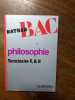
Profil d'Une Oeuvre: Descartes: Discours De La Methode
Editions Hatier 1992 10 6x0 8x21cm. 1992. Broché.
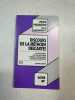
Bon état
En mâle d'amours
TEXTES GAIS 2009 416 pages 2x21x15cm. 2009. Broché. 416 pages.

Bon état couverture un peu défraîchie intérieur propre

UN PROJET GIGANTESQUE EN LANGUEDOC AU XVIIE SIÈCLE.
Montpellier Chez C. Coulet 1873 in 12 (21x13) 1 volume broché, couverture imprimée rempliée, 63 pages [1], et liste des membres de la Société des Bibliophiles Languedociens. Publié d'après le manuscrit des archives de l'ancienne intendance, avec préface par John Seeker (M. de La Pijardière?). Collection des Cent-Quinze de la Société des Bibliophiles Languedociens. Tirage limité à 242 exemplaires, un des 208 exemplaires numérotés sur papier de Hollande (nominatif). Bon exemplaire
Bon Ed. numérotée
ANCIENT TRADITIONS VIRG MARY DORM ASSUM OECS:NCS PAPER (Oxford Early Christian Studies)
Oxford university press 2006 480 pages 13 8x2 8x21cm. 2006. Broché. 480 pages.
Très bon état tranche inférieur un peu ternie intérieur propre bonne tenue
The Philosophy of Money: Preface by David Frisby
Routledge 2004 616 pages 15 6x3 4x22 8cm. 2004. Broché. 616 pages. Ouvrage philosophique de Karl Jaspers publié en 1946 qui analyse la responsabilité collective de l'Allemagne après la Seconde Guerre mondiale. Il distingue différents types de culpabilité (criminelle politique morale métaphysique) et examine les conditions spirituelles qui ont permis l'avènement du régime nazi en insistant sur la responsabilité de ceux qui sont restés passifs
proche du très bon état intérieur propre bonne tenue
Poly Organo Phosphazene Nanomaterials for Therapy (À l'aventure 1)
S Mehnath 2023 218 pages 13 2x16 6x2 4cm. 2023. Relié. 218 pages.

Très bon état - légères marques de lecture et/ou de stockage mais du reste en très bon état- expédié soigneusement depuis la France
COMPTES FAITS EN FORME DE TARIF, DANS LEQUEL ON TROUVE LE MONTANT DES PARTIES DE SOIE VENDUES A FLORIN, POIDS DE DOUZE ONCES, REDUIT EN MONNAIE DE FRANCE. Dédié à la ville d'Avignon, M. M. Jean-joseph Des Rolands De Cantelme, marquis de Relhanete, Antoine-Agricol Richard, & Jean-Jacques Queyraud, étant assesseur, noble & illustre personne, Pierre Fabre. A la suite: COMPTE FAIT POUR L'ACHAT DES COCONS, le prix fixé à sols & liards. Dans lequel on trouve le montant de chaque quantité, à francs, sols & liards.
Avignon, Domergue, 1778, 1 plein veau, tranche jaspée. in-8, titre, frontispicegravé aux armes de la ville d'Avignon, 163 ff., titre, 15 ff., quelques rousseurs ;
ANNEE A - CAREME ET PAQUES
Mame 2003 14x1 1x21cm. 2003. Broché.
Très bon état - légères marques de lecture et/ou de stockage mais du reste en très bon état- expédié soigneusement depuis la France
Intercultural Encounters in Medieval Greece after 1204. The Evidence of Art and Material Culture
, Brepols, 2022 Paperback, 572 pages, Size:156 x 234 mm, Illustrations:220 b/w, 35 col., Language: English. ISBN 9782503598505.
Summary Based on the evidence of artistic production and material culture this collective volume aims at exploring cross-cultural relations and interaction between Greeks and Latins in late medieval Greece in the aftermath of the Fourth Crusade. Fourteen essays discuss mostly new and unpublished archaeological and artistic material, including architecture, sculpture, wall-paintings and icons, pottery and other small finds, but also the evidence of music and poetry. Through the surviving material of these artistic activities this volume explores the way Byzantines and Latins lived side by side on the Greek mainland and the Aegean islands from the thirteenth to the fifteenth centuries and traces the mechanisms that led to the emergence of the new, composite world of the Latin East. Issues of identity, patronage, papal policy, the missionary activities of the Latin religious orders and the reactions and responses of the Byzantines are also re-considered, offering fresh insights into and a better understanding of the various manifestations of the interrelationship between the two ethnicities, confessions and cultures. TABLE OF CONTENTS Introduction List of Abbreviations List of Illustrations PART I: TRACING THE LATIN IDENTITIES AND THE ROLE OF THE MENDICANTS Michalis Olympios, Architecture, Use of Space, and Ornament in the Mendicant Churches of Latin Greece: An Overview Vicky Foskolou, Reflections of Mendicant Spirituality in the Monumental Painting of Crete in the Late Medieval Period (13th-15th centuries) Nickiphoros I. Tsougarakis, Art, Identity, and the Franciscans in Crete Ioanna Bitha and Anna-Maria Kasdagli, Saint George 'of the English': Byzantine and Western Encounters in a Chapel of the Fortifications of Rhodes Dimitris Kountouras, Western Music and Poetry at the Kingdom of Thessalonica: Music and Historiography of the Fourth Crusade PART II: SOCIAL TRANSFORMATIONS AND MUTUAL APPROACHES: THE EVIDENCE OF ARCHAEOLOGY AND MATERIAL CULTURE Olga Gratziou, Imported Projects, Local Skills, and the Emergence of a 'Cretan Gothic' Anastasia Vassiliou, Glazed Pottery in Late Medieval Morea (13th-15th Centuries): Cross-Cultural Tableware with Multiple Connotations Maria Michailidou, Pottery Finds in the Medieval Town of Rhodes (1204?1522): Insights on a Multicultural, Cosmopolitan Society Eleni Barmparitsa, Dress Accessories and Sartorial Trends in the Principality of Achaia (1205-1428): Evidence from the Frankish Castles of Chlemoutsi and Glarentza PART III: CULTURAL INTERACTIONS AND BYZANTINE RESPONSES: THE EVIDENCE OF ARCHITECTURE, MURALS, AND ICON PAINTING Michalis Kappas, Cultural Interactions between East and West: The Testimony of Three Orthodox Monasteries in Thirteenth-Century Frankish Messenia Aspasia Louvi-Kizi, Politics of Equilibrium: Gothic Architectural Features at Mystras (1361-71), Cypriot Models, and the Role of Isabelle de Lusignan Nikolaos Mastrochristos and Angeliki Katsioti, Reconstructing the Artistic Landscape of Rhodes in the Fifteenth Century: The Evidence of Painting from Lindos Konstantia Kefala, Permeable Boundaries of Artistic Identity: The Origin of a Fifteenth-Century Annunciation Sophia Kalopissi-Verti, Preaching, the Role of the Apostles, and the Evidence of Iconography in East and West: Byzantine Responses to the 'Challenges' from the Latin Church after 1204 Notes on Contributors Index

