 Write to the booksellers
-
Type
Book (546)
Magazine (3)
-
Latest
Last 3 days (1)
Last month (149)
Last week (2)
-
Century
19th (1)
20th (213)
21st (183)
-
Countries
Belgium (92)
Canada (1)
France (452)
Switzerland (4)
-
Syndicate
ALAC (1)
ILAB (8)
NVVA (3)
SLACES (3)
SLAM (4)


explication de textes littéraires (L') (CAPES/AGREGATION)
Ellipses 1996 192 pages 17 6x1 4x26cm. 1996. Broché. 192 pages.
Bon état
LES HYMNES DE LA RÉSURRECTION I
Cerf 2000 14 5x23 3x2 4cm. 2000. Broché.
Bon état cependant dos écrasé et ridé intérieur propre
L'industrie en Europe.
Paris, Michel Lévy, 1856, 1 broché, dos renforcé. in-8, faux-titre, titre, 297 pages ;
L'industrie de la soie (Olivier de Serres, les vallées de l'Ardèche, etc..). - Les objets à bon marché. - Métaux précieux. - Joaillerie, orfèvrerie, bijouterie. - L'ébenisterie. - Les objets hors de classe. - Le savon.
RIFFEL Mélanie & ROUART Sophie
Reference : TEXTILE23232378450824
(2003)
ISBN : 9782850881916
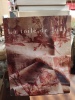
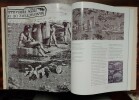
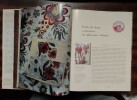
La toile de Jouy
Paris, Citadelles et Mazenod, 2003, 24 x 31, 217 pages sous cartonnage éditeur et jaquette illustrés. Iconographie couleurs - photographies de Marc Walter. "Toile de Jouy : ce terme évoque immanquablement des tissus à fond blanc sur lequel se détachent des scènes champêtres aux graciles protagonistes. En réalité, les productions de la manufacture Oberkampf furent remarquablement plus variées. De fait, les toiles de Jouy furent d'abord et avant tout des cotonnades imprimées aux XVIIIe et XIXe siècles par cette manufacture installée dans le petit village de Jouy-en-Josas, à quelques lieues de Paris et de Versailles, qui occupait un rôle de premier plan depuis l'arrivée de la cour. Toutefois, pour comprendre le rayonnement des productions de Jouy, il faut analyser ce qu'il se passait au XVIIe siècle. À cette époque arrivent en Europe des étoffes chamarrées comme on n'en avait encore jamais vu : les indiennes. Ainsi nommées car importées des Indes, elles se distinguent des tissus traditionnels par le fait que leurs motifs sont obtenus par impression, et non par tissage de fils de couleur. L'engouement est immédiat et à ce point intense qu'en 1686, sous la pression des corporations nationales menacées, le Conseil d'État en interdit non seulement l'importation, mais également la production et l'utilisation. Cependant, de multiples renouvellements de l'interdiction n'y feront rien - la mode est trop forte -, et en 1759, sa levée donne le coup d'envoi au développement de l'impression sur coton. Christophe-Philippe Oberkampf, qui est né et a grandi outre-Rhin, dans un pays non touché par la prohibition des indiennes, possède le savoir-faire nécessaire à leur production. Arrivé à Paris en 1758, il transfère bientôt sa manufacture près des eaux pures de la Bièvre, à Jouy. Le succès ne se fait pas attendre : en 1805, 1 322 ouvriers sont employés par la fabrique. Les tissus qui en sortent sont destinés à l'ameublement comme à l'habillement. La gamme de motifs qui les ornent, monochromes et polychromes, est impressionnante : semis de fleurs, fleurs stylisées et autres «bonnes herbes», losanges, cercles, rayures, «écailles imbriquées» multicolores... et, bien sûr, personnages. Là encore, la diversité est de mise. Outre les célèbres pastorales, la manufacture imprime des toiles s'inspirant de la mythologie, de la littérature ou des événements de l'époque, comme Le Ballon de Gonesse et L'Hommage de l'Amérique à la France. C'est une plongée dans ce passé que propose cet ouvrage grâce à bon nombre de pièces et de documents d'archives rassemblés au musée de la Toile de Jouy, à Jouy-en-Josas, en partie situé dans les vestiges de la manufacture Oberkampf. Robes, tentures, parures de lit, mais aussi albums d'échantillons, de dessins, de modèles gouachés - les empreintes - font revivre le raffinement de l'époque où la toile imprimée régnait en maîtresse, raffinement que le lecteur pourra goûter au fil des pages du présent livre."
Menus défauts (réparés) à la jaquette.
Rigou Gérard Baud Pascal Richard Yann Bras Catherine Bourgeat Serge Vanacore Anne Ciattoni Annette Oster Daniel Couronne Lise-Marie Herr Nathalie Humain-Lamoure Anne-Lise Le Goix Renaud Sanjuan Thierry Eysette-Louveaux Marie-José Louveaux François
Reference : 500245652
(2004)
ISBN : 9782218746017
Géographie Tle L/ES/S - Livre de l'élève éd. 2004
Hatier 2004 368 pages 21 8x1 8x28 6cm. 2004. Broché. 368 pages.
Etat correct
Oeuvres Poetiques Et Lettres Choisies
Hachette 1998 11x1x18cm. 1998. mass_market. 3 volume(s).
Bon état
Fiches Bac Terminale: Economie Approfondie Terminale Es Specialite
Editions Hatier 2015 92 pages 11 4x1x17cm. 2015. Broché. 92 pages.
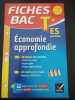
Très bon état
LES MONSTRES S'ENVOIENT EN L'AIR: Kama-Sutra fantastique
EDITIONS DU MONT SARL 2011 64 pages 30x1x21 4cm. 2011. Broché. 64 pages.
Très bon état - légères marques de lecture et/ou de stockage mais du reste en très bon état- expédié soigneusement depuis la France
LES MONSTRES S'ENVOIENT EN L'AIR: Kama-Sutra fantastique
EDITIONS DU MONT SARL 2011 64 pages 30x1x21 4cm. 2011. Broché. 64 pages.
Très bon état - légères marques de lecture et/ou de stockage mais du reste en très bon état- expédié soigneusement depuis la France
LES MONSTRES S'ENVOIENT EN L'AIR: Kama-Sutra fantastique
EDITIONS DU MONT SARL 2011 64 pages 30x1x21 4cm. 2011. Broché. 64 pages.
Très bon état - légères marques de lecture et/ou de stockage mais du reste en très bon état- expédié soigneusement depuis la France
LES MONSTRES S'ENVOIENT EN L'AIR: Kama-Sutra fantastique
EDITIONS DU MONT SARL 2011 64 pages 30x1x21 4cm. 2011. Broché. 64 pages.

Neuf sous blister
LES MONSTRES S'ENVOIENT EN L'AIR: Kama-Sutra fantastique
EDITIONS DU MONT SARL 2011 64 pages 30x1x21 4cm. 2011. Broché. 64 pages.

Bon état - . quelques marques plis de stockage sur couverture et coins coins cornés sur couverture mais du reste en bon état - envoi rapide et soigné dans enveloppe à bulles depuis france
LES MONSTRES S'ENVOIENT EN L'AIR: Kama-Sutra fantastique
EDITIONS DU MONT SARL 2011 64 pages 30x1x21 4cm. 2011. Broché. 64 pages.

Bon état
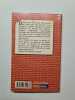
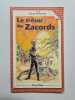
Le trésor des Zacords
Livres et Vous 2000 56 pages 11x0 8x17 2cm. 2000. Broché. 56 pages.
Bon état

300 Questions Tests Sur La Cee Et Les Organismes
Nouvelles Editions Marabout 1995 1995. Broché.

Bon état
End of the Kura-Araxes Phenomenon. The Chrono-Cultural Aspect of the EB/MB Transition in the South Caucasus
, Brepols, 2024 Paperback, xviii + 338 pages, Size:216 x 280 mm, Illustrations:182 b/w, 28 col., 19 tables b/w., 14 maps b/w, 7 maps color, Language: English. ISBN 9782503606736.
Summary This thematic volume focuses on the demise of the Kura-Araxes culture and the beginning of the Middle Bronze Age, a period between about 2600 and 2000 cal BC that saw the gradual disappearance of millennia-long traditions in the region. Specialists reassess the chrono-cultural attribution of several complexes in the region, together with the absolute chronology of the whole sequence. Through this approach, the volume offers a nuanced insight into the changes and continuities of a crucial period between the Early and Middle Bronze Age. The chapters gathered together here also explore the abandonment of long-established settlements, the production of lavishly endowed funerary complexes, testament to the emergence of growing inequalities in society, and the adoption of a far more mobile way of life as revealed by archaeology. TABLE OF CONTENTS List of Illustrations 1. For a Reassessment of the EB/MB Transition in the Kura-Araxes oikumene: The Chrono- Cultural Aspect RUBEN BADALYAN & B RENG RE PERELLO 2. Understanding the End of the Kura-Araxes Phenomenon: The Radiocarbon Perspective ANNA PAOLA PASSERINI 3. Archaeology at the Frontiers : Investigations at Rabati, Southern Caucasus and Evidence of Cultural Memory GIORGI BEDIANASHVILI, ANDREW JAMIESON & CLAUDIA SAGONA 4. The Post-Kura-Araxes Period in the Southern Caucasus : Reflections on Definitions and Terminology, and a View from Shida Kartli ELENA ROVA 5. The Final Stage of the Kura-Araxes Culture from Kvemo Kartli NINO SHANSHASHVILI & GODERDZI NARIMANISHVILI 6. The Eastern Shores of Lake Sevan during the Early Bronze Age : Preliminary Reflections MARIAM AMIRYAN, REN KUNZE, ARSHAVIR HOVHANNISYAN, HAYK MELIKADAMYAN, ROMAN HOVSEPYAN & ARSEN BOBOKHYAN 7. Late Kura-Araxes Sub-Complexes of Armenia : Synchronization Problems in the Light of New Data RUBEN BADALYAN, PAVEL AVETISYAN, B RENG RE PERELLO, ANNAPAOLA PASSERINI, ARMINE HARUTYUNYAN, ARSEN BOBOKHYAN & LEVON AGHIKYAN 8. The Chronology of the Archaeological Complexes of Armenia of the Last Quarter of the Third and the First Half of the Second Millennium bce in the Context of Transformation and Fragmentation of the Archaeocultural Environment PAVEL AVETISYAN & RUBEN BADALYAN 9. Shengavit from Kura-Araxes to Early Kurgan Periods HAKOB SIMONYAN & MITCHELL S. ROTHMAN 10. Preliminary Results of the Excavations at Qara inar (Azerbaijan) and New Data on the 'Kura- Araxes-Early Kurgans' Transition on the Eastern Piedmont of the Lesser Caucasus GIULIO PALUMBI, BAKHTIYAR JALILOV, MUZAFFAR HUSEYNOV, ALEXIA DECAIX, MODWENE POULMARC'H & ANDREA RICCI 11. Metamorphism of the End : A Close Look at the Final Phases of the Kura-Araxes Cultural Tradition SEPIDEH MAZIAR 12. The Later Phases of the Early Trans-Caucasian: A View from Yanik Tepe in North-West Iran GEOFFREY D. SUMMERS 13. Notes on the End of the Kura-Araxes ('Khirbet Kerak') Presence in the Southern Levant RAPHAEL GREENBERG Index
Between Near East and Eurasian Nomads. Representation of Local Elites in the Lori Berd Necropolis during the First Half of the First Millennium BC
, Brepols, 2024 Paperback, xxvi + 358 pages, Size:216 x 280 mm, Illustrations:333 b/w, 77 col., 3 tables b/w., 8 tables col., 6 maps color, Language: English. ISBN 9782503608037.
Summary The site of Lori Berd, located in northern Armenia, is home to an extraordinary necropolis that once housed the dead of the local elite during a period that spanned from 2200 to 400 BC. Influenced both by Urartian conquests from the south and by invasions from the Eurasian nomadic tribes from the north, the people of this region buried their dead with prestigious artefacts, complex customs, and a particular reverence shown during the later stages of the Early and Middle Iron Ages (1000-550 BC). This volume offers a detailed account of the archaeological significance of the site, providing detailed accounts of thirty-one tombs, the majority of which have never before been comprehensively published, and seeking to set Lori Berd in its broader historical and material context. Through this approach, the book offers a comprehensive exploration of the Iron Age in the South Caucasus, unravelling the interconnected themes of wealth, power, and cultural expressions. TABLE OF CONTENTS List of Illustrations Acknowledgements List of abbreviations Chapter 1. Introduction The Aims of this Work The Contemporary Research Framework The Actuality of the Question Methods Chapter 2. The Necropolis of Lori Berd Research History State of Research Description of Early and Middle Iron Age tombs Evaluation of the Tombs Chapter 3. Vessels Types of Pottery Metal Vessels Chapter 4. Weaponry and Tools Swords Daggers Scabbards Knives Spears Axes Maceheads Arrowheads Bidents Flesh Hook Arm Guards Ferrules Chisels Helmet Phaleras Quiver pin Reflections on Weapons Chapter 5. Jewellery and Art Objects Idols Bone Plaques Seals Beads Pendants Rings Clothing and its Fittings Silver Torc Temple Ornaments Band Diadems Assessment of Results of Geochemical Analysis of Gold and Silver Samples Chapter 6. Varia Tripod Fittings Sceptres Toiletry Items Chapter 7. Horse Sacrifices and Horse-Related Objects Historical Sources Zooarchaeological Investigations on Horses Horse Bits Belts Horse Torcs Horse Bridle Fasteners Horse Adornments Foot Bandages Visualization of Horse-Related Objects on Selected Horses Horse Warriors and the Notion of Gender Chapter 8. Assessment of Results of Wet Chemistry Analysis of Samples from Copper Objects Samples and Analysis Chemical Composition and Element Ratios Lead Isotope Analysis Chapter 9. Social Change and the Representation of Elites at Lori Berd Lori Berd Tombs Grouping Evidence of Social Inequality among the Tombs Chronology of Tombs Main Aspects of Representation in the Lori Berd Tombs Chapter 10. Lori Berd in its Regional Context The Nature of Foreign Influences in Lori Berd Lori Berd and Urartu South Caucasus as Imperial Periphery of the Urartian State Chapter 11. Main Results Appendix Works Cited Index
Palmyra in Perspective
, Brepols, 2024 Paperback, xvi + 270 pages, Size:216 x 280 mm, Illustrations:118 b/w, 95 col., 3 tables b/w., 1 maps color, Language(s):English, French. ISBN 9782503610320.
Summary The famous oasis city of Palmyra, located in the Syrian Desert, has long been the subject of scholarly research; and over the last decade, it has been the focus of three key projects based at Aarhus University in Denmark. Together, these projects have yielded results that have shed new light on Palmyra and have profoundly changed what we know about both the city itself, and its place in the wider Roman Empire, through a focus on sculptural production and the sustainability and economy that underpinned this, urban development, excavation history, and legacy data. This volume, based on a conference organized under the auspices of the Palmyra research projects in Aarhus, draws together papers that reflect on our understanding of Palmyra up to now, and pave the way for new lines of enquiry. Experts in the field engage with discussions of best practice, offer new perspectives on the city, its society, and its environs, and outline approaches that will allow research to continue to break new ground in our understanding of Palmyra. TABLE OF CONTENTS List of Illustrations Abbreviations 1. Palmyra in Perspective: A Decade of Research in Retrospective Rubina Raja 2. Harald Ingholt on Palmyra in his Own Words: Audience, Language and Contexts in Ingholt's Archaeological Reports, Newspaper Articles, and Field Diaries Olympia Bobou, Rubina Raja, and Julia Steding 3. Shifting our Perspective on the Female Portraits Maura K. Heyn 4. Perspectives on the Palmyrene Religious Epigraphy: Cultural Context and Organization of Religious Life Aleksandra Kubiak-Schneider 5. Revisiting the Palmyrene Pantheon: Methodological Considerations on the Many and the Few - The Nature of the Evidence Rubina Raja 6. The Contribution of the Palmyra Portrait Project to Research on the Epigraphy of Palmyra Jean-Baptiste Yon 7. Perspectives on Palmyrene Long-Distance Trade Eivind Heldaas Seland 8. Small Coins, Big Implications? Kevin Butcher 9. Palmyra and the Problem of Parthian Art Henry P. Colburn 10. Late Antique and Early Islamic Palmyra in Perspective: The Potential and Limits of Incomplete Datasets Emanuele E. Intagliata and Alberto Bacchetta 11. Documents pour l'histoire de l'arch ologie au temps du mandat fran ais en Syrie : IV. Le Service des Antiquit s de la R publique Fran aise au Levant durant ses premi res phases : Histoire d'une r ussite arch ologique Michel Al-Maqdissi 12. The Sanctuary of Bel in Perspective: Selective Destructions, Selective Memories, Selective Realities Jen A. Baird, Zena Kamash, and Rubina Raja 13. The Hauran Needs Palmyra Maurice Sartre 14. Does Palmyra Still Have a Future? Annie Sartre-Fauriat Index

