Write to the booksellers
-
Type
Art print (3)
Autograph (1)
Book (3293)
Engraving (2)
Magazine (66)
Manuscript (1)
Music sheets (35)
Old papers (2)
Photographs (40)
-
Latest
Last 24h (1)
Last 3 days (5)
Last month (94)
Last week (1)
-
Language
Dutch (2)
English (1)
French (3433)
Italian (1)
Latin (6)
-
Century
16th (4)
17th (27)
18th (108)
19th (394)
20th (863)
21st (136)
-
Countries
Belgium (347)
Canada (1)
Côte d'Ivoire (3)
France (3018)
Switzerland (74)
-
Syndicate
ALAC (1)
CLAM (94)
CNE (2)
ILAB (976)
NVVA (48)
SLACES (48)
SLAM (833)
SNCAO (15)
INSTITUTIONS INTERNATIONALES, coll. Thémis /Manuels…
, Paris, P.U.F. 1955, in-8, br., bon état, 426p.


Phone number : 01 43 29 46 77
L'Adultère.
Paris, Cotillon et Dentu, 1861. In-12, 176 pages. Toile rouge. Nombreux tampons de Radio France ou de l'O.R.T.F.
Edition originale. Le point juridique sur ce délit emblématique du XIXe siècle bourgeois, "profanation de la couche nuptiale, violation, corporellement consommée, de la fidélité conjugale".
LETTRE DE NOMINATION COMME ASSESSEUR DE JUGE DE PAIX DE GUERANDE ADRESSEE A PIERRE BELLIOTE (SIEUR DE LA VILLE ALLAIN), FAIT A PARIS, LE 2 FUCTIDOR AN 4 (19 AOUT 1796) PAR PHILIPPE-ANTOINE MERLIN DE DOUAI, MINISTRE DE LA JUSTICE [REVOLUTION - GUERANDE] MINISTERE DE LA JUSTICE
GUERANDE 1796 une lettre, d'une page, préimprimée en noir, sur papier velin ligné, et filigrané, manuscrite à l'encre brune , format : 21 x 32 cm, fait à Paris, le 2 Fructidor IV (19 aout 1796) signature manuscrite à l'encre brune : MERLIN (Philippe-Antoine Merlin de Douai, Ministre de la Justice , Cachet à l'encre rouge : "Au nom de la république française" en bas à gauche
Pierre-Philippe-Marie Belliote, sieur de La Ville-Allain et de Bouchardé, né à Guérande le 29 juin 1756, marguillier, parrain de la cloche " Perrine " à Guérande, le 26 juillet 1790 ..... Beau DOCUMENT .................... RARETE ..... en trés bon état (very good condition), en trés bon état
Articles additionnels à la loi des Jurés.
Paris, Imprimerie Nationale, 1791. In-8° dérelié de 8 pp. Quelques rousseurs.[C30]
Concerne les procédures particulières pour le faux, la banqueroute, concussion, malversation de deniers.
Projet de Décret sur le respect dû à la loi, proposé par le Comité de Constitution.
Paris, Imprimerie Nationale, s.d.. In-8° dérelié de 8 pp.[C30]
-
REVUE DU DEPARTEMENT DE LA MANCHE, N° 48, 1970. In-8, agrafé.
![. [REVUE] Barros, Pierre de Dalmassy, Nortier, Gouesse.](https://static.livre-rare-book.com/pictures/DHO/8652_1_thumb.jpg)
[8652]
A bas les prisons !
Société d'Editions Parisiennes Associées, n° 21 1953 In-4 agrafé 31,5 cm sur 25. Bon état d’occasion.
Bon état d’occasion
REVUE DES CAUSES CELEBRES POLITIQUES ET CRIMINELLES Illustrations de Noël Dorville.
Reference : 60200
(1918)
Les procès de trahison, numéro 14/15 : Le procès Malvy devant la Cour de Justice (II). Compte rendu des débats judiciaires d'après la sténographie, avec croquis pris à l'audience.
Couverture souple. Revues 21 x 30 cm. 64 pages. Rousseurs.
Périodique. Deuxième numéro consacré au procès Malvy. Illustrations de Noël Dorville. Revue des causes célèbres, 14 août 1918.
REVUE DES CAUSES CELEBRES POLITIQUES ET CRIMINELLES Illustrations de Noël Dorville.
Reference : 60202
(1918)
Les procès de trahison, numéro 20 : Le procès Malvy devant la Cour de Justice (V). Compte rendu des débats judiciaires d'après la sténographie, avec croquis pris à l'audience.
Couverture souple. Revues 21 x 30 cm. 32 pages. Légèrement défraîchi. Rousseurs.
Périodique. 5e et dernier numéro consacré au procès Malvy. Illustrations de Noël Dorville. Revue des causes célèbres, 9 novembre 1918.
Revue d'Histoire et de Philosophie Religieuses. Publiée avec le Concours de Centre National de la Recherche Scientifique. Fondateur : Antonin Causse - Directeurs : Charles Hauter et Jean Hering
Reference : 55358
Revue d'Histoire et de Philosophie Religieuses Amour, Pouvoir et Justice (1er partie) (Paul Tillich) Etude critique : Un épisode de la Crise Moderniste (Pierre Guerin)Revue des livres
N° 4 - Tome XLIII - in-8 broché - 43e année - 1963 - publication trimestrielle - Ed. Presses Universitaires de France
bon état
[Revue : Le Crapouillot, Magazine trimestriel non conformiste], Galtier-Boissière Jean ; Collectif
Reference : 98965
(1958)
Tords-Lui le cou
Crapouillot, n° 39 1958 In-4 agrafé 31,5 cm sur 25. Bon état d’occasion.
Bon état d’occasion
JFK autopsie d'un crime d'Etat.
Flammarion Paris 1998 In-8 ( 224 X 150 mm ) de 490 pages, broché sous couverture illustrée. Bel exemplaire.

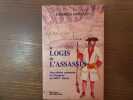
Le LOGIS de l'ASSASSIN Une affaire criminelle en Provence au XVIIIème siècle.
Editions Christian Paris 1996 In-8 ( 240 X 155 mm ) de 135 pages, broché sous couverture illustrée. Très bel exemplaire.
Les Crimes des Conseils de Guerre
1926. Paris Éditions du Progrès Civique 1926. Broché 11 cm x 18 cm XVIII+ 335 pages. Texte de R.-G. Réau préface de Henri Guernut Secrétaire Général de la Ligue des Droits de l'Homme. Bon état
Introduzione allo studio storico del diritto romano
G. Gappichelli=) 1961 in4. 1961. Relié.

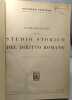
Bon état bonne tenue intérieur propre cependant passages soulignés au crayon de couleur rouge quelques notes au stylo
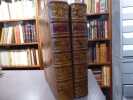
ANALYSE DES CONCILES généraux et particuliers, Contenant leurs Canons fur le Dogme, la Morale, & la Difcipline tant ancienne que moderne, expliques par des Notes, conferes avec le Droit nouveau, notamment avec le Droit particulier de la France, & precedes
Chez Vincent Paris 1772 2 volumes in-4 carré ( 260 X 200 mm ) de X( 2 )-908 et 870 pages, plein veau fauve marbré, dos à nerfs ornés de caissons et fleurons dorés, pièces de titre de maroquin grenat et de tomaison de maroquin tabac, tranches brique ( reliures de l'époque ). EDITION ORIGINALE. Anciens cachets réformés ( Séminaire de Moutiers ), agréable exemplaire, pur.
Justice - the crisis of law order and freedom in America
E.P. Dutton & Company 1970 in8. 1970. Cartonné jaquette.
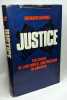
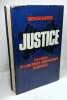
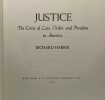
livre en bon état intérieur propre jaquette défraîchie (accrocs sur les bords)
Trahison
Les presses de la cité 1964 in8. 1964. Cartonné. L'ouvrage de l'historien américain Richard M. Watt intitulé "Trahison ?" est une étude minutieuse et documentée des mutineries au sein de l'armée française à la fin de l'année 1916 après deux ans et demi de guerre. Il examine les cours martiales et la justice militaire durant cette période de la Première Guerre mondiale décrivant une armée française "saignée à blanc"



Bon état Couverture en carton tachée couverture en papier déchirée intérieur propre
LA COUR DE JUSTICE; Code annoté - Guide pratique, Communauté européenne du charbon et de l’acier, Préface de M. le Bâtonnier Jacques Charpentier
, Paris, Librairie du Journal des Notaires et des Avocats [1954], in-8, br., non massicoté, (couv. lég. passée, coiffe inférieure légt déchirée), intérieur frais, XI-339 p.
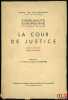
Phone number : 01 43 29 46 77
Jules Vallès. les étapes d'un réfractaire
1900 A Paris, Librairie Internationale A. Lacroix, Verboeckhoven et Cie, Editeurs - 1872 (Edition Originale) - In-12, demi basane verte, dos à 5 nerfs avec filets sur les nerfs et caissons ouvragés dorés. Pièce de titre bordeaux, de titre sur fond bleu, tranche de tête dorée - 95 p. - Couverture originale conservée

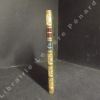
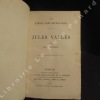
Bon état. Dos insolé - Petites égrenures à la basane de la coiffe inférieure
Causes célèbres et interessantes avec les jugemens qui les ont décidées. IX
Rhey Amsterdam Rhey 1774. In-12 relié pleine basane blonde dos à nerfs ornés, pièces de titre maroquin rouge. Tranches rouges. 476 pages. Mademoiselle de Chaseuil. Question d'Etat. Le fruit d'un adultère peut-il être légitime ? Mariage attaqué après vingt-quatre ans de cohabitation, et après la mort de la femme. Mariage entre le beau-frère et la belle-soeur. Bénéficier d'adultère. Bon état
Toutes les expéditions sont faites en suivi au-dessus de 25 euros. Expédition quotidienne pour les envois simples, suivis, recommandés ou Colissimo.
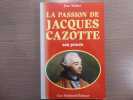
La Passion de JACQUES CAZOTTE son procès.
Guy Trédaniel Paris 1988 In-8 ( 210 X 135 mm ) de 221 pages, broché sous couverture illustrée. Très bel exemplaire.
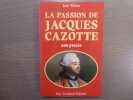
La Passion de JACQUES CAZOTTE son procès.
Guy Trédaniel Paris 1988 In-8 ( 210 X 140 mm ) de 219 pages, broché sous couverture illustrée. Bel exemplaire.
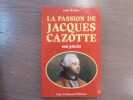
La Passion de JACQUES CAZOTTE. Son procès avec l'interrogatoire par Fouquier-Tinville.
Guy Trédaniel Paris 1988 In-8 ( 210 X 135 mm ) de 221 pages, broché sous couverture illustrée. Portrait d'Elizabeth CAZOTTE par un artiste inconnu. Bel exemplaire.