 Write to the booksellers
-
Type
Book (751)
Magazine (8)
Music sheets (1)
-
Language
English (2)
French (758)
-
Century
18th (19)
19th (31)
20th (297)
21st (154)
-
Countries
Belgium (178)
Canada (5)
Côte d'Ivoire (2)
Denmark (39)
France (490)
Netherlands (17)
Switzerland (29)
-
Syndicate
ALAC (5)
ILAB (102)
NVVA (24)
SLACES (7)
SLAM (41)
Retour des caravelles: Lettres latino-américaines d'aujourd'hui
PU Rennes 1999 228 pages 16x21x2cm. 1999. Broché. 228 pages.
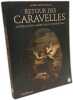
proche du très bon état intérieur propre bonne tenue
Rêve et littérature romanesque en Haïti: De Jacques Roumain au mouvement spiraliste
Editions L'Harmattan 2004 344 pages 15 8x2 6x24cm. 2004. Broché. 344 pages.
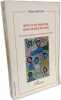
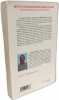
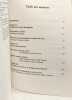
Très Bon Etat intérieur propre bonne tenue
Nouvelle histoire de Paris... Tome 7: La Restauration
Ass Public Hist Paris 1977 22 6x4 2x28 8cm. 1977. Relié.

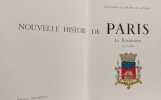
Très bon état couverture un peu défraîchie intérieur propre
L'uvre d'art entre ses disciplines et ses libertés.
Bruxelles, Imprimerie Laconti, 1969. "14 x 22, 428 pp., 8 figures, broché, bon état (1 tranche salie; dos défraîchi)."
Exemplaire N° 164.
Théâtre d'ombres. Journal de l'année 1997
Paris, Seuil, 1998, Broché-Jaquette éditeur, 249 pages. Bon état.
NB. La librairie est fermée jusqu'à fin septembre. Les questions et commandes seront traitées début octobre.
Geheim schrift de Prinzhorncollectie
, Museum Dr. Guislain , 2004 Softcover, 167 pagina's., 195 genummerde afbeeldingen in kleur en z/w.,. ISBN 9789076745053.
Boeken, schriften, kalenders en etc een tentoonstelling Prinzhorncollectie
Equal Temperament in the Eighteenth Century. The Ear versus Numbers
, Brepols, 2023 Hardback, xiv + 186 pages, Size:210 x 270 mm, Illustrations:13 b/w, 12 musical examples, Language: English. ISBN 9782503606750.
Summary Today, many have urged early music specialists to adopt a historical unequal temperament for keyboards and harps, and even for instruments whose frets produce equal temperament naturally. Equal temperament, however, played a significant role during this period, but most writing today has stressed the numbers from early mathematicians who believed that the more just intervals a temperament has, the better it will be. Major writers, however, pressed for equal temperament because it enabled full use of the keyboard, transposition, and enharmonic notes. In contrast, the major and minor semitones of unequal temperaments, and their flats pitched higher than sharps, limited the keyboard's usable compass and made enharmonic notes and transposition impossible. As advanced thinkers were aware, performers with pitch flexibility did not follow the theorists' numbers. An accompaniment in equal temperament offered them free rein to find the best intonation because its ratios for fourths and fifths are closest to the natural ones. Among the many writers who supported equal temperament was Jakob Adlung, who observed that the theorists' calculations gave rise to the argument: ?Whether the ear or the numbers should judge if music sounds in or out of tune?. TABLE OF CONTENTS Foreword Glossary of terms Abbreviation of journal Abbreviaton of refence works CHAPTER ONE: 'EARS TO HEAR, BUT DO NOT HEAR' Introduction Late Renaissance Intonation Later Intonation Standards Eighteenth-Century Views Theory vs. Practice Tuners and the Monochord CHAPTER TWO: FUNDAMENTALS Measurement The Construction of Meantone Temperament The Monochord The Ear's Tolerance for Pitch Discrepancies The Meaning of 'Diatonic' Equal Temperament in Practice CHAPTER THREE: TEMPERAMENT IN ITALY AND FRANCE Equal Temperament in Italy Equal Temperament in France Marin Mersenne Equal Temperament and Instruments Jean-Philippe Rameau Reaction The Francophile Marpurg Temperament Requirements in French Music CHAPTER FOUR: CLARIFYING THE ISSUES The Necessity for Equal Temperament Does an Unequal Temperament Make All Keys Usable? Werckmeister and Equal Temperament Well-Tempered Neidhardt and Equal Temperament CHAPTER FIVE: TEMPERAMENT IN GERMANY The Acceptance of Equal Temperament Key Characteristics Kirnberger and Temperament CHAPTER SIX: INTONATION Flexible Intonation Eighteenth-Century Intonation The Curious Story of the Prelleur Violin Chart The Influence of Traditional Theory Differentiating between Theory and Practice Orchestral Intonation Tuning and Intonation CHAPTER SEVEN: ORGAN TEMPERAMENT AND J.S. BACH Equal Temperament and the Organ Musical Scores Equal Temperament in Bach's Area Builders and Temperament Bach's Harmonic Tequirements Postscript CHAPTER EIGHT: EXPRESSIVE INTONATION Equal Temperament and Expressive Intonation Mathematicians' Reaction CONCLUSION BIBLIOGRAPHY INDEX OF NAMES
Renaissance Baron and his Possessions Paolo Giordano I Orsini, Duke of Bracciano (1541-1585),
Turnhout, Brepols, 2012 Hardback, approx. X+319 p., 11 b/w ill. + 6 colour ill., 3 b/w line art, 156 x 234 mm. ISBN 9782503534749.
A ground-breaking insight into the life of a Renaissance court in Rome. This book explores the subject of baronial identity and material culture in sixteenth-century Rome by focusing on the Duke of Bracciano, Paolo Giordano I Orsini, his court, and his possessions. It is an investigation into the way in which a Roman baron constructed and disseminated his sense of self through the objects he owned, the events he organized, and the relationships he forged by means of material goods and works of art. The analysis of the use of artistic and luxury goods in the form of pawns, rentals, loans, gifts, and thefts shows how aristocratic patrimonies were subject to continual mobility and served a multiplicity of goals. Supported by a wealth of documentation, mostly unpublished, including inventories, correspondence and account books, this study provides a new dynamic insight into a Renaissance aristocratic court. Languages : English, Italian.
This Earthly Stage' World and Stage in Late Medieval and Early Modern England,
Turnhout, Brepols, 2011 Hardback, XI+297 p., 20 b/w ill., 3 b/w tables, 156 x 234 mm. ISBN 9782503532264.
A collection of scholarly essays exploring relationships between 'stage' and 'world' in the drama and ritual performance of late medieval and early modern England. The thirteen essays collected in ''This Earthly Stage' explore intersections between the world as stage and the stage as world in late medieval and early modern England. The volume features studies of stages both familiar and unfamiliar, and worlds old and new - from the ritual performance of funerals for the fifteenth-century London elite to the electronic recreation of Shakespeare on the Internet. The essays engage with a variety of scholarly fields, including art and iconography, cultural and social history, digital humanities, literature, myth, philology, and philosophy. Most studies examine performative elements of Shakespeare?s works in relation to a representative selection of other plays from the dramatic genres in which he wrote, while they also analyse broader topics which traverse a number of plays, such as kingship and rites of civic performance in relation to stage drama. All of the essays consider the overarching issue of representation in late medieval and early modern English drama and culture through a range of theoretical approaches. This volume offers a valuable contribution to contemporary medieval and early modern scholarship, with a particular interest for those researching and teaching early modern English drama and culture. Languages : English.
Language, literature and critical practice.
Couverture souple. Broché. 214 pages. Couverture légèrement défraîchie.
Livre en anglais. Editions Routledge (Collection : Interface), 1991.
Language, literature and critical practice.
Couverture souple. Broché. 214 pages.
Livre en anglais. Editions Routledge (Collection : Interface), 1991.
Litterature Francaise et Pensee Hindoue des Origines à 1950
Klincksieck 1973 681 pages in8. 1973. Broché. 681 pages.

Bon état intérieur propre couverture un peu ternie
Les artistes de mon temps
Librairie de Firmin-Didot et Cie, Paris, 1876. Grand in-8, demi-chagrin rouge à coins, dos à faux-nerfs avec titre, fleurons et année de publication dorés, tranche de tête dorée, signet, vi-556 pp. Préface - Félix Duban, architecte - Eugène Delacroix, peintre - Eugène Devéria, peintre - Calamatta, graveur - David d'Angers, sculpteur - Francisque Duret, sculpteur - Augustin Dupré, graveur en médailles - Paul Chenavard, peintre - Henry Leys, peintre - Léon ...
Illustrations in texte et 12 planches en hors texte. --- Plus d'informations sur le site archivesdunord.com
Théorie des Fonctions Aléatoires.
Masson et Cie. Reliure sur carton toilé d'éditeur.(couverture plastique transparent) 693 pp., 23,5 X 16 cm.1953. Applications à divers phénomènes de fluctuation. Avec un chapitre sur la mécanique des fluides par J. Kampé de Fériet. Préface du professeur G. Darmois.
Parfait état Ray E6*
Architecture et parties qui en dépendent : planches et explications
[Genève, Pellet, 1778]. Petit in-4, 47 pp., 63 pl., demi-basane postérieure bleue, dos lisse orné de filets et fleurons dorés (coins manquants, épidermures, insolation, rousseurs, quelques taches, pl. 24 manquante).
![Architecture et parties qui en dépendent : planches et explications. [BLONDEL (Jacques-François)]](https://static.livre-rare-book.com/pictures/TVX/18657_1_thumb.jpg)
![Architecture et parties qui en dépendent : planches et explications. [BLONDEL (Jacques-François)]](https://static.livre-rare-book.com/pictures/TVX/18657_2_thumb.jpg)
![Architecture et parties qui en dépendent : planches et explications. [BLONDEL (Jacques-François)]](https://static.livre-rare-book.com/pictures/TVX/18657_3_thumb.jpg)
Ensemble des planches, et de leur explication, consacrées à l'architecture, extrait du second volume de planches du Dictionnaire raisonné des sciences, des arts et des métiers (ou Encyclopédie) de Diderot dans l'édition de Pellet à Genève en 1779. Il comprend 63 planches, certaines doubles ou dépliantes (le texte annonce 81 planches en comptant deux planches pour les planches doubles). La première partie s'intéresse aux ordres d'architecture puis aux façades, aux plans et coupes ainsi qu'à l'intérieur de bâtiments religieux et civils. La seconde partie est plus pratique et traite notamment de stéréotomie, de maçonnerie, de tuilerie, de couverture, de carrelage et des instruments qui y sont nécessaires. Elles sont toutes gravées par Benard et représentent notamment l'abbaye royale de Penthemont, l'Hôtel de ville de Rouen, le plan idéal d'un hôtel particulier de Blondel ou encore le plan d'une maison à Avignon par Franque. Voir photographie(s) / See picture(s) * Membre du SLAM et de la LILA / ILAB Member. La librairie est ouverte du lundi au vendredi de 14h à 19h. Merci de nous prévenir avant de passer,certains de nos livres étant entreposés dans une réserve.
Über die Anwendung der Quantentheorie auf den Atombau. I. Die Grundpostulate der Quantentheorie.
Braunschweig u. Berlin, Vieweg & Sohn, Julius Springer, 1923. Contemp. hcloth. . Stamp on titlepage. In ""Zeitschrift für Physik. Hrsg. von Karl Scheel"", Bd. 13. IV,406 pp. Bohr's paper: pp. 117-165. Clean and fine.
First edition. As Bohr in his 1918 paper (The quantum theory of line spectra) had discussed the expectation that there was a necessary connection between the classical and the future theory in the limit of large quantum numbers, and in a later paper (1920) named it ""Korrespondenzprincip"" (Principle of Correspondance), Bohr now in the paper offered discussed again the fundamental principles of Quantum Theory in connection with the Principle of Correspondence.Rosenfeld No 29.

Quelques mots sur l'Eglise, Israël et les Nations. Réponse à un ministre protestant
1853 A Marseille, chez M. Michelin-Salomon - 1853 - In-12, broché - 29 pages
Assez bon état - Couverture légèrement ternie et en voie de désolidarisation - Quelques rousseurs éparses
Les civilisations à l'épreuve du climat
Dunod 2012 192 pages 14x22x2cm. 2012. Broché. 192 pages.
Très bon état intérieur propre bonne tenue
Propos sur l'autobiographie
Champ vallon 1992 144 pages 21 6x1 4x13 6cm. 1992. Broché. 144 pages.

Bon état légère usure de la couverture intérieur très bon
Leçons Sur Les Fonctions De Variables Réelles
Paris Gauthier-Villars 1928 GRAND In-8 XII+158 pp, (.) Et les développements en séries de polynomes. Rédigées par Maurice Fréchet, avec des notes de Paul Painlevé et Henri Lebesgue. 2ème édition avec le concours de A. Roussel. Dos passé, coupé avec manque en tête. Faibles rousseurs sur les plats. Intérieur frais
Usé Pour Le Brochage Broché à raba
La Demoiselle des Lumières
Gallimard 1997 136 pages 12x1 4x20 4cm. 1997. Broché. 136 pages.
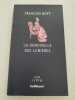
Bon état
Emission, Chaleur Solaire, Eclairage, Théorie De L'émission
Paris Delagrave 1925 GRAND In-8 Fort XXIV+437 pp, Bibliothèque scientifique de l'ingénieur et du physicien. Multiples coupures sur le brochage : manques en tête de la 1ère de couverture et 1ères pages, sans atteinte au texte ; mors fendus, et important manque en queue de la 4ème de couverture, avec manques et atteinte au texte de la table alphabétique des matières. Exemplaire non coupé, papier jauni.
Très Moyen Broché à raba
Sur l'espace architectural. Essai d'épistémologie de l'architecture
Dunod Couverture souple Paris 1971
Très bon In-8. 138 pages. Coll. "Aspects de l'Urbanisme". Illustrations.
Le Fascisme : Idéologies et Pratiques ( Essai D'analyse Comparée )
Paris Éditions Sociales , Problèmes D'histoire 1981 In-8 219 pp
Bon Broché à raba
Le cinéma d'amateur pas à pas.
Paris, Prisma, 1960 17 x 24, 513 pp., très nombreuses illustrations N/B, cartonnage éditeur, bon état
3 tomes en 1 volume, tome 1: les premiers pas, tome 2: à grands pas, tome 3: ciné-amateur service

