EST - Samuel Tastet Editeur 2005 1x24x17cm. 2005. Broché.
Très bon état - légères marques de lecture et/ou de stockage mais du reste en très bon état- expédié soigneusement depuis la France
Paris, JC Lattès, 1981. 14 x 22, 350 pp., notations musicales, broché, très bon état.
Paris. Gauthier-Villars. 1898. In-8. Br. Nbrs formules mathématiques. 237 p. BE.
, brepols, 2026 Paperback, Pages: 421 pages, Size:216 x 280 mm, Illustrations:65 b/w, 102 col. Language :English, NEW. ISBN 9782503610368.
Summary In the broad field of architectural history, many different approaches are possible. The collection of articles in this book covers a variety of themes, with the meanings of architecture as a central theme in most contributions. The articles are grouped into four main themes: Interpreting Architecture, Design and Construction, Spolia and Historiography. The ways in which attention can shift in architectural history are nicely highlighted in this volume. For instance, the ability to interpret architecture in its variety of meanings is not in doubt today, but was a real point of contention in the second half of the 20th century. Apart from as an enclosure of space, architecture in the past could carry diverse meanings, expressed, for instance, through a specific choice of architectural concepts, or through the use of spolia. The different ways in which medieval architecture in particular could be interpreted are the focus of several articles. Thereby, the application of spolia occupies a special place in both meaning-making and interpretation of architecture. The Historiography section analyses various changes in the way medieval architecture was and is studied. TABLE OF CONTENTS Foreword Introduction, by Petra Brouwer and Gabri van Tussenbroek Interpreting Architecture The Sensus Allegoricus of Medieval Buildings, or: Architectural Iconology in Historical Perspective The Past as a Determining Factor in the Architectural Concepts of Liège Cathedral (Eleventh and Twelfth Centuries) Architecture and Quotation. The Historicity of Buildings from the Past S. Giovanni in Laterano and Medieval Architecture. The Significance of Architectural Quotations The Choir Ambulatory. On the History and Reception of a Type of Ground Plan in Medieval and Post-Medieval Times Design and Construction The Dilemma of Pope Julius II. How to Preserve the Old St Peter?s While Building a New St Peter?s Proportion and Building Material or Theory versus Practice in the Determination of the Module Designing the Villa Pliniana at Lago di Como. Pellegrino Tibaldi and Political Iconography under Habsburg Rule Spolia Spolia in the Fourth-Century Basilica Spolia and Coloured Marble in Sepulchral Monuments in Rome, Florence and Bosco Marengo. Designs by Dosio and Vasari Spolia from Rome?s Past as a Contribution to Roman or Romanesque Architecture The Significance of Tradition. About the Spolia in the Choir Area of Magdeburg Cathedral The Veneration of Spolia. The Madonna della Colonna in St Peter?s in Rome Dutch Colonial Architecture Stabroek in Demerara: The Emergence of the City Plan of Georgetown (Guyana) in the Eighteenth Century From Amsterdam to Berbice. Colonial Administration Buildings as a New Design Task for Abraham van der Hart Government Buildings in the Dutch Colonies (Seventeenth and Eighteenth Centuries) Historiography Dutch Architectural Historians and International Contacts until around 1960 The History of Architectural History in the Netherlands. Medieval Architecture M. D. Ozinga?s Inaugural Lecture (1948). The Origins of Gothic Architecture and the Problem of Period Styles The Invention of Gothic. Abbot Suger since Erwin Panofsky There is no Such Thing as Gothic. The Concept of ?Renewal? as an Art Historical Problem Bibliography of Lex Bosman
Routledge & kegan paul 1971 406 pages in8. 1971. Broché. 406 pages.
Bon état bonne tenue intérieur propre couverture légèrement défraîchie
Paris, Nouvelle Librairie Nationale, 1925 ; in-8, 616 pp., broché. Très bon état.
Lyon, Joannès Desvigne & Cie, Successeurs, Paris, Librairie Scientifique Desforges, 1926, 1 volume in-folio de 375x280 mm environ, 1f.blanc, 398 pages, 1f.blanc, 3ff. (table), 1f.(achevé d'imprimer), 1f.blanc, reliure demi chagrin bordeaux et cartonnage marbré, dos lisse portant titres et tomaison dorés, gardes en tissu à carreaux, tranche supérieure rouge. Exemplaire complet des 50 Echantillons. Avec de nombreuses figures dans et hors-texte.Frottements et épidermures sur le cuir et le cartonnage, traces de déchirure sur le dos avec restauration visible , intérieur bien conservé.
Description des différents systèmes de mécaniques employés pour le tissage des étoffes façonnées. Esquisse, mise en carte. Description du lisage et piquage accéléré, système Verdo. Description des différentes opérations nécessaires pour le montage d'un métier à tisser les étoffes façonnées. Décomposition des différents genres de Tissus. Merci de nous contacter à l'avance si vous souhaitez consulter une référence au sein de notre librairie.
ATELIER 1989 144 pages 13 2x1x20 8cm. 1989. mass_market. 144 pages.
Bon état
Sables. 1960. In-12. En feuillet sous couverture à rabats. 34 p. Exemplaire N° 435 sur Vergé ivoire.Bon état malgré des écritures en page de garde.
Harlem, Les Heritieres Loosjes, 1891. Lex8vo. Orig. printed wrappers. In ""Archives Néerlandaises des Science Exactes et Naturelles. Redigée par J. Bosschar"", Tome XXV, 2me Livraison. Pp. (101-) 226 (entire issue offered). Lorentz's paper: pp. 107-130. A faint stamp to frontwrapper and to the first page.
First edition. In this paper Lorentz applies statistical methods to his molecular theory of dlute solutions, discussing the phenomena of osmosis (van't Hoff's law of pressure) in this context and Boltzmann's theorem.
, Brepols, 2019 Hardback, 335 pages, Size:220 x 280 mm, Illustrations:75 b/w, 75 col., Language: English. ISBN 9782503579795.
Summary Whether a painting, a sculpture, or a building, works of art in early modern Europe must achieve the highest degree of perfection. If in the Middle Ages perfection is mostly perceived as a technical quality inherent in craftsmanship-a quality that can be judged according to often unspoken criteria agreed upon by the members of a guild-from the fifteenth century onwards perfection comes to incorporate a set of rhetorical and literary qualities originally extraneous to art making. Furthermore, perfection becomes a transcendent quality: something that cannot be measured only in terms of craftsmanship. In the Baroque period, perfection turns into obsession as a result of the emergence of historical models of artistic evolution in which perfection is already historically embodied-in the first place, Vasari's investiture of Michelangelo as a universal canon for painting, sculpture, and architecture. This book aims to define, analyze, and reassess the concept of perfection in the arts and architecture of early modern Europe. What is perfection? What makes a work of art unique, emblematic, or irreplaceable? Does perfection necessarily relate to individuality? Is the perfect work connate with or independent from its author? Can perfection be reproduced or represented? How do artists react to perfection? How do post-Vasarian models of art history come to terms with perfection? To what extent perfection in early modern Europe is the matter of rhetoric, literary theories, theology, and even scientific observation? TABLE OF CONTENTS Introduction Measure, Number and Weight: Perfection in Medieval Art and Thought Benjamin Zweig Perfection as Rhetorical Techne and Aesthetic Ideal in the Renaissance Discourse on Art Valeska von Rosen Crafting Perfection: Leon Battista Alberti, Language, and the Art of Building Dario Donetti The Palindromic Logic of Dürer's Double-Sided Gift Shira Brisman Michelangelo and la cosa mirabile Victor I. Stoichita Bronzino's Beauty Stuart Lingo The Perfection of Pictorial Evidence Klaus Krüger The Renaissance Masterpiece: Giorgio Vasari on Perfection Lorenzo Pericolo Seeking Perfection: Scamozzi in Theory, Practice, and Posterity Andrew Hopkins Metaprints in Seventeenth-Century Antwerp Caroline Fowler "Per natura capaci di ogni ornamento e perfezzione": Nicolas Poussin and Perfection Henry Keazor The Limits of Perfection: Giovan Pietro Bellori on Celerità and Facilità Elisabeth Oy-Marra Passeri's Prologue, the Paragone, and the Hardness of Sculpture Estelle Lingo
2002 Editions Aféa (Archives du film expérimental d'Avignon), 2002 - Grand In-8, Broché avec couverture à rabats - 189 p. - Très nombreuses photographies in-texte.
Bon état.
Cahiers Techniques d'Information et de Répertoire. 15 x 21, 80 pp., nombreuses figures, broché, bon état (couverture légèrement défraîchie).
Gauthier-Villars, Paris, 1882 et 1883
2 volumes petits in-8°, reliure rigide dos lisse cuir marron, plats de percaline marron délicatement gauffrée et ornée de l’écusson Université de France. Les tranches Toutes les tranches sont dorées. Il s’agit probablement d’un cadeau offert à un universitaire. Il s’agit, comme le titre l’indique, d’un recueil de jeux ou récréations mathématiques. Son auteur Edouard LUCAS (1842-1891) fut un grand mathématicien français, dont l’oeuvre est encore aujourd’hui renommée (en particulier pour sa théorie des nombres). L’ouvrage est composé de deux tomes (il n’y a donc pas deux tomes posthumes publiés en 1882 et 1893).Tome 1 (258 pages): Les Traversées, Les Ponts, les Labyrinthes, Les Reines, Le Solitaire, La Numération, Le Baguenaudier, Le Taquin.-Tome 2 (245 pages): Qui perd gagne, Les Dominos, Les Marelles, Le Parquet, Le Casse-Tête, Les Jeux de Demoiselles, Le Jeu icosien d’Hamilton. Il s’agit d’une édition de luxe sur papier glacé. Il est abondamment illustré en noir et blanc mais une des pages est imprimée en couleur( les mosaïques de M. LAISANT) . Les deux tomes sont en édition originale et en EXCELLENT ETAT.
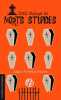
, Brepols, 2024 Hardback, 336 pages, Size:210 x 270 mm, Illustrations:76 b/w, 6 tables b/w., 95 pages of musical scores, Language: English. ISBN 9782503608471.
Summary Every chapter of the three volumes of Giovanni Battista Martini's Storia della Musica begins and ends with an enigmatic canon: 72 puzzle canons, which formed the subject of debate in the 18th and 19th centuries. Luigi Cherubini proposed solutions for all canons, forming a pedagogical collection designed to reveal the secrets of the enigmatic canons practice to 19th-century musicians. Cherubini explained in detail how each proposed solution was reached. The resolutions are all based on a 'Table of Latin words', a list of enigmatic expressions. For each expression, Cherubini gives an explanation detailing how they must be interpreted in order to find the resolution of the riddles. Practically 56 expressions from Cherubini's 'Table of Latin words' can be identified in Renaissance treatises. Until the first half of the 16th century, a canon was a formula that musicians would put into action to create one or more parts of music ? the 'canon' was just the formula and not the music itself. Explanations of such formulas were compiled in Renaissance music treatises. It is this journey ? the one enigmatic expressions took as they travelled from the Renaissance into the 19th century ? that Luigi Cherubini's complete edition of proposed solutions to Padre Martini's enigmatic canons seeks to illustrate. TABLE OF CONTENTS Acknowledgements Introduction The 72 Enigmatic Canons of Padre Martini's Storia della Musica Luigi Cherubini's Solutions: A Pedagogical Work A Table of Enigmatic Expressions Renaissance Sources for Padre Martini's List of Motti o Enigmi Pietro Aaron, Libri tres de institutione harmonica, Bologna, 1516 Heinrich Glarean, Dodecachordon, Basel, 1547 Hermann Finck, Practica musica, Wittenberg, 1556 Pietro Cerone, El melopeo y maestro, Naples, 1613 Giovanni Battista Rossi, Organo de cantori, Venice, 1618 Camillo Angleria, La regola del contraponto?, Milan, 1622 Giovanni Andrea Angelini Bontempi, Historia Musica, Perugia, 1695 Reception of Martini's and Cherubini's Works in the 19th Century Pierre-Louis Ginguené, Encyclopédie méthodique, Paris, 1791 François-Joseph Fétis, Traité du contrepoint et de la fugue, Paris, [1824] Padre Martini's List of Motti o Enigmi (Reproduced in Cherubini's Collection) and the Understanding of the Renaissance Practice of (Puzzle) Canons during the 19th Century Comparative Tables Table 1. Luigi Cherubini's Table des mots latins, que les anciens compositeurs plaçaient souvent en tête des canons, avec l'explication du sens énigmatique qu'ils renferment, afin d'obtenir plus aisément la véritable solution d'un canon fermé Table 2. Cherubini's Table of Latin Words vs. Martini's Lists of Motti o Enigmi and Vocaboli Italiani, Latini e Greci Table 3. Padre Martini's Sources for his Motti o Enigmi Table 4. Martini's Esemplare vs. Finck's Practica musica Table 5. Finck's Expressions not Cited by Martini Table 6. Cherubini's and Ginguené's Translations of Martini's List of Motti o Enigmi Table 7. François Joseph Fétis's Table des Devises ou Inscriptions des Canons Énigmatiques avec leur Explication Padre Martini's Closed and Enigmatic Canons with Solutions by Luigi Cherubini List of Canons in Cherubini's Collection Letter Sent by the French Musicologist Henry Expert (1863-1952) to the Administrator of the National Library in Paris on 10 June 1924 Plates Critical Notes Bibliography Index of Names
Paris, Gallimard TEL, 1985, Broché, 454 pages. Bon état.
contenant toutes les danses de salon avec une théorie nouvelle de VALSE et BOSTON du COTILLON et du CAKE WALK Chaque danse est accompagnée de sa musique.In 8 broché, titre au dos en long,et sur le premier plat,orné d’une vignette.Faux-titre,titre illustré d’une vignette,244 pages,150 figures,40 morceaux de musique Paris Lionel Labrousse,sans date.Couverture légèrement poussiéreuse.
Robert Laffont Broché 1969 In-8 (13,6 x 21,5 cm), broché, 280 pages, tableaux et schémas en noir et blanc ; quelques petites traces et légères rousseurs aux plats, par ailleurs assez bon état. Livraison a domicile (La Poste) ou en Mondial Relay sur simple demande.
Editions de la Différence, collection "la Vue le Texte", sous étui souple, Paris, 1987. Deux volumes in-4, brochés sous couverture illustrées en couleur, 121 pp. & 132 ill. I. Le Texte : La présence. - La ligne. - La franchise. - L'anamnèse. - Le point. - Le site. - L'exposition. - Lectures. - Notice - Index desœuvres reproduites.II.Œuvres : 132 reproductions couleur et n/b.
avec 132 illustrations en noir et en couleur. --- Plus d'informations sur le site archivesdunord.com
Phone number : 01 42 73 13 41
Lüpke Geseko von Erlenwein Peter Alglave Stéphanie
Reference : 500035930
(2008)
ISBN : 9782842211912
Editions La Plage 2008 16 4x2x23 2cm. 2008. Broché.
Comme neuf - livre issu de destockage - pouvant présenter d'infimes traces de stockage - Expédié soigneusement dans emballage adapté
Paris, Christian Bourgois Editeur, 1985. 14 x 22, 296 pp., broché, bon état.
"Textes réunis et présentés par Tod Machover; traduction de Denis Collins, Emmanuel Gresset, Patrick Greussay, Martin Kaltenecker, Monique Lebailly et Tod Machover."
Editions Avatar Malicorne sur Sarthe, 72, Pays de la Loire, France 1992 Book condition, Etat : Très Bon broché, sous couverture imprimée éditeur blanche et rouge, illustrée de nombres et d'une sphère In-8 1 vol. - 155 pages
quelques figures dans le texte en noir et blanc 1ere édition, 1992 bel exemplaire, frais et propre
Paris, Editions Francis Van De Velde, 1979. 15 x 23, 213 pp., quelques illustrations en N/B, broché, bon état.
Textes et traduction par M. et R. D'asfeld.
Paris, Gallimard, 1974. 22 x 28, 299 pp., 178 illustrations en couleurs pour la plupart, reliure d'édition pleine toile + jaquette, très bon état.