 Write to the booksellers
-
Type
Autograph (1)
Book (1623)
Magazine (2)
-
Latest
Last month (24)
Last week (5)
-
Century
17th (1)
18th (3)
19th (47)
20th (483)
21st (49)
-
Countries
Belgium (1171)
Canada (4)
Côte d'Ivoire (3)
France (175)
Switzerland (273)
-
Syndicate
ALAC (4)
CNE (1)
ILAB (52)
NVVA (2)
SLACES (2)
SLAM (26)
"Dans la tête d'un musicien; une nouvelle approche pour évoluer dans sa pratique musicale."
Editions Sey, 2018. 15 x 21, 154 pp, broché, très bon état.
"Carlos Gardel; l'âge d'or du tango."
Paris, Denoël, 1984. 15 x 23, 223 pp., quelques illustrations en N/B, broché, très bon état.
Mittelfränkische Stadt- und Landmusikanten. Eine Untersuchung zum Brauchtum, Aufgabenbereich und Notenbestand der Musikanten im südlichen Mittelfranken im 19. und beginnenden 20. Jahrhundert
Eichstätt, 1987 viii + 495 + 228pp., 21cm., softcover, Doctoral Dissertation (Inaugural-Dissertation zur Erlangung des Doktorsgrades der Geschichts- und Gesellschaftswissenschaftlichen Fakultät der Katholischen Universität Eichstätt), stamp at verso of title page, text and interior are clean and bright, good condition (looks unread), weight: 1.1kg., M109027
Studien zur Symbolik in der Musik der alten Niederländer
Bilthoven, Creyghton 1968 228pp. + frontispiece in colour, illustrated with some music examples in, + 2pp. of theses, 26cm., publisher's hardcover in cloth with gilt lettering, good condition, [Academic doctoral dissertation at the 'Rijksuniversiteit te Utrecht', 1968], M107680
Studien zur Symbolik in der Musik der alten Niederländer
Bilthoven, Creyghton 1968 228pp. + frontispiece in colour, illustrated with some music examples in, + 2pp. of theses, 26cm., publisher's softcover, stamp at verso of title page, text is clean and bright, [Academic doctoral dissertation at the 'Rijksuniversiteit te Utrecht', 1968], M1111122
Symbolic Scores - Studies in the Music of the Renaissance
Leiden, Brill 1994 xii + 269pp., with some bl/w illustrations, 26cm., publisher's hardcover in blue cloth with gilt lettering, good condition, M107681
John Dunstaple Reading Boethius. John Dunstaple's Annotations to Boethius's De institutione musica in the Manuscript Oxford, Corpus Christi College Library, MS 118
, Brepols, 2026 Paperback, Pages: 240, Size:178 x 254 mm, Illustrations:2 b/w, 50 col., 10 tables b/w., 2 tables col., 17 examples in colour, Language: English. ISBN 9782503624884.
Summary European theory of music up to ca.1550, in many respects, presents a history of the reception of Boethius's treatise De institutione musica (before 510). The annotations introduced to this treatise by John Dunstaple (d. 1453), eminent composer of the late Middle Ages, add to our knowledge of the English chapter of this history. The volume is composed of two parts. The first part includes the edition of Dunstaple's annotations paralleled with relevant parts of Boethius text and provided with the introduction comprising a detailed information on manuscript Oxford, Corpus Christi College 118 and the study of Dunstaple's hand. In the second part of the book, the selected glosses which have the strongest interpretive potential are translated and examined in a large context of music theory of Middle Ages. They present Dunstaple as a careful and competent reader of Boethius's arguments and a composer well-read in music theory current in his time. TABLE OF CONTENTS List of Figures List of Tables Preface and Acknowledgements Introduction (1) Dating, origin, and contents of the first part of Occ. 118 (2) Dunstaple's hand (3) Typology of Dunstaple's annotations and editorial policy Edition of Dunstaple's annotations to Boethius's De institutione musica in Occ.118 Liber I Liber II Liber III Liber IV Liber V Commentary on the Selected Glosses, Additions and Diagrams Chapter One. De musica, Book I 1) General remarks 2) 'republica, liber quidam Platonis' Republic, a certain book by Plato'. Mus. I, 1. 3) 'Musica bene morata' Music of good character. Mus. I, 1. 4) Decretum Lacedaemoniorum Spartan Decree. Mus. I, 1. 5) Diagram of the fundamental consonances. Mus. I, 10. 6) Descriptions of the consonances. Mus. I, 15; Mus. I, 16. 7) The division of the diatessaron and the proportion of the minor semitone. Mus. I, 17. 8) The tone as the difference between the diatessaron and the diapente. Mus. I, 18. 9) The diapason consists of five tones and two semitones. Mus. I, 19. 10) 'Those who make art should be named artifices'. Mus. I, 34. Chapter Two. De musica, Books II and III 1) General remarks 2) The order and positions of the consonances. Mus. II, 19-20. 3) The division of the tone. Mus. III, 1. 4) Calculating the difference between five tones and the bis-diatessaron, and six tones and the diapason. Adding and subtracting musical intervals. Mus. III, 3-4; Mus. III, 9. 5) Dividing the tone according to Philolaos. Mus. III, 5. 6) 'Unitas non est numerus' Unity is not a number. Mus. III, 11. Chapter Three. De musica, Books IV and V 1) General remarks 2) Calculating continuous sesquioctave ratios. Mus. IV, 2. 3) 'Extenta, id est relaxata' Extended means relaxed. Mus. IV, 3. 4) 'Dicciones, id est nomina cordarum' Words, that is, the names of strings. Mus. IV, 3. 5) Diagrams of the eight modes. Mus. IV, 15-17. 6) The division of the monochord. Mus. IV, 18. 7) The divisions of the genus diatonicum according to Martianus Capella. Mus. V, 18. Conclusions Bibliography General Index Permissions to reproduce
La gamme et le langage musical.
P., PUF (Bibliothèque Internationale de Musicologie), 1961, in 8° broché, 164 pages.
PHOTOS sur DEMANDE. ...................... Photos sur demande ...................


Phone number : 04 77 32 63 69
Beethoven vie d'un conquérant
Paris, Club des Editeurs, 1956, pleine toile éditeur, portrait au centre, 456 pages. Rousseurs sur tranches, sinon bon état.
Essai sur Monteclair ( Michel Pinolet ) musicien et compositeur du XVIII° siecle ne a Andelot ( Hte-Marne )
Chez Menu a Paris et chez la Veuve Miot-Dadant a Chaumont, 1879. Format 13x20 cm, broche, XIV + 97 + 4 pages. Exemplaire propre mais dos use. Ouvrage rare.Bon etat.
Cinema Changes: Incorporations of Jazz in the Film Soundtrack
, Brepols, 2019 Hardback, xxvi + 334 pages, Size:210 x 260 mm, Illustrations:35 b/w, 26 musical examples, Language: English. ISBN 9782503584478.
Summary Cinema is the form of entertainment that can be, above all, identified with the twentieth century. It gradually replaced theatre as a popular form of performed storytelling, and replaced opera too as the new "multimedia" art form, soon incorporating music as one of cinema's privileged means to co-tell stories. Speaking of music, jazz was as sensational a twentieth-century novelty as cinema was. The two soon teamed up, and jazz, with its various incarnations and styles, has accompanied the moving images and the cinematic narratives throughout the decades. It was inevitable that these two iconic art/entertainment forms, jazz and cinema, should meet, blend, cooperate, and have a reciprocal influence. While the early film music was mostly symphonic and inspired by the late-romantic nineteenth-century idiom, jazz and Afro-American music - in various form and with diverse and changing racial/social connotations - appeared onscreen even before the landmark film The Jazz Singer (1927), which officially launched the sound era. This collection of essays seeks to study the long-standing relationship between jazz and cinema, from the silent era to the contemporary sound cinema, on an international level. TABLE OF CONTENTS Emile Wennekes - Emilio Audissino Prologue: A Reel Jazz Survey Rendition / Reception Emile Wennekes Out of Tune? Jazz, Film and the Diegesis Phillip Johnston Jazzin' the Silents: Jazz and Improvised Music in Contemporary Scores for Silent Film Luca Stoll Cinema: A Privileged Way of Acquiring Intimacy with Jazz Standards Marida Rizzuti Play, My Fiddle, Play! Jazz and Klezmer at the End of the 1930s Randall Cherry Ethel Waters and the Search for Racial Redemption Jazz and National Cinemas Emilio Audissino The Multiform Identity of Jazz in Hollywood: An Assessment through the John Williams Case Study Nicolas Pillai Rhythms of the Everyday: an Alternative History of the British Jazz Film Philippe Gonin Jazz and Cinema: Which Jazz for Which Movies in France from 1945 to the early 1960s? Julio Arce - Celsa Alonso From the Chotis to the Charleston: Jazz in Spanish Films prior to the Civil War Roberto Calabretto Jazz Music in Michelangelo Antonioni's Films Willem Strank When Jazz Meets German Cinema: A Brief Overview Jason R. Hillebrand A Song Helps Us Live: The Narrative Function of Jazz in the Soviet Musical Film Jolly Fellows Case Studies Francesco Finocchiaro - Leo Izzo The Sound of the Nightmares: On the Jazz Music in Fritz Lang's Metropolis Ryan Patrick Jones Dignity in the Twilight of Minstrelsy: Race, Nuance, and Aspiration in Duke Ellington's Symphony in Black: A Rhapsody of Negro Life Adam Biggs The Blues and Dissonance in Michelangelo Antonioni's Blow-Up Armando Ianniello Umiliani, Trovajoli, and Rota: The Jazz Film Score of Boccaccio '70 Marcel Bouvrie Synergetic Jazz Score: The Narrative of the Relation between the Diegetic and Nondiegetic Music in Whiplash Mervyn Cooke 'The Same Goddamn Songs the Same Goddamn Way'? Makin' Whoopee with The Fabulous Baker Boys Abstracts Biographies Index of Names
La harpe, son évolution, ses facteurs. Collection : Précis techniques, N° 5.
Paris, Dessain et Tolra, 1980. 21 x 15, 136 pp., quelques dessins et illustrations, broché, bon état.
"Préface de Jacques Chailley; avant-propos de Jean-Michel Damase."
César Franck. Collection : Les musiciens célèbres.
Paris, Henri Laurens, 1930. 14 x 21, 128 pp., reliure large dos cuir à 5 nerfs, pages de garde beau papier marbré, bon état.
"Etude critique; illustrée de 12 reproductions hors texte."
"Histoire de la langue musicale (2 tomes en 1 volume); tome 1 : Antiquité, Moyen Âge; tome 2 : Renaissance, Epoque moderne, Epoque contemporaine."
Paris, H. Laurens, 1951. 16 x 23, 679 pages (pagination continue), quelques notations musicales, reliure pleine rexine rouge, très bon état.
"Reliure très solide et en parfait état; 2 tomes reliés en 1 seul volume."
EMMANUEL, Maurice. - HAHN, Reynaldo. - LANDORMY, Paul. - CHEPFER, Georges. - PANASSIE, Hugues. - VUILLERMOZ, Emile. - SORDET, Dominique. - YVAIN, Maurice.
Reference : 82943
L’initiation à la musique. A l’usage des amateurs de musique et de radio. Comportant un précis d’histoire de la musique, suivi d’un dictionnaire des oeuvres, d’un lexique des termes et de chapitres variés. Nombreuses illustrations dans le texte et hors texte en couleurs.
Paris, Editions du Tambourinaire 1935, 200x150mm, V - 399pages, reliure demi-toile. Relié demi-toile à coins. Ex-libris. Bel exemplaire.
lettrines, bandeaux et culs-de-lampe, Pour un paiement via PayPal, veuillez nous en faire la demande et nous vous enverrons une facture PayPal
La gamme et le langage musical. Collection Bibliothèque internationale de musicologie.
Paris, Presses Universitaires de France PUF 1961, 230x145mm, 164pages, broché. Bel exemplaire.
Pour un paiement via PayPal, veuillez nous en faire la demande et nous vous enverrons une facture PayPal
Venice, Schiavoni and the Dissemination of Early Modern Music: A Companion to Ivan Luka?i?
, Brepols, 2022 Paperback, 288 pages, Size:178 x 254 mm, Illustrations:28 b/w, 3 col., 19 tables b/w., 1 maps b/w, Music examples: 37, Language(s):English, Italian. ISBN 9782503601953.
Summary Ivan Luka?i? (born around 1585, died in 1648), composer, Conventual Franciscan, long-time ?maestro di cappella? of the cathedral in Split, is a typical ?hero? of local historiography. As early as 1935, the Croatian-American musicologist Dragan Plamenac (real name Karl Siebenschein) prepared a selection from the only known collection of Luka?i?'s compositions, the Sacrae cantiones (Venice, 1620). In the same year, Plamenac introduced Croatian Renaissance and Baroque music to the local audience for the first time at a concert held at the Croatian Music Institute. In the aftermath of Plamenac's emigration to the USA in 1939, it took several decades for new archival, stylistic, interdisciplinary, and international research in Croatian musicology to take place. Despite the availability of earlier material as well as contemporary musical publications of Luka?i?'s work (J. Andreis, Zagreb, 1970; E. Stip?evi?, Padua, 1986), it is not an exaggeration to say that Luka?i? still remains unknown internationally. For many years, a number of studies of Luka?i? and the music of his contemporaries from the ?other, eastern coast of the Adriatic? published almost exclusively in Croatian and thus the international professional public had very limited access to them. This collection of studies dedicated to Luka?i? and to the musical and cultural contacts between the two Adriatic coasts is the first volume to be published in both English and Italian. The echoes of the contacts between Italy and Croatia reached the Royal Palace in Portugal, shops selling printed music in Denmark and church archives in Slovenia and Poland. The aim of this book is to follow the traces of that cultural dissemination. TABLE OF CONTENTS Foreword: Fragments on Luka?i? ? Ennio Stip?evi? Dalmatia in the time of Ivan Luka?i? (1587-1648) ? Josip Vrande?i? Luka?i?'s fellow countrymen in Venice in the past ? Lovorka ?orali? Schiavoni: artists, nation, ideology ? Ivana Prijatelj Pavi?i? Fra Ivan Marko (Giovanni Marco) Luka?i? alla luce della più recente documentazione archivistica ? Ljudevit Mara?i? Il Collegio Illirico a Roma, Luka?i? e la Dalmazia nei documenti veneziani ? Paolo Alberto Rismondo Compositions by Ivan Luka?i? in the context of contemporary music anthologies ? A view from the perspective of digital musicology ? Lucija Konfic Juraj (Giorgio) Alberti: Dialogo per imparare con brevità à Cantar Canto figurato (Venetia, 1619) ? Jelena Kne?aurek Cari? New insights into Tomaso Cecchini's motet production prior to 1620 ? Gabriele Taschetti The Motetti a una, doi, tre et quatro voci (Venezia, 1630) by Antonio Gualtieri: a collection of small-scale motets from the Paduan area ? Chiara Comparin Carlo Farina e il repertorio di danza tedesco d'inizio Seicento ? Aurelio Bianco The influence of Francesco Patrizi's collection of Greek manuscripts on his music theory ? Jacomien Prins Giovanni Sebenico o Ivan ?iben?anin? Andata e ritorno dalla Serenissima all'Europa ? Anna Laura Bellina Luka?i?'s Sacrae cantiones (1620) and historically informed performances in Croatian festivals from 1980s to 2010s ? Dario Poljak The reception of Ivan Luka?i?'s motets by Croatian 20th and 21st century composers ? Tomislav Bu?i? Bibliography Modern music editions (selection) Index nominum
Beethoven.
Paris, Hachette. Les musiciens par l'image., 1957, in-8, Broché, 146 pages. Bon état.
Round about midnight. Un portrait de Miles Davis
Paris, Denoël, 1983, in-8, broché, 248 pages. Défaut au pelliculage. Bon exemplaire.
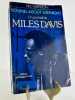
Antonin Dvorak. Collection : Musiciens de tous les temps, N° 29.
Paris, Editions Seghers, 1966. 13 x 16, 185 pp., illustrations, broché, bon état.
Antonin Dvorak. Collection : Musiciens de tous les temps.
Lausanne, La Guilde du Livre, 1966. 14 x 17, 192 pp., quelques illustrations en N/B, reliure d'édition pleine toile, très bon état.
N° 151 sur 1000 exemplaires numérotés.
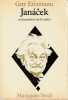
Janacek ou la passion de la vérité,
Seuil, Musique, 1980, 350 pp., broché, trace de pli sur le dos, couverture partiellement dépelliculée, traces de mouillures, état assez correct.
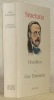
Smetana l'éveilleur. Collection Serié Musique.
Toulouse, Actes Sud 1993, 215x115mm, 465pages, broché. Bel exemplaire.
Pour un paiement via PayPal, veuillez nous en faire la demande et nous vous enverrons une facture PayPal
Traité pratique d'instrumentation. Nouvelle édition complétée et révisée par Henri Busser. Première, deuxième et troisième partie.
Paris, Durand et Cie, Editeurs, 1933, in-4, broché, 351 pages. Bon état.
Philosophische Untersuchungen zum Zeitbegriff in der Musik
Aachen, 1973 116pp., 21cm., softcover, text in German, Doctoral dissertation (Von der Fakultät der Rheinisch-Westfälischen Technischen Hochschule Aachen zur Erlangung des akademischen Grades eines Doktors der Philosophie genehmigte Dissertation), stamp at verso of title page, text is clean and bright, good condition, M108935

