 Write to the booksellers
-
Type
Autograph (1)
Book (1623)
Magazine (2)
-
Latest
Last month (24)
Last week (5)
-
Century
17th (1)
18th (3)
19th (47)
20th (483)
21st (49)
-
Countries
Belgium (1171)
Canada (4)
Côte d'Ivoire (3)
France (175)
Switzerland (273)
-
Syndicate
ALAC (4)
CNE (1)
ILAB (52)
NVVA (2)
SLACES (2)
SLAM (26)
Erasme et la musique. Collection : De Pétarque à Descartes, IX.
Paris, Librairie Philosophique J. Vrin, 1965. 16 x 25, 137 pp., 8 planches, reliure dos/coins cuir, à 5 nerfs, 1 pièce de titre, couverture conservée (3 pièces), très bon état.
Women Composers in New Perspectives, 1800-1950. Genres, Contexts and Repertoire
, Brepols, 2023 Hardback, 362 pages, Size:210 x 270 mm, Illustrations:6 b/w, 34 musical examples, Languages: English, French, Italian. ISBN 9782503606309.
Summary This volume offers new scholarship on women composers of the past two centuries, covering a wide range of repertoire, institutions and locations, with chapters focusing on such varied topics as women writing opera in early nineteenth-century Paris; the intertextual relationship between works by Fanny Hensel and Felix Mendelssohn; women composers writing for instruments not usually associated with them in their time - specifically horn, and organ; and the subversive musical activity of female prisoners in Spain under the Franco regime. In two introductory chapters the editors present their broad perspective on women composers both in history and in modern scholarship, with particular reference to socio-historical and pedagogical aspects, and arguing the case for continued efforts to promote women's music. The 14 chapters that follow are arranged in two parts, divided between nineteenth- and twentieth-century topics. Their authors draw on a variety of sources, including archival documents, letters, diaries, and memoirs, to illuminate the musical works produced by women during the period and the contexts in which they were written, performed, and disseminated. Collectively the chapters demonstrate the richness inherent in this area of study; in reflecting some of the directions being explored in current scholarship, they provide impetus for further research. TABLE OF CONTENTS Mariateresa Storino - Susan Wollenberg Preface Susan Wollenberg (Why) Do We Need 'Women Composers'? Mariateresa Storino «She is not a woman composer - yet a composer, and also a woman»: La creatività femminile 'oltre' il genere Part I: Nineteenth-Century Music Chapter One: Florence Launay She is the first, she is the only one of her sex who has vanquished on the operatic stage»: The Career of Sophie Gail at the Théâtre de l'Opéra-Comique, 1813-1818 Chapter Two: Maria Stratigou Louise Farrenc's Piano Études: Dates, Purpose, Reception, and Function Chapter Three: Siegwart Reichwald Hensel the Progressive: Narrative Strategies in Fanny Hensel's Piano Trio, Op. 11 and Felix Mendelssohn's String Quartet, Op. 80 Chapter Four: Anja Bunzel Countess Elise von Schlik (Eli?ka ?liková): Salonnière, Patroness, Composer Chapter Five: Christine Fischer A Swiss Woman in Italy: Fanny Hünerwadel on Her Study Trip 1853-1854 Chapter Six: Fauve Bougard L'ascension des femmes vers les classes de composition: le cas du Conservatoire royal de Bruxelles au xixe siècle Chapter Seven: Steven Young Les Organistes oubliées: Forgotten Female Organist-Composers of France Part II: Twentieth-Century Music Chapter Eight: Orietta Caianiello The Emancipation of Female Musical Writing in Post-Victorian England. From Song-Cycles to Phantasies: The Society of Women Musicians Chapter Nine: Rhiannon Mathias Grace Williams and Welsh Music: Triads, Orchestral Music and New Beginnings Chapter Ten: Amy E. Zigler «Perhaps what men call a sin?»: An Examination of Ethel Smyth's The Prison Chapter Eleven: Elisabeth Kappel The Compositional oeuvre of Two Viennese 'Higher Daughters': Else Réthi and Vilma Webenau (c. 1900-1950) Chapter Twelve: Peter Asimov Yvonne Loriod, Ultramodernist: Preliminary Glimpses at a Compositional Legacy Chapter Thirteen: Daniel Lienhard Chamber Music and Concertos for Horn/s by Women Composers - A Survey Chapter Fourteen: Elsa Calero-Carramolino «You lack men's creativity»: Music and Women in Prisons under Franco (1938-1948) Abstracts and Biographies Index of Names
French Renaissance Music and Beyond. Studies in Memory of Frank Dobbins
, Brepols, 2019 Paperback, 730 pages, Size:190 x 290 mm, Illustrations:227 b/w, 37 tables b/w., Languages: English, French, Italian. ISBN 9782503579603.
Summary This volume presents 34 studies (750p) in English, French, and Italian, assembled as a tribute by friends and former students from around the world to the late Frank Dobbins (1943-2012), distinguished scholar of the French chanson in early modern Europe. The book is built around studies of music in the Renaissance and Baroque periods (which form the core of the book), together with contributions about music composed between the second half of the eighteenth century and the twentieth centuries; these reflect both the wide-ranging variety of Frank's interests, and the range of his friendships. Secular, sacred, vocal, and instrumental music are all treated, while individual essays focus upon codicology, music printing and editing, music analysis, music theory, text-setting, biography, music and literature, music and theology, and both the reception and sociology of music. They include major discoveries about the diffusion of Jacques Moderne's choirbooks, Josquin's music, and musical and archival sources, while a number cast new light on different repertories. Contributors : C. Ballman, I. Bartlett, C. Cavicchi, D. Charlton, A. Coeurdevey, M. Cornaz, E. Corswarem. A. Di Profio, J. Duchamp, M. Egan-Buffet, D. Fabris, I. Fenlon, F. Fitch, M. M. Fontaine, G. Garden, O. Grellety Bosviel, J. Griffiths, L. Guillo, F. Guilloux, M. Ham, R. Jacob, T. Knighton, G. Mc Donald, F. de Médicis, P. Nicolas, L. Sawkins, A. Scarcez, K. Schiltz, M. Talbot, A. Tacaille, S. Thieffry, D. Trottier, H. Vanhulst, O. Wahnon de Oliveira, D. Wright, V. Zara. TABLE OF CONTENTS BIBLIOGRAPHICAL ABBREVIATIONS PREFACE ARTICLES Christine Ballman Le grand deul (B-Br Ms IV 90 et B-Tv Ms 94) : méthodologie d'une tentative de reconstruction Ian Bartlett Thomas Philips, Lord Chesterfield and the Enigma of a Popular Eighteenth-Century Ballad by William Boyce: a New Conspiracy Theory Camilla Cavicchi Sealed in an Envelope: Binchois and Du Fay on a Fragment from Fifteenth-Century Ferrara David Charlton The Politics of Payments: Rameau, Rousseau and the Opéra Inventory, 1749-1757 Annie Coeurdevey Les recueils manuscrits de c.1480 à c.1540 : particularités scripturales et organisationnelles Marie Cornaz La cantate italienne et française au sein de la collection musicale des archives d'Arenberg : nouvelles perspectives Émilie Corswarem La chanson à Liège au XVIe siècle Alessandro Di Profio Mozart suo malgrado. Un proto-Don Giovanni a Parigi (1791) Jean Duchamp Passions lyonnaises : un unicum liturgique de Jacques Moderne Máire Egan-Buffet Music and Musicians in a French Provincial Salon 1922-1948 Dinko Fabris Il libro di liuto di Andrea Falconieri e Giuseppe Antonio Doni : trent'anni dopo Iain Fenlon Jacques Moderne's Choirbooks and the Iberian Trade Fabrice Fitch Du fragment de texte poétique considéré comme « voix lacunaire » : le rondeau d'Ockeghem Se vostre cueur Marie Madeleine Fontaine Musiques, danses et paroles. Leur pratique dans le Printemps d'Yver de Jacques Yver (1572) Greer Garden Mademoiselle de Menetou, 'grande musicienne' of the La Ferté-Senneterre Family, and Her Airs serieux à deux (Paris, 1691) Olivier Grellety Bosviel Mise en livre et négoce des imprimés parisiens de messes polyphoniques au XVIe siècle. Le cas des bi-feuillets de 1568 publiés par Nicolas Du Chemin John Griffiths Heteroclito Giancarli and His Composizioni musicali of 1602 Laurent Guillo et Alice Tacaille Les réponses de Loys Bourgeois aux invectives de Simon Gorlier (Lyon, 1554) Fabien Guilloux Notes d'archives lyonnaises : les Pénitents blancs du Confalon et le Recueil des Psalmes (1610) Martin Ham Attaingnant and the O Antiphons of the Liber septimus Roger Jacob Double-Choir Dialogue as an Expressive Medium in the Sixteenth-Century Eight-Voice French Chanson from Phinot to Lassus Tess Knighton Approaches to Text-Setting in Castilian-Texted Devotional Songs c. 1500 Grantley McDonald The Debate Over Church Music Between Jacob Andreae and Théodore de Bèze at the Colloquy of Montbéliard (1586) François de Médicis 'Une musique secouée de frissons, d'élans, d'étreintes' : les gestes mimétiques dans l'oeuvre lyrique de Jules Massenet Patrice Nicolas La chanson A qui direlle sa pensée et ses dérivés : quelques réflexions à la lumière d'une attribution tardive Lionel Sawkins Some Observations on French Vocal Practice and Technique 1670-1750 Katelijne Schiltz Coins and Crosses: Cruciform Riddles in Cerone's Melopeo Michael Talbot 'Le plus habile compositeur qui soit à Venise': Vivaldi's Reputation in Eighteenth-Century France Sandrine Thieffry La Société Schott Frères et la SACEM : un épisode des relations éditoriales entre la Belgique et la France (fin XIXe- début XXe siècle) Danick Trottier Monumentum pro Gesualdo di Venosa : quand Stravinski s'invite à sa façon dans la re-découverte de la musique ancienne Henri Vanhulst et Alicia Scarcez Les éditions de musique polyphonique de Pierre Attaingnant retrouvées depuis 1969 Olivia Wahnon de Oliveira Léon Jongen et la diffusion de la musique de Joseph Jongen en France David Wright Mechanized Music and the New Market for Musical Journalism Vasco Zara Du faux-bourdon aux tabulæ compositoriæ : René Ouvrard et le secret pour composer en musique INDEX NOMINUM INDEX LOCORUM
Theatres of Belief: Music and Conversion in the Early Modern City
, Brepols, 2022 Paperback, 312 pages, Size:178 x 254 mm, Illustrations:11 b/w, 12 col., 10 tables b/w., Language: English. ISBN 9782503598871.
Summary These eleven essays, all centrally concerned with the intimate relationship between sound, religion, and society in the early modern world, present a sequence of test cases located in a wide variety of urban environments in Europe and the Americas. Written by an international cast of acclaimed historians and musicologists, they explore in depth the interrelated notions of conversion and confessionalisation in the shared belief that the early modern city was neither socially static nor religiously uniform. With its examples drawn from the Holy Roman Empire and the Southern Netherlands, the pluri-religious Mediterranean, and the colonial Americas both North and South, this book takes discussion of the urban soundscape, so often discussed in purely traditional terms of European institutional histories, to a new level of engagement with the concept of a totally immersive acoustic environment as conceptualised by R. Murray Schafer. From the Protestants of Douai, a bastion of the Catholic Reformation, to the bi-confessional city of Augsburg and seventeenth-century Farmington in Connecticut, where the indigenous Indian population fashioned a separate Christian entity, the intertwined religious, musical, and emotional lives of specifically grounded communities of early modern men and women are here vividly brought to life. TABLE OF CONTENTS Introduction Marie-Alexis Colin, Iain Fenlon and Matthew Laube 1. Converting Tondalos: Musical Culture on a Lutheran Spiritual Pilgrimage of the Late Sixteenth Century Martin Christ (University of Erfurt) 2. Catholicising the City: Music, Ritual and Identity in Sixteenth-Century Córdoba Iain Fenlon (King's College, Cambridge) 3. Sound and the Conversion of Space in Early Modern Germany Alexander J. Fisher (University of British Columbia) 4. Music Books for Lima Cathedral and their Social Context in the Early Seventeenth Century: Black Slaves as a Guarantee for Producing a New Plainchant Library María Gembero-Ustárroz (Consejo Superior de Investigaciones Científicas) 5. Land and Conversion: New Frameworks for Colonial American Hymnody Glenda Goodman (University of Pennsylvania) 6. Lutheranising through Music: Tracing the Confessional Soundscapes of Early Seventeenth-Century Wolfenbüttel and Braunschweig Inga Mai Groote (Zurich University) 7. Sound Conversion? Music, Hearing and Sacred Space in the Long Reformation in Ulm, 1531-1629 Philip Hahn (University of Tübingen) 8. The Musical Cultures of Dissent and Anti-Catholicism in Counter-Reformation Douai Matthew Laube (Birkbeck, University of London) 9. A Jesuit Ceremony of Spiritual Exercises with Music in the Seventeenth Century: Devotional Connections between Perpignan, Barcelona, Madrid, Granada and Archbishop Palafox Emilio Ros-Fábregas (Institución Milá y Fontanals, Consejo Superior de Investigaciones Científicas) 10. Bells, Confessional Conflict and the Dutch Revolt, c. 1566-1585 Andrew Spicer (Oxford Brookes University) 11. Music for an Endless Conversion: A Cycle of Offertories from Jesuit Paraguay Leonardo Waisman (University of Córdoba, Argentina)
Camille Saint-Saëns, Le Carnaval des animaux Facsimile Edition of the Autograph
, Brepols 2018, 2018 Hardcover, dusjacket, 192 pages., 127 col. ills, 300 x 366 mm, English/Francais, Manuscript. Fine. ISBN 9782503581224.
The collection De main de maître showcases the facsimiles of the most prestigious scores of the Music Department of the National Library of France. Camille Saint-Saëns? extremely long career as a virtuoso, as a brilliant pianist and organist (no fewer than seventy-six years of concerts) and his daunting catalogue of works (close to six hundred are known) have helped shape the image of him as a tutelary figure, omnipresent in the musical landscape of his time, the uncontested master of French music, showered with honours and glory, yet the champion of what was, in the young 20th century, an outmoded aesthetic. Such an image ignores, however, that from the outset of his career, at the end of the 1850s, until the 1890s, Saint-Saëns was, on the contrary, regarded in the artistic world as an agitator, as a propagator of new ideas and as an intermediary between French and Germanic cultures. Republican from his earliest days, he was a major figure in musical life, involved in many concert societies, most notably the Société nationale de musique, which he founded in 1871. He was also a polemicist, whose quill was much feared and who used the press as his vehicle of choice, to disseminate his ideas, attract public attention, and conquer new audiences. Similarly, if the image of the ?official? Saint-Saëns, at home with the stage and the institutions and their etiquette, has endured, that of the ?intimate? Saint-Saëns, known by a faithful few for his sparkling conversation, his sharp humour and taste for puns, has been lost. If there is one work, in all of Saint-Saëns? musical output that supremely captures the disposition so typical of the composer, it is the Carnival of the Animals. Dedicated to the autograph manuscript of Camille Saint-Saëns? famous Carnival of the Animals (1835-1921), this volume sheds a distinctive light on the musician?s personality. Completed in February 1886, The Carnival of the Animals was created for friends and performers close to Saint-Saëns and was performed about fifteen times between 1886 and 1894 to a small audience. Because Camille Saint-Saëns feared that his zoological fantasy would damage his reputation, the work was published in its entirety only after his death. Since then, its immense popularity has continued to grow, so much so that it is now enjoyed by music lovers and the general public alike. Presented by Marie-Gabrielle Soret, a specialist of Camille Saint-Saëns, who provides a detailed description of the work and the context of its creation, the facsimile includes the fourteen pieces of The Carnival of the Animals. It reveals the composer's handwriting, all the performance directions as he noted them, but also to the playful animal drawings with which he decorated his score ? a fish for ?Aquarium?, the skeleton of a dinosaur for ?Fossiles?, the pale blue pencil silhouette of a swan to illustrate the famous Swan
L'homme musical
1976 Librairie Arthaud, Paris - Collection "Notre Temps", N° 32 - 1946 - In-8 broché, couverture à rabats illustrée - 359 pages - Ouvrage contenant 184 exemples musicaux, 87 figures, 31 tableaux et 41 planches
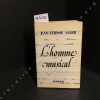
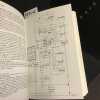
Bon état - Très légers frottements au niveau des coiffes - Très légers frottements au niveau des tranches dont une petite déchirure sans manque au niveau de la tranche inférieure de la 4ème de couverture - Coin supérieur de la couverture légèrement frotté Bon
Genre and the Production of Gendered Identity on the Lyric Stage
, Brepols, 2025 Hardback, Pages: xxii + 317, Size:210 x 270 mm, Illustrations:22 b/w, 5 tables b/w., 17 music examples, Language: English. ISBN 9782503615585.
Summary The lyric stage is a cultural site at which constructions of gender have been developed, mitigated and, at times, hindered by musical performance. From the castrati of the seventeenth century to Mozart and Massenet's cross-dressed Cherubinos, musical works created for lyric stages have often complicated traditional and normative readings of the gender and sexual identities of their characters, allowing composers, performers, and audiences to move beyond simple biological understandings of gender and sex. The erotically charged sights and sounds of such productions called into question accepted generic conventions, thus revealing the very instability of normative identity and musical convention that European societies presumed integral to their social codes and generic constructs. The fourteen case studies in this volume explore these topics through various geographical, historical, and musical perspectives: from Italian opera seria to Parisian music-hall ballet and Greek operetta during the interwar years, these essays shed new light on the complex and complementary ways in which gender and the production of gendered identities were invariably contingent upon - but nevertheless moved beyond - the expectations of genre on the lyric stage. TABLE OF CONTENTS Mark Everist and Jennifer Walker, Introduction Gender, Genre, and Gender Crossing Orsolya Gyárfás, «Too Soft and Tender»: Opera Seria Masculinity and the Case of Mozart's La clemenza di Tito Nicola Badolato, Effeminate Heroes and Female Warriors in Seventeenth-Century Venetian Libretti: Between Cross-Casting and en travesti Luis Antonio González Marín, Women in Men's Costume: Heroic Roles and Female Singers in Hispanic Baroque Lyric Theatre Lucía Magán Abollo, The Voice of Heroes: Catalina Pacheco or 'la mujer vestida de hombre' in the Eighteenth-century Spanish Theatre (1738-1760) Valeria De Lucca, Norma travestie (1841) and its 'Male Heroines' Gender, Genre, and Eroticism Sarah Gutsche-Miller, Imagined Eroticism: The Art of Suggestion in Parisian Music-Hall Ballet Kimberly Francis, The Sounds of Sex: The French Garment Worker of the Belle Époque Jonathan Mallada Álvarez, Sexuality and Eroticism at the Teatro Apolo in Madrid (1900-1910) Carl Tertio Druml, Dance Craze and Eroticism: Operetta as a Carrier of Zeitgeist Peter Mondelli, What Use is Émile Zola to the Operetta Historian? Reconsidering the Roles of Courtesans on the Operetta Stage Gender, Genre, and Lyric Space Mark Everist, 'Opera' off the Stage: Gender and Genre in opéra de salon Elena Luporini, Do Not Open that Door: Perspectives on Gender in Béla Bartók's Bluebeard's Castle Sonja Starkmeth, Taking Centre Stage: 'Chorus Girls' in Late Victorian Popular Musical Theatre Evi Nikita, Women in Greek Operetta between the Wars: Gender, Identity and Sexuality Index of Names
Introduction à la musique.Six causeries faites au studio de Radio-Lausanne.
Lausanne, Payot 1940, 190x125mm, 89pages, broché. Nom de possesseur. Bon état.
Pour un paiement via PayPal, veuillez nous en faire la demande et nous vous enverrons une facture PayPal
Haydn. Collection Musiciens de tous les temps.
Paris, La Guilde du Livre 1967, 160x135mm, 191pages, reliure toile d'éditeur. Très bel exemplaire.
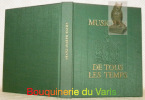
photos n/b, Pour un paiement via PayPal, veuillez nous en faire la demande et nous vous enverrons une facture PayPal
Vivaldi. Collection Musiciens de tous les temps.
Paris, La Guilde du Livre 1966, 160x135mm, 185pages, reliure toile d'éditeur. Très bel exemplaire.
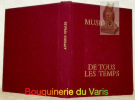
photos n/b, Pour un paiement via PayPal, veuillez nous en faire la demande et nous vous enverrons une facture PayPal
Les origines du chant cistercien : recherches sur les réformes du plain-chant cistercien au XIIe siècle
Rome, Tipografia Poliglotta Vaticana 1952 xvi + 179pp., 25cm., reliure cart. (dos avec qqs. taches), publié dans "Analecta Sacri Ordinis Cisterciensis" Annus VIII (1952), [Ce volume contient également: GRIESSER Bruno O.C.S.O. "Registrum Epistolarum Stephani de Lexinton. Pars II: Epistolae ad tempus regiminis in Savigniaco pertinentes (1230-1239) (pp.181-378) & DUVERNAY Roger "Citeaux. Vallombreuse et Etienne Harding" (pp.379-495)], poids: 1.2kg., R118234
Recherches sur le chant cistercien au douzième siècle
Paris, 1951 x + 196pp., exemplaire original de la thèse de doctorat présentée devant la Faculté des Lettres de l'Université Catholique de Paris, signé avec dédicace autographe par l'auteur, 27cm., broché, texte en typoscript, bon état, R118251
André-Modeste Grétry. Collection : Syrinx.
Molenbeek (Bruxelles), Editions du Trèfle à Quatre Feuilles, s.d. (ca 1940). "15 x 20, 79 pp., broché, état moyen (couverture défraîchie; sans jaquette)."
musicalité des images au Moyen Âge. Instruments, voix et corps sonores dans les manuscrits enluminés (XIIIe-XIVe siècles)
, Brepols, 2021 Paperback, 434 pages, Size:190 x 290 mm, Illustrations:142 col., Language: French. ISBN 9782503588551.
Summary Par les images, la musique est figurée de façon inventive et étonnante dans les manuscrits enluminés entre le XIIIe et le XIVe siècle, principalement en France et en Angleterre. C'est cette capacité d'invention des enlumineurs à rendre visible ce qui est invisible, à savoir les sons des instruments et les voix des chanteurs, qui retient l'attention. La démarche consiste à se fonder sur les cadres généraux de formation et de pensée des lettrés de l'époque : les arts libéraux et la théologie. À partir de cette culture savante commune, ce livre cherche à comprendre les différents procédés visuels élaborés par les « concepteurs d'images » pour faire voir et entendre « la musique » sur le support matériel et culturel particulier du manuscrit. Dans la société médiévale, le verbe et l'image sont aux fondements théologiques et anthropologiques du corps et de l'âme. Cette étude postule alors que les images du roi David, des jongleurs, des fous, des bêtes, des hybrides, participent d'une double représentation culturelle et morale : celle du statut social des « gens de savoir », initiés à la musica, concepteurs des livres et des images à l'usage des clercs, laïcs et/ou nobles cultivés ; celle du but ultime des savoirs des lettrés, et donc des livres enluminés : la conversion des m?urs par la discipline des corps en vue du salut des âmes. TABLE OF CONTENTS Préface - Jean-Claude Schmitt Introduction 1ère partie. Les livres dévotionnels : savoirs et pratiques sociales entre clercs et nobles 1. Statuts sociaux et circulation des livres : clercs et nobles laïcs 2. Savoirs : arts libéraux et images de la musique 3. Figures rhétoriques et motifs musiciens pour les sens et la mémoire 2e partie. David, modèle de la musique dans les images 1. Les instruments et les gestes de David : harpe, orgue et cloches 2. Jouer d'un instrument : gestes, mouvements et corps sonores 3. Le son et l'oreille : objectivation, zoomorphisme et anatomies 3e partie. Prédication, images et musicalités : les passions des corps 1. Corps, gestes et voix des « maîtres de la parole » 2. Chants, paroles et voix : chantres et animaux 3. Édifier et convertir : des passions à la Rédemption Conclusion Liste des manuscrits enluminés Bibliographie Index
Un compositeur médite sur son art. Ecrits et pensées recueillis par sa femme. Collection Langages.
Neuchâtel, A la Baconnière 1977, 210x135mm, 293pages, broché. Couveture à rabats. Bel exemplaire.
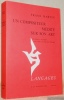
Pour un paiement via PayPal, veuillez nous en faire la demande et nous vous enverrons une facture PayPal
Between Centres and Peripheries. Music in Europe from the French Revolution to WWI
, Brepols, 2023 Hardback, xiv + 434 pages, Size:210 x 270 mm, Illustrations:40 b/w, Language(s):English, French, Spanish. ISBN 9782503608488.
Summary This volume revisits the artificial and enormously limiting historiographical concepts of centre and periphery in European musical life throughout the long 19th century and until the outbreak of the First World War. In this period, music played a prominent role, and cities such as Paris, Vienna, Milan or London, real laboratories of artistic creation, became social and cultural references for the rest of the continent, whose inhabitants strove to imitate their musical habits such as concert and theatrical life, soirées, parties or musical promenades. From diverse perspectives, this volume rethinks the singularity, influence and connections of different European musical centres, analysing the reproduction of cultural models and the conflicts that these models imposed on the peripheries, most of which have been ignored in the historiography of Western European music. In addition, it will also address the birth of musico-national languages situated on the European geographical margins, that develop interesting synergies between universality and nationality. The peripheral models of musical production and circulation in contexts far from the usual musical venues will also be addressed, as well as the derived cultural transfers.
Singing Speech and Speaking Melodies. Minor Forms of Musical Theatre in the 18th and 19th Century
, Brepols, 2021 Hardback, xiv + 562 pages, Size:210 x 270 mm, Illustrations:25 b/w, Language(s):English, Spanish, French. ISBN 9782503595436.
Summary This volume addresses the complex variety of stage works with sung and spoken sections, such as «vaudeville», «singspiel», «opéra-comique», «zarzuela» or «operetta» in different European countries from the eighteenth century to the beginning of the Twenties. Beyond a multifaceted perspective, twenty-one essays investigate the nature of these musical theatre forms, attending their origins, literary sources, relationships, vocality or cultural transfers, features that in some cases have made them become a mass phenomenon. The dissemination and adaptation of these genres through different national contexts, confirms the significance of the long-standing relationship between them and the contemporary dramatical and musical repertoire, revealing significant synergies, always conditioned by the market evolution. TABLE OF CONTENTS María Encina Cortizo - Michela Niccolai Preface VAUDEVILLE and OPÉRA-COMIQUE Danielle L. Herrington Sensibilité, Self-Sacrifice, and the Sentimental: Examining Jacques-Marie Boutet de Monvel and Nicolas Dalayrac's Ideological Diversion Philippe et Georgette (1791) at the Salle Favart Bertrand Porot «Un petit récitatif sans accompagnement»: les vaudevilles à l'opéra-comique, nouvelles perspectives Roberto Scoccimarro L'opéra-comique come creazione collettiva: La Prisonnière (1799),Bayard à Mézières (1814), La Marquise de Brinvilliers (1831) William Osmond «En Hollandais, s'il vous plaît!»: Singing and Reciting French comédie-vaudeville in Amsterdam (1830s) SINGSPIEL and Operetta Andrea Horz Johann Adam Hiller's Lottchen am Hofe: Contextualising Singspiel in French Traditions Marijana Kokanovic Markovic - Lada Durakovic The Place and Significance of the Opera Kuku?ka (Tatjana) in Franz Lehár's Opus Angeliki Kordellou The Contribution of Spiridon-Filiskos Samaras (1861-1917) to the Greek Operetta ZARZUELA and Vocality in Spain Luis Antonio González Marín ¿Actrices o cantantes? Aspectos de la vocalidad en el teatro musical de José de Nebra María Encina Cortizo The Spanish zarzuela in the 19th Century: French Patterns, Italian Harmonies and Theatrical Hispanic Tradition Ramón Sobrino The Emergence of the revista de actualidades and the sainete lírico: Main Patterns of the género chico in the teatro por horas in Spain (1868-1901) Andrea García Torres Discursos literarios sobre el género chico: funcionamiento, recepción y controversias ideológicas entre el contexto local e internacional Zoila Martínez Beltrán The Music of Spain (1918) by Carl Van Vechten.Focusing on Spanish Coloratura Singers Portuguese Musical Theatre Catarina Ribeiro Braga The Role of Amateur Societies in the Dissemination of Operetta and Music Theatre in Portugal in the Late Nineteenth Century David Cranmer Musical Theatre in Portugal and Brazil of the Ancien régime Questions of Genre Jana Franková From a Comedy to an opéra-comique: The Clandestine Marriage (1766) by Colman and Garrick and Its Adaptations in the 18th-Century Musical Theatre Adela Presas Zarzuela y opereta: formatos dramático-musicales en un acto en la frontera crítica del siglo xviii al xix Trevor Penoyer-Kulin Opérette, opéra-comique, and the Field of Operatic Production Francesc Cortès De Barcelona al Parnaso: traducciones y adaptaciones de óperas bufas y operetas francesas en Barcelona Víctor Sánchez Sánchez La zarzuela en las compañías de opereta italiana José Ignacio Suárez García Parodias españolas sobre Tannhaüser (1890) Sylvie Douche L'entre-deux déclamatoire ou le mélodrame français du xixe siècle Abstracts and Biographies Index of Names
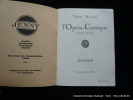
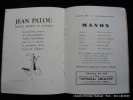
Théâtre National de l'Opéra Comique. Saison 1930-1931 Programme pour MANON de Massenet
Paris, 1930, in-12, broché, env. 36 pages. Superbe couverture de Pierre Brissaud avec une impression à l'or.
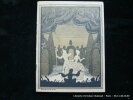
From Stage To Screen. Musical Films in Europe and United States (1927-1961)
, Brepols - Harvey Miller, 2012 hardcover, Pages: 338 pages, Size:210 x 270 mm, Language(s):English, Italian, Spanish *new. ISBN 9782503546148.
TABLE OF CONTENTS Massimiliano Sala, Preface Lauren Acton, Can?t Help Lovin? Dat Musical: 'Show Boat' in Films and Revivals? Beatrice Birardi, The Docu-Opera in the Italian Cinema of the 1940s: Another Way to See the Opera on the Screen? Antonio Caroccia, ?Camillo De Nardis e il cinema? ? Documenti inediti ? Maria ?iri?, Music in Ex-Yugoslav Cinematography 1945-1961: On the Road to Musical ? Jonathan De Souza, Film Musicals as Cinema of Attractions ? James I. Deutsch & Lauren R. Shaw, From 'Liliom' to 'Carousel' to 'Liliom' ? Alexandra Grabarchuk, The Finality of Stories Such as These: Exploring Narrative and Concept in Stephen Sondheim?s 'Into the Woods' ? Clara Huber, The Country Girl, the Emperor and Some Saltsticks: The Musical Film 'Spring Parade', Its Affinity to Viennese Operetta and the Changing Contexts of Its Screen Adaptations ? Ryan Patrick Jones, Copland on Wilder: Scoring Existential Theatre in Early American Film ? Raymond Knapp, Getting off the Trolley: Musical 'contra' Cinematic Reality ? Isabelle Le Corf ? Cécile Vendramini, 'Carmen Jones', a Faithful Adaptation of Bizet?s Opera? ? Sergio Miceli, WYSIWYG (What You See Is What You Get). Movie Musical / Film musicale / Film di argomento musicale: è necessario distinguere ? Matilde Olarte, El protagonismo femenino-masculino en los musicales de Fred Astaire y Gene Kelly: vigencia y actualidad ? Jaume Radigales & Isabel Villanueva, 'Carmen Jones': Between Opera and Musical ? Elena Redaelli, L?influenza del 'melodrama' ottocentesco da 'Showboat' a Sondheim ? Marida Rizzuti, 'Love Life e Trouble in Tahiti': rappresentazione della famiglia americana ? Delphine Vincent, «Lippen schweigen, ?s flüstern Geigen: Hab mich lieb!» Seduction, Powers Relations and Lubitsch?s Touch in 'The Merry Widow' ? Emile Wennekes, Betty Meets Cab: The Hi-De-Ho Man Animated ? Leanne Wood, Technology, Authenticity, and the Pastoral Ideal: Viewing Oklahoma! Through the Lens of Todd-AO ? Iryna Yaroshchuk, The Elusive Mary Poppins: Issues of Gender and Class in the Disney Version (1964) and Mosfilm?s Mary Poppins Goodbye (1983) Biographies ? Index of Names
Luigi Cherubini, A Multifaceted Composer at the Turn of the 19th Century
, Brepols, 2021 Hardback, x + 493 pages, Size:210 x 270 mm, Language(s):English, Italian, French. ISBN 9782503591001.
Summary This volume investigates Luigi Cherubini with the aim of providing a picture of the various faces that a composer and his output could present to European society at the turn of the nineteenth century; a society in which the composer, no longer tied to a patron or a court, tried to integrate himself as a participant in the labor market by finding new, coexisting forms of subsistence, thereby becoming a pre-eminent figure in the industrial and commercial world of the time. Additionally, the volume aims to deepen understanding of the composer's output in light of the political and social upheavals that took place during his long life, from the French Revolution to the threshold of the Springtime of the People. TABLE OF CONTENTS Massimiliano Sala Preface Vocal and Sacred Music Bella Brover-Lubovsky Cherubini's Madrigal Ninfa crudel and the Legacy of the Scuola dei rivolti Michael Pauser Apart from the Masses: Luigi Cherubini's Other Sacred Music Galliano Ciliberti Luigi Cherubini e la Chapelle royale (1816-1830) Music Theatre Helen Geyer Komplex und ambivalent? - Überlegungen zu strukturellen und ästhetischen Eigentümlichkeiten in Cherubinis Opern der 1780er und 1790er Jahre Lorenzo Mattei Il Metastasio infranciosato di Marmontel e Cherubini Francesca Menchelli-Buttini Luigi Cherubini's Adriano in Siria (Leghorn 1782) Roberto Scoccimarro «À la foi savante et simple». I morceaux d'ensembles negli opéras-comiques di Cherubini in un atto: note su strutture formali e questioni drammaturgiche Heiko Cullmann Spielarten einer Komposition Luigi Cherubinis Les Deux Journées Marco Beghelli Ali-Baba, il Falstaff di Cherubini Cherubini Pedagogue Luciane Beduschi Luigi Cherubini's Solutions for Padre Martini's Closed and Enigmatic Canons: An Unpublished (and Overlooked) Pedagogical Collection Frédéric de La Grandville Cherubini, inspecteur de l'enseignement au Conservatoire de musique de Paris (1795-1815) Reception Matthieu Cailliez Étude comparée de l'influence musicale et institutionnelle de Cherubini en France et dans le monde germanique entre 1787 et 1842 375 Giada Viviani «A Sort of Palladio»: Richard Wagner's Reception of Luigi Cherubini A Case Study Maria Teresa Arfini Il Capriccio o Studio in Do maggiore per fortepiano di Luigi Cherubini: un capolavoro o un esperimento accantonato? Abstracts and Biographies Index of Names
Music and the Second Industrial Revolution
, Brepols, 2019 Hardback, xiv + 498 pages, Size:216 x 280 mm, Languages: English, French, Italian. ISBN 9782503585710.
Summary The Second Industrial Revolution, new industrial societies, and growing urbanization drastically changed the life of humankind at the turn of the nineteenth and twentieth centuries. This volume investigates how the articulated musical world of the time was influenced by industrialization, how urbanization and new forms of circulation affected everyday life, and how new possibilities of experiencing cities and their musical entertainments came to light. In which ways did new forms of circulation influence the life of theatres and concert halls, the growing of orchestras, and the related birth of new workers' organizations? One section will be devoted to the development of the making of musical instruments, the related world of universal exhibitions, and music publishing. This volume also investigates new forms of mechanical reproduction in music, together with their many applications within society. Through the analysis of selected works, the volume also examines aesthetic perceptions of technological impact and its projections in an imaginary future. TABLE OF CONTENTS Massimiliano Sala Preface New Urban Perspectives and Everyday Life Jenny Nex Edinburgh's Last International Exhibition and its Music Étienne Jardin Une exposition musicale universelle. Palais du Trocadéro, 1878 João Silva Portugal, Mechanised Entertainment, and the Second Industrial Revolution Gloria Araceli Rodríguez-Lorenzo Arte y tecnología: el impacto de la Segunda Revolución Industrial en la vida musical de Madrid (1870-1923) María Encina Cortizo - Ramón Sobrino Main Changes in the Spanish Way of Life after the Second Industrial Revolution: Images of Modernity through the 'Género Chico' (1870-1914) Carmela Bongiovanni La musica nel sociale. Società di mutuo soccorso e musica in Italia (1850-1890 circa) The Development of Instruments Making and Music Publishing Malou Haine Données socio-économiques sur les facteurs français d'instruments de musique dans la documentation sur les expositions universelles du xixe siècle Arnold Myers - Jenny Nex The Development of Industrial Brass Instrument Making in Britain Francesco Carreras - Gianna Melloni La nascita dell'industria degli strumenti musicali a ?ato a Milano tra Ottocento e Novecento David Rowland Music Publishing in Britain ca. 1840-1900 The Impact on Theatrical Scene Paolo Bolpagni Una nuova luce per il teatro: Mariano Fortuny e la sua 'Cupola' Jürgen Maehder Un ignoto libretto di fantascienza all'inizio del Novecento: L'utopia negativa nel libretto Il 3001 di Luigi Illica Modernism, Reproduction and the Machine Simone Ciolfi Alcuni aspetti del culto di Bach tra Ottocento e Novecento Irene Comisso Musica e pionierismo aviatorio agli esordi del Novecento Paulo F. de Castro Dionysian or Tectological? On the Cultural Meaning of the 'Machine Music' Topic in the Early Soviet Context George Brock-Nannestad The Industrial Substitute for Live Music Marita Fornaro Bordolli La mediatización de la música en el Uruguay de la Segunda Revolución Industrial Emilio Audissino «Behold the Newest Technological Sensation! With Music!»: The Use of Music in the Silent Cinema Abstracts Biographies Index of Names
Music Publishing and Composers (1750-1850)
, Brepols, 2020 Hardback, 336 pages, Size:210 x 260 mm, Illustrations:30 b/w, Languages: English, Italian, French. ISBN 9782503588155.
Summary The development of music publishing in the final years of the eighteenth and first decades of the nineteenth century had a decisive and far-reaching influence on every facet of the music profession. The proliferation of publications substantially altered the conception of the musical work and the nature and extent of intellectual property. Increasingly this allowed composers to support themselves financially through the sale of their own works, or even to establish, or collaborate in, publishing houses. The needs of contemporary consumers of music and new approaches to the production and dissemination of the musical work conditioned, and were conditioned by, the ever-evolving spheres of public and domestic performance that, in turn, stimulated the emergence of new musical forms and genres. This book focuses on the role of music publishing within the daily life and activities of composers at the turn nineteenth century, and its impact on subsequent patterns of development that influenced the course of nineteenth-century music. TABLE OF CONTENTS Massimiliano Sala, Preface Composers, Editions and the Musical Work Nancy November, Beethoven's Symphonies Arranged for the Chamber by His Contemporaries Rainer Kleinertz, Werk und Zyklus. Zur Reihenfolge der Streichquartette in Haydns Opus 33 und Mozarts Opus 10 Maria Birbili, The Proliferation of Musical Sources in the 19th Century: An Abridged Editorial History of Rossini, Verdi, and Puccini's Italian Opera Myron Gray, What Is an Author of Early American Music? «Die Zauberflöte» and the Culture of Reprinting The Market, the Rights and Publishing Strategies David Rowland, Composers, Publishers and the Market in Late Georgian Britain Bianca Maria Antolini, Compositori, editori, fruitori: una rete di rapporti Giovanna Carugno, A chi apparteneva il «Nabucco»? Note storiche sulla «proprietà dello spartito» e sulla controversa tra gli editori Lucca e Ricordi Floris Meens, «Eine heillose Geschichte!»: The Discourse on Publishers in Dutch Music Journals (ca. 1839-1860) Circulation Henri Vanhulst, Compositeurs 'belges' de musique instrumentale édités à Paris au XVIIIe siècle: la quête reconnaissance internationale Stephanie Klauk, Handschriftliche Überlieferung von Streichquartetten im Rom des 18. Jahrhunderts Sarah Noemi Schulmeister, Musikverleger des 18. Jahrhunderts als international agierende Akteure des Transfers: Der Fall Antoine Huberty Elisabetta Righini, Disavventure editoriali e concertistiche di Giovanni Battista Cirri dal soggiorno londinese (1764-1775) al rientro in patria Repertoire and Public Maria João Albuquerque, Music Printing and Publishing in Portugal (1750-1850): The Rise of a New Industry Francisco J. Giménez-Rodríguez, Four Unknown Waltzes by Beethoven? The Beginnings of Sheet Music Publishing in Spanish Periodicals (1805-1834) Gloria Araceli Rodríguez Lorenzo, «La Iberia Musical y Literaria» (1842-1846): Connecting the Public and Private Sphere
Franz Schubert.
Paris, Librairie Arthème Fayard 1977, 220x145mm, 1294pages, reliure toile d'éditeur sous jaquette. Bel exemplaire.
avec Eléments bibliographiques et Catalogue suivant l’ordre adopté dans l’histoire de l’oeuvre et Correspondance du catalogue de Otto Erich Deutsch aux pages de l’histoire de l’oeuvre et Liste des oeuvres publiées sous un numéro d’opus, avec correspondance aux numéros du catalogue d’Otto Erich Deutsch et Catalogue par genres musicaux et Catalogue alphabétique des titres des lieder et Catalogue alphabétique des auteurs mis en musique par Schubert et Table, Pour un paiement via PayPal, veuillez nous en faire la demande et nous vous enverrons une facture PayPal
LUDWIG VAN BEETHOVEN.
Paris, Fayard 1976, 225x140mm, 845pages, reliure d'éditeur sous jaquette. Bel exemplaire.
Pour un paiement via PayPal, veuillez nous en faire la demande et nous vous enverrons une facture PayPal
L'opéra de Rameau.
Paris, Henri Laurens, 1930. 20 x 27, 595 pp., 16 planches, reliure pleine rexine rouge, très bon état.
Reliure solide en très bon état.

