 Write to the booksellers
-
Type
Book (7261)
Disk (44)
Drawings (1)
Engraving (9)
Magazine (89)
Maps (4)
Music sheets (135)
New book (2)
Old papers (1)
Photographs (19)
Posters (1)
-
Latest
Last 24h (4)
Last 3 days (10)
Last month (948)
Last week (6)
-
Language
Czech (1)
Dutch (11)
English (156)
French (7385)
German (4)
Italian (2)
Latin (3)
Russian (4)
-
Century
16th (17)
17th (43)
18th (199)
19th (882)
20th (2482)
21st (1569)
-
Countries
Belgium (1158)
Canada (34)
China (56)
Côte d'Ivoire (6)
Denmark (1063)
France (4899)
Germany (1)
Netherlands (181)
Switzerland (155)
United Kingdom (9)
United States of America (4)
-
Syndicate
ALAC (27)
CLAM (27)
CLAQ (2)
ILAB (2238)
NVVA (15)
SLACES (15)
SLAM (1026)
SNCAO (4)
BERTHA PORTER (The late) and ROSALIND MOSS (L. B.), BURNEY (Ethel W.)
Reference : 600890
ISBN : 0900416130
TOPOGRAPHICAL BIBLIOGRAPHY of ANCIENT EGYPTIAN HIEROGLYPHIC TEXTS, RELIEFS, AND PANTINGS. III. MEMPHIS Part. 1. Abû Rawâsh to Abûsîr. Part 2. Saqqâra to Dashûr.
Oxford, Griffith Institute, Ashmolean Museum, 1974-1981. In-8, cartonnage de l'éd. marron, titre doré sur dos lisse, XXVIII-XXXIII-1014 pp. en continu, LXXV pl. en noir, index.
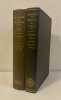
Reliures un brin défraîchie, bonne condition au demeurant. - Frais de port : -France 12,5 € -U.E. 12 € -Monde (z B : 19 €) (z C : 48 €)


Sur les Principes généraux de la Thermochemie. 1.- 13. Mémoire. (+) Dissolution des Acides et de Alcalis. 1. - 9. Mémoire.
Paris, Victor Masson, Imprimerie Gauthier-Villars, 1875. 8vo. Contemp. hcalf, raised bands, gilt spine. Light wear along edges. Wear to top of spine. Small stamps on verso of titlepage. Both works in ""Annales de Chimie et de Physique"", 5me Series - Tome IV. 572 pp. (The entire volume offered). Berthelot's works: pp. 5-131 a. 141-214 + pp. 445-537. Internally clean and fine.
First appearance of this collection of Berthelot's famous memoirs on thermochemistry to which he turned his attention in 1865. In these lectures he introduced the concepts of 'exothermix' and 'endothermic'. He also intorduce his famous 3 principles - equivalence between internal and heat changes in chemical reactions, heat evolved or absorbed in a chemical change depends onlyon the initial and final states of the reactans and products, provided no external work is done, and ""law of maximum work"" which says that ""every chemical change accomplished without the intervention of energy from outside tends towards the production of a body or system of bodies which produce the most heat"". The principles of Thermochemistry given here Berthelot considered himself fundamental.""In the 1860s Berthelot was done with synthesis and turned to thermochemistry, the study of the heat of chemical reactions. In some of his work he had unknowingly been anticipated by Hess, but he went much further. He devised a calorimeter within which he could measure the heat of chemical reactions and ran hundreds of determinations. This work along with that being conducted by Thomson threw the science of thermochemistry into high gear.""(Asimov).
Thés et tisanes : Sirops, liqueurs et ratafias
Maison rustique 2001 In-12 long, relié. Couverture rigide illustrée en vert et couleurs. 223 pp. Livre comme neuf. 394 grammes.
Très bon état d’occasion
Jésus le messie. la bible n°3
Univers-media 1977 48 pages in4. 1977. Broché. 48 pages.

Très bon état
"BERTHOLLET, CLAUDE LOUIS. - PREPARING THE WAY FOR THE ATOMIC THEORY IN CHEMISTRY.
Reference : 46023
(1801)
Recherches sur les lois de l'affinité. (+) Suite des Recherches... (+) Suite des Recherches... (+) Suite des Recherches... (+) Suite des recherches.. (5 Parts).
Paris, Chez Fuchs, An IX(1801). Boundin 3 contemp. hcalf. Gilt spuines. Light wear along edges. In: ""Annales de Chimie, ou Recueil de Mémoires concernant la Chemie"" Tome 36, 37 and 38. (Entire volumes offered). 336"330,(2)"334,(2) pp. and 5 engraved plates. Berthollet's paper: pp. 302-317, pp. 151-181, 221-252, pp. 3-29, 113-134.
Together with the memoir printed at the same time in ""Mémoires de l'Institut.."" this is the first appearance of B's groundbreaking work on the nature of chemical affinity and the fact that many factors influence chemical reactions, comparing chemical affinity to the force of gravity. The paper was at the end of the year published separately.The theory set forth here ""led directly to Prout's investigations which yielded a knowledge of definite chemical proportions and thus played a very importent part in preparing the way for the development of the Atomic Theory on which the whole modern chemistry is based.""(Duveen, p. 75).""Berthollet read a memoir on the general theory of affinities while he was still in Egypt. This was the starting point of his complete new system of chemistry, first briefly sketched in Recherches sur les lois de l’affinité (1801) and later developed into the comprehensive, two volume Essai de statique chimique. Here he attempted to provide a proper basis for chemistry, so that its experimental results could be viewed in the light of theoretical first principles. Berthollet developed a theory and a model adequate for the understanding and the interpretation of the rapidly growing body of chemical knowledge in his time. He was aware that the positive work of constructing a new theory had yet to be performed after the shock of Lavoisier’s criticism of the old chemistry.(DSB).Parkinson ""Breakthroughs"", 1801 C.
Petite anthologie du café
Equinoxe 2000 In-16 broché 16,5 cm sur 16,5. 263 pages. Très bon état d’occasion.
Très bon état d’occasion
Oui, je peux arreter de fumer ! - collection les cahiers dr good
Solar éditions. 2020. In-8. Broché. Etat d'usage, Couv. convenable, Dos satisfaisant, Intérieur frais. 64 pages - nombreux dessins en couleur dans le texte. . . . Classification Dewey : 633.7-Plantes alcaloïdes (tabac, thé, cacao, café, pavot)

collection les cahiers dr good - illustrations de Chloé Gautier et Kei Lam - Apprenez à connaitre votre ennemi pour mieux le combattre - préparez votre sevrage sur tous les plans : logistique, psy, nutritionnel et physique - gardez le cap en adoptant les bonnes habitudes et les gestes anticraquage Classification Dewey : 633.7-Plantes alcaloïdes (tabac, thé, cacao, café, pavot)
Versuch einer lateinischen Nomenclatur für die Chemie, nach electrisch-chemischen Ansichten. (Im Auszuge, frei bearbeitet, und mit Vorschlägen für die deutsche Nomenclatur begleitet, von Gilbert).
Leipzig, Johann Ambrosius Barth, 1812. Without wrappers. In: ""Annalen der Physik und der Physikalischen Chemie. Hrsg. Ludwig Wilhelm Gilbert"", Bd. 12 (= Bd. 42 der Reihe), Neuntes Stück. Titlepage to vol. 12. Pp. 1-116 a. 1 engraved plate. (The entire issue offered). Berzelius' paper: pp. 37-89.
First German edition of this classic paper in chemistry in which Berzelius presented his system of nomenclature to the scientific world. The paper was first preseted in French ""Essay sur la nomenclature chimique"" in Journal de Physique the year before (1811).""Of his contributions, moreover, to the development of the atomic theory and the advancement of chemical science, not the least valuable was the introduction of a chemical symbolism which, with slight modifivcations, is in use at the present day. By giving his symbols a quantitative meaning - the symbol of an element representing one atomic proportion by weight - it was possible ""to show briefly and clearly the number of elementary atoms in each compound and, after the determination of their relative weights, present the results of each analysis in a si8mple and easely retained manner."". This symbolism was speedily adopted on the Continent but, en England, only after some considerable time.""(Findley ""A Hundred Year of Chemistry"", p. 14). - Holmberg, Bibliografi öfver Berzelius, 1812:7).
"BERZELIUS, JÖNS JACOB. - ONE OF THE MOST IMPORTENT WORKS IN THE HISTORY OF CHEMISTRY - THE FRENCH VERSION.
Reference : 46030
(1811)
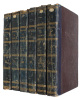
Essais sur les proportions déterminées dans lesquelles se trouvent réunis les élémens de la nature inorganiques. (+) Suite des experiences sur les proportions déterminées, d'après lesquelles les élémens de la nature inorganique s'unissent... (In all...
Paris, Chez J. Klostermann fils, 1811-12. Bound in 6 contemp. hcalf. Gilt spines, slightly rubbed. Wear to top of spines. In: ""Annales de Chimie, ou Recueil de Mémoires concernant la Chemie"" Tome 78, 79, 80, 81, 82 and 83. (Entire volumes offered). The 14 parts: (Tome 78:) pp. 5-37, 105-132, 217-242. - (Tome 79:) pp. 113-142, 233-264. - (Tome 80:) pp. 5-37, 225-258. - (Tome 81:) pp. 5-36, 278-303. - (Tome 82:) pp. 5-33, 113-125, 225-72. (Tome 83:) pp. 5-35 a. pp. 117-127. With in all 3 engraved plates. Some scattered brownspots.
The papers represents one of the first announcements of Berzelius' discovery of the fixed chemical proportions, determining the weights and valencies of the various constituent elements in inorganic compounds. The papers were published at the same time in Swedish, German (both here in Annalen and in Schweiger's Journal), and in French. By running many hundreds of analysis of chemical compounds he gave so many examples of the law of definite proportions that the world of chemistry could no longer doubt its validity, and in so doing he gave experimental evidence to the atomic theory. He hereby laid a solid fundation for the further development of chemistry. A reprint is found in Ostwald's Klassiker der exakten Wissenschaften, No. 35.According to Söderbaum (Jac. Berzelius, 2, p.12) ""It was a giant work, one of the most importent in the history of chemistry, which was here presented. One is even more impressed when one remembers that it was a pioneer undertaking in every sense of the term. Analytic and synthetic methods existed before Berzelius' time, to be sure, but there were no precise methods of the sort which he required. They all had to be elaborated at the cost of time and labour.""(J. Erik Jorpes ""Jac. Berzelius"", p.45).""In general Berzelius's efforts were directed toward the consolidation and extension of the atomic theory. He improved chemical analysis and determined the composition of a large number of compounds, thus verifying the laws of constant and multiple proportions and furnishing the most accurate equivalent weights then available. By ingenious methods he arrived at the correct atomic composition of most common substances, and thus was enabled to draw up (in 1826) a table of atomic weights very nearly identical with the modern one.""(Leicester & Klicktein ""A Source Book in Chemistry"", p. 258).Parkinson ""Breakthroughs"", 1810-20 C.
"BERZELIUS, JÖNS JACOB. - ONE OF THE MOST IMPORTENT WORKS IN THE HISTORY OF CHEMISTRY- GERMAN VERSION.
Reference : 43628
(1811)
Versuch, die bestimmten und einfachen Verhältnisse anzufinden, nach welchen die Bestandtheile der unorganischen Natur mit einander verbunden sind. Erste Hälfte. (+) Zweite Hälfte. (+) Erste Fortsetzung des Versuchs, die bestimmten...(+) Zweite Fortse...
Halle, Rengerschen Buchhandlung, 1811, 1811, 1812. Without wrappers as published in ""Annalen der Physik. Herausgegeben von Ludwig Wilhelm Gilbert"", Bd. 37, Drittes u. Viertes Stück + Bd. 38, Sechtes Stück + Bd. 40, Zweites u. Drittes Stück. The entire issues offered (5 issues). With titlepage to vol. 37, 38 a. 40. Pp. 233-480 a. 3 engraved plates., pp. 121-236 a. 2 engraved plates., pp. 117-348 a. 1 engraved plate. Berzelius's papers: pp. 249-337 a. 415-472.- Pp. 161-226. - Pp. 162-208 a. 235-330..
The papers represents one of the first announcements of Berzelius' discovery of the fixed chemical proportions, determining the weights and valencies of the various constituent elements in inorganic compounds. The papers were published at the same time in German (both here in Annalen and in Schweiger's Journal), and in French. By running many hundreds of analysis of chemical compounds he gave so many examples of the law of definite proportions that the world of chemistry could no longer doubt its validity, and in so doing he gave experimental evidence to the atomic theory. He hereby laid a solid fundation for the further development of chemistry.According to Söderbaum (Jac. Berzelius, 2, p.12) ""It was a giant work, one of the most importent in the history of chemistry, which was here presented. One is even more impressed when one remembers that it was a pioneer undertaking in every sense of the term. Analytic and synthetic methods existed before Berzelius' time, to be sure, but there were no precise methods of the sort which he required. They all had to be elaborated at the cost of time and labour.""(J. Erik Jorpes ""Jac. Berzelius"", p.45).""In general Berzelius's efforts were directed toward the consolidation and extension of the atomic theory. He improved chemical analysis and determined the composition of a large number of compounds, thus verifying the laws of constant and multiple proportions and furnishing the most accurate equivalent weights then available. By ingenious methods he arrived at the correct atomic composition of most common substances, and thus was enabled to draw up (in 1826) a table of atomic weights very nearly identical with the modern one.""(Leicester & Klicktein ""A Source Book in Chemistry"", p. 258).Parkinson ""Breakthroughs"", 1810-20 C.
"BERZELIUS, JÖNS JACOB. - THE INTERNATIONAL LANGUAGE OF CHEMISTRY INTRODUCED.
Reference : 46988
(1813)
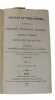
Experiments on the Nature of Azote, of Hydrogen, and of Ammonia, and upon the Degrees of Oxidation of which Azote is susceptible. (+) Essay on the Cause of Chemical Proportions, and on some Circumstances relating to them: together with a short and eas...
London, Robert Baldwin, 1813 a. 1814. 8vo. 2 contemp. hcalf. Marbled boards. Spines lacks and boards detached. In: ""Annals of Philosophy"" or Magazine of Chemistry, Mineralogy, Mechanics... By Thomas Thomson"". Vol. II and Vol. III. Entire volumes offered. Berzelius' papers: pp. 276-284, 357-368 (the first paper in vol. II), pp. 443-454 (vol. II) a. pp. 51-62, 93-106, 244-257 a. 353-364. (vol. III). Internally fine and clean.
First printing of these milestone papers in the history of chemistry, where Berzelius introduced his famous chemical symbolism whereby an element is generally represented by the first letter of its Latin name, or, in the event of elements having the same first letter, by the first two letters. Even though his atomic symbols were introduced in 1813 (see the note on p. 359 in the first paper), it was quite a few years before Berzelius's symbols were adopted by the chemistry community. But once accepted, they became the new international language of chemistry.Berzelius ""contributed more to the development of the atomic theory and to the setting up of accurate values of the atomic weights than did any other worker of the time. Of his contributions, moreover, to the development of the atomic theory and the advancement of chemical science, not the least valuable was the introduction of a chemical symbolism which, with slight modification, is in use at the present day. By giving his symbols a quantitative meaning - the symbol of an element representing one atomic proportion by weight - it was possible ""to show briefly and clearly the number of elementary atoms in each compound and, after the determination of their relative weights, present the results of each analysis in a simple and easely retained manner"". This symbolism was speedily adopted on the Continent but, in England, only after some considerable time.""(Findlay ""A Hundred Years of Chemistry"", p. 14.).Parkinson ""Breakthroughs"", 1813 C. - Leicester & Klickstein ""A Source Book in Chemistry"", p. 258 ff. - Holmberg 1813:28 a. The volume contains other notable papers THOMAS THOMSON ""On the Discovery of the Atomic Theory"", pp. 329-338. and JOHN DALTON ""Remarks on the Essay of Dr. Berzelius on the Cause of Chemical Proportions"", pp. 174-180 (Vol. III).
"BERZELIUS, JÖNS JACOB. - THE INTERNATIONAL LANGUAGE OF CHEMISTRY INTRODUCED.
Reference : 49243
(1813)
Experiments on the Nature of Azote, of Hydrogen, and of Ammonia, and upon the Degrees of Oxidation of which Azote is susceptible.
London, Robert Baldwin, 1813. 8vo. Contemp. hcalf. Marbled boards. Spine lacks and boards loose. In: ""Annals of Philosophy"" or Magazine of Chemistry, Mineralogy, Mechanics... By Thomas Thomson"". Vol. II. - VIII,480 pp. a. 7 plates. (Entire volume offered). Berzelius' paper: pp. 276-284, 357-368. Some browning and brownspots to plates.
First printing of this milestone papers in the history of chemistry, where Berzelius introduced his famous chemical symbolism (the offered paper is the first on the subject - Leicester & Klickstein calls it the ""Preliminary note) whereby an element is generally represented by the first letter of its Latin name, or, in the event of elements having the same first letter, by the first two letters. Even though his atomic symbols were introduced in 1813 (see the note on p. 359), it was quite a few years before Berzelius's symbols were adopted by the chemistry community. But once accepted, they became the new international language of chemistry. Berzelius ""contributed more to the development of the atomic theory and to the setting up of accurate values of the atomic weights than did any other worker of the time. Of his contributions, moreover, to the development of the atomic theory and the advancement of chemical science, not the least valuable was the introduction of a chemical symbolism which, with slight modification, is in use at the present day. By giving his symbols a quantitative meaning - the symbol of an element representing one atomic proportion by weight - it was possible ""to show briefly and clearly the number of elementary atoms in each compound and, after the determination of their relative weights, present the results of each analysis in a simple and easely retained manner"". This symbolism was speedily adopted on the Continent but, in England, only after some considerable time.""(Findlay ""A Hundred Years of Chemistry"", p. 14.).Parkinson ""Breakthroughs"", 1813 C. - Leicester & Klickstein ""A Source Book in Chemistry"", p. 258 ff. - Holmberg 1813:28 a.
Untersuchung eines neuen Minerals und einer darin enthaltenen zuvor unbekannten Erde.
Leipzig, Johann Ambrosius Barth, 1829. Without wrappers as issued in ""Annalen der Physik und Chemie. Hrsg.von Poggendorff"", Bd. 16, Siebentes Stück. (2) + pp., 1 folded engraved plate. Entire issue offered with titlepage to volume 16. Berzelius's paper: pp. 387-415. Clean and fine.
First German printing - printed simultaneously with the English and Swedish version - of the paper in which Berzelius described his discovery of Thorium, the first element after Uranium to be identified as such. In 1829, Jöns Jakob Berzelius of the Royal Karolinska Institute, Stockholm extracted thorium from a rock specimen sent to him by an amateur mineralogist who had discovered it near Brevig and realised that it had not previously been reported. The mineral turned out to be thorium silicate, and it is now known as thorite. Berzelius even produced a sample of metallic thorium by heating thorium fluoride with potassium, and confirmed it as a new metal. He called the black mineral thorite, in honor of the Scandinavian god Thor.Parkinson ""Breakthroughs"", 1829 C.
"BESSEL, FRIEDRICH WILHELM. - REDUCING THE ""PERSONAL EQUATION"".
Reference : 52737
(1818)
Fundamenta Astronomiae pro Anno MDCCLV deducta ex Observationibus Viri incomparabilis James Bradley in Specula Astronomica Grenovicensi per Annos 1750 - 1762 institutis.
Regiomonti (Königsberg), Frid. Nicolovium, 1818. Folio. Near contemp. hcalf. Gilt spine with gilt lettering. A small nick at upper backhinge. (12),325,(1) pp. Light scattered brownspots. Top of title-page with old owners name and a small stamp.
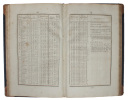
First edition of this milestone work in astronomical obeservation, where Bessel reduced the observations for the ""personal equation"" based on Bradley's observations and here published Bradley's Greenwich observations for the first time and making a catalogue of 3222 stars extracted from them.""The positions of Bradley’s stars valid for 1755 were published by Bessel as Fundamenta astronomiae pro anno 1755 (1818). This work also gives the proper motions of the stars, as derived from these observations of Bradley, of Piazzi, and of Bessel himself. It constitutes a milestone in the history of astronomical observations, for until then positions of stars could not be given with comparable accuracy: through Bessel’s work, Bradley’s observations were made to mark the beginning of modern astrometry. During this investigation Bessel became an admirer of the art of observation as practiced by Bradley"" and because Bradley could not evaluate his own observations, Bessel followed and also taught the principle that immediately after an observation, the reduction had to be done by the observer himself. Further, he realized that the accurate determination of the motions of the planets and the stars required continuous observations of their positions until such motions could be used to predict ""the positions of the stars .... for all times with sufficient accuracy."" (DSB).Shapley a. Howarth. A Source Boook in Astronomy, p. 103 a. 216.
"BESSEL, (FRIEDRICH WILHELM) - THE FIRST MEASURE OF THE DISTANCE TO A STAR AND OF ITS PARALLAX.
Reference : 47114
(1838)
Observations pour déterminer la parallaxe annuelle de la 61e étoile du Cygne. - Extrait d'une Lettre de M. Bessel à M. de Humboldt. Note de M.Arago sur le même sujet. (Séance du Lundi 5 Novembre 1838). (+) Nouvelles observations sur la parallaxe annu...
Paris, Bachelier, 1838 a. 1840. 4to. No wrappers. In: ""Comptes Rendus Hebdomadaires des Séances de L'Academie des Sciences"", Tome 7, No 19 and Tome 10, No 17/18. Pp. (769-) 803 a. pp. (671-) 717. (Entire issues offered). Bessel's papers: pp. 785-793 a. pp. 703-710. Some scattered brownspots.
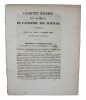
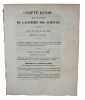
First appearance of a milestone paper in astronomy, giving the solution of the great problem of distances in the universe which had baffled astronomers ever since the time of Copernicus, announcing the FIRST SUCCESSFUL DISPLACEMENT OR PARALLAX OF A FIXED STAR and hence deducing the FIRST RELIABLE DISTANCE OF THE EARTH TO A FIXED STAR. The parallax observed corresponded to ab. 600.000 times that of the earth from the sun. On these grounds Bessel calculated the distance to about 11 light years, and this was confirmed by fresh investigations by Bessel in 1839-40 (the second paper offered). In 1842-43 it was also confirmed by C.A.F. Peters at Pulkowa. It is the first published instance of the fathom-line thrown into celestial space.Bessel communicated his observations in Comptes Rendus, in a letter to Humboldt (the offered paper dated Nov. 5, 1838), in ""Monthly Notices"" in letter to J. Herschel, and in ""Astronomische Nachrichten"" Vol. 16, No 365-66 (pp. 65-96), 1838), where a more detail account was published.Ther paper ""Bestimmung der Entfernung des 61sten Stern des Schwans"" in ""Astronomische Nachrichten"" is dated at the end: Altona 1838, Dec. 13.Bessel's investigation was hailed by John Herschel when Bessel was awarded the R.A.S. gold medal ""The greatest and most glorious triumph which practical astronomy has ever witnessed"". ""For determining the parallax of 61 Cygni, Bessel selected two comparison stars of magnitude 9-10 at distances of roughly eight and twelve minutes of arc. 61 Cygni is a physical double star whose components differ in brightness by less than one magnitude. The distance of sixteen seconds of arc between the components favored the accuracy of the determination of the parallax because pointing could be carried out with two star images. After observing for eighteen months, by the fall of 1838 Bessel had enough measurements for the determination of a reliable parallax. He found that p = 0.314? with a mean error of ±:0.020?. This work was published in the Astronomische Nachrichten (1838), the first time the distance of a star became known. Bessel’s value for the parallax shows excellent agreement with the results obtained by extensive modern photographical parallax determinations,..."" (DSB).Parkinson ""Breakthroughs"" 1838 A. - Shapley & Howarth ""A Source Book in Astronomy"", pp. 216 ff.
"BESSEL, (FRIEDRICH WILHELM) - THE FIRST MEASURE OF THE DISTANCE TO A STAR.
Reference : 49473
(1838)
Observations pour déterminer la parallaxe annuelle de la 61e étoile du Cygne. - Extrait d'une Lettre de M. Bessel à M. de Humboldt. Note de M.Arago sur le même sujet. (Séance du Lundi 5 Novembre 1838). (+) Nouvelles observations sur la parallaxe annu...
Paris, Bachelier, 1838 a. 1840. 4to. No wrappers. In: ""Comptes Rendus Hebdomadaires des Séances de L'Academie des Sciences"", Tome 7, No 19 and Tome 10, No 17/18. With title-ages to vol. 7 and 10. Pp. (769-) 803 a. pp. (671-) 717. (Entire issues offered). Bessel's papers: pp. 785-793 a. pp. 703-710. Stamp on both titlepages. The second titlepage with a fes brownspots, otherwise clean and fine.
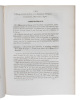
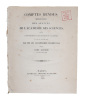
First appearance of a milestone paper in astronomy, giving the solution of the great problem of distances in the universe which had baffled astronomers ever since the time of Copernicus, announcing the FIRST SUCCESSFUL DISPLACEMENT OR PARALLAX OF A FIXED STAR and hence deducing the FIRST RELIABLE DISTANCE OF THE EARTH TO A FIXED STAR. The parallax observed corresponded to ab. 600.000 times that of the earth from the sun. On these grounds Bessel calculated the distance to about 11 light years, and this was confirmed by fresh investigations by Bessel in 1839-40 (the second paper offered). In 1842-43 it was also confirmed by C.A.F. Peters at Pulkowa. It is the first published instance of the fathom-line thrown into celestial space.Bessel communicated his observations in Comptes Rendus, in a letter to Humboldt (the offered paper dated Nov. 5, 1838), in ""Monthly Notices"" in letter to J. Herschel, and in ""Astronomische Nachrichten"" Vol. 16, No 365-66 (pp. 65-96), 1838), where a more detail account was published.Ther paper ""Bestimmung der Entfernung des 61sten Stern des Schwans"" in ""Astronomische Nachrichten"" is dated at the end: Altona 1838, Dec. 13.Bessel's investigation was hailed by John Herschel when Bessel was awarded the R.A.S. gold medal ""The greatest and most glorious triumph which practical astronomy has ever witnessed"". ""For determining the parallax of 61 Cygni, Bessel selected two comparison stars of magnitude 9-10 at distances of roughly eight and twelve minutes of arc. 61 Cygni is a physical double star whose components differ in brightness by less than one magnitude. The distance of sixteen seconds of arc between the components favored the accuracy of the determination of the parallax because pointing could be carried out with two star images. After observing for eighteen months, by the fall of 1838 Bessel had enough measurements for the determination of a reliable parallax. He found that p = 0.314? with a mean error of ±:0.020?. This work was published in the Astronomische Nachrichten (1838), the first time the distance of a star became known. Bessel’s value for the parallax shows excellent agreement with the results obtained by extensive modern photographical parallax determinations,..."" (DSB).Parkinson ""Breakthroughs"" 1838 A. - Shapley & Howarth ""A Source Book in Astronomy"", pp. 216 ff.
LA REGLEMENTATION DE LA CULTURE DU TABAC / Collection -La Terre- Encyclopédie paysanne dirigée par J. Le Roy Ladurie.
FLAMMARION. 1939. In-8. Broché. Etat d'usage, Couv. défraîchie, Dos abîmé, Papier jauni. 175 pages.. . . . Classification Dewey : 633.7-Plantes alcaloïdes (tabac, thé, cacao, café, pavot)
Classification Dewey : 633.7-Plantes alcaloïdes (tabac, thé, cacao, café, pavot)
Besset Natacha Guérin Laurence Gros Patrice
Reference : 500297007
(2016)
ISBN : 9782210501980
Les Nouveaux Outils pour les Maths CE1 (2016) - Fichier de l'élève
Magnard 2016 160 pages 21x29 5x1 2cm. 2016. Broché. 160 pages.
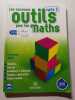
Bon état


Annales BAC 2021 Maths Term-Corrigé
Nathan 2020 336 pages 14 4x20 8x2 2cm. 2020. Broché. 336 pages.
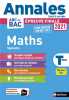
Très Bon Etat
Annales BAC 2021 Maths Term-Corrigé
Nathan 2020 336 pages 14 4x20 8x2 2cm. 2020. Broché. 336 pages.
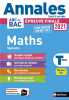
Très Bon Etat
Annales BAC 2021 Maths Term-Corrigé
Nathan 2020 336 pages 14 4x20 8x2 2cm. 2020. Broché. 336 pages.
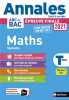
Très bon état
Annales BAC 2021 Maths Term-Corrigé
Nathan 2020 336 pages 14 4x20 8x2 2cm. 2020. Broché. 336 pages.
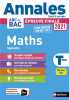
Très bon état
Besson Julien Mateus Luis Védrine Mickaël
Reference : 500083898
(2020)
ISBN : 9782091575391
Annales BAC 2021 Maths Terminale - Culture + (1)
Nathan 2020 432 pages 16 2x23 8x2 2cm. 2020. Relié. 432 pages.
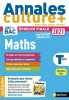
Très Bon Etat
Besson Julien Mateus Luis Védrine Mickaël
Reference : 500092669
(2020)
ISBN : 9782091575391
Annales BAC 2021 Maths Terminale - Culture + (1)
Nathan 2020 432 pages 16 2x23 8x2 2cm. 2020. Relié. 432 pages.
Bon état

