 Write to the booksellers
-
Type
Book (7258)
Disk (44)
Drawings (1)
Engraving (9)
Magazine (89)
Maps (4)
Music sheets (135)
New book (2)
Old papers (1)
Photographs (19)
Posters (1)
-
Latest
Last 24h (4)
Last 3 days (10)
Last month (948)
Last week (6)
-
Language
Czech (1)
Dutch (11)
English (156)
French (7382)
German (4)
Italian (2)
Latin (3)
Russian (4)
-
Century
16th (17)
17th (43)
18th (199)
19th (882)
20th (2483)
21st (1569)
-
Countries
Belgium (1158)
Canada (34)
China (56)
Côte d'Ivoire (6)
Denmark (1063)
France (4896)
Germany (1)
Netherlands (181)
Switzerland (155)
United Kingdom (9)
United States of America (4)
-
Syndicate
ALAC (27)
CLAM (27)
CLAQ (2)
ILAB (2239)
NVVA (15)
SLACES (15)
SLAM (1027)
SNCAO (4)
"BECQUEREL, HENRI. - ESTABLISHING THE CONNEXTION BETWEEN ROTATORY POWERS AND MAGNETISM.
Reference : 47427
(1877)
Recherches expérimentales sur la polarisation rotatoire magnétique.
Paris, G. Masson, 1877. 8vo. Contemp. hcalf, raised bands, gilt spine. Light wear along edges. Small stamps on verso of titlepage. In: ""Annales de Chimie et de Physique"", 5e Series,Tome 12. - 576 pp. a. 1 folded plate. (The entire volume offered). Becquerel's paper: pp. 5-87.
First edition of Henri Becquerel's importent study of the magnetic substances in which he sets forth his discovery that ""the magnetic rotation of the bodies is connected with their refractive index and with another function that varies with their specific magnetism"". For the first time it was showed that there is a connexion between the rotatory power and the magnetic properties of matter.The volume contains other importent papers, more than 10 papers by , MARCELLIN BERTHELOT, mainly on Thermo-Chemistry.

"BECQUEREL, HENRI. - THE DISCOVERY OF RADIO-ACTIVITY - THE BEGINNING OF THE NUCLEAR AGE
Reference : 46854
(1896)
Sur les radiations émises par phosphorescence. (+) Sur les radiations invisibles émises par les corps phosphorescents. (+) Sur quelques propriétés nouvelles des radiations invisibles émises par divers corps phosphorescents. (+) Sur les radiation...
Paris, Gauthier-Villars, 1896. 4to. Near contemp. full cloth. Spine gilt and with gilt lettering. Bookmark, ""The Chemists Club"" in gold on lower part of spine. Light wear along edges. In: ""Comptes Rendus Hebdomadaires des Séances de L'Academie des Sciences"", Tome 122 (Entire volume offered).1633 pp. The papers: 420-421, pp. 501-502, pp. 559-564, pp. 689-694, pp. 762-767 and pp. 1086-1088.
First appearance of the six landmark papers in which Becquerel documents his discovery of Radio-activity, PROMPTING THE NUCLEAR AGE.Becquerel was an expert in fluorescence and phosphorescence, continuing the work of his father and grandfather. Follwing the discovery of X-rays by Röntgen, Bexquerel investigated fluorescent materials to see if they also emitted X-rays. He exposed a fluorescent uranium salt, pechblende, to light and then placed it on a wrapped photographic plate.He found that a faint image was left on the plate, which he believed was due to the pichblende emitting the light it had absorbed as a more penetrating radiation.. However, by chace, he left a sample that had not been exposed to light on top of a photographic plate in a drawer. he noticed that the photographic plate also had a a faint image of the pechblende. After several chemical tests he concluded that these ""Becquerel rays"" were a property of atoms. He had, by chace, discovered radio-activity and prompted thee beginning of the nuclear age. He shared the Nobel Prize for Physics in 1903 with Marie and Pierre Curie. The ""Becquerel Rays"" were later discovered to be a composite of three forms of emanation, distinguished by Rutherford as alpha, beta and gamma rays.Dibner: 163 (the later Mémoire from 1903) - PMM: 393 (1903- Mémoire) - Garrison & Morton: 2001 (only the first paper). - Magie ""A Sourve Book in Physics"" p. 610 ff. - Norman:157.
"BECQUEREL, HENRI - THE FIRST EVIDENCE OF A RADIOACTIVE TRANSFORMATION.
Reference : 47430
(1901)
Sur la radioactivité de l'uranium.
(Paris, Gauthier-Villars), 1901. 4to. No wrappers. In: ""Comptes Rendus Hebdomadaires des Séances de L'Academie des Sciences"", Tome 133, No 24.. Pp. (969-) 1044. (Entire issue offered). Becquerel's paper: pp. 977-980.
First appearance of this historical paper in which Becquerel relates THE FIRST EVIDENCE OF A RADIOACTIVE TRANSFORMATION. ""Nothing that Becquerel subsequently accomplished (after his discovery of radioactivity in 1896) was as important as this discovery, by which he opened the way to nuclear physics. Nevertheless, there were two other occasions on which he stood directly on the path of history: when he identified electrons in the radiations of radium (1899 - 1900) and when he published the first evidence of a radioactive transformation (1901). (The paper offered).""(DSB).""To prove his supposition that the uranium would recover its activity, Becquerel set aside some of the inactive uranium solution and its radioactive barium sulfate precipitate for a period of 18 months. Late in 1901, he found that the uranium had completely regained its activity, whereas the barium sulfate precipitate had become completely inactive. Becquerel wrote: ""The loss of activity ... shows that the barium has not removed the essentially active and permanent part of the uranium. This fact constitutes, then, a strong presumption in favor of the existence of an activity peculiar to uranium, although it is not proved that the metal be not intimately united with another very active product.""
Opera qoutquot reperiri potuerunt omnia: Hac ultima impressione ornatus in lucem edita. 8 Tomi. - [THE FIRST COMPLETE BEDE]
Coloniae Agrippinae (Köln), Sumptibus Anton. Hierati et Ioan. Gymnici, 1612. Folio. Bound in two contemporary, uniform full vellum bindings with remains of silk-ties on boards. Some traces of use to extremities. Some pages evenly browned, some brownspotted. First two volumes richly illustrated with woodcut diagrams, musical notes, earth- and heaven-maps etc. in the text, numerous woodcut initials throughout, engraved title-page. (10) pp, columns 1-168 (84 pp.), pp. 169 - 322, columns 323 - 452 (65 pp.) + (1) f., 238 pp. + (2) ff., columns 1 - 500 (250 pp.) + (2) ff., columns 1 - 916 (458 pp.) + (1) f., columns 1 - 816 (408 pp) + (1) f., columns 1 - 852 (426 pp.) + (2) ff., columns 1 - 485 (243 pp.) + (2) ff., columns 1 - 968 (484 pp.), 55 ff. (Index).
Very rare, early, and apparently first complete edition of the seminal works by the ""Father of English History"", the venrable Bede. Bede’s most famous work, his ""An Ecclesiastical History of the English People"" (Historia Ecclesiastica Gentis Anglorum)? begins with the invasion of the British Isles by Roman forces and is considered one of the most important historical records documenting Roman rule, Anglo-Saxon settlement and the evolution of the Church on the island. With its focus on Anglo-Saxon history, the work is considered a key foundational text in the forming of a national English identity. The ""Ecclesiastical History"" contains stories that serve as the only source documenting the conversion to Christianity of the Anglo-Saxon tribes. It tells the story of Britons from Julius Caesar’s invasion, to the time of Bede himself . He tells the story of battles, conversions and miracles performed by monks and bishops, and details Britain’s early history from the Roman invasion. He furthermore describes the organization and establishment of Christianity in the English church and covers the personal history of ?Holy Ethelwald and miracles of growth within the English church, such as the development of the bishopric. ""Bede’s works fall into three groups: grammatical and “scientific,” scriptural commentary, and historical and biographical. His earliest works included treatises on spelling, hymns, figures of speech, verse, and epigrams. His first treatise on chronology, De temporibus (“On Times”), with a brief chronicle attached, was written in 703. In 725 he completed a greatly amplified version, De temporum ratione (“On the Reckoning of Time”), with a much longer chronicle. Both these books were mainly concerned with the reckoning of Easter. His earliest biblical commentary was probably that on the Revelation to John (703?–709)" in this and many similar works, his aim was to transmit and explain relevant passages from the Fathers of the Church. Although his interpretations were mainly allegorical, treating much of the biblical text as symbolic of deeper meanings, he used some critical judgment and attempted to rationalize discrepancies. Among his most notable are his verse (705–716) and prose (before 721) lives of St. Cuthbert, bishop of Lindisfarne. These works are uncritical and abound with accounts of miracles a more exclusively historical work is Historia abbatum (c. 725" “Lives of the Abbots”). In 731/732 Bede completed his Historia ecclesiastica. Divided into five books, it recorded events in Britain from the raids by Julius Caesar (55–54 BCE) to the arrival in Kent (597 CE) of St. Augustine of Canterbury. For his sources, he claimed the authority of ancient letters, the “traditions of our forefathers,” and his own knowledge of contemporary events. Bede’s Historia ecclesiastica leaves gaps tantalizing to secular historians. Although overloaded with the miraculous, it is the work of a scholar anxious to assess the accuracy of his sources and to record only what he regarded as trustworthy evidence. It remains an indispensable source for some of the facts and much of the feel of early Anglo-Saxon history."" (Encycl. Britt). Only three editions of Bede's Opera Omnia are known before Dr. Giles' edition from 1843 - 44. The first was printed in 1563 and the third in 1688. The 1688-edition constitutes the second edition of the present 1612-edition which is ""According to Dr. Henry, the only complete edition"" (Lowndes I:143). These three editions are also the only ones known to have been printed in folio (though Lowndes mentions the 1688-edition as 4to). The 1612-edition is the rarest. Some of the works contained in this edition are said not to be Bede's own, as some of the many scientific, richly illustrated works on geography, the heavens, the universe, music etc. bear small resemblance to his other works. Lowndes I:143, Brunet 1:731.
Bestimmung der Absorption des rothen Lichts in farbigen Flüssigkeiten.
(Leipzig, Johann Ambrosius Barth, 1852). Without wrappers as issued in ""Annalen der Physik und Chemie. Hrsg. von J.C. Poggendorff"", 86. Bd., 1. issue (""Heft"" No 5, 1852). Entire issue offered. Pp. 1-160 a. 1 engraved plate. Beer's paper: pp.. 78-90. Clean and fine.
First appearance of this importent law in is modern form. It is widely used in meteorology, in chemical analysis an, in meauring radiation etc.The law was discovered by Pierre Bouguer before 1729. It is often mis-attributed to Johann Heinrich Lambert, who cited Bouguer's Essai d'Optique sur la Gradation de la Lumiere (Claude Jombert, Paris, 1729) , and even quoted from it in his Photometria in 1760. Much later, August Beer extended the exponential absorption law. (1852).The issue offered also contains Plücker's large memoir on Diamagnetismus ""Ueber die Theorie des Diamagnetismus, die Erklärung des ueberganges magnetischen Verhaltens in diamagnetidches und mathematisches Begründung der bei Krystallen beobachteten Erscheinungen"". Pp. 1-34.The law is used widely in infra-red spectroscopy for analysis of polymer degradation and oxidation. The carbonyl group absorption at about 6 micrometres can be detected quite easily, and degree of oxidation of the polymer calculated.
Virginia Woolf: to the Lighthouse
Palgrave Macmillan 1991 256 pages 22x13x2cm. 1991. broché. 256 pages.
Bon état
[: foto's : Christine Bastin en Jacques Evrard] - BEKAERT, Geert;
Reference : 18543
ARCHITECTURAE LIBER XI. COGELS-OSYLEI. ANVERS-ANTWERPEN-ANTWERP. LA GRANDE PARADE ARCHITECTURALE. ARCHITECTUURPARADE. THE GREAT ARCHITECTURE SHOW.
, Bruxelles, Pierre Mardaga, 1984., Relie, toile blanche, jaquette illustree, 245 x 270mm., 144pp., prachtige foto's in kleur en z/w.Drietalige editie Fr/Nl/Eng. In goede staat. ISBN 9782870092194.
La grande parade architecturale - Architectuurparade - The Great Architecture show Photographies / Foto's / Photographs: Christine Bastin, Jacques Evrard
BELGIUM AT THE FAIR. EXILE ON MAIN STREET,
Gent, Vakgroep Architectuur , 2010 Hardcover, 210 x 285mm., 252 pagina's in vierkleurendruk. / nieuw ISBN 9789077833148.
In januari verscheen Belgium at the Fair. Exile on Main Street, aflevering 84 van Vlees & Beton, een boek over de Belgische paviljoenen op de Wereldtentoonstellingen van Parijs 1937 en New York 1939-40. Beide gebouwen werden ontworpen onder leiding van Henry van de Velde. De publicatie verschijnt onder impuls van Jan Matthysen, Belgisch Ambassadeur in Washington, D.C. en van Ambassadeur Herman Portocarero, Consul-generaal van Belgie in New York. Het paviljoen van New York werd in 1941 door Hugo Van Kuyck heropgebouwd op de campus van de Virginia Union University in Richmond, Virginia en is momenteel aan renovatie toe. Belgium at the Fair brengt een weelde aan onbekend feiten- en beeldmateriaal uit meer dan 10 binnen- en buitenlandse archiefinstellingen en prive-collecties.
Belafonte Harry,Wonder Stevie,Midler Bette,Charles Ray,Simon Paul,Dylan Bob,Jackson Michael,Warwick Dionne,Turner Tina,Lewis Huey,The News,Richie Lionel - Jackson Michael,Richie Lionel - Jackson Michael,Richie Lionel
Reference : 113309
(1985)

Popularizing the Nation: Audience Representation and the Production of Identity in Die Gartenlaube 1853-1900 (Modern German Culture and Literature)
University of Nebraska Press 1998 237 pages 14 22x2 57x23 6cm. 1998. Cartonné jaquette. 237 pages.

Comme neuf
"BELL, ALEXANDER GRAHAM. - ""THE GREATEST INVENTION I HAVE EVER MADE"": THE PHOTOPHONE.
Reference : 46951
(1880)
On the Production and Reproduction of Sound by Light. (Read before the American Association for the Advancement of Science, in Boston, August 27, 1880).
(New Haven), 1880. 8vo. Modern plain wrappers. In: American Journal of Science"", Third series, Vol. XX, No. 118, October 1880. Frontispiece-plate. Pp. 257-352 (entire issue offered). Bell's paper: pp. 305-324 and 11 textillustrations. A small stamp to verso of plate and the first leaf.
First printing of this important paper in which Bell describes his and Charles Sumner Tainter's, his assistent, invention of the Photophone or Radiophone, THE PROGENITOR OF MODERN FIBER OPTICS. This invention made possible the world's FIRST WIRELESS TELEPHONE MESSAGE, and the first call was sent from the Franklin Scool to the window of Bell's laboratory, some 213 meter away.""On June 3, 1880, Alexander Graham Bell transmitted the first wireless telephone message on his newly invented ""photophone."" Bell believed the photophone was his most important invention. The device allowed for the transmission of sound on a beam of light. Of the eighteen patents granted in Bell's name alone, and the twelve he shared with his collaborators, four were for the photophone. Bell's photophone worked by projecting voice through an instrument toward a mirror. Vibrations in the voice caused similar vibrations in the mirror. Bell directed sunlight into the mirror, which captured and projected the mirror's vibrations. The vibrations were transformed back into sound at the receiving end of the projection. The photophone functioned similarly to the telephone, except the photophone used light as a means of projecting the information, while the telephone relied on electricity."" (Mary Bellis).The first successful attempts were based upon the properties of selenium: ""The electric resistance of which varies with the degree of illumination to which it is exposed. Hence, given a transmitting instrument, such as a flexible mirror, by which the vibrations of a sound could throw into vibrations a beam of light, a receiver, consisting of sensitive selenium, forming part of an electric circuit with a battery and a telephone, should suffice to translate the varying intensities of light into corresponding varying intensities of electric current, and finally into vibrations of the telephone disk audible once more as sound."" (Prescott, George. Bell's Electric Speaking Telephone. 313 p.).
"BELL, ALEXANDER GRAHAM. - THE PHOTOPHONE AND SPECTRAL ANALYSIS.
Reference : 48148
(1880)
Sur l'application du photophone à l'étude des bruits qui ont lieu à la surface solaire. Note présentée par M. Janssen au nom de Alex. Graham Bell.
(Paris, Gauthier-Villars), 1880. 4to. No wrappers. In: ""Comptes Rendus Hebdomadaires des Séances de L'Academie des Sciences"", Tome 91, No 18. Pp.(698-) 736. (Entire issue offered). Bell's paper: pp. 726-727.
First printing of the paper in which Bell speculates how his and Tainter's invention of the Photophone or Radiophone could have a wider use. He pondered the photophone's possible scientific use in the spectral analysis of artificial light sources, stars and sunspots. He later also speculated on its possible future applications, though he did not anticipate either the laser or fiber-optic telecommunications:""Can Imagination picture what the future of this invention is to be!.... We may talk by light to any visible distance without any conduction wire.... In general science, discoveries will be make by the Photophone that are undreamed of just now."" Not long after its invention laboratories within the Bell System continued to improve the photophone in the hope that it could supplement or replace expensive conventional telephone lines. Its earliest non-experimental use came with military communication systems during World War I and II, its key advantage being that its light-based transmissions could not be intercepted by the enemy.
"BELL, ALEXANDRE (ALEXANDER) GRAHAM. - BELL, ALEXANDER GRAHAM. - ""THE GREATEST INVENTION I HAVE EVER MADE"": THE PHOTOPHONE.
Reference : 48149
(1880)
De la Production et de la Reproduction du Son par la Lumière. Mémoire lu à l'Association américaine pour l'avancement des Sciences, au Congrès de Boston, le 27 août 1880. (+) Les Récepteurs photophoniques de Sélénium. (Cette Note fait suite au M´wem...
Paris, G. Masson, 1880. 8vo. Contemp. hcalf, raised bands, gilt spine. Light wear along edges. Small stamps on verso of titlepage. In: ""Annales de Chimie et de Physique"", 5e Series, Tome 21. 576 pp. and 2 folded engraved plates. (Entire volume offered). Bell's paper: 399-430. With 11 fine textillustrations (showing the apparatus). Clean and fine.
First French version of ""On the Production and Reproduction of Sound by Light"" (the French version published in November and the English in October 1880) of this importent paper in which Bell describes his and Charles Sumner Tainter's, his assistent, invention of the Photophone or Radiophone, THE PROGENITOR OF MODERN FIBER OPTICS. This invention made possible the world's FIRST WIRELESS TELEPHONE MESSAGE, and the first call was sent from the Franklin Scool to the window of Bell's laboratory, some 213 meter away.Also with Breguet's importent paper on the Selenium used in the technology.""On June 3, 1880, Alexander Graham Bell transmitted the first wireless telephone message on his newly invented ""photophone."" Bell believed the photophone was his most important invention. The device allowed for the transmission of sound on a beam of light. Of the eighteen patents granted in Bell's name alone, and the twelve he shared with his collaborators, four were for the photophone. Bell's photophone worked by projecting voice through an instrument toward a mirror. Vibrations in the voice caused similar vibrations in the mirror. Bell directed sunlight into the mirror, which captured and projected the mirror's vibrations. The vibrations were transformed back into sound at the receiving end of the projection. The photophone functioned similarly to the telephone, except the photophone used light as a means of projecting the information, while the telephone relied on electricity."" (Mary Bellis).The first successful attempts were based upon the properties of selenium: ""The electric resistance of which varies with the degree of illumination to which it is exposed. Hence, given a transmitting instrument, such as a flexible mirror, by which the vibrations of a sound could throw into vibrations a beam of light, a receiver, consisting of sensitive selenium, forming part of an electric circuit with a battery and a telephone, should suffice to translate the varying intensities of light into corresponding varying intensities of electric current, and finally into vibrations of the telephone disk audible once more as sound."" (Prescott, George. Bell's Electric Speaking Telephone. 313 p.).
Martha Argerich l'enfant et les sortilèges
Buchet chastel 2010 288 pages 14x2 6x20 4cm. 2010. Broché. 288 pages.
Très bon état dos légèrement frotté une légère tache sur la tranche latérale sinon comme neuf
DISQUE VINYLE 33T MELODY IN F, ESPANA, WALTZ IN B MINOR, NEAPOLITAN DANCE, CRADLE SONG, FUR ELISE.
GUIDE INTERNATIONAL DU DISQUE. non daté. In-12. Broché. Bon état, Couv. convenable, Dos satisfaisant, Intérieur frais. Pochette en couleurs, les plus belles melodies immortelles n°2. Orchestre de Vienne, promenade concerts. Producteur: BORIS MERSSON.. . . . Classification : 410-33 Tours

Disque n°SMS-2473 Classification : 410-33 Tours

Ces maladies créées par l'homme : Comment la dégradation de l'environnement met en péril notre santé
Albin Michel 2004 378 pages 14 6x3 6x21 8cm. 2004. broché. 378 pages.
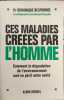
Bon état
L'Atelier du Langage Français Cahier de Vocabulaire et Expression 6e Version Specimen
Hatier 2013 64 pages 18 6x0 8x27 6cm. 2013. Broché. 64 pages.
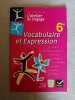
Bon état

Benchallal Nadia Rigal Serge Delga Carole
Reference : 500044528
(2021)
ISBN : 9782366722352
Paysages inattendus cahors... Des vignes et des hommes
PLUME CAROTTE 2021 96 pages 24 1x33 7x2 3cm. 2021. Relié. 96 pages.
Comme neuf - livre issu de destockage - pouvant présenter d'infimes traces de stockage - Expédié soigneusement dans emballage adapté
Benchallal Nadia Rigal Serge Delga Carole
Reference : 500058955
(2021)
ISBN : 9782366722352
Paysages inattendus cahors... Des vignes et des hommes
PLUME CAROTTE 2021 96 pages 24 1x33 7x2 3cm. 2021. Relié. 96 pages.
Très bon état - légères marques de lecture et/ou de stockage mais du reste en très bon état- expédié soigneusement depuis la France
Benchallal Nadia Rigal Serge Delga Carole
Reference : 500078488
(2021)
ISBN : 9782366722352
Paysages inattendus cahors... Des vignes et des hommes
PLUME CAROTTE 2021 96 pages 24 1x33 7x2 3cm. 2021. Relié. 96 pages.
Très bon état - légères marques de lecture et/ou de stockage mais du reste en très bon état- expédié soigneusement depuis la France
Benchallal Nadia Rigal Serge Delga Carole
Reference : 500093015
(2021)
ISBN : 9782366722352
Paysages inattendus cahors... Des vignes et des hommes
PLUME CAROTTE 2021 96 pages 24 1x33 7x2 3cm. 2021. Relié. 96 pages.
Très bon état
Benchallal Nadia Rigal Serge Delga Carole
Reference : 500093829
(2021)
ISBN : 9782366722352
Paysages inattendus cahors... Des vignes et des hommes
PLUME CAROTTE 2021 96 pages 24 1x33 7x2 3cm. 2021. Relié. 96 pages.
Bon état
Benchallal Nadia Rigal Serge Delga Carole
Reference : 500096264
(2021)
ISBN : 9782366722352
Paysages inattendus cahors... Des vignes et des hommes
PLUME CAROTTE 2021 96 pages 24 1x33 7x2 3cm. 2021. Relié. 96 pages.
Très bon état
Landscape: Politics and Perspectives (Explorations in Anthropology)
Routledge 1993 362 pages 15 5x23 3x2cm. 1993. Broché. 362 pages.
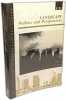
proche du très bon état intérieur propre bonne tenue

