 Write to the booksellers
-
Type
Book (7253)
Disk (44)
Drawings (1)
Engraving (9)
Magazine (89)
Maps (4)
Music sheets (135)
New book (2)
Old papers (1)
Photographs (19)
Posters (1)
-
Latest
Last 24h (2)
Last 3 days (12)
Last month (946)
Last week (6)
-
Language
Czech (1)
Dutch (11)
English (156)
French (7377)
German (4)
Italian (2)
Latin (3)
Russian (4)
-
Century
16th (17)
17th (43)
18th (199)
19th (879)
20th (2480)
21st (1569)
-
Countries
Belgium (1158)
Canada (34)
China (56)
Côte d'Ivoire (6)
Denmark (1058)
France (4896)
Germany (1)
Netherlands (181)
Switzerland (155)
United Kingdom (9)
United States of America (4)
-
Syndicate
ALAC (27)
CLAM (27)
CLAQ (2)
ILAB (2235)
NVVA (15)
SLACES (15)
SLAM (1028)
SNCAO (4)
"BERGSØE, ADOLPH FREDERIK. - WITH A CHAPTER ON THE DANISH WESTINDIES.
Reference : 47476
(1844)
Den danske Stats Statistik fremstillet. 4 Bd.
København., Forfatterens Forlag, 1844-53. (vo. 4 samtidige hldrbd. med rygforgyldning. Forreste fals på bind 1 er revnet. XII,563,705,690,976 pp. Med 2 kort, det ene håndkoloreret (Forchammers kort fra ""Danmark geognostisk beskrevet""). Indvendig ren og frisk.
Originaludgaven af første samlede fremstilling af Danmark i statistisk henseende. 1. Bind.: ""Om den danske Stats naturlige Beskaffenhed og befolkning"" - 2. ""Om den danske Stats Landboforhold, Agerdyrkning, Industri og Handel."" - 3. Om den danske Stats immaterielle Cultur, Statsforfatning, beskatningsvæsen, og øvrige finantsielle Forhold"" - 4. Om forskjellige Statsforvaltningsforhold, Monarkiets udvortes Forhold, de fjernere Statsdele m.m.Bind 4 indeholder længere afsnit om Island (pp. 387-475, om Færøerne (pp. 475-504), om Grønland (pp. 505-556), om De dansk Vestindiske Øer (pp. 557-711).

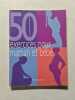
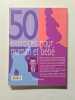
Cinquante exercices pour maman et bébé
Flammarion 2001 128 pages 16 8x1 2x21 8cm. 2001. Broché. 128 pages.
Bon état
THE ICONOGRAPHY OF MIDDLE AMERICAN SCULPTURE,
, Metropolitan Museum of Art, 1973 Illustrated softcover, 165 x 240mm., 167pp., profound b/w illustration.
The Iconology of Olmec Art - Stone Reliefs in the Dainzu Area - Iconographic aspects of Architectural Profiles at Teotihuacan and in Mesoamerica - The Eastern Gulf Coast - Maya Rulers of the Classic Period and the Divine Right of Kings - The late Pre-Hispanic Central Mexican Iconographic System - West Mexican Art: Secular or Sacred? - Stone Sculpture from Southern Central America - Mesoamerican Art and Iconography and the Integrity of the Mesoamerican Ideological System - Science and Humanism among Americanists. Book is in good condition.
"BERNARD, CLAUDE. - DEMONSTRATING THE FIRST PHASE OF FAT METABOLISM.
Reference : 43593
(1849)
Recherches sur les Usages du Suc Pancreatique dans la Digestion.
Paris, Victor Masson, 1849. 8vo. Contemp. hcalf, raised bands, gilt spine. Light wear along edges. Small stamps on verso of titlepage. In: ""Annales de Chimie et de Physique"", 3e Series - Tome 25. 512 pp. a. 2 folded engraved plates. Small stamp to verso of plates. (The entire volume offered). Bernard's paper: pp. 474-484. First part of the volume with some scattered brownspots.
This paper describes the discovery of the digestive action of the pancreatic juice in the first phase of of fat metabolism. The paper was published in 3 journals at the same time, and was later in 1856 expanded into a book.""Bernard's most impressive discoveries in the field of digestion proper concerns the function of the pancreas, especially the importence of pancreatic juice in the digestion and absorption of fats...""(DSB II, p. 28).Garrison & Morton No 996. The volume contains another famous and importent paper: EDMOND BECQUEREL. ""De L'Image colorrées obtenues à la chambre obscure."" Pp.447-474.""The results of the investigations of Edmund Becquerel on photochromy, surpassed all those preceding them. He prepared his sensitive film by polishing a silver plate and immersing it in a metal perchloride solution or in chlorine water"" a violent film of silver subchloride formed, which under the influence of colored glass or of the spectrum takes on the impression received and which retains this color photograph as long as subsequent light action is avoided....Niepce de Saint-Victor devoted himself from 1851 to 1866 to Becquerel's method of heliochromy with chlorinated silver plates, improved the process, and obtained more brilliant and more vivid colors than those of his predecessor.""(Eder ""History of Photography"", p. 664).
De l'influence de deux ordres de berfs qui déterminant les variations de couleur du sang veineux dans les organes glandulaires. (+) Sur la quantité d'oxygène que contient le sang veineux des organes glandulaires, à l'état de fonction et à l'éta...
Paris, Mallet-Bachelier, 1858. 4to. No wrappers. In: ""Comptes Rendus Hebdomadaires des Séances de L'Academie des Sciences"", Tome 47, No 6 a. No 10. Pp. (245-) 279 a. pp. (393-) 431 (entire issues offered). Bernard's papers: pp. (245-) 253 a. pp. (393) -400.
First appearance of these landmark papers in which Barnard explains his discovery of how the nerves controls the blood vessels. This is the ""discovery of the vascoconstrictor and vasodilator nerves and description of their function of regulating the blood supply to the different parts of the body.""(Garrison & Morton, No. 774).""In 1858 (the papers offered) Bernard demonstrated the existence of vasodilator nerves by finding an increased blood flow through the submaxillary gland, when the corda tympani is stimulated. He also observed that the venous blood became bright red. Since that time an enormous amount of research has been carried out on the vasomotor system.""(R.J.S. Mcdowall).Garrison & Morton, No. 774.
Analyse physiologique des propriètés des systèmes musculaire et nerveux au moyen du curare.
Paris, Mallet-Bachelier, 1856. 4to. No wrappers. In: ""Comptes Rendus Hebdomadaires des Séances de L'Academie des Sciences"", Tome 43, No 18. Pp. (825-) 892. (Entire issue offered). Bernard's paper: pp. 825-829.
First printin of an importent paper in toxicology in which Bernard describes how he ""paralyzed motor nerve-endings with curare and demonstrated the independent excitability of muscle"" his paper is the classical proof of Haller's doctrine of irretability"" (Garrison & Morton).""Bernard was a true innovator in the study of the effects of toxic and medicinal substances. No one before him had understood so well the role of drug metabolization. He regarded poisoning as a local phenomenon, and advocated the use of certain poisons in physiological research. Curare and carbon monoxide had served him, he said, as ""chemical bistoury,"" making it possible to destroy specific structures selectively. ""(DSB).Garrison & Morton, No 616 and 2079.
"BERNARD, CLAUDE. - THE DISCOVERY AND ISOLATION OF GLYCOGENE.
Reference : 47110
(1855)
Sur le mécanisme de la formation du sucre dans le foie. (+) Suite Sur le mécanisme... (+) Remarques sur la formation de la matière glycogène du foie. (3 Papers).
Paris, Mallet-Bachelier, 1855 a. 1857. 4to. No wrappers. In: ""Comptes Rendus Hebdomadaires des Séances de L'Academie des Sciences"", Tome 41, No 13 and Tome 44, No 12 a. No. 26. Pp. 461-500, pp. 578-640 a. pp. 1293-1363 (3 entire issues offered). Bernard's papers: pp. 461-469, pp. 578-586 a. pp. 1325-1331. Some scattered brownspots to the first paper.
First printing of these two milestone-papers in physiology in which Bernard discovers and isolates glycogen from the liver, shows that it is converted into blood glucose, and discovers the process of gluconeogenesis. He further creates the concepts ""experimental determination"" and ""local interieur""Bernard undertook the task of tracing out the various transformations of food stuffs within the animal organism, beginning with the carbohydrates"" and he not only found, contrary to the accepted view, that sugar was formed in the liver, but he was also able to isolate a substance from the hepatic tissue which, though not sugar, was converted by fermentation into dextrose. He made a special study of its properties and called it ""glycogen"".""The culmination of Bernard's work on the glycogenic function of the liver. He invented the term ""internal secretion"", and can be said to have started the scientific investigation of the internal secretions, although for 30 years the significance of his work was not generally realized. By his research on glycogene Bernard showed that the body not only can break down, but can also build up, complex chemical substances.""(Garrison & Morton) .Claude Bernard (1813-78) was a key figure in French nineteenth-century science, and one of the world's great physiologists. With good reason he has been called the ‘father of experimental medicine’.Garrison & Morton No. 1000 a. 999.1
"BERNARD, CLAUDE. - THE DISCOVERY OF THE GLYCOGENIC FUNCTION OF THE LIVER.
Reference : 48830
(1850)
Sur une nouvelle fonction du foie chez l'homme et les animaux. (Extrait par l'auteur).
(Paris, Bachelier),1850. 4to. No wrappers. In: ""Comptes Rendus Hebdomadaires des Séances de L'Academie des Sciences"", Tome XXXI, No. 17. With titlepage to vol. 31. Pp. (561-) 592. (Entire issue offered). Bernard's paper: pp. 571-574. Titlepage with a faint stamp to top and a stamp in lower margin.
First appearance of the first exposition of the glycogenic function of the liver - one of the greatest physiological discoveries of the 19th century. Bernard showed that the liver builds up complex substances, including glycogen, from the nutriment brought to it by the blood and that these are subsequently modified for distribution to the body.Dibner ""Heralds of Science"" No 131 - Horblit ""One Hundred Books famous in Science"" No. 11a, here listing ""Nouvelle Fonction du Foie"" from 1853 but with the remark ""The work appeared earlier in abbreviated form in the ""Comptes rendus"" (the paper offered). - Exhibition of First Editions of Epochal Achievements in the History of Science, Berkeley 1934. No 107.
"BERNARD, CLAUDE - ""THE MOST COMPLETE STATEMENT OF THE FUNCTION OF THE PANCREAS""
Reference : 49471
(1856)
Mémoire sur le pancréas et sur le role du suc pancréatique dans les phénomènes digestifs, particulièrement dans la digestion des matières grasses neutres.
(Paris, Mallet-Bachelier), 1856. 4to. No wrappers. In: ""Supplément aux Comptes rendus hebdomadaires des séances de l’Académie des sciences"", Tome Premier. With half-title and title-page to Tome I. Pp. 379-563 and 9 engraved plates (4 handcoloured). A punched stamp to lower margin of title-page. Clean and fine.
First printing of this celebrated memoir in which Bernard describes his importent invesigations on the function of the liver, the pancreas and the pancreatic juices.""In 1846 Bernard began studying the pancreatic juices and their role in digestion,.... By observing the processes of digestion in dogs and rabbits, and by experimentation with pure pancreatic juices collected from temporary pancreatic fistulae, Bernard was able to show that pancreatic juices made fats absorbable by breaking them down into fatty acids and glycerine. In 1856 he published his most complete statement of the function of the pancreas, ""Mémoire sur le pancréas et sur le role du suc pancréatique dans les phénomènes digestifs, particulièrement dans la digestion des matières grasses neutres."" This appered in Volume I of the supplement to the ""Comptes rendus hebdomadaires des séances de l’Académie des sciences"", and it was also published as a separate edition in book form.""(Norman p. 247).Norman ""One Hundred Books Famous in Medicine"", No 67 B. -
George Orwell: A Life
Penguin 1982 656 pages 12 7x3 302x19 558cm. 1982. Broché. 656 pages. The Wild Palms est un roman de William Faulkner publié en 1939 qui entrelace deux histoires distinctes : celle d'un couple adultère fuyant la société et celle d'un forçat luttant contre une inondation. L'œuvre explore les thèmes de la passion de la liberté et de la fatalité à travers une structure narrative fragmentée

intérieur propre
Brenne la nature et les hommes
PITTORESQUE 2015 187 pages 2x29x23cm. 2015. Relié. 187 pages.
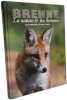
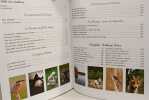
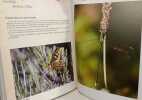
Comme neuf
Cahier d'investigations Technologie 6e (2011) - Cahier activités élève
Delagrave 2011 96 pages 20 8x0 8x29 4cm. 2011. Broché. 96 pages.
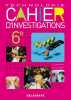
Très bon état - légères marques de lecture et/ou de stockage mais du reste en très bon état- expédié soigneusement depuis la France
Et samlet Udtog paa de Reyser, som Norden paa ere foretagene, udi hvilket indeholdes adskillige Beretninger, Som ere til synderlig Nytte og Underretning for Handelen og Seyladsen. Udi det Franske Sprog først forfattet. Siden udi det Danske Sprog overs...
Kiøbenhavn, Hans Kongl. Majests. privil. Bogtrykkerie, 1732. 8vo. Bound in a fine contemporary panelled calf in the Boppenhausen style with richly gilt spine. Four raised bands. Spine very neatly restored with the original spine laid down. Previous owner’s signature to rear pastedown. Clean and well-preserved internally. (8), 210 [209–210 inserted in the register at the end of the book], 314, (7) pp.
Contains: Underviisninger for At lære Hvorledes man ret med nogen Nytte skal reyse... (Instructions on How to Travel Properly and with Some Benefit...). — Historiske Beskrivelser Om Island, Udi Det Franske Sprog først skreven, Og siden Udi det Danske oversat, og med Historiske, Geographiske etc. Anmerkninger formeeret (Historical Descriptions of Iceland, first written in the French language, and afterwards translated into Danish, with historical, geographical, etc. annotations). — Historisk Beretning om Grønland, Hvorudi findes anførte de Rejser og Seyladser, som af de Danske Tid efter anden ere, som samme Land at opfinde, foretagne. Udi Det Franske Sprog først skreven Og siden Udi det Danske oversat (Historical Account of Greenland, containing the voyages and expeditions undertaken by the Danes at various times in order to discover that country. First written in the French language and afterwards translated into Danish).
Blatter un monde à vendre
Jacques Marie Laffont Editeur 2016 233 pages 14x2x21cm. 2016. Broché. 233 pages.
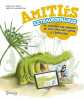
Très bon état
Les grandes heures de la chouannerie.
PERRIN, 1993 22,5 x 14 x 3 cm., 375 pp, Broché
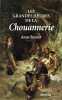
- - VENTE PAR CORRESPONDANCE UNIQUEMENT - LIEN DE PAIEMENT, NOUS CONSULTER.

"BERNOULLI, (JACOB). - A NEW ERA IN THE MECHANICS OF ELASTICAL BODIES.
Reference : 44383
(1706)
Veritable Hypothêse de la Résistance des Solides, Avec la Démonstration de la Coubure des corps qui sont Ressort. Lettre du 12. Mars 1705.
Paris, Jean Boudot, 1706. 4to. Without wrappers. Extracted from ""Mémoires de l'Academie des Sciences. Année 1705"". Pp. 176-186 and 1 folded engraved plate.
First appearance of a founding paper in the theory of elastic curves. ""Importent also is his last work, on the resistance of elastic bodies (1705)."" (DSB II, p.49 s).""During the last quarter of the seventeenth century and the beginning of the eighteenth centuries a rapid development of the infinitesimal calculus took place. Started on the Continent by Leibnitz...it progresssed principally by the work of Jacob and John Bernoulli. In trying to expand the field of application of this new mathematical tool, they discussed several examples from mechanics and physics. One such example treated by Jacob Bernouilli..concerned the shape of the deflection curve of an elastic bar and in this way he began an importent chapter inthe mechanics of elastic bodies.""(Timoshenko ""History of Strenght of Materials"" p. 25-26).
(BERNOULLI, JEAN (JOHANN) & BERNOULLI, DANIEL. - THE MECHANICS OF THE HEAVENS.
Reference : 42459
(1735)
Essai d'une nouvelle Physique celeste. Servant à expliquer les principaux Phenomenes du Ciel, & en particulier la cause physique de l'inclinaison des Orbites des Planetes par rapport au plan de l'Equateur du Soleil. Qui a partagé le Prix doub...
Paris, Imprimerie Royale, 1735. 4to. Fine recent marbled boards. Printed titlelabel on frontcover. (6),144 pp. and 1 double-page folded engraved plate. Johann B's paper: pp. (1-) 91. - Daniel B's papers: pp. (93-) 122 and pp. 123-144. A few marginal brownspots.
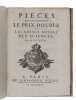
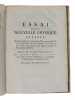
First edition of these prize winning papers by father (Jean) and son (Daniel). - Both papers deals with the cause of the inclination of the planetary orbits relative to the solar equator. - In Daniel's paper he put foreward the hypothesis of the existence of an atmosphere, resempling air, and rotating around the solar axis, resulting in an increasing inclination of the planetary orbits toward the equator of the sun. Daniel was the first importent Newtonian outside Great Britain. The problems faced here (by Daniel) are treated in Newtonian manner.The publication of these papers by father and son resulted in a controversy between the two, forcing Daniel to leave his fathers house. - Poggendorff I:161.
Méthode pour trouver les Tautochrones, dans des Milieux résistants, comme le Quarré des Vitesses.
(Paris, L'Imprimerie Royale, 1732). 4to. Without wrappers. Extracted from ""Mémoires de l'Academie des Sciences. Année 1730"". Pp. 78-101.
First printing of Johann Bernoulli's importent paper in which he for the first time (Euler did it at the same time) solved the problem of finding the tautochrone in a medium that resists a body's motion directly as the square of the body's speed.After Huygens first discovered that the cylcoid was a tautochronous curve in vacuo according to the hypothesis of uniform gravity" Newton and Hermann have also given tautochrones following the hypothesis of non-uniform gravity acting, and pulling towards some fixed point as centre. Moreover, they have considered the motion to arise in a vacuum, with no resistance. Truly pertaining to resisting media, Newton has also shown that the cycloid is a tautochrone in a medium for which the resistance is proportional tothe speed moreover, as far as any other kinds resisting media are concerned, there has been no progress made either in roducing the curves themselves or in demonstrating possible tautochronism in them [The 3rd edition of the Principia that Euler refers to finally in 35 alters this view to include the type of resistance offered here. It may be of interest to the reader to observe that Johan. Bernoulli published a paper in the Memoire de l'Acad. Roy. des Sciences in 1730, also present in his Opera Omnia, T. III, p.173, with the title (in tra. from French): Method for Finding Tautochrones in Media Resisting as the Square of the Speed in which Euler does not get a mention.].
Nouvelle Theorie du Centre D'Oscillation. Contenant une Regle pour déterminer dans les Pendules composés & balancans non-seulement dans la vuide, mais aussi dans les liqueeurs" laquelle Regle est appuyée sur un fondement plus seûr qu'aucun qu'on a...
(Paris, L'Imprimerie Royale, 1717). 4to. Without wrappers. Extracted from ""Mémoires de l'Academie des Sciences. Année 1714"". Pp. 208-229, 7 textfigs.
First appearance of this importent paper in which John Bernoulli gives his famous solution to the question of the center of oscillation. The solutions of Bernoulli and Brook Taylor were in principle identical and became an occasion of a grat dispute between these two eminent mathematicians.
Economist on Wall Street: Notes on the Sanctity of Gold the Value of Money the Security of Investments and Other Delusions (Peter L. Bernstein's Finance Classics)
JW 2011 336 pages in8. 2011. Broché. 336 pages.
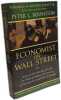
très bon état intérieur propre bonne tenue
"BERRY, M.V. (MICHAEL VICTOR) - THE DISCOVERY OF THE ""BERRY-PHASE""
Reference : 47169
(1984)
Quantal phase factors accompanying adiabatic changes.
London, Royal Society, 1984. Royal8vo. Full buckram, gilt lettering to spine.In: ""Proceedings of the Royal Society of London"", Series A, vol. 392. IV,478 pp. (Entire volume offered). Berry's paper: pp. 45-57. Clean and fine.
First printing of the paper in which Berry describes his discovery of the ""Berry phase"", a unifying concept in quantum mechanics.""In 1983, Berry made the surprising discovery that a quantum system adiabatically transported round a closed circuit in the space of external parameters acquires, besides the familiar dynamical phase, a non-integrable phase depending only on the geometry of the circuit. This Berry phase, which had been overlooked for more than half a century, provides us a very deep insight on the geometric structure of quantum mechanics and gives rise to various observable effects. The concept of the Berry phase has now become a central unifying concept in quantum mechanics, with applications in fields ranging from chemistry to condensed matter physics. In particular, the Berry phase plays an important role in modern magnetism, an allows to reach a deeper understanding of a broad range of phenomena such as the spin-orbit coupling, the Aharonov-Bohm effect, the quantum Hall effect, the anomalous Hall effect, the magnon dynamics, the tunneling of magnetization in molecular magnets, etc. Further, in the light of the Berry phase, a number of new phenomena can be predicted in ferromagnets with a textured magnetization or in semiconductors with spin-orbit coupling."" (Patrick Bruno).
Silver-Stained Roundels and Unipartite Panels before the French Revolution Flanders, Vol. 2: The Provinces of East and West Flanders
, Brepols Publishers, 2011 Hardcover, XIV 631 pages., 300 b/w ill. 900 colour ill., 230 x 315 mm, English. ISBN 9781905375318.
This checklist is the second in a series of volumes describing the silver-stained glass roundels and unipartite panels from the Middle Ages to the 18th century found in public buildings, museums and private collections in the present five provinces of Flanders (Belgium). It also includes documented roundels and unipartite panels whose whereabouts are presently unknown and those which have been removed to other locations or collections in the past. The checklist also mentions all known related material. Where possible, photographs of this material have been added. As far as the related material is concerned, the relevant publications are also mentioned. This material includes models, drawings, engravings, and roundels which belong either to the same series or to those which are copies of these series. The present volume covers the Provinces of East and West Flanders (more or less the former County of Flanders). The first checklist, concerning the Province of Antwerp, was published in 2007. Additional volumes for the Provinces of Flemish Brabant and Limburg (Vol. 3), and the one with Addenda (Vol. 4) are in the planning stage. The former County of Flanders, with the cities of Bruges and Ghent, must once have displayed huge quantities of stained glass, which for the most part have been lost or relocated. The causes and reasons for this loss include natural calamities, fires, deliberate destruction and neglect. Most of the surviving roundels are now in foreign collections: on the continent; in Great Britain; or in the United States of America. It is worthy of note that great efforts have been made in the USA and Great Britain to compile and publish checklists of silver-stained roundels and other small panels, originating from the Low Countries, whilst here, where they were produced, this series is the first genuine overview that has ever been published. During the 15th and 16th centuries roundels and small panels played an important role as 'public relations' gifts among the upper classes, the church and its associated religious orders. As these gifts played a very significant role in social life, demand for these items was very high. It is clear that the manufacture of roundels and small panels was a substantial part of the earnings of these glass workshops, which also produced monumental windows. The most popular themes were predominantly religious, but also included heraldic, secular, mythological and allegorical subjects. The seasons and months and labours of the year were also commonly found. In the late 16th and the 17th centuries the range of iconographical subjects became more secular with, among other themes, representations of professions. Heraldry also remained very important, and in the second half of the 17th and the beginning of the 18th centuries nearly all roundels and panels depicted armorials and included the name of their donors.
Bertagna Chantal Carrier-Nayrolles Françoise
Reference : 500101987
(2020)
ISBN : 9782011254924
Fleurs d'encre 4e
Hachette Collections 2020 400 pages 21x2 2x28 6cm. 2020. Broché. 400 pages.
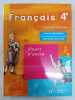
Bon état
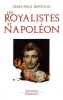
Les Royalistes et Napoléon.
FLAMMARION, 2009 24,1 x 15,3 x 3 cm., 464 pp, Broché
- - VENTE PAR CORRESPONDANCE UNIQUEMENT - LIEN DE PAIEMENT, NOUS CONSULTER.

