Write to the booksellers
-
Type
Book (7262)
Disk (44)
Drawings (1)
Engraving (9)
Magazine (89)
Maps (4)
Music sheets (135)
New book (2)
Old papers (1)
Photographs (19)
Posters (1)
-
Latest
Last 24h (4)
Last 3 days (2)
Last month (971)
Last week (2)
-
Language
Czech (1)
Dutch (9)
English (156)
French (7388)
German (4)
Italian (2)
Latin (3)
Russian (4)
-
Century
16th (17)
17th (43)
18th (199)
19th (881)
20th (2478)
21st (1565)
-
Countries
Belgium (1156)
Canada (32)
China (56)
Côte d'Ivoire (7)
Denmark (1063)
France (4903)
Germany (1)
Netherlands (181)
Switzerland (155)
United Kingdom (9)
United States of America (4)
-
Syndicate
ALAC (25)
CLAM (25)
CLAQ (2)
ILAB (2234)
NVVA (15)
SLACES (15)
SLAM (1026)
SNCAO (4)
The Antifederalists: Critics of the Constitution 1781-88
WW Norton & Co 1974 308 pages 12 7x1 778x19 05cm. 1974. Broché. 308 pages.
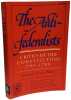
Bon état
Thé Vert
173 pages Sans date. 173 pages.
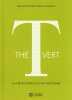
Neuf - french edition - expédié soigneusement dans emballage adapté
Thé Vert
173 pages Sans date. 173 pages.
Neuf- livre issu de destockage - pouvant présenter d'infimes traces de stockage - Expédié soigneusement dans emballage adapté
Thé Vert
173 pages Sans date. 173 pages.
Bon état - . quelques marques de lecture et/ou de stodckage sur couverture et coins mais du reste en bon état - envoi rapide et soigné dans enveloppe à bulles depuis france
Thé Vert
Editions de l'Homme 173 pages Sans date. 173 pages.
Comme neuf - ouvrage issu de destockage jamais lu mais pouvant présenter d'infimes marques de stockage et/ou de manipulation - expédié soigneusement dans emballage adapté
"MAJORANA, Q. - PROVING THAT THE SPEED OF LIGHT IS INDEPENDENT OF ITS SOURCE.
Reference : 48169
(1917)
Démonstration experimentale de la constance de vitesse de la lumiére réfléchie par un miroir en mouvement.
(Paris, Gauthier-Villars), 1917. 4to. No wrappers. In: ""Comptes Rendus hebdomadaires des Séances de L'Academie des Sciences"", tome 165, No 14. Pp. (417-) 448. (Entire issue offered). Majorana's paper: pp. 424-428. A stamp in upper right corner of the first page.
First apperance of Majorana's paper which was the first experimentally to prove the speed of light as set forth by Einstein in his special relativity theory. Majorana was critical to Einstein's relativity, and he therefore tried to prove experimentally that the postulate of the speed of light was wrong. His experiments turned out otherwise, and he hereby proved Einstein's postulate that the speed of light was independent of the velocxity of its source.

On Megaladapis madagascariensis, an Extinct Gigantic Lemuroid from Madagascar" with Remarks on the Associated Fauna, and of its Geological Age. Received June 14, - Read June 15, 1893.
(London, Harrison and Sons, 1894). 4to. No wrappers as extracted from ""Philosophical Transactions"", 1894, Vol. 185 - Part I. Pp 15-38 a. 3 lithographed plates. Clean and fine.
First printing of this importent paper, relating the discovery of a new family Megaladapidae with the genus and species of the extinct giant lemur of Madagascar. Major collected the bones on his expedition to Madagascar in the years 1894-96.""Its tree-grasping attributes probably made Megaladapis vulnerable to changes to the forests of Madagascar. Upon human arrival between 1,500 and 2,000 years ago, the forests of Madagascar were cleared to make farmland. Unable to adapt to these new environmental changes imposed by man and being a tempting target for hunters, Megaladapis became extinct approximately 500 years ago, around the time of European discovery of Madagascar.""
White Trash
New York Stonehill Publishing 1977 In-8 broché, couverture illutrée Dédicacé par l'auteur
EDITION ORIGINALE. Préface de Andrew J. Crispo. Nombreuses photos en noir et blanc de la scène underground new yokaise par Christopher Makos, où l'on reconnaît entres-autres Andy Warhol, Man Ray, Tennessee Williams, Halston, John Paul Getty III, Mick Jagger, David Bowie, Grace Jones, Patti Smith, Richard Hell, Tom Verlaine, Alice Cooper, Iggy Pop, Zandra Rhodes, Divine, Lance Loud, and Marilyn Chambers,... 3 hors-texte dépliants. Bel exemplaire avec son étiquette "Includes the superstars of PUNK! plus 3 giant foldouts". >>>>> ENVOI AITOGRAPHE signé et daté Paris 1978 de l'auteur au styliste italien Nino Cerutti "... when you come to new york again i wonder like to do a ritralto of you, like the one of Andy Warhol...". Très bon 0
HANDBOOK OF ADULT EDUCATION IN THE UNITED STATES.
, Illinois, Adult Education Association of the U.S.A., 1960., Bound, leather, 24x16cm, 624pp.
Background and overview. Some common concerns of adult education. Institutional programs and resources. program areas in adult education the future of adult education in america. national organisations, associations and agencies in adult education.
[John Laurent] - [Mallarmé, Stéphane (trad.) ] - Hope, C. W. Elphinstone (Mrs) - Laurent, John (ill.)
Reference : 2448
(1881)
L'Etoile des fées. Traduction de l'anglais par M. Stéphane Mallarmé. Illustrations de M. John Laurent.
1881 Paris, G. Charpentier, 1881. 28,5 x 21 cm (R), in-4, 90 pp. - 2 ff. n. ch. (annonce et imprimeur) - 11 planches hors texte en noir sous serpentes légendées dont l'une en frontispice, cartonnage de l'éditeur, premier plat orné d'une large composition à froid et dorée, dernier plat reprenant la même composition, cette fois-ci entièrement en noir, dos orné portant le titre en long, tranches dorées.
![L'Etoile des fées. Traduction de l'anglais par M. Stéphane Mallarmé. Illustrations de M. John Laurent.. [Mallarmé, Stéphane (trad.) ] - Hope, C. W. ...](https://static.livre-rare-book.com/pictures/AJM/2448_1_thumb.jpg)
![L'Etoile des fées. Traduction de l'anglais par M. Stéphane Mallarmé. Illustrations de M. John Laurent.. [Mallarmé, Stéphane (trad.) ] - Hope, C. W. ...](https://static.livre-rare-book.com/pictures/AJM/2448_2_thumb.jpg)
![L'Etoile des fées. Traduction de l'anglais par M. Stéphane Mallarmé. Illustrations de M. John Laurent.. [Mallarmé, Stéphane (trad.) ] - Hope, C. W. ...](https://static.livre-rare-book.com/pictures/AJM/2448_3_thumb.jpg)
Edition originale de la traduction due à Stéphane Mallarmé de ce conte naïf, étrange et fantastique qui parut simultanément en anglais sous le titre "The Star of the Fairies". Les compositions oniriques de John Laurent (faisant parfois penser à du Max Ernst par anticipation) rajoutent à l'inquiétante étrangeté de l'ensemble. Rare dans le traduction de Mallarmé et en cartonnage. Quelques rousseurs sur papier blanc, une petite déchirure restaurée en marge d'un feuillet, mais un bel exemplaire dont le cartonnage est en parfait état.
"MALUS, ETIENNE LOUIS & LAPLACE, PIERRE-SIMONE & WOLLASTON, WILLIAM HYDE. - THE LAWS OF DOUBLE REFRACTION ESTABLISHED.
Reference : 44061
(1809)
Ueber die Messung des Brechungsvermögens der undurchsichtigen Körper. (+) Ueber eine Eigenthümlichkeit des von durchsichtigen Körpern zurückgeworfenen Lichtes. Uebersetzt von Erman, mit einigen Erleuterungen von Tralles. (+ WOLLASTON:) eue Methode die...
Leipzig, Johann Ambrosius Barth, 1809. Without wrappers as issued in ""Annalen der Physik und der Physikalischen Chemie. Hrsg. Ludwig Wilhelm Gilbert"", Bd. 31, Drittes Stück. Titlepage to vol. 31. Pp. 225-336 a. 1 engraved plate. (Entire issue offered). Malus's papers: pp. 225-234 a. pp. 286-294. Wollaston's papers: pp. 235-251 a. pp. 252-262 a. Erläuterungen von Gilbert pp. 263-273. Laplace's paper: pp. 274-285.
First apperance in German of these importent papers on the refraction and double refraction of light. The papers by Malus is his first two papers on the refraction of light and Laplace's paper is the memoir in which he commented Malus' paper and Huygen's refraction law. ""In 1788 Haüy found experimentally that Huygen's law was true only in certain special cases, but in 1802 Wollaston found experimental evidence for the Huygenian construction (the second Wollaston paper offered). In ´""Mémoire sur la mesure du pouvoir réfringent"" (the first paper offered) Malus showed that Wollaston's experiments were incomplete, and so the French corpuscularian physicists did not trust Wollaston's results. They thought, moreover, that Wollaston was associated with Tmomas Young and therfore with the new wave hypothesis. In this situation the Institute on January 1808 proposed a prize which required an experimental and theoretical explanation of double refraction. The French ""Newtonian"" scientists hoped that Malus would find a precise and general law for double refraction within the framework of an emission theory of light. Malus was a skilled mathematician and during 1807 he had carried out experiments on double refraction. By december 1808 Malus had finished his experimental investigations, which verified the Huygenian law. What remained was a theoretical deduction of the law. In January 1809, Laplace published a memoir in which he deduced Huygen's law law within the framework of Newtonian mechanics, using the principle of least action, and Malus considered this an insolence which deprived him of the priority. In 1810 Malus von the prize for his ""Théorie sur la double réfraction"", published in 1811.""(DSB IX, p. 73).
Écrits: [1916-1928
Ivrea 1986 584 pages 14 4x3 8x24cm. 1986. Broché. 584 pages.
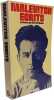
Bon état dos ridé intérieur propre bonne tenue
To the East and home again.
A traveller's impression by Jo SPIEL. Amsterdam, The Management of the nederland line, Royal Dutch Mail, sans date, in-4 à l'italienne broché, couverture imprimée en couleurs, au motif de vagues, titre en rouge sur la couverture, non paginé.
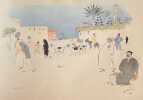
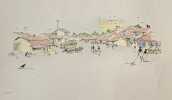
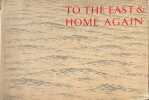
Recueil publicitaire pour la Nederland Line, composé d'aquarelles pleines de poésie sur le thème du voyage. Jo Spiel saisit des instants et des scènes, croquées avec charme et drôlerie, pendant cette traversée de l'Italie jusqu'en Extrême Orient en passant par le Moyen-Orient et l'Afrique. Couverture salie, jaunie, dos déchiré dans la partie inférieure, coin inférieur de la couverture plié.

The (Mis)Behaviour of Markets: A Fractal View of Risk Ruin and Reward
Profile Books 2004 352 pages 12 9x19 7x2 4cm. 2004. Broché. 352 pages.
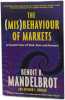
pages jaunissantes bords frottes
Les plantes utiles
MAME Alfred & FILS. Illustrations de Yan'Dargent et W. Freeman. ,2 ème édition. 1874. In-12 Relié demi-veau marron , dos à nerfs. 384 pages. Frontispice en noir et blanc. Nombreuses illustrations en noir et blanc, dans le texte et en planches.. Le séchage du cacao, Récolte du Thé, Declieux et son Caféier, Récolte de la canne à sucre, La Betterave, Le Poivrier et le Gingembre .
petits defauts sur le premier plat sans gravité, photos sur demandeRay B2*
Ancient Americans: Rewriting the History of the New World
Granta Books 2005 576 pages 16x4 8x23 4cm. 2005. Cartonné jaquette. 576 pages.
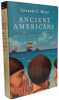
proche du très bon état intérieur propre bonne tenue petit accroc en haut du dos de la jaquette
Glimpses of Jersey: A Collection of Interesting Stories and Traditions
Guernsey Press Co Ltd 1994 96 pages 14 4x1x20 8cm. 1994. Broché. 96 pages.
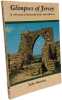
Très bon état
"MANTOUX, CH. (CHARLES) - THE INVENTION OF THE ""MANTOUX TEST"" FOR TUBERCULOSIS.
Reference : 49892
(1908)
Intradermo-reaction de la tuberculine.
(Paris, Gauthier-Villars), 1908. 4to. No wrappers. In: ""Comptes Rendus Hebdomadaires des Séances de L'Academie des Sciences"", Tome 147, No 6. Pp. (323-) 366 (entire issue offered). Mantoux's paper: pp. 355-357.
First printing of the paper in which Mantoux published his invention of the famous test for tuberculosis.""The Mantoux test or Mendel-Mantoux test (also known as the Mantoux screening test, tuberculin sensitivity test, Pirquet test, or PPD test for purified protein derivative) is a screening tool for tuberculosis (TB). It is one of the major tuberculin skin tests used around the world, largely replacing multiple-puncture tests such as the Tine test."" (Wikipedia). - Garrison & Morton: 2341 (listing only the paper from 1910).
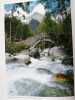
DISQUE VINYLE 33T : THE VERY BEST OF MANUEL AND THE MUSIC OF THE MOUNTAINS : Brazil, Rodriogo's guitar concerto de Aranjuez, Eso Beso, Eye Level, The Carioca, Lisboa Antigua, The twelfth of never, El bimbo, Beyond the mountains, Peanut vendors
"EMI. NON DATE. In-12. Broché. Bon état, Couv. convenable, Dos satisfaisant, Intérieur frais. Pochette en couleurs : Cascade en Suisse. Brazil, Rodriogo's guitar concerto de Aranjuez, Eso Beso, Eye Level, The Carioca, Lisboa Antigua, The twelfth of never, El bimbo, Beyond the mountains, Peanut vendors, Y viva Espana, Love theme from Spartacus, The way we were, Spanish flea, Island in the sun, Honeymoon song, Theme from ""a summer place"", Magic fountains, Moon River, La bamba.. . . . Classification : 410-33 Tours"
Disque n°TWOX 1051. OC 062 06145. Classification : 410-33 Tours
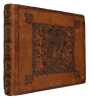
Haandbog over Søe-Artilleriets Sortementer.
Søe Etaten Tøy-Huus den 2den Januarij Ao 1765. 8vo-oblong. Contemporary Cambridge style mirror binding with King Frederik V's large monogram to both front and back board. All edges gilt. Written on good paper. 61 ff.
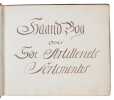
The manuscript is a complete register of the navy’s ships as of the year 1765, with detailed numerical specifications of the armament of every vessel, including calibres, etc. At the end the land batteries are likewise described, together with their inventory holdings. The manuscript was probably prepared for the King as an up-to-date information on the strength of the realm at sea and on land.
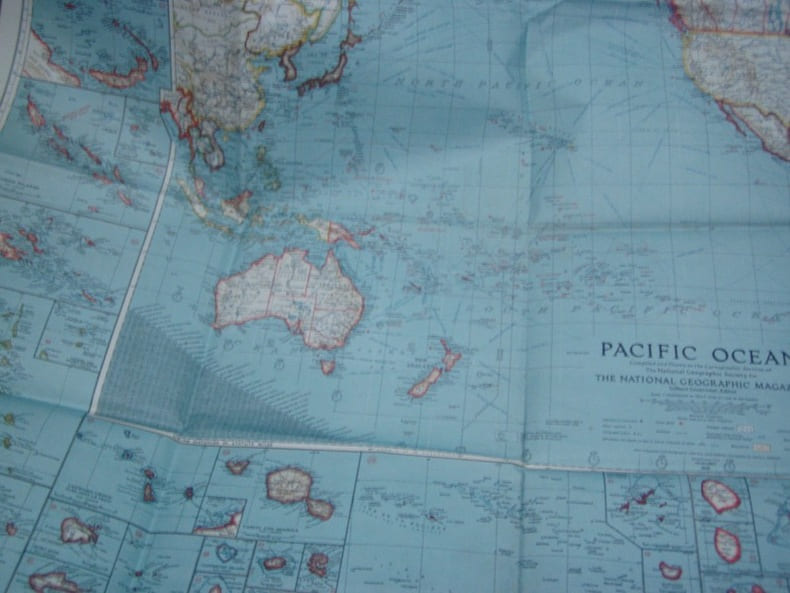
Map pacific ocean , National Geographic Map of the Pacific Ocean 1936 . BRITISH War Office 1943 ; 99 x 83 cm
1943 bon état,pliée
Remise de 20% pour toutes commandes supérieures à 200 €
Français - 2de (2015): Manuel élève
BELIN EDUCATION 2015 452 pages 17 8x2 8x25cm. 2015. Broché. 452 pages.
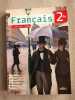
Bon état