 Write to the booksellers
-
Type
Book (8591)
Disk (44)
Drawings (1)
Engraving (9)
Magazine (89)
Maps (4)
Music sheets (135)
New book (2)
Old papers (1)
Photographs (19)
Posters (1)
-
Latest
Last 24h (3)
Last 3 days (2)
Last month (1655)
Last week (2)
-
Language
Czech (1)
Dutch (9)
English (156)
French (8717)
German (4)
Italian (2)
Latin (3)
Russian (4)
-
Century
16th (17)
17th (43)
18th (199)
19th (882)
20th (2616)
21st (2690)
-
Countries
Belgium (1156)
Canada (32)
China (56)
Côte d'Ivoire (7)
Denmark (1063)
France (6232)
Germany (1)
Netherlands (181)
Switzerland (155)
United Kingdom (9)
United States of America (4)
-
Syndicate
ALAC (25)
CLAM (25)
CLAQ (2)
ILAB (2234)
NVVA (15)
SLACES (15)
SLAM (1026)
SNCAO (4)
Le bûcher 1re partie / The pyre part I.
P.o.l.. 2013. In-12. Broché. Etat d'usage, Tâchée, Dos satisfaisant, Intérieur frais. 40+36 pages - ouvrage en français et en anglais, deux sens de lecture - mouillures sur lesplats - couverture contrepliée.. . . . Classification Dewey : 810-Littérature américaine
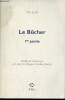
Traduit de l'américain par Jean-Luc Mengus et Zachary Farley. Classification Dewey : 810-Littérature américaine


Blackwell Dictionary of Eastern
John wiley & sons 2001 604 pages 17x4 2x23 6cm. 2001. Broché. 604 pages.
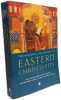
Bon Etat couverture défraîchie intérieur propre
Partridge's Children's Annual, Conducted By the Editor of "The Children friend"
Reference : 3937
Partridge's Children's Annual - Fifth Year of Issue
S.W.Partridge & Co., Ltd 22 x 27,5 London Epais volume in quarto, [circa 1910], cartonnage éditeur illustré de deux enfants sous la neige en période de Noël, dos toilé rouge illustré, contenant de nombreuses histoires pour enfants illustrées entre autres par par A. L. Bowley, L. Kirchmayr, L. R. Brightwell, F.C. Hardy, Margaret W. Tarrant, Louis Wain, Savile Lumley, N.T. Matthews, Levine Helmer. Bas du dos fendu à la reliure, usures d'usage, bon intérieur, exemplaire satisfaisant.(ApC128) Livre
PARVILLE, HENRI DE. - THE FIRST INTERNATIONAL EXPOSITION OF ELECTRICITY
Reference : 51741
(1882)
LÉlectricité et ses Applications. Exposition de Paris. Avec 187 Figures dans le texte.
Paris, G. Masson, 1882. Small 8vo. Orig. full decorated cloth. Gilt spine, gilt covers. A paperlabel pasted on upper part of spine. A stamp on title-page. Frontispiece (woodcut). 536 pp. and 186 woodcut illustrations in the text (many full-page). Scattered faint brownspots.
First edition. This exposition, which took place in Paris 1881, was a great stir. The public could admire the dynamo of Zénobe Gramme, the incandescent light bulbs of Thomas Edison, the Théâtrophone, the electric tramway of Werner von Siemens, the telephone of Alexander Graham Bell, an electrical distribution network by Marcel Deprez, and an electric boat by Gustave Trouvé etc. etc.
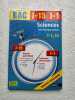
FRED BERVOETS, Oeuvre catalogus
Antwerpen,, Vrienden van de Zwarte Panter, , 1992 Gebonden, wit linnen met zwarte opdruk, geillustreerde stofomslag, gedecoreerde binnenplatten, frontispice in kleur, 250 x 305mm., 320pp.text in Dutch / English.
Woord vooraf door Willy van den Bussche. Tweetalige uitgave Nl/Eng. Werd uitgegeven naar aanleiding van de gelijknamige tentoonstelling in het Museum voor Moderne Kunst te Oostende van 28 maart tot 5 juni 1992. In goede staat.Hardback, 310x255mm, 320p, English/ Dutch (NL) edition
Passeron Joëlle Munoz Françoise Siroy Adrien
Reference : 500108866
(2019)
ISBN : 9782401051133
Allemand 4e - LV2 (A1+ A2): cahier d'entraînement et de révision
Hatier 2019 88 pages 19 6x27 4x0 6cm. 2019. Broché. 88 pages.
Comme neuf
Passeron Joëlle Siroy Adrien Boularand Catherine
Reference : 500074444
(2019)
ISBN : 9782401051140
Allemand 3e - LV2 (niveau A2): cahier d'entraînement et de révision
Hatier 2019 88 pages 20 4x27 6x0 8cm. 2019. Broché. 88 pages.
Très bon état - légères marques de lecture et/ou de stockage mais du reste en très bon état- expédié soigneusement depuis la France
Pass the Port Again - the Best After-Dinner Stories of the Famous
Brian Blake Brann Direct Marketing broché Bristol illustré 1991 232 pages en format 14 - 20 cm - nombreux dessins 0-9504923 3 7
Très Bon État
Études sur les vins. Première partie: De l'influence de l'oxygene de l'air dans la vinification. (+) Deuxiéme partie: Des altérations spontanées ou maladies des vins, particulièrement dans le Jura.
(Paris, Mallet-Bachelier), 1863 a. 1864. 4to. No wrappers. In: ""Comptes Rendus Hebdomadaires des Séances de L'Academie des Sciences"", Tome 57, No 23 a. Tome 58, No 3. Pp. (925-) 964 a. pp. (141- 180. (2 entire issues offered). Pasteur's paper: pp. 936-942 a. 142-150 and 1 engraved plate (Maladies des Vins - leurs Fermets..).
First appearance of these famous papers initiating Pasteur's renowned studies on wine and its ""diseases"", being his most importent papers on wine.""In December 1863 Pasteur published the first of the papers that culminated in his Études sur le vin (1866"" 2nd ed. 1873). In that first paper, dealing with the role of atmospheric oxygen in vinification, he sought to establish that the aging of wine resulted from the slow penetration of atmospheric oxygen through the porous wook casks into which new wine was decanted. By virtue of this slow oxidation, he claimed, new wine grows less harsh and acid to the taste as it becomes clearer and lighter from the to the taste as it becomes clearer and lighter from the precipation of dark coloring matters. In his second paper (January 1864) Pasteur examined the ""alterations"" or ""diseases of wine, especially wine from the Jura, his native department. Reviewing the familiar disease of ""turned,"" ""acid"" ""ropy"" or ""oily "" wine, he associated each with a microscopic organism. He summarized the results of his first two papers by nothing that ""wine, which is proudced by a cellular vegetation acting as a ferment [namely, yeast], is altered only by the influence of other vegetations of the same order"" and once removed from the effects of their parasitism, it is made or matured principally by the action of atmospheric oxygen penetrating slowly through the staves of the casks.""(DSB).
"PASTEUR, LOUIS. - ANNOUNCING THE DISCOVERY OF ""MOLECULAR ASSYMETRY""
Reference : 47149
(1848)
Mémoire sur la relation qui peut exister entre la forme cristalline et la composition chimique, et sur la cause de la polarisation rotatoire"" (Extrait). (Séance du Lundi 22 Mai 1848).
(Paris, Bachelier), 1848. 4to. No wrappers. In: ""Comptes Rendus Hebdomadaires des Séances de L'Academie des Sciences"", Tome 26, No 21. Pp. (529-) 548. (Entire issue offered). Pasteur's paper: pp. 535-538.
First appearance of the announcement of Pasteur's momentous and revolutionary discovery of ""molecular assymetry"" and founding the science of Polarimetry.The discovery was first announced by Pasteur in may 1848 by the printing of the preliminary report of only 4 short pages, in order to establish priority (the paper offered). A more full exposition was published the same year in ""Annales de Chimie et de Physique"", 3me Series - Tome XXIV.""In 1848....Pasteur studied the crystals of tartrates (one of the substances that exhibited the now-clockwise, now-counterclockwise effect) under the microscope and found that the xcrystasls were mirror images of the others. The two crystals resemmbled each other as a right-hand glove resembles a left-hand glove....This was a revolutionary discovery and it took some courage to announce it. A few years before, the well-known chemist Mitscherlich had studies the same tartrate crystals and declared them all to be identical. Pasteur was only a twenty-sic-year-old unknown. neverthelless he announced his findings and went before Biot to repeat the separation ofthe crystals before the eyes of the aged authority in the field. Biot was convinced and Pasteur received the Rumford medal of the Royal Society for his work....Pasteur had thus founded the science of polarimetry in which the measurements of the manner in which the plane of polarized light was twisted could be used to help to determine the structure of organic substance, to follow various chemical reactions, and so on.""(Asimov). Leicester & Klickstein ""A Source Book of Chemistry"", p. 374-379).
"PASTEUR, LOUIS. - ANNOUNCING THE DISCOVERY OF ""MOLECULAR ASSYMETRY""
Reference : 49456
(1848)
Mémoire sur la relation qui peut exister entre la forme cristalline et la composition chimique, et sur la cause de la polarisation rotatoire"" (Extrait). (Séance du Lundi 22 Mai 1848).
(Paris, Bachelier), 1848. 4to. No wrappers. In: ""Comptes Rendus Hebdomadaires des Séances de L'Academie des Sciences"", Tome 26, No 21. Pp. (529-) 548. (Entire issue offered). Pasteur's paper: pp. 535-538. Clean and fine.
First appearance of the announcement of Pasteur's momentous and revolutionary discovery of ""molecular assymetry"" and founding the science of Polarimetry.The discovery was first announced by Pasteur in may 1848 by the printing of the preliminary report of only 4 short pages, in order to establish priority (the paper offered). A more full exposition was published the same year in ""Annales de Chimie et de Physique"", 3me Series - Tome XXIV.""In 1848....Pasteur studied the crystals of tartrates (one of the substances that exhibited the now-clockwise, now-counterclockwise effect) under the microscope and found that the xcrystasls were mirror images of the others. The two crystals resemmbled each other as a right-hand glove resembles a left-hand glove....This was a revolutionary discovery and it took some courage to announce it. A few years before, the well-known chemist Mitscherlich had studies the same tartrate crystals and declared them all to be identical. Pasteur was only a twenty-sic-year-old unknown. neverthelless he announced his findings and went before Biot to repeat the separation ofthe crystals before the eyes of the aged authority in the field. Biot was convinced and Pasteur received the Rumford medal of the Royal Society for his work....Pasteur had thus founded the science of polarimetry in which the measurements of the manner in which the plane of polarized light was twisted could be used to help to determine the structure of organic substance, to follow various chemical reactions, and so on.""(Asimov). Leicester & Klickstein ""A Source Book of Chemistry"", p. 374-379).
"PASTEUR, (LOUIS) et (JULES) JOUBERT - THE FIRST DOCUMENTED DISCOVERY OF AN ANTIBIOTIC.
Reference : 48136
(1877)
Charbon et septicémie.
(Paris, Gauthier-Villars), 1877. 4to. No wrappers. In: ""Comptes Rendus Hebdomadaires des Séances de L'Academie des Sciences"", Tome 85, No 3. Pp. (101-) 168. (Entire issue offered). Pasteur & Joubert's paper: pp. (101-) 115.
First appearance of one of the founding papers in the realm of antibiotics, being the discovery of ""Vibrion septique"" (Cl. septicum), the first pathogenic anaerobe to be found. ""Pasteur and Joubert were probably the first to realize the practical implications of antibiosis. They noted the antagonism between Bacillus anthracis and other bacteria cultures (in the paper offered)""(Garrison & Morton: No. 1932.1 and 2490).
Animalcules infusoires vivant sans gaz oxygène libre et déterminant des fermentations.
(Paris, Mallet-Bachelier), 1861. 4to. No wrappers. In: ""Comptes Rendus Hebdomadaires des Séances de L'Academie des Sciences"", Tome 52, No 8. Pp. (321-) 368. (Entire issues offered). Pasteur's paper: pp. 344-347. Minor marginal brownspots.
First printing of a milestone paper in microbiology, being the paper in which Pasteur disclosed his discovery of organisms that lived without oxygen. Two years later he named them anaerobic or zymics, contrasting to aerobic which only lived in the presence of free oxygen.""In 1861 he turned his attention to the butyric fermentation and made another importent discovery, viz. that this fermentation proceeds in the absence of oxygen. In the fermented material he found cylindrical rods, which he showed were the cause of the fermentation. Following the nomenclature and ideas of the time he regarded them as animal in character and named them Vibrio..."" (Bullock ""The History of Bacteriology"", p. 61).
"PASTEUR, (LOUIS). - THE DOWNFALL OF THE THEORY OF SPONTANEOUS GENERATION - PMM 336 (b)
Reference : 48140
(1860)
Expériences relatives aux générations dites spontanées. (+) De l'origine des ferments. Nouvelles expériences relatives aux générations dites spontanées. (+) Nouvelles expériences relatives aux générations dites spontanées. (+) Suite à une précédente c...
(Paris, Mallet-Bachelier), 1860. 4to. No wrappers. In: ""Comptes Rendus Hebdomadaires des Séances de L'Academie des Sciences"", Tome 50, No 6 a. No 19, Tome 51, No 10 a. No 19. (4 entire issues offered). Pasteur's papers: pp. 303-307, 849-854 (tome 50), pp. 348-352, 675-678 (tome 51).
First appearance of the suite of the 4 groundbreaking papers marking the downfall of the theory of spontaneous generation, and all of Pasteur's later work in this field can be seen as an extension, elaboration, and defence of the principles and methods set forth here. It is from these conclusions all modern bacteriology and immunology have developed. Pasteur was awarded the Zecker Price 1861 for these discoveries. ""Pasteur's publications on the subject of spontaneous generation consists chiefly of communications to the Academy of Sciences in Paris and published in abstracts in the Comptes rendus... (the paper offered)... In these communication he dealt with the collection and demonstration of erms in the air, the origin of ferments, the distribution of germs in nature, and many other questions. These reports were finally expanded in his famous ""Memoire sur les corpuscules organisés qui existent dans l'atmosphere. Examen de la doctrine de génerations spontanées"", which was published in 1861. (Bullocdh ""The History of Bacteriology"", p. 96).Printing and the Mind of Man No, 336 (b) - Garrison & Morton No. 2474.
"PASTEUR, LOUIS. - THE FIRST CASE OF IMMUNITY VIA ARTIFICIALLY ATTENUATED VIRUS - RABIES.
Reference : 48215
(1885)
Méthode pour prévenir la rage après morsure. (Method for preventing Rabies after Bites). (+) Résultats de l'application de la méthode pour prévenir la rage aprés morsure. (+) Note complémentaire sur les résultats de l'application de la méthode de pr...
(Paris, Gauthier-Villars), 1885 a. 1886. 4to. No wrappers. In: ""Comptes Rendus Hebdomadaires des Séances de L'Academie des Sciences"", Tome 101 (No. 17), 102 (No. 9 + 15) a. 103. (No. 18). Titlepages to vol. 101, 102 a. 103. Pp. (765-) 848, (459-529), (835-) 886, (777-) 840. (Four entire issues offered). Pasteur's papers: pp. 765-772, 459-469, 835-838 a. 777-785.. A stamp to verso of titlepages.
First printing of these groundbreaking papers in Immunology where Pasteur describes his rabies vaccine and the results he attained with it gave further proof of the value of attenuated virus as a protective inoculum against infective diseases in man and animals. THIS IS CONSIDERED PASTEUR'S GREATEST TRIUMPH (Garrison & Morton No. 2541).""The central problem in establishing a science of immunology was to discover methods of lowering the pathogenicity of the antigens while preserving their immunogenicity. In the case of smallpox (Jenner) this was done, according to the accepted interpretation, by utilizing strains accidentally attenuated through animal passage. In the present paper famous paper (the first paper offered), Pasteur shows how, for a disease of wide distribution among mammals, attenuation may be accomplished artificially.""(Hall ""A Source Book in animal Biology"", pp. 528 ff.).""Pasteur revealed the enormous medical and economic potential of experimental biology. He himself developed only one treatment directly applicable to a human disease - his treatment for rabies - but his widely publicized and highly successful efforts on behalf of the germ theory were immediately credited with saving much money and many lives. It is for this reason above all that he was recognized and honored during his lifetime and that his name remains a household word."" (DSB).Garrison & Morton No. 2541. - Parkinson ""Breakthroughs"" 1885 H.
"PASTEUR, LOUIS. - THE PRINCIPLE OF ENANTIOSELECTIVITY ANNOUNCED.
Reference : 53132
(1858)
Mémoire sur la fermentation de l'acide tartrique.
(Paris, Gauthier-Villars), 1858. 4to. No wrappers. In: ""Comptes Rendus Hebdomadaires des Séances de L'Academie des Sciences"", Tome 46, No 13. Pp. (603-) 666. (Entire issue offered). Pasteur's: pp. 615-618. Clean and fine.
First printing of an importent paper in biochemistry announcing the discovery of enantioselectivity. Pasteur's milestone discovery of biological enantioselectivity began the process that in the long run established the fundamental importance of molecular chirality in biology.""In 1858 he made an importent discovery in connexion with the fermentation of tartaric acid. he observed, if incompletely, the characters of the organisms which causes the fermentation in ammonium tartrate, and transferring a trace of the organism to a solution of racemate of ammonia, which of course is optically inactive, he found that the fermenting solution gradually acquired a left rotatory power until finally the right-handed salt disappeared and laevotartaric acid was left untouched. The organism which achieced this feat was probably a PENICILLIM (1860)."" (Bulloch, The History of Bacteriology, p. 60).
"PASTEUR, (LOUIS). - THE SEPARATION OF LEFT- AND RIGHT HANDED FORMS IN SOLUTIONS.
Reference : 48139
(1860)
Note relative au Penicillium glaucum et à la dissymétrie
(Paris, Mallet-Bachelier), 1860. 4to. No wrappers. In: ""Comptes Rendus Hebdomadaires des Séances de L'Academie des Sciences"", Tome 51, No 8. Pp. (273-) 307. (Entire issue offered). Pasteur's paper: pp. 298-299.
First appearance of the paper in which the optical chemical acticity in fermentation could be explained as an activity of a living organism.""He showed in 1860 that a specific mold, penicillium glaucum, selectively metabolized the right-handed form in a solution of ammonium paratartrate containing a little phosphate. Later qualified, modified, and generalized by others, Pasteur’s new method become applicable to the separation of leftand right-handed forms in a number of compounds.""(DSB).
Observations sur la maladie des vers à soie.
(Paris: Gauthier-Villars), 1865. 4to. No wrappers. In: ""Comptes Rendus Hebdomadaires des Seances de l'Academie des Sciences"", Vol 61, No 13. Pp. (493-) 535. (Entire issue offered). Pasteur's paper: pp. 506-512.
First printing of Pasteur's first report on the silkworm disease. Between 1855 and 1865 a widespread epidemic among silk worms called pebrine alarmed the south of France, so much so that finally, in 1865, it drew national attention. In June 1865 the government sent Pasteur down to investigate the disease, and the first report was already finished by the 25th of September, the paper offered. Parkinson ""Breakthroughs"", 1865 B. - Bunch 1865, Biology.
La Grammaire allemande des lycées et collèges
Ophrys 2002 15 6x1 8x22 8cm. 2002. Broché.
Bon état
Niederl. Landschaftsmaler.
O.J. (um 1700). Kupferstich. Bildgrösse: 18 x 14 cm. Blattgrösse: 32 x 21 cm.
Ränder gebräunt.

