 Write to the booksellers
-
Type
Book (7246)
Disk (45)
Drawings (1)
Engraving (9)
Magazine (89)
Maps (4)
Music sheets (135)
New book (2)
Old papers (1)
Photographs (19)
Posters (1)
-
Latest
Last 3 days (2)
Last month (866)
Last week (109)
-
Language
Czech (1)
Dutch (9)
English (156)
French (7373)
German (4)
Italian (2)
Latin (3)
Russian (4)
-
Century
16th (16)
17th (43)
18th (196)
19th (878)
20th (2478)
21st (1562)
-
Countries
Belgium (1156)
Canada (32)
China (56)
Côte d'Ivoire (7)
Denmark (1063)
France (4888)
Germany (1)
Netherlands (181)
Switzerland (155)
United Kingdom (9)
United States of America (4)
-
Syndicate
ALAC (25)
CLAM (25)
CLAQ (2)
ILAB (2237)
NVVA (15)
SLACES (15)
SLAM (1029)
SNCAO (4)
"SAY, HORACE. - THE INVENTION OF THE STEREOMETER (GAS PYCHNOMETER).
Reference : 44128
(1797)
Description d'un Instrument propre à measurer le volume des corps, sans les plonger dans aucun liquide.
(Paris, Chez Fuchs, Guillaume, An VI (1797)). Without wrappers. In: ""Annales de Chimie et de Physique, Par MM. Gay-Lussac et Arago."" , tome 23, Cahier 1. Pp. 1-112 (entire issue offered). Say's paper: pp. 1-27 a. 1 folded plate depicting the stereometer.
First appearance of Say's description of his invention of the Gas Pychnometer, which he himself called Stereometer. It is a simple apparatus for determining the density and volume of solids without water. - Darmstaedter 1797 Say.

Eus be de C sar e et la philosophie. Christianisme et philosophie en Palestine au tournant du IVe si cle de notre re
, Brepols, 2024 Paperback, 267 pages, Size:216 x 280 mm, Illustrations:6 tables b/w., Language(s):French, English. ISBN 9782503614762.
Summary Eusebius of Caesarea in Palestine, active between the end of the third century and the beginning of the fourth, is the Christian author who has handed down to us, in the form of quotations, the greatest number of Greek philosophical texts. Yet his precise relationship to philosophy has never been the subject of a comprehensive study. This book, which brings together contributions by leading specialists, aims to provide an initial overview. The analyses, covering most of Eusebius' works, starting with the Preparation for the Gospel, show the importance of philosophy in his thought. Beyond the use he makes of philosophers, sometimes to criticise them, sometimes to appropriate their ideas, Eusebius stands out for his fairly good knowledge of philosophy, especially Platonic philosophy, the issues of which he seems to understand well. Although he takes up from his Christian predecessors the idea that Christianity is, as such, a ?philosophy,? this claim sometimes implies a technicality that is revealed not only in the way he quotes and comments on the philosophers, but also in the presence in his work, less visible at first sight, of concepts and methods of exposition that bear witness to a real philosophical culture. At the end of these studies, Eusebius of Caesarea, too often reduced to a ?court theologian? or to the status of ?Father of Ecclesiastical History,? emerges more as the scholar he was, both Greek and Christian, whose work and thought are inseparable from the philosophical context in which they were born. Eus be de C sar e, en Palestine, actif entre la fin du IIIe s. et le d but du IVe s., est l'auteur chr tien qui nous a transmis, sous forme de citations, le plus grand nombre de textes philosophiques grecs. Pourtant, sa relation pr cise la philosophie n'avait jamais donn lieu une tude d'ensemble. Ce livre, r unissant des contributions crites par les meilleurs sp cialistes, vise faire un premier tat des lieux. Les analyses, portant sur la plupart des oeuvres d'Eus be, commencer par la Pr paration vang lique, montrent l'importance de la philosophie dans sa pens e. Au-del de l'utilisation qu'il fait des philosophes, tant t pour les critiquer, tant t pour s'approprier leurs id es, Eus be se signale par une assez bonne connaissance de la philosophie, surtout platonicienne, dont il para t bien comprendre les enjeux. S'il reprend ses devanciers chr tiens l'id e que le christianisme est, en tant que tel, une philosophie , cette revendication implique parfois une technicit qui se r v le non seulement dans la fa on dont il cite et commente les philosophes, mais aussi dans la pr sence dans son oeuvre, moins visible premi re vue, de concepts et de m thodes d'exposition qui t moignent d'une culture philosophique r elle. Au terme de ces tudes, Eus be de C sar e, trop souvent r duit un th ologien de cour ou au statut de P re de l'Histoire eccl siastique , appara t davantage comme le savant qu'il tait, grec et chr tien la fois, dont l'oeuvre et la pens e sont indissociables du contexte philosophique qui les a vues na tre. TABLE OF CONTENTS Introduction : Eus be le philosophe ? (S bastien Morlet) Abr viations ditions et traductions des oeuvres d'Eus be I. La Pr paration vang lique Eus be et le ???? ????????? de Porphyre (Luc Brisson) Les incons quences de Porphyre propos des sacrifices d'apr s Eus be de C sar e (Volker Henning Drecoll) oenomaus et l'impossible proph tie : la compr hension du discours cynique par Eus be de C sar e (Suzanne Husson) Le christianisme comme philosophie : le d tour par le juda sme de langue grecque dans la Pr paration vang lique (livres VII-VIII) (Olivier Munnich) Les enjeux id ologiques de la r ception des extraits philoniens sur la cause seconde dans la Pr paration vang lique (Sabrina Inowlocki) L'exploitation th ologique de Num nius par Eus be : une bonne voie pour mieux conna tre Num nius, m me l o Eus be se tait (Fabienne Jourdan) Le r le des citations d'Atticus dans la Pr paration vang lique (Alexandra Michalewski) Des notions communes la philosophie : un passage de Porphyre chez Eus be de C sar e (PE XIV, 10, 3 / Porphyre, 246F. Smith) (Riccardo Chiaradonna) Philosopher par extraits : Eus be et ses sources sur et contre les sto ciens au livre XV de la Pr paration vang lique (Jean-Baptiste Gourinat) Eusebius and the later Platonists (Aaron P. Johnson) II. La philosophie dans les autres oeuvres d'Eus be Concevoir le savoir oraculaire : Eus be philosophe et ex g te (Lucia Maddalena Tissi) La philosophie dans le Commentaire sur les Psaumes d'Eus be (Tommaso Interi) La philosophie dans l'Histoire eccl siastique d'Eus be de C sar e (Lorenzo Perrone) L'arri re-plan philosophique des Questions vang liques d'Eus be (Claudio Zamagni) Les philosophes dans la Chronique d'Eus be (Victor Gysembergh) La philosophie d'un non-philosophe ? Philosophie, paideia, biblioth que(s) C sar e l' poque d'Eus be (S bastien Morlet) Index des oeuvres d'Eus be conserv es en grec R sum s / Abstracts
Thés
Solar 2005 In-4 broché 25,5 cm sur 26. 191 pages. Bon état d’occasion.
Bon état d’occasion
Carte du monde bi face Amerique nord sud et Europe Afrique,Asie, Australie texte en français -Large Map CHART OF THE WORLD STEAMER ROUTES
1910 Antique Double Sided World Map by The Scarborough Company c1910 Grande carte toilée double face pliée sous étui avec itineraires et distances.This map has Europe, Asia, Africa & Australia on one side and North America & South America on the other and was published by the Scarborough Company, London, England, around 1910 (latest copyright date) but was printed in Boston, Mass, USA and was originally priced at 15 shillings (£0.75)- quite a sum at that time - equivalent to about £80 now. It includes principal ocean steamship lines, distances in nautical miles along steamship routes andthe routes shown in red on the map, principal places etc. It measures 39 inches wide by 41 inches high (100 x 104 cm) and is printedon cloth. It's in reasonable condition for its age - a bit of foxing, a couple of other marks and some slight frayingbut no splits or tears- see pictures - they form part of the description.
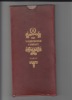
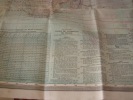
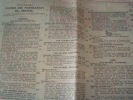
Etui titré et decoré,bon etat,traces de mouillures en haut des plis et marge,dans l'etat Remise de 20% pour toutes commandes supérieures à 200 €
Atlas de l'archéologie. Sous la direction de C. Scarre.
Couverture rigide. Reliure de l'éditeur. 319 pages. 27 x 37 cm. Jaquette. Parfait état.
Livre. The Times France Loisirs, 1991.
The Book of Gems
Whittaker and Co 1838 304 pages in8. 1838. reliure editeur demi chagrin à coins dos à nerfs tranches dorées. 304 pages. The Book of Gems est une anthologie en trois volumes des poètes et artistes de Grande-Bretagne éditée par S. C. Hall et publiée en 1838 par Whittaker and Co. Le troisième volume est consacré aux poètes et artistes modernes
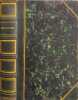
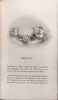
Bon état couverture légèrement usagée intérieur propre belles gravures avec serpentes
SCHEELE, (CARL WILHELM). - THE REVISION OF SCHEELE'S VIEW ON THE NATURE OF AIR.
Reference : 41977
(1785)
Neuere Bemerkungen über Luft und feuer, und die Wasser=Erzeugung" (+ Fortsetzung:) Neuere Bemerkungen über Luft und...von Hrn. Scheele. (2 papers).
Helmstädt und Leipzig, J.G. Müllerschen Budhhandlung, 1785. Small 8vo. Orig. printed blue wrappers to both issues., no backstrip. In: ""Chemische Annalen...von Lorenz Crell"", 1785:1. Bd., 3. Stück. a. 1785: 1.Bd., Stück 4. ( 2 whole issues = Stück3-4). (2),196-288 a. (2),291-384 a. 1 engraved plate. - Scheele's papers: pp. 229-38 a. pp. 291-299.
First appearance of these importent papers by the discoverer of oxygen. ""In 1785, Scheele revised his views on the nature of air and fire (the papers offered) as a result of Lavoisier's observations on the increase in weight on burning phosphorus in air. He says he had also often observed the formation of water on the explosion of a mixture of inflammable air (hydrogen) and fire air in a bottle, but had thought that the moisture was in the gases (as Priestly had done in 1781....(Parkinson III:p.228). ""It is only the exact observation of Lavoisier which had helped me out of the dream..""(Scheele).
The Fate of the Earth (Picador Books)
Picador 1984 256 pages 13x2 2x19 4cm. 1984. Broché. 256 pages. The Fate of the Earth is a 1982 book by Jonathan Schell that describes the catastrophic consequences of a nuclear war forcing readers to confront the potential destruction of humanity and most life on Earth. The work also explores moral obligations to future generations and advocates for nuclear disarmament
To get rich is glorious. China in the 80's
1984 - cartonné - Pantheon Books, New York - First Edition - 1984 - In-8 (21,5 x 14,5 cm) reliure cartonnée sous jaquette - 210 pages - ISBN : 0-394-53952-4 - Ouvrage sous titré : "The New Yorker reports on China" - Texte en anglais
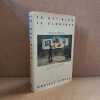
Bon état - Frottements sur la jaquette
L'HEURE DU CAFE - COLLECTION LES PETITS PLAISIRS N°7.
GENTLEMAN EDITEUR. 1987. In-8. Relié. Bon état, Couv. convenable, Dos satisfaisant, Intérieur frais. 107 pages - jaquette en bon état - nombreuses illustrations en couleurs et en monochrome dans et hors texte.. Avec Jaquette. . . Classification Dewey : 633.7-Plantes alcaloïdes (tabac, thé, cacao, café, pavot)
COLLECTION LES PETITS PLAISIRS N°7 - Préface de Philippe Jobin. Classification Dewey : 633.7-Plantes alcaloïdes (tabac, thé, cacao, café, pavot)

L'heure du café
Gentleman. 1987. In-8. Relié. Bon état, Couv. convenable, Dos satisfaisant, Intérieur frais. 107 pages augmentées de nombreuses illustrations monochromes dans le texte et d'une illustration en couleurs hors text en fin d'ouvrage. Jaquette en bon état.. Avec Jaquette. . . Classification Dewey : 633.7-Plantes alcaloïdes (tabac, thé, cacao, café, pavot)
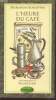
Préface de Philippe Jobin. Classification Dewey : 633.7-Plantes alcaloïdes (tabac, thé, cacao, café, pavot)
L'HEURE DU THE - COLLECTION LES PETITS PLAISIRS N°1.
GENTLEMAN EDITEUR. 1987. In-8. Relié. Bon état, Couv. convenable, Dos satisfaisant, Intérieur frais. 96 pages - jaquette en bon état - nombreuses illustrations en couleurs et en monochrome dans et hors texte.. Avec Jaquette. . . Classification Dewey : 633.7-Plantes alcaloïdes (tabac, thé, cacao, café, pavot)
Illustrations de Franco Testa - COLLECTION LES PETITS PLAISIRS N°1. Classification Dewey : 633.7-Plantes alcaloïdes (tabac, thé, cacao, café, pavot)
L'heure du thé.
Coll. "Les Petits Plaisirs" n° 1, Paris, éd. Gentleman, 197, EDITION ORIGINALE en français, cartonnage, in-8 étroit, couv. ill. coul. éd., jaquette à l'identique, 96 pp., papier crème fort, photos et dessins en coul. et en noir, sommaire, Beau voyage des le pays du thé : les producteurs, la culture, la fabrication et des recettes à base de thé. Charmant ouivrage ! Très bon état
Librairie spécialisée en gastronomie , œnologie et tabagie
"SCHLEGEL, FRIEDRICH. - COINING THE TERM ""COMPARATIVE GRAMMAR"".
Reference : 56793
(1808)
Ueber die Sprache und Weisheit der Indier. Ein Beitrag zur Begründung der Alterthumskunde. nebst metrischen Uebesetzüngen indischer Gedichte.
Heidelberg, Mohr und Zimmer, 1808. Contemp pink boards. Gilt titlelabels on spine. Lacks a bit of coverpaper on top of spine. Wear to spine ends and along edges. XVI,324 pp. Faint scattered brownspots.
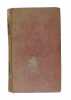
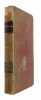
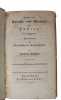
Scarce first edition of Schlegel's work on the grammatical connections between Sanskrit and the Indo-European languages. It represents an important moment in the development of the study of comparative grammar, a term which Schlegel himself coined in the text.
Ueber die von den Thorverbindungen und einigen andern Substanzen ausgehende Strahlung.
Berlin, J.A. Barth, 1898. No wrappers. In ""Annalen der Physik"", Neue Folge Band 65, No 5. Pp. 1-240.. (Entire issue offered, No.5). Titlepage to vol. 65. Stamp on titlepage. Schmidt's paper: pp. 141-151, textillustr. A tear to inner lower corners of pp. 24-32. (not affecting Schmidt's paper). Clean and fine.
First printing of Schmidt's full exposition, in which he describes his discovery of the radioactivity of Thorium. Schmidt and Marie Curie independently demonstrated the radioactive quality, but Schmidt's demonstration took place a few months before Curie's. The discovery was announced, but not described in full, in a short message published in ""Verhandl. d. Phys. Gesellsch. zu Berlin, 1898.""Schmidt made his discovery while examining ""many elements and compounds"" in an effeort to determine whether any of the rays that were emitted bore a resemblance to those that Henri becquerel had found emerging from uranium and uranium compounds. He located only one such element, thorium, and immediately conducted absorption, ionization, reflection, refradction, and poklarization studies to determine the characteristics of its rays. Having combined a misinterpretation of Becquerel's with one of his own, Schmidt concluded that thorium rays most resembled Röntgen rays - a conclusion that soon required revisoln in view of the researches of Marie Curie and Ernest Rutherford.""(DSB XII, p. 191.
Crime parfait/Les mauvaises lectures: deux nouvelles a chute
Magnard 2011 144 pages 13 1x17 8x0 7cm. 2011. Broché. 144 pages.
Etat correct
L'Enfant de Noe
Magnard 2010 144 pages 12 9x17 9x0 9cm. 2010. Broché. 144 pages.

Très bon état
IN MEMORIAM PROF. DR. HERMAN FREDERIK BOUCHERY ( 1912 - 1959).
, Antwerpen, De Nederlandsche Boekhandel, 1959., Originele uitgeversomslag, 16,5x25cm, 8pp.
Overdruk uit De Gulden Passer. 37e jaargang.
Ecolo a Profit: Comment j'ai sauvé un ours polaire et économisé beaucoup d'argent
Helvetiq 2019 160 pages 13 97x20 83x1 78cm. 2019. Broché. 160 pages.

Très Bon Etat
Ecolo a Profit: Comment j'ai sauvé un ours polaire et économisé beaucoup d'argent
Helvetiq 2019 160 pages 13 97x20 83x1 78cm. 2019. Broché. 160 pages.

Très bon état
Ecolo a Profit: Comment j'ai sauvé un ours polaire et économisé beaucoup d'argent
Helvetiq 2019 160 pages 13 97x20 83x1 78cm. 2019. Broché. 160 pages.

Très bon état
Van der Loo 72: de po tische surrealist Van der Loo 72: the poetical surrealist Van der Loo 72: le surr aliste po tique Van der Loo 72: de po tische surrealist
Bruxelles, Arcade, 1973 Gebonden, paarse linnen hardcover met goudopdruk op rug en front, buitentekstillustraties kleur en z/w.
Vijftalige uitgave Eng/Fr/Nl/Dts/Sp. Voorwoord door Marnix Gijsen.
SCHRÖDER, Klaus Albrecht (edited by) ; CRONE, Rainer ; VON STOSCH, Alexandra
Reference : 20682
(2006)
ISBN : 3902403098
Andy Warhol Popstars. Zeichnungen und Collagen. Drawings and Collages.
Albertina, Vienne 2006 In-4, cartonnage illustré, photographies pleines pages en couleurs, 130 pp. En anglais et en allemand. Etat neuf.
Présentation des portraits de célébrités d’Andy Warhol. Très bon état d’occasion
Précurseurs et révoltés. Shelley. Nietzche. Ada Negri. Ibsen. Maeterlinck. Wilhemine Schroeder-Devrient. Gobineau. Gustave Moreau.
Paris, Perrin, 1904 ; in-12 ; demi-vélin ivoire, dos lisse, fleuron et titre rouges, plats conservés (reliure de l’époque) ; (6), V, (1) bl., 377, (3) pp.
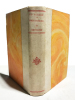
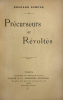
EDITION ORIGINALE dont il n’y a pas eu de tirage de tête.Bon exemplaire sobrement mais solidement relié ; quelques rares rousseurs, surtout sur les couvertures.

