 Write to the booksellers
-
Type
Book (7246)
Disk (45)
Drawings (1)
Engraving (9)
Magazine (89)
Maps (4)
Music sheets (135)
New book (2)
Old papers (1)
Photographs (19)
Posters (1)
-
Latest
Last 24h (1)
Last 3 days (1)
Last month (118)
Last week (857)
-
Language
Czech (1)
Dutch (9)
English (156)
French (7373)
German (4)
Italian (2)
Latin (3)
Russian (4)
-
Century
16th (16)
17th (43)
18th (196)
19th (878)
20th (2478)
21st (1562)
-
Countries
Belgium (1156)
Canada (32)
China (56)
Côte d'Ivoire (7)
Denmark (1063)
France (4888)
Germany (1)
Netherlands (181)
Switzerland (155)
United Kingdom (9)
United States of America (4)
-
Syndicate
ALAC (25)
CLAM (25)
CLAQ (2)
ILAB (2244)
NVVA (15)
SLACES (15)
SLAM (1036)
SNCAO (4)
DAVY, HUMPHRY. - ISOLATION OF BARIUM, MAGNESIUM, CALCIUM AND STRONTIUM FOR THE FIRST TIME.
Reference : 45885
(1808)
Electro-Chemical Researches, on the Decomposition of the Earth" with Observations on the Metals obtained from the alkaline Earths, and on the Amalgam procured from Ammonia. Read June 30th, 1808.
(London, W. Bulmer and Co., 1808). 4to. No wrappers as extracted from ""Philosophical Transactions"" 1808 - Part I. Pp. 333-370.
First printing of a historical paper in chemistry, his third Bakerian Lecture, in which he obtained for the first time, by means of electrolysis, the metals barium, magnesium, calcium and strontium. He further utilized the strong reducing power of potassium to prepare boron.""Humphry Davy was one of the most brilliant chemists of the early nineteenth century. His early study of nitrous oxide brought him his first reputation, but his later and most importent investigations were devoted to electrochemistry. Following Galvani's experiments and the discovery of the voltaic pile, interest in galvanic electricity had become widespread. The first electrolysis by means of the pile was carried out in 1800 by Nicholson and Carisle, who obtained oxygen and hydrogen from water. Davy began to examine the chemical effects of electricity in 1800, and his numerous discoveries were presented in his Bakerian lectures."" - Not in Wheeler Gift. - The Ronalds Library p. 128.

"DAVY, HUMPHRY - THE DISCOVERY OF HYDROGEN TELLURIDE - THE RIVALRY WITH GAY-LUSSAC & THENARD.
Reference : 46377
(1810)
Nouvelles Recherches électro-chimiques, principalement relatives aux substances métalliques tirées des alcalis et de terres, et à quelques combinations de l'Hydrogène. (+) Suite des Recherches... (+) Sur les Observations sur les Recherches faites p...
Paris, J. Klostermann, 1810. Contemp. hcalf. Spine gilt. Slightly rubbed. A few scratches to binding. Small stamps on verso of titlepage.In: ""Annales de Chimie, ou Recueil de Mémoires concernant la Chemie"" Tome 75. 336 pp. a. 2 folded engraved plates. Some scattered brownspots. The papers: pp. 27-77, 129-175, 256-263, 264-273, 274-289 a. 290-316.
First French version of Davy's ""The Bakerian Lecture for 1809. On some new Electrochemical Researches, on various Objects, particularly the metallic Bodies, from the Alkalies, and Earth, and on some Combinations of Hydrogene. Read November 16, 1809."", together with the controversy papers by Davy and Gay-Lussac & Thenard.""Mr. Davy having from the commencement of his electro-chemical researches, communicated the several steps of his progress to the Society (The Royal Society), takes the present opportunity of reporting the results of his further inquiries under four principal heads. First, on the nature of the metals of the fixed alkalis. Second, on the nature of Hydrogen and composition of ammonia. Thirdly, on the metals of the earth"" and Fourthly he makes a comparison between the antiphlogistic doctrine, and a modified phlogistic hypothesis.""(Abstract). He further gives arguments for considering potassium and sodium, which he discovered in 1808, as a element.""""Gay-Lussac had a slight rivalry between himself and the creation scientist Sir Humphry Davy. Davy was chemically preparing Potassium and Sodium through an electrical current, and this made Gay-Lussac and Thénard envious of his success. They too decided to perform the same task, but they had no battery at their disposal as Davy had, so they had to form another way to chemically prepare the two elements. In 1808, they used a red-hot iron fused to potash, the water-soluble form of a manufactured salt containing potassium, to perform this task, a method that Davy admitted had its advantageous qualities. Gay-Lussac and Thénard were successful in preparing Potassium, and continued to make a full analysis of its chemical properties, and began to use it for their own experiments. In 1809, Davy performed the same task, using it to reduce Boron in Boracic acid.""
The Bakerian Lecture for 1809. On some new Electrochemical Researches, on various Objects, particularly the metallic Bodies, from the Alkalies, and Earth, and on some Combinations of Hydrogene. Read November 16, 1809.
(London, W. Bulmer and Co., 1810). 4to. No wrappers as extracted from ""Philosophical Transactions"" 1810 - Part I. Pp. 16-74 and 2 engraved plates showing Davy's electrochemical apparatus for decomposing substances. The plates dampstained. Text fine and clean.
First appearence of this historical chemical paper, Davy' fifth Bakerian Lecture, in which he announced his discovery of hydrogen telluride.""Mr. Davy having from the commencement of his electro-chemical researches, communicated the several steps of his progress to the Society (The Royal Society), takes the present opportunity of reporting the results of his further inquiries under four principal heads. First, on the nature of the metals of the fixed alkalis. Second, on the nature of Hydrogen and composition of ammonia. Thirdly, on the metals of the earth"" and Fourthly he makes a comparison between the antiphlogistic doctrine, and a modified phlogistic hypothesis.""(Abstract). He further gives arguments for considering potassium and sodium, which he discovered in 1808, as a element.""Humphry Davy was one of the most brilliant chemists of the early nineteenth century. His early study of nitrous oxide brought him his first reputation, but his later and most importent investigations were devoted to electrochemistry. Following Galvani's experiments and the discovery of the voltaic pile, interest in galvanic electricity had become widespread. The first electrolysis by means of the pile was carried out in 1800 by Nicholson and Carisle, who obtained oxygen and hydrogen from water. Davy began to examine the chemical effects of electricity in 1800, and his numerous discoveries were presented in his Bakerian lectures."" - Wheeler Gift: 2518.
The Bakerian Lecture for 1809. On some new Electrochemical Researches, on various Objects, particularly the metallic Bodies, from the Alkalies, and Earth, and on some Combinations of Hydrogene. Read November 16, 1809.
(London, W. Bulmer and Co., 1810). 4to. No wrappers as extracted from ""Philosophical Transactions"" 1810 - Part I. Pp. 16-74 and 2 engraved plates showing Davy's electrochemical apparatus for decomposing substances, Davy's versions of the Voltaic-pile.. Plates a bit brownspotted, otherwise clean and fine, wide-margined.
First appearence of this historical chemical paper, Davy' fifth Bakerian Lecture, in which he announced his discovery of hydrogen telluride.""Mr. Davy having from the commencement of his electro-chemical researches, communicated the several steps of his progress to the Society (The Royal Society), takes the present opportunity of reporting the results of his further inquiries under four principal heads. First, on the nature of the metals of the fixed alkalis. Second, on the nature of Hydrogen and composition of ammonia. Thirdly, on the metals of the earth"" and Fourthly he makes a comparison between the antiphlogistic doctrine, and a modified phlogistic hypothesis.""(Abstract). He further gives arguments for considering potassium and sodium, which he discovered in 1808, as a element.""Humphry Davy was one of the most brilliant chemists of the early nineteenth century. His early study of nitrous oxide brought him his first reputation, but his later and most importent investigations were devoted to electrochemistry. Following Galvani's experiments and the discovery of the voltaic pile, interest in galvanic electricity had become widespread. The first electrolysis by means of the pile was carried out in 1800 by Nicholson and Carisle, who obtained oxygen and hydrogen from water. Davy began to examine the chemical effects of electricity in 1800, and his numerous discoveries were presented in his Bakerian lectures."" - Wheeler Gift: 2518.Also with William Hyde Wollaston ""The Croonian Lecture. Read November 16, 1809.(On Muscular Action - On Sea-Sickness - On the salutary Effects of Riding, and other Modes of Gestation). Pp. 1-15.
"DAVY, HUMPHRY - THE DISCOVERY OF POTASSIUM AND SODIUM (FRENCH VERSION).
Reference : 50198
(1809)
Recherches ëlectrochimiques sur la décomposition des terres, avec des observations sur les métaux obtenus des terres alcalines, et sur un amalgame produit avec l'ammoniaque. Tireeis des Transactions philosophiques, et traduites par M. C.A. Prieur. (+)...
Paris, Mad. Ve Barnard, 1809. Contemp. hcalf. Spine gilt. Wear to top of spine. A few scratches to binding. Small stamps on verso of titlepage.In: ""Annales de Chimie, ou Recueil de Mémoires concernant la Chemie"" Tome 70. 336 pp. (Entire volume offered). Davy's paper: pp. 189-254.
First edition in French (the first English 1808) of this importent historical paper in chemistry, in which Davy shows that electricity is capable of decomposing some alkalies, isolating two new substances and discovering potassium and sodium. Neville in his Historical Chemical Library vol. I, p.340, writes about this paper ""ONE OF THE GREAT CLASSIC RESEARCHES IN CHEMISTRY, in which Davy announced in this, his second Bakterian lecture, the isloation of metallic potassium and sodium by the electrolytic decomposition of their fused oxides.""""He (Davy) began his own electrical experiments...The results were spectacular. On October 6, 1807, the current passing through molten potash liberated a metal, which Davy called potassium. The little globules of shining metal tore the water molecule apart as it eagerly recombined with oxygen and the liberated hydrogen burst into lavender flame. Davy danced about in a delirium of joy. A week later he isolated sodium from soda.""(Asimow). The paper offered here describes these discoveries.""Humphry Davy was one of the most brilliant chemists of the early nineteenth century. His early study of nitrous oxide brought him his first reputation, but his later and most importent investigations were devoted to electrochemistry. Following Galvani's experiments and the discovery of the voltaic pile, interest in galvanic electricity had become widespread. The first electrolysis by means of the pile was carried out in 1800 by Nicholson and Carisle, who obtained oxygen and hydrogen from water. Davy began to examine the chemical effects of electricity in 1800, and his numerous discoveries were presented in his Bakerian lecture to the Royal Society on November 20, 1806. (A Source Book in Chemistry p. 243).
The Bakerian Lecture, on some new Phenomena of chemical Changes produced by Electricity,particularly the Decomposition of the fixed Alkalies, and the Exhibition of the new substances which constitute their bases" and on the general Nature of alkaline ...
(London, W. Bulmer and Co., 1808). 4to. No wrappers as extracted from ""Philosophical Transactions"" 1808 - Part I. Pp. 1-44.
First printing of this importent historical paper in chemistry, in which Davy shows that electricity is capable of decomposing some alkalies, isolating two new substances and discovering potassium and sodium. Neville in his Historical Chemical Library vol. I, p.340, writes about this paper ""ONE OF THE GREAT CLASSIC RESEARCHES IN CHEMISTRY, in which Davy announced in this, his second Bakterian lecture, the isloation of metallic potassium and sodium by the electrolytic decomposition of their fused oxides.""""He (Davy) began his own electrical experiments...The results were spectacular. On October 6, 1807, the current passing through molten potash liberated a metal, which Davy called potassium. The little globules of shining metal tore the water molecule apart as it eagerly recombined with oxygen and the liberated hydrogen burst into lavender flame. Davy danced about in a delirium of joy. A week later he isolated sodium from soda.""(Asimow). The paper offered here describes these discoveries.""Humphry Davy was one of the most brilliant chemists of the early nineteenth century. His early study of nitrous oxide brought him his first reputation, but his later and most importent investigations were devoted to electrochemistry. Following Galvani's experiments and the discovery of the voltaic pile, interest in galvanic electricity had become widespread. The first electrolysis by means of the pile was carried out in 1800 by Nicholson and Carisle, who obtained oxygen and hydrogen from water. Davy began to examine the chemical effects of electricity in 1800, and his numerous discoveries were presented in his Bakerian lecture to the Royal Society on November 20, 1806.(A Source Book in Chemistry p. 243). - Wheeler Gift: 2514.
The Bakerian Lecture, on some new Phenomena of chemical Changes produced by Electricity,particularly the Decomposition of the fixed Alkalies, and the Exhibition of the new substances which constitute their bases" and on the general Nature of alkaline ...
(London, W. Bulmer and Co., 1808). 4to. No wrappers as extracted from ""Philosophical Transactions"" 1808 - Part I. Pp. 1-44. Clean and fine, wide-margined.
First printing of this importent historical paper in chemistry, in which Davy shows that electricity is capable of decomposing some alkalies, isolating two new substances and discovering potassium and sodium. Neville in his Historical Chemical Library vol. I, p.340, writes about this paper ""ONE OF THE GREAT CLASSIC RESEARCHES IN CHEMISTRY, in which Davy announced in this, his second Bakterian lecture, the isloation of metallic potassium and sodium by the electrolytic decomposition of their fused oxides.""""He (Davy) began his own electrical experiments...The results were spectacular. On October 6, 1807, the current passing through molten potash liberated a metal, which Davy called potassium. The little globules of shining metal tore the water molecule apart as it eagerly recombined with oxygen and the liberated hydrogen burst into lavender flame. Davy danced about in a delirium of joy. A week later he isolated sodium from soda.""(Asimow). The paper offered here describes these discoveries.""Humphry Davy was one of the most brilliant chemists of the early nineteenth century. His early study of nitrous oxide brought him his first reputation, but his later and most importent investigations were devoted to electrochemistry. Following Galvani's experiments and the discovery of the voltaic pile, interest in galvanic electricity had become widespread. The first electrolysis by means of the pile was carried out in 1800 by Nicholson and Carisle, who obtained oxygen and hydrogen from water. Davy began to examine the chemical effects of electricity in 1800, and his numerous discoveries were presented in his Bakerian lecture to the Royal Society on November 20, 1806.(A Source Book in Chemistry p. 243). - Wheeler Gift: 2514.
"DAVY, HUMPHRY. - THE DISCOVERY OF THE ANAESTETHIC EFFECTS OF ""LAUGHING GAS""
Reference : 44095
(1799)
Athembarkeit des sauerstoffhaltigen Stickgas"" aus einem Briefe H.Davy's an Will. Nicholson. (+) Nachricht von einigen merkwürdigen Versuchen Davy's. (Aus einem Briefe Humphry Davy's an Will. Nicholson).
Halle, Rengerschen Buchhandlung, 1799, 1800. Without wrappers extracted from ""Annalen der Physik. Herausgegeben von Ludwig Wilhelm Gilbert"", Bd. 2. p. 483 (one page). and Bd. 6, pp. 105-115. Some scattered brownspots.
First German translation of Davy's announcement (the announcement on 1 page) of his discovery of the unusual, anaesthetic, effects of nitrous oxide which, on being inhaled, gave rise to a giddy, intoxicated feeling. On announcing his discovery he says, that he will publish a paper discribing the experiments with the gas, later. This is the paper offered here, also in the first German version. Both the announcement and the paper were issued in the ""Annalen"" the same year as they appeared in Nicholson's Journal.The gas was first synthesized by English natural philosopher and chemist Joseph Priestley in 1772, who called it phlogisticated nitrous air.""Following Priestley's discovery, Humphry Davy of the Pneumatic Institute in Bristol, England, experimented with the physiological properties of the gas, such as its effects upon respiration. He even administered the gas to visitors to the institute, and after watching the amusing effects on people who inhaled it, coined the term 'laughing gas'! Davy even noted the anaesthetic effects of the gas: ""As nitrous oxide in its extensive operation appears capable of destroying physical pain, it may probably be used with advantage during surgical operations in which no great effusion of blood takes place"".(Wikipedia).""Davy discovered the anaesthetic properties of nitrous oxide and suggested its use during surgiical operations, a suggestion which was not turned to useful account until 1844.""(Garrison & Morton, 5646, not mentioning the announcing of its discovery in 1799).
Some Experiments and Observations on the Substances produced in different chemical Processes on Fluor Spar. Read July 8, 1813.
(London, W. Bulmer and Co., 1813). 4to. No wrappers as extracted from ""Philosophical Transactions"" 1813 - Part II. Pp. 263-279. Clean and fine.
First printing of an importent paper in the history of chemistry in which he decomposited ammonium salts by heated potassium.""In 1812 Davy,,,,said that fluoboric acid and fluosilicic acid are 'compounds of a principle unknown in the separate state but analogous to chlorine, with silicium and boron', and 'the hydrofluoric acid is a compound of the same principle with hydrogene and water'. In 1813-14 ( 1813 the paper offered) Davy described his attempts to isolate the radical, which following a sugesstion by Ampere, he called fluorine.."" (Partington IV, p.58).""Humphry Davy was one of the most brilliant chemists of the early nineteenth century. His early study of nitrous oxide brought him his first reputation, but his later and most importent investigations were devoted to electrochemistry. Following Galvani's experiments and the discovery of the voltaic pile, interest in galvanic electricity had become widespread. The first electrolysis by means of the pile was carried out in 1800 by Nicholson and Carisle, who obtained oxygen and hydrogen from water. Davy began to examine the chemical effects of electricity in 1800, and his numerous discoveries were presented in his Bakerian lectures."" Another paper printed together with Davy's paper: John Pond: ""Catalogue of North Pole Distances of Eighty-four principal fixed Stars, deduced from Observations made with the Mural Circle at the Royal Observatory."", pp. 280-304.
DAVY, Marie-Madeleine (Direction) - BERLEWI, Marian (Conception et réalisation
Reference : 114503
(1978)
Encyclopédie des mystiques. Tome 4 : Bouddhismes tibétain, chinois, japonais, yi king, tch'an, zen
1978 Editions Seghers - 1978 - In-12, broché couverture illustrée - 472 pages
Bon état - Menus frottements sur la couv. et le dos - Coins et "coiffes" légèrement frottés Bon
DAWIT ANYAGHT [DAVID NEPOBEDIMYI, DAVID THE INVINCIBLE] & AREVSHATIAN S.S. (ed. & transl.)
Reference : X116781
(1967)
Tolkovanie Analitiki Aristotelia (svodnyi kriticheskii tekst) = Meknut'iwn i verlutsakann Aristoteli
Erevan [Yerevan], Haykakan SSH GA Hrat 1967 156pp. + 1 errata slip, 21cm., bilingual text: Armenian & Russian in Cyrillic script, publisher's hardcover in green cloth, text is clean and bright, edition limited to 1000 copies, good condition, cfr. OCLC 1242793962, [Contains David the Invincible's Commentary on the 'Analysis of Aristotle" : critical text edition of the Classical Armenian, with Russian translation, introduction and notes], X116781
Dayan Jacques Beaumont Emilie Boccador Sabine
Reference : 500280275
(2010)
ISBN : 9782215104346
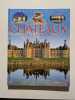
Les Chteaux de la Loire
Fleurus 2010 32 pages 23 2x1x28 8cm. 2010. board_book. 32 pages.
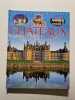
Bon état
Dayan Jacques Beaumont Emilie Boccador Sabine
Reference : 500280262
(2010)
ISBN : 9782215104346
Les Châteaux de la Loire
Fleurus 2010 32 pages 23 2x1x28 8cm. 2010. board_book. 32 pages.
Bon état
Beautiful Death: The Art of the Cemetery
, Penguin Studio (1996), 1996 Hardcover, unnumbered pages, English, 235 x 235 mm, book in good state, with many coloured pictures, mostly taken from graves, . ISBN 9780670868063.
A collection of photographs from the burial grounds of Europe explores the beauty of cemeteries and the emotions the survivors of the dead placed into the making of the tombs, accompanied by a meditation on the death of his own parents by Dean Koontz.
DE VERZAMELING. LA COLLECTION. THE COLLECTION,
Antwerpen, Museum van Hedendaagse Kunst, 1988 Paperback, wit geillustreerde kartonomslag, 200 x 275mm., 160pp., uitgebreide illustratie in kleur en z/w.
Verschijnt ter gelegenheid van de gelijknamige tentoonstelling 12 maart - 5 juni 1988. In goede staat.
Hygiène alimentaire. Histoire simplifiée de la digestion des aliments et des boissons à l'usage des gens du monde.
Paris, éd. E. Dentu, 1868, deuxième édition, in-16, demi-chagrin brun foncé, plats marbrés "moucheté" blanc et vert foncé, 4 fleurons, filets, auteur et titre dorés sur dos à 4 nerfs et 2 faux nerfs à froid, tranches mouchetées, reliure d'époque, 532 pp., signature sur la page en face de la page de titre, table des matières, Ex-libris de Charkes P. Riess, réf. Vicaire 253, Ce livre est remarquable par ses analyses chimiques de toutes les substances végétales et animales servant à la nourriture de l'homme. Les meilleurs modes de préparations des viandes et des légumes. En un mot : une cuisine de Santé ! Très bon chapitre sur le chocolat, le café et le thé. La première édition date de 1860. Très belle reliure d'époque. RARE. Très bon état de la reliure et du papier,
Debenat Jean-Paul Roussillat Vincent Ravel Christian
Reference : 500096296
(2007)
ISBN : 9782915652062
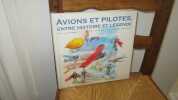
Avions et pilotes entre histoire et légende
DU MONT 2007 23 4x1 4x25 4cm. 2007. Broché.
Très bon état
Debenat Jean-Paul Roussillat Vincent Ravel Christian
Reference : 500113556
(2007)
ISBN : 9782915652062
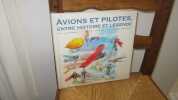
Avions et pilotes entre histoire et légende
DU MONT 2007 23 4x1 4x25 4cm. 2007. Broché.
Très bon état
DE VERZAMELING II. LA COLLECTION II. THE COLLECTION II,
Antwerpen, Museum van Hedendaagse Kunst, 1990 Paperback , wit geillustreerde kartonomslag, 200 x 275mm., 160pp., uitgebreide illustratie in kleur en z/w.
Verschijnt ter gelegenheid van de tentoonstelling "De Verzameling II en een keuze van schenkingen en bruiklenen" 30 juni - 4 november 1990. In goede staat.
DE BEUS P. (raadsheer in het Hof van Beroep te Brussel) & VAN DIEVOET E. (woord vooraf)
Reference : J29612
(1944)
Overzicht van het Burgerlijk recht
Turnhout, J.Van Mierlo-Proost 1944 506pp., 3e uitgave, luttele onderlijningen, verder in goede staat, J29612
Sur une nouvelle matière radio-active.
(Paris, Gauthier-Villars), 1898. 4to. No wrappers. In: ""Comptes Rendus Hebdomadaires des Séances de L'Academie des Sciences"", Tome 129, No 16. Pp. (567-) 626. (Entire issue offered). Debierne's paper: pp. 593-595. Paperquality rather poor, a bit fragile.
First appearance of the paper in which Debierne announced his discovery of a new radioactive element found in uranium residues.""In 1906 Professor Hahn discovered radioactinium between actinium an actinium X. Actinium emanation, or ""action"", like radon, is an inert gas, was discovered independently by F. Giesel and André Debierne."" (Weeks ""Discovery of the Elements"", p. 307.Parkinson ""Breakthroughs"" 1899 C.
L'envol des femmes
DES FEMMES 2006 21 7x24 9x1 6cm. 2006. Broché. L'ouvrage 'L'Envol des femmes' de Colette Deblé avec un texte de Jean-Joseph Goux propose une analyse visuelle des représentations de la femme dans l'art de la préhistoire à nos jours à travers une série de dessins. L'artiste revisite les postures et mises en scène traditionnelles pour offrir une nouvelle perspective libérée du regard masculin


Bon état intérieur propre bonne tenue
Café autour du monde
Jean-Jacques Pauvert 2000 In-8 cartonné. 92 pages. Jaquette illustrée. Nombreuses illustrations en couleurs. Très bon état d’occasion.
Très bon état d’occasion
Les personnages célèbres à travers les civilisations
Editions Tableaux synoptiques de l'histoire 2006 2x34x26cm. 2006. Broché.
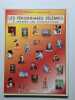
Bon état
DE BORCHGRAVE D'ALTENA, J./VAN CAUWENBERGH, E. /FRANCOTTE, J. en LEMAIRE, R.
Reference : 24443
KUNST TE LEUVEN.
Leuven, Davidsfonds , 1946 Hardcover, 21x28cm, grijs halflinnen over vilt, met goudopdruk vooraan, 83 pp. + XCV zwart/wit platen.
Gedenkboek van de tentoonstelling van kunstwerken uit de geteisterde kerken van Leuven.

