 Write to the booksellers
-
Type
Book (7262)
Disk (45)
Drawings (1)
Engraving (9)
Magazine (89)
Maps (4)
Music sheets (136)
New book (4)
Old papers (1)
Photographs (19)
Posters (1)
-
Latest
Last 24h (2)
Last 3 days (5)
Last month (122)
Last week (9)
-
Language
Czech (1)
Dutch (9)
English (158)
French (7389)
German (4)
Italian (2)
Japanese (1)
Latin (3)
Russian (4)
-
Century
16th (17)
17th (43)
18th (199)
19th (882)
20th (2485)
21st (1574)
-
Countries
Belgium (1156)
Canada (34)
China (56)
Côte d'Ivoire (7)
Denmark (1063)
France (4902)
Germany (1)
Netherlands (181)
Switzerland (155)
United Kingdom (12)
United States of America (4)
-
Syndicate
ALAC (27)
CLAM (25)
CLAQ (2)
ILAB (2251)
NVVA (15)
SLACES (15)
SLAM (1038)
SNCAO (4)
Zoological Record. Insecta: Hymenoptera. Volumes 109-111.
1978-1979 215, 220, 206 p., 4to, paperbound. Covering the complete Hymenoptera section for the years 1972-1974. In all a consecutive set of 3 volumes + Advance author index to volume 111 (48 p.).
Zoological Record. Insecta: Hymenoptera. Volumes 118.
1984 xviii, 316 p., 4to, paperbound. Covering the complete Hymenoptera section for the year 1981.
Zoological Record. Insecta: Hymenoptera. Volumes 109-140.
1978-2005 4to, half cloth with title in gilt on spine for volumes 109-127, paperbound for the remainder of volumes (as issued). Covering the complete Hymenoptera section for the years 1972-2004. In all a consecutive set of 32 volumes + Advance author index (1979).
Zoological Record. Insecta: Lepidoptera. Volumes 110-112.
1978-1979 257, 193, 281 p., 4to, paperbound. Covering the complete Lepidoptera section for the years 1973-1975. In all a consecutive set of 3 volumes + Advance author index to volume 111 (68 p.).
Zoological Record. Insecta. Volumes 21-23, 25-30.
1886-1895 (reprint 1958-1960) paperbound. Covering the complete insecta for the years 1884-1893. Nine early volumes in the 1958/60 reprint edition.We also have an almost complete set of all Zoological records (Vols 1-111), please inquire.
Zoological Record. Insecta. Volumes 85-99.
1950-1964 Uniform red cloth with gilt titles on spines (printed covers bound in, except for the first 3 volumes). Covering the complete insecta for the years 1948-1962. The first 8 years are bound in 4, and the next 5 in 5 volumes. Stamp on front covers. A good attractively bound set.We also have an almost complete set of all Zoological records (Vols 1-111), please inquire.
Zoological Record. Insecta. Volumes 96-108.
1961-1975 paperbound. Covering the complete insecta for the years 1959-1971. In all a consecutive set of 13 volumes.We also have an almost complete set of all Zoological records (Vols 1-111), please inquire.
Bibliography of parapsychology.
New York, Parapsychology foundation, 1957 ; in-8, cartonnage de l’éditeur en percaline noire, auteur et titre dorés, jaquette de papier beige imprimée rouge ; 116 pp. , 11 pp.
Exemplaire en très bon état.


TABAC MIROIR DU TEMPS
PRESSES MASSILIA. NON DATE. In-8. Relié. Bon état, Couv. convenable, Dos satisfaisant, Intérieur frais. Non paginé - 60 pages environ. Illustrée de photos dans le texte.. . . . Classification Dewey : 633.7-Plantes alcaloïdes (tabac, thé, cacao, café, pavot)
Classification Dewey : 633.7-Plantes alcaloïdes (tabac, thé, cacao, café, pavot)
"ÅNGSTRÖM, A.J. (ANDERS JONAS). - THE DISCOVERY OF HYDROGEN IN THE SUN.
Reference : 44063
(1862)
Ueber die Fraunhofer'schen Linien im Sonnenspectrum. (Mitgetheilt vom Hrn. verf. aus d. Oefversigt af K. vet. Acad. Förhandl."" 1861, No 8, nebst einem späteren Zusatz).
Leipzig, Johann Ambrosius Barth, 1862. Without wrappers as issued in ""Annalen der Physik und Chemie. Hrsg. von J.C. Poggendorff"", Vierte Reihe Bd. 27 (117), Stück Zwei, No. 10. The entire issue offered. Titlepage to vol. 27. Pp. 193-352 a. 1 engraved plate. Ångströms paper: pp. 290-302.
First appearance in German of Ångström's famous paper in which he announced the discovery of hydrogen in the atmosphere of the sun and in which he also confirmed the probable existence of of other elements there. The paper appeared in ""Oefversigt af K. Vet. Acad. Förhandl."" in 1861. The German paper here is expanded. At the same time it was translated into English and publishe as ""On the Fraunhofer Lines Visible in the Solar Spectrum"".Ångström was one of the early formulators of the science of modern spectroscopy" he wrote extensively on terrestrial magnetism, the conduction of heat, and especially spectroscopy. He published a monumental map of the normal solar spectrum that expressed the length of light waves in units of one ten-millionth of a millimeter, a unit of length now known as the angstrom. He discovered that hydrogen is present in the sun's atmosphere, and he was the first to examine the spectrum of the aurora borealis.
"ÆPINUS (AEPINUS), FRANZ ULRICH THEODOSICUS. - THE ANALOGY BETWEEN ELECTRICITY AND MAGNETISM.
Reference : 46557
(1758)
Mémoire concernant quelques nouvelles Experiences électriques remarquables.
Berlin, Haude et Spener, 1758. 4to. No wrappers, as issued in ""Mémoires de l'Academie Royale des Sciences et Belles-Lettres"", 1756, tome XII. Pp. 105-121. With titlepage to the volume, printed in red/blac and with engraved titlevignette. Also having the parttitlepage. Titlepage with 2 small wormtracts.
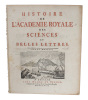
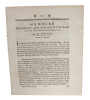
First appearance of a milestone paper in the history of electricity as Aepinus here found that a heated tourmaline attracted and repelled light bodies. He decided, that the effect was electrical and that its ends was carrying charges of opposite sign, much as soft iron is magnetized by a lodestone. This paper is a forerunner of his ""Tentamen Theoriae electricitatis et magnetismi"", - published 1759, and one of the most original and important books in the history of electricity. It is the first reasoned, fruitful exposition of electrical phenomena based on action-at-a-distance.""Aepinus’ first reseraches on the thermoelectric properties of this stone (Tourmalin) which was then of extreme rarity, were fundamental. He recognized the electrical nature of the attractive power of a warmed tourmaline and attempted not altogether successfully, to reduce its apparent capriciousness to rule. He was particularly struck by the formal similarity between the tourmaline and the magnet in regard to polarity which inspired him to reconsider the possibility, then occasionally discussed, that electricity and magnetism were basically analogous. This thought became the This thought became the theme for his masterwork, Tentamen theoriae electricitatis et magnetismi (1759).""(DSB).""Aepinus is known in the history of electricity for his attempt to develop the one fluid theory of Franklin. His theory was for a while generally adopted, but was gradually displaced by the two fluid theory, in consequence chiefly of the necessity of ascribing to uncharged matter repulsions of the same force as those which were ascribed to electrical charges. His theory exhibits interesting similarities to the present theory of the constitution of matter""(Magie ""A Source Book in Physics"", pp.406-8).Ronalds p. 4.
États-Unis. Commission on population growth and the American future
Reference : 36402
ISBN : B001D2YK6O
L'Accroissement de la population et l'avenir des États-Unis : Population growth and America's future, rapport intérimaire établi par la Commission chargée de l'étude de l'accroissement de la population et de l'avenir des États-Unis [Unknown Binding] États-Unis. Commission on population growth and the American future
Attention : Edition de 1973 : titre exact La population et l'avenir des États-Unis - rapport de la commission d'enquête sur l'accroissement de la population et l'avenir des États-Unis
Merci de nous contacter à l'avance si vous souhaitez consulter une référence dans notre boutique à Authon-du-Perche.
Skjaldur og Ævintyr. Savnad hevur Sofia Petersen. Teknad Elinborg Lützen.
Torsh., 1948. Tv-4to. Orig.papbd. Rigt illustr., delvis i farver.
Öldin sem Leid. Minnisverd Tidindi 1801-1950. Gils Gudmundsson tök saman. (1801-1860, 1861-1900, 1901-30, 1931-50). 4 Bd.
Reykjavik, Forlagid Idunn, 1950-56. Lille 4to. Indbundet i 4 orig. hshirtbd. 256288302323 pp. Rigt illustreret.
ØRSTED (OERSTED), HANS CHRISTIAN. - THE DEBUT OF HANS CHRISTIAN OERSTED.
Reference : 57779
(1809)
Videnskaben om Naturens almindelige Love. Første Bind (alt som udkom). (The Science of the General Laws of Nature. First volume (all published).
Kjøbenhavn (Copenhagen), Fr. Brummer, 1809. Cont. hcalf. Gilt spine. Titlelabel with gilt lettering. A paperlabel pasted on top of spine. Stamps on title-page. XXX,378 pp. and 11 engraved plates with many figs. A fine copy.
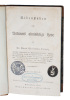
Scarce first edition of Hans Christian Oersted's first printed book (The Science of the General Laws of Nature). Oersted is universally known for his discovery of the Electro-Magnetism in 1820. In this his first printed book, Oersted proposes at least three theses that he were to follow for the rest of his life, and which he made the foundation for his discovery of Electro-Magnetism: the crucial role that experiments and thereby empiricism play in the perception of nature the fact that each individual phenomenon in nature in accordance with the philosophy of nature must be understood as a whole" and that the laws of nature are the same everywhere, in the smallest and in the greatest parts of the universe. The sort of philosophy of nature that Oersted studies and develops is by him comprehended as a product of human striving towards with its reason to ""include and penetrate the entire nature, and to explain it in its full context"" (from ""Science of the General Laws of Nature"" - own translation), which is why this philosophy is also the science of the general laws of nature (that are the same everywhere). It thus not only includes the science of movement, but also that of electricity, magnetism, light, warmth, and chemical connections, such as they all follow directly from ordinary forces of nature, and Oested's discovery in 1820 of the connection between magnetism and electricity must be seen in this connection.Both H.C. Andersen and Søren Kierkegaard admit to having been influenced by the writings of Oersted. ""He was an enthusiastic follower of the ""Naturphilosophie"" school in Germany, whose main object was the unification of physical forces, thus producing a monistic theory of the universe. It was to further this purpose that Oersted sought in actual phenomena the electro-magnetic identity of which he had already convinced himself on metaphysical grounds"" (Percy H. Muir in Printing and The Mind of Man).
"ØRSTED (OERSTED), H.C. & FOURIER, (JEAN BAPTISTE JOSEPH). - COINING THE WORD 'THERMO-ELECTRIC""
Reference : 45991
(1823)
Sur quelques nouvelles Expériences thermo-électriques faites par M. le Baron Fourier et M. Oersted.
Paris, Crochard, 1823. No wrappers. In: ""Annales de Chimie et de Physique, Par MM. Gay-Lussac et Arago."", tome 22 (Cahier 4), With titlepage to vol. 22. Pp. 337-444. (Entire issue offered). Oersted & Fourier's paper: pp. 375-389 and 1 folded engraved plate. showing apparatus used.
First appearance of this importent paper - which can bee seen as the precursor of OHM'S LAW - in which Ørsted explains the experiments he did together with Fourier on the thermo-electric effects discovered by Seebeck. They proved with different experiments, that the effect depended solely on the heating of the plates in the voltaic arrangements. Ørsted calls Seebech's observations ""the most beautiful of the discoveries which have as yet grown out of mine (his discovery of electromagnetism three years before)""""We learn from his letters that thet the experiments on which the paper was founded had taken him 3 weeks, a space of time which evidently much too short for the performance of the work" thus Ørsted himself points out a fundamental flaw in the experiments, but there has been no time to remedy it. The work is of interest, both by what has been gained through it, and by what does not plainly appear" in some of its results it is the precursor of Ohm's law and by its defects it shows how great was the feat of the actual discovery of this law.""(Kirstine Meyer).The offered issue contains further Poisson ""Sur le Phénomene des anneaux colorés"", pp. 337-347., Ørsted ""Sur le Multiplacateur électro-magnetique de M. Schweigger, et sur quelques applications qu'on en a faites"", pp. 358-365, Ampère ""Extrait d'une Lettre de M. Ampère à M. Faraday"", pp. 389-400.
"ØRSTED (OERSTED), H.C. - THE DISCOVERY OF ELECTROMAGNETISM - FIRST ANNOUNCEMENT IN FRENCH.
Reference : 35260
(1820)
Experimenta circa Effectum, etc. Expériences sur l'effet du conflict électrique sur l'aiguille animantée.
Paris, Crochard, 1820. Recent hcloth. Some repairs to inner margin of titlepage to ""Annales"". In ""Annales de Chimie et de Physique, Par MM. Gay-Lussac et Arago"" Tome XIV pp. 417-25. The whole volume present: 448 pp. and 3 folded engraved plates.
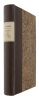
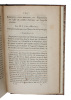
First French translation and the first translation of Oersted's epoch-making announcement in his Latin pamphlet ""Extperimenta circa effectum conflictus electrici in acun magneticam. Hafniæ, 1820"" (privately printed in a very small number, and only distributed to colleques in Europe). This discovery and confirmation of the connection between 2 forces, electricity and magnetism, must be considered one of the happiest events in the history of science, both with regard to scientific and practical results. - ""From the moment that Ørsted's discovery became known it created an enormous sensation. The results communicated were so astounding that they were received with a certain distrust, but they were stated with such accuracy that it could hardly be permitted to entertain any doubts. In the course of a short time the treatise was translated into all the chief languages."" (Kirstine Meyer). - Dibner:61 - PMM: 282 - Horblitt: 3 b. - Sparrow: 152.
"ØRSTED (OERSTED), H.C. - THE DISCOVERY OF ELECTROMAGNETISM - FIRST ANNOUNCEMENT IN FRENCH.
Reference : 46026
(1820)
Experimenta circa Effectum, etc. Expériences sur l'effet du conflict électrique sur l'aiguille animantée.
(Paris, Crochard, 1820). No wrappers. In ""Annales"". In ""Annales de Chimie et de Physique, Par MM. Gay-Lussac et Arago"" Tome XIV, Cahier 4, Titlepage to vol. 14 + pp. 337-442. (Entire issue offered). Ørsted's paper: pp. 417-25. A few scattered brownspots.
First French translation and the first translation of Oersted's epoch-making announcement in his Latin pamphlet ""Extperimenta circa effectum conflictus electrici in acun magneticam. Hafniæ, 1820"" (privately printed in a very small number, and only distributed to colleques in Europe). This discovery and confirmation of the connection between 2 forces, electricity and magnetism, must be considered one of the happiest events in the history of science, both with regard to scientific and practical results. - ""From the moment that Ørsted's discovery became known it created an enormous sensation. The results communicated were so astounding that they were received with a certain distrust, but they were stated with such accuracy that it could hardly be permitted to entertain any doubts. In the course of a short time the treatise was translated into all the chief languages."" (Kirstine Meyer). - Dibner:61 - PMM: 282 - Horblitt: 3 b. - Sparrow: 152.
夕照看人体 / Nudes in the Twilight
1992 - cartonné - L'Atelier Productions Pte Ltd., Singapour - 1992 - In-folio (37 x 27 cm) reliure cartonnée, sous jaquette de l'éditeur - 160 pages - Très nombreuses illustrations en couleurs et photographies en noir et blanc - ISBN : 981-00-3288-9 - Chua Soo BIN (Directeur de la publication) - Textes en anglais et en chinois - ENGLISH: L'Atelier Productions Pte Ltd., Singapore - 1992 - Folio (37 × 27 cm) hardcover binding with publisher’s dust jacket - 160 pages - Numerous colour illustrations and black-and-white photographs - ISBN: 981-00-3288-9 - Chua Soo Bin (chief editor and photographer) - Texts in English and Chinese - 中文:L'Atelier Productions Pte Ltd.,新加坡 — 1992年 — 大开本(37 × 27厘米)精装本,附出版社原装护封 — 160页 — 大量彩色插图及少量黑白照片 — ISBN 981-00-3288-9 — 主编、摄影:蔡斯民(Chua Soo Bin) - 中英文对照
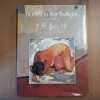
Bon état - Coins et coiffes quelque peu frottés - Légers frottements sur la jaquette avec infimes accrocs sur la coiffe supérieure
将错就错 王华祥的素描艺术 / Wang Hua Xiang de su miao yi shu. Jiang cuo jiu cuo / Make the Best of a Mistake. Wang Huaxiang's Sketch Art
1995 - broché - Éditions des Beaux-Arts du Hebei et Académie Centrale des Beaux-Arts de Chine - Collection « Art du croquis et enseignement » - Deuxième tirage : 1995 - In-4 (28,5 x 21 cm) broché, couverture à rabats et plats cartonnés - 60 pages - Très nombreuses illustrations en noir et blanc - ISBN : 7-5310-0578-6 - Ouvrage en chinois - ENGLISH: Hebei Fine Arts Publishing House and Central Academy of Fine Arts - Make the Best of a Mistake: Wang Huaxiang's Sketch Art - "Sketch Art and Teaching" Series - Second printing: 1995 - Quarto (28.5 × 21 cm), paperback with flaps and stiff card covers - 60 pages - Very numerous black-and-white illustrations - ISBN: 7-5310-0578-6 - Text in Chinese - 中文:河北美术出版社、中央美术学院出版 - 《素描艺术与教学》丛书 - 《将错就错:王华祥的素描艺术》 - 1995年第二次印刷 - 16开(28.5 × 21厘米)平装,带折页封面及硬纸板书面 - 60页 - 大量黑白插图 - ISBN 7-5310-0578-6 - 中文版
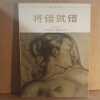
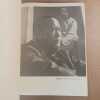
Bon état - Menus frottements sur la couverture
封神榜 (L’Investiture des Dieux) : #4 à #10
1990 - agrafé - Shanghai People's Fine Arts Publishing House - Imprimé en Chine (Shanghai Printing Factory No. 10) - Premières éditions - 1990 - 7 volumes in-4 (26 x 18,5 cm) brochés par agrafage - 32 pages par numéro - Feng YINAN & Lu HUA (Illustration de couverture) - Wang MING, Lu CHENGHUA, Zeng MING, Gu BAOCHENG, Wang YUEQIANG & Chen AKANG (Illustrations) - Qian ZHIQING & Le MINGXIANG (Rédacteurs en chef) - Differents ISBNs : 7-5322-0783-8 / 7-5322-0784-6 / 7-5322-0785-4 / 7-5332-0786-2 / 7-5322-0787-0 / 7-5322-0788-9 / 7-5322-0789-7 - ENGLISH : Investiture of the Gods - Printed in China (Shanghai Printing Factory No. 10) - First editions - 1990 - 7 quarto volumes (26 × 18.5 cm), saddle-stitched - 32 pages per issue - Feng Yinan & Lu Hua (Cover illustrations) — Wang Ming, Lu Chenghua, Zeng Ming, Gu Baocheng, Wang Yueqiang & Chen Akang (Illustrations) — Qian Zhiqing & Le Mingxiang (Editors) - 中文:中国印刷(上海市印刷十厂)— 上海人民美术出版社出版 — 1990年7月第一版第一次印刷 — 7册四开本(26 × 18.5厘米),骑马钉装订 — 每册32页 — 封面绘画:冯忆南、陆华 — 插图:王明、鲁成华、曾明、谷宝成、汪跃强、陈阿康 — 责任编辑:钱志清、乐明祥。
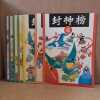
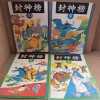
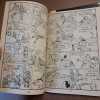
Bon état - Quelques menus frottements sur les couvertures

