 Write to the booksellers
-
Type
Book (546)
Magazine (3)
-
Latest
Last 3 days (1)
Last month (149)
Last week (2)
-
Century
19th (1)
20th (213)
21st (183)
-
Countries
Belgium (92)
Canada (1)
France (452)
Switzerland (4)
-
Syndicate
ALAC (1)
ILAB (8)
NVVA (3)
SLACES (3)
SLAM (4)
Du passé vers l'avenir: Éveil à l'histoire pour le cours moyen utilisable au cours élémentaire
Magnard 1990 1990. Relié.
Bon état
Drouin Jean-Claude Leder Sylvain Porphire François
Reference : 500284938
(2012)
ISBN : 9782218962547
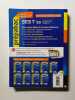
Prepabac Cours ET Entrainement: Ses Terminale Es Enseignement Obligatoire
Editions Hatier 2012 18 6x1 6x13 8cm. 2012. Broché.
Bon état
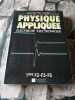
Physique appliquée: Électricité-électronique 1res F F F
Nathan 1991 1991. Broché.
Etat correct
pratique de l ecrit 5e eleve
Edl 1986 160 pages 23 6x1x17 2cm. 1986. Broché. 160 pages.
Bon état
Nouveau Dictionnaire encyclopédique des sciences du langage
Seuil 1995 672 pages 15 2x4x21 4cm. 1995. Cartonné jaquette. 672 pages.
Bon état tranche ternie jaquette défraichie intérieur propre
Einblick Allemand 2de éd. 2010 - Manuel de l'élève
HATIER 2010 272 pages 18 8x1x27 8cm. 2010. Broché. 272 pages.
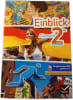
Bon état
ST-MARTIN DE VALAMAS ET SES VILLAGES ENVIRONNANTS d'hier et d'aujourd'hui.
Le Cheylard, Dolmazon, 2002, 1 br., couverture illustrée. in-8 de 130-(6), illustrations ;
Saint-Martin de Valamas. - L'arrivée du chemin de fer. - La grande sècheresse de 1906. - La bijouterie, l'industrie de la soie, les eaux minérales. - Us et coutumes. - Arcens, Borée, Saint-Clément, Saint-Martial, Chartreuse de Bonnefoy. Etc...
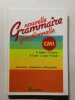
Nouvelle grammaire fonctionnelle: Expression conjugaison orthographe C.M. 1
Nathan 1994 1994. Broché.
Bon état
Montélimar au fil des canaux.Des moulins et des hommes.
Montélimar, Association Patrimoine Montilien, 2019, 1 boché, couverture illustrée. in-4 de 84 pages, texte sur 2 colonnes, photos de Patrick Morand (Meule conservée à Ardelaine, Saint-Pierreville, etc...), illustrations, de Robert de Lauzun (sceau de l'évèque de Viviers, etc...), plans, cartes ;
Ont collaborés à cet ouvrage: Richard Ladet pour le moulin de Lentillères, Philippe Champion pour le moulin de Chanaud à Meysse, le Moulin Ardelaine à Saint-Pierreville, le moulin de Mandy à Pranles, le moulin de la Pataudée à Coux, Yves Esquieu, Amicie d'Arces, Chantal Brunel, Franck Reynier, Colette Veron, etc...[...] Le moulin à blé. - Le moulin à soie. - Le moulin à huile. - Le moulin à chocolat. - La scierie à bois. - La marbrerie. - La tannerie ou chauchière. - Meuniers, gardes et mouliniers, etc...
Dupoizat D Menand Jean Auriac Jean-Marc
Reference : 500246835
(2001)
ISBN : 9782206083681
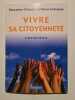
Éducation Civique Juridique et Sociale (ECJS) 1re - Manuel élève: Vivre sa cioyenneté
Delagrave 2001 136 pages 16 6x0 8x23 2cm. 2001. Broché. 136 pages.
Etat correct
Le Bibliobus CP/CE1 : Les Trois Petits Cochons ; Comment le chien devînt l'ami du chat ; Ca mange quoi un dragon? ; Guillaume superpoète: Cycle 2 CP/CE1 Les trois petits cochons (Livre de l'eleve)
Hachette 2006 128 pages 14 6x1x21 6cm. 2006. Broché. 128 pages.
Bon état
Durozoi Gérard Hansen-Love Laurence Hansen-Love Ole Pouméroulie Chantal Zernic Eric
Reference : 500231850
(2004)
ISBN : 9782701137872
Philosophie - Terminale L ES S (2004): Manuel élève
BELIN EDUCATION 2004 447 pages 17 8x25 5x1 9cm. 2004. Relié. 447 pages.
Bon état
Le roman et ses personnages
Ellipses 2007 176 pages 14 4x1 2x18 8cm. 2007. mass_market. 176 pages.
Etat correct
Revue East and West - Editions IsMEO - texte en anglais - istituto Italiano per il medio ed estremo oriente - Extrême-Orient - EthnologieSommaire : India in the letters of Pietro della Valle par Giuseppe de Lorenzo - The Ancient Civilizations of Manchuria par Louis Hambis - Indian events in Trogus Pompeius. Serach for a lost source par Mario Bussagli - Begram in the light of the recent work " new archaeological enquiries at Begram âr Ahmad Ali Kohzad " - Two bronz masks of t'ao-t'ieh par Lionello Lanciotti - The colonial deviation in Indonesian History par Justus M. van der Kroef - IX conference of junior Sinologues par Lionello Lanciotti - Inauguration of Father Sidotti's memorial stone in Tokyo par Marcello Muccioli - New material on Man's Origins par Pei Wen-chung
1 vol in-4 broché - 82 pages - N° 3 year VII ( october 1956 ) - iconographie en et hors texte
Bon état de conservation
Le Nord-Dauphiné : points de vue.
Broché 22x22, format carré, couverture couleur. L'Isle-d'Abeau : Écomusée Nord-Dauphiné, 1984. 140 pages illustrées en noir, bibliographie.
Fondements du Bas-Dauphiné (caractéristiques géomorphologiques, situation linguistique, fondements préhistoriques et historiques) / L'homme, la mémoire du milieu et la longue durée (la pierre, la terre et le bâti - écosystèmes, milieux et mises en culture - usages techniques : transmission, pérennité et abandon) / Techniques, transformations et innovation dans l'espace local (de l'homme pluriactif à la haute technicité : le textile - l'entreprise : espace de production et outil d'identité - espace ancien et ville nouvelle de l'Isle-d'Abeau) / Écomusée Nord-Dauphiné.


Eiller Robert Brini Rodolphe Descaves Alain
Reference : 500084878
(1996)
ISBN : 9782011159311
Associated Regional Chronologies for the Ancient Near East and the Eastern Mediterranean. Tigridian Region
, Brepols, 2019 Paperback, xii + 448 pages, Size:210 x 297 mm, Illustrations:119 b/w, 36 tables b/w., Language: English. ISBN 9782503534978.
Summary The fifth volume of the ARCANE series presents an up-to-date and richly illustrated synthesis of the archaeology of the 3rd millennium BC in the Upper Tigris region of Northern Iraq and South-eastern Turkey, the first to fully include the results of international rescue excavations carried out in both countries in the second half of the 20th century in the framework of dam projects. Written by well-known experts, it revises all aspects of the material culture and history, and proposes a new periodisation and terminology for the region. It thus poses a sound basis for the evaluation of the recently revived archaeological research in Iraqi Kurdistan. Together with the other volumes of the ARCANE series, it will represent an indispensable reference for students as well as for scholars of the Ancient Near East, in particular for those interested in the Early Bronze Age and in inter-regional connections. TABLE OF CONTENTS Foreword - ELENA ROVA Introduction - ELENA ROVA Stratigraphy - STEVE RENETTE Pottery - MONICA ARRIVABENI The Pottery Sequence from Assur and Its Integration in the Tigridian Pottery Culture - CLAUDIA BEUGER Architecture and Settlement Trends - DOROTA ?AWECKA Metal - ?UKASZ RUTKOWSKI Figurines and Small Finds - MONICA TONUSSI Lithics - JUDITH THOMALSKY Burials and Funerary Practices - STEFANO VALENTINI Glyptic - HOLLY PITTMAN Radiocarbon Dates and Periodisation for the Tigridian Region - ELISABETTA BOARETTO AND ELENA ROVA History and Philology - MASSIMO MAIOCCHI Conclusions - ELENA ROVA General Bibliography Index of Geographical Names
Elisabeth Begemann, Diana Pavel, Georgia Petridou, Anna-Katharina Rieger, Rubina Raja, J rg R pke (eds)
Reference : 63347
Magnification and Miniaturization in Religious Communications in Antiquity and Modernity. Materialities and Meanings
, Brepols, 2023 Paperback, xiv + 230 pages, Size:216 x 280 mm, Illustrations:47 b/w, 72 col., 3 maps b/w, 1 maps color, Language: English. ISBN 9782503604794.
Summary Human agents might not be the measure of all things. Nonetheless, human bodies, and their bodily dimensions, often are, with size impacting on the ways in which we conceive of, interact with, and relate to the world around us. The scaling up or down of features ? magnification and miniaturization ? is particularly evident in the creation of anthropogenic items intended for use in religious ritual, and here sizing can be employed as a deliberate strategy to encourage shock and awe, admiration and deterrence, among spectators. Taking as its starting point the concept of 'materialities and meanings', this volume explores how human perceptions and understanding of magnified and miniaturized forms and structures are shaped and changed, both synchronically and diachronically, by our understanding of the human body and its size, and the impact that this has in our relationship with the wider world in the context of ritual practices. The chapters collected here consider a range of questions, from a discussion on the essentials of magnification or miniaturization to an exploration of the impact of such strategies on humans and their wider socio-political ramifications. Together, these chapters contribute to a unique discussion that offers new insights into 'materialities and meanings', the creation of items for ritual, and the ways in which they influence human perception and understanding. TABLE OF CONTENTS List of Illustrations Abbreviations 1. Magnification and Miniaturization in Religious Communication in Antiquity and Modernity: Materialities and Meanings Elisabeth Begemann, Diana Pavel, Georgia Petridou, Rubina Raja, Anna-Katharina Rieger, and J rg R pke Miniaturization 2. Look Closely and You Will See: The Banqueting Tesserae from Palmyra and Small-Scale Iconography Rubina Raja 3. The Material Record of Micro-Shares: An Archaeological Case Study on Sanctuary Transactions in Ancient Sicily Natascha Sojc 4. What Do Tiny Objects Want? A Case Study with Miniature Pottery from Pompeii Anna-Katharina Rieger 5. Are the Same Objects Desirable for People and for Gods? Material and Dimensional Interchangeability Elisabeth Trinkl Monumentalization 6. Scaling Altars in the Etruscan Funerary Sphere Diana Pavel 7. Urban Monumentality and Religion J rg R pke 8. Perceptions of Changing Religious Landscapes in Augustan Rome Devmini Malka Wijeratne 9. The King and the Population as Protagonists of the Oath: Intermediatory Semantics in Ancient Near Eastern Treaties Elena Malagoli Domestic Space 10. Small, Versatile, Numinous: Pagan-Mythological Statuettes at the End of Antiquity Ine Jacobs 11. The Dancing Deity: Diminishing the Goddess Libertas on the Palatine Elisabeth Begemann 12. Di Penates: From Small Objects to Anthropomorphic Gods Peter Scherrer The Fragmented and the Augmented Body 13. The Eyes Have It: Materialities, Monumentality, and Meanings in Eye-shaped Modern Greek tamata and Ancient Greek anathemata Georgia Petridou 14. A Triangle of Mary: Relating Religious Artefacts to Non-Religious Lorry Drivers Manuel Moser Index
Grey - Cinquante nuances de Grey par Christian: Livre audio 2CD MP3
Audiolib 2015 13 8x18 7x1 2cm. 2015. audioCD.

Neuf sous blister
Pal.M.A.I.S. Syro-Italian Joint Project. Selected Essays on the Southwest Quarter and the Peristyle Building of Palmyra in Memory of Prof. Maria Teresa Grassi
, Brepols, 2025 Hardback, Pages: xix + 190, Size:216 x 280 mm, Illustrations:190 b/w, 61 col., 10 tables b/w., Language: English. ISBN 9782503607238.
Summary The Pal.M.A.I.S. Syro-Italian Joint Project at Palmyra, established in 2007, aimed to shed light on private housing in the Roman East. Through excavations in Palmyra's southwest quarter, the remains of a residential complex, the 'Peristyle Building', were uncovered; this site was built in the Roman period but was inhabited up to the eighth century AD. This volume, dedicated to Prof. Maria Teresa Grassi (Universit degli Studi di Milano), who co-directed the project together with Dr Walid Asaad (Museum of Palmyra), presents selected studies stemming from the Pal.M.A.I.S. Project. It draws together contributions dedicated to the topography of the southwest quarter, the excavation of the Peristyle Building, and selected classes of material. Through detailed analysis and the presentation of fresh data, this volume sheds new light on a relatively unexplored sector of a threatened UNESCO World Heritage site. TABLE OF CONTENTS List of Illustrations Main Conventions and Abbreviations Used in this Volume A Tribute to Prof. Maria Teresa Grassi's Legacy in Palmyra Walid Asaad Preface Emanuele E. Intagliata Maria Teresa Grassi and her Work Emanuele E. Intagliata and Fabrizio Slavazzi 1. Setting the Scene: The Pal.M.A.I.S. Syro-Italian Joint Project and the Purpose of this Book Emanuele E. Intagliata 2. The Southwest Quarter: An Overview of the Evidence and Preliminary Observations Based on the Results of the 2007 Survey Emanuele E. Intagliata, Daniele Bursich, and Giorgio Rossi 3. The Peristyle Building Alberto Bacchetta and Emanuele E. Intagliata 4. Exploring the Invisible: Circulation in the Peristyle Building Daniele Bursich 5. The Architectural Elements of Palmyra: New Data from the Southwest Quarter Giorgio Rossi 6. Numismatic Finds from the Southwest Quarter of Palmyra: A Preliminary Report Antonino Cris 7. Glass Finds from the Peristyle Building Miriam Romagnolo
C'est toujours moins grave qu'une jambe cassée
H&O 1999 189 pages 14 4x1 8x22cm. 1999. Broché. 189 pages.
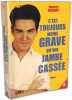
Bon Etat couverture un peu défraîchie intérieur propre

