 Write to the booksellers
-
Type
Any type (1)
Autograph (1)
Book (27355)
Disk (1)
Drawings (1)
Engraving (2)
Magazine (57)
Manuscript (16)
Old papers (19)
Posters (1)
-
Latest
Last 24h (30)
Last 3 days (5)
Last month (37)
Last week (3)
-
Language
Dutch (8)
English (7)
French (27369)
German (9)
Italian (2)
Latin (56)
Portuguese (1)
Spanish (2)
-
Century
16th (64)
17th (346)
18th (1319)
19th (3415)
20th (7124)
21st (1862)
-
Countries
Belgium (1994)
Brazil (4)
Canada (102)
China (12)
Côte d'Ivoire (40)
Denmark (970)
France (21847)
Germany (3)
Greece (10)
Italy (1)
Netherlands (118)
Switzerland (2353)
-
Syndicate
ALAC (101)
CLAM (44)
CLAQ (92)
CNE (5)
ILAB (16867)
NVVA (1355)
SLACES (1285)
SLAM (14419)
SNCAO (66)
CODE DE COMMERCE ITALIEN Promulgué le 31octobre 1882, Mis en vigueur le 1erjanvier 1883 suivi des dispositions transitoires et réglementaires, Traduit, annoté et précédé d’une introduction, coll. de codes étrangers, t.IV
, Paris, A. Durand et Pedone Lauriel 1892, in-8, br., (fané), int. frais, XXXVI-306p.


Phone number : 01 43 29 46 77
CODE PÉNAL ITALIEN, Promulgué le 1erjanvier 1890 suivi des dispositions transitoires, Traduit et annoté par Edmond Turrel, coll. de codes étrangers, t.II
, Paris, A. Durand et Pedone Lauriel 1890, in-8, demi-basane ocre (rel. légt frottée, coiffes arrachées), XIII-231p.
Phone number : 01 43 29 46 77
Codicis D. Iustiniani Ex Repetita Praelectione libri novem priores : Ex vetustissimis, & aliis quamplurimis recentioribus Exemplaribus probatissimis, ita in universum recogniti & emendati, ut nihil praetereà, quod ad puram lectionem attinet, desiderari possit. Haloandri catalogum Consulum subiecimus.
Lugduni, [ Compagnie des libraires ], 1585. In-folio de [10] feuillets, 1848 colonnes, [18] feuillets (aa10; a-z8; A-Y8; Z10; AA-LL8; MM6; NN-OO8), demi-vélin, dos à nerfs, plats de papier.
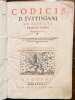
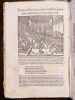
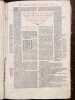
Belle vignette gravée des imprimeurs, avec la devise "De forti dulcedo", un bois gravé au verso du feuillet Y8 (1440), un autre au recto de BB5 (1530). Belle édition du Code Justinien par l'humaniste allemand Gregor Haloander. Jolie typographie noire et rouge réalisé par la Compagnie des Libraires de Lyon : " Association de libraires constituée sous la marque du Lion (aux abeilles), devant notaire, le 4 mars 1560 (nouveau style) pour la publication des "cours civils et canons" et d'autres livres, dont les œuvres des Pères de l'Église, pendant 10 ans renouvelables. Composition du groupe en 1560 : les héritiers de Luxembourg de Gabiano (les frères Balthazar II, Barthélemy et Henri de Gabiano), Hugues de La Porte, Guillaume Regnauld, Claude Senneton, Barthélemy Teste, Antoine I Vincent. Cette composition semble s'être modifiée à partir de 1568, avec le départ des Gabiano et de Senneton pour Genève, et du fait des nombreux décès survenus. En fév. 1579, l'association se compose désormais de : Antoine de La Porte (héritier universel d'Hugues de La Porte, m. en 1570), Barthélemy I Vincent (fils et héritier universel d'Antoine I Vincent, m. en 1568), les héritiers de Claude Senneton (m. en 1570), Sibille de La Porte, veuve d'Henri de Gabiano, Marie de Rochefort, veuve de Barthélemy de Gabiano, et Jean-Baptiste Regnauld. La Compagnie dite des grands libraires (ou : Compagnie des grands livres) semble avoir succédé à cette association en 1587 ou 1588, jusqu'en 1591-1592." DataBnF. Nom de possesseur (biffé) sur la page de titre. Reliure du temps usagée. Le premier cahier, qui contient les tables, est légèrement déboîté, rare galerie d'insecte dans la marge centrale, sans manque. Perforation (type classeur) dans la marge d'une dizaine de feuillets finaux, sans manque également. HORAIRE ESTIVAL : DU LUNDI 27 JUILLET AU SAMEDI 22 AOUT NOUS SERONS OUVERTS UNIQUEMENT SUR RENDEZ-VOUS.
Code Louis XV ou Nouveau Recueil des principaux reglemens & Ordonnances de Sa Majesté, tant sur la Justice, Police & Finances, que sur la Juridiction Ecclesiastique et sur toutes sortes de matières intéressantes….
1754 basane brune, dos à n. (2 coiffes avec mqs). 2 vol. in-12, (2ff.), VIII-454pp. et (2ff.), VIII-412pp., Grenoble André Giroud 1754
Recueil des principaux Edits, Déclarations, Ordonnances, Arrêts et Règlemens [Règlements] concernant la Justice, Police et Finance depuis 1722 jusqu'à la présente année 1740.
A Paris, au Palais / chez Claude Girard, 1740. Un fort vol. au format gd in-32 (122 x 68 mm) de 1 f. n.fol., 12, 624 pp. et 1 f. bl. Reliure de l'époque de pleine basane glacée et marbrée brune, plats jansénistes, dos à nerfs orné de filets gras à froid, caissons d'encadrement dorés, fleurons dorés, semis de petites étoiles et de pointillés dorés, roulette dorée sur les nerfs, titre doré, roulette dorée sur les coupes, tranches mouchetées.
![Recueil des principaux Edits, Déclarations, Ordonnances, Arrêts et Règlemens [Règlements] concernant la Justice, Police et Finance depuis 1722 jusqu'à ...](https://static.livre-rare-book.com/pictures/BLS/30180_1_thumb.jpg)
Edition originale. Défaut affectant chacun des angles. Petits manques superficiels angulaires au second plat ainsi qu'en queue du dos. Corps d'ouvrages présentant quelques discrètes marques d'usage éparses. Du reste, bonne condition.
Le Nouveau Valin ou code commercial maritime, accompagné : 1° du commentaire de Valin sur les dispositions de l'Ordonnance de la Marine qui ont été conservées dans le Livre II du Code de Commerce. 2° De la doctrine d'Emerigon, sur les contrats d'assurance et à la grosse aventure. 3° De Remarques sur les modifications apportées à quelques articles de l'Ordonnance, et sur les dispositions nouvelles. 4° De Formules des contrats maritimes, des actes, rapports et déclarations à faire par les Capitaines de la Marine marchande, tant en France qu'à l'étranger. 5° D'une table analytique et alphabétique des matières.
1809 1 Paris, Aux Archives du Droit français, 1809, in-4° relié pleine basane marron mouchetée d'époque, dos lisse orné, titre doré, filet doré sur les plats, accident à la coiffe supérieure, plats desquamés, coins frottés.
Polak 8617, Camus 2244.
TRATADO ELEMENTAL DE DERECHO DEL TRABAJO, 4èmeéd. corrigée et augmentée
, Madrid, Instituto de Estudios politicos 1949, in-8, br., (petits accidents en couv.), texte très frais, 810p.
![TRATADO ELEMENTAL DE DERECHO DEL TRABAJO, 4èmeéd. corrigée et augmentée. [Code], MARQUEZ (Miguel Hernainz)](https://static.livre-rare-book.com/pictures/DRM/29055_thumb.jpg)
![TRATADO ELEMENTAL DE DERECHO DEL TRABAJO, 4èmeéd. corrigée et augmentée. [Code], MARQUEZ (Miguel Hernainz)](https://static.livre-rare-book.com/pictures/DRM/29055_1_thumb.jpg)
Phone number : 01 43 29 46 77
CODE DE COMMERCE MEXICAIN promulgué le 15septembre 1889, Mis en vigueur le 1erjanvier 1890, Traduit, annoté et précédé d’une introduction par Henri Prudhomme, coll. de codes étrangers t.X
, Paris, A. Durand et Pedone Lauriel 1894, in-8, demi-chagrin brun, tit. doré sur dos à cinq nerfs orné de filets estampés à froid, tr. mouchetées, bon état, LXXXIV-435p.
Phone number : 01 43 29 46 77
Napoleon I bürgerliches Gesetzbuch. Nach der neuesten officiellen Ausgabe verdeutscht und nebst den von dem Französischen Rechtsgelehrten Herrn Dard jedem Artikel beygefügten Parallelstellen des Römischen und ältern Französischen Rechts, auch seinen e...
Dessau und Leipzig, Georg Voss, 1808. 8vo. Cont. hcalf. Back worn and tears in top of spine. Coverpaper gone. Titlepages in French and german with loss of paper in margin, no textæloss. loose. Block fine and tight. Having paralelltext in French and German. Internally fine. XLVII,1139,(4) pp. ""Vorrede"" in German (4) pp. perhaps the French ""Introduction"" lacks ?
Le Code civil. 1805-1904. Livre du centenaire publié par la Société d'études législatives. I. Généralités. Études spéciales. - II. Le Code civil à l'étranger. La question de la révision. Documents
Paris, Arthur Rousseau, 1904 2 forts vol. in-8, L pp., 582 pp. ; [3] ff. n. ch., pp. 587-1128, demi-chagrin noir, dos à faux-nerfs ornés de filets et caissons à froid, tranches mouchetées, couvertures conservées (reliure de l'époque).
Contributions d'Adhémar Esmein, Albert Tissier, Charles Lyon-Caen, André Weiss, Louis Josserand, Albert Wahl, Pierre Arminjon, Eustache Pilon, Marcel Planiol, Eugène Gaudemet, etc.C'est néanmoins avec une relative discrétion que fut célébré, en 1904, le centenaire du Code civil. Il donna seulement lieu, le 29 octobre, dans le grand amphithéâtre de la Sorbonne, à une cérémonie qui réunit les grands corps de l'Etat et les plus hautes autorités des institutions judiciaires. - - ACTUELLEMENT EN CONGÉS, DE RETOUR LE 17 AOÛT - VENTE PAR CORRESPONDANCE UNIQUEMENT - LIEN DE PAIEMENT, NOUS CONSULTER.
Code pénal annoté. Edition limitée 2024. Annotations de Yves Mayaud, coordination Carole Gayet.
Couverture souple. Broché. 3321 pages.
Livre. Editions Lefebvre Dalloz (Collection : Les codes Dalloz), 2023.
Décret de l'Assemblée Nationale, des 16, 19 et 21 août 1790. Code Pénal pour être exécuté sur les Vaisseaux, Escadres et Armées navales, et dans les Ports et Arsenaux
A Paris, chez Baudouin, (1790) in-8, 28 pp., dérelié.
- - ACTUELLEMENT EN CONGÉS, DE RETOUR LE 17 AOÛT - VENTE PAR CORRESPONDANCE UNIQUEMENT - LIEN DE PAIEMENT, NOUS CONSULTER.
Projet de loi pénale. pour être exécutée provisoirement dans les armées navales, escadres, divisions, & sur les vaisseaux de guerre ; présenté à l'Assemblée Nationale par le Comité de Marine. Imprimé par ordre de l'Assemblée Nationale en juillet 1790
Paris, Baudouin, 1790 in-8, 22 pp., dérelié.
Ces dispositions provisoires étaient destinées à mettre terme au système de châtiments en usage dans la marine, dans l'attente de la rédaction d'une loi navale spécifique.Polak, 7798. - - ACTUELLEMENT EN CONGÉS, DE RETOUR LE 17 AOÛT - VENTE PAR CORRESPONDANCE UNIQUEMENT - LIEN DE PAIEMENT, NOUS CONSULTER.
Rapport sur les peines à infliger dans l'armée navale. et dans les ports et arsenaux, fait au nom du Comité de la marine, dans la séance du 16 août 1790. Imprimé par ordre de l'Assemblée nationale
Paris, Imprimerie Nationale, 1790 in-8, 16 pp., dérelié.
Ce rapport devait aboutir à la suspension des pénalités en usage dans la marine et à l'adoption de dispositions provisoires, en attente de la rédaction d'un code pénal naval qui ne vit d'ailleurs pas le jour.Absent de Polak. - - ACTUELLEMENT EN CONGÉS, DE RETOUR LE 17 AOÛT - VENTE PAR CORRESPONDANCE UNIQUEMENT - LIEN DE PAIEMENT, NOUS CONSULTER.
Code Perrin ou dictionnaire des constructions et de la contiguité. Législation complète des servitudes et du voisinage, du sol cultivé ou planté... ouvrage entièrement refondu par Ambroise Rendu, revu par Jean Sirey. 8e édition mise au courant par M. Hudelot.
P., Marchal et Billard, 1896, in 8° relié demi chagrin, dos à nerfs, VIII-926 pages ; dos insolé
PHOTOS sur DEMANDE. Fermeture du 1er au 23 Août
Phone number : 04 77 32 63 69
Décret de l'Assemblée Nationale sur les biens & usages ruraux, & sur la police rurale. Du 28 septembre 1791
Paris, Imprimerie Nationale, s.d. (1791) in-8, 31 pp., en feuilles, cousu, sous couverture factice.
Improprement mais couramment dénommé Code rural, ce décret du 28 septembre 1791 est le résultat d'un compromis attentiste sur une matière qui semblait décourager l'édiction de normes universelles, au rebours de la frénésie simplificatrice des hommes de 1789. Le texte sanctionnait surtout la liberté économique des propriétaires, tout en maintenant certains droits collectifs (vaine pâture, parcours). Les assemblées révolutionnaires n'iront pas plus loin, et la matière ne sera reprise que sous le Consulat. - - ACTUELLEMENT EN CONGÉS, DE RETOUR LE 17 AOÛT - VENTE PAR CORRESPONDANCE UNIQUEMENT - LIEN DE PAIEMENT, NOUS CONSULTER.
CODES ET LOIS POUR LA FRANCE, L’ALGÉRIE ET LES COLONIES. CODES ET TRAITÉS. LOIS ET DÉCRETS, Ouvrage contenant sous chaque article des codes de nombreuses références aux articles correspondants et aux lois d’intérêt général LES ARRÊTS DE PRINCIPES LES PLUS RÉCENTS, La législation algérienne et coloniale en donnant en outre la concordance des lois et des décrets entre eux et les principaux traités internationaux relatifs au droit privé, 16èmeéd. refondue, corrigée et mise au courant; LOIS ET DÉCRETS; CODES ET TRAITÉS: CODE CIVIL; CODE DE PROCÉDURE CIVILE; CODE DE COMMERCE; CODE D’INSTRUCTION CRIMINELLE; CODE PÉNAL; CODE FORESTIER; TRAITÉS, CONVENTIONS, DÉCLARATIONS DE DROIT INTERNATIONAL; APPENDICES Traités d’union et conventions multiples
, Paris, Marchal et Godde 1912, 2 vol. fort in-4, demi-basane noire, tit. sur dos à 4 nerfs avec filets soulignant dorés, impression en double colonne, (très lég. épidermures), intérieur très frais, [Cet ouvrage provient de la bibliothèque des Avoués près la cour d’appel de Paris, il peut être frappé aux armes de la Chambre des Avoués et revêtir des marques de bibliothèque], 1992-206 / XVI-328-172-104-140-104-62-270-28-18-12p.
Phone number : 01 43 29 46 77
Codes français contenant les lois constitutionnelles, les codes civil, de procédure civile, de commerce, d'instruction criminelle, pénal, forestier, loi militaire…
Couverture rigide. Reliure de l'éditeur. 11 x 15 cm. 892 pages.
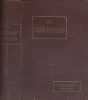
Livre. Eugène Ardant et Cie éditeurs, Limoges, 1912.
Réponse à la protestation des exécuteurs testamentaires du feu roi Louis-Philippe. contre le décret du 22 janvier
Paris, Typographie Plon frères, s.d. (1852) in-4, 37 pp., broché sous couverture imprimée. Dos un peu défraîchi.
Edition in-4 qui semble bien avoir précédé la version in-16 que l'on rencontre généralement.Pour le reste, le texte et le propos sont les mêmes : l'avocat Coffinières (1786-1862) cherche à démontrer l'invalidité de l'acte de donation-partage du 7 août 1830 par lequel Louis-Philippe cédait la nue-propriété de ses biens patrimoniaux à ses enfants (en-dehors de l'ainé), s'en réservant l'usufruit, pour éviter qu'ils ne fussent confondus avec les biens apanagés devant faire retour à la Couronne. Parlant manifestement sur commande, il défend bien évidemment la légalité du décret du 10 janvier 1852 qui confisquait tous les biens des Orléans, sans faire de distinction. - - ACTUELLEMENT EN CONGÉS, DE RETOUR LE 17 AOÛT - VENTE PAR CORRESPONDANCE UNIQUEMENT - LIEN DE PAIEMENT, NOUS CONSULTER.
Droits de l'homme et de la femme. Classification de L.-P. Cognet.
In-8 relié, cartonnage éditeur, L. Cognet Fils, sans date, XXXVI + 608 pp. Un peu frotté, mors un peu fendus, papier normalement jauni, petite mouillure sur le haut de certaines pages. Poids 550 g. Frais d'envoi 6,80 euros sur la France, 15,40 euros UE et Suisse, 18,20 euros pour le reste du monde (tarifs de base hors envois suivis). Possibilité de remise en mains propres sur Paris, n'hésitez pas à me contacter avant de passer commande. Twitter : @Pontneuf06.
La prostitution. Etude de Science Criminelle. Thèse de Doctorat en Droit
Nancy, , 1938, in-8, 260 pages broché
Evolution historique de l'attitude du législateur et de l'opinion publique à l'égard de la prostitution - étude criminologique et sociologique de la prostitution - réglementarisme et abolitionnisme - les solutions théoriques et celles du droit positif à l'égard du problème prostitutionnel
La Nationalité au point de vue des Rapports Internationaux.
Paris, L. Larose, 1879. In-8 reliure d'époque demi chagrin bordeaux, dos à nerfs, titre et date dorés en plein, plats marbrés, gardes peignées, tête dorée, exemplaire non coupé à témoins, pleines marges, 505 pp. Ex-Libris armorié de Horric de Beaucaire.

Ouvrage de référence du droit international. L'auteur était Docteur en droit attaché au Ministère des Affaires étrangères. Très bel exemplaire. - Frais de port : -France 7,15 € -U.E. 9 € -Monde (z B : 14 €) (z C : 24 €)
LE CRÉDIT-BAIL IMMOBILIER et la Réforme de 1995, 3ème éd., coll. Pratique de l’immobilier
, Paris, Dalloz 1996, in-8, br., bon état, 154p.
Phone number : 01 43 29 46 77
Législation ouvrière. Dixième édition revue et complétée.
P., Delagrave (Bibliothèque des Ecoles Pratiques de Commerce et d'Industrie), 1928, in 12, cartonnage de l'éditeur, 184 pages.
"Ouvrage conforme aux programmes des Ecoles d'Arts et Métiers et des Ecoles Supérieures de Commerce".PHOTOS sur DEMANDE. Fermeture du 1er au 23 Août
Phone number : 04 77 32 63 69
Code de Commerce contenant sous chaque article l'analyse de la doctrine et de la jurisprudence
"Larose. 1903. In-4. Relié demi-cuir. Etat d'usage, Coins frottés, Dos à nerfs, Quelques rousseurs. Tome I. 1186 pp., dos frotté. Artciles 1 à 436. Titre et tomaison dorés. Collection ""Codes annotés"".. . . . Classification Dewey : 343-Droit fiscal, commercial, défense"

Classification Dewey : 343-Droit fiscal, commercial, défense

