 Write to the booksellers
-
Latest
Last 24h (141)
Last 3 days (75)
Last month (3864)
Last week (467)
-
Century
14th (1)
16th (249)
17th (1006)
18th (4252)
19th (23864)
20th (83848)
21st (9959)
-
Countries
Belgium (28617)
Brazil (1)
Canada (516)
China (11)
Côte d'Ivoire (697)
Denmark (1976)
France (161043)
Germany (618)
Greece (68)
Italy (7)
Netherlands (1610)
Switzerland (16213)
-
Syndicate
ALAC (512)
CLAM (323)
CLAQ (461)
CNE (35)
ILAB (91151)
NVVA (5605)
SLACES (5428)
SLAM (81585)
SNCAO (27)
Ostracoda of the Cretaceous of North Texas.
3 vol. in 1. Texas, 1929. 8°. 137 pp. 10 pl, 1 folded map. Half cloth.
Prebound: J.A. Udden and E.H. Sellards: Contributions to Geology. Followed by: M.G. Cheney: Stratigraphic and Structural Studies in North Central Texas. University of Texas Bulletin No. 2901, 2907, 2913. Owner stamp.

"Signé: """"""""Scotland Yard"""""""""
Paris, Ed. du Livre Moderne, s.d.[vers 1940] ; in-12 br. 158p. "Récit """"""""vécu"""""""". Propagande anti-anglaise."
De gestis Alexandri Magni Regis Macedonum libri qui supersunt octo. Adiecta sunt nova librorum argumenta et diversitas lectioneis Freinshemianae. Ad fidem codicum manuscriptorum recensuit Car. Timoth. Zumptius.
10 Bücher in 1 Band. Berlin, Fred. Dümmler, 1826. 8°. XXX, 378 S. Lederband der Zeit mit Wappensupralibros.
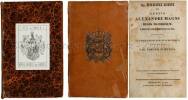
Herausgeben von Carl Gottlob Zumpt (1792-1849). - Mit 2 montierten Exlibris auf dem Vorsatz. - Papier zu Beginn stärker stockfleckig. Einband berieben. Vorderes Einbandgelenk vollständig geplatzt.
Impressionist Paris A Panoramic View of Paris in French Impressionism.
, Hannibal Books, 2025 Hardcover 209 pages, Illustrated. 29x24.5cm, English text. *new ISBN 9789464941401.
Magnificent publication on the depiction of Paris by the French impressionists such as Monet, Cassatt, Renoir and Degas In 1867, Claude Monet painted three iconic views of Paris from the balcony of the Louvre, thus firing the starting shot of Impressionism. This book explores these groundbreaking works in detail, alongside a multitude of other Impressionist paintings and drawings. Experts from leading museums around the world show how Paul Cézanne, Gustave Caillebotte, Mary Cassatt and many others also depicted Paris in the midst of a radical transformation. Their artworks transport us to the birth of the French capital as a modern metropolis. They grant us entry to the theatres, parks and boulevards of Haussmann?s Paris, where the bourgeoisie parade their new-found wealth. In a new world dominated by fashion and consumption, the graceful Parisienne emerges as the symbol of this vibrant world city. But behind the facade of light, beauty and romance, political unrest and revolution are in the air. This turbulent period is brought to life in this publication through original photographs, posters, letters and satirical prints. Published to accompany the exhibition New Paris: From Monet to Morisot at Kunstmuseum Den Haag from 15 February until 9 June 2025.
Étretat par-delà les falaises Courbet, Monet, Matisse
, Fonds Mercator/ Mercatorfonds, 2025 hardcover, Couverture rigide, 280 pages, 280 x 230 mm, 274 ill. col. & nb FR. *NOUVEAU. ISBN 9789462304017.
Expo: 29/11/2025 - 01/03/2026, Musée des Beaux-Arts, Lyon. Au cours du XIXe siècle, un modeste village de pêcheurs de la côte normande, découvert par les peintres romantiques, s'élève au rang de mythe : Étretat. La beauté sauvage de ses falaises vertigineuses, rythmées d'arches naturelles aux formes fantastiques, les couleurs de la mer, la lumière changeante et l'atmosphère de villégiature loin du tumulte parisien, attirent des artistes de toute l'Europe. Dans ce décor naturel grandiose, peintres et intellectuels s'adonnent à l'étude du paysage.
IRON HORSES American Locomotives 1829-1900.
New York Norton et Company 1941. In-4 carré 239pp. rel éditeur percaline rouille bradel, titre noir et doré sur le dos et le 1er plat, décor en noir sur le plat supérieur, sous jaquette illustrée en couleurs. Orné de 18 figures dans le texte et 96 planches hors texte (locmotives de 1829 à 1900), 1 publicité en couleurs sur double page. Bel exp, en parfait état.
1re édition de cet ouvrage en langue anglaise très bien illustré, qui retrace l'histoire des célèbre "Chevaux de Fer" Américains.
IRON HORSES. AMERICAN LOCOMOTIVES 1829-1900
Mineola New York Dover Publications, Inc. 2003 in 4 (27,5x21) 1 volume broché, couverture illustrée, 239 pages, avec de nombreuses planches de reproductions de locomotives américaines des années 1829 à1900. Bel exemplaire ( Photographies sur demande / We can send pictures of this book on simple request )
Bon Broché
SCENARIUM. deel 9, theater op Java.
, De Walburg Pers, 1985, Gebrocheerd, originele geillustreerde uitgeversomslag z/w, 16x24cm, 119pp.
In deze bundel staat het theater op Java centraal: het wordt belicht vanuit een theateantropologisch en cultuurhistorisch perspectief.
Continuity in History and Other Essays
Belknap Press 1968 in8. 1968. Cartonné jaquette.
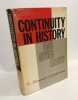
jaquette défraîchie accrocs sur les bords trache ternie présence de quelques notes au stylo ex-libris
Italiaanse miniaturen uit de renaissance.
, Het Spectrum 1978, 1978 Hardcover, 120 pagina's, Nederlands, 285 x 210 mm, omslag heeft een betere tijd gehad, boek zelf is in prima staat, met illustraties in kleur, . ISBN 9789027473035.
ENGLISH ILLUMINATED MANUSCRIPTS 700 - 1500,
, Bruxelles, Bibliotheque Royale Albert Ier, 1973, Paperback, original illustrated wrappers in color, 17,5x25,5cm, 120pp + 41 full page illustrations b/w.
Index of manuscripts, list of plates. In good condition.
Byzanz - Aufstieg und Untergang des Oströmischen Reiches - Lebendiges altertum BAND 16
Akademie verlag / Berlin 1964 in8. 1964. Broché.
Bon état couverture ternie intérieur propre bonne tenue
Compilatio singularis exemplorum
, Brepols, 2021 Hardback, cxl + 853 pages, Size:155 x 245 mm, Language: Latin. ISBN 9782503593081.
Summary Die Compilatio singularis exemplorum ist eine Exempelsammlung, die gegen Ende des 13. Jahrhundert von einem anonymen französischen Dominikaner zusammengestellt wurde. Sie enthält neben vielen auch anderweitig breit und variantenreich überlieferten Stoffen einiges sonst nur selten erhaltene oder gänzlich unbekannte Erzählgut. Zudem hebt sie sich von den meisten anderen Exempelsammlungen durch das ihr zugrundeliegende Gliederungsprinzip ab, welches sich an der Dreiteilung der mittelalterlichen Christenheit in Säkularklerus, Regularklerus und Laienstand orientiert: Streng hierarchisch geordnet, werden der Reihe nach Geschichten über die Mitglieder dieser drei Stände erzählt. Von den Päpsten bis hinab zu den Theologiestudenten, von den Äbten und Abtissinnen bis hinab zu den Laienbrüdern und Beginen, von den Kaisern und Königen bis hinab zu den gesellschaftlichen Randexistenzen wird vor uns das ganze Panoptikum der spätmittelalterlichen Gesellschaft entfaltet. Dem so entworfenen Abbild der Menschenwelt werden in den ersten Teilen der Sammlung eine Marienvita, zahlreiche Marienmirakel, Hostienwunder, Kreuzzugsgeschichte und einige Geschichten über die Engel vorangestellt. Lediglich der letzte, vermutlich sekundär hinzugefügte Teil der Sammlung weicht von der Gesamtkonzeption des Werkes ab. Er vereint in sich eine Liste altfranzösischer Sprichwörter nebst deren lateinischen Nachdichtungen, Proben der Vagantenpoesie des Hugo Primas und weitere Verse erbaulichen und unterhaltsamen Inhalts. Der lateinische Text der Sammlung ist stellenweise von altfranzösischen Einsprengseln durchsetzt, die in einigen Fällen das Ausmaß kleinerer Gedichte erreichen. Er wird hier zum ersten Mal vollständig nach allen drei bekannten Überlieferungsträgern, Handschriften des 14. und 15. Jahrhunderts, kritisch herausgegeben.
Tableau historique et politique du commerce des Pelleteries dans le Canada, depuis 1608 jusqu'à nos jours. Contenant beaucoup de détails sur les nations sauvages qui l'habitent; et sur les vastes contrées qui y sont contigües ; avec un vocabulaire de la langue de plusieurs peuples de ces vastes contrées
Dentu | Paris 1807 | 14.2 x 22.5 cm | Relié
Très rare édition originale de la traduction française par J. Castéra : elle est illustrée, en frontispice, d'un portrait de l'auteur (cf Sabin 43417. Leclerc 756.) Tampons imprimés grattés sur le faux-titre et en fin de volume, portant la date 22 août 1878, rares rousseurs. Reliure en demi basane havane, dos lisse orné de filets, de fleurons et de roses dorés, pièce de titre basane rouge, restaurations sur le dos, plats de papier marbré comportant des décolorations marginales, un coin supérieur un peu enfoncé, reliure de l'époque. Les pages 261 à 274 contiennent un Vocabulaire de la langue algonquine et de celle des Knisteneaux et les pages 304 à 310 un Vocabulaire de la langue Chipiouyane [Chippeway]. - Photographies et détails sur www.Edition-Originale.com -

Mögliches Unwahrscheinliches Fabelhaftes: Die "Historia trium regum" des Johannes von Hildesheim und ihre orientalischen Quellen: Die ... Quellen (Jenaer mediävistische Vorträge)
Franz steiner verlag 2014 93 pages 12 4x0 8x18 8cm. 2014. Broché. 93 pages.
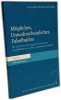
Très Bon Etat intérieur propre bonne tenue
Holbein's Wit. Pictorial Ingenuity in Renaissance Art
, Brepols - Harvey Miller, 2026 Hardback, Pages: 516, Size:225 x 300 mm, Illustrations:5 b/w, 374 col., Language: English. ISBN 9781915487520.
Summary Hans Holbein the Younger (1497/8-1543) is renowned as an outstandingly realistic painter-the acme of Renaissance naturalism. In fact, he was a purveyor of cunning ambiguity. Holbein's Wit: Pictorial Ingenuity in Renaissance Art reveals the artist at play, juggling the uncertainties and paradoxes that arise in the enterprise of imitation. Spanning Holbein's career in Basel and London, and encompassing his portraits, devotional paintings, and designs for prints and the decorative arts, the book explores this celebrated artist's subtle pictorial wiles. Holbein was immersed in the multi-faceted world of Renaissance ingenium or 'wit', which could mean innate talent, mental acuity, generative capacity, and a person's unique nature. In dialogue with witty patrons such as Desiderius Erasmus and Thomas More, Holbein advanced an ingenious kind of artmaking characterised by visual jokes, puns, and internal contradictions. Responding to humanism's literary conceits with an inventive visual language, he upended conventional assumptions about naturalism and the status of painting to assert the worth of an autonomous artistic intelligence. TABLE OF CONTENTS Prologue: Holbein's Angels Introduction Chapter 1: Verbal and Visual Wit Chapter 2: A Father's Figures Chapter 3: Hans the Jester Chapter 4: Ludic Illusionism Chapter 5: Death ad vivum Chapter 6: Mimics and Critics Chapter 7: More or Less a Smile Chapter 8: The Mindful Hand Chapter 9: Inherent Ingenuity Epilogue: The Ambassadors' Policy
D'El-Alamein à Tunis et à la Sicile ( 1942 - 1943). Rapport officiel du Commandant en Chef des Forces du Moyen-Orient et des 18ème et 15ème groupes d'armées.
Charles-Lavauzelle. 2002. In-8. Relié demi-cuir. Bon état, Couv. convenable, Dos satisfaisant, Intérieur frais. Paris, Charles-Lavauzelle, 2002, in 8, reliure éditeur cuir, dos à nerfs, pièces de titres, signet, 212 pp. (Reprint de l'édition de 1949) . . . . Classification Dewey : 960-Histoire générale de l'Afrique
AF-002 - Lieu d'édition : Paris Classification Dewey : 960-Histoire générale de l'Afrique
Ravenna in the Imagination of Renaissance Art
, Brepols, 2020 Paperback, 208 pages, Size:216 x 280 mm, Illustrations:100 col., Language: English.*NEW ISBN 9782503583990.
Summary It is clear that Renaissance artists and their patrons were interested in Ravenna's buildings and their decorations, both before Vasari's negative pronouncements and after them. Contemporary European travelers and diarists have left descriptions of the city's heritage, by then in ruinous condition. What happens if we reinsert this corpus of Ravenna's treasures and their multiple imbrications into our histories of Renaissance art? How can our narratives change if we trace and study an almost forgotten, albeit rich and articulated series of intersections between Ravenna's splendors and ambitious works of art and architecture from early modern Italy? We have ignored a series of visual engagements and imaginative plays with Ravenna's forms, materials, and iconographies, folding the past into the present and the present into the past. These instances of creative imitations and recreations can best be recovered if we focus on the Renaissance production and humanists' accounts of the city's treasures, that is, works in various media and size, to map out an extended dimension of early modern visual culture. TABLE OF CONTENTS 1. Alexander Nagel, Giancarla Periti, Introduction 2. Sarah McHam, Byzantine Sources in Ravenna Influence Venetian Renaissance Sculpture 3. Nicholas Herman, Reframing the Past: Viewing Mosaics in Renaissance Ravenna 4. Linda A. Koch, Creating the Legitimate Prince at the Tempio Malatestiano, Rimini: Ravenna and the Continuity of Imperial Tradition 5. Giancarla Periti, Ravenna, Vasari, and the Problem of the Late Antique Heritage 6. Debra Pincus, Ravenna's Unlikely Monument: The Tomb of Dante at the Church of San Francesco 7. Silvia Foschi, San Vitale in Ravenna: the Renaissance Interpretation of a Church between East and West 8. Claudio Franzoni, Art or History? The Mosaics of San Vitale in Ravenna between the Middle Ages and Avantgardes
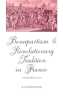
Bonapartism and Revolutionary Tradition in France The Fédérés of 1815.
Cambridge University Press, 1991 22,86 x 15,24 x 2,24 cm., 328 pp, Couverture rigide
- - VENTE PAR CORRESPONDANCE UNIQUEMENT - LIEN DE PAIEMENT, NOUS CONSULTER.
Trinakria - Sizilien und Grossgriechenland in archaischer und frühklassischer Zeit
R. Oldenbourg Verlag / München 1963 in8. 1963. Cartonné.
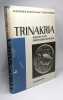
livre en bon état rousseurs sur la tranche de tête intérieur propre avec sa jaquette (défraîchie ternie accrocs)
We never make mistakes - Two short novels (an incident at Krechetovka station and Matryona's house
1963. Columbia University of South Carolina Press 1963 - Cartonné bien complet de la jaquette 16 cm x 24 cm 100 pages - Texte en anglais de Alexander Solzhenitsyn (Soljenitsyne) traduction du russe et introduction de Paul W. Blackstock - Bien complet de l'Université - Etat neuf
LES PAYS DU NORD : Le milieu, les hommes / L'origine de la population / la production agricole / lL'exploitation forestière / La chasse à la baleine ou au phoque / Les industries de transformations / Le Norden dans le monde,etc
PRESSES UNIVERSITAIRE DE FRANCE. VERS 1971. In-8. Relié. Bon état, Couv. défraîchie, Dos satisfaisant, Intérieur frais. 310 pages. Quelques photos et cartes en noir et blanc, hors texte.. . . . Classification Dewey : 900-GEOGRAPHIE, HISTOIRE, SCIENCES AUXILIAIRES DE L'HISTOIRE
SOMMAIRE : Le milieu, les hommes / L'origine de la population / la production agricole / lL'exploitation forestière / La chasse à la baleine ou au phoque / Les industries de transformations / Le Norden dans le monde,etc Classification Dewey : 900-GEOGRAPHIE, HISTOIRE, SCIENCES AUXILIAIRES DE L'HISTOIRE
Alexander der Grosse. Das Genie und seine Welt.
Wiesbaden, Löwit, (1964).
283 p., ills. Cloth 24 cm (Articles transl. from the French, by G. Walter, R. Flacelière, A. Champdor et alii)
Helleense krijgsgeschiedenis.
Nijmegen, Dekker & v.d. Vegt, 1972.
(XII),253 p.; maps & ills. Pb. 23 cm (Mainly on Alexander the Great)

