 Write to the booksellers
-
Latest
Last 24h (141)
Last 3 days (75)
Last month (3866)
Last week (467)
-
Century
14th (1)
16th (249)
17th (1006)
18th (4252)
19th (23864)
20th (83848)
21st (9959)
-
Countries
Belgium (28617)
Brazil (1)
Canada (516)
China (11)
Côte d'Ivoire (697)
Denmark (1976)
France (161998)
Germany (618)
Greece (68)
Italy (7)
Netherlands (1610)
Switzerland (16213)
-
Syndicate
ALAC (512)
CLAM (323)
CLAQ (461)
CNE (35)
ILAB (91151)
NVVA (5605)
SLACES (5428)
SLAM (81585)
SNCAO (27)
Notice historique sur les personnages composant la Grande Cavalcade représentant l'entrée à Alençon en 1527 de Marguerite de Navarre et de François Ier. Ordre du cortège & itinéraire
Alençon, A. Herpin, 1898 petit in-8, 16 pp., agrafé.
Programme de la fête de la Cavalcade, à Alençon, les 4 et 5 juin 1898. - - VENTE PAR CORRESPONDANCE UNIQUEMENT - LIEN DE PAIEMENT, NOUS CONSULTER.

ALEP - SYRIE
Automobile Et Touring Club De Syrie S.L. 2007 In-8 ( 270 X 205 mm ), broché sous couverture illustrée. Illustrations hors-texte, très bel exemplaire.
La préhistoire - Collection nouvelle clio l'histoire et ses problèmes 1.
Presses universitaires de France. 1977. In-8. Broché. Bon état, Couv. convenable, Dos satisfaisant, Intérieur frais. 364 pages - quelques figures en noir et blanc hors texte.. . . . Classification Dewey : 930-Histoire générale du monde ancien jusqu'à 499 apr. J.-C.
Collection nouvelle clio l'histoire et ses problèmes 1. Classification Dewey : 930-Histoire générale du monde ancien jusqu'à 499 apr. J.-C.
Naming Pathology from Antiquity to the Early Modern Period
, Brepols, 2026 Hardback, Pages: 273, Size:156 x 234 mm, Illustrations:4 tables b/w., Languages: English, Greek, Latin. ISBN 9782503620114.
Summary This collection of contributions from international scholars offers a cross-language and multi-period analysis dedicated to the constitution of the lexicon of pathology between Antiquity and the Early Modern period. By analysing unpublished texts and studying sources written in different languages (Greek, Latin, Arabic and different vernaculars), the authors demonstrate that the pathological terminology of the past did not have an unambiguous meaning and therefore, to be understood, must be historicized and evaluated according to sources and context. The volume offers the reader the possibility of observing continuity and change in the perception, representation and theoretic paradigm of the disease lexicon, in a wide range of cultural contexts. TABLE OF CONTENTS The Names of Diseases of the Past: A Challenge for Historians (Alessandra Foscati & Michèle Goyens) Disease Names in Latin Translations of Galen's Works from Late Antiquity to the Renaissance: The Case of ??????, ?????, ??????????, and ????????? (Stefania Fortuna) Scotomia: A Label in Search of an Illness (Michael McVaugh) The Enlarged Clitoris: Naming and Defining Female Pathology in Rodrigo De Castro's De uniuersa mulierum medicina (Cristina Santos Pinheiro) The Medical Lexicon of Sleep Disorders (Ana Isabel Martín Ferreira & Cristina de la Rosa Cubo) The Lexicon of an Eating Disorder in Latin Medical Texts: A Case of Renaissance Pica (Victoria Recio Muñoz) In nostro vulgare dicuntur lo tac: The Complexity of Naming Diseases in Latin and French Texts (Alessandra Foscati) A Pathology Related to Cold in Early Modern Southern Italy: References to the male del freddo in Hagiographic Sources (Marco Papasidero) Gr?ce liquoides, Latine lupus id est strangulatio: The Names of the Diseases in the Pseudo-Galenic De Spermate (Outi Merisalo) The Arabic-Latin Astrological Tradition of Disease Names and Descriptions (Charles Burnett) Index of Authors and Physicians of the Past Index of Disease Names from the Source Texts
Cindy Sherman Anti-Fashion
, Hannibal Books, 2024 HB, 295 x 230 mm, 184 pages, Color illustrations, ENG-NL edition. ISBN 9789464941326.
Een spiegel op mode en massamedia in ijzersterk fotografisch werk van Cindy Sherman. Het boek bij de eerste Cindy Shermantentoonstelling in de Lage Landen Cindy Sherman (°1954) staat bekend om haar baanbrekend werk in fotografie. Ze verkent thema?s als identiteit, gender en sociale rollen door zichzelf te transformeren in uiteenlopende personages en scènes. Anti-Fashion belicht haar fotografisch werk vanuit een nieuw perspectief, waarbij de focus ligt op de wisselwerking tussen mode en kunst. Haar vele opdrachten voor magazines als Vogue en Harper?sBazaar en haar nauwe samenwerking met beroemde ontwerpers vormen een voortdurende bron van inspiratie. Maar ook omgekeerd beïnvloedt deze hedendaagse kunstenaar de modewereld en geeft ze er belangrijke impulsen aan. Shermans interesse in mode komt op een subversieve manier tot uiting: haar foto?s tonen figuren die allesbehalve aantrekkelijk zijn en daardoor alle conventies van haute couture en de gebruikelijke voorstellingen van schoonheid tegenspreken. Het brede spectrum aan personages toont het kunstmatige en veranderlijke van identiteit, die meer dan ooit een kwestie van keuze lijken te zijn, (zelf)geconstrueerd en fluïde. Deze publicatie verschijnt bij de tentoonstelling Cindy Sherman, die loopt van 28 september 2024 tot 2 februari 2025 in FOMU, Antwerpen.
Cindy Sherman Anti-Fashion
, Hannibal Books, 2024 HB, 295 x 230 mm, 184 pages, Color illustrations, ENG-NL edition. ISBN 9789464941326.
A mirror on fashion and mass media in a powerful photographic work by Cindy Sherman. The book accompanying the first Cindy Sherman exhibition in the Low Countries Cindy Sherman (b. 1954) is known for her pioneering work in photography, through which she explores themes of identity, gender and social roles by transforming herself into different personas in a variety of staged scenes. Anti-Fashion approaches her photographic oeuvre from a new perspective, focusing on the interaction between fashion and art. She uses her many commissions for magazines such as Vogue and Harper's Bazaar and her close collaboration with famous designers as a constant source of inspiration. Conversely, this contemporary artist also continues to influence the aesthetics of the fashion world today, providing essential impulses. Sherman expresses her interest in fashion in a subversive way: her photographs depict people that are anything but desirable, contradicting all conventions of haute couture and the usual representations of beauty. Her wide range of characters shows the artificiality and mutability of identity, which seems more selectable, (self-) constructed and fluid than ever before. Companion publication to the exhibition Cindy Sherman at FOMU (Fotomuseum Antwerpen) from 28 September 2024 until 2 February 2025.
Acquisition through Translation. Towards a Definition of Renaissance Translation
, Brepols, 2020 Paperback, 380 pages, Size:156 x 234 mm, Illustrations:12 b/w, Languages: English, Italian, German. ISBN 9782503589541.
Summary The definition of translation in Renaissance Europe is here proposed as a process of acquisition: the book studies how a number of European languages, finding their identification in the newly evolving concept of nation, shape their countries' vernacular libraries by appropriating ancient and contemporary classics. The emergence of standard modern languages in early modern Europa entailed a competition with the dominant Latin culture, which remained the prevalent medium for the language of science, philosophy, theology and philology until at least the eighteenth century. In this process, translation played a very special role: in a number of significant instances we can identify in the undertaking of a specific translation a policy of acquisition of classical - and by definition authoritative - texts that contributed to the building of an intellectual library for the emerging nation. At the same time, the transmission of ideas and texts across Europe constructed a diasporic and transnational culture: the emerging vernacular cultures acquired not only the classical Latin models, incorporating them in their own intellectual libraries, but turned their attention also to contemporary, or near-contemporary, vernacular texts, conferring on them, through the act of translation, the status of classics. Through the examination of case studies, that take into account both literary and scientific texts, this volume offers an overview of how early modern Europe developed its vernacular national literatures, following the model suggested in the late Middle Ages, through a process of acquisition and translation. TABLE OF CONTENTS Alessandra Petrina (University of Padua) and Federica Masiero (University of Padua) Introduction: acquisition through translation in early modern Europe Biblical and classical literature in translation Camilla Caporicci Translating Solomon's Song: Gervase Markham's Poem of Poems. Or Sions Muse Bryan Brazeau 'I write sins, not tragedies': manuscript translations of Aristotle's hamartia in late sixteenth-century Italy Carla Suthren Iphigenia in English: Reading Euripides with Jane Lumley Angelica Vedelago Plutarch in sixteenth-century France and England: an insight into the Life of Coriolanus as translated by Amyot and North Marta Balzi Lodovico Dolce's Italian translation of Ovid's Metamorphoses and the canonization of the Orlando furioso Francesco Roncen Stesso corpo in 'cangiate forme': traduzione fedele e ottava rima nelle Metamorfosi di Fabio Marretti (1570) Ilaria Pernici The revolution of Ovid's Metamorphoses in Golding's translation: the case of Thomas Lodge Petr Valenta Virgil in Czech seventeenth-century translations and Pastý?ské rozmlouvání o narození Pán? by Václav Jan Rosa Horizontal translation and the definition of literature Valentina Gallo Dall'Agrigento del III sec. a.C. alla Londra di Jonathan Swift Giulio Vaccaro Tra traduzione, tradizione e identità: il Libro dell'Aquila Lucia Assenzi Übersetzen für die Muttersprache. Übersetzung und Fremdwortpurismus in der barocken Sprachreflexion am Beispiel der Verdeutschung des Novellino (1624) Andrea Rado?evi? - Marijana Horvat Translation strategies in the Sermon Collection Besjede (1616) written by the Franciscan Matija Divkovi? Alice Equestri The first English translation?of Tommaso Garzoni's Ospidale De' Pazzi Incurabili: cultural context and representation of idiocy Heritage and archives at the close of the early modern period Dominika Bopp Das Sprachlehrbuch Janua linguarum reserata von J.A. Comenius (1592-1670) und seine ersten deutschsprachigen Übersetzungen Roberto De Pol Il contributo dell'editore Georg Müller e del traduttore Johann Makle alla ricezione della letteratura italiana in Germania nel XVII secolo Anna Just Übersetzungstexte aus der ehemaligen Bibliotheca Zalusciana (1747-1795) als Indikator einer transnationalen Literatur im frühneuzeitlichen Polen
Languages and Cross-Cultural Exchanges in Renaissance Italy
, Brepols, 2023 Hardback, 433 pages, Size:156 x 234 mm, Illustrations:6 b/w, 8 tables b/w., Language: English. ISBN 9782503601816.
Summary Although much work has been done in the field of Renaissance Studies, at present there is no book which offers a comparative overview of the linguistic interaction between Renaissance Italy and the wider world. The present volume is intended to fill this void, representing the first-ever collection of essays that deal with multiple types of language contact and cross-cultural exchanges in and with respect to Renaissance Italy (1300?1600). We bring diverse disciplinary perspectives together: literary scholars, historians, and linguists with different regional expertise; we argue for multilingualism and language contact as products of a period of dynamic change which cannot be fully grasped through a single framework. The contributions present a variety of case-studies by often cross-fertilising their approaches with other disciplinary lenses. This book aims to provide a comprehensive picture of a truly global Renaissance Italy where languages, textual traditions, and systems of knowledge from different geographical areas either combined or clashed. It takes a fresh approach to the history of late medieval and early modern Italy by focusing on East/West linguistic and cultural encounters, transmission of ideas and texts, multilingualism in literature (various genres and various forms of multilingualism), translation practices, reception/adaptation of new knowledge, transculturalism and literary exchanges, and the relationship between languages and language varieties. TABLE OF CONTENTS Languages and Cross-Cultural Exchanges in Renaissance Italy ? ALESSANDRA PETROCCHI and JOSHUA BROWN Multilingual Printing ? BRIAN RICHARDSON Communicating in Different Vernaculars: Italo-Romance Intercomprehension in Historical Perspective ? ALESSANDRO CARLUCCI Untraced Polymorphy and Vernaculars in Contact in Renaissance Italy ? JOSHUA BROWN Medieval and Renaissance Venice: Language Contact at Home and Abroad ? RONNIE FERGUSON Latin, Sicilian, and the Adoption of Italian in Malta ? JOSEPH M. BRINCAT Trusting Vernacular Languages in the Italian Renaissance ? ANDREA RIZZI Language Contact between French and Italian in the Sixteenth Century: Evidence from the Diplomatic Letters of Georges dArmagnac ? JENELLE THOMAS The Impact of Aragonese and Castilian Dominations on the Language and Literature of Sardinia ? IMMACOLATA PINTO Libri alienigeni: Evidence of Anglo-Italian Language Contact from the Fifteenth-Century Port of Southampton ? MEGAN TIDDEMAN The Influence of French on Sixteenth-Century Italian ? THOMAS SCHARINGER Ethiopia and Ethiopian Languages in Renaissance Italy ? SAMANTHA KELLY Ascanio Persio and the Greekness of Italian ? HAN LAMERS Hebrew Literature in Italy (1300-1600) ? FABRIZIO LELLI Language Contacts and Contact Languages in Renaissance Naples: From the moresche to Lo cunto de li cunti ? CAROLINA STROMBOLI
Encyclopédie des Bandes-dessinées. Nouvelle édition entièrement refondue et mise à jour
1986 Editions Albin Michel - 1986 - In-4, Broché - 288 p. - Nombreuses reproductions photographiques et illustrations en couleurs et N&B
Bon état. Tranche inférieure légèrement ternie. Petite écriture sur la première de garde. Menus plis et frottements sur la couverture avec coins émoussés
Il Qalementos etiopico - la rivelazione di Pietro a Clemente Ilibri 3-7
Istituto Universitario Orientale 1992 in8. 1992. Broché.
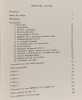
proche du très bon état intérieur propre bonne tenue
Il Qalementos etiopico - la rivelazione di Pietro a Clemente Ilibri 3-7
Istituto Universitario Orientale 1992 in8. 1992. Broché.
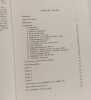
proche du très bon état intérieur propre
Alessandro Bertolotti ; Clarisse Deubel ; Frederic Celestin ; translation :Denis-Armand Canal
Reference : 55832
Curiosa : La bibliothèque érotique
, Editions de la Martinière] 2012, 2012 Hardcover, 254 pages, Texte en Francais, 290 x 260 x 27 mm, belle exemplaire, beaucoup photos et illustrations. ISBN 9782732452746.
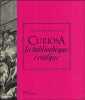
Curiosa, tel est le nom donné à la section d'une bibliothèque privée consacrée aux ouvrages sur l'érotisme, la pornographie, la sexualité. Et collectionner des livres érotiques, telle est l'une des passions du célèbre bibliophile italien Alessandro Bertolotti. Ce livre est le fruit de son travail de collectionneur. Les plus importants et les plus rares de ces erotica y sont présentés, avec leur couverture et quelques pages intérieures. Ils ne sont pas présentés dans un ordre chronologique, mais suivent un classement thématique : l'héroïne libertine, le couvent bordélique, l'école d'amour ou le sado-masochisme sont quelques-unes des catégories établies par l'auteur pour présenter environ 130 livres, du XVIIe siècle à nos jours, illustrés de gravures, peintures, dessins, photographies ou bandes dessinées.De Sade à Guido Crepax, de Leonor Fini à Robert Mappelthorpe, de Jean de la Fontaine à Georges Bataille, cet ouvrage nous fera parcourir l'infinie variété du désir et du plaisir, et de l'imagination humaine. Né en 1960, Alessandro Bertolotti est metteur en scène pour la télévision italienne (la Rai) depuis 30 ans. Passionné de photographie, il a publié des portraits et des photographies de nus féminins dans les principales revues italiennes. Il est aussi l'auteur de deux ouvrages sur Capri. Ses photographies sont conservées dans les collections de la Bibliothèque nationale de France.
Ars et commentarius. La grammaire dans le commentaire de Servius à Virgile
, Brepols, 2022 Hardback, 324 pages, Size:155 x 245 mm, Illustrations:20 tables b/w., Language(s):French, English, Italian. ISBN 9782503593753.
Summary La grammaire présente dans le commentaire de Servius à Virgile reste encore peu connue. Mélangées à de nombreuses notes de toutes sortes, les scolies grammaticales constituent des remarques ad locum et forment un discours fragmenté et nécessairement partiel. Les seize contributions du présent volume mettent en valeur ce contenu grammatical en s'intéressant à la portée pédagogique, artigraphique et philologique de l'ars commentarii de Servius. TABLE OF CONTENTS Ars et commentarius. Pour une étude de la grammaire dans le commentaire virgilien de Servius (Alessandro Garcea) I. Aperçu général de la grammaire et de la pédagogie de Servius Qu'y a-t-il de « grammatical » dans le commentaire de Servius à Virgile ? (Frédérique Biville) Learning Latin Grammar with Servius (Frances Foster) La grammatica di Servio. Prime esplorazioni (Massimo Gioseffi) II. Les catégories grammaticales La declinatio nel commento serviano a Virgilio (Concetta Longobardi) Gerunds, Supines and Participles: The modus gerundi in Servius' Vergil Commentaries and the Latin Grammarians (Robert Maltby) Quod ad omnes pertinet: The Impersonal in Servius' Commentaries (Juliana Wekel) Exempla elocutionum in Servio (Michela Rosellini) Servius et l'antiptose (Daniel Vallat) III. Les exemples linguistiques : modèles et anti-modèles I difetti del poeta: il soloecismus in Servio (Maria Luisa Delvigo) Servio e le Verrine (Paolo De Paolis) Frequency as an Indicator of Regular Language in Servius' Commentaries (Ute Tischer) IV. Les frontières de l'ars commentarii Servius entre philologie et grammaire (Fabio Stok) Etymologia and Varronian Etymology in Servius (Jared Hudson) Cornutus' Fragments in the Virgil Commentarii of Servius (Gemma Bernadó Ferrer) Concilier la perfection du texte virgilien et l'évolution de la langue. Servius et les réflexions linguistiques de Caper et Asper (Janyce Desiderio) Index locorum antiquorum
Latin in Byzantium I. Late Antiquity and Beyond
, Brepols, 2019 Hardback, 564 pages, Size:155 x 245 mm, Illustrations:22 b/w, Languages: English, French, Italian. ISBN 9782503584928.
Summary 'Latin in Byzantium' explores the linguistic competence, cultural identity, and transmission of Latin texts in the 'noua Roma' between the fourth and the ninth centuries. Drawing together texts from a number of fields (e.g., law, grammar, religion, and tactics) and across a range of different forms (e.g., palaeographic, epigraphic, and papyrological), this important project provides scholars for the first time with an in-depth knowledge of both the Latin-speaking milieux in Byzantium, and of the contexts in which Latin was used. Crucially, the ancient sources studied in this volume are also analysed in their broader political and sociological context, providing rich material for study across different disciplines and making this volume an important resource for closing the gaps between literary and non-literary texts, history, and philology. TABLE OF CONTENTS Preface Rhomaika: Una introduzione - Guglielmo Cavallo General Framework Desuetudine longa? subeunt verba latina : The Transition From Late Antique to Medieval Byzantium and the Fall of Latin - Luigi Silvano Latin in Byzantium: Different Forms of Linguistic Contact - Alessandro Garcea Latin in the Empire: Texts and People La pratique du latin dans l'Égypte de l'Antiquité tardive - Jean-Luc Fournet The Use of Latin in the Context of Multilingual Monastic Communities in the East - Claudia Rapp Writing Latin in Late Antique Constantinople - Gabriel Nocchi Macedo The Laws of the Language and the Language of the Laws La lingua degli ??????. Conoscenza e uso del latino nell'Oriente greco di iv secolo attraverso l'opera di Libanio - Andrea Pellizzari Asymmetric Exchange: Latin Speakers Learning Greek and Greek Speakers Learning Latin in Late Antiquity. On the Evidence of Grammars and Bilingual Texts - Juan Signes Codoñer L'insegnamento di Prisciano - Michela Rosellini - Elena Spangenberg Yanes Sur un silence de Jean le Lydien - Marc Baratin Justinianus Latinograecus. Language and Law during the Reign of Justinian - Thomas Ernst van Bochove Latin as a Medium at the Service of the Power Le rituel des acclamations : de Rome à "Byzance" - Frédérique Biville L'univers grec et latin d'un poète africain : Corippe et Byzance - Vincent Zarini Latin Inscriptions in (Early) Byzantium - Andreas Rhoby Latin Texts as Sources La traduction du latin en grec à Byzance : un aperçu général - Bruno Rochette Modelli latini per poemi greci? Sulla possibile influenza di autori latini sulla poesia epica tardoantica - Gianfranco Agosti Latin and the Chronicon Paschale - Christian Gastgeber Sulla conoscenza del latino nell'Oriente romano nel periodo tra Maurizio ed Eraclio (582-641): il caso degli storici-funzionari e di Giovanni di Antiochia - Umberto Roberto Latinismi e cultura letteraria nei frammenti di Pietro Patrizio: per un'indagine sul De cerimoniis e sugli Excerpta Historica Constantiniana - Laura Mecella Latin Literature in Johannes Malalas's Chronicle - Olivier Gengler Appunti per un lessico grecolatino tardoantico: la traduzione latina di Gregorio di Nazianzo trasmessa dal Laur. S. Marco 584 - Alessandro CaponeLatin Vocabulary Transmitted across Space and Time On the Use of Latin Legal Terminology in the Byzantine Legal Treatise De actionibus - José-Domingo Rodríguez Martín Per lo studio dei rapporti tra istituzioni di giustiniano e libri basilici - Massimo Miglietta Latinité cachée à Constantinople (VIe - moitié XIIIe siècles) - Peter Schreiner I latinismi nella lingua greca moderna - Johannes Niehoff-Panagiotidis Index of Names Index of Places
I longobardi in Italia
Fogola editore in Torino 1984 in12. 1984. Broché.
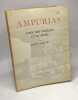
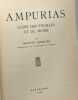
Bon état rousseurs en tête sous papier de soie intérieur propre
Medieval Debates on Foreknowledge: Future Contingents, Prophecy, and Divination. Acts of the XXVII Annual Colloquium of the SIEPM, Trento 12-15 September 2023
, Brepols, 2026 Hardback, Pages: xx + 564, Size:156 x 234 mm, Languages: English, Italian, French. ISBN 9782503619811.
Summary This volume offers a comprehensive examination of medieval conceptions of foreknowledge-understood both as divine prescience and as the human capacity to anticipate future events-across a range of intellectual traditions. It investigates key themes such as future contingents, prophetic discourse (both divinely inspired and natural), divinatory dreams, eschatology, scientific prognostication (in astrology and medicine), and conjectural disciplines such as geomancy, physiognomy, meteorology, and magic. Through historical reconstructions and doctrinal analyses, the contributions illuminate the theoretical frameworks and distinctive positions advanced by medieval authors within diverse cultural and scholarly contexts. Building on an extensive body of prior research, the volume documents the multiplicity of medieval strategies for engaging with the future, thereby challenging the historiographical assumption that the notion of an open and indeterminate future emerged only in the Modern period. TABLE OF CONTENTS Alessandro Palazzo (Università di Trento), Prognostication in the Middle Ages: Preliminary Remarks Medieval Doctrines and Debates on Future Contingents, Prescience, and Freedom Enrico Moro (Università di Padova), Anatomia della caduta. Agostino sulla compatibilità tra prescienza divina e libertà del primo peccato (lib. arb. III, 3, 6-8) Pasquale Porro (Università di Torino), Does God Really Know Contingent Events as they Are? Revisiting (once again) the Consolation of Philosophy, Book V Marcia L. Colish (?), Anselm's Boethius: Necessity and Future Contingents in De concordia Josep Puig Montada (Universidad Complutense de Madrid), Aristotle's Peri Hermeneias (c. 9) and its medieval Arabic translation. The first step toward a fruitful reception Ginevra Tozzi, (IMT - Scuola Alti Studi Lucca), Future Contingents in Arabic Logic: Towards a Genealogy of F?r?b?'s and Avicenna's Commentaries on the Ninth Chapter of De Interpretatione Martha Beullens (ULB), Connaître le futur. Le cas des futurs contingents ut in pluribus chez Albert le Grand Amos Corbini (Università di Torino), Alcune polemiche di Ugolino di Orvieto sulla preconoscenza divina dei futuri contingenti Riccardo Fedriga and Costantino Marmo (Università di Bologna), Rodolfo Brito sui futuri contingenti Peter Hartman (Loyola University Chicago), The Presence of the Past: Durand of St.-Pourçain and Peter of Palude on Intuitive Cognition of the Past Gonzalo Tinajeros Arce (Universidade de Brasília), Future Contingents in arguments of political censorship: Modal propositions in contrast. Solorzano Pereira Stands up to the censors of De Indiarum Iure (1638) Prophecy in Jewish, Islamic, and Latin traditions Meryem Sebti (CNRS), Déchiffrer l'Invisible : interprétation (ta'b?r) et exégèse (ta'w?l) dans la philosophie islamique Germano Gorga (IMT - Scuola Alti Studi Lucca), The Epistemology of Astrology and Prophethood from Ab? Ma??ar to Avicenna's Metaphysics Ying Zhang (Shanghai - East China Normal University), The Most Perfect Prophet for Maimonides: Moses and Abraham in The Guide of the Perplexed Anna Rodolfi (Università di Firenze), Angels and Prophets in Thirteenth-Century Latin Prophetology Andrea Colli (Università di Bologna), The Church at the End of Times. Prophecy and Eschatology in Albert the Great's Sermons and Biblical Commentaries Paul Clarke, O.P., Prophecy's Future and Prophecies Past: Thomas Aquinas, Peter of John Olivi, and the Prophetic Economy Prognostic Sciences and Divination Charles Burnett (The Warburg Institute - London) Scientia stellarum ex te et illis est: The Two Sources of Knowledge for Predicting the Future, in Pseudo-Ptolemy's Centiloquium and Michael Scot's Liber introductorius Giulio Navarra (Università di Foggia), Celestial Influence and Astral Magic. Between the Gh?yat al-?ak?m and the 'Kind?-circle Alexander' Barbora Kocánová (Prague - Czech Academy of Sciences), Non-astrological Methods of Weather Forecasting in Medieval Latin Astrological Works: A Contradiction? Alessandro Palazzo (Università di Trento), Geomantic Collections: Structure, Meaning, and Function Jens Ole Schmitt (LMU Munich), Barhebraeus on Physiognomical Prognosis Anna Gili (Università di Padova), Between Tradition and Medical Practice. Prognosis in al-Ma??s?'s Kit?b al-Malak? Mario Loconsole (Università del Salento), Somnium coadiuvat ad curationem. The Curative Power of Dreams in Pietro d'Abano's Conciliator Roberto Limonta (Università di Salerno), Malae divinationes: Demons' Foreknowledge and Semiotics of Lying in Augustine's De divinatione daemonum Vesa Hirvonen (University of Eastern Finland), Madmen's special capacities in Nicole Oresme
Epidemics and Pandemics. Philosophical Perspectives
, Brepols, 2024 Hardback, approx. 328 pages, Size:178 x 254 mm, Illustrations:10 b/w, Language: English. ISBN 9782503598925.
Summary Epidemics, pandemics, contagion, immunity, social distance, zoonosis are just a few of the concepts that have become commonplace in the academic community and in everyday conversation since the outbreak of the Covid-19. This book aims to provide the reader with a philosophical guide to this conceptual vocabulary by investigating the meanings, implications, and history of words related to the current emergency of Covid-19. This book addresses the fundamental anthropological, ethical, and political issues that have come under the spotlight of the public debate (life and death, freedom and authority, fear and protection, poverty and access to medical care). In this context, particular attention is given to the conflict between the scientific discourse on the one hand, and irrational bias, misinformation and fake news on the other. The SARS-CoV-2 outbreak is only the latest episode in a long history of pandemics and epidemics that have constellated human history since its very beginning. Authoritative accounts have made some of these contagious plagues famous (Thucydides' pages immortalizing the Athenian epidemic of the 5th century B.C.; Boccaccio's description of the Black Death; Manzoni's depiction of the Plague ravaging 17th-century Milan). Because a full understanding of the present is not possible without historical inquiry, several contributions in the book explore debates about calamitous phenomena as documented in philosophical literature from Antiquity to 20th-century philosophy. TABLE OF CONTENTS Naomi Zack, Epidemics and Pandemics: Philosophical Perspectives. What's Philosophy Got to Do with It? Michele Nicoletti, Alessandro Palazzo, Introduction Part I. History of a Problem Mauro Bonazzi, Thucydides and the Politics of the Plague Marco Di Branco, Between Religion and Science. The Debate on the Concept of Contagion in the Medieval Islamic World and its Western Parallels Alessandro Palazzo, Pestilences and Contagious Diseases in the Middle Ages. Albert the Great and the Fourteenth-Century Plague Treatises Diana Di Segni, Latin-into-Hebrew Treatises on the Black Death Concetta Pennuto, Contagion and Pandemics. Plague in Early Modern Medical Thought Mariangela Priarolo, New Sciences and Old Diseases. Seventeenth-Century Readings of the Causes of the Plague Fabrizio Meroi, Contagion and Epidemics in Twentieth-Century Thought. A Hypothesis about Bergson Part II. Concepts and Theories Carlo Brentari, Zoonosis Michele Nicoletti, Fear and Dispossession Nidesh Lawtoo, The Mimetic Faculty Reloaded: Contagion, Immunization, Conspiracies in the Age of Viral Reproduction L'udmila Lacková, Crisis of the Subject in Mediated Communication Federico Laudisa, The Epistemology of Models in the Era of Pandemic Pejman Abdolmohammadi, The COVID-19 Pandemic. An Exogenous Shock into Political Systems in the Middle East and North Africa? Michele Nicoletti, Alessandro Palazzo, Conclusion
Johannes Kahrs: Men with Music
, Diamondpaper, 2007 Softcover, 103 pages, 20 x 13 cm, English, Italian. *New . ISBN 9783981105025.
Exhibition catalogue Johannes Kahrs: Men with Music at GAMeC, Bergamo (Italy), from 4 April to 29 July 2007
Storia di Milano virgilio
Virgilio 1984 in8. 1984. Cartonné.
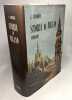

Bon état avec sa jaquette intérieur propre bonne tenue
Grand Ducal Medici and their Archive (1537-1743)
, Brepols - Harvey Miller, 2016 Hardback, 222 pages, 220 x 280 mm, Illustrations: 41b/w, 5 col., English/Italian. *NEW. ISBN 9781909400344.
The Grand Ducal Medici and their Archive offers a unique window into early modern Florentine society through an exploration of the archives of the Medici ruling family. Teeming with circa three million letters, the archival collection of the Medici grand dukes housed at the Archivio di Stato in Florence chronicles the culture and history of Europe and beyond, across a span of over two hundred years. The letters of this collection, known as the Mediceo del Principato, embrace a great variety of themes including diplomacy, art, medicine, food, science, and warfare. Since its contents originate from a court archive that served both the state and a ruling family, this collection comprises administrative, political, and financial correspondence, as well as more private and intimate accounts of the Medici themselves and their activity at court. At the same time, it would be a great misconception to assume that this enormous archival corpus pertains just to Florence or just to the Medici, given that the vast majority of these missives were written by ambassadors, agents, and informants stationed throughout Europe. This volume, The Grand Ducal Medici and their Archive, aims to unlock not only the complex structure of the Mediceo del Principato but also the richness of its content. The sixteen essays address a variety of topics ? book history, Ottoman relations, collections of New World artifacts, medical history, gender studies, and material culture ? all with direct reference to the Medici grand duchy. The original research that supports these studies was drawn in part from the Medici Archive Project's online platform (BIA) for querying over 350,000 digitized and/or transcribed letters. Making use of these and other original sources, the essays in The Grand Ducal Medici and their Archive shed new light on the mechanisms and strategies that enabled Florence to emerge from decades of internecine confl ict and diplomatic chaos in order to enjoy cultural and political prominence. TABLE OF CONTENTS Introduction Alessio Assonitis (The Medici Archive Project) 1. The Revenge of the Emperor: Rewriting the Story of Lorenzino de? Medici?s Assassination Stefano Dall?Aglio (University of Leeds) 2. Searching for Cosimo?s Books? Alessio Assonitis (The Medici Archive Project) 3. Le ?spoglie? invisibili.?Note a margine di alcuni documenti relativi al reimpiego dei materiali nei cantieri orentini di Giorgio Vasari Francesca Funis (The Medici Archive Project) 4. "When He Becomes Pope ?" The Rise and Fall of Don Luis de Toledo at the Medici Court (1545-1579) Anatole Tchikine (Dumbarton Oaks) 5. Jacobiglio Hebreo.?Mercante, antiquario, informatore di Cosimo I de? Medici Piergabriele Mancuso (The Medici Archive Project) 6. Political Meddling in Women?s Lives: Sienese and Florentine Solutions in Difficult Times (1490-1560) Elena Brizio (The Medici Archive Project) 7. Sofonisba Anguissola, Francesco de? Medici and Chiappino Vitelli: a Lady-in-waiting, a Prince and a General at the Spanish Court? Maurizio Arfaioli (The Medici Archive Project) 8. Medical Culture and the Women of the Medici Grand Ducal Court Sheila Barker (The Medici Archive Project) 9. The Riches of the Indies: Francesco and Ferdinando de? Medici and the Americas? Lia Markey (Villa I Tatti - The Harvard Center for Italian Renaissance Studies) 10. "Al certo che questa corte ha un bel misto": Mapping the Artistic Relations between the Medici and the Savoia Roberta Piccinelli (Università degli studi di Teramo) 11. Jachia ben Mehmet and the Medici Court? Mark Rosen (University of Texas at Dallas) 12. Donna Livia?s New Clothes Brendan Dooley (University College Cork) 13. Of Mothers and Aunts: Regency Government and Performance in Early Modern France and Tuscany under Maria de? Medici and Christine de Lorraine? Brian Sandberg (Northern Illinois University) 14. A Grand Duchess and her Painters as Matchmakers: Maria Magdalena of Austria, Tiberio Titi, Giusto Suttermans and the Betrothal of Empress Eleonora Gonzaga? Lisa Goldenberg Stoppato (The Medici Archive Project) 15. "What news abroad?": Florentine Avvisi from London, 1614-1622 Lisa Kaborycha (University of California Education Abroad Program) 16. A Medici Agent?s Newsletters to Florence during the Leghorn Crisis of 1653 Nicholas Brownlees (Università degli Studi di Firenze)
Bretagne - Episemasie ou relation d'Aletin le Marthyr, concernant l'Origine, Antiquité, Noblesse et Sainteté de la Bretagne Armorique et particulièrement des viles de Nantes et Rennes, avec l'explication d'un épigraphe ou inscription en l'honneur de Volianus, gravée sur une pierre de marbre blanc trouvée dans les vieux fossés de l'enceinte dudit Nantes l'an 1580.Oo sont contenues plusieurs recherches rares et curieuses, concernans les vieilles fondations des Gaulois & Bretons & quelques remarques utiles, des fautes & erreurs des Chimiques de ce temps.
1882 NANTES,V. Forest & E. Grimaud, 1882 -Réimpression de l'Edition imprimée à NANTES par Sébastien de Hucqueville en 1637 - Réédition originale tirée à 300 Exemplaires, celui-ci N° 180 - Grand In-8 carré - Broché, Couverture rempliée, ornée d'une petite illustration en cul-de-lampe au 1 er plat - 99 pages, 1 illustration - Bon exemplaire - Réf. 49621
Conformément à nos conditions générales de vente :Les frais de port sont affichés à titre indicatif. Il se peut que nous devions vous contacter pour vous informer du coût de laffranchissement supplémentaire en fonction du poids et du nombre de livres, surtout pour les envois internationaux Cependant vu l'augmentation des tarifs postaux à l'internationale, nous pouvons expédier les ouvrages en point relais MONDIAL RELAY pour les pays suivants : Allemagne, Autriche, Belgique, Espagne, Italie, Luxembourg, Pays-Bas, Pologne, et Portugal. Merci de nous indiquer en retour le point relais choisi ainsi que votre numéro de téléphone mobile & adresse Courriel pour assurer le suivi du colis.N'hésitez pas à nous interroger.In accordance with our general terms and conditions of sale:Shipping costs are displayed for informational purposes only. We may need to contact you to inform you of the additional postage costs depending on the weight and number of books, especially for international shipments.However, given the increase in international postal rates, we can ship books via Mondial Relay to the following countries: Germany, Austria, Belgium, Spain, Italy, Luxembourg, Netherlands, Poland, and Portugal. Please provide us with your chosen Mondial Relay point, as well as your mobile phone number and email address to ensure package tracking.Please feel free to contact us with any questions
Le Bienheureux Pierre Canisius. ou l’Apotre de l’Allemagne au XVIe siècle. Tableau de sa vie publique et de sa vie intime tracé principalement d’après ses lettres et ses mémoires inédites.
Paris, Charles Douniol, libraire-éditeur, 1865, in-8°, VI + 450 p., ms. au contreplat - Ce livre est du Pensionnat de la Visirtation de Fribourg en Suisse - reliure en d.-cuir, dos orné or + une pièce de papier avec le n° 62.
Image disp.

(SLACES, NVVA)
Phone number : 41 (0)26 3223808
La France et le Sacré Coeur.
DUMOULIN D. et Cie. 1889. In-4. Relié demi-cuir. Bon état, Couv. défraîchie, Dos satisfaisant, Quelques rousseurs. 405 pages. Frontispice en noir et blanc. Nombreuses illustrations en noir et blanc, dans le texte et hors-texte. Lettrines et culs-de-lampe. Titre et fleurons dorés sur le dos cuir vert. Coiffe en-tête usée. Coiffes et mors usés.. . . . Classification Dewey : 270-Histoire et géographie de l'Eglise
Classification Dewey : 270-Histoire et géographie de l'Eglise
LES BAGNES
PYGMALION. 1996. In-8. Broché. Bon état, Couv. convenable, Dos satisfaisant, Intérieur frais. 185 pages. Dessins en noir et blanc en 2° et 3° de couverture.. . . . Classification Dewey : 944.01-Histoire de France de 486 à 987
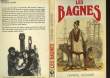
Collection en Marge de l'Histoire. Classification Dewey : 944.01-Histoire de France de 486 à 987

