 Write to the booksellers
-
Type
Book (936)
Magazine (5)
-
Latest
Last 24h (1)
Last month (11)
-
Language
English (2)
French (939)
-
Century
16th (19)
17th (52)
18th (180)
19th (304)
20th (143)
21st (48)
-
Countries
Belgium (123)
Denmark (668)
France (150)
-
Syndicate
CLAM (1)
ILAB (676)
SLAM (7)
Feldzug der Schleswig=Holsteinische Armee und Marine im Jahre 1850.
Kiel, 1852. Cont. hcalf. Richly gilt back. VIII,488 pp., the 3 supposed maps lacks (issued ?).

Romantik og Historie fra Danske Herregaarde. Tegninger af Thormod Kidde. Kbhvn., u.år (ca 1950).
4to. Opapbd. med omslag. 190 pp. Illustr.
Den fyenske Biskop Mester Jacob Madsens Visitatsbog. Paa Grundlag af A.Crones Udg. Med oversættelse af de latinske Stykker og noter samt Biskoppens Tegninger af irkerne ved A.R.Idum.
Odense, 1929. Solidt privat helshirtbd. 394 pp.
Finmarken. Samlinger til Finmarkens Historie. Med et Kart.
Kjøbenhavn, Gyldendal, 1889. Beskedent samtidigt hldrbd. (4),140 pp. samt et stort foldet litograferet kort. Stempel på titelblad og sidste blad. Indvendig ren.
Historia de omnibus Gothorum Sveonumque Regibus qui unquam ab initio nationis extitere, corumque memorabilibus bellis late varieque per orbem gestis, Opera Olai Magni Gothi Fratris eiusdem autoris ac etiam ... in lucem edita.
Rome, ( Viottis parmensem vin aedibus S. Birgittae), 1554. Folio. Bound in 17th century full calf, later rebacked preserving old titlelabel with gilt lettering. Corners a bit bumped. Woodcut on title-page. 2 full-page woodcuts (printer devise Olaus Magnus-Viottii)(58),787,(1 - Errata),(2 - Colophon) pp. and 238 woodcuts in the text and one full-page woodcut map (a smaller copy of Olaus Magnus Carta marina, published 1555). A few minor marginal brownspots at end. printed on good paper. Internally clean and fine.
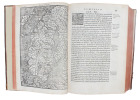
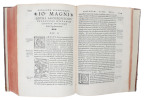
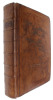
First edition, first issue. ""This famous history was written in Venice in 1540, where the author was then living as a catholic refugee - he had left Sweden in 1526. In it, the Gothic romantic conception of Sweden as the ""vagina gentium"", the idea of Jordanes, 6th century chronicler of the Goths, is developed in a history of Swedish kings both at home and abroad leading the migrating peoples. The conception had alredy been adopted by mediaeval Swedish historians and was the leading ideology of Swedish patriotism in the 17th century when the text was translated into Swedish (1620). The book was posthumously published by the author's brother Olaus Magnus, who dedicated it to Pope Julius III as well as to the Swedish Crown Prince Erik."" (Swedish Books 1280-1967, No. 17).Adams, M 136. - Collijn II,210-214.
Swea och Götha Crönika" hwarutinnan beskrifwas, icke allena the inrikes Konungars lefwerne och namnkunnige Bedriffter uthi theras eghit Fosterland: Räknandes ifrån Magog Japhetson Götha första Regent, in til then .... Konung Göstaff: Uthan och the uth...
Stockholm, Ignatium Meurer, 1620. - Stockholm, Christoffer Reusner, 1622. Folio. Indbundet i et samtidigt hellæderbind over træ med 5 ægte bind på ryggen. Begge permer med rigt blindtrykte rammer. Rester af beslag til lukkestroppe. Ryg med nogle krakeleringer ved forreste fals. Hjørner let stødte. Ganske få marginalrifter. Nogle læg i slutningen af Tegel's værk brunede. Få spredte brunpletter.Titelbladet i rød/sort med rigsvåbnet i træsnit. (8),XVI,663 (664 blankt),(26) pp. Kolophon: ""Tryckt i Stockholm, hoos Ignatium Meurer Anno M. DC. XX. - Tegel: Begge titelblade trykt i rød/sort. (14),324,(14)""(6),416,(8) pp. Kolophon: ""Tryckt i Stockholm hoos Chr. Reusnerum, medh Authoris eghet förlagh och bekostningh. Anno M.D. CXXII.
Johannes Magnus' værk er den sjældne første svenske udgave af hans berømte værk ""Historia de omnibus Gothorum Sveonumque regibus"" 1554. Værket var inspirationskilden til Sveriges stormaktsideologi i 1600-tallet.- Colljin: 558.Tegels værk er originaludgaven. ""Tegel sammanskref denna Historia på Kong Carl XII:s Befalning, til Vederläggning på Arild Huitfelds Danska Chrönika om Kon. Christian III i Danmark"" men beskylles före, at hafva i det stället snarare, ånda til Danskan Ordasätten följt, och afskrifvit densamma. At Tegel på mangå ställen ord ifrån ord afskrifvit Biskop Peder Swarts Krönika, er redan här ofvanföre...anmärkt.""( Warmholtz Nr. 3041). - Colljin: 913-14.
Historia om de Nordiska Folken. I Urval av Knut Hagberg. (Uppsala, 1963).
Orig. helshirt. 201 pp. tekstillustr.
Storia d'Olao Magno, arcivescovo d'Upsali, de costumi de popoli settentrionali. - [FIRST ITALIAN TRANSLATION]
Venice, Bindoni, 1561. 8vo. In later half calf with four raise bands and gilt lettering to spine. Light wear to binding. Traces from old label on verso of front board. Lower margin of title-page with closed tear. Dampstain to lower and upper margin of first leaves. Upper margin closely trimmed, text not affected. (44), 511 pp.
First Italian edition of Magnus' great work, which constitutes the first larger geographical-ethnographical description of Scandinavia and one of the most important sources on the customs of the Northern peoples and daily life in the 16th century. ""Olaus Magnus (1490-1557) was the last Catholic archbishop of Sweden, which he left in 1524. This book is still one of the most importent sources on Northern customs and daily life of the time. The artist of the wood-cuts is unknown but most of them are made after drawings by the author. 13 editions were published in 16th century and several in the following, comprising translations into Dutch, French, German, Italian and lastly into Swedish. The history was intended to expand the information in the large map, ""Carta marina"", which Olaus Magnus published in venice in 1539, and of which only one copy was known, until a second was discovered in 1962 and acquired by the University Library of Upsala."" (Swedish Books 1280-1967, no.18). Collijn 2, pp. 221-7.
Histoire de Dannemarc. Contenant ce qui s'est passé depuis l'établissement de la Monarchie jusques à l'avénement de la Maison D'Oldenbourg au Throne. Vol. 1-2.
Copenhaque, C. Philibert, 1768-65. 4to. 2 samt. helldrbd. i flammet kalv, rygge med 5 ophøjede bind og rig rygforgyldning. Titel-og tomefelter i skind. (8),451,(1)480 pp. Få ubetydelige brunpletter. Trykt på skrivepapir. Frisk velbevaret eksemplar.
Originaludgaven. Værket blev fortsat.
Histoire de Dannemarc. Troisieme Edition. 9 vols.
Geneve, Paris, Barde, Manget & Compagnie, - Buisson, 1787-88. 9 contemp. full calf. Gilt spines, gilt borders on covers. Spines worn and 2 covers detached from spines. Internalyy clean and fine, printed on good paper. With the large folded engravd map.
Store og Gode Handlinger af Danske, Norske og Holstenere.
Kbhvn., Gyldendal, 1777. Nyere blankt omslag. Brugsspor, navne på foden af titelbladet uskønt bortraderet. Kobberst. titelvignet,(26),734 pp. + Registre og Chronologiske Tabeller. Nogle tilskrifter, brugsspor.
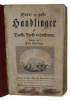

Originaltrykket.
Store og Gode Handlinger af Danske, Norske og Holstenere. Femte Oplag.
Kiøbenhavn, Gyldendal, 1810. Samtidigt hldrbd. Rygforgyldning. Lille papirsetiket på ryg. Stempel på titelblad.XV,(1),582,(18) pp. samt chronologiske tabeller. Lidt spredte brunpletter.
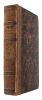
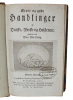
Store og Gode Handlinger af Danske, Norske og Holstenere. Femte Oplag.
Kiøbenhavn, Gyldendal, 1810. Senere hldrbd. Forgyldt rygtitel. Stempel på titelblad. XV,(1),582,(18) pp. samt chronologiske tabeller. Lidt spredte brunpletter.
Tale til Erindring om det Kongl. Danske Landhuusholdnings=Selskabs afdøde Præsident, Henrik Gerner...holden i Selskabets ..Møde den 19 Martii 1788...Med Tillæg af historiske Efterretninger om den afdødes Levnet, Arbeider, Død o.s.v.
Kiøbenhavn, Thiele, 1788. Samtidigt hldrbd. Ryg slidt. Stempel på titelblad. 109 pp. Spredte brunpletter. Trykt på skrivepapir.
Om det danske Kammervæsen, en Haandbog for Embedsmænd ved Rentekammeret og hvem ellers danske Kammersager vedkomme.
Kiøbenhavn, Gyldendal, 1820. Indbundet delvist ubeskåret i et pænt senere hldrbd. i flammet kalv. Forgyldt rygtitel. (4),478,(1) pp. samt 1 foldeplanche.
Intégrale Wallander Tome 1 : Meurtriers sans visage - Les chiens de Rega - La lionne Blanche. Tome 2 : L’homme qui souriait - Le Guerrier solitaire - La Cinquième femme. Tome 3 : Les Morts de la Saint-Jean - La Muraille invisible - L’homme inquiet
Editions du Seuil, Collection Opus. Couverture souple illustrée. in 8 (20,5 x 14 cm). Tome 1 : 2010 : 1027 pages. Tome 2 et 3 (exemplaire de bibliothèque) : 2011, 1315 et 1461 pages.
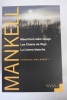
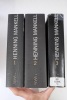
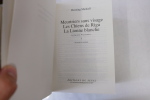
Bel ensemble en bon état. Une pliure au dos des tomes 1 et 3. Une petite déchirure sans manque en haut du dos du tome 3. Intérieur frais.

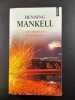
Sable mouvant: Fragments de ma vie
POINTS 2017 384 pages 10 8x17 6x2 6cm. 2017. pocket_book. 384 pages.

Bon état
Anteckningar rörande Finska Arméens och Finlands Krigshistoria särskildt med Afseende på Krigen emellan Sverige och Ryssland Åren 1788-1790 samt 1808-1809. 2 Bd.
Stockholm, Norstedt & Sönar, 1870. 2 samtidige hldrbd. Rygforgyldning. Forgyldte rygtitler. En papirsetiket påsat nederst på rygge. Stempel på titelblade. (8),532(8),432 pp. Nogle få brunpletter på de første og sidste blade, ellers ren og frisk.
Er det lykkets England, at retfærdiggjøre sit Røvertog imod Dannemark ? En Undersøgelse, foranlediget ved den engelske Declaration af 25. Sept. 1807. Oversat af Frederik Høegh=Guldberg.
Kiel, Academiske Boghandling, 1807. Lille 8vo. Samtidigt hldrbd. Rygforgyldning. Forgyldt titeletiket. Øverste kapitæl lidt slidt. Stempel på titel-bladet. 150 pp. Trykt på skrivepapir.
Ist es England gelungen, seinen Raubzug gegen Dännemark zu rechtfertigen ? Eine Untersuchung veranlasst durch die Englische Deklaration vom 25. Sept. 1807.
Kiel, Akademischen Buchhandlung, 1807. Later full fabrikoid. Gilt lettering on spine. 157 pp. Wide-margined, printed on good paper.
Haandbog over Søe-Artilleriets Sortementer.
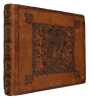
Søe Etaten Tøy-Huus den 2den Januarij Ao 1765. 8vo-oblong. Contemporary Cambridge style mirror binding with King Frederik V's large monogram to both front and back board. All edges gilt. Written on good paper. 61 ff.
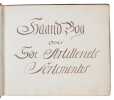
The manuscript is a complete register of the navy’s ships as of the year 1765, with detailed numerical specifications of the armament of every vessel, including calibres, etc. At the end the land batteries are likewise described, together with their inventory holdings. The manuscript was probably prepared for the King as an up-to-date information on the strength of the realm at sea and on land.
Pre-Christian Religions of the North. Research and Reception, Volume II: From c. 1830 to the Present
, Brepols, 2019 Hardback, xxiii + 635 pages, Size:156 x 234 mm, Illustrations:9 b/w, 10 col., 4 tables b/w., 2 Musical Examples, Languages: English, Old Norse. ISBN 9782503568805.
Summary Over more than a thousand years since pre-Christian religions were actively practised, European - and later contemporary - society has developed a fascination with the beliefs of northern Europe before the arrival of Christianity, which have been the subject of a huge range of popular and scholarly theories, interpretations, and uses. Indeed, the pre-Christian religions of the North have exerted a phenomenal influence on modern culture, appearing in everything from the names of days of the week to Hollywood blockbusters. Scholarly treatments have been hardly less varied. Theories - from the Middles Ages until today - have depicted these pre-Christian religious systems as dangerous illusions, the works of Satan, representatives of a lost proto-Indo-European religious culture, a form of 'natural' religion, and even as a system non-indigenous in origin, derived from cultures outside Europe. The Research and Reception strand of the Pre-Christian Religions of the North project establishes a definitive survey of the current and historical uses and interpretations of pre-Christian mythology and religious material, tracing the many ways in which people both within and outside Scandinavia have understood and been influenced by these religions, from the Christian Middle Ages to contemporary media of all kinds. The previous volume (I) traced the reception down to the early nineteenth century, while the present volume (II) takes up the story from c. 1830 down to the present day and the burgeoning of interest across a diversity of new as well as old media. TABLE OF CONTENTS List of Illustrations Abbreviations for Volume II The Contributors Introduction to Volume II - MARGARET CLUNIES ROSS Part 1 The Later Grundtvig 1.1 N. F. S. Grundtvig's Use of Norse Mythology (1815-72) and its Aftermath - FLEMMING LUNDGREEN-NIELSEN Part 2 The Influence of Cultural Milieu on the European Reception 2.1 Germany 1650-1860 - CHRISTINA LEE 2.2 Finns, S mi and Swedes - THOMAS A. DUBOIS Part 3 Studies of Norse Myth and Religion in the Nineteenth Century 3.1 The Character of the New, Comparative Scholarship - MARGARET CLUNIES ROSS 3.2 The Nineteenth-Century Emergence of Religionswissenschaft and its Impact on the study of the pre-Christian Religions of the North - BERNHARD MAIER 3.3 The Heavenly Mountains of Asia: Old Norse Religion and Comparative Religion - ANNETTE LASSEN 3.4 The Comparative Study of Celtic and Nordic Religions - BERNHARD MAIER 3.5 Nordic, Germanic, German: Jacob Grimm and the German Appropriation of Old Norse Religion and Myth - SIMON HALINK 3.6 The Rise of Folklore Studies - JOHN LINDOW Part 4 The Influence of Old Norse Myth on Music in the Nineteenth and Twentieth Centuries 4.1 Wagner, the Ring and its influence - EDWARD HAYMES 4.2 Scandinavian Myths in Nineteenth-century Opera and Choral Music - BARBARA EICHNER 4.3 The Music of J n Leifs - FLORIAN HEESCH Part 5 The Reception in Theatre and Performance 5.1 Theatre and Performance (1830-2012) - TERRY GUNNELL AND SVEIN EINARSSON Part 6 The Reception in Literature 6.1.1 Literary Modernism and Old Norse Myth - KATJA SCHULZ 6.1.2 Old Norse myth in James Joyce's Finnegans Wake CHRISTOPHER BLACK 6.2 Old Norse Mythology in Anglophone Fantasy and Science Fiction from 1940 - RANDI ELDEVIK 6.3.1 Norse Medievalism in Children's Literature in English - DAVID CLARK 6.3.2 Norse Mythology in Nordic Children's Literature 1970-2012 - ANNE-KARI SKARDHAMAR Part 7 The Reception in Mass Culture 7.1 Nordic Gods and Popular Culture - J N KARL HELGASON Part 8 The Reception in Modern and Contemporary Art 8.1 Norse Myths in the Visual Arts of the Twentieth and Twenty-First Centuries: A Short Catalogue Raisonn - SARAH TIMME Part 9 The Role of the pre-Christian Religions of the North in Modern National, Political and Religious Movements 9.1 Old Norse Mythology and Heroic Legend in Politics, Ideology and Propaganda - JULIA ZERNACK 9.2 Germanic Neopaganism - STEFANIE VON SCHNURBEIN Part 10 Modern Scholarship and Research as Reception 10.1 On the Concept of 'Germanic' Religion and Myth - JULIA ZERNACK 10.2 Philological Studies of Nordic Religion from rni Magn sson until Today - ANNETTE LASSEN 10.3 The Social Turn: The pre-Christian Religions of the North in the Twentieth and Twenty-First Centuries - MARGARET CLUNIES ROSS 10.4 Pre-Christian Religions of the North: The Reception Now - MARGARET CLUNIES ROSS Index of Authors, Artists and Works Index of Concepts

