 Write to the booksellers
-
Type
Book (933)
Magazine (5)
-
Latest
Last 3 days (1)
Last month (11)
-
Language
English (2)
French (936)
-
Century
16th (19)
17th (52)
18th (180)
19th (304)
20th (142)
21st (47)
-
Countries
Belgium (123)
Denmark (668)
France (147)
-
Syndicate
CLAM (1)
ILAB (676)
SLAM (7)
Poetry in Sagas of Icelanders
, Brepols, 2023 Hardback, 2 vols, cxliv + 1606 pages, Size:160 x 240 mm, Language(s):English, Old Norse. ISBN 9782503518985.
Summary Collected together in this volume are long poems and stanzas attributed to the characters who appear in sagas of Icelanders (family sagas), including such well known figures as Egill Skallagr msson, G sli S rsson and Grettir smundarson. The poetry from twenty-four complete sagas and four short tales are edited here, together with two texts from non-saga manuscripts, including the scurrilous Grettisf?rsla, 'The Moving of Grettir'. The texts range chronologically from early poets' sagas to late and little known works from the later thirteenth and fourteenth centuries. TABLE OF CONTENTS Volume Editor's Preface and Acknowledgements General Abbreviations Sigla used in this Volume Technical Terms The Contributors Introduction Skaldic Poetry of the Scandinavian Middle Ages - a New Edition Poetry in Sagas of Icelanders Manuscripts Dating and Authenticity Metres Normalisation Poetic Form and Function Poetic Diction How to use this edition Appendix: Half-kennings in the skaldic corpus Poetry in Sagas of Icelanders: The Corpus PART 1 Bandamanna saga ? Edited by Margaret Clunies Ross B rdar saga Sn fells ss ? Edited by Margaret Clunies Ross Bergb a t ttr ? Edited by Tarrin Wills Bjarnar saga H tdoelakappa ? Edited by Alison Finlay Draumr Torsteins S duhallssonar ? Edited by Tarrin Wills Droplaugarsona saga ? Edited by Richard Perkins Egils saga Skalla-Gr mssonar ? Edited by Margaret Clunies Ross Eir ks saga rauda ? Edited by Margaret Clunies Ross Eyrbyggja saga ? Edited by Judy Quinn and Kate Heslop Fl amanna saga ? Edited by Richard Perkins F stbroedra saga ? Edited by R. D. Fulk G sla saga S rssonar ? Edited by Kari Ellen Gade Grettis saga smundarsonar ? Edited by Jonathan Grove PART 2 Gunnlaugs saga ormstungu ? Edited by Diana Whaley Hallfredar saga ? Edited by Diana Whaley Hardar saga ? Edited by Margaret Clunies Ross H vardar saga sfirdings ? Edited by Rolf Stavnem and Margaret Clunies Ross Heidarv ga saga ? Edited by Colin Grant Korm ks saga ? Edited by Edith Marold Kr ka-Refs saga ? Edited by Kari Ellen Gade Kumblb a t ttr ? Edited by Tarrin Wills Laxdoela saga ? Edited by Margaret Clunies Ross Nj ls saga ? Edited by R. D. Fulk Stj?rnu-Odda draumr ? Edited by Tarrin Wills Svarfdoela saga ? Edited by Kari Ellen Gade V ga-Gl ms saga ? Edited by John McKinnell V glundar saga ? Edited by Klaus Johan Myrvoll T rdar saga hredu ? Edited by Klaus Johan Myrvoll Torsteins t ttr Austfirdings ? Edited by Kari Ellen Gade Texts recorded outside a saga context Sk ldhelgi r arson Verses addressed to a sorceress ? Edited by Margaret Clunies Ross Grettisf rsla ? Edited by Kate Heslop Bibliography Index of First Lines ? Edited by Hannah Burrows Indices of Names and Terms Ethnic and Regional Names Personal Names Nicknames Mythical and Legendary Names Biblical Names Place Names Other Names Indigenous Terms
Found in Translation: Itinerant French Epics in Medieval Scandinavia
, Brepols, 2024 Paperback, x + 256 pages, Size:152 x 229 mm, Language: English. ISBN 9780888443144.
Summary This volume contains English translations of three Old Norse?Icelandic renderings of French chansons de geste (Elis saga ok R samundu, Bevers saga, and Flovents saga), and of one Icelandic chivalric romance (B rings saga). The French epics translated into Old Norse-Icelandic were composed under the influence of courtly romance and were anonymous narratives subject to revision and recreation. These translations resulted in a new Icelandic genre, the riddarasaga or chivalric saga, of which B rings saga is the first. TABLE OF CONTENTS Preface Abbreviations and Conventions Introduction Heroic Epic and Courtly Romance in the Germanic Realm Translating French Epics and Romances The Creation of a New Literary Genre in Iceland Four Old Norse-Icelandic Epics Rendering Old Norse-Icelandic Sagas into English he Romance Epic of Elis and Rosamunda The Romance Epic of Flovent The Romance Epic of Bevers The Romance Epic of Baering Bibliography Index
Dictionnaire du roman policier nordique
2010 Editions Encrage - N°54 de la collection "Travaux" dirigée par Alfu - 2013 - In-8 broché, couverture illustrée à rabats - 239 pages
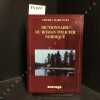
Bon état général - Ex-libris sur la deuxième de couverture Bon
Vasta Maalattu / Peinture fraîcheLa jeune création finlandaise
Institut finlandais, Paris, 2004. In-8, broché sous couverture rempliée et illustrée en couleurs, 87 pp. Peinture, nom féminin, par Cécile Marie. - P comme peinture, par Mika Hannula - Catalogue : Brander. - Eklund. - Fredriksson. - Hiltunen. - Leinonen. - Merenmies. - Niva. - Päiväläinen. - Räisänen. - Saaristo. - Sakkinen. - Salmenkivi. - ...
Nombreuses planches couleurs. --- Plus d'informations sur le site archivesdunord.com
Between Body and Soul in Old Norse Literature. Emotions and the Mutability of Form
, Brepols, 2024 Hardback, 224 pages, Size:156 x 234 mm, Language: English. ISBN 9782503605883.
Summary What did the body mean for inhabitants of the medieval Norse-speaking world? How was the physical body viewed? Where did the boundary lie between corporality and the psychological or spiritual aspects of humanity? And how did such an understanding tie in with popular literary motifs such as shape-shifting? This monograph seeks to engage with these questions by offering the first focused work to delineate a space for ideas about the body within the Old Norse world. The connections between emotions and bodily changes are examined through discussion of the physical manifestations of emotion (tiredness, changes in facial colour, swelling), while the author offers a detailed analysis of the Old Norse term hamr, a word that could variously mean shape, form, and appearance, but also character. Attention is also paid to changes of physical form linked to flight and battle ecstasy, as well as to magical shapeshifting. Through this approach, diametrically different ways of thinking about the connection between body and soul can be found, and the argument made that within the Old Norse world, concepts of change within the body rested along a spectrum that ranged from the purely physical through to the psychological. In doing so, this volume offers a broader understanding of what physicality and spirituality might have meant in the Middle Ages. TABLE OF CONTENTS Acknowledgements Introduction. Searching for the Body Methodological Limitations Influence of Continental Writings Chapter 1. Somatic Aspects of Emotion The Study of Emotions Genre Specifics and Saga Style The Emotional Content of Physical Displays Exhaustion and Fatigue Change of Facial Colour Swelling Eye Pain Death The Concept of the Body in Light of the Semantic Field of Emotions as Physical Experiences Chapter 2. Change of Form The Concept of hamr The Etymology of the Root ham- and its Compound Words The Compound Words hamingja and l kamr Interpretive Dilemmas Changes Associated with Flight Changes Linked with Strong Animals Transformations in the Context of Battle Ecstasy Hybrid Forms The Transformations of Magic Practitioners Witches Journeying of hamr The Disappearance of hamr The Surface of the Body The Post-medieval Development Scandinavian Ballads Modern Icelandic The Concept of the Body in Light of the Semantic Field of hamr Conclusion. The Period of Transition Appendix. Occurrences of the ham- Root in Old Norse Literature The Poetic Edda Skaldic Poetry Snorra Edda (Prose Edda) Landn mab k (Book of Settlements) The Sagas Kings' Sagas (konungas?gur) Tales ( ttir) Sagas of Icelanders ( slendingas?gur) Legendary Sagas (fornaldars?gur) Indigenous Romances (lygis?gur) The Chivalric Sagas (riddaras?gur) Christian Sagas Contemporary Sagas (samt ars?gur) Scholarly Literature Works Cited Index
Histoire de la littérature en Danemark et en Suède.
Paris, Félix Bonnaire, Editeur, 1839. "13 x 22, 452 pp., reliure d'époque plein cuir, état moyen (nombreuses rousseurs; reliure état d'usage)."
Nouvelles danoises.
Paris, Hachette, 1876. 12 x 17, 323 pp., reliure dos toilé, état moyen (nombreuses rousseurs).
traduite par Xavier Marmier.
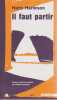
Il faut partir
Traduit du suédois, Agone, 2002, 373 pp., broché, dos légèrement écrasé, état correct.
Loanwords and Native Words in Old and Middle Icelandic. A Study in the History and Dynamics of the Icelandic Medieval Lexicon, from the Twelfth Century to 1550
, Brepols, 2022 Hardback, 332 pages, Size:156 x 234 mm, Illustrations:1 b/w, 5 col., 36 tables b/w., Language: English. ISBN 9782503598154.
Summary Anyone familiar with the Modern Icelandic language will know that the country's policy is to avoid borrowing lexemes from other languages, and instead to draw on their own vocabulary. This often results in the formation of a word pair, consisting of a loanword and its respective native equivalent, as the process of borrowing systematically eludes the tight tangles of language policy. But how did this phenomenon develop in the Middle Ages, before a purist ideology was formed? This volume offers a unique analysis of a previously unexplored area of Old Norse linguistics by investigating the way in which loanwords and native synonyms interacted in the Middle Ages. Through a linguistic-philological investigation of texts from all medieval Icelandic prose genres, the book maps out the strategies by which the variation and interplay between loanwords and native words were manifested in medieval Iceland and suggests that it is possible to identify the same dynamics in other languages with a comparable literary tradition. In doing so, new light is shed on language development and usage in the Middle Ages, and the gap between case-study and general linguistic theory is bridged over. TABLE OF CONTENTS List of Figures List of Tables Preface Abbreviations Languages Icelandic Prose Works, Skalds, and Poems Other Abbreviated Bibliographical Sources Abbreviated Dictionaries, Lexica, and Corpora Other Introduction Aim and Scope Review of Previous Research Research Hypothesis Loanwords in Old and Middle Icelandic: A Brief Sketch Theoretical Framework and Methodology of Analysis Corpus, Rationale, and Data Elicitation Terminology Structure of the Present Work Chapter 1: Religious Texts Introduction The Icelandic Homily Book The Old Norse Translation of Honorius Augustodunensis's Elucidarius Stj rn I Oddur Gottsk lksson's Translation of the New Testament Comparative Analysis and Conclusions Chapter 2: Law Texts and diplomata Introduction Gr g s J nsb k and Relative r ttarboetr Diplomata Comparative Analysis and Conclusions Chapter 3: Treatises Introduction Grammatical Treatises (1-4) Medical Texts Algorismus Astronomical and Computistic Texts Comparative Analysis and Conclusions Chapter 4: Historiographical Texts Introduction slendingab k Veraldar saga Kristni saga Comparative Analysis and Conclusions Chapter 5: Hagiographical Texts Introduction Hungrvaka orl ks saga helga Laurentius saga byskups Nikul ss saga af T lent n Comparative Analysis and Conclusions Chapter 6: Sagas of the Icelanders Introduction Egils saga Droplaugarsona saga G sla saga Gunnlaugs saga Grettis saga V glundar saga Comparative Analysis and Conclusions Chapter 7: Kings' Sagas Introduction Sverris saga lafs saga helga (Heimskr.) Kn tlinga saga Comparative Analysis and Conclusions Chapter 8: Chivalric and Legendary Sagas Introduction Alexanders saga Erex saga Fl res saga ok Blankifl r Gibbons saga Sigur ar saga ?gla Sigrgar s saga froekna D nus saga drambl ta V?lsunga saga orsteins saga V kingssonar Hr lfs saga kraka Comparative Analysis and Conclusions Conclusions General Results Word Pair Dynamics Lexical Strategies through the Centuries Word Pairs from 1550 Onwards General Bibliography Manuscripts Primary Sources Dictionaries, Lexica, and Corpora Secondary Works Index verborum
Landscape and Myth in North-Western Europe
, Brepols, 2019 Hardback, viii + 263 pages, Size:156 x 234 mm, Illustrations:18 b/w, 3 tables b/w., 3 maps b/w, Language: English. ISBN 9782503580401.
Summary This volume explores the intersection of landscape and myth in the context of north-western Atlantic Europe. From the landscapes of literature to the landscape as a lived environment, and from myths about supernatural beings to tales about the mythical roots of kingship, the contributions gathered here each develop their own take on the meanings behind 'landscape' and 'myth', and thus provide a broad cross-section of how these widely discussed concepts might be understood. Arising from papers delivered at the conference Landscape and Myth in North-Western Europe, held in Munich in April 2016, the volume draws together a wide selection of material ranging from texts and toponyms to maps and archaeological data, and it uses this diversity in method and material to explore the meaning of these terms in medieval Ireland, Wales, and Iceland. In doing so, it provides a broadly inclusive and yet carefully focused discussion of the inescapable and productive intertwining of landscape and myth. TABLE OF CONTENTS Introduction: 'Landscape', 'Myth', and the North-Western European Perspective - MATTHIAS EGELER Myth and Real-World Landscapes Spaces, Places, and Liminality: Marking Out and Meeting the Dead and the Supernatural in Old Nordic Landscapes - TERRY GUNNELL Aesthetic Appreciation of Landscape in the Sagas of Icelanders - REINHARD HENNIG Landscape Meditations on Death: The Place-Lore of the Hvanndalur Valley in Northern Iceland - MATTHIAS EGELER Myth and the Creation of Landscape in Early Medieval Ireland - GREGORY TONER Codal and riu: Feeding the Land of Ireland - GRIGORY BONDARENKO with NINA ZHIVLOVA) Finn's Wilderness and Boundary Landforms in Medieval Ireland -ELIZABETH FITZPATRICK 'Here, Finn? Take This and Give him a Lick of it': Two Place-Lore Stories about Fi(o)nn Mac Cum(h)aill in Medieval Irish Literature and Modern Oral Tradition - TIZIANA SOVERINO The M lusine Legend Type and the Landscape in Insular and Continental Tradition - GREGORY R. DARWIN Myth and the Landscapes of Literature King Sverrir's Mythic Landscapes - NICOLAS MEYLAN Mythologizing the Conceptual Landscape: Religion and History in Imago mundi, Image du monde, and Delw y byd - NATALIA PETROVSKAIA The Road Less Travelled: C Chulainn's Journey to Matrimony and the Dindshenchas of Tochmarc Emire - MARIE-LUISE THEUERKAUF 'If we settled in the forest?': Tracing the Function of Wooded Spaces from Old Irish Literature to Contemporary Poetry - EDYTA LEHMANN

Histoire de Gustave-Adolphe Roi de Suede. Composée sur tout ce qui a paru de plus curieux, & sur un grand nombre de Manuscrits, & principalement sur ceux de mr. Arkenholtz. 4 Vols.
Amsterdam, Chatelain et Fils, 1764. Bound in 4 nice uniform contemp. hcalf. Raised bands. Titlelabels with gilt lettering. A paperlabel pasted on spines. Stamp on title-pages. Engraved frontispiece (portrait). ca. 1800 pp., 1 folded table, 7 folded engraved maps and plans. Clean and fine.
Le mec de la tombe d'à côté
Actes Sud 2011 253 pages 10 922x1 778x17 018cm. 2011. pocket_book. 5 volume(s). 253 pages.
Très bon état
Le mec de la tombe d'à côté
Actes Sud 2011 253 pages 10 922x1 778x17 018cm. 2011. pocket_book. 5 volume(s). 253 pages.
Très bon état
Le mec de la tombe d'à côté
Actes Sud 2011 253 pages 10 922x1 778x17 018cm. 2011. pocket_book. 5 volume(s). 253 pages.
Bon état
Le mec de la tombe d'à côté
Babel 2009 253 pages 10 922x1 778x17 018cm. 2009. pocket_book. 5 volume(s). 253 pages.
Etat correct
en voyage
Salvy 1994 160 pages 12 4x1 2x19 2cm. 1994. Broché. 160 pages.
couverture légèrement défraîchie intérieur propre bonne tenue
Norvège, terre de tous les rêves.
Courbevoie (France), Editions Soline, 1988. 32 x 28, 127 pp., très nombreuses illustrations en couleurs, reliure d'édition pleine toile + jaquette, bon état.
Woman's Rite. The Ritual of Churching of Women after Childbirth in Denmark, 1500-1965
, Brepols, 2026 Hardback, Pages: 331, Size:216 x 280 mm, Illustrations:20 b/w, 61 col., 4 tables b/w., Language: English. ISBN 9782503620695.
Summary The Lutheran rite of 'churching' women after childbirth was long performed across Europe. It marked the liminal end of a woman's cycle of procreation - from pregnancy through to her first months as a new mother. Dating back to ancient Christianity, churching has rarely been studied in depth. Spanning four centuries, this volume offers a compelling case study of how religious practices persist, change, and disappear - and what they reveal about the enduring tensions between gender, ritual, and institutional control. It is a history of women and their everyday lives, but also a history of forgetting, for it centred on the messiness of childbirth - a female world long marginalized in historical narratives. This book examines the rules imposed on procreative women, whether during pregnancy or in the seclusion of confinement, and shows how churching became a feast day for the married mother, marking her return to church and society after weeks of separation. Unmarried mothers, by contrast, faced public shame and church discipline. These disparities expose how Lutheran society enforced moral boundaries, upheld sexual norms, and regulated procreative women's bodies. Drawing on a wealth of source material - most of it previously unexplored - this book reveals churching at the centre of communal life for centuries. Rooted in Denmark but with far wider resonance, A Woman's Rite restores churching to the history of European ritual and gendered religious life. TABLE OF CONTENTS List of Illustrations Acknowledgements List of Abbreviations and Conventions Introduction Chapter 1. Churching on the Eve of the Reformation Chapter 2. Reformation of Churching in Denmark Chapter 3. The Curse of Eve Chapter 4. The Ceremony Chapter 5. The Material Culture of Churching in Danish Churches Chapter 6. Feast and Shame Chapter 7. Conflict and Change Chapter 8. The Long Decline of Churching Conclusion Appendices Works Cited Index
Historiae Danicae libri III in quibus commemorantur gestae a Christiano I.
Hafniae (Copenhagen), J. Moltkenius, 1630. 4to (180 x 143 mm). In a bit later half vellum binding with title in later hand to spine. Ex-libris pasted on to pasted down front end-paper and a few notes to front free end-paper. A fine copy. (20), 252, (4) pp.
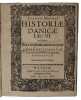
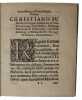
The uncommon first published part (being part III) of Meursius extensive history of Denmark. Christian IV of Denmark offered Meursius to become professor of history and politics at Sorø, in Zealand, combined with the office of historiographer royal, in which role he the present work. Thesaurus 260 Bibl. Dan. III, 43.
Historiæ Danicæ, sive, de Regibus Daniæ, qui familiam OLdenburgicam præcessere, eorumque rebus, gestis, à Dano ad Canutum VI...in quo definit Saxo, libri qvinqve priores-posteriores.
Amsterd., G.& I. Blaev, 1638. Folio. Samt.hldrbd.m. oph.bd. på ryg. Ryg og false slidte. 2 første blade med skjold. (4), 118, (6), 134 pp.
Schleswigsche Beleuchtung einer Preussischen angeblich Officiellen Denkschrift, schleswigsche Verhältnisse betreffend.
Kopenhagen, 1862. Samt. hldrbd. med rygforgyldning. 170,(1) pp. samt 3 farvelitograferede foldekort.
August Strindberg. Collection : NRF biographies.
Paris, Gallimard, 1993. 15 x 24, 836 pp., broché, très bon état.
Traduit de l'anglais par André Mathieu.
Sendschreiben an Herrn C.F. von Schmidt=Phiseldek, betreffend das Verfassungswerk in Schleswig=Holstein von einem Schleswig=Holsteiner.
Hamburg, Hoffmann und Campe, 1831. No wrappers, as issued. 16 pp.
Werewolves in Old Norse-Icelandic Literature. Between the Monster and the Man
, Brepols, 2023 Hardback, 227 pages, Size:156 x 234 mm, Illustrations:13 b/w, Language: English. ISBN 9782503596006.
Summary At the heart of any story of metamorphosis lies the issue of identity, and the tales of the werwulf (lit. 'man-wolf') are just as much about the wolf as about the man. What are the constituents of the human in general? What symbolic significance do they hold? How do they differ for different types of human? How would it affect the individual if one or more of these elements were to be subtracted? Focusing on a group of Old Norse-Icelandic werewolf narratives, many of which have hitherto been little studied, this insightful book sets out to answer these questions by exploring how these texts understood and conceptualized what it means to be human. At the heart of this investigation are five factors key to the werewolf existence ?skin, clothing, food, landscape, and purpose ? and these are innovatively examined through a cross-disciplinary approach that carefully teases apart the interaction between two polarizations: the external and social, and the interior and psychological. Through this approach, the volume presents a comprehensive new look at the werewolf not only as a supernatural creature and a literary motif, but also as a metaphor that bears on the relationship between human and non-human, between Self and Other, and that is able to situate the Old-Norse texts into a broader intellectual discourse that extends beyond medieval Iceland and Norway. TABLE OF CONTENTS Introduction Werewolves in Old Norse-Icelandic Literature Werewolves in the Franco-Latin Tradition Texts in Focus Goals and Structure Chapter 1: eir f ru hamina The Werewolf's Skin The Skin's Position in Werewolf Literature The Skin's Position in the Appearance-Essence Binary The Skin of the Old Norse-Icelandic Werewolves la flekks saga: A Case Study From lupus to leprosus Chapter 2: Kl ddr e a Nokkui r The Werewolf's Clothing and the She-Wolf The Clothes-Body Dynamics: The Man-Wolf The Clothes-Body Dynamics: The Metaphorical She-Wolf Dress: Definition, Classification, Function From Naked to Clothed: The Knight From Clothed to Naked: The Lady Chapter 3: Et ek eirra hold The Werewolf's Food and Food Taboo What and How Does a Wolf Eat? Food and Taboo: What Werewolf Does or Does not Eat Tabooed Food and Tabooed Sex: The She-Wolf's Appetite The Scale of the Werewolf's (Possible) Food: The Acceptable The Point of No Return: Human and Horse Flesh Chapter 4: sk g me hrygg um The Werewolf's Landscape and Mindscape Theories and Tools: The Foundation Mapping the Werewolf's Mindscape: An Overview lfhams r mur: A Tale of Generations lfhams r mur: Dark Land, Dark Mind Chapter 5: From Monstratus to Monstrare The Werewolf's Purpose Classification of the Characters (Were)wolf as Learner: monstratus The Disguised Hero as Learner/monstratus, or the Werewolf's Pupil Wolf as Teacher: monstrare The Konungs skuggsj Werewolves: The Foundations The Konungs skuggsj Werewolves: Teaching (of) the Wolf Conclusion What Can We Learn from the Wolf? Works Cited Index

