 Write to the booksellers
-
Type
Book (933)
Magazine (5)
-
Latest
Last 24h (1)
Last month (11)
-
Language
English (2)
French (936)
-
Century
16th (19)
17th (52)
18th (180)
19th (304)
20th (142)
21st (47)
-
Countries
Belgium (123)
Denmark (668)
France (147)
-
Syndicate
CLAM (1)
ILAB (676)
SLAM (7)
Urnes Stave Church and Its Global Romanesque Connections
, Brepols, 2022 Hardback, 480 pages, Size:225 x 280 mm, Illustrations:7 b/w, 230 col., 2 maps b/w, Language: English. ISBN 9782503594514.
Summary Urnes is the oldest and best known of the Norwegian stave churches. Despite its rich sculptural program, complex building history, fine medieval furnishings, and UNESCO World Heritage Site status, Urnes has attracted scant scholarly attention beyond Scandinavia. Broadly speaking, the church has been seen to exemplify Nordic traditions, a view manifest in the frequent use of ?Urnes style? to designate the final phase of Viking art. While in no way denying or diminishing the importance of local or regional traditions, this book examines Urnes from a global perspective, considering how its art and architecture engaged international developments from across Europe, the Mediterranean, and Central Asia. In adopting this alternative approach, the articles collected in this volume offer the most current research on Urnes, published in English to reach a broad audience. The aim is to reinvigorate academic interest and debate in not only what is one of the most important churches in the world, but also in the rich cultural heritage of Northern Europe. TABLE OF CONTENTS Acknowledgments - Contributors and Editors Introduction Kirk Ambrose, Margrete Syrstad And s, and Griffin Murray List of Illustrations - The Plates Part One: Situating Urnes Chapter 1 Urnes Stave Church: A Monument Frozen in Time? ystein Ekroll Chapter 2 Urnes: Some Current Research Issues Leif Ank er Chapter 3 The Landscape of Urnes: Settlement, Communication, and Resources in the Viking and Early Middle Ages Birgit Maixner Part Two: The Eleventh-Century Church Chapter 4 The Decoration of Buildings in the North in the Late Viking Age: A Tale of Bilingualism, Code-Switching, and Diversity? Margrete Syrstad And s Chapter 4A Appendix: Alphabetical List of Fragments from Eleventh-Century. Decorated Buildings in the North Margrete Syrstad And s Chapter 5 The European Significance of Urnes: An Insular Perspective on Urnes and the Urnes Style Griffin Murray Chapter 6 ?Who is this King of Glory??: The Religious and Political Context of the Urnes Portal and West Gable Margrete Syrstad And s Part 3: The Twelfth-Century Church Chapter 7 Soft Architecture: Textiles in the Urnes Stave Church Ingrid Lunnan N dseth Chapter 8 Trueing the Capitals at Urnes Kirk Ambrose Chapter 9 Norse Encounters with the Mediterranean and Near Eastern Worlds in the Capitals of Urnes Kjartan Hauglid Chapter 10 Plants, Beasts, and a Barefoot Cleric Elizabeth den Hartog Chapter 11 Monstrosity, Transformation and Conversion: The Program of the Urnes Capitals in Its European Context Thomas E . A . Dale Bibliography Index
Etatsraad Laurits Kjellerups Minde.
Aalborg, Albert Borch, 1825. 12mo. Orig. papbd. med overtræk af blåt karduspapir. Rifter i ryg. Kobberstukket portræt af Kjellerup, stukket af Flint. 86),55 pp. På skrivepapir.

Samling af Dokumenter, Breve og andre Kilder til Oplysning om Kjøbenhavns ældre Forhold før 1728. Udgivet af O. Nielsen. 8 Bd. + Registre 2 Bd.
Kbhvn., 1872-87. Lex8vo. 9 samt. hldrbd. med rygforg.
Minnen från Åren 1829-1839.
Helsingborg, C.B. Been, 1841. Indbundet ubeskåret med de orig. for-og bagomslag i smukt senere privat hldrbd. af rød oaseged. Marginer med skjolder.
"Art norvégien des Vikings au XVIIIe siècle. Palais des Beaux-Arts de Bruxelles; 15 janvier-28 février 1954."
Bruxelles, Ministère de l'instruction Publique, 1954. 13 x 18, 53 pp., 70 illustrations en N/B, broché, bon état.
Rigernes u-skatterlige Lyksalighed under den høypriselige Oldenburgiske Stammes Regiering, bragt til Fuldkommenhed under Voris Stormægtigste. Allernaadigste Monarch Friderich den Femte, blev bevist ved en Jubel Tale holden paa Sorøe Ridderlige Academi...
Kiøbenhavn, Gabriel Christian Rothe, (1749). 4to. In contemporary half calf with gilt lettering and ornamentation to spine. Wear to boards. Internally nice and clean. 20 pp.
Second edition, published same year as the original, of Kraft's work in which he praises the immense prosperity of the Danish realms under the rule of the Oldenburg dynasty, particularly emphasizing the reign of King Frederick V of Denmark. Biblioteca Danica III, 392.
Dennemärckische Chronick. Newlich durch Henrich von Eppendorff verteütschet.
Strassbourg, Hans Schotten, 1545. Folio. Later hcalf (mid 19th century). Gilt spine, raised bands and with gilt lettering. A large crowned monogram, stamped in gold, on frontcover. Title in red/black with large coat of arms in woodcut. (8), 504, (10) pp. Colophon-leaf with printed monogram in woodcut and with errata. many historical initials in woodcut. 10 first leaves waterstained in a small part of upper margins, 70 first and last 50 leaves with dampstaining on foot.
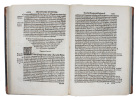
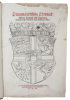
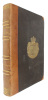
First German edition. Brunet III:696. Bibl. Danica II, 593 . This is a separate edition of the Denmark part of the first edition of Krantz' important chronicle of the Nordic countries, with new title pages and with the arms of Frederick III. Albert Krantz (c. 1450 - December 7, 1517), German historian, was a native of Hamburg. He studied law, theology and history at Rostock and Cologne, and after travelling through western and southern Europe was appointed professor, first of philosophy and subsequently of theology, in the University of Rostock, of which he was rector in 1482. In 1493 he returned to Hamburg as theological lecturer, canon and prebendary in the cathedral. By the senate of Hamburg he was employed on more than one diplomatic mission abroad, and in 1500 he was chosen by the king of Denmark and the duke of Holstein as arbiter in their dispute regarding the province of Dithmarschen. As dean of the cathedral chapter, to which office he was appointed in 1508, Krantz applied himself with zeal to the reform of ecclesiastical abuses, but, though opposed to various corruptions connected with church discipline, he had little sympathy with the drastic measures of Wycliffe or Huss. With Martin Luther's protest against the abuse of Indulgences he was in general sympathy, but with the reformer's later attitude he could not agree. When, on his death-bed, he heard of the ninety-five theses, he is said, on good authority, to have exclaimed: ""Brother, Brother, go into thy cell and say, God have mercy upon me!"" Krantz died on the 7th of December 1517.Krantz was the author of a number of historical works which for the period when they were written are characterized by exceptional impartiality and research. The principal of these are Chronica regnorum aquilonarium Daniae, Sveciae, et Noruagiae (Strassburg, 1546)" Vandalia, sive Historia de Vandalorum jerq origine, etc. (Cologne, 1518) Saxonia (1520) and Metropolis, sive Historia de ecclesiis sub Carolo Magno in Saxonia (Basel, 1548).Brunet III,696. - Bibl. Danica II, 593 .
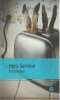
Hors - service,
Gaïa, 2011, 267 pp., broché, légères traces d'usage, tampon éditeur sur la tranche inférieure, état très correct.
Acta Processus Litium inter regem Danorum et Archiepiscopum Lundensem. Novam Editionem criticam curaverunt...
Hauniae, Gad, 1932. Lex8vo. Med orig. bogtrykt foromslag i smukt privat hldrbd. X,404 pp. Med dedikation ""fra Udg.""
Les miniatures islandaisesSagas, Histoire, Art
La Renaissance du Livre, Tournai, 2003. In-8, reliure pleine toile éditeur sous jaquette illustrée en couleurs, 162 pp. En guise d'introduction, par Régis Boyer - I. Un pays neuf. - II. Dieux et héros. - III. Plume et parchemin. - IV. Une profusion de savoirs. - V. Chroniqueurs de rois. - VI. L'âge héroïque de l'Islande. - VII. ...
Nombreuses illustrations et planches en couleurs. --- Plus d'informations sur le site archivesdunord.com
Historiske Minder. Af F. Krogh, Kammerherre.
Kjøbenhavn, Reitzel, 1882. Samtidigt hldrbd. med rygforgyldning. Stempel på titelblad. (4),224,(1) pp.
Rechtsgutachten bezüglich der Herzogthümer Schleswig, Holstein und Lauenburg erstattet auf grund des Allerhochsten Erlasses vom 14. Dezember 1864 vom Kron=Syndikat.
Berlin, 1866. With orig. printed frontwrapper in full cloth. 232 pp.
Helsinki. Collection : Panorama.
Paris, La Bibliothèque des Arts, 1966. 17 x 17, 61 pp., 30 photos en couleurs, reliure d'édition pleine toile + jaquette, très bon état.
"Légendes des photos trilingues : français/anglais/allemand; traduction de Eva Rapsilber."
Médée l'étrangère. Collection : Théâtre du monde entier.
Paris, Gallimard, 1970. 11 x 17, 83 pp., broché, très bon état.
Texte français de C. G. Gjurström et Jean Queval.
Epigraphic Literacy and Christian Identity Modes of Written Discourse in the Newly Christian European North.<br>
, Brepols - Harvey Miller, 2012 Hardcover. VI 273 p., 39 b/w ill., 15 b/w line art, 156 x 234 mm, Languages: English. Fine copy. Including an index. ISBN 9782503542942.
This collection of nine essays deals with the role of epigraphic literacy within the newly introduced Christian culture and the developing tradition of literacy in Northern Europe.<br>This volume examines the role of epigraphic literacy within the newly introduced Christian culture and the developing tradition of literacy in Northern Europe during the Viking Age and the High Middle Ages. The epigraphic material under scrutiny here originates from Scandinavia and North-West Russia ? two regions that were converted to Christianity around the turn of the first millennium. Besides traditional categories of epigraphic sources, such as monumental inscriptions on durable materials, the volume is concerned with more casual inscriptions on less permanent materials. The first part of the book discusses a form of monumental epigraphic literacy manifested on Scandinavian rune stones, with a particular focus on their Christian connections. The second part examines exchanges between Christian culture and ephemeral products of epigraphic literacy, as expressed through Scandinavian rune sticks, East Slavonic birchbark documents and church graffiti. The essays look beyond the traditional sphere of parchment literacy and the Christian discourse of manuscript sources in order to explore the role of epigraphic literacy in the written vernacular cultures of Scandinavia and North-West Russia.
Königl: Dänemarck. Haupt u. Retzi:Statt Coppenhagen, wie solche von dem König in Schweden Ao 1658, den 11 Augusti belägert, u. Ao 1659... Bestürmt und geendiget worden ist.
(FRANKFURT am M., ca. 1690). Stort kobberstukket prospekt, 26 x 69 cm. (i passpartou), sammensat af 2 plancher, visende Københavns belejring 1658 under svenskekrigen, med Karl X Gustavs hær stående i forgrunden, København i fugleperspektiv med sundets bombarderende skibe i baggrunden og belejringsstyrkerne op til voldene.
Det kobberstukne prospekt blev udgivet i Merian's Theatrum Europäum, som udkom med flere forskellige trykår.
Fortegnelse over de udi Kiöbenhavns Raadstues Archiv bevarede gamle og vigtigste Documenter, indeholdende Kongelige Privilegier og Benaadninger, Residents-Staden Kiöbenhavn og dens Magistrat allernaadigst Givne, samt Stadens publique Væsen Kirker, Sko...
Folio. Samt. helldrbd. i flammet kalv, rig rygforgyldning. (4),170,(7) pp. trykt på svært skrivepapir.
Nye Fundation og Anordning for Kiøbenhavns Universitet. Christiansborg Slot den 7de May 1788.
Kiøbenhavn, P.M. Høpffner, (1788). 4to. Uden bind, som udkommet. 62 pp.
Originaltrykket af Universitetets 3. fundats. ""Kun enkelte Bestemmelser i Fundatsen af 7. maj 1788 ere senere udtrykkelig blevne forandrede"" men en del af dens Forskrifter ere traadte ud af Kraft ved Bortfalden af Prokancelliet, som var den nødvendige Forudsætning for deres aktuelle Virken, og den største Del er stiltiende ophævet ved ny regler angaaende de i Fundatsen omhandlede Æmner.""(Matzen ""Kjøbenhavns Universitets Retshistorie 1479-1879"" Bd. I (1879), p. 118).
Photographisk Album over Kong Christian IV. og denne Konges berømte Samtidige. Med kortfattede Biographier. Samlet og udgivet af J.A. Gold.
Kjöbenhavn, Thiele, 1862. Lille 4to. Orig. helldrbd. med ornamenterede metalbeslag på alle hjørner og ryg. ornamenterede lukkebeslag. Helt guldsnit. Skindet falmet på ryg og kanter. Med 24 originalfotografier, monteret på svært karton, efter malerier og andre afbildninger. Hvert fotografi med ledsagende tekst.
Tidligt dansk eksempel på anvendelse af originalfotografiet i bogkunsten.
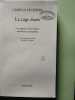
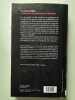
La cage doree: La vengeance d'une femme est douce et impitoyable
Actes Sud 2019 352 pages 14 7x23 8x2 7cm. 2019. Broché. 352 pages. La Cage dorée est un roman policier de Camilla Läckberg qui marque un tournant en s'éloignant de ses séries habituelles. Il raconte l'histoire de Faye une femme dont l'ex-mari Jack est soupçonné du meurtre de leur fille. Trahie et laissée sans ressources Faye élabore une vengeance méthodique transformant le récit en un drame psychologique sur la souffrance la colère et la reprise de pouvoir. Le livre constitue la première partie d'un diptyque
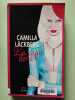
Bon état
Kongeriget Sverrigs Historie fra de ældste til nærværende Tider. Et udtog af Svend Lagerbring. Giennemseet og rettet af Professor Bützow i Odense.
Odense, Christian Iversen, 1783. Høj 8vo. Samtidigt hellæderbd. Ophøjede bind på ryggen. Rig rygforgyldning. Forgyldt titeletiket. To titelblade. Stempel på 2. titelblad. (12),879 pp. Også med titelbladet: ""Samtlige Europæiske Rigers og Staters Historie indtil vore Tider, et fuldstændigt pragmatisk Udtog af de beste Historikers Verke med hvert Riges Geographie og Statistik, Første Bind: Kongeriget Sverrig."" (Alt som udkom). Rift udbedret på 2. titelblad, uden tab.
Barabbas. Collection scandinave.
Paris, Librairie Stock, 1952. 13 x 19, 198 pp., broché, non coupé, bon état.
"Avant-propos de Lucien Maury; lettre d'André Gide; traduit du suédois par Marguerite Gay et Gerd de Mautort."
La Sibylle (roman).
Paris, Stock, 1957. 13 x 19, 223 pp., broché, bon état.
"Edition originale sur papier ordinaire (achevé d'imprimer : septembre 1957); traduit du suédois par Marguerite Gay et Gerd Mautort."

