 Write to the booksellers
-
Latest
Last month (126)
Last week (9)
-
Century
16th (1)
17th (9)
18th (55)
19th (100)
20th (630)
21st (143)
-
Countries
Belgium (260)
Brazil (2)
Denmark (229)
France (481)
Netherlands (145)
Switzerland (16)
-
Syndicate
ILAB (408)
NVVA (145)
SLAM (168)
L'ECONOMIE FRANCAISE ENTRE LES DEUX GUERRES. 1919 - 1939.
Sté d'Editions Economiques Sté d'Editions Economiques et Sociales SD (1941), In-8 broché, 372 pages. Des rousseurs sur la couverture néanmoins bon exemplaire.
Toutes les expéditions sont faites en suivi au-dessus de 25 euros. Expédition quotidienne pour les envois simples, suivis, recommandés ou Colissimo.
The Origins of the Marshall Plan
STANFORD UNIV PR 1976 344 pages in8. 1976. Cartonné. 344 pages.


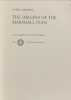
Bon état sans jaquette intérieur propre tampon sur la garde
Il sesso dal punto di vista statistico. Le leggi della produzione dei sessi. - [CORRADO GINI'S FIRST PUBLISHED WORK]
Milano, Palermo, Napoli, Rema Sandron, 1908. 4to. Bound in recent full cloth with red leather title label with gilt lettering to spine. Front wrapper pasted on to front board. Occassional light underlignings in pencil. A fine copy. XXIX, (1), 517, (3), 16. + 54 numbered plates and 3 unnumbered plates.
First edition of Italian economist Gini's - particularly famous for the Gini coefficient - graduate thesis, and first published work, on gender from a statistical point of view, in which he for the first time introduced: ""the hypothesis that the cause of differential birth rate could be reduced to the environmental influence on ""germinal elements"" (Cassata: Building the New Man: Eugenics, Racial Science and Genetics in Twentieth Century). This work is a thorough review of the natal sex ratio, looking at past theories and at how new hypothesis fit the statistical data. In particular, it presents evidence that the tendency to produce one or the other sex of child is, to some extent, heritable.""Animals kept in captivity demonstrated, according to Gini, that ""the maturation of the germinal elements is obstructed by captivity, as it impedes muscular activity, makes the environment uniform, and greatly reduces the reaction of the organism."" In the same way, in the human species, the ""development of sex"" appeared favored by those conditions - muscular work, ""active rural life"", sport - that ""command in the organism, and through it, in the germinal cells, a lively reaction, which is obstructed on the other, by the opposite conditions of health and tranquility"". This physiological reason could explain, therefore Gini's view, the lesser prolificacy of the aristocracy compared to the lower social classes and the decreasing rate of the ""white races"". (Cassata: Building the New Man: Eugenics, Racial Science and Genetics in Twentieth Century).""Gini (1884-1965), perhaps best known to economists because of the Gini Coefficient, was born in Motta di Livenza, Italy. His doctoral thesis [The present], defended in 1905, was awarded the Vittorio Emanuele prize for social sciences. (The New Palgrave).
Il sesso dal punto di vista statistico. Le leggi della produzione dei sessi. - [CORRADO GINI'S FIRST PUBLISHED WORK]
Milano, Palermo, Napoli, Rema Sandron, 1908. 4to. Bound in contemporary half cloth with gilt lettering to spine. Title page with signs after a removed stamp. Otherwise a fine and clean copy. XXIX, (1), 517, (3), 16. + 54 numbered plates and 3 unnumbered plates.
![Il sesso dal punto di vista statistico. Le leggi della produzione dei sessi. - [CORRADO GINI'S FIRST PUBLISHED WORK]. "GINI, CORRADO.](https://static.livre-rare-book.com/pictures/LLX/46967_1_thumb.jpg)
![Il sesso dal punto di vista statistico. Le leggi della produzione dei sessi. - [CORRADO GINI'S FIRST PUBLISHED WORK]. "GINI, CORRADO.](https://static.livre-rare-book.com/pictures/LLX/46967_2_thumb.jpg)
First edition of Italian economist Gini's - particularly famous for the Gini coefficient - graduate thesis, and first published work, on gender from a statistical point of view, in which he for the first time introduced: ""the hypothesis that the cause of differential birth rate could be reduced to the environmental influence on ""germinal elements"" (Cassata: Building the New Man: Eugenics, Racial Science and Genetics in Twentieth Century). This work is a thorough review of the natal sex ratio, looking at past theories and at how new hypothesis fit the statistical data. In particular, it presents evidence that the tendency to produce one or the other sex of child is, to some extent, heritable.""Animals kept in captivity demonstrated, according to Gini, that ""the maturation of the germinal elements is obstructed by captivity, as it impedes muscular activity, makes the environment uniform, and greatly reduces the reaction of the organism."" In the same way, in the human species, the ""development of sex"" appeared favored by those conditions - muscular work, ""active rural life"", sport - that ""command in the organism, and through it, in the germinal cells, a lively reaction, which is obstructed on the other, by the opposite conditions of health and tranquility"". This physiological reason could explain, therefore Gini's view, the lesser prolificacy of the aristocracy compared to the lower social classes and the decreasing rate of the ""white races"". (Cassata: Building the New Man: Eugenics, Racial Science and Genetics in Twentieth Century).""Gini (1884-1965), perhaps best known to economists because of the Gini Coefficient, was born in Motta di Livenza, Italy. His doctoral thesis [The present], defended in 1905, was awarded the Vittorio Emanuele prize for social sciences. (The New Palgrave).
Les vrais principes du gouvernement françois, démontrés par la raison et par les faits. Par un François.
A Genève, 1777. (4), (2, Avis au Lecteur, blank), vii, (1, blank), 316, (4, errata) pp. 8vo. Contemporary marbled calf, spine richly gilt in compartments, label with gilt lettering, marbled edges. INED 2037 (later edition); not in Kress; not in Goldsmiths; not in Einaudi; not in Mattioli; Mornet, Les origines intellectuelles de la Révolution, pp. 217-8. Rare first edition of this work which is primarily a defence of monarchic government against the theories of Montesquieu and Mably, notable for a variety of observations on economic issues. Gin identifies the products of agriculture and manufacture as the basic forms of wealth, and condemns import on the grounds that they lead to a diminution in the population. 'Il y défend les lois fondamentales de la monarchie pure, réfute la théorie de la liberté politique ou de constitution de Montesquieu, celle de l'équilibre des pouvoirs et refuse de donner des limites à la puissance du monarque' (Mornet). 'Sociologie politique. De la monarchie, en général, et du gouvernement français en particulier. Plusieurs passages consacrés à des questions économiques. Réflexions sur les impôts et sur les richesses en général' (INED). - Some annotations concerning author and book on verso front free blank. A very nice copy with good margins, and an interesting copy: after the title-page there is a "Avis au Lecteur", reading: "Ce livre n'ayant pas ete imprime sous les yeux de l'Auteur, il s'y est glissé plusieurs fautes typographiques. On a corrigé les plus importantes dans l'Errata qui est à la fin de cet Ouvrage." Both this "avis" and the errata are almost always lacking in copies usually found, the errors in those copies not being corrected.


(NVVA, )
Phone number : 31 20 698 13 75
Les vrais principes du gouvernement françois, démontrés par la raison et par les faits. Par un François. Nouvelle édition, revue, corrigée & augmentée.
A Genève, et se trouve à Paris, Chez tous les Libraires qui vendent les Nouveautés, 1780. With engraved frontispiece. (4), xxiv, 427, (1) pp. 8vo. Contemporary marbled calf, spine richly gilt in compartments with red label and gilt lettering, a beautiful copy. INED 2037 (1782 edition); not in Kress; not in Goldsmiths; not in Einaudi; not in Mattioli; Mornet, Les origines intellectuelles de la Révolution, pp. 217-8. Rare second edition, as the first not to be found in any of the reference works. The present work, which is primarily a defence of monarchic government against the theories of Montesquieu and Mably, is notable for a variety of observations on economic issues. Gin identifies the products of agriculture and manufacture as the basic forms of wealth, and condemns import on the grounds that they lead to a diminution in the population. 'Sociologie politique. De la monarchie, en général, et du gouvernement français en particulier. Plusieurs passages consacrés à des questions économiques. Réflexions sur les impôts et sur les richesses en général' (INED). 'Il y défend les lois fondamentales de la monarchie pure, réfute la théorie de la liberté politique ou de constitution de Montesquieu, celle de l'équilibre des pouvoirs et refuse de donner des limites à la puissance du monarque' (Mornet).
(NVVA, )
Phone number : 31 20 698 13 75
Modeling Rational Agents: From Interwar Economics to Early Modern Game Theory
Edward Elgar Publishing Ltd 2003 480 pages in8. 2003. Cartonné jaquette. 480 pages.


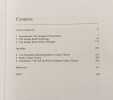
Très bon état avec sa jaquette intérieur propre bonne tenue
Décret qui accorde un prix d'un million à l'inventeur de la meilleure machine à filer le lin. 7 mai 1810. (Manuscript copy on paper of the Depot des Lois). 2 pp. 4to. - (Bound with:) AMPERE, J.J. M. Philippe de Girard. (Corbeil, Typ. de Créte), no date (around 1845). 16 pp. 8vo. - (Bound with:) INVENTION de la filature méchanique du lin. Notice chronologique. (Drop-head title). (Paris, Imprimerie de Guiraudet et Jouaust), no date (1851). 24 pp. 4to. - (Bound with:) RAPPORT et loi avant pour objet d'accorder aux héritiers de Philippe de Girard inventeur de la filature méchanique du lin, une Pension A titre de récompense nationale. Paris, Typographie Panckoucke, 1853. 13, (1) pp. 8vo. - (Bound with:) DUPIN, Ch. Rapport fait Au nom de la Commission chargée d'examiner le projet de loi qui confère, à titre de récompense nationale, des pensions aux héritiers de feu Philippe de Girard, inventeur de la filature méchanique du lin. (Drop-head title). (Paris, Imprimerie du Senat et du Corps legislatif, no date (1853?). 14 pp. 8vo. - (Bound with:) RECLAMATION d'un million et les intérêts par Madame la Comtesse de Vernède de Corneillan, née de Girard, Nièce et Héritière de M. le Chevalier Philippe de Girard, Inventeur de la filature méchanique du lin (1856). Paris, Imprimerie de Guiraudet et Jouaust, 1856. (4), 71, (1) pp. 4to. - (Bound with:) TRES RESPECTUEUX recours à sa Majesté l'Empereur soumettant à son èquité souveraine les erreurs de dates et de faits source et base de la décision du Conseil d'État contre le droit de Madame la Comtesse de Vernède de Corneillan, née de Girard, Nièce et héritière de M. le Chevalier Philippe de Girard, Inventeur de la filature mécanique du lin. (1860).
Paris, Imprimerie de Ch. Jouaust, (1860). 7 pieces in 1 volume. 2 pp.; 16 pp.; 24 pp.; 13, (1) pp.; 14 pp.; (4), 71, (1) pp.; 40 pp. 4to. Modern half morocco, marbled boards, spine lettered in gilt. Not in Siegelaub, Bibliographica Textilia historiae; Hoefer, vol. xx, cols. 668-678; Dictionnaire de Biographie Française, vol. 16, cols 168-170. Philippe de Girard invented the machine for spinning linen along principles still valid today. He was awarded a million francs by Napoléon and, in anticipation started three factories. But due to political circumstances and the fact that Napoléon did not keep his promise, his factories, very succesful from the start, faced soon ruin and de Girard was imprisoned. Ruined and betrayed by two collaborators, he accepted an invitation by the Austrian government. He again set up a factory and was again succesful. When de Girard was awarded the gold medal given by the Société d'encouragement pour l'Industrie nationale, he returned to France. Despite his brilliant discoveries (de Girard was the inventor of many more novelties) and the intervention on his behalf by journalists, politicians and intellectuals, the government refused to give him any financial help or reward. De Girard died in 1845 and his niece continued to find a way to get the money once awarded to de Girard. Also Charles Dupin appealed to the government, but all to no avail. - A few pieces have contemporary underlining and handwritten notes and comments in the margins, three texts have been bound with their original, printed covers, the last text has a handwritten dedication to Monsieur Gudin or Godin by the Comtesse Vernède de Corneillan, née de Girard.
(NVVA, )
Phone number : 31 20 698 13 75
Traité historique de l'État des trésoriers de France et généraux des finances, avec les preuves de la supériorité de ces offices. Le tout enrichie de notes. Divisé en deux parties. Premiere [-Seconde] Partie.
A Nancy, Chez la veuve Leclerc, 1776. 2 volumes in 1. (16), 349, (1) pp.; (2), 358, (16) pp. 4to. Modern vellum, red label with gilt lettering. Kress S.4854; Masui, i, p. 404; not in Goldsmiths; not in Einaudi; not in INED; not in Franklin, Les Sources de l'histoire de France; not in Catalogue de l'Histoire de France; Conlon 76:1033. First edition. Henri Antoine Regnard de Gironcourt (1719-1786), became a lawyer at Epinal in 1746 and published several Mémoires dealing with taxes on merchandise to be levied on behalf of religious orders, a practice which existed since the tenth century. He also wrote a number of works and articles on the history of the Lorraine. The present work was his most important and is an esteemed historical treatise on French finances and the responsible officers. - Very good copy and rare.
(NVVA, )
Phone number : 31 20 698 13 75
Saggio Politico sopra le vicissitudini inevitabili delle società civili. - [THE FIRST FORMULATION OF THE MALTHUSIAN THEORY OF POPULATION ]
Vienna, Ignazio Alberti, 1791. 4to. Magnificent contemporary full mottled calf with richly gilt spine. gilt ornamental borders to boards and large oval centre-pieces, each encircled by a floriated gilt border, inside which a female figures of polished calf, in Roman style - presumably predicting Minerva (the goddess of wisdom and war) on the front and Juventas (the goddess of youth) on the back board. All edges of boards gilt and inner gilt dentelles. All edges gilt. Bound by G.F. Kraus of Vienna, with gold-stamped binder's signature to inside of back board. A bit of wear (mostly coming from the acid used to mottle the calf in the 18th century). A magnificent copy that is also internally in splendid condition. It is printed on thick, heavy paper and with wide margins. There's an elegant stamp to the title-page, a crowned monogram that we have not been able to identify.
![Saggio Politico sopra le vicissitudini inevitabili delle società civili. - [THE FIRST FORMULATION OF THE MALTHUSIAN THEORY OF POPULATION ]. ...](https://static.livre-rare-book.com/pictures/LLX/55808_1_thumb.jpg)
![Saggio Politico sopra le vicissitudini inevitabili delle società civili. - [THE FIRST FORMULATION OF THE MALTHUSIAN THEORY OF POPULATION ]. ...](https://static.livre-rare-book.com/pictures/LLX/55808_2_thumb.jpg)
![Saggio Politico sopra le vicissitudini inevitabili delle società civili. - [THE FIRST FORMULATION OF THE MALTHUSIAN THEORY OF POPULATION ]. ...](https://static.livre-rare-book.com/pictures/LLX/55808_3_thumb.jpg)
Exceedingly scarce first edition - in a stunning binding - of the groundbreaking main work by Antonio Giuliani, in which he formulates his political and economic system, presenting his theory of population growth, which antedates Malthus' ""Essay on Population"" by seven years.This influential work actually constitutes the forerunner and the first formulation of The Malthusian theory of population and population growth, which had an immense impact on not only politics, economics and social sciences, but also on natural sciences. For instance both Darwin and Wallace considered the theory of population growth a main source in their development of the theory of natural selection.Malthus does not explicitly reference the work, but it is very likely that he read it. It was published in both Italian, German, and French - and apparently also in English as ""A Political Essay on the Unavoidable Revolution incident to Civil Societies"" (Molini, Paris, London, 1791) (see Watt: Bibliotheca Britannica) seven years before Malthus published his work, and it was reviewed in England the following year, where it was met with great critique - like some years later Mathus' ""Essay on Population"" would be too. ""At a time when the science of politics is undergoing such extensive discussions, and when the improvement of our knowledge in the art of governing is sought practically, as well as in theory, this writer steps forward, and tells us that our reasoning is vain, and that our exertions are fruitless: that human wisdom and political fagacity neither impede nor hasten the fate of societies: that ministers and statesmen, who suppose that they govern the world, are mistaken, for the world governs itself: that there is a propelling force, of which politicians are ignorant, that drives all civil societies to their destruction" and that, from the excess of their strength, arises their decay: - in fact, that all our pretended knowledge is useless, if not hurtful and that the science of legislation is like that of physic its pretensions are quackeries, and its progress is marked with an increase of mischiefs, as a greater number of persons die since the art of healing has been practised. The mystery which our politician has developed amounts to this: that every country arrives in time to such a degree of population, that the produce of the ground is not sufficient to supply the wants of the inhabitants: the consequence necessarily is, that the nation is starved to death. - All the light, says he, that the most profound meditation on the nature of social bodies can furnith, must be reduced to this proposition, that there exists two classes of men, which ought to be exactly balanced: the one is the productive class, which furnishes the food by which life is sustained: the other is the consuming class, which exists only by the favour of the former. It is incontrovertible, then, that an equilibrium should be preserved between these two bodies and that societies can flourish only while it remains unaltered. This fortunate state is of short duration: men multiply, without any law being provided to proportion their increase to their means of subsistence.This is the ground-work of our author's system, of which he afterward unfolds several parts. The inhabitants of cities, the monarch, the noble, the magistrate, the priest, the merchant, the soldier, the courtier, the man of letters, the artist, and all those whose industry and talents are employed in a thousand various manners, form the consuming class, and are, in fact, a heavy load, pressing down the farmers or cultivators of the ground, who are the productive class. ...In order to shew the danger resulting to society from an excess of population, and from the extension of commerce, (for this is also a doctrine held by our author,) he should have proved that there were more persons in existence than could have their wants supplied by the culture of the earth...He sees nothing but the approach of ruin in the increase of mankind and the catastrophe of the tragedy must long since have been finished, had not Providence ordained that man, wanting, as in the case of other animals, a variety of different species to prey on his life, should take into his hands the work of thinning the world and, by fighting, one against another, keep population within bounds" while, by destroying, from time to time, the superfluous number, he should make room for the entrance of fresh generations. - Hence, then, the utility and absolute necessity of wars!...Such is the ground-work and basis of Signor Guiliani's system: the superstructure is as perishable as the foundation is rotten: he has erected his house on the sand.""(Contemporary review of the original and the French translation, in: The Monthly Review, Vol. IX, London, 1792, pp. 559-562). The work outlines a well-rounded system of politics and economics, at the core of which we have the theory of population growth.""An important contribution to the history of political philosophy is made by two small works recently disinterred by Croce and composed 1791 and 1793 by an Italian of Trieste, Antonio de Guiliani, an Austrian subject who studied with an alert and unprejudiced mind the political and economic vicissitudes of Europe in the period between the enlightened despotism of Joseph II and the outbreak of the French Revolution. From his first writing, ""Saggio politico sopra le vicissitudini inevitabili delle societa civili,"" Guiliani, who in his youth had shared in the generous illusions of illuministic rationalism, already appears disillusioned, as if he no longer believed in the power of reason to regulate and guide the course of human events. According to him, man believes that everything is guided by reason because he reasons on everything that happens. On the contrary, the forces that govern the interweaving of events are much more elemental and natural, and politicians are rather passive instruments than active artificers of the course of history. There is an elemental principle of life that regulates the life and death of social groups. This principle is as much hidden from politicians as the principle that animates living species in concealed from physicians. Man falls sick and dies despite the efforts of much vaunted science"" and societies languish and die in spite of the efforts of politics and legislation. This principle consists in the fact that there exist two classes which ought to balance one another - the class that produces economic goods, and the class of consumers that only exists by virtue of the former, and which corresponds to a certain extent with the ""sterile"" class of physiocrats. As long as the two classes balance, society has a prosperous and harmonious life, and these conditions are usually found in the less progressive phases of an historical period when the mass of production sufficiently covers consumption. But in the periods that are generally considered most progressive, when population is rapidly increasing and great urban agglomerations begin to appear, Giuliani is on the contrary inclined to note a beginning of decadence and dissolution. ""The equilibrium of the two classes begins insensibly to alter"" men multiply without any restraining law to regulate the increase of population according to the means of subsistence. Instead the politicians hail with satisfaction the increase of population and do not perceive that in nature the various living species are balanced by mutual destruction, while man, with whom no other animal can enter into competition, is condemned to regulate his species himself, and to be the author of his own destruction."" Hence revolutions, wars, commercial rivalries, and all those vicissitudes of human history that are usually named from their apparent causes, though they have at the same time a hidden reason disguised in the undeviating order of nature. The English reader will easily recognize here the characteristic traits of the doctrine of Malthus, but it is Malthusian doctrine ""avant la lettre"", as it antedates by seven years the famous ""Essay on Population"". There are wanting in Giuliani the mathematical determination of the two series, arithmetical and geometrical (which is anyway the most arbitrary part of the ""Essay"" of Malthus), and the council of moral restraint. Nevertheless, both authors are equally alive to the complex consequences resulting from the disproportion between population and the means of subsistence, and both have, as Croce says, ""the merit of having considered not only the paradisiacal aspect of ""crescite et multiplicamini"", that of placid, increasing, and idyllic prosperity, but the demonic and revolutionary aspect as well."" ... Finally we may note the characteristic that Giuliani, like Mathus, deduces from his economic principle a political attitude that is not only conservative but to some degree reactionary."" (Guido de Ruggiero: Philosophy in Italy. In: Philosophy, Vol. 9, No. 34. (Apr. 1934), pp. 215-17).We have been able to locate only four copies of the true first edition (namely that in Italian, printed in Vienna) on OCLC and no copies at auctions whatsoever.Einaudi: 2603.
The 1990's (Paying for Welfare)
Prentice-hall 1992 256 pages in8. 1992. Broché. 256 pages.
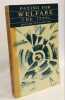
Très bon état intérieur propre bonne tenue dos bruni
Chiffres CL's de L''Conomie Franaise
Contemporary French Fiction 1993 128 pages 10 6x0 8x17 2cm. 1993. pocket_book. 128 pages.

Bon état
Regulation and Administered Contracts. - [INITIATING ""TRANSACTIONS-COST ECONOMICS""]
Worcester MA, The Heffernan Press, 1976. Royal8vo. In the original blue printed wrappers. In ""The Bell Journal of Economics"": Vol. 7, No. 2, Spring 1976. Entire volume offered. Very light wear to extremities otherwise a very fine and crisp copy (not ex-library). Pp. 426-448 [Entire volume: Pp. 359-736].
First printing of Goldberg important paper in which he was the first first to emphasise the incompleteness of long-term contracts and the key role of long-term contracts in establishing a process for adjusting the terms of the agreement to changing market conditions over time.The paper initiated together with Williamson's paper published the same year the new field of ""transactions-cost economics"".Here he ""foresaw the essential similarity between the issues that arise in public utility regulation and the issues in administering a long-term contract: ""In searching for a rationale for regulation we should look not at the shape of the long-run average cost curve, but instead at the complexities involved in devising and administering such a contract. Indeed, natural monopoly industries will be characterized in this paper not by their alleged decreasing average costs, but by the features which make long-term relationships between consumers and producers desirable and which further make it extremely difficult to determine at the outset the specific terms of that relationship."""" (Biggar, the fifty most important papers in the economics of regulation)
Gorbachev's Challenge: Economic Reform in the Age of High Technology
W. W. Norton & Company 1987 324 pages in8. 1987. Broché. 324 pages.


Bon Etat couverture un peu défraîchie intérieur propre
Entwickelung der Gesetze des menschlichen Verkehrs, und der daraus fliessenden Regeln für menschliches Handeln. Neue Ausgabe.
Berlin, Verlag von R.L. Prager, 1889. Numerous tables and figures in the text. (2), viii, 277, (1, errata), (2, Vieweg und Sohn catalogue) pp. 8vo. Later half cloth, marbled boards, corners, gilt lettering to spine. Einaudi 2657; Mattioli 1479. Second issue of the very rare first edition, first published at Gossen's own expense by Vieweg in Brunswick (1854). Very few copies were sold and the book remained unnoticed for years. Shortly before his death, Gossen withdrew it from circulation and the unsold copies were returned to him. After the author had become famous, Vieweg's successor, Prager, bought this stock from Hermann Kortum (Gossen's nephew and professor of mathematics) and brought the work back on the market in 1889 with a new title page and as a 'new' edition.The importance of Gossen was brought to light by Jevons and Walras. In the second edition of The Theory of Political Economy Jevons included a generous acknowledgement of Gossen's priority 'as regards the general principles and method of the theory of Political Economy.''Gossen, though perhaps not quite a genius, had a brilliant, original and precise mind. With his one book, he moved constrained optimization into the centre of the theory of value and allocation, where it has since remained. With respect to economic content, his was probably the greatest single contribution to this theory in the 19th century' (New Palgrave, ii, p. 550-554).Inner margin of paste-downs and free first blanks reinforced with white cloth tape, two discrete stamps on verso of the title-page "Universitätsbibliothek Konstanz", two passages in the book with side marking.
(NVVA, )
Phone number : 31 20 698 13 75
Lettre de Monsieur le Chevalier Goudar à un académicien de Paris au sujet de la nouvelle charrue à semer. Ou l'Auteur fait voir le danger qu'il y auroit pour l'Etat Politique & le Gouvernement Civil d'abandonner l'ancien usage d'ensemencer les terres.
Avignon, 1758. 59, [1] blank pp. 8vo in 8s and 4s. Uncut in original grey stiff wrappers; paper spine label. Mars 48; OCLC lists just a microform copy; INED 2080; not in Kress, Goldsmiths' or Einaudi. First edition, uncommon of Goudar's response to l'abbé Soumille's proposals, expressed in a number of pamphlets, on the mechanisation of agriculture, especially the introduction of multiple seeding machinery. Goudar argues against it because this would lead to depopulation of the land. "Of the pre-physiocratic French writers who approached the population problem in terms of agricultural values and reforms, Ange Goudar (1720-1791) was the most important" (Joseph J. Spengler, French Predecessors of Malthus, p. 57-69 with elaborate discussion of Goudar and his works.)
(NVVA, )
Phone number : 31 20 698 13 75
Henri Gougaud Coffret en 3 volumes : L'arbre à soleils ; L'arbre aux trésors ; L'arbre d'amour et de sagesse
Seuil 1997 176 pages in12. 1997. mass_market. 3 volume(s). 176 pages.



Bon état avec son coffret cartonné tranches un peu jaunies par endroit bonne tenue


A Defence of an Essay on the Publick Debts of this Kingdom, &c. In Answer to a Pamphlet, entitled A State of the National Debt, &c. - [THE NATIONAL DEBT OF ENGLAND]
London, J. Peele, 1727. 8vo. Without wrappers. A fine and clean copy. 72 pp.
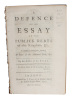
Scarce first edition of Gould's influential treatise in which he declared that the interest on government securities should be kept near ""the natural interest of money,"" as defined by Locke. Gould's essay is the very first work commenting on England's massive debt burden in the 18th century and it anticipates the major economic debate on the role of national debt and The Sinking Fund by 50 years. Gould documented that since 1716 the national debt had been greatly reduced and he argued that in time, by the application of the principle of compound interest, the sinking fund would pay off all of the national debt. To support this argument he showed that one million pounds, accumulating at four percent compound interest, would amount in 105 years to 1575 millions. ""The English public was in fact so nervous [by the massive national debt] that the Pitt government in 1786 resumed, on a larger scale and more seriously, the policy of paying an annual sum into a Sinking Fund. The plan adopted is usually attributed to the suggestion of Richard Price, [1772]. Sir Nathaniel Gould had published similar views before [in the present publication]. (Schumpeter, History of Economic Analysis, 327).""Gould appears, in fact, to have been the first person to have employed those arguments on behalf of the policy of simultaneously borrowing and repaying which subsequently became an accepted element in financial theory. [...] Gould had complete confidence in the permanence of and the efficacy of the sinking fund"". (Wormell, National Debt in Britain. P. 41)Kress 3695Goldsmith 6548Hanson 3737Hollander 932Houkes: p. 405(Not in Einaudi, but lists it. See Einaudi Vol. p. 400)
Vues Politiques sur le Commerce, Ouvrage dans lequel on traite particulièrement des Denrées, & où l'on propose de nouveaux moyens pour encourager l'Agriculture & les Arts, & pour augmenter le Commerce général du Royaume.
A Amsterdam, Aux depens de la Compagnie, 1759. Title printed in red and black. viii, 296 pp. 8vo. Contemporary blind marbled covers, paper shelf number to spine, uncut. Kress 5781; Goldsmiths 9441; Einaudi 2671; Mattioli 1484; Higgs 1978; INED 2119; Conlon 59:827; Spengler, French Predecessors of Malthus, pp. 86-90. First edition. The copies catalogued in Kress and Higgs have 535 pages and the title ends after the words 'Commerce général', lacking the additon 'du Royaume'. No priority has been established, either of these editions is very rare. The author, one of the editors of the Journal Économique, philantropist and utopian socialist, proposes in this work to 'faire entrer tous les moyens de mettre en exécution les projets les plus grands pour le bonheur de la nation': the founding of a state-owned agricultural company for the sale of its products with the purpose of maintaining price stability, the foundation of 'sociétiés de crédit', development of the use of machines, etc. The whole of his socialist and utopian ideas is also elaborately dealt with in J.-C. Perrot's work 'Histoire intellectuelle de l'Économie Politique', chapter entitled Le despotisme de la raison dans l'utopie économique de Goyon de la Plombanie, pp. 284-304. See also A. Lichtenberger, Le Socialisme au XVIIIe siècle, pp. 329-334. - Occasional faint dampstain, a very good copy.
(NVVA, )
Phone number : 31 20 698 13 75
Projet de Finance, adressé aux gouvernemens de toutes les nations policées; par Joseph-Modeste Granier de Ste-Cécile, Résident à Treffort, Département de l'Ain.
Bourg (Ain), Chez Janinet, Imprimeur-Libraire du Roi, 1819. 64 pp. 8vo. Stab-sewn in original pale yellow covers, a bit frayed at edges. Not in Kress; not in Goldsmiths; not in Einaudi; not in Mattioli; Louandre & Bourquelot, iv, p. 153 for other works by the author but not this one; Quérard, iii, p. 451, listing the third edition published in 1821. First edition. The author, inhabitant of Treffort in the department l'Ain, was a prolific philantropist. In this curious work he exposes with much details a revolutionary financial project which he would like to see implemented in all civilized nations. The gist of the project is no less than the abolition of all taxes: they will be replaced by a voluntary contribution: "C'est sur l'orgueil, le luxe et l'amour-propre que je vais proposer d'établir un impôt." The method is simple and clear: no-one is allowed to decorate his horses, carriages, clothes, furniture, harness, etc. etc. unless a license has been bought. Granier's argument is based on human nature: if something is dear to someone, he will want it; if it distinguishes it is appreciated and desired, and the more it is wanted. Hence, many will pay to be able to obtain what they want and what will distinguish them from others. Granier also deals with possible objections to his project, gives calculations of income generated through his project, and exposes clearly the unjust and uneven division of taxes in existence: a day-worker pays 15 % taxes on his glass of wine, whereas those who can afford to purchase wine "en gros" pay only 5%!Granier is the author of various other works: Moyen d'améliorer l'état social en diminuant l'excès de la fréquentation des cafés, billards, ...., Moyen d'éteindre la mendicité, d'améliorer le sort des pauvres .... and of Moyen pour produire spontanément et à peu de frais un moteur capable de suppléer aux pompes de feu ..... A very nice copy, a bit spotted, uncut.
(NVVA, )
Phone number : 31 20 698 13 75
Soviet Economic Structure and Performance
Joanna Cotler Books 1974 478 pages in8. 1974. Broché. 478 pages.


Bon état intérieur propre bonne tenue couverture un peu défraîchie
Grillo E. Wieser Friedrich von Böhm Bawerk Eugen von Menger Carl
Reference : 100137690
(2002)
Sulla genesi di capitale e interesse (Classici di economia politica)
Archivio Izzi 2002 352 pages 18 8x1 6x24cm. 2002. Broché. 352 pages.

Très Bon Etat de conservation intérieur propre bonne tenue
Des Causes du Bonheur Public. Ouvrage dédié à Monseigneur Le Dauphin, Par M. l'Abbé Gros de Besplas, de la Maison & Société de Sorbonne, Prédicateur du Roi, &c.
A Paris, De l'Imprimerie de Sébastien Jorry, 1768. Frontispice by Jean Massard after Charles Eisen representing the young Dauphin, the future Louis XVI, running after the shadow of his father, the Dauphin Louis, who died in 1765. xxxiv, 586, (2) pp. 8vo. Contemporary marbled calf, spine richly gilt with raised bands, label with gilt lettering, marbled edges, gilt triple fillet on sides, very lightly rubbed. INED 2163 (edition 1790 in 2 volumes in 12mo); Higgs 4522; Goldsmiths 11087 (the 1774 edition); Kress S.4524; not in Mattioli; Einaudi A.348 (the 1774 edition); Lichtenberger, Le Socialisme au XVIIIe Siècle, pp. 391-393. First edition of the major work by the Abbé Gros de Besplas, the preacher of Louis XV. While property, society and religion were subjected to violent attacks in the writings of the philosophes, only very few "abbé's" introduced the subject of political economy into their sermons, some even to the point where they were called to order by the ecclesiastical authorites. Among them, the Abbé Gros de Besplas, while not believing in the utility of important and profound reform, argued that public welfare, of which religion and the monarch were the principle guards, follows from possession of the "necessary", a certain abundance, and being subjected to work. Gros de Besplas strongly condamns celibacy, mendicity and "le luxe" which, he feels, must be suppressed by means of heavy taxes, deplores the fallow land for want of instruments and machines in the hands of those who work the land, and argues for a more even distribution of land in "accord avec la justice". The subjects of the monarch, or any ruler, have four important rights: the right to life, the right to be free, the right to own property, and the right to be protected. From this Gros de Besplas arrives at a socialist theory of property: the property of land belongs to society as it can not belong to any particular man. To his politically moderate ideas Gros de Besplan attaches more radical ideas concerning property.The engraved frontispiece is preceded by a leaf which contains verso an "Explication du Frontispiece." Rare: only Higgs and Kress have the original edition.
(NVVA, )
Phone number : 31 20 698 13 75

