 Write to the booksellers
-
Latest
Last 24h (4)
Last month (126)
Last week (9)
-
Century
16th (1)
17th (9)
18th (55)
19th (100)
20th (634)
21st (143)
-
Countries
Belgium (260)
Brazil (2)
Denmark (229)
France (485)
Netherlands (145)
Switzerland (16)
-
Syndicate
ILAB (408)
NVVA (145)
SLAM (168)
La fuite des capitaux [Envoi de l'auteur à Wolinski]
Couverture souple Paris, Grasset, 1979. In-8, broché (23,5 x 15,5 cm), couverture illustrée, couverture légèrement passée. 247 pages, intérieur légèrement passé. L'ouvrage porte sur l'enquête de Victor Franco sur l'évasion fiscale vers la Suisse à la fin des années 70. Envoi manuscrit de l'auteur plein d'humour à Jean (sic) Wolinski et à Maryse : "cette fuite des capitaux qui leur donnera sûrement des idées pour planquer leurs millions - avec ma sincère amitié". Préface de Jean Ziegler. Bon exemplaire.
![La fuite des capitaux [Envoi de l'auteur à Wolinski]. FRANCO, Victor.](https://static.livre-rare-book.com/pictures/ECV/1349_1_thumb.jpg)
![La fuite des capitaux [Envoi de l'auteur à Wolinski]. FRANCO, Victor.](https://static.livre-rare-book.com/pictures/ECV/1349_2_thumb.jpg)
![La fuite des capitaux [Envoi de l'auteur à Wolinski]. FRANCO, Victor.](https://static.livre-rare-book.com/pictures/ECV/1349_3_thumb.jpg)
Très bon
Money: Two Philosophies - Conflict of Trust and Authority
Blackwell Publishers 1977 163 pages 14 2x2x21 8cm. 1977. Cartonné jaquette. 163 pages.
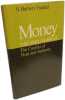

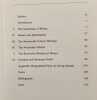
Très Bon Etat de conservation intérieur propre bonne tenue avec sa jaquette
Mélanges de Morale, d'Économie et de Politique, Extraits des Ouvrages de Benjamin Franklin, et précédés d'une notice sur sa vie, Par A. Ch. Renouard, advocat.
Paris, Chez Antoine-Augustin Renouard, 1824. With portrait-frontispiece and folding facsimile (split along one fold). 2 volumes. vii, (1), 252 pp.; (4), 186 pp. 12mo. Contemporary half calf, marbled boards, spines gilt with green and red labels with gilt lettering. Sabin 25544; not in Howes; not in Kress; not in Goldsmiths; not in Einaudi; not in Mattioli. First French edition. - Some dampstaining at the beginning and end of each volume but still a good copy.


(NVVA, )
Phone number : 31 20 698 13 75
Entretiens sur la véritable idée de l'usure.
1783 Couverture rigide A Toulouse, Imprimerie de Me Jean Florent Baour, 1783. Reliure pleine basane, dos à 5 nerfs orné, tranches rouges, pièce de titre frottée. Vij (faux-titre, titre), 383 pages.


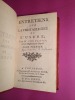
Bon
Traité historique de l'origine et nature des Dixmes, Et des biens possedés par les Ecclésiastiques en franche Aumône, & de leurs charges. Par M. E.D.L.P.D.F. Bailly des Ville & Marquisat de la Palisse.
A Paris, Chez Valleyre père, 1762. (2), x, (4), 468, (20) pp. 12mo. Contemporary marbled calf, spine gilt with raised bands, red edges, corners very lightly bumped. Kress 6021; INED 2614; Higgs 2669; not in Goldsmiths; not in Einaudi; not in Leblanc; not in Masui; not in Stammhammer, Bibliographie der Finanzwissenschaft; not in Camus; Conlon 62:879. First edition. Historical and legal treatise which studies the dîmes in relation to religion, law and the origins of the monarchy and stating that the dîmes were not, at the outset, due to the church. Edme de la Poix de Fréminville studied law. His main interests were related to feudal questions and his works were of importance. - Occasional light browning. Rare.
(NVVA, )
Phone number : 31 20 698 13 75
Buch vom Rohtabak
Mainz, Süddeutsche Tabakzeitung 1950 177pp. + 1 ill.+ 8 maps, cart.cover, V33740


Le tournant de l'économie mondiale
Paris, Payot 1942 411pp.avec 29 croquis, dans la série "Bibliothèque écoomique", br.orig., cachet, bon état, E41532
Historia economica de la Europa moderna
Buenos Aires, Fondo de cultura economica 1957 697pp., br.orig., text en espagnol, 25cm., qqs.soulignements en crayon sur les pages 1-87 sinon en bel état
Essays in Positive Economics (Phoenix Books)
University of Chicago Press 1984 336 pages 13 335x20 32x2 1336cm. 1984. Broché. 336 pages.
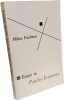
Très Bon Etat proche du neuf
Friedman Milton Gordon Robert J. James Tobin Karl Brunner Allan H. Meltzer Paul Davidson Don Patinkin
Reference : 100147558
(1977)
ISBN : 0226264084
Milton Friedman's Monetary Framework: A Debate with His Critics
Univ of Chicago Pr 1977 199 pages 14 986x1 27x22 86cm. 1977. Broché. 199 pages.

Bon état
Sur un problème d'economie pure. - [FOUNDING PAPER ON ECONOMETRICS.]
Oslo, Grøndahl & Søns, 1926. 8vo. In the original modest boards with cloth to spine. Red library stamp to front board and top of first page. Otherwise fine and clean. 40 pp.
First printing of Frisch's scarce landmark paper which not only coined the term ""econometrics"" but also introduced it as an entirely new economic discipline thereby holding a seminal position in 20th century economics. The paper was a powerful demonstration of the meaning of econometrics: mathematical precision in the formulation of theoretical concepts and relationships so as to make them quantifiable, and erudition and ingenuity in the application of statistical methods to available data. The paper drew up further perspectives for the development of the newly coined discipline. Frisch was in 1969 awarded the Nobel Prize in economics ""for having developed and applied dynamic models for the analysis of economic processes"". ""The Sur un problème essay made a forceful impression on the small number of mathematically inclined economists who - like Irving Fisher - happened to be introduced to it. It was not translated and published in English until 1972 at the very end of Frisch's life. The paper would deserve a place in the history of economics, even for no other reason than the opening sentences, which coined the first of Frisch's many - and by far the most important - contributions to the international terminology of the discipline"" (Regnar Frisch Centre for Economic Research): 'Intermédiaire entre les mathématiques, la statistique et l'économie politique, nous trouvons une discipline nouvelle que l'on peut, faute de mieux, désigner sous le nom de l'économétrie. L'économétrie se pose le but de soumettre les lois abstraites de l'economie politique théorique ou l'économie 'pure' à une vérification expérimentale et numeriques, et ainsi de constituer, autant que cela est possible, l'economie pure en une science dans le sens restreint de ce mot' (i.e.'Intermediate between mathematics, statistics, and economics, we find a new discipline which for lack of a better name, may be called econometrics. Econometrics has as its aim to subject abstract laws of theoretical political economy or 'pure' economics to experimental and numerical verification, and thus to turn pure economics, as far as possible, into a science in the strict sense of the word'.).Frisch's paper on economics had been prepared largely during his stay in Paris in the preceding years. Since 1923 Frisch had published some papers in theoretical statistics, but he was on a course to become - for lack of a better term - a mathematical economist, firmly determined to give his scientific contribution within economics. He had prepared himself for the task by far-reaching studies in mathematics and statistics in addition to his readings of economic literature. The two professors of economics in Norway at this time belonged to the Faculty of Law, and there was no research institution or separate university department in economics. Hence, colleagues with related scientific interests had by and large to be found abroad, and Frisch had established connections, mostly within Europe, by travels and correspondence.Frisch was one of the founders of economics in general as a modern science. He coined a number of new words including econometrics and macroeconomics. He helped set up Neo-Walrasian research. He formalized production theory. In econometrics he worked on time series and linear regression analysis. With Frederick Waugh, he introduced the celebrated Frisch-Waugh theorem (Econometrica1933) (sometimes referred to as the Frisch-Waugh-Lovell theorem). His 1933 work on impulse-propagation business cycles became one of the principles of modern New Classical business cycle theory. He also helped introduce econometric modeling to government economic planning and accounting. He was one of the founders of the Econometric Society and editor of Econometrica for over twenty years. The Frisch Medal, so named in his honor, is given every two years for the best paper published in the Econometrica in the previous five years. (The New Palgrave).
Furubotn Eirik Grundtvig Richter Rudolf
Reference : 100138472
(2000)
ISBN : 0472086804
Institutions and Economic Theory: The Contribution of the New Institutional Economics (Economics Cognition and Society)
The university of Michigan Press 2000 in8. 2000. Broché.
Très bon état intérieur propre
The Corruption of Economics (Georgist Paradigm Series)
SHEPHEARD WALWYN 2007 271 pages 14 73x1 78x20 83cm. 2007. Broché. 271 pages.
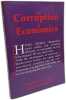
proche du neuf intérieur propre bonne tenue
Le nouvel état industriel - Essai sur le système économique américain
, Paris, Gallimard 1974, 434pp., dans la série "Bibliothèque des sciences humaines", nouvelle édition augmentée et revue, br.orig., bel état
Della moneta libri cinque. Edizione seconda. - [""THE BEST OF THE MANY TREATISES PUBLISHED IN ITALY ON MONEY""]
Napoli, Stamperia Simoniana, 1780. 4to. In contemporary full vellum with leather title label with gilt lettering to spine. Occassionally brownspotted throughout, otherwise a good copy. (28), 416 pp.
![Della moneta libri cinque. Edizione seconda. - [""THE BEST OF THE MANY TREATISES PUBLISHED IN ITALY ON MONEY""]. "GALIANI, FERDINANDO.](https://static.livre-rare-book.com/pictures/LLX/60056_1_thumb.jpg)
![Della moneta libri cinque. Edizione seconda. - [""THE BEST OF THE MANY TREATISES PUBLISHED IN ITALY ON MONEY""]. "GALIANI, FERDINANDO.](https://static.livre-rare-book.com/pictures/LLX/60056_2_thumb.jpg)
![Della moneta libri cinque. Edizione seconda. - [""THE BEST OF THE MANY TREATISES PUBLISHED IN ITALY ON MONEY""]. "GALIANI, FERDINANDO.](https://static.livre-rare-book.com/pictures/LLX/60056_3_thumb.jpg)
Second edition, supplemented with a preface, notes and an epilogue, remarking on the change in the current situation since the first edition, of this groundbreaking work in monetary economics, considered one of the first specific treatises on economics. Galiani's treatise, first printed anonymously in 1751, was not just a work of economics"" it was based on the principal that freedom was important for society to work properly and it became very influential in subsequent monetary theory - ""This is the best of the many treatises published in Italy on money"" (McCulloch). Most of Galiani’s theoretical work can be found in his ‘Della moneta’. Despite the variety of topics addressed in the book, the basic contributions concern value and monetary theory and the so called paradox of value which according to Schumpeter he ‘carried this analysis to its 18th-century peak’ (History of Economic Analysis, p.300). “Besides being a policy paper – stressing, in Vico’s tradition, the importance of happiness and utility and arguing that policy does not have principles, hence different economic policies are needed in different times – Della moneta is also a sophisticated theoretical treatise. The latter is probably the highest analysis on the nature of money, its value and the implications of different policies on prices, supply and demand of goods and equilibrium. In the tradition of Montanari and Davanzati, Galiani develops a subjective value theory on philosophical and psychological grounds. The value of anything is something that human human beingsdetermine for themselves naturally, through their own mutual agreement. Utility equals happiness and is inversely proportional to rarity" value is a function of marginal utility" no lawm nor governments, should therefore try to impose estimates of value (‘alzamento’) on others, because this coercion would eventually ruin and corrupt the natural order of things. In the treatise he challenged both Broggio, Locke and above all Jean-Francois Melon, whose work he knew through his uncle Celestino. He proclaims his debt to a long tradition of studies on money and on monetary theory: from Aristotle, to the Spanish theologians of the School of Salamanca, Bernardo Davanzati and William Petty, showing the breadth of his reading and the quality of sources.” (Books that Made Europe). Ferdinando Galiani was a leading Italian figure of the Enlightenment and one of the most notable Italian economists of all time. Friedrich Nietzsche referred to him as ""a most fastidious and refined intelligence"" as well as ""... the most profound, sharp-sighted and perhaps also the foulest man of his century."" Kress I. B 275. Einaudi 2330 Mattioli 1374 McCulloch p. 190
Reperes - La Decouverte: L'Emploi En France
La Decouverte Editions 1988 11x1 2x18cm. 1988. Broché.
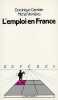
Bon état
Englands Grievance Discovered, In relation to the Coal-Trade with the Map of the River of Tine, and Situation of the Town and Corporation of Newcastle. - [ONE OF THE EARLIEST WORKS ON THE ENGLISH COAL TRADE]
London, R. Ibbitson & P. Stent, 1655. 4to. In contemporary full calf. Small paper-label pasted on to top of spine. Wear to extremities, scratches and stains to boards. Ex-libris pasted on to verso of front board. First 20 leaves with a few small worm-tracts in outer lower margin, only slightly touching text. Outer margin closely trimmed, slightly touching the printed marginal notes on a few leaves. (8), 211 pp. 23 engravings in text. Wanting the folded map.

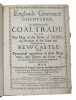
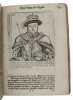
Uncommon first edition of one of the earliest books relating to the English coal trade. This work sheds light on the grievances of locals in the North East of England during the mid-seventeenth century. In 1653, Gardiner was imprisoned by the Hostmen of Newcastle upon Tyne for his refusal to cease operations at his brewery in North Shields, a small town situated to the east of Newcastle. The Hostmen, a powerful corporation of local merchants, had significant control over the trade, particularly in coal, along the River Tyne. Despite limitations imposed by the House of Commons, they exerted influence over various ports in the North East of England. “Gardiner's petition to Oliver Cromwell, published in 1655 (the present work), demanded that the Hostmen had abused their powers, and that trade ought to be opened up on the Tyne and elsewhere. He suggested that North Shields gain a market to facilitate trade, and to help the garrison at nearby Tynemouth. Gardiner's pleas were ultimately unsuccessful. However, the Hostmen's influence did begin to diminish. This was primarily due to the increased production of coal and other goods in the region, as well as Parliamentary support for competition from other local ports such as Sunderland and Blyth.” (Royal Collection Trust) Goldsmiths 1347
Manuel de sociologie et d'économie sociale
Paris, Bloud & Gay 1924 662pp., br.orig. (dos restauré), 23cm., qqs.cachets, bon état, E41771
Considerations sur le Commerce et la Navigation de la Grande-Bretagne. Ouvrage traduit de l'Anglois.
Geneve, Antoine Philibert, 1750. 8vo. In contemporary full calf with four raised bands and blind-tooled ornamentation spine. Ex-libris (Carl Juel, Danish statesman and owner of Valdemar's Castle) to verso of front board. Light wear to extremities, otherwise a fine and clean copy. 24, 215 pp.
The Geneva-edition of the French translation of this interesting treatise which devotes a large part to the trade with American plantations and contains discussions of British trade with Carolina, Pennsylvania, New York, New Jersey, and New England. First published in 1729, the work was frequently reprinted throughout the eighteenth-century. Translated by J.B. de Secondat, son of Montesquieu.
Les grands économistes - Textes et commentaires
Paris, Recueil Sirey 1925 xi + 330pp., br.orig. (peu abîmé et restauré), 24cm., qqs.cachets, texte en bon état, E41697
L'ECONOMIE DE L'U. R. S. S.
1951 broché in-octavo tellière (paperback), dos et couverture blancs (white spine and cover), illustrations : figures et tableaux (pictures and tables), 128 pages, 1951 Paris Presse Universitaires de France,
Collection "Que Sais-Je ?" numéro 179, quatrième édition revue et augmentée (revised and enlarged edition), bon état (good condition)
Transportation and industrial development in the Middle West. Thesis.
New York, Columbia University 1909, 245x165mm, 275pages, paperback.
Pour un paiement via PayPal, veuillez nous en faire la demande et nous vous enverrons une facture PayPal
(NVVA, )
Phone number : 31 20 698 13 75
Dansk Toldhistorie V (5). Fra importregulering til moms. 1945-1986.
(København), Toldhistorisk Selskab, 1987. 8vo. Originalt helshirt med smudsomslag. Et meget fint og rent eksemplar. 505, (1) pp.

