 Write to the booksellers
-
Latest
Last month (126)
Last week (9)
-
Century
16th (1)
17th (9)
18th (55)
19th (100)
20th (630)
21st (143)
-
Countries
Belgium (260)
Brazil (2)
Denmark (229)
France (481)
Netherlands (145)
Switzerland (16)
-
Syndicate
ILAB (408)
NVVA (145)
SLAM (168)
Zur Erklärung und Abhülfe der heutigen Creditnoth des Grundbesitzes. Zweite Aufl. Vorwort von Rudolph Meyer.
Berlin, Hermann Bahr, 1893. Cont. hcloth. Titlelabel in leather on back. Lithographed portrait. XL,300 pp.
Six Centuries of Work and Wages. The history of English Labour.
London, Swan Sonnenschein and Co., 1906. Orig. full cloth. Gilt spine. 591 pp. A stamp on first and last leaf. Clean and fine.
Un revenu et une activité pour tous
Editions L'Harmattan 1998 160 pages 21 2x1 4x13 4cm. 1998. Broché. 160 pages.

Bon état
Rise & Decline Of Medici Bank1397-1494
W. W. Norton and Company Inc 1966 528 pages 12 7x2 794x20 32cm. 1966. Broché. 528 pages.
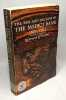
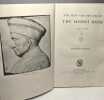
Bon Etat couverture défraîchie bords frottés intérieur propre
Ross Alec Devesa Florence Adams Philippe
Reference : 500079798
(2018)
ISBN : 9782364051645
Dompter le futur: Emplois éducation intelligence
FYP 2018 328 pages 15x20 5x2 9cm. 2018. Broché. 328 pages.

Bon état
Dans l'Italie fasciste ; Aspects politiques et moraux de la nouvelle économie corporative (Conférence de Edmondo Rossoni à Berlin, le 29 avril XIV)
Roma, Societa Editrice di Novissima A.XIV 34pp., br.orig., estampe, 20cm., bon état
Working-Class Hollywood: Silent Film and the Shaping of Class in America
Princeton University Press 1999 386 pages 15 24x2 54x22 86cm. 1999. Broché. 386 pages.


Très Bon Etat de conservation intérieur propre bonne tenue
The Social and Economic History of the Hellenistic World (reprint 1986)
Oxford University Press Reprints distributed by Sa 1986 1931 pages 16 5x24x3 6cm. 1986. Cartonné. 3 volume(s). 1931 pages.


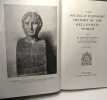
Très bon état de conseration ternissure sur le bas de tranche intérieur propre
The Process of Economic Growth. - [SIMON KUZNETS'S COPY]
New York, Norton & Company, 1952. 8vo. In the original full black cloth with gilt lettering to spine in the original dust jacket. Previous owner's name on front free end-paper (The economist Simon Kuznets) Gilt lettering with a bit of wear and capitals on dust jacket with wear. Otherwise a very fine and clean copy.
First printing - and Simon Kuznets copy - of Rostow's famous work in which Rostow, probably for the first time, introduced an analytical tool and framework to analyze growth and progress in historical and contemporary economics. Rostow states in the preface that: ""I should like to acknowledge valuable exchanges with [...] S. S. Kuznets"" (Preface, p. IX).Rostow's work is to a large extent a response to Marx's stages (of feudalism, capitalism, socialism, and communism). Rostow's categorized economic growth and development in four stages: 1.The traditional society" 2.The pre-condition for take off 3.The drive to maturity" 4.The age of high mass consumption. ""Rostow's exposition has received very wide attention and approval, perhaps for several reasons. First, it is evolutionary" second, it is grounded in historical studies third, it seems to show a predestined affluence for all finally, it presents a case for an inner logic and drive from one stage to the next that requires no conscious decision-making or deliberate efforts to promote growth" it is analytic without being programmatic."" (Ibid.).Walt Whitman Rostow (1916-2003) had a prominent role in the shaping of US foreign policy in Southeast Asia during the 1960s, he was a staunch anti-communist, and was noted for a belief in the efficacy of capitalism and free enterprise. Rostow served as a major adviser on national security affairs under the Kennedy and Johnson administrations..In 1960 Rostow published the book ""The Stages of Economic Growth: A non-communist manifesto"", in which he elaborated the ideas presented in the present book. Simon Smith Kuznets (1901 - 1985) Russian American economist was awarded the Nobel Prize in Economic Sciences for ""his empirically founded interpretation of economic growth which has led to new and deepened insight into the economic and social structure and process of development"".Kuznets revolutionized econometrics with the important book ""National Income and Its Composition, 1919-1938. Published in 1941 which eventually formed the famous Kuznets Curve. This work relied to a large extent on Bowley's work on national income.
The Stages of Economic Growth. - [SEMINAL WORK WITHIN DEVELOPMENT ECONOMICS - THE ROSTOVIAN TAKE-OFF MODEL]
Utrecht, Economic History Society, 1959. Royal8vo. Bound with all the original wrappers in full red cloth with gilt lettering to spine. In ""The Economic History Review, Second Series, Vol. XII, No. 1, August 1959"" (the entire Second Series, Vol. XII, No. 1-3, August 1959 - April 1960"" present). Library label pasted on to pasted down front free end-paper. Library stamp, a small marginal repair, and some pencil-annotations to first front-wrapper. Internally fine and clean. [Rostow:] Pp. 1-16. [Entire issue: VIII, 552, (4) pp.], .
First edition of probably the most important and influential work ever to be published within development economics. The work had profound influence not only on contemporary economics and politics but also on economic history where it marked an entirely new period of historiography and theories within economic history. His theory became one of the important concepts in the theory of modernization in the social evolutionism.""Rostow's analysis of economic growth was based on the developmental stages through which each country goes. Rostow saw each country evolving through five stages of economic growth. These are the traditional society, the preconditions for take-off, the take-off [The take-off is really an industrial revolution that arrives when the old barriers and resistances to steady growth are finally overcome], the drive to maturity, and the age of high mass consumption."" (Oser, The Evolution of Economic Thought, P. 368).""Rostow's exposition has received very wide attention and approval, perhaps for several reasons. First, it is evolutionary" second, it is grounded in historical studies third, it seems to show a predestined affluence for all finally, it presents a case for an inner logic and drive from one stage to the next that requires no conscious decision-making or deliberate efforts to promote growth" it is analytic without being programmatic."" (Ibid.).Walt Whitman Rostow (1916-2003) had a prominent role in the shaping of US foreign policy in Southeast Asia during the 1960s, he was a staunch anti-communist, and was noted for a belief in the efficacy of capitalism and free enterprise. Rostow served as a major adviser on national security affairs under the Kennedy and Johnson administrations..In 1960 Rostow published the book ""The Stages of Economic Growth: A non-communist manifesto"", in which he elaborated the ideas presented in the present paper.
Sciences économiques et sociales en 25 fiches - Seconde: Tout le programme en 25 fiches (Tout le programme en fiches)
Ellipses 2015 160 pages 11 8x1 2x18 8cm. 2015. Broché. 160 pages.

Très bon état - légères marques de lecture et/ou de stockage mais du reste en très bon état- expédié soigneusement depuis la France
Del Contratto Sociale, ossia Principi del Diritto Politico di G.G. Rousseau Cittadino di Ginevra. Venezia, Tipografia di Antonio Curti, Presso Giustino Pasquali Q. Mario, 1797. - (Bound with:) ROUSSEAU, Jean-Jacques. Discorso sopra l'Economia Politica di G.G. Roussaeau Cittadino di Ginevra.
Venezia, Tipografia di Antonio Curti, Presso Giustino Pasquali Q. Mario, 1797. Two works bound in one volume. viii, 207, (1) blank pp.; 68 pp. 8vo. Modern blue cloth, red label with gilt lettering to spine. First work: Sénelier 721; Dufour 169; this edition not found in RLIN or OCLC. First Italian edition of this translation, the first Italian translation (1796) was published outside Italy, in Paris. 'His fundamental thesis that government depends absolutely on the mandate of the people, and his genuine creative insight into a number of political and economic problems, gives his work an indisputable cogency. It had the most profound influence on the political thinking of the generation following its publication. It was, after all, the first great emotional plea for the equality of men in the state; others had argued that same cause theoretically but, had themselves tolerated a very different government ... it remains the crucial document of egalitarian government' (PMM).Second work: Sénelier 1470; OCLC lists copies at McGill and the Wellcome Library.First edition in Italian of Rousseau's important contribution to economics.Rousseau's article on political economy, originally written for publication in the Encyclopédie, remained his most explicit contribution to the subject. His sustained argument against luxury and conspicuous consumption of the rising European bourgeoisie implied a direct criticism and rejection of the mercantilists. His article, published well before any of the published statements of the Physiocrats, shows similarities or anticipates the physiocratic school in important issues of property and to some extent on taxation (He also cites China as an example). His Lockean discussion of the right of property and his treatment of taxation are of particular interest. Taxation is 'inevitable', and he suggests a tax on consumption, paid for by the buyer of non-essential items or services, foreshadowing modern VAT. Most importantly his single-minded opposition to economic inequality and his insistence that liberal laissez-faire was no substitute for a theory of social relations, influenced political reformers and political economists alike.Both works were translated by the Italian Niccolò Rota. - Old handwritten name on first title, light stain in upper inner margin of the first work, an uncut copy.


(NVVA, )
Phone number : 31 20 698 13 75
Recueil Historique d'Actes, Negociations, Mémoires, et Traitez. 21 vols + 2 supplement vols.
Haye, Scheurleer, 1728 - 1754. 8vo. Uniformly bound in 22 fulll vellum bindings with gilt lettering (except vol. 1 & 4) to spine. Spines with small paper label to upper part (or traces of it) indicating the inventory number in an estate library. Ex-libris (Carl Juel, Danish statesman and owner of Valdemar's Castle) to verso of front boards. Light wear to extremities, internally very fine and clean. X, 473, (18) (2), 495, (3) (2), 499, (19) (16), 510 (12), 324, CXLIV (16), 480 (8), 484 (14), 480 (8), 518 + 1 folded plate XII, 528 + 1 folded plate (16), 560, (12) pp. (16), 528 (8), 537, (31) pp. (8), 403, VIII, 328 XVI, (8), 484, (18) (2), 546, (4) (12), 527 (8), 486, (2) (12), 522, (6), (10), 495, (5) (10), 482, (4) (10), 495, (5) (8), 100, 286 pp.


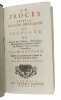
A fine set, with an interesting provenance, of Rousset's large collection of state papers and treatises which stands as a crucial resource for understanding European diplomacy spanning the period after the Treaty of Utrecht until the early 1740s. The compilation includes numerous documents related to American and East Indian affairs, with a focus on overseas trading companies, notably those of the Netherlands, England, and Sweden. Jean Rousset de Missy (1686–1762) was a French Huguenot historian and journalist. He was born in Nîmes, France, and later became a prominent figure in the intellectual and cultural circles of his time. Rousset de Missy was known for his historical writings and contributions to periodicals, and he played a role in documenting and analyzing significant events in European history. Provenance: Carl Juel, Danish statesman and owner of Valdemar's Castle.
Analyse historique de l'établissement du crédit public en France. Par Vital Roux, Régent de la Banque.
Paris, Bossange père, 1824. With 6 folding tables. (4), 234 pp. 8vo. Modern half morocco, marbled boards, gilt lettering. Kress C.1330; not in Goldsmiths; not in Einaudi; not in INED; Coquelin & Guillaumin, ii, p. 560. First edition. This is a history of public finances during the Restoration and of the establishment of public credit in France. The author was born in Bellay, around 1760, and died in Strasbourg in 1846. He started his career with a trading company in Lyon, and after that went to work for the house of Delessert in Paris. He founded himself a trading company but with little success. He became regent of the Banque de France, member of the Chamber of Commerce of Paris and one of the editors of the Code de Commerce. In 1819, he established the world's first school of management, a kind of business school providing special instruction for young people who had finished their academic studies and intended to pursue a career in commerce and industry. Roux's school, the École Supérieure de Commerce de Paris, still exists today as the ESCP-EAP "European School of Management", with branches in Paris, Oxford, Madrid and Berlin. - A very nice copy with ample margins.
(NVVA, )
Phone number : 31 20 698 13 75
Ce que je peux enfin vous dire
Librairie artheme fayard 2018 292 pages 15 2x23 2x2 6cm. 2018. Broché. 292 pages.

Bon état
FONDEMENTS MICROECONOMIQUES: La microéconomie et la macroéconomie sont-elles compatibles
Economica 1999 268 pages 22 8x2x14 8cm. 1999. Broché. 268 pages.


Bon état couverture marquée sur le premier plat intérieur propre
Renteforhold i Danmark. I Tidsrummet fra Reformationen til Chr. V's Danske Lov.
Kbhvn. og Kria., 1914. Samt. hldrbd. En mærkat påsat med tape pånnederste del af ryg. Stempel på titelbladet. Ryg lidt slidt. 204 pp.
Rubows disputats.
Strategy Structure and Economic Performance in Large American Industrial Corporations
Harvard Business Review Press 1974 239 pages 25 4x2 286x18 034cm. 1974. Cartonné jaquette. 239 pages.
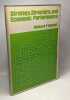
Bon état avec sa jaquette (défraîchie) intérieur propre
Corporate Finance: Going Public and Issuing New Equity and Takeovers Mergers and Disposals
Butterworth Legal Pub 1987 in8. 1987. Cartonné jaquette.
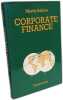

Très bon état avec sa jaquette intérieur propre bonne tenue
Le corporatisme et le régime de la production et du travail en Italie
Paris, Librairie du Recueil Sirey 1938 150pp., dans la série "Institut de droit comparé de l'Université de Paris. Série de monographies d'economie politique" vol.II., br.orig. (dos peu réparé), cachet, bon état, E41502
The Development Dictionary: A Guide to Knowledge As Power (Development Essentials)
Zed Books Ltd 1993 320 pages 13 8x1 8x21 4cm. 1993. Broché. 320 pages.
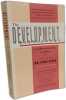
Très bon état
Sainsaulieu Renaud Tixier Pierre Eric Marty Emilia Marie-Odile
Reference : 100136096
(1983)
ISBN : 286563065X
La Démocratie En Organisation: Vers Des Fonctionnements Collectifs de Travail
Klincksieck 1983 272 pages in8. 1983. Broché. 272 pages.
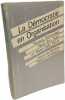

couverture défraîchie intérieur propre réparation au scotch sur le dos
Du système d'Impôt fondé sur les principes de l'Économie politique; par M. le Vte. de Saint-Chamans.
Paris, Le Normant, 1820. (4), 640, (2) pp. 8vo. Contemporary boards (slightly sunned). Goldsmiths 22857; Einaudi 4934; Masui, p. 478; not in Kress; not in Menger; Palgrave, iii, p. 345. First edition. In Palgrave's opinion, Saint-Chamans 'was the most distinguished of the upholders of the theory of the balance of trade.' The last part of the book contains numerous tables and notes.'Boutade d'un écrivain distingué, qui a dépensé au service des doctrines surannées de l'économie politique plus d'esprit qu'il n'en fallait pour faire un excellent ouvrage. C'est dans son livre que se trouve la plus habile apologie du système mercantile' (Blanqui, Histoire de l'Économie politique en Europe, vol. ii, p. 391). - Small library label on front paste-down.
(NVVA, )
Phone number : 31 20 698 13 75
Catechisme des Partisans, ou Resolutions Théologiques touchant l'Imposition, Levées & Employ des Finances. Dressé par Demandes & Responces, pour plus grande facilité. Par le R. P.D.P.D. S.I.
A Paris, Chez Cardin Besongne, 1649. With large vignette on title. 32 pp. 4to. Modern boards. Moreau 652; Kress 788; Goldsmiths 1019; INED 4055; not in Einaudi; not in Mattioli. First edition of this very rare pamphlet offering thoughts on the power of the king in financial matters and on the organisation of the collecting of the taxes. 'Très remarquable pamphlet' (Moreau). See for an elaborate account of the man and his works Dictionnaire de Théologie Catholique, xii, 2e partie, col. 2042-2044. - Somewhat spotted throughout. Rare.
(NVVA, )
Phone number : 31 20 698 13 75
Histoire monétaire de la France: 1800-1980
Puf 1983 448 pages 3x25x18cm. 1983. Cartonné. 448 pages.
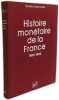

Bon Etat intérieur propre bonne tenue

