 Write to the booksellers
-
Type
Book (959)
Magazine (8)
Music sheets (1)
-
Language
English (2)
French (966)
-
Century
18th (19)
19th (31)
20th (393)
21st (203)
-
Countries
Belgium (240)
Canada (5)
Côte d'Ivoire (2)
Denmark (39)
France (636)
Netherlands (17)
Switzerland (29)
-
Syndicate
ALAC (5)
ILAB (102)
NVVA (24)
SLACES (7)
SLAM (41)
La Petite Vertu : huit années de prose courante sous la Régence: Huit années de prose courante sous la Régence anthologie
Seuil 1990 432 pages 14x3x20 6cm. 1990. broché. 432 pages.
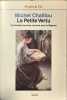
Bon état
La photographie.
Couverture rigide. Cartonnage de l'éditeur. 285 pages.
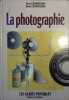
Livre. Editions Ouest-France (Collection : Les guides pratiques), 1991.
La dernière marche: Ces favoris qui ont raté l'Elysée
Alisio 2020 224 pages 17 6x22 1x3 1cm. 2020. Broché. 224 pages.
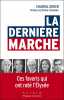
Très bon état
La dernière marche: Ces favoris qui ont raté l'Elysée
Alisio 2020 224 pages 17 6x22 1x3 1cm. 2020. Broché. 224 pages.

Très bon état
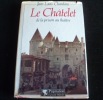
Le Châtelet de la prison au théâtre
Paris, Pygmalion - Gérard Watelet, 1980, in-4 carré, relié-Jaquette éditeur, 209 pages. Bon état. Déchirure réparée sur le 2e plat. Illustrations N/B.
NB. La librairie est fermée jusqu'à fin septembre. Les questions et commandes seront traitées début octobre.
Journal Tome 1 1921-1923 + Journal Tome 3 1926-1927
ÉDITIONS CORRÉA 1946 in8. 1946. Broché. 2 volume(s). Le 'Journal (1921-1923)' de Charles du Bos est une édition originale de 1946 publiée par Corrêa. Il rassemble les notes intimes et les réflexions du critique littéraire sur la littérature la vie culturelle et ses rencontres durant cette période. L'ouvrage est présenté comme un document exceptionnel sur la vie littéraire du début du XXe siècle et constitue une forme de réponse à des accusations portées contre l'auteur de son vivant
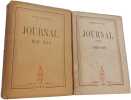
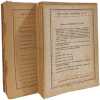
Bon état pages non coupées pages jaunies un livre avec une petite déchirure sur la couverture latérale intérieur propre
Art et Humanisme à Florence au temps de Laurent le MagnifiqueEtudes sur la Renaissance et l'Humanisme platonicien
PUF, Publications de l'Institut d'Art et d'Archéologie de l'université de Paris, tome IV, Paris, 1959. In-8, broché sous jaquette illustrée en couleurs, 578 pp. - xcvi pl. Introduction : la légende médicéenne - Première Partie : Artistes et Humanistes I. Les collections. - II. Les textes. - III. Les programmes - Deuxième Partie : Problèmes de l'iconographie et du style. L'originalité de Florence I. Le règne des ...
Avec 10 figures in texte 96 planches en noir et blanc en hors texte. --- Plus d'informations sur le site archivesdunord.com
William Styron: Le 7e jour
Editions du Rocher 1991 11 5x2x19cm. 1991. Broché.

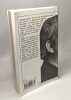
très bon état de conservation
L'art et la manière : La céramique. Collection : Le temps des loisirs.
Paris, Editions Bias, 1971. 14 x 22, 61 pp., nombreuses illustrations en N/B et en couleurs, broché, très bon état.
Sacred Images and Normativity: Contested Forms in Early Modern Art
, Brepols, 2022 Hardback, 320 pages, Size:216 x 280 mm, Illustrations:37 b/w, 97 col., Language: English. ISBN 9782503584669.
Summary Early modern objects, images and artworks often served as nodes of discussion and contestation. If images were sometimes contested by external and often competing agencies (religious and secular authorities, image theoreticians, inquisitions, or single individuals), artists and objects were often just as likely to impose their own rules and standards through the continuation or contestation of established visual traditions, styles, iconographies, materialities, reproductions and reframings. Centering on the capacity of the image as agent ? either in actual legal processes or, more generally, in the creation of new visual standards ? this volume provides a first exploration of image normativity by means of a series of case studies that focus in different ways on the intersections between the limits of the sacred image and the power of art between 1450 and 1650. The fourteen contributors to this volume discuss the status of images and objects in trials; contested portraits, objects and iconographies; the limits to representations of suffering; the tensions between theology and art; and the significance of copies and adaptations that establish as well as contest visual norms from Europe and beyond. TABLE OF CONTENTS Foreword INTRODUCTION Images as Norms in Europe and Beyond: A Research Program Chiara Franceschini I. Images and Trials CHAPTER 1 Fumi-e: Trampled Sacred Images in Japan Yoshie Kojima CHAPTER 2 Too Many Wounds: Innocenzo da Petralia's Excessive Crucifixes and the Normative Image Chiara Franceschini CHAPTER 3 Wounds on Trial: Forensic Truth, Sanctity, and the Early Modern Visual Culture of Ritual Murder Cloe Cavero de Carondelet CHAPTER 4 The Image and Cult of Sette Arcangeli facing Roman Censorship Escardiel Gonz lez Est vez II. Contested Portraits CHAPTER 5 The Return of Andrea Casali: Legal Evidence, Imposture, and the Portrait in Late Renaissance Italy Mattia Biffis CHAPTER 6 Simulating and Appropriating the Sacred: The Background to a Papal Ban on Saintly Portraits of Non-Saints James Hall CHAPTER 7 Ritratti rubati: Portraits of Post-Tridentine Saints as pia fraus Nina Niedermeier CHAPTER 8 Ignatius of Loyola as a Normative Image Steffen Zierholz III. The Norm and the Copy CHAPTER 9 In between Sacred Space and Collection: An Altarpiece from Augsburg and the Norms of Catholic Art around 1600 Antonia Putzger CHAPTER 10 The Tradition of Change in Copies of the Santa Casa di Loreto: The Case of San Clemente in Venice Erin Giffin CHAPTER 11 Sebastiano del Piombo: The Normative Sacred Image between Italy and Spain Piers Baker-Bates IV. Pictorial and Material Depths CHAPTER 12 The Reception of Divine Grace in Hendrick ter Brugghen's Crucifixion with the Virgin and Saint John Josephine Neil CHAPTER 13 Alonso Cano's The Miracle of the Well: Material Forms, Temporalities, and the Invention of Miraculous Marian Images Livia Stoenescu CHAPTER 14 Middle Natures, Human Stone: Fossils, Ribera, and Fanzago at Certosa di San Martino, Naples Todd P. Olson Contributors Bibliography Indexes Photo Credits
Aspect de la théorie syntaxique
Paris Éditions du Seuil 1971 Petit In-8 TRaduction de Jean-Claude Milner
Bon Couverture souple
Christian Bourgois 1966 1986
Christian Bourgois 1986 in8. 1986. Broché. Ce livre est un catalogue des titres publiés par les éditions Christian Bourgois entre 1966 et 1986 marquant les vingt premières années de cette maison d'édition indépendante fondée par Christian Bourgois avec l'ambition de s'adresser aux passionnés d'une littérature originale et audacieuse
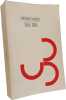
Bon Etat intérieur propre
Order into Action. How Large-Scale Concepts of World-Order determine Practices in the Premodern World
, Brepols, 2022 Hardback, 332 pages, Size:156 x 234 mm, Illustrations:5 b/w, 16 col., Language: English. ISBN 9782503590462.
Summary The construction and application of models that order complex phenomena such as 'the world' is not a 'neutral' activity: theoretical models and ideas help us to perceive and categorize the information conveyed by experience and tradition alike; in turn, they also influence the behaviour and actions of individuals and groups. Collecting a global series of case studies on premodern societies, this volume proposes new approaches to research into premodern models of world-order and their effects. With its focus on the period between c. 1300 and 1600, it seeks to open up fresh perspectives for premodern Global History and the analysis of phenomena of transcultural contact and exchange. Focussing on religious, political, and geographical ideas and models, the contributions explore whether and how large-scale concepts influenced or even determined concrete actions. The examples include socio-religious concepts (Christianity, terra paganorum, d?r al-?arb), political concepts (empire) and geographical notions. A special section is dedicated to comparative insights into societies in Sub-Saharan Africa, Australia, and pre-Columbian America. Taken together, the contributions underline the importance and effects of historically shaped cultural traits in the long term. TABLE OF CONTENTS List of Illustrations, Acknowledgements Introduction: Creating Order and Causing Action ? Klaus Oschema and Christoph Mauntel D?r al-?arb vs terra paganorum: On the Practical Implications of Circumscribing the Sphere of the 'Infidels' ? Daniel G. K nig The Concept of Christendom: Christianitas as a Call to Action ? Nora Berend A 'Medieval Islamist' Versus an 'Arab Machiavelli'? The Legacy of the Mamluk Scholars Ibn Taym?ya (1263-1328) and Ibn Nub?ta (1287-1366) ? Albrecht Fuess The Mongol World-Order: From Universalism to Glocalization ? Michal Biran Between Universal Empire and the Plurality of Kingdoms: On the Practical Influence of Political Concepts in Late Medieval Latin Europe ? Christoph Mauntel and Klaus Oschema Imperial Geography and Fatherly Benevolence: The Chinese World Order and the Construction of its Margins ? Donatella Guida The Advent of the Black Magus: Moving towards a Continental Hierarchy ? Michael Wintle Beyond Eurasia ? the African Contribution to the Pre-Modern World: Examining the Global and the Local in the Kilwa Sultanate, East Africa ? Mark Horton Seeing Through the Rainbow: Aboriginal Australian Concepts of an Ordered Universe ?Veronica Strang Translating Otherworlds: The Encounter of Pre-Columbian and European Cosmologies in Colonial Missionary and Indigenous Texts from Highland Guatemala ? Frauke Sachse *** Index
Eclipse of Empire. Perceptions of the Western Empire and its Rulers in Late-Medieval France,
Turnhout, Brepols, 2007 Hardback, XXIV+415 p., 4 b/w ill. + 4 colour ill., 5 b/w line art, 160 x 240 mm. ISBN 9782503524788.
Through an innovative and wide-ranging exploration this book examines the reality behind the assumption that the idea of a universal ruler became increasingly irrelevant in late-medieval Europe. Focusing on France in the century before the outbreak of the Hundred Years War, it explores attitudes towards the contemporary institution of the western Empire, its rulers, and its place in the world. Historians have tended to assume that there was little place for a universal Empire and its would-be rulers in late-medieval thought. Pointing to the rapid decline in the fortunes of the Empire after the death of the Emperor Frederick II, the rediscovery of Aristotle's Politics by western Europeans, and the growing confidence - and burgeoning bureaucracy - of the kings of France and England, it is often argued that the claims to universal domination of men like the Emperor Henry VII, or indeed of popes like Boniface VIII, were becoming increasingly anachronistic, not to say a little ridiculous. Perceptions of the Empire undoubtedly changed in this period. Yet, whether it was in the cloisters of Saint-Denis, the pamphlets of Pierre Dubois, or even the thought of Charles d'Anjou, the first Angevin king of Sicily, this book argues that the Empire and its ruler still had an important, indeed unique, role to play in a properly ordered Christian society. Languages : English.
"CLAIRAUT, (ALEXIS CLAUDE de). - THE FIRST DIRECT CONFIRMATION OF THE COPERNICAN THEORY.
Reference : 46843
(1740)
De L'Abberation apparente des Etoiles, causée par le mouvement progressif de la Lumière.
(Paris, L'Imprimerie Royale, 1740). 4to. Without wrappers. Extracted from ""Mémoires de l'Academie des Sciences. Année 1737"". Pp. 205-227 a. 2 folded engraved plates.
First appearance of this extremely importent paper in which Clairaut directly confirms the rotation and the orbital movement of the Earth around the Sun, and giving an indirect proof of the axiom, that the velocity of light does not depend on whether the light source moves away or toward the observer. The Earth does move after all !!In 1728 James Bradley, trying to measure the stellar parallax, discovered stellar aberration - the angular displacement of the apparent direction of starlight due to the earth's motion - and attributed it to the combined effect of the finite velocity of light and the earth's orbital velocity. But Bradley had not given any theoretical proof, but Clairaut did in the offered paper.Aberration is ""the apparent change in direction of a source of light caused by an observers component of motion perpendicular to the impinging rays. During this time the telescope has moved a short distance, causing the photons to reach a spot on the focal plane, displayed from the former image position... This discovery provided the first direct physical confirmation of the Copernican theory. A second importent application of aberration has been its clear-cut demonstration that, as is axiomatic to special relativity, light reaching the earth has a velocity unaffected by the relative motion of the source toward or away from earth.""(McGraw-Hill ""Concise Encyclopedia..."").
L'art et les artistes français contemporainsavec unavant-propos sur le Salon de 1876
Charpentier et Cie, Libraires-Editeurs, Paris, 1876. In-12, demi-reliure cuir rouge, dos à faux nerfs avec titre, fleurons et filets dorés, signet, 450 pp. Avant-propos sur le Salon de 1876 - Préface : L'Art moderne. - Médaillons et profils. Jules Dupré. - N. Diaz. - Carolus Duran. - J.-J. Henner. - Paul Baudry. - Edouard Detaille. - B. Ulmann. - Une msison de sculpteurs ...
--- Plus d'informations sur le site archivesdunord.com
Peintres etSculpteurs contemporains
Charpentier et Cie, Libraires-Editeurs, Paris, 1874. In-12, demi-reliure cuir rouge, dos à faux nerfs avec titre, fleurons et filets dorés, signet, 450 pp. Préface de la deuxième édition - Préface de la première édition - Médaillons et portraits : Corot. - Dupré. - Gérome. - Ingres. - Meissonier. - Doré. - Millet. - Diaz. - Préault. - Picot. - Fromentin. - Maurice Sand. ...
Mention de deuxième édition revue et augmentée. --- Plus d'informations sur le site archivesdunord.com
CLAUSIUS, R. (RUDOLF). - A MAIN PAPER ON THE KINETIC THEORY OF GASES.
Reference : 43056
(1858)
Ueber die mittlere Länge der Wege, welche bei der Molecularbewegung gasförmiger Körper von den einzelnen Molecülen zurückgelegt werden" nebst einigen anderen Bemerkungen über die mechanische Wärmetheorie.
Leipzig, Johann Ambrosius Barth, 1858. Contemp. hcalf. 5 raised bands, gilt spine and gilt lettering to spine. A few scratches to spine. Small stamp on verso of first -and general- titlepage. In: ""Annalen der Physik und Chemie. Hrsg. von J.C. Poggendorff"", Vierte Reihe Bd. 15, (=Poggendorff Bd. 105). X,636 pp. and 4 folded lithographed plates. Clausius's paper: pp. 239-258. The entire volume offered. Fine and clean.
First printing of this main paper in the working out of the Kinetic Theory of Gases in which Clausius announced his determination of the equation governing the mean free path lenght of a molecule moving freely in gases. By this he inscribed his name as one of the founders of the Kinetic Theory of Gases.""Clausius was one of the founders of the kinetic theory of gases and of the science of thermodynamics. He and Lord Kelvin at about the same time and independently announced the Second Law of thermodynamics. Clausius particularly developed the theory of thermodynamics by applying it to the study of gases and vapors.""(Magie in ""A Source Book in Physics"", p. 228).""In order to analyze the process (of molecular collisions), Clausius adopted a simplified model for his admittedly complicated molecule. He assumed that whatever the actual patterns on intermolecular forces, one could suppose that there is some advantage distance between the centers of molecules which would represent a general boundary between attractive and repulsive forces. If two molecules were to approach each other within that boundary, repulsion would generally occur. Thus the very complex problem of intermolecular action was reduced to a ""billiard ball"" model."" (DSB III, p. 307-06). - Parkinson, Breakthroughs, C/P 1858.
Ueber die Wärmeleitung gasförmiger Körper.
Leipzig, Johann Ambrosius Barth, 1862. Without wrappers as issued in ""Annalen der Physik und Chemie. Hrsg. von J.C. Poggendorff"", 115. Bd., 1. issue (""Heft"" No 1, 1862). Titlepage to vol. 115. Pp. 1-176 a. 1 folded engraved plate. (The entire issue offereed (""Heft"" 1)). Clausius' paper: pp. 1-56. Some brownspots to right marginon some leaves.
First printing of this importent paper, the seciond of C's papers in the working out of the Kinetic Theory of Gases. In the paper he states that he found an error in Maxwell's theory of gases, an error Maxwell was to admit as far more serious. ""In his initial approach to the conduction of heat in gases, Maxwell drew a brilliant analogy between diffusion (a transfer of mass) and conduction (a transfer of kinetic energy), thereby making it possible to use the form of his diffusion equation to represent conduction, simply replacing the mass of a molecule with its kinetic energy. Clausius critized this adoption of the diffusion equation, because, given the assumptions, mass transfer would accompany the heat conduction and the process would not be one of energy transfer alone. He then offered a revised theory of conduction. ""(DSB III, p. 308).""Clausius was one of the founders of the kinetic theory of gases and of the science of thermodynamics. He and Lord Kelvin at about the same time and independently announced the Second Law of thermodynamics. Clausius particularly developed the theory of thermodynamics by applying it to the study of gases and vapors.""(Magie in ""A Source Book in Physics"", p. 228).
Le maire du palais.
No place, 1771. 124 pp. Small 8vo. Modern boards. Conlon 71:798. First edition. 'Athanase Alexandre Clément de Boissy (1716-1793), conseiller à la Chambre des comptes, érudit, théologien' (Lalanne, Dictionnaire historique de la France, i, p. 540). Discusses political power in relation to contemporary public debates concerning the parlements and the influence of royal advisers.


(NVVA, )
Phone number : 31 20 698 13 75
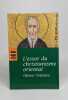
L'essor du christianisme oriental
Ddb 2009 144 pages 14x20 9x1 2cm. 2009. Broché. 144 pages.
Comme neuf
Hermes Christianus The Intermingling of Hermetic Piety and Christian Thought,
Turnhout, Brepols, 2012 Hardback, XII+306 pages., 156 x 234 mm. ISBN 9782503529608.
This new study concerns a form of Christian esotericism that attempted to reconcile Christianity with a late antique model of devotion. Hermetic theosophy, originally an offspring of Egyptian religion, spread throughout the ancient world from the Hellenistic age onwards and was welcomed by Christianity in Late Antiquity. Cultivated people in a Christian milieu were convinced that Hermetic piety and religion were the preparation, expressed by heathen imagery, of their own faith: Hermes, a wise and pious philosopher in Egypt in the time of Moses, received (so it was thought) the same revelation which would be manifested 1,000 years later by Christ. At the end of the third century AD, this belief did not perish with the end of the Roman Empire; rather, it was taken up and explored during the French Renaissance of the twelfth century. In the fifteenth century, Italian humanism, supported by the rediscovery of Greek language and literature, promoted a fresh new evaluation of the ancient Hermetic texts which continued to be considered and studied as pre-Christian documents. In the sixteenth century, new interpretations of Christian Hermetism were explored until this connection between pagan and Christian was increasingly criticized by scholars who argued that Hermetism was neither as ancient as was thought nor as close to Christianity. The theory was abandoned in scientific milieux from the seventeenth century onwards, whereas Hermetic theosophy, on the contrary, survived in esoteric circles. Languages : English, Latin.
Structure du langage poétique. Collection : Champs, Champ linguistique, N° 30.
Paris, Flammarion/Champs, 1978. 11 x 18, 221 pp., 11 tableaux, broché, très bon état.
Théorie de la dialectique.
Age d'Homme Raison Dialectique 1993 L'Age d'Homme, Coll. Raison Dialectique, 1993, 394 p., broché, bon état.
Merci de nous contacter à l'avance si vous souhaitez consulter une référence au sein de notre librairie.
"Signification de la musique. Collection : Savoir, N° 1; Bibliothèque de problèmes scientifiques et culturels d'actualité."
Bruxelles, les Editions Lumière, 1944. 14 x 22, 71 pp., broché, bon état.

