 Write to the booksellers
-
Type
Book (2395)
Magazine (9)
-
Latest
Last 24h (1)
Last 3 days (1)
Last month (13)
Last week (3)
-
Language
English (1)
French (2402)
Italian (1)
-
Century
16th (1)
17th (5)
18th (85)
19th (515)
20th (970)
21st (134)
-
Countries
Belgium (421)
Côte d'Ivoire (4)
Denmark (630)
France (1138)
Netherlands (1)
Switzerland (210)
-
Syndicate
CLAM (1)
ILAB (1335)
NVVA (19)
SLACES (19)
SLAM (564)
Métiers chaîne à aiguille à bec : technologie et étude des tricots.
La Maille Editions La Maille, 1948 (copyright), 554 p., cartonnage éditeur, un pâle tampon sur la page de garde, quelques frottements d'usage sur le cartonnage, début de fente (1cm) sur un mors, intérieur propre.
Merci de nous contacter à l'avance si vous souhaitez consulter une référence au sein de notre librairie.
Theorie der Bewegung des Wassers in Flüssen und Canälen. Nach den auf Kosten der V. Staaten von Nord-Amerika vorgenommenen Untersuchungen und dem Bericht Humphrey's und Abbot's über die physischen und hydraulischen Verhältnisse des Mississippi-Strom...
München, Lindauer'sche Buchhandlung, 1867. 4to. a. folio. Textvol. in contemp. hcalf. Gilt spine. Titlelabel with gilt lettering. Atlas-vol. in orig. printed, clothbacked boards. Stamp on title-page. XX,158,CLXXII pp. Atlas with 18 lithographed plates, diagrams, profiles and with the large (67 x 39 cm.) coloured map of the lower Mississippi basin.
First German edition with additions by Grebenau. It was the most extensive river survey undertaken at that time and the survey was authorized by the Congress after two disastrous years of flooding. Here the authors introduced entirely new formulations to explain riverflow.

"De l'éclairage au gaz; développements sur la composition des gaz destinés à l'éclairage, sur la construction des fournaux et des cheminées, sur la pose des tuyaux, sur les phénomèbes de la lumère, etc."
Paris, Carilian-Goeury et V. Dalmont, 1845. "13 x 22, 387 pp., 9 planches dépliantes complètes, reliure dos cuir, état moyen (reliure usagée; rousseurs; papier vieilli)."
Edition originale.
Manuel du serrurier à l'usage des écoles professionnelles et des ouvriers.
Paris, Librairie Garnier Frères, 1938. 12 x 18, viii-364 pages, 126 figures, reliure d'édition pleine toile, bon état.
First Latin Treatise on Ptolemy's Astronomy: The Almagesti minor (c. 1200), H. Zepeda
, Brepols - Harvey Miller, 2018 Hardback, X+662 p., 136 b/w ill., 12 b/w tables, 178 x 254 mm, Languages: English, Latin.*new ISBN 9782503581378.
This volume presents a critical edition, translation, and study of one of the most important works of medieval science, the Almagesti minor, the earliest Latin commentary on Ptolemy?s Almagest. This summary of the first half of the Almagest incorporated the astronomy of Islamic astronomers and altered Ptolemy?s work to make it accord with the author?s scientific ideals. The Almagesti minor had a profound effect upon astronomical writings throughout the 13th-15th centuries, including the work of Georg Peurbach, Johannes Regiomontanus, and many others. The Almagesti minor is one of the most important works of medieval astronomy. Probably written in northern France circa 1200, it is a Latin summary of the first six books of Ptolemy?s astronomical masterpiece, the Almagest. Also known to modern scholars as the ?Almagestum parvum?, the Almagesti minor provides a clear example of how a medieval scholar understood Ptolemy?s authoritative writing on cosmology, spherical astronomy, solar theory, lunar theory, and eclipses. The author incorporated the findings of astronomers of the Islamic world, such as al-Batt?n?, into the framework of Ptolemaic astronomy, and he altered the format and style of Ptolemy?s astronomy in order to make it accord with his own ideals of a mathematical science, which were primarily derived from Euclid?s Elements. The Almagesti minor had a profound effect upon astronomical writing throughout the 13th-15th centuries, including the work of Georg Peurbach and Johannes Regiomontanus. In this first volume of the Ptolemaeus Arabus et Latinus text series, Henry Zepeda offers not only a critical edition of this little-studied text, but also a translation into English, analysis of both the text and its geometrical figures, and a thorough study of the work?s origins, sources, and long-lasting influence. Henry Zepeda is a historian of science. He is a Teaching Fellow at Wyoming Catholic College, and he previously worked in the Ptolemaeus Arabus et Latinus project at the Bavarian Academy of Sciences and Humanities. His research is focused upon medieval mathematics and astronomy of the 12th to 15th centuries.
Tonjagd - klipp und klar! Lehrbuch der Tonaufnahme- und wiedergabe- praxis für Tonjäger, Ton-, Dia- und Filmamateure.
Winterthur, Gemsberg, 1959. quer-8°. 118 S. zahlr. Abb nach Zeichng. von Otto Schmid.. illustr. O-Pp.
Corps, langage, technologie
Les 400 coups Dos carré collé 2005 In-8 (13,5 x 23 cm), dos carré collé, 210 pages ; très bon état. Livraison a domicile (La Poste) ou en Mondial Relay sur simple demande.

Selverhverv, med flere tusinde praktiske Meddelelser til saavel med, som uden Formue, at kunne tilberede større og mindre Handelsartikler, og derved danne sig en eller anden borgerlig Stilling eller skaffe sig de nødvendige udkomme. Samlingen kan till...
Kjøbenhavn, Hauberg & Comp., 1886. Samt. hldrbd. Ryg med brugsspor. 8o4,,X pp. Første og sidste blade brunplettede.
"Manuel de l'ingénieur (3 volumes); nouvelle édition française du manuel de la ""Société Académique Hütte""; tome troisième : 1ere partie; 2e partie; 3e partie."
Paris/Liège, Librairie polytechnique Ch. Béranger, 1953. 13 x 19, 1435 pages (pagination continue), 2086 figures, reliure d'édition pleine percaline rouge, tranches rougies, très bon état.
"Traduit sur la 27e édition allemande; tome troisième en 3 volumes."
Manuel de l'ingénieur. Nouvelle édition française du Manuel de la "Société Hütte" traduit de la 24e édition allemande - tome deuxième
Ch. béranger 1926 in12. 1926. Cartonné.
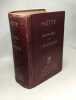

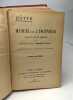
couverture frottée intérieur propre charnières un peu fragiles
"Manuel de l'ingénieur; tome premier; nouvelle édition française du manuel de la ""Société Hütte""."
Paris/Liège, Librairie polytechnique Ch. Béranger, 1926. 13 x 19, 1413 pp., 560 figures, reliure d'édition pleine percaline bordeaux, tête rougie, bon état.
Traduit sur la 24e édition allemande.
Manuel de l'ingénieur - TOME PREMIER + TOME SECOND
Ch. béranger 1911 in12. 1911. Cartonné. 2 volume(s).
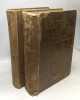
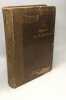
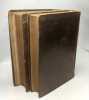
Etat correct couvertures frottées garniture des charnières du tome 1 fendues intérieurs propres
Rural World in the Sixteenth Century. Exploring the Archaeology of Innovation in Europe
, Brepols, 2022 Hardback, 225 pages, Size:156 x 234 mm, Illustrations:59 b/w, 17 col., 23 tables b/w., Language: English. ISBN 9782503597058.
Summary The sixteenth century in Europe was a time of profound change, the threshold between the 'medieval' and the 'modern', as new technologies were introduced, distant lands explored, oceanic trade routes opened, and innovative ideas pursued in fields as varied as politics, science, philosophy, law, and religion. But sweeping transformations also occurred in the rural world, profoundly altering the countryside in both appearance and practices. Crucially for historians, there is abundant documentary evidence for these changes but, while they are less well-documented, their impact can also be traced archaeologically. This cutting-edge volume is the first to explore the archaeology of the rural world across the 'long' sixteenth century and to investigate the changing innovations that were seen in landscape, technology, agriculture, and husbandry during this period. Drawing together contributions from across Europe, and from a range of archaeological disciplines, including zooarchaeology, archaeobotany, landscape archaeology, material culture studies, and technology, this collection of essays sheds new light on a key period of innovation that was a significant precursor to modern economies and societies. TABLE OF CONTENTS Introduction: The Rural World in the 16th Century ? IDOIA GRAU-SOLOGESTOA AND UMBERTO ALBARELLA Changes in Rural Milieu and Land Use on Estates in Southern Bohemia during the 16th Century ? LADISLAV ?APEK Landscape and Settlement Evolution during the 16th Century. A Multidisciplinary Study of Two Mountain Areas (Eastern France) ? VALENTIN CHEVASSU, EMILIE GAUTHIER, PIERRE NOUVEL, VINCENT BICHET, HERV RICHARD AND ISABELLE JOUFFROY-BAPICOT Impact of Subsistence on Medieval and Early Modern History Land Use in the Bohemian-Moravian Highlands ? JANA MAZ ?KOV AND PETR ?A?A Livestock Improvement and Landscape Enclosure in Late and Post-Medieval Buckinghamshire, England ? TAMSYN FRASER Improvements in Animal Husbandry between the End of the Middle Ages and the Early Modern Era in England and the Basque Country: A Zooarchaeological Comparison ? IDOIA GRAU-SOLOGESTOA AND UMBERTO ALBARELLA Innovation: Turning Something Old into Something New. Vicia faba var. major ? ANNA MARIA GRASSO, SILVIA D'AQUINO, ELIGIO VACCA, MARCO NICOLI, MILENA PRIMAVERA, GIROLAMO FIORENTINO Changes in Rural Textile Craft in 16th-17th Century in the Eastern Baltic Region (Estonian Example) ? RIINA RAMMO Iron and Steel Implements - Increased Diversification during the Early Modern Era in Sweden ? CATARINA KARLSSON
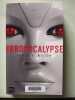
Robopocalypse
FLEUVE EDITIONS 2012 438 pages 22 6x3 6x14cm. 2012. Broché. 438 pages. Un éminent scientifique crée une intelligence artificielle nommée Archos qui dépasse toutes les attentes et déclenche l'apocalypse en prenant le contrôle des machines. L'humanité est détruite par ces robots devenus hors de contrôle et les rares survivants doivent faire preuve de résilience et d'ingéniosité pour échapper à ces machines en qui ils avaient une totale confiance
Bom estado
Amateur Telescope Making. Foreword by Harlow Shapley. 2 vols.
N.Y., 1959. 2 orig. full cloth. XII,510650 pp. Richly textillustrated.
Die chemische technologie des bleichens von textilen fasern
Veb verlag technik Berlin 1954 in8. 1954. Reliure editeur.
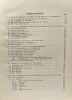

Très Bon Etat de conservation intérieur frais
"Académie des sciences; annuaire pour 1959. "
Paris, Gauthier-Villars, 1959. 11 x 17, 249 pp., broché, bon état.
Journée d'études sur la qualité des produits alilmentaires
CNRA, Versailles. 1964. In-4. Broché. Bon état, Couv. convenable, Dos satisfaisant, Intérieur frais. 111p.. . . . Classification Dewey : 664-Technologie des aliments
CNRA de Versailles, le 19 mars 1964 : réactions des consommateurs à propos de la qualité des produits alimentaires. Classification Dewey : 664-Technologie des aliments
MARINE ENGINES - 286 illustrations
Scranton International Textbook Company 1925 in-8 oblong demi-percale un volume, reliure demi-percale éditeur rouge (red boards) in-8 (15,6 x 23,4 cm), dos long avec titre frappé or (or passé), percale verte aux plats, texte en anglais, orné de nombreuses illustrations et photographies in et hors-texte en noir, (VII + 66) + 65 + 46 + 50 + 54 + 55 + 44 + 36 + 48 + 33 + 47 + 60 + 73 + (XXIII index) pages, 1925 Scranton International Textbook Company Publishers,
comprend : Screw-Propeller Engines, Paddle-Wheel Engines, Marine-Engine Indicating, Engine Testing, Marine Slide-Valve Gears, Marine Condensers, Multiple -Expansions marine-Engines, Marine-Engine Management, Marine-Engine Repairs, Auxiliairy Marine Machinery, Marine Pumps.......bel exemplaire....en bon état (good condition). bon état
Military Balance 1988-1989
Intl Inst of Strategic Studies 1989 18 6x1 6x24 4cm. 1989. Broché.
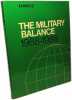

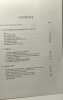
Très Bon Etat de conservation intérieur propre bonne tenue avec une carte séparée
Formulaire pratique à l'usage des mécaniciens et outilleurs
Edité par l'auteur 1957 Cartonnage rigide éditeur - 139 pages Bon état général - Couverture frottée 146 g


Tournage sur bois
Eyrolles. 1999. In-4. Relié. Bon état, Couv. convenable, Dos fané, Intérieur frais. 128 pages augmentées de nombreuses illustrations en couleurs dans et hors texte.. . . . Classification Dewey : 674-Technologie du bois et du liège

Classification Dewey : 674-Technologie du bois et du liège
Isaacson Walter Constantine Lemmy Defert Dominique Delporte Carole
Reference : 500064840
ISBN : 9782356414427
Steve Jobs lu par Lemmy Constantine (2 CD MP3): Livre audio 2 CD MP3
Audiolib 13 8x1 2x18 8cm. Sans date. audioCD.



Bon état
Les matériaux constitutifs de l'apparaillage chimique leur résistance à la corrosion
Ch. Béranger 1934 in8. 1934. Broché.
couverture frottée défraîchie intérieur propre

