 Write to the booksellers
-
Type
Book (2395)
Magazine (9)
-
Latest
Last 24h (1)
Last 3 days (1)
Last month (13)
Last week (3)
-
Language
English (1)
French (2402)
Italian (1)
-
Century
16th (1)
17th (5)
18th (85)
19th (515)
20th (970)
21st (134)
-
Countries
Belgium (421)
Côte d'Ivoire (4)
Denmark (630)
France (1138)
Netherlands (1)
Switzerland (210)
-
Syndicate
CLAM (1)
ILAB (1335)
NVVA (19)
SLACES (19)
SLAM (564)
Om de engelske Veie.
Kjøbenhavn, Seidelin, 1828. Samt. hldrbd. med rygforgyldning. Stempler på titelbladet og en papirsetiket påsat øverst på ryg. XVI,144 pp. Stort eksemplar på skrivepapir, ren og frisk.
Første danske udgave af disse 2 klassikere om vejanlæg og konstruktion. Indeholdende McAdams ""Bemærkninger om Maaden at lægge Veie."" (Originalens titel: ""Remarks on the Present System of Road Making."" samt Patersons ""Om offentlige Veies Anlæg og Vedligeholdelse, samt Undersøgelser angaaende MacAdams System for Vejlægning, saa og Brugen af brede Hjul.""). Heraf begrebet ""Macadamisering"", en teknik, som anvendes den dag idag. - The first Danish edition (as offered here) of McAdams work is a translation of the 8th edition, London 1824.

Construisez votre chauffage solaire - Un guide completsur le chauffage solaire à eau
Editions Techniques et Scientifiques Françaises 1983 Broché - Couverture glacée photo éditeur - 255 pages Bon état - Coiffes petites accrocs - 4e plat corné - pages de garde avant et arrière traces d'adhésif 374 g

pour les nuls
Sybex 1996 1996. Broché.
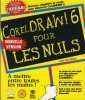
Très bon état - légères marques de lecture et/ou de stockage mais du reste en très bon état- expédié soigneusement depuis la France
Error-Correcting Codes - A Linear Programming Approach.
New York, American Telephone and Telegraph Company, 1959. 8vo. In the original printed blue wrappers. In ""The Bell System Technical Journal"", Volume XXXVIII, November, Number 6, 1959. Entire issue offered. Light miscolouring to spine. A fine fine and clean copy. Pp. 1485-1512. [Entire issue: 1337-1601 pp.].
First appearance of Mccluskey's paper on his linear programming approach to error-correting codes. Edward J. McCluskey is a pioneer in the field of Electrical Engineering and served as the first President of the IEEE Computer Society. He is famous for the Quine-McCluskey algorithm.
Technique, mot et image. Le "De re metallica" d'Agricola,
Turnhout, Brepols, 2006 Hardback, 520 p., 57 b/w ill., 155 x 240 mm. ISBN 9782503523651.
Creer un langage technique: tel fut le defi a relever par Agricola, un medecin et humaniste saxon de la Renaissance, lorsqu'il voulut rediger le premier traite technique complet concernant la metallurgie extractive, activite qui faisait alors la richesse de l'Etat saxon. En effet, on ne peut rediger un texte technique sans utiliser un langage technique. Cette etude nous fait decouvrir les methodes linguistiques et iconographiques forgees par Agricola pour son De re metallica, un ouvrage qu'utiliserent les exploitants miniers a travers toute l'Europe jusqu'a la Revolution industrielle. Languages : French, Latin.
Engineering and Engineers. Proceedings of the XXth International Congress of History of Science (Liege, 20-26 July 1997) Vol. XVII,
Turnhout, Brepols, 2002 Paperback, 196 p., 155 x 240 mm. ISBN 9782503514093.
Languages : English, French.
Snowdomes: The Essential Founding Father
Abbeville Press Inc. U.S 1990 96 pages 23 65x1 45x23 7cm. 1990. Relié. 96 pages.

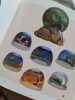

Bon état
Scientific Instruments and Museums. Proceedings of the XXth International Congress of History of Science (Liege, 20-26 July 1997) Vol. XVI,
Turnhout, Brepols, 2002 Paperback, 338 p., 155 x 240 mm. ISBN 9782503513690.
The present volume is organised around two symposia of the XXth International Congress of History of Science, respectively devoted to the history of sundials and to the national inventories of scientific instruments. Separate studies on outstanding instruments, instrument-makers, as well as unknown museums and collections in Spain, Italy, Estonia, and Latin-America were also included. Languages : English, French.
Routine de l'établissement des voûtes ou recueil de formules pratiques et de tables déterminant à priori et d'une manière élémentaire le tracé les dimensions d'équilibre et le métrage des voûtes d'u
Dunod / Paris 1865 in8. 1865. Broché. Routine de l'établissement des voûtes ou recueil de formules pratiques et de tables déterminant à priori et d'une manière élémentaire le tracé les dimensions d'équilibre et le métrage des voûtes d'une espèce quelconque - Nouvelle édition /// document dépliant en noir et blanc in-fine
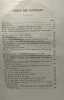
couverture salie scotch sur le dos et le premier plat dos fendu tranche ternie fanée intérieur taché de rousseurse
Traité raisonné de la distillation réduite en principe - Nouvelle édition, revue corrigée et beaucoup augmentée - Tome premier seul
Chez Moutardier. 1801. In-12. Relié plein cuir. Etat d'usage, Coins frottés, Dos frotté, Quelques rousseurs. IX + 293 pages. Contreplats jaspés. Plats légèrement frottés. Quelques épidermures. Léger manque en coiffe de tête. Pièce de titre manquante. Motifs dorés passés.. . . . Classification Dewey : 663-Technologie des boissons
Classification Dewey : 663-Technologie des boissons

Der Bromöldruck. Ausführliches Handbuch für den ein-und mehrfarbigen Bromöldruck, sowie für das Undruckverfahren auf Papier, Metall und Stein.
Berlin, Union Deutsche Verlagsgesellschaft, 1914. Orig. boards. Back and frontcover with spots. Internally clean a. fine. VIII,206 pp., 16 plates a. 22 textillustr.
First edition.
Prescriptions et recommandations pour installations électrique en Belgique.
Bruxelles, Editions Erasme, 1948. 16 x 24, 207 pp., 66 figures, broché, bon état (couverture défraîchie 1 cachet d'ex-propriétaire).
Eisen und Eisenkonstruktionen in geschichtlicher, hüttentechnischer und technologischer Beziehung. Mit etwa 650 Illustrationen im Text.
Berlin, Ernst Toeche, 1887. Contemp. hcalf. Gilt spine with gilt lettering. A paperlabel pasted on upper part of spine. Stamp. on title-page. XX,398 pp., profusely textillustrated. Internally clean and fine.
(Handbuch der Baukunde, Abth. I, Bd. II, Heft 1).
Der deutsche Brückenbau im XIX. Jahrhundert
Couverture rigide Julius Springer 1900 Berlin 39,5x27,5 cm
Reliure d'éditeur demi-cuir vert à coins avec titre en noir, titre doré au dos - 134 pp. Taches sur le premier plat; traces d'usure sur la reliure, sinon intérieur très frais. Denkschrift bei Gelegenheit der Weltaustellung des Jahres 1900 in Paris.
Technologisches Handwörterbuch zur Erläuterung der bey den Künstlern und Handwerkern zur Bezeichnung ihrer Arbeiten und Werkzeuge gebräuchlichen Kunstausdrücke. Für den Hausbedarf und zum Gebrauch in Industrie- und Werkschulen
Leipzig, Brockhaus, 1818. Contemp. half calf. Gilt spine with gilt lettering. A paperlabel pasted on lower part of spine. Stamp on title-page. VIII,308 pp. A few brownspots on the first leaves.
Artilleristisches Taschen-Buch zunächst für Avancirte und ältere Kanoniere zu deren Selbstbelehrung. Nach den neuesten Bestimmungen bearbeitet. Nebst einer Zeichnung und vier Tabellen.
Magdeburg, Ferdinand Rubach, 1834. Small8vo. Contemp. hcalf. Richly gilt spine. A paperlabel pasted on lower part of spine. Stamps on titlepage. IV,(2),492 pp., 2 folded tables and 1 folded engraved plate. First and last leaves a little brownspotted.
Die Civilbaukunst zu Kriegszwecken für Ingenieure oder Leitfaden zu Vorlesungen für angehende Architekten.
Berlin, Maurerschen Buchhandlung, 1819. Contemp. hcalf. Gilt spine, titlelabel with gilt lettering, spine slightly rubbed. A paperlabel pasted on upper part of spine. Stamps on title-page. XIV,(2),564 pp.
Anfangsgründe der Feldmesskunst. Mit fünf schwarzen und einer illuminirten Kupfertafel.
Halle, Rengerschen Buchhandlung, 1794. Contemp. hcalf. Richly gilt spine. Titlelabel with gilt lettering. A paperlabel pasted on upper part of spine. Light wear to head of spine.Stamp on title-page. (12),422,(12-Tabellen) pp., 5 folded engraved plates and 1 large folded engraved plate, handcoloured, showing 48 different signatures (Oeconomische Chartencharactere). Light marginal browning.
First edition. - Poggendorff II,103.
Die Heitzung mir erwärmter Luft, erfunden, systematisch bearbeitet und als das wohlfeilste, bequemste, der Gesundheit zuträglichste, und zugleich die feuergefahr am meisten entfernende Mittel zur Erwarmung der Gebäude aller Art. Dritte, sehr vermehrte...
Wien, Carl Gerold, 1827. Contemp. hcalf. Gilt spine. Titlelabel with gilt lettering. A paperlabel pasted on upper part of spine. Stamps on title-page. XII,318 pp., 3 folded tables and 22 large folded engraved plates. A few scattered brownspots.
Poggendorff II, 106.
Dictionnaire industriel à l'usage de tout le monde ou les 100 000 secrets et recettes de l'industrie moderne
Eugène Lacroix Imprimeur-Éditeur Sans date.
Etat correct
Aluminium. Die leichtmetalle und ihre Legierungen. Im Auftrage der Deutschen Gesellschaft für Metallkunde. Mit 82 Abbildungen und 43 Zahlentafeln.
Berlin, VDI-Verlag, 1929. Orig. full cloth., gilt. Stamp on titlepage. X,280 pp.
O soprotivlenij schidkostey i o vuzduchoplavani. [On the Resistance of Liquids and Air flying/ About Liquids Resistance and Aeronautics]. - [THE BASIS OF RUSSIAN AERONAUTICS]
S.-Peterburg, 1880. 8vo. Contemporary half calf. Capitals and corners with wear. Some crayon-underlinings and some brownspotting. (2),160" 80 pp + 12 folded plates.
![O soprotivlenij schidkostey i o vuzduchoplavani. [On the Resistance of Liquids and Air flying/ About Liquids Resistance and Aeronautics]. - [THE BASIS ...](https://static.livre-rare-book.com/pictures/LLX/49439_1_thumb.jpg)
![O soprotivlenij schidkostey i o vuzduchoplavani. [On the Resistance of Liquids and Air flying/ About Liquids Resistance and Aeronautics]. - [THE BASIS ...](https://static.livre-rare-book.com/pictures/LLX/49439_2_thumb.jpg)
Scarce first edition of this fundamental guide of aeronautics, which constitutes one of the most important works in aviation history. The work formed the basis for Russian aeronautics, influencing the likes of Tsiolkovsky. The great Russian chemist D.I. Mendeleev suspected that, in the highest levels of the Earth atmosphere, the Ether might exist at natural vacuum. It is this thought that sparks his growing interest in meteorology and aeronautics, which begins to take form in the 1870'ies. For Mendeleev aerodynamics and aeromechanics was inseparably linked to hydrodynamics and hydromechanics, and also to the theory of shipbuilding. He viewed these as belonging to one general problem, which he called media resistance and which he summarized and described in detail in his important work ""On the Resistance of Liquids and Air flying""/"" About Liquids Resistance and Aeronautics"", 1880 [i.e. the present work]. A great part of the work is dedicated to the questions of hydrodynamic theory and contains important analyses of the development of liquids resistance theory from Newton till Froud. Pinpointing the weakest points of the hitherto most important theories, he concluded that even the most important scientists were not able to understand the not examined resistance and thus that theoretical studies alone will not be able to resolve the issue, but require conjoint regular tests of models in hydrodynamic laboratories. Thus, Mendeleev initiated a new school, namely that of experimental hydrodynamics of ships, and the present work became one of the fundamental guides for work in shipbuilding, aeronautics, airplane construction, and ballistics. It greatly influenced the likes of Tsiolkovsky and Zhukovsky and thus formed the basis of Russian aeronautics. It is in the present work that Mendeleev first describes his famous aerostat, the first attempt by Russian. His aerostat was supposed to be able to reach the stratosphere, but the project was never realized. His interest in aerostatics, however, as presented in the present work, led to his famous baloon ride in 1887, to watch the full solar eclipse.""The earliest attempts to establish the theoretical possibility of air flight were made by Leonardo da Vinci, whose observations of bird flight inspired him to conceive the ideas of flying on heavier-than-air machines, of the helicopter, and of the parachute. But credit for the further development of his theoretical ideas and their realization belongs to the Russians... A large contribution to the development of aviation was made by D.I. Mendeleev, who conceived of a stratospheric balloon and devised plans for its construction in 1875. The first foreigner to construct a stratospheric balloon was Picard in 1931. In 1887, Mendeleev ascended 3,350 meters in the balloon to observe a solar eclipse. Mendeleev defined the future significance of aviation with great foresight. His ""On the Resistance of Liquids and Aeronautics"" (1880) served as one of the fundamental guides for work in shipbuilding, aeronautics, airplane construction, and ballistics."" (Geldern & Stites edt.: Mass Culture in Soviet Russia, p. 480).
Manuel pratique de soudage à l'arc.
Paris, Dunod, 1976. 15 x 21, 212 pp., nombreuses figures, broché, bon état.
Manuel pratique de soudage à l'arc - 5e édition
Dunod 1967 in12. 1967. Broché.
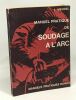
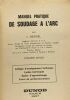
Bon état cependant couverture défraîchie intérieur propre
L'affûtage des outils à bois et dérivés
H. Vial. 1978. In-4. Broché. Bon état, Couv. convenable, Dos satisfaisant, Intérieur frais. 104 pages - nombreux schémas, illustrations et photos en noir et blanc dans et hors texte. Ex dono à l'encre en page de titre.. . . . Classification Dewey : 674-Technologie du bois et du liège
Classification Dewey : 674-Technologie du bois et du liège

