 Write to the booksellers
-
Type
Autograph (1)
Book (1631)
Magazine (2)
-
Latest
Last month (24)
Last week (5)
-
Century
17th (1)
18th (3)
19th (47)
20th (488)
21st (50)
-
Countries
Belgium (1171)
Canada (4)
Côte d'Ivoire (3)
France (183)
Switzerland (273)
-
Syndicate
ALAC (4)
CNE (1)
ILAB (60)
NVVA (2)
SLACES (2)
SLAM (34)
Herbert von Karajan. Collection : Têtes d'affiche.
Paris, Editions PAC, 1978. 15 x 20, 259 pp., nombreuses illustrations en N/B, broché, couverture à rabats, très bon état.
Der Cantor Heinrich Grimm (1593-1637) Sein Leben und seine Werke mit Beiträgen zur Musikgeschichte Magdeburgs und Braunschweigs
Hamburg, 1940 93pp., 23cm., text in German, Doctoral dissertation (Dissertation zur Erlangung des Doktorgrades der Philosophischen Fakultät der Hänsischen Universität Hamburg), stamp at verso of title page, small label on cover, text is clean and bright, good condition, M109030
Opéra-comique in the Eighteenth and Nineteenth Centuries
, Brepols - Harvey Miller, 2011 hardcover, Pages: 394 pages, Size:210 x 270 mm, Language(s):English, French. *new. ISBN 9782503527819.
The subject of this book, edited by Lorenzo Frassà, is the Opéra-comique as an art form, compositional genre, institution and production process. The volume will consist of a close examination of the genre of the Opéra-comique and the great masterpieces and artists who have sustained this form of musical theatre and prevented it from falling into oblivion. The freedom given to authors in selecting the subject of their contribution has made it possible to bring together subjects that appear disparate, but which are in fact complementary and indispensable to all who wish to investigate the Opéra-comique?s varying facets, and also receive a comprehensive overview. The collection of essays encompasses the heterogeneous world of institutions, traditions, works and composers that can be assimilated into the frame of ?Opéra-comique?. TABLE OF CONTENTS Preface Olivier Bara, Influence et détournement du mélodrame dans le livret d?opéra-comique, des lendemains de la Révolution à la Restauration ? Jean-Christophe Branger, 'Le Portrait de Manon' de Massenet ou les miroirs du passé ? David Charlton, Sight Meets Sound: Fifty Years of Musical Scenography at the Opéra-Comique ? Alexandre Dratwicki, 'Zampa' ou l?opéra-comique selon Hérold? ? Mark Everist, Between Opéra-Comique and Opéra-National: Scribe, Vaëz and Boisselot c1850 ? Vincent Giroud, Gounod and 'opéra-comique' ? Arnold Jacobshagen, A National Genre in an International Context: 'Opéra-comique' in Nineteenth-Century Europe ? Hervé Lacombe, L?opéra-comique au xixe siècle: Un genre défini par sa législation ? Raphaëlle Legrand, Rameau parodié dans les opéras-comiques: la notion d?auteur au risque du vaudeville ? Jean-Sébastien Macke, Représenter le réel à l?opéra: artifices naturalistes Alfred Bruneau et Emile Zola (1891-1893) ? Michela Niccolai, Albert Carré et le projet du théâtre lyrique populaire (1904) ? Danièle Pistone, Contribution a la titrologie scenique parisienne: les appellations génériques au théâtre de l?Opéra-Comique de 1762 à 1972 ? Bertrand Porot, Aux origines de l?opéra-comique: étude musicale du 'Théâtre de la Foire' de Lesage et d?Orneval (1713-1734) ? Laure Schnapper, Opéra-comique et variations pianistiques en France sous la Monarchie de juillet ? Lesley A. Wright, The Directors of the Opéra-Comique (1870-1900): Responsibility and Opportunity
Albert Lortzing.
Zürich, Orell, Füssli und Comp., 1869. Gr.-8°. 18 S. Mit einem lithogr. Porträt von J. Lier nach C. Scheuchzer. Orig.-Broschur. = "57. Neujahrsblatt (Neujahrsgeschenk an die Zürcherische Jugend sic.) von der allgemeinen Musik-Gesellschaft in Zürich auf das Jahr 1869".
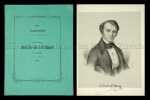
Rohr 881. - Mit hübschem Portrait von Albert Lortzing. - Papier etwas gebräunt.

Ouvertures à la française : migrations musicales dans l'espace germanique, 1660-1730
, Brepols, 2020 Paperback, 349 pages, Size:190 x 290 mm, Illustrations:21 b/w, 31 tables b/w., 2 maps b/w, 13 musical examples, Language: French. ISBN 9782503588582.
Summary « Une musique indéchiffrable pour toute autre nation. » Depuis Rousseau, la musique française d'Ancien Régime est vue comme une étrange exception culturelle dans une Europe baroque tout acquise à la musique italienne. Les nombreux exemples d'acclimatation du style français dans l'espace germanique entre 1660 et 1730 - de Johann Sigismund Cousser à Johann Sebastian Bach en passant par Georg Muffat et Georg Philipp Telemann - nous invitent cependant à ouvrir les yeux sur un phénomène trop longtemps méconnu. La migration de nombreux musiciens français dans l'Empire, leur engagement dans de prestigieuses chapelles ducales et princières, la circulation de sources musicales manuscrites et imprimées, sont autant de phénomènes essentiels que ce livre aborde pour la première fois de façon conjointe et approfondie. À la croisée de l'histoire des migrations, de l'anthropologie historique et de la musicologie, il emprunte les routes parcourues par la musique et les musiciens français, déploie leur destin et reconstruit leur vie quotidienne dans ce nouvel environnement. L'ouvrage s'organise en cinq grands chapitres consacrés à l'Europe galante comme marché du travail, à l'administration de la musique française, aux carrières et aux mobilités des musiciens, à la circulation des sources musicales, et à l'invention allemande du style français. TABLE OF CONTENTS Introduction Chapitre 1. L'Europe galante comme marché du travail Chapitre 2. Administrer la musique française Chapitre 3. Frantzösische Musicanten : une biographie collective Chapitre 4. La dissémination de la musique Chapitre 5. L'invention allemande du style français Conclusion. L'année 1733 comme terminus Sources imprimées Bibliographie Index nominum
LOUYS DE MOY (JAPE Mijndert, introd. & SCHREURS Eugeen, ed.)
Reference : M95099
(1987)
Louys de Moy ; Le Petit Boucquet, Pour toucher du luth join deux violes de gambas par-my les vois
Peer, Alamire 1987 22pp. (introduction in English) + [135] pp. facsimile-edition of the original 1631-edition ; "Le Petit Boucquet, de frise orientale contenant quelques chansonnettes musicales, pour toucher du luth join deux violes de gambas par-my les vois ; et autres padvanes pour le luth & violons communs avec diverses pieces faciles pour toucher du luth seul", publisher's hardcover, 25cm., good condition, M95099
Die Improvisation im Klavierwerk L. van Beethovens
Saarbrücken, 1962 175pp., with some music examples in text, 21cm., softcover, text in German, Doctoral dissertation (Inaugural-Dissertation zur Erlangung des akademischen Grades eines Doktors der Philosophie der Philosophischen Fakultät der Universität des Saarlandes), stamp at verso of title page, text is clean and bright, good condition, M108984
Luc Bérimont & Marie-Hélène Fraïssé. Louis-Jean Calvet. Guy Millière. Cécile Barthélémy. Alain Dran & Philippe Soupault.
Reference : 84196
(1973)
Réunion de 5 titres de la collection "Poésie et Chansons" : Jacques Douai. Joan Pau Verdier. Gilles Servat. Lény Escudéro. Héléne Martin.
Paris Seghers, 1973-1976, in-12 broché, 215p. Bon état. Introduction - Chanson - Discographie - Illustrations.


Musiques et musiciens des fêtes urbaines et villageoises en France (XIVe - XVIIIe siècle)
, Brepols, 2024 Hardback, 1064 pages, Size:190 x 290 mm, Illustrations:39 b/w, 135 col., 58 tables b/w., 1 tables col., 2 maps color, Language: French. ISBN 9782503611891.
Summary Si les premières traces de ritualisation musicale (noces, banquets?) remontent au début du xiiie siècle avec les jongleurs, ce n'est vraiment qu'à partir du siècle suivant que les ménétriers ou joueurs d'instruments sont chargés de la représentation des pouvoirs et de l'animation de la vie sociale dans sa totalité (fêtes politiques et religieuses, de métiers, calendaires, votives, familiales, etc.) et qu'ils se regroupent en confréries ou corporations. S'appuyant sur son « terrain » toulousain premier ainsi que sur le dépouillement systématique de deux siècles de littérature sur les ménétriers des provinces françaises et sur la collaboration de certains chercheurs en régions, l'auteur propose une nouvelle réflexion d'ampleur sur le personnage historique du ménétrier (plus de trois mille musiciens recensés), son genre, son statut social (poids de la marginalité musicienne des aveugles, mendiants, concurrence des musiciens occasionnels comme les maîtres d'école), sa fonction, sa pratique et ses formes d'organisation. Cette étude d'anthropologie musicale historique est doublée d'une approche territoriale, cette géographie ménétrière étant abordée au niveau des provinces, des villes (notamment des quarante ayant abrité des corporations et confréries ménétrières), des villages et de l'organisation administrative de ce vaste espace de la Ménestrandise (royauté et lieutenances ménétrières). Par ailleurs, cette histoire sensible de l'art des ménétriers est aussi celle de leur rapport aux musiques dites « savantes », d'église, aux cultures musicales autres, comme celle des Bohémiens. À l'aide de nombreuses archives, de tableaux, cartes, documents iconographiques, cet ouvrage dépeint la grande fresque d'une musique historique encore méconnue, malgré sa longévité et sa centralité sociale et sociétale, celle des ménestrels et joueurs d'instruments. TABLE OF CONTENTS Introduction I. Naissance & fonctionnement des institutions ménétrieres II. Éléments pour une géographie ménétrière en france III. Devenir ménétrier IV. Profils sociaux, identités statutaires, genrées et professionnelles V. Jouer ménétrier : instruments, techniques et « beau jeu » VI. La musique des ménétriers, au coeur de la vie sociale et politique VII. La relégation par les interdits, la réprobation morale, l'académisme et l'évolution du goût musical Conclusion Table des cartes et des tableaux Table des illustrations et des crédits photographiques Annexes Bibliographie Index
Padre Martini's Closed and Enigmatic Canons with Solutions by Luigi Cherubini. A 19th-Century Guide into Renaissance Music Riddles
, Brepols, 2024 Hardback, 336 pages, Size:210 x 270 mm, Illustrations:76 b/w, 6 tables b/w., 95 pages of musical scores, Language: English. ISBN 9782503608471.
Summary Every chapter of the three volumes of Giovanni Battista Martini's Storia della Musica begins and ends with an enigmatic canon: 72 puzzle canons, which formed the subject of debate in the 18th and 19th centuries. Luigi Cherubini proposed solutions for all canons, forming a pedagogical collection designed to reveal the secrets of the enigmatic canons practice to 19th-century musicians. Cherubini explained in detail how each proposed solution was reached. The resolutions are all based on a 'Table of Latin words', a list of enigmatic expressions. For each expression, Cherubini gives an explanation detailing how they must be interpreted in order to find the resolution of the riddles. Practically 56 expressions from Cherubini's 'Table of Latin words' can be identified in Renaissance treatises. Until the first half of the 16th century, a canon was a formula that musicians would put into action to create one or more parts of music ? the 'canon' was just the formula and not the music itself. Explanations of such formulas were compiled in Renaissance music treatises. It is this journey ? the one enigmatic expressions took as they travelled from the Renaissance into the 19th century ? that Luigi Cherubini's complete edition of proposed solutions to Padre Martini's enigmatic canons seeks to illustrate. TABLE OF CONTENTS Acknowledgements Introduction The 72 Enigmatic Canons of Padre Martini's Storia della Musica Luigi Cherubini's Solutions: A Pedagogical Work A Table of Enigmatic Expressions Renaissance Sources for Padre Martini's List of Motti o Enigmi Pietro Aaron, Libri tres de institutione harmonica, Bologna, 1516 Heinrich Glarean, Dodecachordon, Basel, 1547 Hermann Finck, Practica musica, Wittenberg, 1556 Pietro Cerone, El melopeo y maestro, Naples, 1613 Giovanni Battista Rossi, Organo de cantori, Venice, 1618 Camillo Angleria, La regola del contraponto?, Milan, 1622 Giovanni Andrea Angelini Bontempi, Historia Musica, Perugia, 1695 Reception of Martini's and Cherubini's Works in the 19th Century Pierre-Louis Ginguené, Encyclopédie méthodique, Paris, 1791 François-Joseph Fétis, Traité du contrepoint et de la fugue, Paris, [1824] Padre Martini's List of Motti o Enigmi (Reproduced in Cherubini's Collection) and the Understanding of the Renaissance Practice of (Puzzle) Canons during the 19th Century Comparative Tables Table 1. Luigi Cherubini's Table des mots latins, que les anciens compositeurs plaçaient souvent en tête des canons, avec l'explication du sens énigmatique qu'ils renferment, afin d'obtenir plus aisément la véritable solution d'un canon fermé Table 2. Cherubini's Table of Latin Words vs. Martini's Lists of Motti o Enigmi and Vocaboli Italiani, Latini e Greci Table 3. Padre Martini's Sources for his Motti o Enigmi Table 4. Martini's Esemplare vs. Finck's Practica musica Table 5. Finck's Expressions not Cited by Martini Table 6. Cherubini's and Ginguené's Translations of Martini's List of Motti o Enigmi Table 7. François Joseph Fétis's Table des Devises ou Inscriptions des Canons Énigmatiques avec leur Explication Padre Martini's Closed and Enigmatic Canons with Solutions by Luigi Cherubini List of Canons in Cherubini's Collection Letter Sent by the French Musicologist Henry Expert (1863-1952) to the Administrator of the National Library in Paris on 10 June 1924 Plates Critical Notes Bibliography Index of Names
Beethoven, vie d'un conquérant.
Paris, Flammarion, 1945. 15 x 21, 300 pp., quelques illustrations en N/B, broché, non rogné, bon état.
"Traduit de l'allemand par Jean Longeville; édition originale, N° 349 sur 1100 exemplaires numérotés sur beau vélin."
Geographies of Sound. Sounding and Listening to the Urban Space of Early Modern Italy with a Contemporary Perspective
, Brepols, 2023 Hardback, x + 286 pages, Size:210 x 270 mm, Illustrations:34 b/w, Language(s):English, Italian. ISBN 9782503606767.
Summary Sound is an essential element of human experience. It is part of the complex semiotic system that enables human communities to orient themselves in time and space, to be informed, to participate in social life as conscious listeners, capable of deciphering and giving meaning to the collective action of the urban space in which they live. Deeper sound horizons reverberate at different levels on the sonic dimension of reality, contributing to a more complex semantic process of the collective civic rituality and the construction of institutional and individual sound identities. In order to investigate the urban soundscape, it is important to define the nature of the sound phenomena to be examined, but also the dynamics concerning their perception as part of complex anthropological processes. These perspectives can be considered from a historical point of view. The studies collected in this volume aim to investigate sound as an element of urban space in early modern Italy. They consider different phenomenologies investigated through innovative methodological perspectives. Particular importance is given to the sound of urban rituality, to its declinations and local connotations, to its ability to interact with public and private dimensions, to the social and aesthetic dynamics that regulate it, and to the definition of the sonic identity of early modern urban space. TABLE OF CONTENTS LUIGI COLLARILE & MARIA ROSA DE LUCA, Introduction VALERIA DE LUCCA, Regulating Sound and Noise in Seventeenth-Century Rome LUIGI COLLARILE, «Ephemerides itineris romani»: Experiencing the Sound of Italy in two Swiss Travel Diaries of the Seventeenth-Century UMBERTO CECCHINATO, Suoni pericolosi. Musica sacra, emozioni e disciplinamento dello spazio sonoro nelle chiese venete della prima età moderna ANGELA FIORE, Suoni, spazi, identità della Modena estense GIOVANNI FLORIO, Celebrating the Prince from Afar: Echoes of the Jubilant «Terraferma» in the Orations to the Newly Elected Doges (XVI-XVII Century) NICOLA USULA, Traditional Music in Seventeenth-Century Operas 'alla Veneziana': Intersections in the Italian Soundscape ELIA PIVETTA, Forms of Circulation of Musical Knowledge in Eighteenth-Century Italy: Giambattista Martini's «Risposta» to «abate Pavona friulano» ANGELA FIORE, Urban Spaces and Sound Practices in Neapolitan Female Monasteries Between the Seventeenth and Eighteenth Centuries MARIA ROSA DE LUCA, Ritualizing a Resilient City: Soundscape, Collective Performances and Construction of Urban Imaginary GIUSEPPINA LA FACE BIANCONI, La musica come persecuzione. L'inquinamento musicale nelle città odierne
LUPO T., COPRARIO I., DAMAN W. & GIBBONS Orlandus (RASCH Rudolf, introd.)
Reference : M95239
(1987)
XX Konincklycke Fantasien, om op 3 fioolen de Gamba en ander Speel-tuigh te gebruycken. Gestelt door de konstige Engelse Speel-meesters T.Lupo, I. Coprario, W. Daman. En noch IX fantasien, etc., door Orlando Gibbons, oragnist en zang-meester, van de Konick van Engeland. [Facsimile edition]
Peer, Alamire 1987 Facsimile-edition of the original 1648-edition by Paulus Matthysz in Amsterdam, 3 volumes (one for each voice): 11,[56] + [56] + [48] pp., 22cm., softcovers, in publisher's cart. slipcase, ISBN 90-6853-025-9, good condition, [volume 1 also contains an introduction in English], M95239
"Traité de l'expression musicale; accents, nuances et mouvements dans la musique vocale et instrumentale. Grammaire de l'exécution musicale."
Paris, Librairie Fischbacher, 1904. 18 x 28, 184 pp., nombreuses notations musicales, broché, bon état.
8e édition revue, corrigée et augmentée.
Les musiciens impressionnistes. Série française, N° 20.
Bruxelles, Editions de l'I. N. R., 1938. 14 x 21, 32 pp., nombreuses illustrations, broché, bon état.
Méthode simple et complète d'harmonica chromatique. Harmonicas A10, 12 et 16 divisions. Polyphonias - Harmonicas - Basse et Ensembles d'harmonicas
Paris Paul Beuscher, Editions et Instruments, sd, in-4, agrafé, 56p. Bon état. Couverture dessinée par Würth.
Geschiedenis van het meerstemmig Magnificat tot omstreeks 1525
Groningen, 1967 208pp. + 2pp. stellingen, met muziekvoorbeelden in tekst, 24cm., gebroch., Doctoraal proefschrift (Universiteit van Amsterdam), stempeltje, tekst helder, goed, M109022
La musicologie. Collection : Que sais-je ?, N° 978.
Paris, Presses Universitaires de France (PUF), 1962. 12 x 18, 128 pp., broché, très bon état.
La notation musicale. Collection : Que sais-je ?, N° 514.
Paris, Presses Universitaires de France (PUF), 1971. 12 x 18, 128 pp., broché, très bon état.
3e édition mise à jour par Michel Huglo
Le Bel Canto. Collection : Formes, écoles et oeuvres musicales.
Paris, Librairie Larousse, 1948. 11 x 17, 124 pp., broché, très bon état.
Maurice Ravel. Collection : Triptyque.
Paris, Richard Masse, 1947. 13 x 19, 125 pp., 8 illustrations, broché, non coupé, bon état.
Maurice Ravel. Collection : Triptyque-musique.
Paris, Richard-Masse, 1947. 13 x 19, 125 pp., 8 illustrations, broché, couverture à rabats, très bon état.
Traité de la critique musicale. La doctrine, la méthode, anthologie justificative
Paris, Richard-Masse 1947 224pp., belle reliure demi-toile rouge avec titre doré au dos, brochure originale conservée (reliée), 21cm., dans la série "Bibliothèque d'études musicales", M94852
Machover, Ted (Textes réunis et présentés par)
Reference : 34543
(1985)
ISBN : 9782267004236
Quoi ? Quand ? Comment ? La recherche musicale
Christian Bourgois / I.R.C.A.M. Couverture souple Paris 1985
Très bon In-8. 295 pages. Textes de P. Boulez, J.-J. Nattiez, etc.

