 Write to the booksellers
-
Type
Book (1194)
Magazine (26)
Maps (3)
Photographs (2)
-
Latest
Last month (109)
Last week (5)
-
Language
English (2)
French (1223)
-
Century
16th (1)
17th (1)
18th (25)
19th (136)
20th (292)
21st (103)
-
Countries
Belgium (142)
Canada (3)
Denmark (106)
France (889)
Switzerland (85)
-
Syndicate
ALAC (2)
ILAB (236)
NVVA (61)
SLACES (61)
SLAM (66)
1500 - La lettre de Pero Vaz de Caminha au roi manuel sur la découverte de la "Terre de la vraie croix" dite aussi Brésil
Broché, 96 pages, paru en 2011 chez Chandeigne, livre en très bon état général. Nous avons d'autres exemplaires des éditions Chandeigne, retrouvez les dans notre catalogue grâce au mot-clé "Chandeigne".


correspondance de Victor JACQUEMONT avec sa famille et ses amis
pendant son voyage dans l’Inde 1828-1832 précédée d’une étude sur JACQUEMONT par CUVILLIER-FLEURY, nouvelle édition augmentée de lettres et fragments inédits et Correspondance inédite de V JACQUEMONT avec sa famille 1824-1832 précédé d’une notice biographique par V JACQUEMONT neveu et d’une introduction par Prosper MERIMEE. 2 tomes en 2 volumes in 12 demi-cuir vert,titre,filets dorés;faux-titre,pas de page de titre,XXXV,455pages,faux-titre,tire,364 pages,Calmann Levy 1885,des rousseurs.On joint Correspondance inédite de V JACQUEMONT avec sa famille 1824-1832 précédé d’une notice biographique par V JACQUEMONT neveu et d’une introduction par Prosper MERIMEE. volume 1 seul in 12 reliure identique faux-titre,titre, XVI 390 pages,Calmann Levy 1885.rousseurs."Jacquemont(1801-1832)était médecin;chargé par le Muséum d'histoire naturelle d'une mission, il visita le nord de l'Inde (Bénarès, Dehli, Agra,le Pendjab,le Cachemire)et mourut à Bombay de maladie en 1832.Cette correspondance eut un énorme succès, y compris en Angleterre;on a là une des premières descriptions modernes et réalistes de l'Inde." Sans la carte annoncé.Les trois volumes
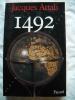
1492
1523 broché - 15x23.5 - 379pp - éditions FAYARD - 19991
ANTHROLOGIE HISTOIR PHILOSOPHIE LITTERATURE PARADES
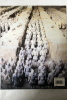
The First Emperor : China's terracotta army
Paperback, 240 pages, published by British Museum Press in 2007, very good conditions.

Nikos Kazantzaki. Sa vie, son oeuvre (1883-1957)
1970 - broché - Editions François Maspero - Collection La Découverte - 1970 - Fort in-8 (24 x 16 cm) broché, couverture à rabats - 600 pages
Bon état - Infimes frottements sur la couverture
Kleine Grote Zwarte Man. Levensherinneringen van een Neger uit de Oostafrikaanse Steppen. Met Medewerking van Ludwig Kohl-Larsen.
Amsterdam, Scheltens & Giltay, n.d., in-4to, 240 p. + photogr. plates, orig. clothband.

(SLACES, NVVA)
Phone number : 41 (0)26 3223808
"JANSSEN, PIERRE JULES CÉSAR - THE DISCOVERY OF HELIUM IN THE SUN.
Reference : 44231
(1878)
Éclipse de Soleil du 18 Aout 1868. Rapport adressé par M. Janssen au Maréchal de France Président du Bureau des Longitude.
Paris, G. Masson, 1878. 8vo. Contemp. hcalf, raised bands, gilt spine. Light wear along edges. Small stamps on verso of titlepage. In: ""Annales de Chimie et de Physique"", 4e Series - Tome 15. 512 pp. a. 3 folded engraved plates. (The entire volume offered). Janssen's memoir: pp. 414-426.
First appearance of this milestone paper in chemistry, physics and astronomy, announcing the discovery of the helium lines in the spectrum of the sun. It was Lockyer in the same year that named it 'helium' for Helios, the Greek God of the Sun. Helium was not discovered on the earth before 1895 by William Ramsay, and it was Crookes who established its identity with the helium Janssen and Lockyer observed in the spectrum of the sun.""He Janssen) met immortality by travelling to India in 1868 to study the total eclipse. It was then that he observed the helium line and forwarded the spectral data to ockyer. He also noted the size of the solar prominences. The day after the eclipse he attempted to take their spectra again and succeeded despite the absence of the obscuring moon. he then announced jubilantly that it was the day after the eclipse that was the real eclipse day for him. Lockyer also reported this method of studying prominences without an eclipse....Like Lockyer he lived to see his observation of the helium line vindicated by Ramsay's discovery of that element on earth.""(Asimov).""This (the discovery of helium lines in the sun by Lockyer) was announced on the same day by the French astronomer Janssen, who was in India observing a total eclipse. As a result, the French government some ten years later struck a medallion showing the heads of both scientists.By that time, the two men had made a much more dramatic discovery at the same time, this time in cooperation. Janssen, studying the spectrum ofthe sun during the eclipse, had noted a fine line he did not recognize. he send a report on this to Lockyer, an acknowledges expert on solar spectra. Lockyer compared the reported position of the line with lines of known elements, concluding that it must belong to a yeat unknown element, possibly not even existing on the earth. He named the element, from the Greek word for the sun.""(Asimov).Parkinson ""Breakthroughs"" 1868 A. - The volume contains other notable papers by Dumas, Berthelot et al.
"JANSSEN, PIERRE JULES. - DISCOVERY OF THE FIRST ALIAN ELEMENT, HELIUM.
Reference : 59086
(1869)
Observations spectrales prises pendent l'éclipse du 18 août 1868, et methode d'observation des protubérances des éclipses... Calcutta, 3 octobre 1868.
(Paris, Gauthier-Villars), 1869. 4to. In: ""Comptes Rendus Hebdomadaires des Séances de L'Academie des Sciences"", Tome 68, No 7. Pp. (349-) 408. (Entire issue offered). Janssen's paper pp. 367-376.
First printing of the paper in which Janssen announced the discovery of a new element. On August 18, 1868, Janssen managed to do just that. He became the first person to observe helium, an element never before seen on Earth, in the solar spectrum. At the time, though, Janssen didn’t know what he’d seen""just that it was something new""""Helium, the second most abundant element in the universe, was discovered on the sun before it was found on the earth. Pierre-Jules-César Janssen, a French astronomer, noticed a yellow line in the sun's spectrum while studying a total solar eclipse in 1868. Sir Norman Lockyer, an English astronomer, realized that this line, with a wavelength of 587.49 nanometers, could not be produced by any element known at the time. It was hypothesized that a new element on the sun was responsible for this mysterious yellow emission. This unknown element was named helium by Lockyer.""
Grignan en Drôme Provençale
Chez l'auteur 2023 40 pages in4 a l'italienne. 2023. broché. 40 pages. Livre de dessins de Jean-Claude Vangierdegom hommage illustré à la commune de Grignan célébrant son patrimoine architectural et historique notamment le château le village et la figure de la marquise de Sévigné
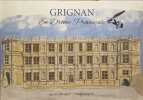
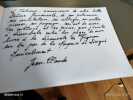
Bon état
Voyages en Perse
Cercle du bibliophile 1970 in8. 1970. Relié. Il s'agit d'une édition illustrée des récits de voyage de Jean-Baptiste Tavernier en Perse publiée par le Cercle du Bibliophile. L'ouvrage d'environ 340-352 pages contient des gravures en noir et blanc et présente une reliure de qualité avec des décors dorés
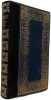
Bon état pages neuves intérieur propre
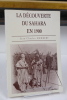
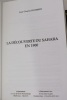
La découverte du Sahara en 1900
Edité par L'HARMATTAN, 1996. In-8 broché. 295pp. Illustrations en n&b. Quelques traces d’usure. Bon état général.
De la modernité
La Découverte 1983 in8. 1983. Broché.
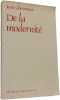
Bon état Couverture jaunie intérieur très propre
Flow nº 47
PRISMA MEDIA Sans date. SAVOURER LA DOUCEUR DE VIVRE ET LE BONHEUR DES CHOSES IMPARFAITES Le rêve est la vraie victoire sur le temps


Bon état
[Jean-Claude Golvin] - Jean-Claude Golvin, Aude Gros de Beler
Reference : VOY4436M
(1999)
Voyage en Egypte ancienne
Relié, 189 pages, paru le 2 novembre 1999 chez Actes Sud, livre en très bon état général.
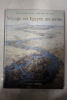
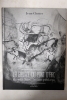
La grotte du Pont d'Arc, dite grotte Chauvet : Sanctuaire préhistorique
Relié, 96 pages, paru le 10 juin 2015 chez Actes Sud, livre en très bon état général.
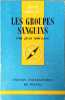
Que sais-je? Les groupes sanguins
Presses Universitaires de France 1966 125 pages in12. 1966. broché. 125 pages. Cet ouvrage de la collection 'Que sais-je ?' présente une synthèse des connaissances sur les groupes sanguins. Il retrace leur découverte explique leur nature biochimique et sérologique et aborde leur mécanisme d'hérédité ainsi que les techniques usuelles d'immuno-hématologie
Bon état
Le Nouveau Monde - Les voyages d'Amerigo Vespucci (1497-1504)
Relié, 303 pages, paru le 1er mars 2005 chez Chandeigne, livre en très bon état général. Nous avons d'autres exemplaires des éditions Chandeigne, retrouvez les dans notre catalogue grâce au mot-clé "Chandeigne".

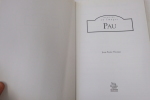
Pau, Mémoires en images
Broché, 128 pages, illustré en n/b, 16,0 x 23,0 x 0,7 cm, le livre est comme neuf.


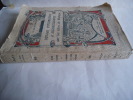
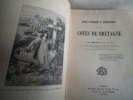
Voyage pittoresque sur les côtes de Bretagne.
In 8 broché,faux titre,frontispice,titre,XXII,240 pages, illustrations dans et hors-texte.Tours Marcel Cattier éditeur,sans date.(vers 1900)Rousseurs sur la couverture, sinon bon exemplaire
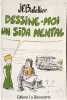
Dessine-moi un sida mental (Bandes Dessinée) dédicacé par l'auteur
LA DECOUVERTE 1987 143 pages in8. 1987. Broché. 143 pages. Recueil de 170 dessins satiriques de Jean-François Batellier couvrant l'actualité politique sociale économique et culturelle de l'été 1985 à l'été 1987 avec un focus sur la déconstruction des préjugés liés au sida
Bon état
Géographie de la Loire
in 12 cartonnage d’éditeur demi-toile bleue,titre doré en long.Titre,56 pages,14 gravures dans le texte une carte dépliante coloriée en fin de volume Hachette & Cie 1876. petites rousseurs éparses habituelles, plats frottés
Géographie du Puy de Dôme
in 12 cartonnage d’éditeur demi-toile bleue,titre doré en long.Titre,72 pages,16 gravures dans le texte une carte dépliante coloriée en fin de volume Hachette & Cie 1890. petites rousseurs éparses pas de rousseurs
Les Environs de Paris illustrés.
3 ème édition, contenant 244 vignettes, une carte des Environs de Paris et sept autres carte et plans. Paris, Librairie Hachette et Cie, 1878. In-8 (18x3x11cm) percaline noire éditeur estampée à froid, et légendes dorées, petites fentes sur les charnières. LIX,656pp. + 96pp de publicité.
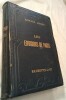
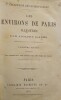
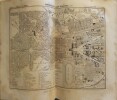
Collection des Guides-Joanes. La Carte des environs de Paris est en mauvais état avec des manques de certaines parties (en morceau), mais complet des autres plans. Quelques passages soulignés.

