 Write to the booksellers
-
Type
Book (7284)
Disk (44)
Drawings (1)
Engraving (9)
Magazine (89)
Maps (4)
Music sheets (135)
New book (2)
Old papers (1)
Photographs (19)
Posters (1)
-
Latest
Last 24h (2)
Last 3 days (12)
Last month (946)
Last week (6)
-
Language
Czech (1)
Dutch (11)
English (156)
French (7408)
German (4)
Italian (2)
Latin (3)
Russian (4)
-
Century
16th (17)
17th (43)
18th (199)
19th (879)
20th (2479)
21st (1569)
-
Countries
Belgium (1158)
Canada (34)
China (56)
Côte d'Ivoire (6)
Denmark (1058)
France (4927)
Germany (1)
Netherlands (181)
Switzerland (155)
United Kingdom (9)
United States of America (4)
-
Syndicate
ALAC (27)
CLAM (27)
CLAQ (2)
ILAB (2233)
NVVA (15)
SLACES (15)
SLAM (1026)
SNCAO (4)
Nightingale
Full Time Hobby Etat Pochette : M (comme neuf) Etat face A : M (comme neuf) Etat face B : M (comme neuf) Collector!
Merci de nous contacter à l'avance si vous souhaitez consulter une référence dans notre boutique à Authon-du-Perche.
OVER EEN KLEINE MOL DIE WIL WETEN - KARTONBOEKJE,
Antwerpen , De Vries - Brouwers, Karton uitgave, 23pp. nieuw ! ISBN 9789053413586.
Als de kleine mol op een dag zijn kop boven de grond steekt, gebeurt het: het is rond en bruin en ziet er een beetje uit als een worst en het komt precies op zijn kop terecht. Mol gaat op zoek naar de dader. Nieuw.
OVER EEN KLEINE MOL DIE WIL WETEN - MINI,
Antwerpen , De Vries - Brouwers, Mini uitgave. Gebonden. 9789061746799. nieuw ! 15x11 cm ISBN 9789053413500.
Als de kleine mol op een dag zijn kop boven de grond steekt, gebeurt het: het is rond en bruin en ziet er een beetje uit als een worst en het komt precies op zijn kop terecht. Mol gaat op zoek naar de dader. Nieuw.
OVER EEN KLEINE MOL DIE WIL WETEN - POP-UP,
Antwerpen , De Vries - Brouwers, Gebonden. met uitvouwbare onderdelen. pop-up , nieuw ! . ISBN 9789053415832.
Deze klassieker onder de prentenboeken is nu ook verkrijgbaar als pop-up. Beleef nog meer pret met de mol die op zoek gaat naar de schuldige van de drol op zijn kop. Nieuw.
OVER EEN KLEINE MOL DIE WIL WETEN WIE ER OP HAAR KOP GEPOEPT HEEFT,
Antwerpen , De Vries - Brouwers, 2012 Gebonden, oblong formaat 21x30cm , nieuw !! Geschikt als cadeau. ISBN 9789061745822.
Beleef nog meer pret met de mol die op zoek gaat naar de schuldige van de drol op zijn kop. Nieuw.
Erle Stanley Gardner (traduit de l'ouvrage américain par E. De Buttowt)
Reference : 46027
(1948)
La Dangereuse Douairière (The Case of the Dangerous Dowager).
1948 N° 3 - petit in-8 broché - 1948 - 234 pages - Ed. B. Arthaud - coll. L'Aigle Noir - 3
bon état (léger plis au dos)
Repertorio di letteratura biblica in italiano a stampa (Ca 1462-1650)
, Brepols, 2023 Paperback, 637 pages, Size:210 x 270 mm, Language: Italian. ISBN 9782503584058.
Summary This catalogue collects Italian biblical works issued from the beginning of print to the middle of the 17th century. The abundant literature had multiple uses: the transmission of the sacred text, its interpretation, preaching, religious education, and devotional uses (meditation and prayer). It was also used as a foundation of learning and general knowledge, ethics, professional practices (i.e. in medecine and politics), domestic piety and everyday life, as well as literary and theatrical entertainment. This catalogue will help to reconstruct the access to the Bible by Italian lay people. It contributes to the historiographical debate on how Italians could read the Bible after the ban of biblical translations. It represents an extremely rich source of information for future research about authorship, readership and the very nature and use of this production, shedding light on forgotten bestsellers of Italian Renaissance.
Dit is de sproke van broederke Valentijn
, Uitgeverij Terra - Lannoo 1988, 1988 Hardcover, 92 pagina's, Nederlands, nr 1050 + nr 368 van 2500 exemplaren, 275 x 235 mm, als nieuw. ISBN 9789020915068.
Ernest Claes "Andreas Ernestus Josephus (Ernest) Claes (Zichem, 24 oktober 1885 - Elsene, 2 september 1968) was een Vlaams schrijver. Hij is beroemd geworden door het boek De Witte, een streekroman over een belhamel in humoristische stijl. In Vlaanderen was hij een van de meest gelezen schrijvers. Enkele van zijn werken werden gepubliceerd onder het pseudoniem G. van Hasselt.
Pour qui sonne le glas
Heinemann & zsolnay 1959 in12. 1959. Relié. Roman d'Ernest Hemingway publié en 1940 inspiré de son expérience de journaliste pendant la guerre civile espagnole. Il suit la mission de Robert Jordan un jeune professeur américain engagé dans les Brigades internationales chargé de faire sauter un pont en Castille. L'œuvre explore les thèmes de la guerre de l'amour de l'honneur de la mortalité et de la solidarité humaine dans un contexte dramatique
Bon état bords frottés et couverture pages jaunies intérieur propre
Missing Images, Eugeen van Mieghem and the Jewish Immigrants of the Red Star Line
, , 2011 Paperback, 240x170mm, 160p, throughout bw and col. illustrations, English edition. fine condition ! ISBN 978908586614513.
Van de massele Europese emigratie tussen 1850 en 1940 naar de Nieuwe Wereld zijn bijna geen beelden bewaard gebleven. Van de Joodse emigranten zijn er wel de foto's van het leven voor het vertrek (Roman Vishniac in de shetls in Oost-Europa) en bij aankomst (Jacob Riis in de Lower East Side - New York). Beelden uit de vertrekhavens vindt men enkel bij de Antwerpse kunstenaar Eugeen Van Mieghem (1875- 1930) die rond 1900 beklijvende kunstwerken maakte van de ca. 2,5 miljoen landverhuizers die met de Red Star Line vertrokken naar Amerika en Canada. Dit boek vertelt het verhaal van "The Missing Images" dat de laatste jaren internationaal herontdekt wordt. Scarcely any images have been preserved of the mass migration from Europe to the New World which occurred between 1850 and 1940. Of course, photographs do exist concerning the lives of Jewish migrants prior to their departure (Roman Vishniac in the Eastern European shetls), as well as photographs taken on the arrival of those migrants at their destination (Jacob Riis in the Lower East Side of New York). However, images from the ports of embarcation are to be found only in connection with Antwerp's artist Eugeen Van Mieghem (1875- 1930) who, around 1900, produced moving works of art portraying the roughly 2.5 million people who emigrated to the United States and Canada on the Red Star Line. This book tells the story of "The Missing Images" that have been rediscovered internationally in recent years.
flemish parliament.
Tielt, Lannoo, 1997 Hardcover with dustjacket, 141pp., 25.5x30cm., num. col. ills., as new. ISBN 9789020932812.
Vlaams Parlement
Tielt, Lannoo, 1997 Hardcover with dustjacket, 141pp., 25.5x30cm., num. col. ills., as new. ISBN 9789020950335.
Compressed Meanings. The Donor's Model in Medieval Art to around 1300. Origin, Spread and Significance of an Architectural Image in the Realm of Tension between Tradition and Likeness,
Turnhout, Brepols, 2009 Paperback, 310 p., 127 b/w ill., 220 x 280 mm. ISBN 9782503528359.
In the Christian art of western Europe images survive from as early as the sixth century that show figures of founders or donors bearing a model of the building they caused to be constructed, renovated or embellished. Previous studies have tended to turn on the question of how accurately these models represent the buildings they were intended to portray. But the donors' model cannot be explained exclusively by comparison with its built equivalent. The sculptors, goldsmiths, minters, mosaicists, painters, weavers and sealmakers who created these little buildings were not always aiming to produce a straightforward likeness of the edifice in question but rather to represent its significance. The donor's model could underline the function or symbolic importance of a building or be an expression of support for a particular ruler. It could document real or fictive family ties, validate a patron's position or enhance his prestige. It could operate as a policy statement by lords temporal and spiritual, be deployed as a weapon in ecclesiastical rivalries, or serve as a visual charter to underpin the lawfulness and legality of gifted privileges, properties and possessions. Compressed Meanings approaches the donor's model primarily as part of an iconographic tradition whose origins can shed light on the message the model-bearers and their models were intended to convey. New.
Van Gogh Museum Journal 1999.
Amsterdam, Van Gogh Museum, 1999 Bound, grey cloth with illustr., 151pp., 24x28.5cm., ills. in col. and b/w., good cond. ISBN 9040094101.
Van Gogh Museum Journal 2001.
Amsterdam, Van Gogh Museum, 2001 Bound, grey cloth with illustr., 190pp., 24x28.5cm., ills. in col. and b/w., good cond. ISBN 9069870304.
ORACLE DE L INVISIBLE -L-
GOOD MOOD DEALER BY EXERGUE
LIVRE A L’ETAT DE NEUF. EXPEDIE SOUS 3 JOURS OUVRES. NUMERO DE SUIVI COMMUNIQUE AVANT ENVOI, EMBALLAGE RENFORCE. EAN:9782385780838
Heat Pumps
NOVA SCIENCE PUBLISHERS INC
LIVRE A L’ETAT DE NEUF. EXPEDIE SOUS 3 JOURS OUVRES. NUMERO DE SUIVI COMMUNIQUE AVANT ENVOI, EMBALLAGE RENFORCE. EAN:9781536143416

Esquive - The magazine for men - SCHOEFFLER, Oscar E. (Fashion Director)
Reference : 115081
(1961)
Esquive N° 1 : Dean Acheson tells why law is the most sophisticated profession (Dean ACHESON) - Sophisticated murder, and how to commit it (Alfred HITCHCOCK) - How the sexual revolution affects the sophisticated man - The new expatriates in the Paris of today (James BALDWIN) - First look at Saul Bellow's brilliant new novel, plus exciting changes in science, manners, the arts, travel, fashions, men, women and dogs in The New Sophistication - ...
1961 N° 1 - Volume LVI - Whole No. 332 - Juillet 1961 -In-4, broché - 138 pages - Très nombreuses illustrations et reproductions photographiques en N&B in et hors texte - Ouvrage en anglais
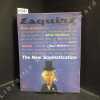
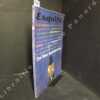
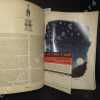
Bon état - Couverture frottée (voir photos)
Et si l'on partageait notre passion du goût ? Petites histoires et grandes recettes.
Paris, éd. Albin Michel, 2004, EDITION ORIGINALE, pt. in-4, cartonnage souple à rabats éd., couv. photos coul. éd., 160 pp., papier glacé, très nb. photos et reproductions de publicités et de documents anciens en coul. et en coul., sommaire, table des recettes, Une pointe de moutarde pour pimenter une viande, un cube de bouillon pour relever un légume, un petit sachet rose pour lever une pâte, un filet d'huile d'olive pour égayer une salade. Depuis des générations, ces ingrédients ornent les étagères de nos cuisines et font partie de notre quotidien. Grâce au concours de 14 grands chefs et à l'imagination d'amateurs passionnés, ce livre offre de savoureuses recettes inventives et facile à faire. Moutarde, vinaigre, mayonnaise, épices ont traversé le temps et orné les tables royales durant des siècles avant de trôner sur nos tables en fidèles compagnons. A travers leur saga racontée dans ce livre se dévoile une partie de notre histoire et de l'évolution de nos goûts. Comment, grâce à Sit Lipton, le thé est-il devenu une boisson si populaire ? Pourquoi, jusqu'au XIXe siècle, la moutarde et le vinaigre était-il fabriqué par le même artisan ? D'histoires savoureuses en découvertes culinaires, un livre à parcourir pour le plaisir et à consulter pour ses recettes, sans modération ! Très bon état
Biological Indicators of Environmental Quality: Bibliography of Abstracts
Imprint unknown 1973 264 pages 15 494x2 286x23 114cm. 1973. Cartonné jaquette. 264 pages.
Bon état intérieur propre jaquette défraîchie frottée
"EULER, J. ALBERT. - THE LAW OF BILLIARD TRAJECTORIES - THE PHYSICS OF THE BILLIARD BALL.
Reference : 45862
(1765)
Recherches des Mouvemens d'un Globe sur un Plan horizontal. (1.-) Seond Mémoire. (2 Papers).
(Berlin, Haude et Spener, 1765 u. 1767). 4to. No wrappers, as issued in ""Mémoires de l'Academie Royale des Sciences et Belles-Lettres"" 1758, tome XIV a. XVI, pp. 284-353 a. 2 folded engraved plates + pp. 261-284 a. 1 folded engraved plate.
First printing of Johann Albert Euler's importent paper in which he set forth the so-called ""Theorem of Johann-Albert Euler"", stating that the trajectory of a ball is a parabola followed by a straight line. The eldest son of Leonhard Euler was a prominent geometer in his own right. In 1758, Johann-Albert Euler (1734-1800) published a study of the motion of a sphere on an horizontal plane in the presence of Newtonian friction. His main result would be rediscovered independently by Gaspard Coriolis as part of his authoritative theoretical work on the topic: Théorie mathématique des effets du jeu de billard (1835). Johann Albrecht Euler, born in St. Petersburg 1732 was a Swiss-Russian astronomer and mathematician and he was the first child born to the great Swiss mathematician Leonhard Euler.
Recherches sur la Cause physiques de L'Electricité.
(Berlin, Haude et Spener, 1759). 4to. No wrappers, as issued in ""Mémoires de L'Academie Royale des Sciences et belles-Lettres"", tome XIII, 1757. With titlepage to the year 1757 with engraved titlevignette and pp. 125-159 and 1 folded engraved plate. A Stamp to titlepage.
First appearance of this paper which expands his prize-winning memoir from the Petersbourg Academy. He is now convinced by Aepinus of the importence of Franklin's distinction between positive and negative electricity. He elaborates his theory of the identity of the electrical fluid with the ether.
De innumerabilibus Curuis tautochronis in in Vacuo. (On the innumerable tautochrone curves in a vacuum). (+) Curva Tautochrona in Fluido resistentiam faciente secundum Quadrata cerilitatum. (Tautochrone curves in a fluid making a second resistance pr...
(Petropoli, St. Petersburg, Typis Academiae, 1735). 4to. No wrappers. In: ""Classes Prima continens Mathematica. Commentarii Academiae Scientiarum Imperialis Petropolitanae"", Tomus IV ad Annum 1729. The whole section of ""Mathematica""offered. Pp 1-118 pp. and 10 engraved plates. Euler's papers: pp. 49-67 a. 2 engraved plates. Pp. 67-89 a. 1 engraved plate. Wide-margined, clean.
Both first editions and some of the earliest mathematical papers by Euler. The first paper is a masterful work, in which Euler first establishes a surprisingly simple geometric condition for tautochronic curves, and then shows how to generate such curves, both analytic and algebraic, starting from the familiar cycloid "" the next paper extends the analysis to a resistive medium where the resistance is in proportion to the square of the speed. - Enestroem E12 and E13.The section (Mathematica) also contains papers by Jacob Hermann, Christopher Maier, G.W. Krafft and Daniel Bernoulli ""Problema astronomicum inneniendi altitudinem poli,...."", pp. 89-94.
Recherches sur l'effet d'un machine hydraulique proposée par M. Segner, professeur à Goettingue. (Research concerning the effects of a hydraulic machine proposed by M. Segner, professor at Gottingen)
(Berlin, Haude et Spener, 1752). 4to. No wrappers, as issued in ""Mémoires de l'Academie Royale des Sciences et Belles-Lettres"", tome VI, Année 1750. Pp. 311-354 and 5 folded engraved plates.
First edition. In this importent paper Euler perfection Segner's hydraulic turbine, giving the theory of hydraulic turbines created in accordence with the principle of action and reaction.""In this work, Euler gives a complete hydraulic analysis, an early example of the theory of relative motion. He also shows that very high speeds are necessary for good efficiency. He argues that ""by means of fixed conducting tubes, adjust the incoming velocity of the water so that the speed of efflux relative to the rotor is zero"" in this way, the theorietical efficiency will be 100% at the desired speed of operation.""""(Truesdell).Enestroem: 179.

