 Write to the booksellers
-
Type
Book (7246)
Disk (45)
Drawings (1)
Engraving (9)
Magazine (89)
Maps (4)
Music sheets (135)
New book (2)
Old papers (1)
Photographs (19)
Posters (1)
-
Latest
Last 3 days (2)
Last month (866)
Last week (109)
-
Language
Czech (1)
Dutch (9)
English (156)
French (7373)
German (4)
Italian (2)
Latin (3)
Russian (4)
-
Century
16th (16)
17th (43)
18th (196)
19th (878)
20th (2478)
21st (1562)
-
Countries
Belgium (1156)
Canada (32)
China (56)
Côte d'Ivoire (7)
Denmark (1063)
France (4888)
Germany (1)
Netherlands (181)
Switzerland (155)
United Kingdom (9)
United States of America (4)
-
Syndicate
ALAC (25)
CLAM (25)
CLAQ (2)
ILAB (2237)
NVVA (15)
SLACES (15)
SLAM (1029)
SNCAO (4)
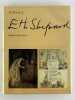
The Work of E.H. Shepard
New York, Schocken Books, 1980, in-4, relié jaquette éditeur, 256 pages. Bon état. Good condition.
NB. La librairie est fermée jusqu'à fin septembre. Les questions et commandes seront traitées début octobre.
"RAYLEIGH, LORD (J.W. STRUTT) and WILLIAM RAMSAY. - THE DISCOVERY OF ARGON.
Reference : 42221
(1895)
Argon, a New Constituent of the Atmosphere. Received and Read January 31, 1895.
(London, Harrison and Sons, 1895). 4to. No wrappers as extracted from ""Philosophical Transactions"", Vol. 186 - I, Series A. Pp. 187-241 a. 8 textillustrations (apparatus). Fine and clean.
First printing of this importent paper in the history of chemistry, Lord Rayleigh's most famous discovery, announcing the discovery of this new gas, the first finding of one of the rare gases (inert gases) having unusual properties, and forming a distinct group in the periodic table, and all with zero valency.""The original paper in the ""Philosophical Transactions"" will undoubtly rank as a classic, the investigation having been a particularly brilliant ine."" (Ernst von Meyer in History of Chemistry). For this discovery Lord Rayleigh and W. Ramsay received the Nobel Prize (1904).After having made several measuring of the densities of gases, ""Rayleigh came across a curious puzzle. With oxygen, he always obtained the same density, regardless of how the oxygen might be produced, whether from one particular compound, from a second compound, or from the air. The situation was different with nitrogen. The nitrogen he obtained from air constantly showed a slightly higher density than the nitrogen he obtained from any of various compounds. Rayleigh could think of several ways in which the nitrogen obtained from air might be contaminated but none of the possibilities checked out experimentally. He was so frustrated that he went so far as to write to the journal ""Nature"" asking for suggestions. Ramsay, a brilliant Scottish chemist, asked permission to tackle the problem and received it. The upshot was that a new gas, somewhat denser that nitrogen, was discovered to exist in the atmosphere. It was named argon and it was the first of a series of rare gases of unusual properties whose existence had never been suspected.""(Asimow).Dibner, Heralds of Science No. 50 - Neville, Historical Chemical Library vol. II, p.358.

"RAYLEIGH, LORD (J.W. STRUTT) and WILLIAM RAMSAY. - THE DISCOVERY OF ARGON.
Reference : 49207
(1895)
Argon, a New Constituent of the Atmosphere. Received and Read January 31, 1895.
London, Harrison and Sons, 1895. 4to. Orig. full cloth. Gilt lettering to spine. Blindtooled covers. First corner a bit bumped. In ""Philosophical Transactions"", Vol. 186 - I, Series A. XIV,(2),602,(4) pp. (Entire volume offered). The paper: p. 187-241 a. 8 textillustrations (apparatus). The title-page with faint brownspots. Otherwise internally clean and fine.
First printing of this importent paper in the history of chemistry, Lord Rayleigh's most famous discovery, announcing the discovery of this new gas, the first finding of one of the rare gases (inert gases) having unusual properties, and forming a distinct group in the periodic table, and all with zero valency.""The original paper in the ""Philosophical Transactions"" will undoubtly rank as a classic, the investigation having been a particularly brilliant ine."" (Ernst von Meyer in History of Chemistry). For this discovery Lord Rayleigh and W. Ramsay received the Nobel Prize (1904). The volume also contains WILLIAM CROOKES ""On the Spectra of Argon"", OSBORNE REYNOLD ""On the Dynamical Theory of Incompressible Viscous Fluids and the determination of the Criterion"", KARL PEARSON ""Contributions to the Mathematical Theory of Evolution. - II. Skew Variations in Homogenous Materials"" etc.After having made several measuring of the densities of gases, ""Rayleigh came across a curious puzzle. With oxygen, he always obtained the same density, regardless of how the oxygen might be produced, whether from one particular compound, from a second compound, or from the air. The situation was different with nitrogen. The nitrogen he obtained from air constantly showed a slightly higher density than the nitrogen he obtained from any of various compounds. Rayleigh could think of several ways in which the nitrogen obtained from air might be contaminated but none of the possibilities checked out experimentally. He was so frustrated that he went so far as to write to the journal ""Nature"" asking for suggestions. Ramsay, a brilliant Scottish chemist, asked permission to tackle the problem and received it. The upshot was that a new gas, somewhat denser that nitrogen, was discovered to exist in the atmosphere. It was named argon and it was the first of a series of rare gases of unusual properties whose existence had never been suspected.""(Asimow).Dibner, Heralds of Science No. 50 - Neville, Historical Chemical Library vol. II, p.358.
Partition de la chanson : In einer kleinen konditorei Etiquette collée haut de couverture
Partitions sur la Restauration et alimentations,Partitions sur la Mode et accessoires Vennootschap Muziek 1929 approx.

Etat moyen Grand format Piano
La Meute de la Mort (The death pack)
1882 N° 18 - in-8 broché - sd - 248 pages - Ed. Gallimard - coll. Détective
bon état - couv. très légèrement ternie
Catalogue of Medieval and Renaissance Manuscripts in the Beinecke Rare Book and Manuscript Library, Yale University, Volume IV. MSS 481-485,
Turnhout, Brepols, 2004 Hardback, XXVIII+616 p., 281 b/w ill., 150 x 230 mm. ISBN 9782503514406.
Volume IV is devoted to the items in the Beinecke's general collection with the shelf numbers 481, 482, 483, 484, and 485, each a discrete collection of manuscript fragments. The text consists of 285 entries -- describing single leaves, groups of leaves, or pieces of leaves -- of medieval and Renaissance manuscripts written between the seventh and sixteenth centuries in Western Europe. They are, for the most part, the battered remnants of otherwise lost books from the Middle Ages. Almost all of the fragments included in this catalogue are in Latin, although there are a few items in Middle High German and in Hebrew. The two larger groups of fragments described here (MS 481 and MS 482) were assembled originally as a palaeographical collection documenting a wide range of Latin bookscripts used during the Middle Ages and Renaissance. Included are specimens in Uncial, Visigothic, Merovingian, Beneventan, and humanist scripts, as well as numerous examples of Caroline minuscule and Gothic book hands,with a particular richness in eleventh- and twelfth-century manuscripts from Southern Germany. The fragments described in the catalogue are almost all derived from books. There are manuscripts of biblical texts (with and without glosses), classical and patristic authors, exegetical treatises, sermons, liturgical works, monastic rules, medieval encyclopedias, legal works, scholastic treatises, schoolbooks, grammatical works, medieval chronicles, calendars, and medieval poetry. Classical authors are represented by manuscripts of Vergil and Cicero; the Greek fathers by Basil and Origen (in Latin translation); the Latin fathers by Augustine, Jerome, and Gregory. Medieval writers include Isidore, Bede, Paul the Deacon, Notker Balbulus, Bern of Reichenau, and Thomas Aquinas; and on the secular side, Boethius, Priscian, Wirnt von Gravenburg, Eberhard of Bethune, and Ludolphus de Luco. There are numerous liturgical manuscripts, many of them with early examples of musical notation, including a substantial portion of an eleventh-century breviary; sequentiaries with works by Notker Balbulus and Gottschalk; and seventeen leaves of a twelfth-century antiphonary from Lambach that shed new light on the performance there of a Magi play. Manuscripts written in Italy, Spain, France, England, Germany, Switzerland, Austria, and the Low Countries are represented. A few items can be attributed to specific writing centres, including scriptoria in Luxeuil, Reims, Tours, Fresing, Fulda, Schaffhausen, Lambach, Kremsmunster, and Melk. New.
Future of the Middle Ages and the Renaissance. Problems, Trends, and Opportunities for Research,
Turnhout, Brepols, 1999 Hardback, XVI+194 p., 160 x 240 mm. ISBN 9782503508054.
This volume contains a selection of essays, reflecting a broad range of interests in medieval and Renaissance studies, yet focusing on problems, trends, and opportunities for research. This volume, containing a selection of essays from ACMRS's 1996 conference, reflects a broad range of interests in medieval and Renaissance studies. Although most of the eleven essays address western European topics, one essay deals with Byzantine political and theological histroy, and one touches on Arabic poetry in medieval Sicily. The chronological range is also broad, extending from the seventh to the twentieth century and including topics from an early Byzantine polemicist to the recent growing interest in medievalism, and from critical readings of early texts to implications of computer technology for future manuscript study. In some significant ways the volume continues earlier discussions of the state of the profession, such as those in William D. Paden (ed.), The Future of the Middle Ages, and John Van Engen (ed.), The Past and Future of Medieval Studies. More generally, this second volume in the ASMAR series extends the theme of the first, Reinventing the Past, and makes fresh contributions to the scholarship on a number of problems. If the current volume provides a reliable gauge for the future of medieval and Renaissance studies, we are on the verge of new beginnings, increasingly outward-looking, reexamining and redefining old boundaries to reach a new and sharpened understanding of the past. The contributions are: 'A panel discussion among Leslie J. Workman, T.A. Shippey, Allen J. Frantzen, Richard J. Utz, William D. Paden, and Arthur F. Kinney'; Marcia L. Colish, 'Re-envisioning the Middle Ages: a view from intellectual history'; Judith Barad, 'The ontology of animal rights'; Pamela Clements, 'Shape-shifting and gender-bending: Merlin's last laugh at silence'; Joan Grenier-Winthur, 'Lectio multiplicior, lectio potior: On the form and impact of electronic hypermedia editions'; L.S.B. MacCoull, 'George of Pisidia, Against Severus: in praise of Heraclius'; Karla Mallette, 'Arabic and Italian lyric in medieval Sicily'; Richard. New.
Corpus Christianorum. Foebadius Aginnensis, Victricius Rotomagensis, Leporius monachus, Ruricius Lemovicensis, Vincentius Lerinensis, Evagrius Liber contra Arrianos; De laude sanctorum; Libellus emendationis; Epistulae; Commonitorium. Excerpta ex operibus s. Augustini; Altercatio legis inter Simonem Iudaeum et Theophilum christianum,
Turnhout, Brepols, 1985 Hardback, 523 p., + 4 pl., 155 x 245 mm.Languages: Latin. ISBN 9782503006413.
La Gaule du sud connut une grande efflorescence litt raire aux 4? et 5? si cles. Quelques auteurs connus et moins connus de cette poque ont t r unis dans le pr sent volume, d'o la grande diversit de textes. F bade, v que d'Agen fut, dans son trait Contra Arianos - r ponse directe la deuxi me Formule de Sirmium (357/358) - l'instigateur d'une violente opposition anti-arienne en Gaule. A l'occasion de la translation de quelques reliques Rouen, l' v que du lieu, Victrice, crivit un trait de circonstance dans une langue vivante et concise: le De Laude Sanctorum. Dans le Libellus emendationis, opuscule peu important en apparence qui fut pourtant cit fr quemment par les auteurs ult rieurs, L porius porta t moignage de son retour la vraie foi. Le retentissement du Commonitorium de Vincent de L rins fut tr s grand: pendant des si cles il a t un fil conducteur permettant de combattre et de d masquer des id es nouvelles et dangereuses au nom de la "tradition". Les Excerpta, collection de textes emprunt s divers ouvrages d'Augustin, sont galement de lui. Evagre crivit un dialogue fictif, l'Altercatio legis inter Simonem. Sermones duo in constitutionem hominis secundum. En vue de la pr sente dition on a utilis pour la premi re fois quelques fragments sur papyrus du 6? si cle. Le volume s'ach ve par les Epistulae de Rurice, v que de Limoges: c'est une collection de lettres mod le, pouvant servir diverses occasions. TABLE OF CONTENTS Phoebadius Agennensis ? Liber contra Arianos ( CPL 473 ) ? ed. R. Demeulenaere Victricius Rotomagensis ? De laude sanctorum ( CPL 481 ) ? ed. J. Mulders, R. Demeulenaere Evagrius monachus ? Altercatio legis inter Simonem Iudaeum et Theophilum Christianum ( CPL 482 ) ? ed. R. Demeulenaere Vincentius Lirinensis ? Commonitorium ( CPL 510 ) ? ed. R. Demeulenaere Vincentius Lirinensis ? Excerpta ( CPL 511 ) ? ed. R. Demeulenaere Leporius monachus ? Libellus emendationis ( CPL 515 ) ? ed. R. Demeulenaere Potamius Olisiponensis ? Fragmentum epistulae ( CPL 544a ) ? ed. R. Demeulenaere Faustus Reiensis ? Epistulae XII: Epistulae V Fausti ad Ruricium ( CPL 963 ) ? ed. R. Demeulenaere Ruricius Lemovicensis ? Epistularum libri II accedentibus epistulis ad Ruricium scriptis ( CPL 985 ) ? ed. R. Demeulenaere
The Proudest Day: India's Long Road to Independencre
Pimlico 1998 592 pages 15 2x4 6x23cm. 1998. Broché. 592 pages.
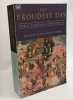
Très bon état bonne tenue intérieur propre
THE CLOISTER AND THE HEARTH. A TALE OF THE MIDDLE AGES,
New York, Dodd, Mead , 1924 Bound, blue cloth covers w/ gilt title on binding, marmered end papers, colour frontispice, original title page, 155 x 220mm., 707pp., colour illustrations.
With 16 coloured illustrations by Evelyn Paul. In good condition.
Alex Steinweiss. The inventor of the Modern Album Cover
2015 - cartonné - Editions Taschen - Collection Bibliotheca Universalis - 2015 - Fort in-8 (20 x 15 cm) reliure cartonnée, sous jaquette de l'éditeur - 549 pages - Très nombreuses illustrations en couleurs - ISBN : 9783836557764 - Textes en anglais, allemand et français
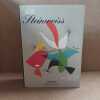
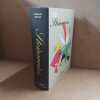
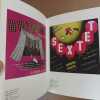
Bon état
Reboul Laurence (dossier établi par) ; Te Pass Albert (dossier établi par) ; Thill Jean-Claude (sous la direction de)
Reference : 129073
(1972)
La lettre Mansholt réactions et commentaires
Jean-Jacques Pauvert, coll. « Politique et Bonheur » 1972 In-12 broché 18 cm sur 11,5. 107 pages. Bon état d’occasion.
Bon état d’occasion
ABC (L') de l’amour. Dictionnaire illustré par R. Peynet.
Paris, Raoul Solar, 1949 ; in-12, broché ; 301, (3) pp., couverture illustrée en couleurs, nombreux dessins.
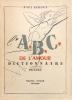
Edition originale. Petits manques en pied du dos.

Grand Atelier : Pathways of art in Europe (5th-18th century),
, Fonds Mercator, 2007 Softcover, 335 pages, ENG, 280 x 230 x 30 mm, in Good Condition, illustrations in color / b/w. ISBN 9789061537885.
Long before its emergence as a political entity, Europe was distinguished by its intense traffic in goods and people. We too often forget that the trade routes and other navigable highways were trafficked at a very early stage by artists, works of art and rich patrons desirous of satisfying their appetite for beauty. Well-known and lesser known works offer an insight into this ???European space for art and ideas??? which already existed at the dawn of the Middle Ages. With its remarkable and often spectacular works, le Grand Atelier illustrates various facets and many forms of this artistic interaction. The work covers a long period in the history of art, from the fifth century ??? the fall of the Roman Empire in the west ??? to the eighteenth century ??? the birth of the first great museums; calling on 350 works from well over a hundred European collections. The texts in the catalogue stem from the pens of several European luminaries in the history of art.
Record Research - the Magazie of Record Statistics and Informatioin
Reference : 037567
(1958)
Issue 16 - January / February 1958
Jerome H. Remick & Co brochure Couverture Illustrée New York 1958 20 pages en format 21 -27 cm - illustrations
Bon État
Record Research - the Magazie of Record Statistics and Informatioin
Reference : 037569
(1958)
Issue 19 - sep./oct. 1958
Jerome H. Remick & Co brochure Couverture Illustrée New York 1958 20 pages en format 21 - 27 cm - illustrations
Bon État
Record Research - the Magazie of Record Statistics and Informatioin
Reference : 037565
(1959)
Issue 21 - January / February 1959 - There's Yes Yes in Your Eyes
Jerome H. Remick & Co brochure Couverture Illustrée New York 1959 20 pages en format 21 - 27 cm - illustrations
Bon État
Record Research - the Magazie of Record Statistics and Informatioin
Reference : 037570
(1959)
Issue 22 - April / May 1959
Jerome H. Remick & Co brochure Couverture Illustrée New York 1959 20 pages en format 21 - 27 cm - illustrations
Bon État
Record Research - the Magazie of Record Statistics and Informatioin
Reference : 037568
(1959)
Issue 23 - June / July 1959
Jerome H. Remick & Co brochure Couverture Illustrée New York 1959 20 pages en format 21 - 27 cm - illustrations
Bon État
Record Research - the Magazie of Record Statistics and Informatioin
Reference : 037573
(1963)
Issue 51/52 - May / June 1963 - Perfect Dance and Race Catalog ( 1922 - 1930 )
Carl Kendziora Jr brochure Couverture Illustrée 1963 47 pages en format 21 - 27 cm - illustraitons
Bon État
Record Research - the Magazie of Record Statistics and Informatioin
Reference : 037572
(1964)
Issue 61 - July 1964
Jerome H. Remick & Co brochure Couverture Illustrée New York 1964 20 pages en format 21 - 27 cm - illustrations
Bon État
Record Research - the Magazie of Record Statistics and Informatioin
Reference : 037571
(1966)
Issue 75 - April 1966
Jerome H. Remick & Co brochure Couverture Illustrée New York 1966 20 pages en format 21 - 27 cm - illustrations
Bon État
Record Research - the Magazie of Record Statistics and Informatioin
Reference : 037566
(1956)
Issue 9 - july/august 1956
Jerome H. Remick & Co brochure Couverture Illustrée New York 1956 20 pages en format 21 - 27 cm - illustrations
Bon État
RECOULY Raymond / BUCKLEY E. F. ( Translated from the French by )
Reference : 055466
THE THIRD REPUBLIC
London William Heinemann 1928 in 8 (22,5x15,5) 1 fort volume reliure cartonnage percaline bleue de l'éditeur, VI et 383 pages, papier vergé, ex-libris Raymond Recouly. Raymond Recouly, Saint-Pons-de-Mauchiens 1876-1950, journaliste, et homme de lettres, correspondant de guerre pour le journal Le Temps. The National History of France series. Texte en langue anglaise (English text). Translated from tne french by E. F. Buckley. First Edition, First printing. Bel exemplaire, à provenance de la bibliothèque de l'auteur
Très bon Couverture rigide

