 Write to the booksellers
-
Type
Book (7251)
Disk (44)
Drawings (1)
Engraving (9)
Magazine (89)
Maps (4)
Music sheets (135)
New book (2)
Old papers (1)
Photographs (19)
Posters (1)
-
Latest
Last 24h (5)
Last month (969)
Last week (4)
-
Language
Czech (1)
Dutch (9)
English (156)
French (7377)
German (4)
Italian (2)
Latin (3)
Russian (4)
-
Century
16th (17)
17th (43)
18th (199)
19th (881)
20th (2479)
21st (1565)
-
Countries
Belgium (1156)
Canada (32)
China (56)
Côte d'Ivoire (7)
Denmark (1063)
France (4892)
Germany (1)
Netherlands (181)
Switzerland (155)
United Kingdom (9)
United States of America (4)
-
Syndicate
ALAC (25)
CLAM (25)
CLAQ (2)
ILAB (2237)
NVVA (15)
SLACES (15)
SLAM (1029)
SNCAO (4)
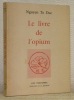
LE LIVRE DE L'OPIUM.
Guy Trédaniel, I-1979
Un volume in-12°, broché, 141 pages, couverture à rabats, TRES BON ETAT.


Le Livre de l’opium.
Sans lieu, Guy Trédaniel 1979, 180x140mm, 141pages, broché. Couverture à rabats. Bel exemplaire.
Pour un paiement via PayPal, veuillez nous en faire la demande et nous vous enverrons une facture PayPal
Le Livre de l'opium.
Guy Trédaniel, Editions de la Maisnie, 1979. In-12, broché, couverture à rabats, imprimée en deux tons et illustrée, 141 pp.
2 planches illustrées hors-texte. Photos sur demande.
LE LIVRE DE L'OPIUM
GUY TREDANIEL EDITIONS DE LA MAISNIE 0 Un volume grand in-12 broché de 141 pages , couverture à rabats , quelques illustrations , bon exemplaire . Bon Couverture souple
Déchets effluents et pollution - 3e éd. - Impact sur l'environnement et la santé: Impact sur l'environnement et la santé
Dunod 2012 216 pages 14 1x21 7x1 6cm. 2012. Broché. 216 pages.
Comme neuf
Almost Chosen People: Moral Aspirations of Americans
University of Notre Dame Press 1976 170 pages 23 114x2 286x16 002cm. 1976. Cartonné jaquette. 170 pages.
Bon état jaquette défraîchie intérieur propre
"NICHOLSON, WILLIAM. - THE FIRST ELECTROLYSIS WITH THE VOLTAIC PILE PERFORMED.
Reference : 43624
(1800)
Beschreibung des neuen electrichen oder galvanischen Apparats Alexander Volta's, und einiger wichtigen damit angestellten Versuche.
Halle, Rengerschen Buchhandlung, 1800. Without wrappers as published in ""Annalen der Physik. Herausgegeben von Ludwig Wilhelm Gilbert"", Bd. 6, Drittes Stück. The entire issue offered (=Heft 3). Titlepage to vol. 6. Pp. 249-376. Nicholson's paper: pp. 340-359. Light browning. A faint dampstain to upper right corners on some leaves.
First German edition of Nicholson's famous paper in which he, together with his friend Anthony Carlisle, succeeded in breaking up molecules into the constituent atoms of hydrogen and oxygen. They thus established the usefulness of the converse of the voltaic cell, by using electricity to produce chemical actions.""On March 20 of that year (1820) Volta wrote to Banks, president ofthe Royal Society, informing him of his construction of an electric battery. Nicholson heard of this and with the aid of a friend built his own Voltaic pile by May 2. It was the first in England. Nicholson's great contribution was to place wires attached to the two ends of the pile in water. He found that with the current flowing, bubbles of gaz (hydrogen and oxygen) ere given off. He had ""electolyzed"" water, breaking up the molecules into the individual elements. He thus reversed the demonstration of Cavendish, that hydrogen and oxygen could unite to form water. This was the first demonstration that an electric current could bring about a chemical reaction - the reverse of olta's demonstration that a chemical action could bring about an electrical current.""(Asimov). Parkinson ""Breakthroughs"" 1800 C. - Magie ""A Source Book in Physics"", pp. 431 ff.
Disquisitio De Nimbis antiquorum, Imaginibus Deorum, imperatorum olim, & nunc Christi, Apostolorum & Mariae Capitibus adpictis.
(Iena), Ehrt, 1699. 12mo. Contemp. hcalf. Spine gilt. Binding defective at start, another small work taken out ? (16),139,(13) pp. and 20 textengravings, some full page. Some leaves with a dampstain.
First edition of this curious and interesting tract on the history of haloes and nimbuses, secular as well as religious.
Nicolas Jury Daniel Meur Michel Pullicino Guillaume Saget Albert Terras Pierre-François Thomas
Reference : 500139220
(2015)
ISBN : 9782091638898
Physique-Chimie - Terminale STI2D/STL
Nathan scolaire 2015 208 pages 15x1 6x20 8cm. 2015. Broché. 208 pages.
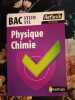
Très bon état
Nicole Schuermans-Ceulemans, Guido Braem en Ronnie Viane, onder wetenschappellijke leiding van Guido Braem
Reference : 13132
Jean LINDEN. Explorateur - Pere des orchidees; Jean LINDEN.
, Mercator, 2006, Bound with dusjacket;Pages: 256,Format: 28 x 23 cm,250 illustrations dont 200 en couleur,Couverture reliee avec jaquette 240 pagina's, 28 x 23 cm, 250 illustraties waarvan 200 in kleur ISBN 90 6153 630 8 (text Francais) ISBN 9789061536307.
Le jeune homme parcourra pendant pres de dix ans d'innombrables contrees inexplorees d'Amerique Latine, affinant progressivement ses connaissances et sa passion pour les orchidees. Rentre en Belgique, Linden exploite son savoir-faire au profit d'un commerce de plantes exotiques rendu florissant par les apports reguliers des collecteurs diriges a travers le monde. L'horticulteur devient vite une figure incontournable dans les milieux scientifique, economique et politique. De meme, ses multiples publications demeurent encore aujourd'hui des jalons dans la litterature orchidophile. S'appuyant sur de nombreux documents d'archives et sur les recits de voyage de l'explorateur, l'ouvrage s'agremente entre autres de nombreuses somptueuses planches illustrees issues des revues et recueils specialises de l'epoque.ISBN 90 6153 630 8 (Francais)
Gorgias: Platon
Bréal 2022 140 pages 15 1x19 8x0 7cm. 2022. Broché. 140 pages.
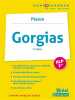
Très bon état - légères marques de lecture et/ou de stockage mais du reste en très bon état- expédié soigneusement depuis la France
Contributions to the Physiography of Iceland with particular Reference to the Highlands West of Vatnajökull.
Copenhagen, Munksgaard,1933. 4to. Contemp. hcloth. Gilt lettering. (102) pp. , 32 plates and 9 maps.
(Kgl. Danske Videnskabernes Selskab).
Presta Tal og Prófasta á Íslandi, eptir Sveinn Nielsson.
Kaupmannahöfn, F.S. Muhle, 1869. Indbundet ubeskåret med orig. for-og bagomslag i et pænt senere hldrbd. af bru maroquin, ryg med ophøjede bind og forgyldning. IX,241,(2) pp.
Originaltrykket. - Fiske I, p. 419 a. - Klose 3353.
"NIEPCE DE SAINT-VICTOR, (CLAUDE FELIX ABEL). - THE INVENTION OF NIEPCEOTYPES OR ""GLASS PICTURES"".
Reference : 47222
(1847)
Sur des propriétés particulières de l'iode, du phosphore, de l'acide azotique, etc. (Dépose en deux parties a l'Institut, le 22 juin 1846 et le 11 janvier 1847.) (Extrait). (+) Annexe au Mémoire précédent, présenté à l'Academie le 25 octobre 1847....
(Paris, Bachelier), 1847. 4to. No wrappers. In ""Comptes rendus hebdomadaires des séances de l’Académie des sciences"", Vol. 25, No 17. Pp. (561-) 608. (Entire issue offered). Niepce de Saint-Victor's paper: pp. 579-589.
First appearance of this milestone paper in the histroy of photography in which Niepce de Saint-Victor describes his invention of photography on glass or ""glass negatives"".""Early in 1847 Niepce de Saint-Victor experienced with the use of starch paste on his glass plates as a binding substratum for the iodide coating, but he soon found that albumen was preferable"" he also tried gelatine, but laid it aside because it came off in the aceto-silver nitrate bath. By a mixture of honey, syrup, or whey with the albumen, he oncreased, later the sensivity. He published his process on October 25, 1847, in the Comp. rend. (the paper offered), and soon had many followers. He also made many modifications (Annexe to the memoir)."" (Eder ""History of Photography"", Dover Publ., pp. 338 ff.).
Het Valkhof te Nijmegen. (Uitgegeven ter gelegenheid van de tentoonstelling 'Het Valkhof en de vroegste geschiedenis van de stad Nijmegen' in het Nijmeegs Museum 'Commanderie van Sint-Jan' van 11 oktober t/m 30 november 1980. Tweede druk.
Nijmegen, Dwarsstap, 1984.
214,2 p., illustrations. Stiff wrappers. 30x24 cm
Hunnen,
, Antwerpen, Mercatorfonds,, Softcover, 170 x 240mm., 64pp., 40 illustraties in kleur ISBN 9789061536154.
De beschaving van de Hunnen, een oude volksstam uit Centraal-Azie, ontwikkelt zich vanaf het midden van het 2de millennium, in het Bronstijdperk. Dankzij de tanende macht van de Scythen ontwikkelen de Hunnen tussen 209 v.C. en 93 n.C. hun eerste imperium, in de noordelijke gebieden van Mongolie, in het huidige Boeriatie. Vervolgens trekken vele Hunnen naar Centraal-Europa, waar ze zich vermengen met de Franco-Germaanse bevolking. De tentoonstelling heeft vooral oog voor de prehistorie en de geschiedenis van het eerste hunnenrijk in de regio van het Bajkalmeer en de vallei van de Selenga, waar opgravingen belangrijke overblijfselen hebben blootgelegd. Wapens, gespen, paardenbitten, juwelen en dagelijkse gebruiksvoorwerpen, getuigen van de leefgewoonten en de maatschappelijke ordening van deze bijzondere beschaving. Deze publicatie begeleidde de gelijknamige europalia.russia tentoonstelling in de Koninklijke Musea voor Kunst en Geschiedenis. Verkrijgbaar in een volume Nederlands/Frans. Nieuw.
Analogical Identities: The Creation of the Christian Self. Volume 2: Self-catholicization, Meta-narcissism, and Christian Theology
, Brepols, 2024 Paperback, 288 pages, Size:156 x 234 mm, Language(s):English, Greek, Latin. ISBN 9782503609911.
Summary Following the first volume entitled Analogical Identities: The Creation of the Christian Self of a trilogy dedicated to Christian anthropology in a modern re-assessment, the present second volume deals with the specific content of this concept of ?Analogical Identity? as a new hermeneutic retrieval of Christian anthropology in its relation with its historical roots and in the light of modern Philosophical and Psychological thought, to which we thus introduce some new conceptual tools. At the same time, a theological criticism of modern Philosophy and Psychology is initiated, and some new anthropological concepts of theological provenance are proposed. TABLE OF CONTENTS INTRODUCTION PART I: Theology of Analogical Consubstantiality and Theological Tradition Argument Chapter 1. Consubstantiality Beyond Perichoresis, East and West Chapter 2. Dialogical or Monological Analogy? A Palamite reading of Thomas, and a Thomist reading of Palamas Chapter 3. Practising Analogical Consubstantiality: Mary the Theotokos as an example, from Nicholas Cabasilas to Sergius Bulgakov Chapter 4. What is then Sophia? Chapter 5. Consubstantiality-as-Descent: Maximus, Palamas, Sophrony Chapter 6. Acting upon God: A Eucharistic Gnosiology PART II: Philosophy of the Self-catholicization and Patristic Theology: Analogical Consubstantiality as Intermeaningfulness Argument Chapter 1. Evagrius Ponticus , the precursor Chapter 2. Self-referring Subject, Self-catholicization, and the Theological Tradition: Maximus the Confessor, Gregory Palamas, Thomas Aquinas and Modern Philosophy Chapter 3. How can Theology advance beyond Self-catholicization? An Analogical Ecstasis: Maximus, Plotinus, Heidegger and Lacan Chapter 4. We then need Intermeaningfulness: Meta-narcissism, and Intersubjectivity-without-Meaning, in the light of Christian Theology Chapter 5. Ecstatic or Reciprocal Meaningfulness? A Theological Conclusion of a Philosophico-psychological Discussion of Eschatology PART III: Psychoanalysis of the Detached Subject and Patristic Theology: Aspects of Intermeaningfulness Argument Chapter 1. The Detached Self's Desire: Lacan and Maximus the Confessor on the Will-to-Consubstantiality Chapter 2. Inter-intra-co-being: Psychoanalysis of the Detached Self and Theological Catholicity Chapter 3. Psychoanalysis and Eschatology: Freud, Wittgenstein and Theological Hermeneutics Chapter 4. A Fading Self and its Fragmented Body: St Symeon the New Theologian and Jacques Lacan on the Dialectics of Desire Chapter 5. What are the Consubstantial Selves? The Areopagitic Texts , Modern Depth Psychology and Phenomenology Chapter 6. ?and what is the Unconscious? Initiating a Discussion of the Theological Roots of a Modern Discovery CONCLUDING DISCUSSION: The Truth of the Analogical Self as Intermeaningfulness BIBLIOGRAPHY
Analogical Identities: The Creation of the Christian Self. Volume 1: Beyond Spirituality and Mysticism in the Patristic Era
, Brepols, 2020 Paperback, xvi + 386 pages, Size:156 x 234 mm, Languages: English, Greek, Latin. ISBN 9782503578156.
Summary Is it possible for nihilism and an ontology of personhood as will to power to be incubated in the womb of Christian Mysticism? Is it possible that the modern ontology of power, which constitutes the core of the Greek-Western metaphysics, has a theological grounding? Has Nietszche reversed Plato or, more likely, Augustine and Origen, re-fashioning in a secular framework the very essence of their ontology? Do we have any alternative Patristic anthropological sources of the Greek-Western Self, beyond what has been traditionally called "Spirituality" or "Mysticism"? Patristic theology seems to ultimately provide us with a different understanding of selfhood, beyond any Ancient or modern, Platonic or not, Transcendentalism. This book strives to decipher, retrieve, and re-embody the underlying mature Patristic concept of selfhood, beyond the dichotomies of mind and body, essence and existence, transcendence and immanence, inner and outer, conscious and unconscious, person and nature, freedom and necessity: the Analogical Identity of this Self needs to be explored. TABLE OF CONTENTS Preface Abbreviations Introduction PART ONE. THE MEANING OF SPIRITUAL BEING Augustine and Origen: a study of the presuppositions of Western and Eastern spirituality, and some modern repercussions Chapter One Augustine, Origen, and the Person as Will to Power. The ontology of power 1. Representative eudemonism and the spirituality of the soul as thinking 2. A spiritualistic theory of knowledge. The violence of the spiritual and 'monophysitism' 3. Origen, following his parallel way 4. The thinking soul as light and the spirituality of the will to power 5. Knowledge of God through consciousness and the ontologization of the psychological 6. The genesis of the ontology of the person as will to power. The ontology of power and phenomenality 7. The will to power as a historical concern PART TWO. ON WILL AND NATURE, ON PERSON AND CONSUBSTANTIALITY Chapter One Maximus the Confessor's Theology of the Will and the complete Selfhood 1. The limits of ancient will and the new opening 2. The theology of the will in the anti-monophysite anthropology of Maximus the Confessor 3. A theologico-philosophical appendix to this chapter: is it possible to transcend naturalism in the ontology of the person and of history? Chapter Two Symeon the New Theologian and the Eschatological Ontology of the Nature of Creation 1. History 2. The unfamiliarity of Being and melancholy 3. The familiarity of the Being through repentance as an eschatology of consubstantiality 4. Eucharistic Vigilance and Judgment: The Christology of Light 5. The embodied intellect and the poetics of matter. Joy 6. The Eschatological denial of the 'Spiritual' and Eucharistic Apophaticism Chapter Three The Neo-Platonic Root of Angst and the Theology of the Real On being existence and contemplation, Plotinus-Aquinas-Palamas 1. The infinite, contemplation and angst 2. Deficient existence and the angst of its contemplation: Plotinus and Thomas Aquinas 3. The real as nature and vision of God. Saint Gregory Palamas 4. From the undermining of the real to its theology Concluding Addition: The 'second Absolute' and the misreadings of Hesychasm Nietzschean readings of Hesychasm? Chapter Four World and Existence, Nature and Person: The Being of Self and the Meaning of Its Consubstantial Universality 1. The Individual without the World. Epictetus 2. The World without the Individual. From Buddha to Schopenhauer 3. Individual and World, Person and Nature. Self and its Consubstantial Universality of its Being in Patristic Thought a) On Consubstantiality, on the Person and on Nature b) Beyond the Ontologization of the Person: the Meaning of Self PART THREE. CONCLUDING DISCUSSION Beyond Spirituality and Mysticism: The Poiesis/Creation of the Self as an Analogical Identity 1. Weighing Christian anthropological (Neo)Platonism in East and West 2. Medieval repercussions 3. Descartes' Augustinian happiness and beyond 4. The Will to Power and the Nietzschean Obelisk: an Autonomous Infinity 5. Objections, Wise and non-Wise: a Parenthesis 6. The Will to Consubstantiality: the Vessel in the Open Sea 7. The Heart of the Ocean: the Poiesis/Creation of a New Self 8. An Analogical Identity Appendix 1: Person instead of Grace and Dictated Otherness: John Zizioulas's Final Theological Position Appendix 2: Dialogical nature, Enousion Person, and Non-ecstatic Will in Maximus the Confessor: The Conclusion of a long Debate Appendix 3: An Aquinas for the Future BIBLIOGRAPHY Ancient and Medieval Authors Modern Authors INDEXES Index of Authors Index of Modern Scholars Index of Concepts
German and Austrian Painting in the Hermitage.
Leningrad, Aurora Art Publishers, 1986 Bound in red cloth with gilt lettering and ornamentation, orig. pict. dustjacket, 423pp., 26x33.5cm., 316 plates in col. and b/w., good cond.
"NILSON, L.- F. (LARS FREDRIK). - THE DISCOVERY OF A NEW ELEMENT SCANDIUM.
Reference : 47273
(1879)
Sur l'ytterbine, terre nouvelle de M. Marignac. (+) Sur le scandium, élément nouveau.
(Paris, Gauthier-Villars), 1879. 4to. No wrappers. In: ""Comptes Rendus Hebdomadaires des Séances de L'Academie des Sciences"", Tome 88, No 12. Pp. (625-) 676. (Entire issue offered). Nilson's papers: pp. 642-645 a. 645-648. First leaf with a tear to right margin, no loss of paper.
First apperance of the papers in which Nilson describes his discovery of a new element and its properties, and naming it Scandium. It was the second new element found after Mendeleev's prediction of its existence as ""Eka-Boron"".""Mendeléeff had predicted that another element, which he called eka-boron and which he said would have an atomic weight between 40 (calcium) and 48 (titanium), would some day be revealed. It was discovered in 1879 by Lars Fredrik Nilson.... Nilson extracted 63 grams of the rare earth erbia from gadolinite and euxenite, and converted it into the nitrate. Upon decomposing this salt by heat, as Marignac had done, he obtained some very pure ytterbia and, to his great surprise, an earth that was unknown to him.Upon thoroughly investigating this new earth, he found that it contained an element whose properties concided almost exactly with those Mendeléef had predicted for ekaboron. Nilson called it scandium in honour of his fatherland.""(Weeks ""Discovery of the Elements"" pp. 219-20).Parkinson ""Breakthroughs"" 1879 C.
La Vie Moderne - with an Essay By Lilien F. Robinson
Corcoran Gallery of Art broché Bristol illustré Washington 1983 86 pages en format -4 - nombreuses illustrations - en Anglais- TBE
Très Bon État
LIEGE ARRONDISSEMENT Tome 8 volume 1 + volume 2 --- L patrimoine monumental de la Belgique Wallonie
Mardaga Pierre 1995 4x22x16cm. 1995. Cartonné jaquette.
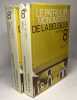
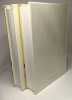
Bon Etat de conservation intérieurs propres bonne tenue avec leurs jaquettes (réparées en haut par un scotch)
L'uomo che fermò Hitler. La storia di Dimitar Pesev che salvò gli ebrei di una nazione intera (Oscar storia Band 198)
Mondadori 2000 336 pages 13 4x2x19 8cm. 2000. Broché. 336 pages.
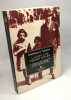
Très bon état bonne tenue intérieur propre

