 Write to the booksellers
-
Type
Book (7252)
Disk (45)
Drawings (1)
Engraving (9)
Magazine (89)
Maps (4)
Music sheets (135)
New book (2)
Old papers (1)
Photographs (19)
Posters (1)
-
Latest
Last 3 days (2)
Last month (866)
Last week (109)
-
Language
Czech (1)
Dutch (9)
English (156)
French (7379)
German (4)
Italian (2)
Latin (3)
Russian (4)
-
Century
16th (16)
17th (43)
18th (196)
19th (878)
20th (2477)
21st (1562)
-
Countries
Belgium (1156)
Canada (32)
China (56)
Côte d'Ivoire (7)
Denmark (1063)
France (4894)
Germany (1)
Netherlands (181)
Switzerland (155)
United Kingdom (9)
United States of America (4)
-
Syndicate
ALAC (25)
CLAM (25)
CLAQ (2)
ILAB (2243)
NVVA (15)
SLACES (15)
SLAM (1035)
SNCAO (4)
La Vie Moderne - with an Essay By Lilien F. Robinson
Corcoran Gallery of Art broché Bristol illustré Washington 1983 86 pages en format -4 - nombreuses illustrations - en Anglais- TBE
Très Bon État
LIEGE ARRONDISSEMENT Tome 8 volume 1 + volume 2 --- L patrimoine monumental de la Belgique Wallonie
Mardaga Pierre 1995 4x22x16cm. 1995. Cartonné jaquette.
Bon Etat de conservation intérieurs propres bonne tenue avec leurs jaquettes (réparées en haut par un scotch)
L'uomo che fermò Hitler. La storia di Dimitar Pesev che salvò gli ebrei di una nazione intera (Oscar storia Band 198)
Mondadori 2000 336 pages 13 4x2x19 8cm. 2000. Broché. 336 pages.
Très bon état bonne tenue intérieur propre
"NITZE, MAX. - FOUNDING UROLOGY - THE FIRST TEXTBOOK IN UROLOGY
Reference : 46232
(1889)
Lehrbuch der Kystoskopie. Ihre Technik und klinische Bedeutung. Mit 6 Tafeln und 26 Abbildungen im Texte.
Wiesbaden, J.F. Bergmann, 1889. Contemp. hcalf. Raised bands, gilt, titlelabel in leather with gilt lettering. Compartments richly blindtooled. A small crack to backhinge, board still holding. VIII,(1),319,(1) pp. 5 lithographed plates (numb. I-V, No. I in chromolitography) and 1 folded woodengraved plate (Tafel A). Internally fine and clean, but with some pencil undrlinings (easy toremove) and some underlinings in ink on the last leaves (from p. 304 ff).
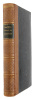
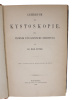
First edition of Nitze's important monograph on cystoscopy, which revolutionized the surgery of the bladder. The first edition is of renowned scarcity.""The invention of the cystoscope by Nitze revolutionized endoscopy but his true genius lay in his lifelong pursuit of better methods to diagnose and treat patients with urological diseases and in teaching others the practical use and value of cystoscopy. He also designed the first operating cystoscope, took the first endoscopic photographs and published the first textbook in urology... The legacy of discovery of Max Nitze established the specialty of urology and a legitimate claim as the father of urology"" (Harry W. Herr).Garrison & Morton: 4184.

Cahier 53, Marcel Proust. - Marcel Proust. Cahiers 1 75 de la Biblioth que nationale de France, vol. 4 in 2 vols.
Turnhout, Brepols, 2013 Hardback, 2 vols. 575 pages., 225 x 295 mm. NEUF! ISBN 9782503543383.
Version primitive de la future Prisonniere, le Cahier 53, redige au debut de la Grande Guerre, tire sa substance de precedents 'Cahiers d'Albertine' et s'organise autour de l'armature de la matinee, heritee du projet Contre Sainte-Beuve. En 1916, Proust en arracha de nombreuses pages pour nourrir d'autres cahiers : le fac-simile critique reconstitue par les editeurs permet de saisir le dynamisme si caracteristique de son ecriture. Languages : French.
song of songs. A photographer's vision of The Song of Solomon.
London, Charles Skilton, 1969 Bound, black cloth with orig. dj., unpag., photogr. ills. in b/w., very good copy.
Le Voyage inspiré
Hatier 2016 288 pages 12 2x17 3x1 7cm. 2016. Broché. 288 pages.
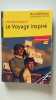
Etat correct
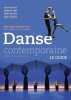
Danse contemporaine: Le guide
Flammarion 2015 224 pages 16 8x2x23 8cm. 2015. Broché. 224 pages.
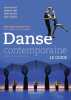
Comme neuf
Danse contemporaine: Le guide
Flammarion 2015 224 pages 16 8x2x23 8cm. 2015. Broché. 224 pages.
Très bon état
Villainess level 99. Tome 2
Soleil
LIVRE A L’ETAT DE NEUF. EXPEDIE SOUS 3 JOURS OUVRES. NUMERO DE SUIVI COMMUNIQUE AVANT ENVOI, EMBALLAGE RENFORCE. EAN:9782302101043
"NOLLET, (JEAN ANTOINE). - THE THEORY OF THE ""DOUBLE FLUX"" IN ELECTRICITY.
Reference : 44319
(1753)
Recherches sur les Causes Particulieres des Phénoménes Électriques, Et sur les effets nuisibles ou avantageux qu'on peut attendre. Troisieme Edition.
Paris, Freres Guerin, 1753. Small 8vo. Cont. full mottled calf. Top of spine with wear. Raised bands, richly gilt spine. Some wear to titlelabels. Small tear to hinges at upper compartment (hinges not loosening).. Spine a little rubbed. Small loss of leather at at lower right corner of frontcover. XXIII,444 pp. and 8 large folded engraved plates (showing apparatus and experiments with electricity). Internally clean, printed on good paper. From the library of le Comte de Caumia Baillenx, ""en son Chateau d'Andrain"" and with his mongram, blindtooled on both covers.
In this work Nollet, the discoverer of the theory of double flux, describes, among other experiments, the famous experiments with the Leyden jar. ""The author lay down a theory, according to which the cause of electrical phenomena is the effluence and affluence of a subtile fluid which is everywhere present. Some interesting experiments are described with vacuum tubes also on the influence of electric charges on the growth of plants."" (Wheeler, 355, but not listing this edition). - Poggendorff II:296.""Nollet's system (effluence and affluence) was much superior to earlier theories of double flux. such as Moliere's or Hauksbee's. A cheif difficulty with them (as with the theory of pulsating atmospheres) had been to explain why attraction occurs first.follwed by contact and then repulsion. Nollet answered that the effluent and affluent flows differ not only in direction, but in velocity and spatial distribution as well.The effluent stream consists of many jets, each of which spreads out into a cone with apex at one of the scattered exit pores. The affluent current, being a hodgepodge of differently directed effluent streams, is approximately isotropic.""(Heilbron, p. 284)
LE TABAC
GEORGES LANG. 1952. In-12. Broché. Bon état, Couv. convenable, Dos satisfaisant, Intérieur frais. 31pp.illustré en noir et blanc.. . . . Classification Dewey : 633.7-Plantes alcaloïdes (tabac, thé, cacao, café, pavot)
Classification Dewey : 633.7-Plantes alcaloïdes (tabac, thé, cacao, café, pavot)

Régie française des tabacs
Non Renseigné. Non daté. In-12. Broché. Etat d'usage, Couv. convenable, Dos satisfaisant, Intérieur frais. Fascicule de 4 pages publicitaires sur les cigares - 1 PHOTO DISPONIBLE.. . . . Classification Dewey : 633.7-Plantes alcaloïdes (tabac, thé, cacao, café, pavot)
Classification Dewey : 633.7-Plantes alcaloïdes (tabac, thé, cacao, café, pavot)
Persons and Masks of the Law: Cardozo Holmes Jefferson and Wythe as Makers of the Masks
University of California Press 2002 230 pages 13 97x1 778x20 828cm. 2002. Broché. 230 pages.
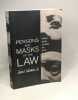
proche du très bon état intérieur propre bonne tenue dos légèrement écrasé et ridé
CONSTABLE TO DELACROIX. BRITISH ART AND THE FRENCH ROMANTICS,
London, Tate Publishing, 2003 Pictorial softcover, 230 x 295mm., 296pp., profound colour illustration. ISBN 1854374591.
After years of cultural standoff, the period of high Romanticism (1820-1840) was one of the fervent artistic exchange between France and Britain. In the aftermath of Waterloo, British artists contributed regularly to Paris Salons and shared studios with French artists. Artists from both countries criss-crossed the channel. Shared themes are explored, illustrated by many of the acknowledged masterpieces of Romantic painting, including works by Constable and Delacroix among many others. New book.
Ájanger. 2 Bd. (1. Lif og Daidi og adrar Hugleidingar. 2. Svipir).
Reykj., 1943-44. 2 orig. helshirtbd. 293, 280 pp.
The Presidential Papers
Panther 1976 335 pages in8. 1976. broché. 335 pages. Le livre 'The Presidential Papers' de Norman Mailer publié par Panther rassemble des essais et réflexions de l'auteur sur la politique américaine notamment autour des élections présidentielles et des figures politiques des années 1960. Mailer y explore les tensions culturelles et sociales de l'époque mêlant journalisme et critique littéraire

Nordwesteuropa in Der Weltwirtschaft 1750 - 1950
Franz Steiner Verlag 15 x 21 Stuttgart 1993 Beiträge zur Wirtschafts- und Sozialgeschichte-Band 54. Broché, xiv-307 p. Recueil des communications en anglais et en allemand faites lors du colloque de Salzau en mai 1992. Sommaire : Denmark'Role in the World Economy 1750 - 1950 / Norway's Role in the World Economy 1750 - 1950 / Finland and the World Economy 1600 - 1950 / L.M. Ericsson, Alfa-Laval, SKF and others : the emergence oh the Swedish Multinationals / Wirtschaftlicher Wettbewerb und Kartellierung als Indicatoren für die "Arbeitsweise praktischer Vernunft" in Skandinavien 1918 - 1939 / Dutch Economic development and international trade 1850 1913 / Industrial banking in Belgien im 18. und 19. Jahrhundert / Bankers and banks in the integration of the Eurpean economy during the nineteenth century / Technological advance and the progress of capital market / Zur bedeutung von Börsen : Beispiel der Hamburger Börse / Die Stellung "Westeuropas" in der Weltwirtschaft 1750 - 1950 / Beispiel Hasenclever. Exemplaire en parfait état.(C28) Livre 3515063609
The tea lover's companion
Birch Lane Press Cartonné avec jaquette 1996 In-8, (18.5x18 cm), cartonné sous jaquette illustrée, texte en anglais, 185 pages, guide sur le thé ; étiquette sur le 4e plat, bel état. Livraison a domicile (La Poste) ou en Mondial Relay sur simple demande.
Notes from the Leyden Museum. Vols 1-5.
1879-1883 Original printed boards (some wear, especially on spines). Library stamps. First five volumes and thus the rare early start of this interesting zoological journal.
Aux frontières de la Vendée: Rochefort-sur-Loire (1789-1795).
Editions Hérault, 2004 23 x 15 cm., 144 pp,
- - VENTE PAR CORRESPONDANCE UNIQUEMENT - LIEN DE PAIEMENT, NOUS CONSULTER.
ANECDOTES SECRETES DU DIX-HUITIEME SIECLE, rédigées avec soin d'après la correspondance secrète, politique et littéraire. Pour faire suite aux Mémoires de Bchaumont.
1808 2 volumes, reliure plein papier peigné marron (binding full paper in-8) in-octavo (22,5 x 14 cm), reliure d'époque, dos long (spine without raised bands), épidermé (scratches on the spine), pièce de titre et pièce de tomaison sur fond marron-clair avec filet et roulette or (label of title and volume numbering with gilt line and fillet), titre et tomaison frappés or (gilt title and volume numbering), papier marbré marron-clair aux plats (cover with marbled paper), toutes tranches non rognées (all edges no smooth), sans illustrations (no illustration), [ivj + 400] + [(4) + 418] pages, 1808 ParisLéopold Collin Editeur,
Edition Originale..........Intérieur Parfait.........................................en bon état général malgré le petit défaut signalé (very good condition in spite of the small defect indicated).
NOUVELLE METHODE POUR APPRENDRE L'ANGLAIS - NEW METHOD FOR STUDYING THE FRENCH LANGUAGE.
Reference : c3685
Paul et Virginie, Traduction interlinéaire ou Nouvelle Méthode à l'aide de laquelle on peut soi-même, et sans le secours d'aucun maître, apprendre l'anglais dans l'espace de trois ou quatre mois. Suivi de New Method for studying the Frenche Language.
Paris, Librairie Etrangère et Orientale de GIrard Frères, 1840 ; 2 tomes reliés en 1 volume in-12°, demi-chagrin violine de l' époque, dos à nerfs, filet maigre doré sur les nerfs, compartiments de double filet doré ornés de petits fers dorés, titre doré; VIIpp., 341pp.; 373pp. 4 feuillets brunis en début du 1er tome, jaunissures et traces de mouillures dans la 2ème partie du 2ème tome.
La première partie est consacrée à l'apprentissage de l'anglais à partir du texte de Bernardin de Saint-Pierre en français traduit ligne à ligne en anglais et plus étonnamment la seconde partie est consacrée à l'apprentissage du français à partir du texte en anglais de "Paul et Virginie".Il manque au 2ème Tome le titre et les pages 5 à 8 soit 3 feuillets.(GrMG)

