 Write to the booksellers
-
Type
Book (7247)
Disk (44)
Drawings (1)
Engraving (9)
Magazine (89)
Maps (4)
Music sheets (135)
New book (2)
Old papers (1)
Photographs (19)
Posters (1)
-
Latest
Last 24h (3)
Last 3 days (2)
Last month (971)
Last week (2)
-
Language
Czech (1)
Dutch (9)
English (156)
French (7373)
German (4)
Italian (2)
Latin (3)
Russian (4)
-
Century
16th (17)
17th (43)
18th (199)
19th (881)
20th (2478)
21st (1565)
-
Countries
Belgium (1156)
Canada (32)
China (56)
Côte d'Ivoire (7)
Denmark (1063)
France (4888)
Germany (1)
Netherlands (181)
Switzerland (155)
United Kingdom (9)
United States of America (4)
-
Syndicate
ALAC (25)
CLAM (25)
CLAQ (2)
ILAB (2234)
NVVA (15)
SLACES (15)
SLAM (1026)
SNCAO (4)
"MENDELÉEFF, D. (MENDELÉEV, MENDELEYEV, MENDELÉEFF). - THE DECISIVE CONFIRMATION OF MENDELEEV'S PERIODIC TABLE OFTHE ELEMENTS.
Reference : 49528
(1875)
Remarque à propos de la découverte du gallium.
Paris, Gauthier-Villars, 1875. 4to. No wrappers. In: ""Comptes Rendus Hebdomadaires des Séances de L'Academie des Sciences"", Tome 81, No 21. Pp. (909-) 992. With titlepage to vol. 81. Mendelejeff's paper: pp. 969-972. Titlepage lightly browned and with a punched stamp in lower margin. Otherwise clean and fine.
First apperance of this importent paper which established that Gallium is identical with Eka-aluminum (the missing element between Aluminum and Indium) in Mendelejeff's periodic table. The properties of the new element corresponded well with those predicted. A bitter contorversy was raised between the discoverer of Gallium, Lecog de Boisbaudran and Mendelejeff. ""The discovery of the three elements predicted by Mendeleev was, however, of decisive importance in the acceptance of his law. In 1875 Lecoq de Boisbaudran, knowing nothing of Mendeleev’s work, discovered by spectroscopic methods a new metal, which he named gallium. Both in the nature of its discovery and in a number of its properties gallium coincided with Mendeleev’s prediction for eka-aluminum, but its specific weight at first seemed to be less than predicted. Hearing of the discovery, Mendeleev sent to France ""Zametka po povodu otkrytia gallia"" (the paper offered) (""Note on the Occasion of the Discovery of Gallium""), in which he insisted that gallium was in fact his eka-aluminum. Although Lecoq de Boisbaudran objected to this interpretation, he made a second determination of the specific weight of gallium and confirmed that such was indeed the case. From that moment the periodic law was no longer a mere hypothesis, and the scientific world was astounded to note that Mendeleev, the theorist, had seen the properties of a new element more clearly than the chemist who had empirically discovered it. From this time, too, Mendeleev’s work came to be more widely known""(DSB).Parkinson Breakthroughs"" 1875 C.

Promemoria. Lo sterminio degli ebrei d'Europa (1939-1945)
Il Mulino 1994 112 pages 21x1x13 4cm. 1994. perfect. 112 pages.

Comme neuf encore sous son plastique d'emballage
Cafés Gourmands... du matin... au soir
Les éditions culinaires, coll. « Krups Cook Book » 2007 In-8 broché 20 cm sur 20. 122 pages. Très bon état d’occasion.
Très bon état d’occasion
Modern publicity 1931. Commercial Art Annual.
London & New York The Studio Limited & William Edwin Rudge 1931 In-4 Broché
Recueil de publicités et d'affiches d'Angleterre, France, Allemagne, Hollande, Autriche, Yougoslavie, Hongrie, Suisse, Italie, Espagne, , Norvège, Suéde, Russie, Amérique. 351 reproductions en noir et en couleurs. 174 pp. Très bon 0
MERIEL, Olivier - POIREY, Sophie - VANNIER, Pascal
Reference : 961
ISBN : 9782849755105
L'île dans les îles - The Island in the Isles
- cartonné - Editions Fage - Musée de Normandie - 2018 - In-4 (28,5 x 22,5 cm) cartonné - 118 pages - Très nombreuses photographies en noir et blanc - ISBN : 9782849755105 - Préface de Jean-Marie Levesque - Textes en anglais et en français (Sophie Poirey & Pascal Vannier) - Photographies de Olivier Meriel


Bon état
Meroto Tina Quarello Maurizio A. C. Duc Marion
Reference : 500094783
(2007)
ISBN : 9788496573932
La sorciére grince-dents (colección O)
OQO Editora 2007 48 pages 0x00cm. 2007. Broché. 48 pages.
ST. HUBERTUSGILDE GEDENKBOEK 1STE LUSTRUM. De gildebroeders van Sint Hubertusgilde te Antwerpen en Sint Carolus Borromeuskerk. Les confreres en Saint Hubert a Anvers et l'eglise Saint Charles Borromee.
Antwerpen, St. Hubertusgilde/St. Caroluskerk, 1961 originele uitgeversomslag 21,5x29 cm, p. niet genummerd, illustraties in z/w.
Voorwoord + 5 HOOFDSTUKKEN
Les nuits d'orient : Contes nocturnes par Mery
1854 Paris : Michel Levy 1854.in-12 relié percaline marron,dos lisse insolé,texte trés frais, 341 pages. 1st Edition. Description: xii. 341p. 18cm. Subjects: Orient -- Asia -- the East -- History -- Essays. Preface dated March. 1853. Language: French. Very good copy rare edition originale

Remise de 20% pour toutes commandes supérieures à 200 €
JOANNES DELLA FAILLE s.j. MATHEMATICS, MODESTY AND MISSED OPPORTUNITIES,
, Brussels, Belgisch Historisch Instituut te Rome, 2005, Softcover, pictorial wrapper, 155 x 240mm., 179pp., b/w illustration and documentation. ISBN 9074461530.
Institut Historique Belge de Rome Bibliotheque / Belgisch Historisch Instituut te Rome Bibliotheek LIII.Trilingual edition Eng / Dtch / Fr. Newly discovered manuscript evidence shows that Della Faille's research on conic sections was probably on par with that of Pascal and Descargues. His results are discussed and a plea is made for reappraisal of his work. Book is as new.
COULEUR HAVANE.
PARKSTONE PRESS LTD. 2001. In-8. Relié. Bon état, Couv. convenable, Dos satisfaisant, Intérieur frais. 103 pages - jaquette en bon état - nombreuses illustrations en couleurs dans et hors texte.. Avec Jaquette. . . Classification Dewey : 633.7-Plantes alcaloïdes (tabac, thé, cacao, café, pavot)
Classification Dewey : 633.7-Plantes alcaloïdes (tabac, thé, cacao, café, pavot)

Messana Anne-Olivia Jobé-Truffer Virginie
Reference : 500092735
(2018)
ISBN : 9782733858547
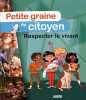
PETITE GRAINE DE CITOYEN - RESPECTER LE VIVANT
Auzou 2018 24x28x0 4cm. 2018. Broché.
Très bon état
Messana Anne-Olivia Jobé-Truffer Virginie
Reference : 500113396
(2018)
ISBN : 9782733858547
PETITE GRAINE DE CITOYEN - RESPECTER LE VIVANT
Auzou 2018 24x28x0 4cm. 2018. Broché.
Très bon état
Messana Anne-Olivia Jobé-Truffer Virginie
Reference : 500114219
(2018)
ISBN : 9782733858547
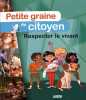
PETITE GRAINE DE CITOYEN - RESPECTER LE VIVANT
Auzou 2018 24x28x0 4cm. 2018. Broché.
Très bon état
Le mystere Nespresso
NESPRESSO. NON DATE vers 2024. In-8. Relié. Etat d'usage, Couv. convenable, Dos satisfaisant, Intérieur frais. 73 PAGES - Nombreux dessins couleur, dans et hors texte - Papier contenant du marc de café usagé - Tranches argentées - Logo nespresso en relief sur les plats. . . . Classification Dewey : 633.7-Plantes alcaloïdes (tabac, thé, cacao, café, pavot)
Classification Dewey : 633.7-Plantes alcaloïdes (tabac, thé, cacao, café, pavot)
"25 Years of Design".
1983 Estampe affiche sérigraphiée, 1983, 57 x 41.3 cm., encadrée.
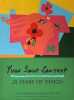
Affiche de l'exposition Yves Saint Laurent, qui eut lieu à New York, en 1983, au Costume Institute du Metropolitan Museum of Art. Placée sous la direction de Diana Vreeland, cette rétrospective, célébrait pour la première fois, le talent de ce monstre sacré de la Haute Couture qu'était Yves Saint Laurent. Mouillures et traces.
Je joue je révise - Je rentre en 5e: Je rentre en 5e révisions de la 6e
Bordas 2022 96 pages 19 4x25 8x1 3cm. 2022. Broché. 96 pages.
bon état - L'ouvrage qui n'a jamais été lu peut présenter de légères traces de stockage mais est du reste en très bon état. envoi rapide et soigné dans un emballage adapté depuis France
"MEYER, LOTHAR. - THE PERIODIC TABLE & ""THE ATOMIC VOLUME CURVE"".
Reference : 43852
(1870)
Die Natur der chemischen Elemente als Function ihrer Atomgewichte. (Hierzu Tafel III).
Leipzig und Heidelberg, C.F. Winter'sche Verlagshandlung, 1870. No wrappers. In ""Annalen der Chemie und Pharmacie. Hrsg. und Redigiert von Friedrich Wöhler, Justus Liebig und Hermann Kopp"", VII. Supplementband. Pp. 354-364 a. 1 folded plate (The atomic volume curve). The entire volume offered ""VII. Supplementband."" (4),380 pp. and 3 folded plates. Small stamp on titlepage and verso of.
First appearance of this groundbreaking, classic paper in which Lothar Meyer first fully expressed his ideas of the relationsships between the atomic weight of the elements and their properties. In his ""Curve"" he plots the atomic volumes of the chemical elements against their weights and connects the points to obtain a curve with proonounced peaks and valleys. The periodicity in atomic volume and electrochemical behaviour revealed by this curve is matched by periodicities in other properties, such as fusibility and volatility etc.The ""Periodic Law"" may be stated in the words: The properties of the Elements are a periodic function of (or vary in a periodic manner with) the atomic weight. (Findlay).Lothar Meyer and Dimitri Mendeleev independently discovered the periodic system, but ""Meyer did not publish this work until after the appearance of Mendeleev's first paper on the subject in 1869. His table was very similar to that of Mendeleev, but it contained some improvements and was, perhaps, influential in causing some of the revisions made by Mendeleev in the second version of his table, published in 1870. In general, Meyer was more impressed by the periodicity of the physical properties of the elements, while Medeleev saw more clearly the chemical consequences of the periodic law.""(Source Book in Chemistry, p. 434). - Weeks p. 207 ff.
"MEYER, LOTHAR und KARL SEUBERT. - THE PERIODIC TABLE REVISED.
Reference : 44324
(1883)
Die Atomgewichte der Elemente aus den Originalzahlen neu berechnet.
Leipzig, Breitkopf & Härtel, 1883. Contemp. hcalf. Raised bands, gilt spine, titlelabel with gilt lettering. X,245,(1) pp. Internally fine and clean.
Scarce first edition of this importent work which is a large extension of Meyer's classic paper of 1870, in which he independently of Mendeleev, discovered that the properties of the elements are a periodic function of (or vary in a periodic manner with) the atomic weight - the Periodic Table.""The significance of atomic weights in the demonstration of chemical periodicity, and the suspicion that some atomic weights were not accurate, led Meyer and Seubert to examine critically and to recalculate all atomic weights then considered importent. Their study was published in 1883 (the work offered). All atomic weights were referred to the standard of unity for the atomic weight of hydrogen, a standard that Meyer championed.....In 1903 the newly created International Commission of Atomic Weeights decided to publish parallel tables based on H=1 and O=16, a practice followed for many years.""(DSB IX, pp. 351-352).
English in 6e Enjoy (1CD audio)
DIDIER 2006 176 pages 19x1 2x28 2cm. 2006. Broché. 176 pages.

Bon état
La Rage de vivre
Corréa - Collection "Le Chemin de la vie" dirigée par Maurice Nadeau 1950 In-8 carré Demi-reliure à coins Signé par l'auteur
Edition originale de la traduction française de Marcel Duhamel et Madeleine Gautier. Préface d'Henry Miller. SIGNATURE autographe de Milton Mezz Mezzrow à l'encre verte sur le faux-titre. Bon exemplaire en reliure d'époque : demi maroquin rouge à couns, lettre or au dos à nerfs, couvertures conservées. >Autobiographique de ce clarinettiste et saxophoniste américain de jazz, publié aux Etats-Unis en 1946 sous le titre "Really the Blues". Dans ce récit il assume son comportement de « mauvais garçon », évoquant ses séjours en prison et sa forte consommation puis la vente de marijuana. Il y décrit les sensations qu'il éprouve la première fois qu'il joue sous l'influence de cette drogue. Il devient également dépendant à l'opium et à l'alcool, démons qu'il réussit à chasser avant de relancer sa carrière. Très bon 0
Spoken and Written Language Relations between Latin and the Vernacular Languages in the Earlier Middle Ages<br>
, Brepols - Harvey Miller, 2013 Hardcover. XII 364 p., 8 b/w ill. 4 colour ill., 156 x 234 mm, Languages: English, German, French, Fine copy. Including an index. ISBN 9782503507705.
The linguistic situation of medieval Europe has sometimes been characterized as one of diglossia: one learned language, Latin, was used for religion, law, and documents, while the various vernaculars were used in other linguistic registers. Informing the relationship between Latin and the vernaculars was the choice of Latin as the language of the Western Roman Empire and the Roman Church. This choice entailed the possibility of a shared literary culture and heritage across Europe, but also had consequences for access to that heritage. Scholarship on the Romance languages has contested the relevance of the term diglossia, and the divergence between written or spoken Latin and Romance is a subject of energetic debate. In other linguistic areas, too, questions have been voiced. How can one characterize the interaction between Latin and the various vernaculars, and between the various vernaculars themselves? To what extent could speakers from separate linguistic worlds communicate? These questions are fundamental for anyone concerned with communication, the transmission of learning, literary history, and cultural interaction in the Middle Ages. This volume contains contributions by historians, cultural historians, and students of texts, language, and linguistics, addressing the subject from their various perspectives but at the same time trying to overcome familiar disciplinary divisions.
Michael Hanrahan Kalani Miller Kelly Slater Raimana Van Bastolear Stephen Low The Ultimate Wave Tahiti ( ) (3D) The Ultimate Wave Tahiti
Reference : 500269905
(2012)
ISBN : 5050582897395
Vague extrême tahiti 3D [Blu-ray] [FR Import] (NEUF SOUS BLISTER)
Universal 2012 13 7x17 2x1 1cm. 2012. blu_ray.
![Vague extrême tahiti 3D [Blu-ray] [FR Import] (NEUF SOUS BLISTER). Michael Hanrahan Kalani Miller Kelly Slater Raimana Van Bastolear Stephen Low The ...](https://static.livre-rare-book.com/pictures/IGE/500269905_thumb.jpg)
Neuf
Fragen an eine Gesellschaft Gelehrter Männer, die auf Befehl Ihro Majestät des Königes von Dännemark nach Arabien reisen. - [THE HANDBOOK OF NIEBUHR'S ARABIA-EXPEDITION]
Frankfurt am Mayn, Garbe, 1762. 8vo. Very nice contemporary full mottled calf with five raised bands to richly gilt spine. Titlelabel with gilt lettering. A bit of wear to spine, causing slight loss of leather and a neat restoration to lower compartment. A paperlabel pasted on top of spine. Small loss of leather to back board. A stamp on title-page (Holstein=Holsteinborg). (70), 397 pp., 4 folded tables, paginated 391-97. Internally clean, some quires printed on thick paper.
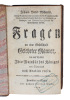
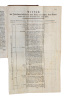
The rare first edition of the founding work of Niebuhr's Arabia-expedition, which would gain world-wide fame and establish the scientific description of the Arabian peninsula. The present work consists in 100 questions, the answers to which constitute the purpose of the Royal Danish Arabia Expedition. In fact, the present work is the handbook of Niebuhr's travel to Arabia Felix, as its author is the spiritual father of it. The work is extraordinary in many ways, and it not only served as the basis for the Arabia-expedition, it also constitutes a forerunner of modern bible science that would begin to emerge a few decades later. Johann Davis Michaelis (1717-19) was a theologian and orientalist, whose fame today rests upon the present work and upon the fact that he was responsible for the first scientific expedition to Arabia Felix, namely that of Niebuhr. In 1753, he had come up with the idea for the the Royal Danish Arabia Expedition (1761-1767) and had gotten the Danish minister Bernstoff to agree to it. In 1760, when the expedition was becoming a reality, Michaelis recommended Niebuhr as a participant, and he outlined the entire purpose of the trip - namaly the list of 100 questions that he prepared and published for the members of the expedition, in order for them to answer in the course of the voyage. For all intents and purposes, Michaelis was the spiritual father of the Arabia-expedition. As a theologian and an orientalist, many of Michaelis' questions have root in the Bible. But unlike many other theolgians of the time, Michaelis sought to shed light over biblical themes through sources outside of the Bible - especially from the Middle East, not least Arabia. In this regard, his 100 Questions also came to be a precursor to the emergence of modern bible science.Although the expedition would have never taken place had it not been for Michaelis and his 100 questions - many of which are also purely naturalistic - he could not quite have foreseen the scientific outcome of the expedition. He had not foreseen that Niebuhr would become the founder of the scientific description of the Arabian peninsula and that Niebuhr's notes would become the basis for the first decipherment of Mesopotamian and Persian cuneiform. On the contrary, he was probably quite disappointed that his questions were not all answered as thoroughly as the had anticipated. Adding to that, Niebuhr's answer to the questions ""only"" takes up six pages in the preface to ""Description of Arabia"", although the text itself contains many detailed explanations and answers to Michaelis' questions.
MICHAEL OF PRAGUE O.Cart. [MICHAEL THE CARTHUSIAN OF PRAGUE] (& WITKOWSKI Raphael, ed.)
Reference : R107605
(2009)
De quatuor virtutibus cardinalibus pro eruditione principum (book II-IV)
Salzburg, Universität Salzburg 2009 iv + 333pp., in the series "Analecta Cartusiana" volume 6:2, 24cm., original softcover, text in Latin, text and interior are clean and bright, good condition, R107605
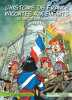
L'histoire de France racontée aux enfants Tome 4 : Le siècle des Lumières
Editions Clémentine 2018 100 pages 22 6x31x0 8cm. 2018. Album. 100 pages.
Bon état

