 Write to the booksellers
-
Type
Book (7812)
Disk (44)
Drawings (1)
Engraving (9)
Magazine (89)
Maps (4)
Music sheets (135)
New book (2)
Old papers (1)
Photographs (19)
Posters (1)
-
Latest
Last 24h (4)
Last 3 days (2)
Last month (1063)
Last week (2)
-
Language
Czech (1)
Dutch (9)
English (156)
French (7938)
German (4)
Italian (2)
Latin (3)
Russian (4)
-
Century
16th (17)
17th (43)
18th (199)
19th (884)
20th (2804)
21st (1766)
-
Countries
Belgium (1165)
Canada (32)
China (56)
Côte d'Ivoire (7)
Denmark (1063)
France (5444)
Germany (1)
Netherlands (181)
Switzerland (155)
United Kingdom (9)
United States of America (4)
-
Syndicate
ALAC (25)
CLAM (25)
CLAQ (2)
ILAB (2234)
NVVA (15)
SLACES (15)
SLAM (1026)
SNCAO (4)
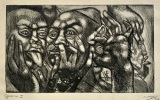
The Bronx Cheer.
Pointe sèche originale imprimée sur vélin, légendée Épreuve I, datée 1937 et signée au crayon en marge. Contrecollée sur une feuille libre et titrée The Bronx Cheer (14,8/24,8 cm).
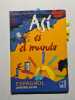
Asi es el mundo : 4e 2002 (livre de l'élève): Manuel de l'élève
BELIN EDUCATION 2002 194 pages 19 8x1x28 5cm. 2002. Broché. 194 pages.
Bon état
Mazoyer Elisabeth Berger Cyrille Mazoyer Jean-Patrick Montaigu Reynald
Reference : 500248216
(2014)
ISBN : 9782701189833
¡Asì somos! - 2e (2014): Manuel élève
BELIN EDUCATION 2014 256 pages 21x1 4x27 8cm. 2014. Broché. 256 pages.



Bon état
Mazoyer Elisabeth Berger Cyrille Mazoyer Jean-Patrick Montaigu Reynald
Reference : 500272993
(2014)
ISBN : 9782701189833
¡Asì somos! - 2e (2014): Manuel élève
BELIN EDUCATION 2014 256 pages 21x1 4x27 8cm. 2014. Broché. 256 pages.

Bon état
Les Cours: De la Renaissance italienne au Paris d'aujourd'hui
Actes sud 2007 230 pages 16 8x2 6x21 8cm. 2007. Broché. 230 pages.

intérieur propre bonne tenue
Town and Countryside in the Age of the Black Death, Essays in Honour of John Hatcher
, Brepols, 2012 hardback, XXXVIII 473 p., 58 b/w ill., 156 x 234 mm, Languages: English, Hardback,. ISBN 9782503535173.
This collection of essays by many of the leading scholars of the medieval English economy focuses on one of the most fascinating periods in English social and economic history and provides a worthy tribute to the pioneering work of John Hatcher in this field. The arrival of the Black Death in England, which killed around a half of the national population, marks the beginning of one of the most fascinating, controversial and important periods of English social and economic history. This collection of essays on English society and economy in the later Middle Ages provides a worthy tribute to the pioneering work of John Hatcher in this field. With contributions from many of the most eminent historians of the English economy in the later Middle Ages, the volume includes discussions of population, agriculture, the manor, village society, trade, and industry. The book?s chapters offer original reassessments of key topics such as the impact of the Black Death on population and its effects on agricultural productivity and estate management. A number of its studies open up new areas of research, including the demography of coastal communities and the role of fairs in the late medieval economy, whilst others explore the problems of evidence for mortality rates or for change within the village community. Bringing together broad surveys of change and local case studies based on detailed archival research, the book?s chapters offer an assessment of previous work in the field and suggest a number of new directions for scholarship in this area. Table of Contents
Cent oeuvres de Gauguin Galerie Charpentier
Marval 1996 416 pages in8. 1996. Broché. 416 pages.

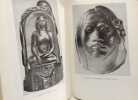
Bon Etat général couverture défraîchie premier plat taché intérieur propre
1001 secrets sur le café - Pour découvrir, déguster et savourer le café en toute volupté !
Prat éditions. 2014. In-12. Relié. Bon état, Couv. convenable, Dos satisfaisant, Intérieur frais. 309 pages - jaquette en bon état - signet conservé - nombreux dessins en noir et blanc dans le texte - nombreuses photos en couleurs hors texte.. Avec Jaquette. . . Classification Dewey : 633.7-Plantes alcaloïdes (tabac, thé, cacao, café, pavot)

Illustrations de Lise Herzog - Avec la collaboration de Thierry Layec - Plus de 40 recettes. Classification Dewey : 633.7-Plantes alcaloïdes (tabac, thé, cacao, café, pavot)


Gulf Conflict: A Military Analysis (Adelphi Papers)
Brassey's (UK) Ltd 1993 91 pages 14 8x0 6x21 4cm. 1993. Broché. 91 pages.
Bon état quelques pages cornées
McGlone Robert E. (University of Hawaii Manoa)
Reference : 100145264
(2009)
ISBN : 9780521514439
John Brown's War against Slavery
Cambridge University Press 2009 462 pages 16 51x3 556x23 368cm. 2009. Cartonné jaquette. 462 pages. L'ouvrage de Garry Wills analyse le Discours de Gettysburg d'Abraham Lincoln soutenant que ce bref discours a fondamentalement redéfini l'identité américaine en réinterprétant les idéaux fondateurs de la nation. En examinant le contexte historique et culturel Wills donne une nouvelle vie à ce texte célèbre et révèle la profondeur rhétorique et l'impact d'un président souvent mal compris
Très bon état
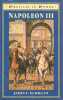
Napoleon III (Profiles In Power).
Routledge, 1991 21,21 x 13,59 x 1,14 cm., 196 pp, Broché
- - VENTE PAR CORRESPONDANCE UNIQUEMENT - LIEN DE PAIEMENT, NOUS CONSULTER.
THE OTHER HOLLIWOOD - L'histoire du porno Américain par ceux qui l'ont fait.
ALLIA Fort volume broché au format 175x220mm, couverture rouge rempliée glacée et titrage en noir et blanc, 782 pages, index et importante iconographies dans le texte en noir -Très bel exemplaire sous tous rapports.
Très Bon Etat Mise à jour du Samedi 27 Juin 2026. Paiement PayPal immédiat, Mondial Relay pour : France, Allemagne, Autriche, Belgique, Espagne, Italie, Portugal, Luxembourg, Pays-Bas, Pologne (Communiquer votre point ou locker si connu). Une participation supplémentaire peut être demandée pour les colis lourds hors France où les envois compris entre 5 et 25 kg sont dégressifs : 2 à 4 kilogrammes - 7.99 / 5 à 10 kg - 15.99 / 15 -25 kg - 25.99. Certaines de nos collections ( Vian, Céline, Camus (...) peuvent être expédiées en Franco de port. Pour linternational hors Europe (Suisse, Canada, Japon, Etats-Unis, les frais dexpéditions peuvent varier selon le poids (mise à jour : 1 juin 2026).
Mettre en prose aux XIVe-XVIe siecles
, Brepols - Harvey Miller, 2010 Hardcover. 265 p., 156 x 234 mm, Languages: French, Including an index. Fine copy. ISBN 9782503533513.
Loin de concerner uniquement romans et poemes epiques ? comme le ferait penser l?etude magistrale de Georges Doutrepont (1939) ?, le phenomene ? mise en prose ? a touche aux XIVe-XVIe siecles tous les genres litteraires : vies de saints, ?uvres de derivation biblique, traites de devotion, nouvelles, pieces de theatre, voire la traduction en prose francaise de poemes anterieurs en langue etrangere. Revisites depuis une trentaine d?annees grace a de nombreuses editions critiques et a des etudes surtout litteraires, ces ? nouveaux ? textes meritaient une reflexion plus articulee : c?est ce qui a fait l?objet du IIIe Colloque de l?AIEMF (Association Internationale pour l?Etude du Moyen Francais), qui s?est tenu a Gargnano del Garda ? Universita degli Studi di Milano, du 28 au 31 mai 2008. Les contributions reunies ici analysent donc des ?uvres tres diverses, de trois points de vue : linguistique, philologique, litteraire.
MEDDELELSER FRA DANSK GEOLOGISK FORENING - BULLETIN OF THE GEOLOGICAL SOCIETY OF DENMARK.
Reference : 9111
(1894)
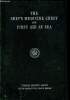
"The Ship's medicine chest and first aid at sea (Collection ""Miscellaneous Publication, n°9)"
Government Printing Office. 1940. In-8. Relié. Etat d'usage, Couv. convenable, Dos satisfaisant, Papier jauni. 207 pages. Texte en anglais. Rousseurs. Nombreuses illustrations en noir et blanc dans et hors texte. Quelques planches d'illustrations en noir et blanc.. . . . Classification Dewey : 420-Langue anglaise. Anglo-saxon
Classification Dewey : 420-Langue anglaise. Anglo-saxon
Dutch and Flemish Still-Life Paintings: bequeathed by Daisy Linda Ward
Waanders BV Uitgeverij 2005 336 pages 23 62x3 3x28 45cm. 2005. Cartonné jaquette. 336 pages.
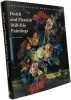
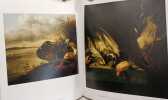
Bon état quelques rousseurs en tête intérieur propre avec sa jaquette
LE GRAND ESCROC (The confidence Man), traduit par Henri THOMAS, précédé d’un portrait de l’auteur par Nathaniel HAWTHORNE.
Les Editions de minuit, Paris, 1950
Un fort volume in-12°, broché couverture souple éditeur, 395 pages, 1ère édition (imprimé le 30 mai 1950), pages pour la plupart non rognées. Une traduction du grand Henri THOMAS. Quelques légères marques du temps et d’usage. Mais exemplaire TRÈS SATISFAISANT
Moby-Dick or The Whale. / A Limited Edition.
Franklin Center, Pennsylvania, The Franklin Library, 1974. In-8 (22,9 cm) xxvii, (1), 522 pages, orné de lettrines. Reliure plein cuir noir. Entre-nerfs et plats ornés de fleurons, encadrements et croisillons de losanges dorés. Toutes tranches dorées. Signet et gardes de soie bleue moirées. Très bel état.
Pièce jointe : « Note from the Editors "sur le Moby-Dick de Melville" ». Livret non paginé de 20 pages. [ Publié exclusivement pour les souscripteurs de la collection « The 100 Greatest Books of All Time » ].
Memory as a Journal #5
2023 - broché - Numéro 5 - Spring/Summer 2023 - Revue éditée par le Lithuanian Culture Institute (LCI) - In-8 (28 x 21 cm) broché - 120 pages - Très nombreuses photographies - Daiva PRICE (Guest editor) - Kotryna LINGIENE (Editor) - ISBN : 9772783568008 - Textes en anglais - A PROPOS : Nous vivons dans un monde de « guerres de la mémoire ». Un monde où se joue une lutte permanente pour le droit de se souvenir, pour le droit à son histoire, à ses souvenirs, à son identité. La rédactrice invitée de ce numéro est l'historienne de l'art et commissaire Dr Daiva Price. Dans Memory as a Journal, la commissaire se demande : comment parler d'histoire quand le présent est en compétition avec le passé ? Comment parler de la Seconde Guerre mondiale alors que la guerre en Ukraine se déroule maintenant ? Comment devons-nous nous souvenir lorsque la mémoire est traumatique ? - SOMMAIRE : Memory against the National Grain (Prof. James E. YOUNG) - A Week in August (Manca BAJEC, Drawings by Vesta KROESE) - ...Without being able to Remember, They cannot Heal (Linara DOVYDAITYTE) - 1944-1991 (Indré SERPYTYTE) - Balancing History in the Course of Time (Robert VAN VOREN) - Memory as a Trauma - ...
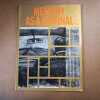
Bon état
"MENDELEJEFF, (MENDELÉEV, MENDELEYEV, MENDELÉEFF), DIMITRY IVANOVICH. - THE DECISIVE CONFIRMATION OF MENDELEEV'S PERIODIC TABLE OFTHE ELEMENTS.
Reference : 47272
(1875)
Remarque à propos de la découverte du gallium.
Paris, Gauthier-Villars, 1875. 4to. No wrappers. In: ""Comptes Rendus Hebdomadaires des Séances de L'Academie des Sciences"", Tome 81, No 21. Pp. (909-) 992. With titlepage to vol. 81. A stamp to verso of titlepage, showing on recto. Mendelejeff's paper: pp. 969-972.
First apperance of this importent paper which established that Gallium is identical with Eka-aluminum (the missing element between Aluminum and Indium) in Mendelejeff's periodic table. The properties of the new element corresponded well with those predicted. A bitter contorversy was raised between the discoverer of Gallium, Lecog de Boisbaudran and Mendelejeff. ""The discovery of the three elements predicted by Mendeleev was, however, of decisive importance in the acceptance of his law. In 1875 Lecoq de Boisbaudran, knowing nothing of Mendeleev’s work, discovered by spectroscopic methods a new metal, which he named gallium. Both in the nature of its discovery and in a number of its properties gallium coincided with Mendeleev’s prediction for eka-aluminum, but its specific weight at first seemed to be less than predicted. Hearing of the discovery, Mendeleev sent to France ""Zametka po povodu otkrytia gallia"" (the paper offered) (""Note on the Occasion of the Discovery of Gallium""), in which he insisted that gallium was in fact his eka-aluminum. Although Lecoq de Boisbaudran objected to this interpretation, he made a second determination of the specific weight of gallium and confirmed that such was indeed the case. From that moment the periodic law was no longer a mere hypothesis, and the scientific world was astounded to note that Mendeleev, the theorist, had seen the properties of a new element more clearly than the chemist who had empirically discovered it. From this time, too, Mendeleev’s work came to be more widely known""(DSB).Parkinson Breakthroughs"" 1875 C.
"MENDELÉEFF, D. (MENDELÉEV, MENDELEYEV, MENDELÉEFF). - THE DECISIVE CONFIRMATION OF MENDELEEV'S PERIODIC TABLE OFTHE ELEMENTS.
Reference : 49528
(1875)
Remarque à propos de la découverte du gallium.
Paris, Gauthier-Villars, 1875. 4to. No wrappers. In: ""Comptes Rendus Hebdomadaires des Séances de L'Academie des Sciences"", Tome 81, No 21. Pp. (909-) 992. With titlepage to vol. 81. Mendelejeff's paper: pp. 969-972. Titlepage lightly browned and with a punched stamp in lower margin. Otherwise clean and fine.
First apperance of this importent paper which established that Gallium is identical with Eka-aluminum (the missing element between Aluminum and Indium) in Mendelejeff's periodic table. The properties of the new element corresponded well with those predicted. A bitter contorversy was raised between the discoverer of Gallium, Lecog de Boisbaudran and Mendelejeff. ""The discovery of the three elements predicted by Mendeleev was, however, of decisive importance in the acceptance of his law. In 1875 Lecoq de Boisbaudran, knowing nothing of Mendeleev’s work, discovered by spectroscopic methods a new metal, which he named gallium. Both in the nature of its discovery and in a number of its properties gallium coincided with Mendeleev’s prediction for eka-aluminum, but its specific weight at first seemed to be less than predicted. Hearing of the discovery, Mendeleev sent to France ""Zametka po povodu otkrytia gallia"" (the paper offered) (""Note on the Occasion of the Discovery of Gallium""), in which he insisted that gallium was in fact his eka-aluminum. Although Lecoq de Boisbaudran objected to this interpretation, he made a second determination of the specific weight of gallium and confirmed that such was indeed the case. From that moment the periodic law was no longer a mere hypothesis, and the scientific world was astounded to note that Mendeleev, the theorist, had seen the properties of a new element more clearly than the chemist who had empirically discovered it. From this time, too, Mendeleev’s work came to be more widely known""(DSB).Parkinson Breakthroughs"" 1875 C.

