 Write to the booksellers
-
Type
Book (7247)
Disk (45)
Drawings (1)
Engraving (9)
Magazine (89)
Maps (4)
Music sheets (135)
New book (2)
Old papers (1)
Photographs (19)
Posters (1)
-
Latest
Last 24h (1)
Last 3 days (1)
Last month (118)
Last week (857)
-
Language
Czech (1)
Dutch (9)
English (156)
French (7374)
German (4)
Italian (2)
Latin (3)
Russian (4)
-
Century
16th (17)
17th (43)
18th (199)
19th (882)
20th (2480)
21st (1563)
-
Countries
Belgium (1156)
Canada (32)
China (56)
Côte d'Ivoire (7)
Denmark (1063)
France (4889)
Germany (1)
Netherlands (181)
Switzerland (155)
United Kingdom (9)
United States of America (4)
-
Syndicate
ALAC (25)
CLAM (25)
CLAQ (2)
ILAB (2245)
NVVA (15)
SLACES (15)
SLAM (1037)
SNCAO (4)
EYE STALK HORMONES, POST MOULT VOLUME INCREASE AND NITROGEN METABOLISM IN THE CAB ERIOCHEIR SINENSIS ( M. EDW. )/ HORMONEN VAN DE OOG-STELEN, VOLUMETOENAME NA VERVELLING EN STIKSTOFMETABOLISME BIJ DE KRAB ERIOCHEIR SINENSIS ( M. EDW. ) ( Samenvatting ),
, Brussel, Paleis der Academien, 1952, onder papieromslag, 180 x 260mm., 11pp.
Mededelingen van de Koninklijke Vlaamse Academie voor Wetenschappen, Letteren en Schone Kunsten van Belgie. Klasse der Wetenschappen, Jaargang XIV, 1952 - nr 14.
Double Lives: Stalin Willi Munzenberg and the Seduction of the Intellectuals
HarperCollins Publishers Ltd 1995 419 pages in8. 1995. Cartonné jaquette. 419 pages.

Bon Etat intérieur propres ex-libris
Constructing Saints in Greek and Latin Hagiography. Heroes and Heroines in Late Antique and Medieval Narrative
, Brepols, 2023 Hardback, 182 pages, Size:156 x 234 mm, Illustrations:1 b/w, Language(s):English, French. ISBN 9782503602820.
Summary This book explores representations of saints in a variety of Latin and Greek late antique hagiographical narratives, such as saints' Lives, martyr acts, miracle collections, and edifying tales. The book examines techniques through which the saints featured in such texts are depicted as heroes and heroines, i.e., as extraordinary characters exhibiting both exemplary behaviour and a set of specific qualities that distinguish them from others. The book inscribes itself in a growing body of relatively recent scholarship that approaches hagiographical accounts not just as historical sources but also as narrative constructions. As such, it contributes to the development of a scholarly rationale which increasingly values imaginative and fictional aspects of hagiography in their own right, with the aim of answering broader questions about narrative creativity and ideology. For instance, individual chapters examine how hagiographical accounts mobilize and capitalize on earlier literary and rhetorical traditions or narrative models. These questions are specifically addressed to explore the narrative construction of characters. The chapters thereby encourage us to acknowledge that many hagiographers were more skilful than is often accepted. TABLE OF CONTENTS Saints, Narratives, and Hero(in)es: Scholarship, Definitions, and Concepts ? KOEN DE TEMMERMAN Saints and Secondary Heroes in Byzantine Hagiography ? STEPHANOS EFTHYMIADIS Rh torique de l' loge et construction des mod les de saintet dans l'hagiographie africaine (IIe-VIe si cles) ? SABINE FIALON Listen to Her: Rewriting Virgin Martyrs as Orators in the Byzantine Passions of St. Tatiana and St. Ia ? ANNE ALWIS Fail Again. Fail Better. Notker Balbulus cum suis on the Impossibility of Writing the Life of St. Gallus ? PIET GERBRANDY Character Types and Characterization in Byzantine Edifying Stories ? MARK TA KULH NKOV Money and Sainthood: Doctor Saints as Christian Heroes ? CHRISTIAN H GEL An Unstable Heroine: The Life and Lives of Constantina ? VIRGINIA BURRUS Index
"KOENIG (KÖNIG), SAMUEL. - GIVING RISE TO ONE OF THE UGLIEST SCIENTIFIC CONTROVERSIES.
Reference : 46906
(1751)
De universali Principio aequilibrii & motus, in Vi viva reperto, deque nexu inter Vim Vivam & Sctionem, utriusque Minimo, Dissertatio. (+) ...continuata & finita. (2 Parts).
Leipzig, Gleditsch & Lanckis, 1751. 4to. No wrappers. In: ""Nova Acta Eruditorum, Anno MDCCLI"", March- Issue, Pars I-II. Entire issue in 2 parts offered. With titlepage to the volume 1751. Pp. 97-192. Koenig's paper: pp. 125-135 a. pp. 162-176. With 2 engraved plates. Titlepage with 2 stamps and a bit soiled. Leaves as usual a bit browned.
First printing of this important paper in which Koenig set forth his ""Law of least Action"". The law states that the kinetic energy of a system of mass points is equal to the sum of the kinetic energy of the motion of the system relative to the center of gravity and of the kinetic energy of the total mass of the system considered as a whole, which moves as the center of gravity of the system.""While still in Franeker, Koenig wrote the draft of his important essay on the principle of least action, which was directed against Maupertuis. The controversy touched off by this work, which was published in March 1751, resulted in perhaps the ugliest of all the famous scientific disputes. Its principal figures were Koenig, Maupertuis, Euler, Frederick II, and Voltaire" and, as is well known, it left an unseemly stain on Euler’s otherwise untarnished escutcheon. The quarrel occupied Koenig’s last years almost completely" moreover, he had been ill for several years before it started. Koenig emerged the moral victor from this affair, in which all the great scientists of Europe—except Maupertuis and Euler—were on his side. The later finding of Kabitz2 testifies to Koenig’s irreproachable character.""(DSB).

FINANCIAL MARKETS
John wiley & sons 1996 368 pages 19x2 4x23 2cm. 1996. Broché. 368 pages.

Bon Etat couverture un peu défraîchie intérieur propre
DER GUDE SENTE SERVAS. DE SERVATIUSLEGENDE EN DE SERVATIANA : EEN ONDERZOEK NAAR DE BEELDVORMING ROND EEN HEILIGE IN DE MIDDELEEUWEN. DE GESCHIEDENIS VAN DE KERKSCHAT VAN HET SINT-SERVAASKAPITTEL TE MAASTRICHT, DEEL 1,
, Maastricht, Van Gorcum - Assen, 1985, Gebonden, zwart linnen met goudopdruk onder geillustreerde stofomslag, frontispice, 205 x 255mm., 357pp., uitgebreide z/w illustratie.
Volume 5: Maaslandse Monografieen. I. De sociaal - culturele betekenis van Sint - Servaas te Mechelen II. De Servatiuslegende III. De Servatiana IV. De Sint - Servaaskerk en de schatkamer van het Servaaskapittel in reis- en plaatsbeschrijvingen. In goede staat.
The Soviet Military And The Communist Party
Westview Press 1985 429 pages 14 86x1 85x21 41cm. 1985. Broché. 429 pages.

proche du très bon état couverture un peu défraîchie intérieur propre
Ma maman et moi: Les premiers jours des bébés animaux
ACTES SUD 2019 48 pages 18 4x22 2x1 2cm. 2019. Relié. 48 pages.

Très bon état
Ma maman et moi: Les premiers jours des bébés animaux
ACTES SUD 2019 48 pages 18 4x22 2x1 2cm. 2019. Relié. 48 pages.

Très Bon Etat
Ma maman et moi: Les premiers jours des bébés animaux
ACTES SUD 2019 48 pages 18 4x22 2x1 2cm. 2019. Relié. 48 pages.

Très Bon Etat
Ma maman et moi: Les premiers jours des bébés animaux
ACTES SUD 2019 48 pages 18 4x22 2x1 2cm. 2019. Relié. 48 pages.

Comme neuf - livre issu de destockage - pouvant présenter d'infimes traces de stockage - Expédié soigneusement dans emballage adapté
Ma maman et moi: Les premiers jours des bébés animaux
ACTES SUD 2019 48 pages 18 4x22 2x1 2cm. 2019. Relié. 48 pages.

Très bon état - légères marques de lecture et/ou de stockage mais du reste en très bon état- expédié soigneusement depuis la France
Ma maman et moi: Les premiers jours des bébés animaux
ACTES SUD 2019 48 pages 18 4x22 2x1 2cm. 2019. Relié. 48 pages.

Très bon état - légères marques de lecture et/ou de stockage mais du reste en très bon état- expédié soigneusement depuis la France
Ma maman et moi: Les premiers jours des bébés animaux
ACTES SUD 2019 48 pages 18 4x22 2x1 2cm. 2019. Relié. 48 pages.

Bon état
Ma maman et moi: Les premiers jours des bébés animaux
ACTES SUD 2019 48 pages 18 4x22 2x1 2cm. 2019. Relié. 48 pages.

Bon état
Ma maman et moi: Les premiers jours des bébés animaux
ACTES SUD 2019 48 pages 18 4x22 2x1 2cm. 2019. Relié. 48 pages.

Très bon état
Ko Mireille Boehrer Paul Debleds Evelyne Delmas-Massouline Marie-Francoise
Reference : 500125089
(2001)
ISBN : 9782011352606
Bibliographie ethnographique du congo et des regions avoisinantes
Musée royal de l'Afrique Centrale Tervuren BE 1959 in8. 1959. Broché.
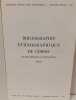
Très bon état intérieur propres
Illustrated History of the USSR
Novosti Press Agency Publishing House 1982 175 pages in8. 1982. broché. 175 pages.


Bon état couverture légèrement usagée intérieur propre
DISQUE VINYLE 33T AS ONE / STREET KIDS / BIG FUN / HI DE HI, HI DE HO / LET'S GO DANCIN' OOH LA, LA, LA / PRETTY BABY..
VOGUE. 1982. In-12. Broché. Etat d'usage, Couv. convenable, Dos satisfaisant, Intérieur frais. Pochette légèrement passée et décollée. Paroles dans la pochette. Photos du groupe sur le dos de la pochette.. . . . Classification : 410-33 Tours


Classification : 410-33 Tours

DISQUE VINYLE MAXI 45T MISLED.
VOGUE. 1985. In-12. Broché. Bon état, Couv. convenable, Dos satisfaisant, Intérieur frais. Pochette légèrement décollée.. . . . Classification : 410-33 Tours
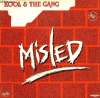
Classification : 410-33 Tours
KOOL AND THE GANG - Bell Ronald,Taylor James,KOOL AND THE GANG - Bell Ronald,Taylor James,KOOL AND THE GANG
Reference : 98305
(1986)
"KOOPMAN, B. O. - GEORGE D. BIRKHOFF. - THE ERGODIC THEOREM DISCOVERED AND PROVED
Reference : 48257
(1931)
Hamiltonian Systems and Transformation in Hilbert Space. (Koopman) (+) Proof of a Recurrence Theorem for strongly transitive Systems. (Birkhoff) (+) Proof of the Ergodic Theorem. (Birkhoff).
Easton, PA., Mack printing Compagny, 1931. Royal8vo. Contemp. full cloth. Spine gilt and with gilt lettering. In: ""Proceedings of the National Academy of Sciences of the United States of America"", Vol. 17. VII,710 pp. (Entire volume offered). The papers: pp. 315-318, 650-655 and 656-660.
First editions of these importent papers in statistical mechanics. The so-called Koopman-von Neumann mechanics is a description of classical mechanics in terms of Hilbert space, introduced by Bernard Koopman (the paper offered) and John von Neumann in 1931 and 1932. Ergodicity was introduced by Boltzmann, but the modern theory started from the paper by Koopman, and has been a cornerstone of statistical mechanics since. The ergodic method has found impressive applications in the fields of statistical mechanics, number theory, probability theory, harmonic analysis, and combinatorics.As Koopman and von Neumann demonstrated, a Hilbert space of complex, square integrable wavefunctions can be defined in which classical mechanics can be formulated as an operatorial theory similar to quantum mechanics.Birkhoff's proof (in the third paper offered) of ""the ergodic theorem was deemed as importent as his proof of Poincare's geometric theorem"" (Landmarks Writing in Western Mathematics 1640-1940, p. 877).
Sue la transmission de photographies à l'aide d'un fil télégraphique. (Transmission of photographs by telegraph wire).
(Paris, Gauthier-Villars), 1903. 4to. No wrappers. In: ""Comptes Rendus Hebdomadaires des Séances de L'Academie des Sciences"", Tome 136, No 20. Pp. (1165-) 1216. (Entire issue offered). Korn's paper: pp. 1190-1192 and one diagram in the text. Disbound.
First printing of one the papers in which Korn describes his invention in 1902 of the telephotographic machine (later the fax-machine).In 1902, Arthur Korn (1870-1945) in Germany invented telephotography, a means for transmitting still photographs by means of electrical wires. In 1907, Korn sent the first inter-city fax when he transmitted a photograph from Munich to Berlin. By 1906 his equipment was being put into regular service for transmission of newspaper photographs between Munich and Berlin via telegraph circuits. (Shiers & Shiers ""Early Televison"" No.303).

