 Write to the booksellers
-
Type
Book (7280)
Disk (45)
Drawings (1)
Engraving (9)
Magazine (89)
Maps (4)
Music sheets (134)
New book (4)
Old papers (1)
Photographs (19)
Posters (1)
-
Latest
Last 24h (2)
Last 3 days (3)
Last month (120)
Last week (855)
-
Language
Czech (1)
Dutch (18)
English (162)
French (7392)
German (4)
Italian (2)
Japanese (1)
Latin (3)
Russian (4)
-
Century
16th (17)
17th (43)
18th (199)
19th (885)
20th (2497)
21st (1572)
-
Countries
Belgium (1177)
Canada (32)
China (56)
Côte d'Ivoire (7)
Denmark (1063)
France (4893)
Germany (1)
Netherlands (181)
Switzerland (161)
United Kingdom (12)
United States of America (4)
-
Syndicate
ALAC (25)
CLAM (46)
CLAQ (2)
ILAB (2272)
NVVA (15)
SLACES (15)
SLAM (1040)
SNCAO (4)
Union forcée
Harlequin Sans date. Union forcée est un roman de romance écrit par Kim Lawrence publié en 2003 par les éditions Harlequin. Il s'agit de la traduction de "The Blackmailed Bride". L'auteure une lectrice assidue de Mills & Boon s'est lancée dans l'écriture de romans sentimentaux
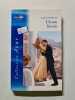
Très bon état
Reponse de S.M. le Roi de Prusse a Mr. de Voltaire - Svar fra H.M. Kongen af Preussen til Mr. de Voltaire.
(No place, nor printer, ca. 1757). 4to. In contemporary full calf with six raised bands and gilt lettering and ornamentation to spine. Boards with miscolouring and a hole in the leather to front board. Ex-libris pasted on to pasted down front end-paper. Bi-lingual text in French and Danish. Printed on good paper. A nice copy. (8) pp.
First appearance of this correspondence between Frederick the Great, King of Prussia, and Voltaire, the famous French Enlightenment philosopher and writer. The relationship between Voltaire and Frederick the Great is one of the most celebrated of the Age of Enlightenment. It was initiated by the young Prussian crown prince in August 1736 and they met for the first time in September 1740, a few months after Frederick succeeded his father as King. In a period Voltaire resided at Frederick's court in Potsdam. OCLC only list three copies, all in Denmark.

Seven Happy Days
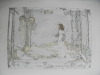
Une série de dessins par Jessie M.King avec Citation de John Davidson et autre.A Series of Drawings by Jessie M. KIG with Quotation from John Davidson & Other.In 4 broché, couverture blanche,muette,rempliée,titre 15 pages,15 illustrations pleine page dont 7,superbes,en couleurs, avec des petits rehauts d’or ou d’argent.Christmas supplement To the STUDIO 1913.Très bon état.L’ensemble(y compris la couverture )sur papier beau papier couché.RARE.Jessie Marion King est connue pour son style Art Nouveau(école de GLASGOW)elle a également conçu des bijoux,des cartes de vœux,tissus,céramiques et textiles batik,et en particulier, des peintures murales. Jessie Marion KING est née à Bearsden,Glasgow,et,malgré la désapprobation de sa famille,a étudié à la Glasgow School of Art de 1892 à 1899 avec l'intention de devenir professeur d'art.Entre 1899 et 1907,elle a enseigné à l'école de Glascow.Elle a vécu à Paris.Quintessence du Style ART NOUVEAU
artist by himself. Self-portraits from youth to old age.
London, Granada publishing, 1980 Bound, green cloth, dustjacket, 224pp., 19.5x25.5cm., b/w. ills., fine copy. ISBN 0236401602.
Dr. Brook Taylor's method of perspective, made easy, both in theory and practice. In two books. Being an attempt to make the art of perspective easy and familiar; to adapt it intirely to the arts of design; and to make it an entertaining study to any gentleman who shall chuse so polite an amusement.
Ipswich, W. Craighton for the author, 1754. In-4 de [4]-IV-XVI-[2]-78-[2]-84 pages, plein veau brun, dos à nerfs orné de filets dorés, pièce de titre en maroquin rouge, double filet d'encadrement doré sur les plats, roulette à froid sur les coupes.[]4; A4-[a4]-errata-B-L4; A-K4; L2.
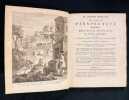
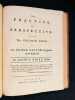
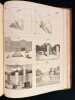
Illustré de 50 planches hors-texte dont un joli frontispice dessiné par William Hogarth et gravé par L. Sullivan dont la légende est la suivante: "Whoever makes a design without the knowledge of perspective will be liable to such absurdities as are shewn in this frontispiece". Édition originale publiée au frais de l'auteur. Son succès fut énorme et elle fut immédiatement épuisée, nécéssitant une seconde édition en 1755. Le texte est divisé en deux parties, la première consacrée à la théorie, la seconde à la pratique. L'ouvrage est dédicacé à William Hogarth. Ou l'on apprend, grâce à la liste des souscripteurs que ce dernier avait acquis 6 exemplaires du volume, mais on peut également voir Thomas Gainsbourough, qui a contribué à l'ouvrage par un paysage finement gravé, l'une des trois seules eaux-fortes que Gainsbourough ait jamais exécutées. Kirby lui-même était le dessinateur du prince de Galles, le futur roi George III. Bien complet du feuillet d'errata qui est relié entre la table des matière et le début du texte.
Les animaux impossibles
TEMPS PRESENT 2014 142 pages collection Collection : démons & merveilles. 15 6x1 4x21 8cm. 2014. Broché. 142 pages.
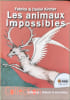
Très bon état
"KIRCHHOFF, G. (GUSTAV ROBERT). - FOUNDING ASTRO-PHYSICS - THE SOLAR SPECTRUM (PMM 278) - FRENCH VERSION.
Reference : 44144
(1863)
Recherches sur le Spectre solaire et sur les Spectres des Corps Simples. Traduit de l'allemand, par M.L. Grandeau. (Premier-) Seconde Partie. (2 Papers).
Paris, Victor Masson et Fils, 1863 a. 1864. Boundin 2 contemp. hcalf. Gilt spines, raised bands, light wear along edges. In: ""Annales de Chimie et de Physique"", 3e Series - Tome 68 a. 4e Series, tome 1. 512 pp. a. 5 large folded engraved plates. + 512 pp. a. 3 large folded engraved plates. Kirchhoff's papers: pp. 5-45 a. pp. 396-411. 5 plates belongs to K's papers, 4 showing spectra and 1 plate (double page) depicts the famous spectroscope invented by K. and used by K. and Bunsen in their importent analysis of the spectra of the elements.
First edition in French of Kirchhoff's milestone papers on the interpretation of the dark D lines - noticed by Fraunhofer in 1814 - in the spectrum of the sun, the papers that inspired Max Planck to his theory of quanta (1900). The papers are the French translations of his papers published in Abhandl. d. königl. Akad. d. Wissenscchaften in Berlin in 1861 and 1862.In the course of his preparatory work in the autumn of 1859, Kirchhoff made an unexpected observation. It had long been known that the dark D lines, noticed in the solar spectrum by Fraunhofer (1814), coincided with the yellow lines emitted by flames containing sodium.....Kirchhoff's unexpected discovery was that if the intensity of the solar spectrum increased above a certain limit, the dark D lines were made much darker by the interrposition of the sodium flame. He instantly felt that he had got hold of ""something fundamental"", even though he was at a loss to suggest an explanation. On the day following the surprising observation, Kirchhoff found the the correct interpretation, which wass soon confirmed by new experiments: a substance capable of emittiing a certain spectral line has a strong absorptive power for the same line....The dark D lines in the solar spectrum could accordingly be ascribed to absorption by a solar atmosphere containing sodium. Immense prospects thus opened up of ascertaining the chemical composition of the sun and other stars from the study of their optical spectra. A few more weeks sufficed for Kirchhoff to elaborate a quantitative theory of the relationship between emissive and absorptive poweer.""(DSB VII, pp. 381-82).PMM, 278 b. - Barchas, 1169-70 - Sparrow, 117 - Horbli, 59 - Dibner, 153 (the note).
"KIRCHHOFF, G. (GUSTAV ROBERT).- THE KEY TO THE NEW WORLD OF QUANTA - INTRODUCING ""BLACK-BODY RADIATION""
Reference : 44131
(1861)
Du Rapport entre le pouvoir émissif et le pouvoir absorbant des Corps pou la Chaleur et la Lumière. Traduit de l'allemand par Georges Leclanche.
Paris, Victor Masson et Fils, 1861. Without wrappers. In: ""Annales de Chimie et de Physique"", 3e Series - Tome 62, Cahier Juin 1861. Titlepage to vol. 62. Pp. 129-256. (The entire issue offered). Kirchhoff's paper: pp. 160-192. Small stamps to verso oftitlepage.
First French edition of a milestone paper by ""The Grandfather of Quantum Theory"" in which he formulates the law named after him, ""KIRCHHOFF'S LAW"", which was the ""key to the whole thermodynamics of radiation. In the hands of Planck, Kirchhoff's successor to the Berlin chair, it proved to be the key to the new world of the quanta, well beyond Kirchhoff's conceptual horizon.""(DSB, VII, p.382).""Kirchhoff's Law of Thermal Emission was formulated in 1859 (Über das Verhältnis....) - the paper offered here in the first French version. It is at the same time the simplest and least understood law in physics. Kirchhoff's law states that given thermal equilibrium with an enclosure, the radiation inside will be always black, or normal, in a manner which is independent of the nature of the walls, or the objects they contain. This is known as the concept of universality. That is, that radiation within an enclosure can always be described by a universal function dependent only ontemperature and frequency. This universal function was first given us by Max Planck, in 1900. Kirchhoff's law STANDS AT THE HEARTH OF ALL MODERN ASTROPHYSICS. It is the basis for setting the temperature of the stars, for the gaseous model of the Sun, and for believing that we now know the temperature of the entire universe.""(Pierre-Marie Robitaille)..The research background for the paper was his unexpected observation that if the intensity of the solar spectrum increased above a certain limit, the dark D lines were made much darker by the interposition of the sodium flame. he instantly felt, that he had got hold of ""something fundamental"". Another notable, and importent paper in the development of photography, is in the same issue ALPHONSE POITEVIN ""De l'Action chimique de la Lumiere sur les Substances organiques. Son emploi à l'impression photographique.""Pp. 192-210.
"KIRCHHOFF, G. (GUSTAV ROBERT).- THE KEY TO THE NEW WORLD OF QUANTA - INTRODUCING ""BLACK-BODY RADIATION""
Reference : 43085
(1860)
Über das Verhältnis zwischen dem Emissionsvermögen und dem Absorptionsvermögen der Körper für Wärme und Licht. (On the relation between the radiating and the absorbing powers of different bodies for light and heat). (+) Über die Frauenhofer'schen Lin...
Leipzig, Johann Ambrosius Barth, 1860. Contemp. hcalf, raised bands, gilt spine. A few scratches to spine. In ""Annalen der Physik und Chemie. Hrsg. von J.C. Poggendorff"", Bd. 109. X,660 pp. and 4 folded engraved plates. Kirchhoff's papers: pp. 275-301 and pp. 148-150. Internally clean and fine. Small stamps to verso of titlepage and plates.
First printing of a milestone paper by ""The Grandfather of Quantum Theory"" in which he formulates the law named after him, ""KIRCHHOFF'S LAW"", which was the ""key to the whole thermodynamics of radiation. In the hands of Planck, Kirchhoff's successor to the Berlin chair, it proved to be the key to the new world of the quanta, well beyond Kirchhoff's conceptual horizon.""(DSB, VII, p.382).""Kirchhoff's Law of Thermal Emission was formulated in 1859 (Über das Verhältnis....) - the paper offered. It is at the same time the simplest and least understood law in physics. Kirchhoff's law states that given thermal equilibrium with an enclosure, the radiation inside will be always black, or normal, in a manner which is independent of the nature of the walls, or the objects they contain. This is known as the concept of universality. That is, that radiation within an enclosure can always be described by a universal function dependent only ontemperature and frequency. This universal function was first given us by Max Planck, in 1900. Kirchhoff's law STANDS AT THE HEARTH OF ALL MODERN ASTROPHYSICS. It is the basis for setting the temperature of the stars, for the gaseous model of the Sun, and for believing that we now know the temperature of the entire universe.""(Pierre-Marie Robitaille)..The research background for the paper was his unexpected observation that if the intensity of the solar spectrum increased above a certain limit, the dark D lines were made much darker by the interposition of the sodium flame. he instantly felt, that he had got hold of ""something fundamental"". These observations are described in the second paper offered here ""Über die Frauenhofer'schen Linien..."" which was published first in 1859 in Monatsschrift der Berliner Academie.The volume contains many other importent papers in physics and chemistry, by C.F. Schönbein, Zöllner, H. Fizeau, Eisenlohr, W. Heine, Knoblauch, K.G. Neumann, W. Siemens etc.
"KIRCHHOFF, GUSTAVE ROBERT. - THE VELOCITY OF ELECTRICITY DETERMINED.
Reference : 45075
(1857)
Ueber die Bewegung der Elektricität in Drähten.
Leipzig, Johann Ambrosius Barth, 1857. Without wrappers. In ""Annalen der Physik und Chemie. Hrsg. von J.C. Poggendorff"", Bd. 100, No 2 . Pp. 177-252 a. 1 plate. (Entire issue offered). Kirchhoff's paper: pp. 193-217. With titlepage to volume 100.
First printing of an importent papers on the theory of electricity in conductors, telegraph-cables etc., determining the velocity of the electrical propagation. He found that the propagation velocity of electricity to be ""very close to the velocity of light in empty space"".""The work of Thomson on signalling along cables was followed in 1857 (the paper offered) by a celebrated investigation by Kirchhoff's, on the propagation of electrical disturbance along a telegraph wire of circular cross-section. (Whittaker ""A History of the Theories of Aether and Electricity"", pp. 230 ff.).""The field was still open (the nature of the electric current) when Kirchhoff entered it in 1857 with his own general theory of the motion of electricity in conductors. His first paper, in which he treated linear conductors from the same premises as Weber, turned out to coincide in all essentials with an investigation carried out by Weber shortly before but delayed in publication. Both physicists noticed a remarkable implication of their theory: in a perfectly conducting circuit, oscillating currents could be propagated with a constant velocity, independent of the nature of the conductors, and numerically equal to the velocity of light. Both Kirchhoff and Weber, however, pointing to the extreme character of the condition of infinite conductivity, dismissed this result as a mere accidental coincidence.""(DSB)
A World Fit for People: Thinkers from Many Countries Address the Political Economic and Social Problems of Our Time
New York University Press 1994 504 pages in8. 1994. Cartonné jaquette. 504 pages.
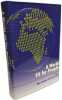
Très Bon Etat de conservation intérieur propre bonne tenue avec sa jaquette
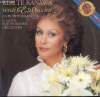
DISQUE VINYLE 33T TU CHE LE VANITA CONOSCESTI / TIMOR DI ME D'AMOR SULL' ALI / SE COME VOI / VISSI D'ARTE / QUANDO M'EN VO' SOLETTE / IN QUELLE TRINE MORBIDE...
CBS. 1983. In-12. Broché. Bon état, Couv. convenable, Dos satisfaisant, Intérieur frais. Par le London Philharmonic Orchestra sous la direction de John PRITCHARD. Photo de KIRI TE KANAWA sur la couverture.. . . . Classification : 410-33 Tours
Classification : 410-33 Tours

KIRKPATRICK J.- JACKSON R. - HARBISON J. - OLMTEAD A. -SAYLOR B. - LICHTENWANGER W. - CRAWFORD R. - SCHNEIDER W. - AUSTIN W.W. - NORTHCOTT B. - EYMAN B. - HAMM C. - PEYSER J. -
Reference : 89837
(1988)
The new grove : IVES - THOMSON - SESSIONS - COWELL - GERSHWIN - COPLAND - CARTER - BARBER - CAGE - BERNSTEIN
1988 Ed. W.W. Norton & Company - 1988 - In-12 broché - Texte en anglais - illustrations N&B - 311 pages
Bon état
Teaching and Impact of the 'Doctrinale' of Thomas Netter of Walden (c. 1374-1430) ,
Turnhout, Brepols, 2011 Hardback, XVI 298 p., 4 b/w tables, 156 x 234 mm. ISBN 9782503531793.
The first full-scale study of theologian Thomas Netter of Waldens Doctrinale, a work whose important response to the threat of Lollardy remained invaluable to later Counter-Reformation polemicists and apologists. Thomas Netter of Walden (c. 1374?1430) was a Carmelite friar, royal confessor, diplomat, religious superior, and theologian. His only extant theological work, the Doctrinale antiquitatum fidei catholicae ecclesiae contra Wiclevistas et Hussitas, was written with the purpose of combating the errors of Wyclif and his followers. For this reason, Netter's name and work are familiar mainly to those engaged in the study of Lollardy. Outside this field, Netter is almost unknown today, yet in his lifetime he was a highly regarded churchman who, it was said, could have had the pick of any diocese in England. From his death in 1430 until the middle of the eighteenth century Netter was a much-quoted and copied author whose exposition of Catholic teaching on subjects such as the Church, religious life, and the sacraments proved useful to many Counter-Reformation polemicists and apologists. This book is the first survey of the whole of the Doctrinale and it argues that there is more to Netter than anti-Lollard polemic. The author examines the principal topics in Netter's work : God, humanity, Christ, the Church, religious life, prayer, the sacraments ... and he makes the case that there is a definite plan which links the various parts of the Doctrinale into a whole giving it a certain theological unity. Medieval Church Studies (MCS 7). Languages: English, Latin. New.
The Organ Stoplist [ First Edition ]
1 vol. in-4 br., The Praestant Press, 1975, 136 pp. with a large folding plate
![The Organ Stoplist [ First Edition ]. KLAIS, Hans Gerd](https://static.livre-rare-book.com/pictures/CDL/55704_thumb.jpg)
![The Organ Stoplist [ First Edition ]. KLAIS, Hans Gerd](https://static.livre-rare-book.com/pictures/CDL/55704_2_thumb.jpg)
![The Organ Stoplist [ First Edition ]. KLAIS, Hans Gerd](https://static.livre-rare-book.com/pictures/CDL/55704_3_thumb.jpg)
Good copy (spind slightly rubbed, otherwise a very good copy)
Grain of Sand, Aleph Temple.
Important tirage photographique en couleurs monté dans un encadrement carré en bois, ajouré en cercle au centre. Très rare épreuve, peut-être tirée pour un essai de couleurs lors de la commercialisation d’une affiche en 1969. Mentions Mati Klarwein, Grain of Sand, Robert Crandall Assoc., 1968 sur le côté avec échelles chromatiques, petits manques de pigmentation dans la partie basse (111,5/117,2 cm dans un cadre de 122/122 cm).
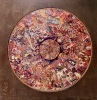
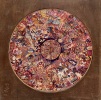
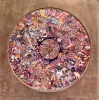
Initialement conçue en 4 quarts de plan entre 1963 et 1965 pour décorer le plafond d’un temple de méditation de 3 m3, la fresque fut baptisée Grain of Sand en référence à un poème des Chants de l’innocence de William Blake (« To see a world in a grain of sand, and a heaven in a wild flower, hold infinity in the palm of your hand and eternity in an hour. ») A son sujet l’artiste écrivait lui-même : « Pendant longtemps, j'ai voulu peindre un tableau que l'on pourrait accrocher au mur dans n'importe quel sens, un univers en rotation sans haut ni bas. Je l'ai projeté comme une sorte de comédie musicale peinte avec des milliers d'acteurs, orchestrés en sanskrit avec Marilyn Monroe, Anita Ekberg, Ray Charles, Pablo Picasso, Brigitte Bardot, Roland Kirk, Cannonball Adderley, Ahmed Abdul Malik, Wonderwoman, la fille du cimetière de Delacroix, (…). » Achevées en 1970, l’ensemble des fresques de l’Aleph Temple furent présentées à l’exposition itinérante Summer of Love : Art of the Psychedelic Era, organisée en 2007 par la Tate Liverpool. Dans la lignée des productions d’Abdul Mati Klarwein pour Miles Davis (Bitches Brew, Live/Evil) ou Carlos Santana (Abraxas), l’image fut reprise pour illustrer la pochette du disque New Generation des Chambers Brothers en 1971.
Jan Breughel der Jungere. Die Gemalde mit kritischem Oeuvrekatalog. Jan Breughel the Younger (1601-1978). The paintings with oeuvre catalogue.
, Freren, Luca-Verlag, 1984, Hardcover, no dustjacket, 575pp., 29x25cm., ills. in col. and b/w., fine copy. ISBN 3923641036.
Oeuvrecatalogue. German text with English summary.
IN THE DECO STYLE,
, New York, Rizzoli, 2002, Bound, black cloth, illustrated dustjacket, frontispice in colour, 245 x 255mm., 288pp., profoundly illustrated in colour and b/w. ISBN 9780847806331.
The first book to treat Deco as an ongoing phenomenon, as susceptible to revival and adaptation as all the great decorative styles of the past. New.
The Lesser Evil: The Diaries of Victor Klemperer 1945-1959
Weidenfeld & Nicolson History 2004 500 pages 16 76x5 59x23 62cm. 2004. Cartonné jaquette. 500 pages.
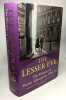
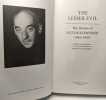
Très Bon Etat de conservation intérieur propre bonne tenue
Islandkatalog der Universitätsbibliothek Kiel und der Universitäts- und Satdtbibliothek Köln.
Kiel, Universitätsbibliothek, 1931. Lexvo. Orig. full cloth. XII,423 pp.
Art, Music and Spectacle in the Age of Rubens
, Brepols - Harvey Miller, 2013 Hardback, VIII 351 p., 203 b/w ill. 35 colour ill., CD, 210 x 280 mm Languages: English, Fine copy. ISBN 9781905375837.
This volume presents an interdisciplinary study of the triumphal entry of the Cardinal-Infante Ferdinand into Antwerp in 1635, and pays special attention to Rubens?s monumental arches and oil sketches that ornamented the entry. This volume deals with the triumphal entry of the Cardinal-Infante Ferdinand, brother of King Philip IV of Spain, into Antwerp in 1635, one of the largest and most spectacular festivals ever mounted in an early modern city. The outdoor festivities in honor of the city?s new governor included a citywide procession, performances, fireworks, music, and political speeches. Along the processional route appeared nine richly ornamented stages and arches designed by Peter Paul Rubens and executed by a group of local painters and sculptors, including Jacob Jordaens, Theodoor van Thulden, and Jan van den Hoecke. To commemorate the event, the city commissioned a lavish festival book, entitled the Pompa Introitus Ferdinandi (1641), which contains learned commentaries by Jan Gaspar Gevaerts, a city official and Latinist, as well as folio engravings by Theodoor van Thulden after Rubens's stages. More than a simple description of the event, Gevaerts? volume offers a rich compilation of references to ancient writers and reproductions of ancient coins.While most literature on the subject has focused on Rubens?s nine monumental arches and his twelve preparatory oil sketches for the designs, this volume will examine the entry and its accompanying festival book as a whole. A group of highly distinguished specialists from different disciplines will discuss the entry and Gevaerts? book from a myriad of viewpoints, including art, architecture, music, theater, history, politics, classical knowledge, and economic and intellectual networks. It is the first time that the entry will be examined from a truly interdisciplinary perspective. The book draws on a wide variety of primary sources, including Rubens?s preparatory oil sketches, Gevaerts? festival book, pamphlets describing the entry, and political songs from the period. Contributors: Jonathan Israel (Princeton), Peter Miller (Bard Graduate Center), Bart Ramakers (Groningen), Louis Grijp (Utrecht), Anne Woollett (Getty), Anna Knaap (Emmanuel College, Boston), Michael Putnam (Brown), Carmen Arnold-Biucchi (Harvard), Frank Fehrenbach (Hamburg), Caroline van Eck (Leiden), Ivan Gaskell (Bard Graduate Center) Table of Contents Introduction: Anna C. Knaap, Emmanuel College, Boston Part I: Historical Background and Intellectual Milieu 1. Rubens, Antwerp, and the Fight for Domination of the World Trade System (1572-1650)? Jonathan Israel, Institute for Advanced Study, Princeton 2. Peiresc, Rubens, and Visual Culture, c. 1620? Peter N. Miller, Bard Graduate Center, New York Part II: Music, Vernacular Theater and Performance 3. Ferdinand?s Triumph and the Vernacular Dramatic Tradition Bart Ramakers, University of Groningen 4. Music Performed in the Triumphal Entry of the Cardinal-Infante Ferdinand into Antwerp (1635)? Louis P. Grijp, Utrecht University Part III: Art and Enlivenment 5. The Unmoved Mover? Frank Fehrenbach, University of Hamburg 6. Animation and Petrifaction in Rubens?s Pompa Introitus Ferdinandi? Caroline van Eck, Leiden University Part IV: Classical Antiquity 7. Virgil and the Pompa Introitus Ferdinand ?Michael C. J. Putnam, Brown University 8. Coins and Classical Imagery in the Time of Rubens: The Stage of Welcome in the Pompa Introitus Ferdinand?Carmen Arnold-Biucchi, Harvard Art Museums Part V: Rubens?s Oil Sketches: Preparation and Display 9. The Burden of Invention: Rubens and the Stage of Welcome ?Anne T. Woollett, J. Paul Getty Museum 10. Being True to Rubens ?Ivan Gaskell, Bard Graduate Center, New York Appendix 1: Track list Audio CD performed by The Imperial Trumpets, La Caccia and Camerata TrajectinaAppendix 2: Explanation of Audio CD? Louis P. Grijp Appendix 3: Song texts of Audio CD with short introductions
Nicodemus Tessin the Elder. Architecture in Sweden in the Age of Greatness,
Turnhout, Brepols, 2009 Paperback, XII+275 pages., 146 b/w ill., 220 x 280 mm. *NEW ISBN 9782503528267.
Nicodemus Tessin the Elder was an architect, gentleman, and founder of the artistic dynasty that was immensely influential at the Swedish court in the seventeenth and eighteenth centuries. He was architect to the crown, to the nobility, and to the city of Stockholm, and he supplied buildings for a wide range of functions, from palaces to banks, courthouses, and fortifications. His unusually extensive travels in the Netherlands, Italy, France and Germany provided him with a comprehensive picture of contemporary European architecture, which he drew on as he synthesized a new group of buildings that would attract international attention as models for princely architecture. His productivity required a new approach to architecture, and he was part of the first generation of architects in northern Europe to develop the architectural studio, distinguishing the design process from the business of building, and in the process recreating himself as the modern architect. New.
Le Démon des Delaronde (Murder in the Mind)
in-8 broché - sd - 251 pages - Ed. Paris, Librairie Gallimard - coll. Les Chefs-d'Oeuvre du Roman d'Aventures
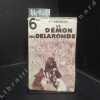
bon état (dos plié, petites coupures sur le bord de la couverture, non massicoté)
The Rebirth of an English Country House: St. Giles House
Knox, Tim, the Earl of Shaftsbury,: The Rebirth of an English Country House: St. Giles House. 2018. 255 pages, fully illustrated in colour throughout. 24x28.5cms.
Siegfried Kracauer: An Introduction
Princeton University Press 2000 150 pages in8. 2000. Broché. 150 pages.
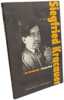
Comme neuf

