Write to the booksellers
-
Type
Book (7276)
Disk (45)
Drawings (1)
Engraving (9)
Magazine (89)
Maps (4)
Music sheets (134)
New book (4)
Old papers (1)
Photographs (19)
Posters (1)
-
Latest
Last 24h (1)
Last 3 days (110)
Last month (123)
Last week (750)
-
Language
Czech (1)
Dutch (18)
English (162)
French (7388)
German (4)
Italian (2)
Japanese (1)
Latin (3)
Russian (4)
-
Century
16th (17)
17th (43)
18th (199)
19th (885)
20th (2496)
21st (1573)
-
Countries
Belgium (1177)
Canada (32)
China (56)
Côte d'Ivoire (7)
Denmark (1063)
France (4889)
Germany (1)
Netherlands (181)
Switzerland (161)
United Kingdom (12)
United States of America (4)
-
Syndicate
ALAC (25)
CLAM (46)
CLAQ (2)
ILAB (2269)
NVVA (15)
SLACES (15)
SLAM (1037)
SNCAO (4)
The Rolling Stones : Programme Urban Jungle 1990. ( Complet de la feuille volante publictaire TDK ).
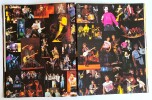
Musidor 1990. In-4 agrafé, non paginé d'environ 30 pages au format 29,5 x 23,5 cm. Couvertures illustrées. Plats et intérieur frais. Magnifique et luxueux programme de la tournée européenne " Urban Jungle ", des Rolling Stones qui eut lieu en 1990. Complet de la rare feuille volante publictaire TDK. Double page centrale dépliante et de très nombreuses photographies couleurs de Mick Jagger, Keith Richards, Charlie Watts, Bill Wyman, Ron Wood, ainsi que des musiciens de la tournée. Discographie avec reproduction des couvertures des albums. Un des plus beaux programmes que j'ai eu en ma possession. Rare édition originale anglaise en superbe état général. Collection personnelle.


Vente exclusivement par correspondance. Le libraire ne reçoit, exceptionnellement que sur rendez-vous. Il est préférable de téléphoner avant tout déplacement.Forfait de port pour un livre 10 € sauf si épaisseur supérieure à 3 cm ou valeur supérieure ou égale à 100 €, dans ce cas expédition obligatoire au tarif Colissimo en vigueur. A partir de 2 livres envoi en colissimo obligatoire. Port à la charge de l'acheteur pour le reste du monde.Les Chèques ne sont plus acceptés.Pour destinations extra-planétaire s'adresser à la NASA.Membre du Syndicat Lusitanien Amateurs Morues
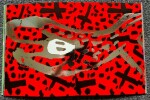
The Rolling Stones : Programme Voodoo Lounge, World Tour 1994/95.
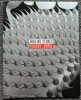
RZO / B.C.L Group 1994. In-4 agrafé, non paginé d'environ 40 pages au format 30,5 x 24 cm. Couvertures illustrées. Plats et intérieur frais, malgré de minuscules frottis aux coins. Magnifique et luxueux programme de la tournée mondiale Voodoo Lounge, des Rolling Stones qui eut lieu de 1994 à 1995, avec impressions sur calques, double page centrale dépliante et de très nombreuses photographies couleurs de Mick Jagger, Keith Richards, Charlie Watt, Ron Wood, Brian Jones, Bill Wyman, ainsi que des musiciens de la tournée. Complet du catalogue " merchandising " de 6 pages. Un des plus beaux programmes que j'ai eu en ma possession. Rare édition originale américaine en superbe état général. Collection personnelle.

Vente exclusivement par correspondance. Le libraire ne reçoit, exceptionnellement que sur rendez-vous. Il est préférable de téléphoner avant tout déplacement.Forfait de port pour un livre 10 € sauf si épaisseur supérieure à 3 cm ou valeur supérieure ou égale à 100 €, dans ce cas expédition obligatoire au tarif Colissimo en vigueur. A partir de 2 livres envoi en colissimo obligatoire. Port à la charge de l'acheteur pour le reste du monde.Les Chèques ne sont plus acceptés.Pour destinations extra-planétaire s'adresser à la NASA.Membre du Syndicat Lusitanien Amateurs Morues
( Rock - The Rolling Stones - The Beatles ) - Collectif - The Rolling Stones - Brian Jones - Bill Wyman - Spencer Davis Group - John Lennon - Robert Vaughn - Julie Felix.
Reference : 17474
(1966)
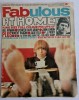
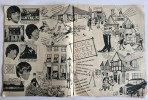
Fabulous at Home, World's Pop Stars in colour, colour, colour,12 march 1966. ( The Beatles , The Rolling Stones ).
Royaume-Uni, Londres, 1966. Fabulous at Home, World's Pop Stars in colour, colour, colour. Magazine de 24 pages au format 26 x 33 cm. Couverture avec photo de couleur de Brian Jones. Plats et intérieur frais, malgré de petites déchirures au bord du 4ème plat. Articles sur The Beatles, The Rolling Stones, Spencer Davis Group, John Lennon, Robert Vaughn, Julie Felix, etc, avec de très nombreuses photos pleine page couleurs, destinées à être coupées et fixées au mur. Edition originale en très bel état général. Rare.

Vente exclusivement par correspondance. Le libraire ne reçoit, exceptionnellement que sur rendez-vous. Il est préférable de téléphoner avant tout déplacement.Forfait de port pour un livre 10 € sauf si épaisseur supérieure à 3 cm ou valeur supérieure ou égale à 100 €, dans ce cas expédition obligatoire au tarif Colissimo en vigueur. A partir de 2 livres envoi en colissimo obligatoire. Port à la charge de l'acheteur pour le reste du monde.Les Chèques ne sont plus acceptés.Pour destinations extra-planétaire s'adresser à la NASA.Membre du Syndicat Lusitanien Amateurs Morues
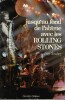
Jusqu'au fond de l'abîme avec les Rolling Stones
Editions Olivier Orban 1980. In-8 broché de 282 pages au format 23 x 15 cm. Couverture illustrée par un photo-montage. Dos carré. Coins des plats avec frottis. Mors et bords frottés au 4ème plat. Petits tassements aux angles. Intérieur resté frais. Passionnant livre de Tony Sanchez, sur ses 8 ans passés en compagnie du groupe et qui narre le parcours chaotique de la vie des Rolling Stones dans les années 70, avec leurs débauches Stoniennes, 100 % pur Rock n’ Roll. Edition originale en état général, juste correct.
Vente exclusivement par correspondance. Le libraire ne reçoit, exceptionnellement que sur rendez-vous. Il est préférable de téléphoner avant tout déplacement.Forfait de port pour un livre 10 € sauf si épaisseur supérieure à 3 cm ou valeur supérieure ou égale à 100 €, dans ce cas expédition obligatoire au tarif Colissimo en vigueur. A partir de 2 livres envoi en colissimo obligatoire. Port à la charge de l'acheteur pour le reste du monde.Les Chèques ne sont plus acceptés.Pour destinations extra-planétaire s'adresser à la NASA.Membre du Syndicat Lusitanien Amateurs Morues
Monkey, Bird & Riviera
France, Barclay 80233 Standard, 33trs, 30cm, sous pochette illustrée.Très bon état avec la languette. (105123)
Les vierges / Les tombeaux.
Paris, S. Bing, Noël 1895. 2 volumes brochés: Les Vierges, 24 pages, couverture muette de papier moiré blanc, recouverte d'une large bande de papier gris vert rempliée, illustrée d'un bois tiré en blanc. Les Tombeaux: broché, 28 pages, couverture muette de papier moiré noir, recouverte d'une large bande de papier vert-jaune rempliée illustrée d'un bois tiré en rose (passé).2 volumes: Les Vierges 24 pages, blank cover of white shimmering paper, covered with a wide band of grey-green paper wrapped, illustrated with a woodcut printed in white. Les Tombeaux: 28 pages, blank cover of black shimmering paper, covered with a wide band of green-yellow paper wrapped, illustrated with a woodcut printed in pink (faded).
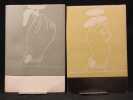
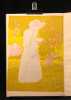
Quatre lithographies en couleurs à pleine page de Joseph Rippl-Ronai pour Les Vierges. La bande de chacune des plaquettes est illustrée d'un bois original. Trois gravures sur bois de James Pitcairn-Knowles, tirées en noir pour Les Tombeaux.Four full-page color lithographs by Joseph Rippl-Ronai for Les Vierges. The strip of each of the booklet is illustrated with an original xylography. Three wood engravings by James Pitcairn-Knowles, drawn in black for Les Tombeaux. Éditions originales non justifiées, mais tirées à 500 exemplaires. Ces deux élégantes plaquettes sont une belle réussite: imprimées à la japonaise (un seul côté de la feuille), d’une délicatesse exquise, elles sont empruntes de la sensibilité du mouvement Nabis, dont les deux illustrateurs étaient membres. Le texte-prétexte fut écrit pour accompagner les illustrations et l’ensemble publié par Siegfried Bing, marchand d’art et collectionneur qui venait d’ouvrir sa galerie “L’Art Nouveau” (en 1895). Monod, 9810; From Manet to Hockney, n°12.
"ROEMER (RÖMER), OLE - THE PLAN FOR ""OBSERVATORIUM TUSCULANUM""
Reference : 59045
(1727)
Olai Roemeri ad G.G. Leibnitium Epistola de Instrumento Astronomicis Observationibus serviente à se inventa. (Dated Hafniæ 15. Dec. 1700).
Berlin, Ambrosius Haude, 1727. 4to. Contemp. full calf. Raised bands. Tome- and titlelabels with gilt lettering. Minor repairs at upper joint. In: ""Miscellanea Berolinensia, ad Incrementium scientiarum ex Scriptis Societati Regiæ Scientiarum exhibitis editia, Continuatio II."" (6),346,(4) pp., 11, partly folded engraved plates. Scattered brownspots. Roemer's letter to Leibniz: pp. 276-78, 2 textillustrations. The entire volume offered.
First printing of Roemer's letter to Leibniz in which he describes his plan for a new observatory and the circle-instrument.""In a letter written to Leibniz, dated December 15, 1700, - (the offered item) - in reply to Leibniz's request for the most suitable plan for an observatory, Roemer describes his plans for the ""Observatorium Tusculanum"". He has an excellent discussion of the need of building the observatory so that it can best serve the function for which it is intended, namely, observation. He probably was thinking of the construction of the Paris Observatory, a beautiful building, but impractical as far as actual observational needs were concerned. He also describes the prime vertical transit and states his preference for the circle as compared to quadrants and sextants, saying that he would have confidence in a circle of four feet in diameter than a quadrant of ten."" (I. Bernard Cohen in ""Roemer and the first determination of the Velocity of Light"", p. 48).

Daniel Boone. Les Aventures d'un chasseur américain parmi les peaux rouges. Lithographies en couleurs par Fédor
Paris Domino Press. 1931 In-4 Cartonnage illustré éditeur
Premier tirage des illustrations de Fedor Rojankovsky (1891-1970), lithographies en couleurs enluminant l'histoire de Daniel Boone, célèbre pionnier américain avait publié ses exploits en 1784. Impression de Coulouma pour le texte et Mourlot pour les estampes. Rousseurs sur certaines pages, mais bon exemplaire portant l'étiquette de relais Fischbacher masquant le nom de l'éditeur. 16 pp. Très bon 0
Le Nouveau fil des mots lire au CP - livre 2
Nathan 1990 80 pages 16 6x1x23 6cm. 1990. Broché. 80 pages.
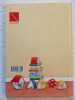
Bon état
Rollinger Robert Steele John Haubold Johannes Lanfranchi Giovanni B
Reference : 100144353
(2013)
ISBN : 3447067284
The World of Berossos: Proceedings of the 4th International Colloquium on "The Ancient Near East between Classical and Ancient Oriental Traditions" ... July 2010 (Classica et Orientalia Band 5)
Harrassowitz Verlag 2013 339 pages 17 8x24 4x2 8cm. 2013. Cartonné. 339 pages.
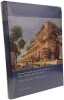
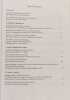
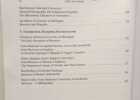
proche du neuf sous rhodoïd coins supérieurs un peu enfoncés
The Doors/Rolling Stones
Rough Trade Distribution GmbH 2010 13 76x18 03x1 48cm. 2010. DVD.
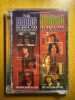
Neuf
"ROLOFF, CHRISTIAN LUDVIG. - THE NORTH AMERICAN RACCOON DESCRIBED.
Reference : 42712
(1758)
Description d'un Quadrupede D'Amerique, rapporté par M. Linnaeus au Genre des Ours. Traduit du Latin.
(Berlin, Haude et Spener, 1758). 4to. No wrappers, as issued in ""Memoires de Academie Royale des Sciences et Belles-Lettres"", Annee 1756, tome XI, pp. 149-162 a. 3 folded engraved plates.
First printing of an early description of the North American Raccoon, Ursus Lotor, Washer Bear (Linné 10th ed.), with 3 fine engraved plates.
Le thé en Chine. Un language amoureux.
Genève, Minerva, 2002, Première Edition, in-4, cartonnage couv. photo coul. éd., 139 pp., nb. dessins aquarelles de l'auteur et plhotos coul. de Yann Romain. Présenté sous forme de "carnet de voyage", illustré de superbes aquarelles en couleurs. Histoire du thé en Chine depuis le 4e siècle : les grands personnages, les maisons de thé, les théières, l'eau, la grande variété de thé. Un plaisir visuel et gustatif ! Très bon état
Librairie spécialisée en gastronomie , œnologie et tabagie
Premier livre de prières.
Paris, Vers et Prose (Bruges, The St Catherine Press), 1909 ; in-8, broché ; 69, [3] pp., couverture crème imprimée en rouge et noir, titre dans un encadrement.
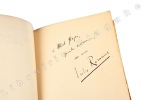
Edition originale, exemplaire N°51 des 83 exemplaires sur Hollande Van Gelder Zonen, après 2 Japons, seul tirage de tête ; envoi autographe “à Albert Gleizes, peintre nouveau, son ami Jules Romains”.Agrégé de philosophie en 1909 et normalien, Jules Romains est à cette époque proche du Groupe de l’Abbaye fondé par Charles Vildrac, Georges Duhamel, et Albert Gleizes, il est l’auteur de son oeuvre fleuve “Les Hommes de bonne volonté” en 27 volumes. Albert Gleizes, peintre, philosophe et théoricien est un des fondateurs majeurs du cubisme et à influencé l’Ecole de Paris, le Bauhaus, et l’art moderne américain. Couverture légèrement poussiéreuse, bel exemplaire.

Eds. R.G. Collingwood & R.P. Wright. Vol. II: instrumentum domesticum. Fasc. 8: graffiti on coarse pottery cut before and after firing, stamp on coarse pottery, addenda and corrigenda to fasc. 1-8. (RIB 2502-2505). Ed. by S.S. FRERE & R.S.O. TOMLIN.
N.pl., Sutton, 1995.
XII,165 p., ills., 8 pls. Hardb. 28 cm
"ROMAS, (JACQUES) DE. - INVENTING THE ELECTRICAL KITE BEFORE FRANKLIN ?
Reference : 45002
(1755)
Mémoire, ou aprés donné un moyen aisé pour élever fort haut, & à peu de frais, un corps Electrisable isolé, on rapporte des observations frappantes, qui provent que plus le corps isolé est élevé au dessus de la terre, plus le feu de l'Électricitè est ...
(Paris, Imprimerie Royale, 1755). 4to. Extract from ""Mémoires fe Mathematique et de Physique, Présentés à l'Academie des Sciences par divers Savans"", Tome II. Pp. 393-407. With titlepage to vol. II. Clean and fine.
Firs appearance of the paper in which De Romas describes his invention of the electrical kite.""De Romas, who independently of Franklin hit on the electrical kite, seems to have proposed an experiment much like that of Marly in 1750 or 1751. He fiercely defended his independence against Priestly's insinuation that he merely improved upon Franklin's demonstrations...In fact de Romas drew his inspiration from the Bordeaux prize question of 1749 which, in turn, derived from Nollet's speculations.""(Heilbron ""Electricity in the 17th and 18th Centuries"", p. 351).
La Retouche. Encre Pinceau Aero
Vm 2004 272 pages 27x1 4x20 6cm. 2004. Broché. 272 pages.
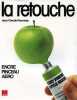
Bon état
Chancellorsville : La victoire parfaite du général Lee
Ysec Editions 2022 82 pages 21x29 5x0 6cm. 2022. Broché. 82 pages.
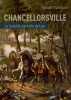
Bon état
Chancellorsville : La victoire parfaite du général Lee
Ysec Editions 2022 82 pages 21x29 5x0 6cm. 2022. Broché. 82 pages.
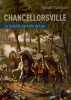
Très bon état
Chancellorsville : La victoire parfaite du général Lee
Ysec Editions 2022 82 pages 21x29 5x0 6cm. 2022. Broché. 82 pages.
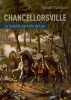
Très bon état
Chancellorsville : La victoire parfaite du général Lee
Ysec Editions 2022 82 pages 21x29 5x0 6cm. 2022. Broché. 82 pages.
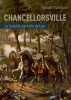
Très bon état