 Write to the booksellers
-
Type
Book (7257)
Disk (44)
Drawings (1)
Engraving (9)
Magazine (89)
Maps (4)
Music sheets (135)
New book (2)
Old papers (1)
Photographs (19)
Posters (1)
-
Latest
Last 24h (1)
Last 3 days (5)
Last month (969)
Last week (2)
-
Language
Czech (1)
Dutch (9)
English (156)
French (7383)
German (4)
Italian (2)
Latin (3)
Russian (4)
-
Century
16th (17)
17th (43)
18th (199)
19th (881)
20th (2484)
21st (1566)
-
Countries
Belgium (1156)
Canada (34)
China (56)
Côte d'Ivoire (7)
Denmark (1063)
France (4896)
Germany (1)
Netherlands (181)
Switzerland (155)
United Kingdom (9)
United States of America (4)
-
Syndicate
ALAC (27)
CLAM (25)
CLAQ (2)
ILAB (2246)
NVVA (15)
SLACES (15)
SLAM (1036)
SNCAO (4)
"AMPÈRE, ANDRÉ-MARIE. - THE CLASSIFICATORY SYSTEM OF AMPERE.
Reference : 43465
(1816)
Essai D'une Classification naturelle pour les Corps simples. (+) Suire De l'Essai i d'une Classification naturelle pour les Corps simples. (+) Suire D'une Classification naturelle pour les Corps simples. Suite du II. (+) Suite...Suite du II. (...
(Paris, Crochard, 1816) No wrappers as extracted fron 'Annales de Chimie et de Physique', Volume 1 and 2 (2e Series). Pp. 295-308 a. pp. 373-394 (Vol. 1), pp. 5-32 a. pp. 105-125 (Vol. 2). With both halftitles to vols. 1 a. 2. Htitles shaved in inner margins, no loss of letters. All 4 papers having some scattered brownspots.
First appearance of Ampere's notable memoir (issued in 4 parts) in which he tries to set up a classification system for the elementary entities in chemistry tieing the elements together in a natural classification, a dim foreshadowing of the periodic table.""Here (in the paper offered) he drew attention to the similarities between Lavoisier's and his fellowers classification of elements in terms of their reactions with oxygen and Linnaeus' classification of plants in terms of their sexual organs. Bernard de Jussieu had successfully challenged Linnaeus with a natural system that took the whole plant into account and sought affinities between all parts of the plant, not just the flowers, as the basic classification. Ampère now wished to do the same thing for chemistry. By discovering a natural classification, i.e., one that tied the elements together by real and rather than artificial relations, Ampère hoped to prove a new insight into chemical reactions. His classificatory scheme, therefore, was not merely an ordering ofthe elements but, like the later periodic table of Dimitri Mendeleev, a true instrument of chemical research. Ampères system was as artificial as Lavoisier's...Thepapermay be noted, however, as an early attempt to find relationships between elements that would bring some order into the constantly growing number of elementary bodies.""(DSB I, p. 143).

Description d'un Apparail électro-dynamique.
(Paris, Crochard, 1824). 8vo. Without wrappers. In 'Annales de Chimie et de Physique', Series 2 - Volume 26, Cahier 4. Pp. 337-448 (entire issue offered). With htitle to volume 26. Amperes' paper: pp. 390-411 and 2 folded engraved plates.
First appearence of the paper in which Ampere describes his invention of the SOLENOID, the electro-magnetic device he used in his early electrodynamical experiments.""A solenoid is a coil wound into a tightly packed helix. In physics, the term solenoid refers to a long, thin loop of wire, often wrapped around a metallic core, which produces a magnetic field when an electric current is passed through it. Solenoids are important because they can create controlled magnetic fields and can be used as electromagnets. The term solenoid refers specifically to a magnet designed to produce a uniform magnetic field in a volume of space (where some experiment might be carried out).""Poggendorff I, p. 29. - Ronalds, p. 10.
"AMPÈRE, ANDRÉ-MARIE. - THE NEW ELECTRIC MOTOR AND AMPÉRE'S ""FORCE LAW""
Reference : 48224
(1822)
Expériences relatives à de nouveaux phénomenes électro-dynamique. (+) Mémoire sur la Détermination de la formule qui représente l'action mutuelle de deux portions infiniment petites de conducteurs voltaiques.
(Paris, Crochard, 1822). No wrappers. In: ""Annales de Chimie et de Physique, Par MM. Gay-Lussac et Arago."", Tome 20 (Premier Cahier) Pp. (5-) 112 a. 1 engraved plate. (Entire issue offered). Ampère's paper: pp. 60-74 a. 1 engraved folded plate depicting apparatus. Some brownspots to the plate.
First apperance of this importent paper in which Ampère his creation of a new kind of electric motor where he succeeded in spinning a cylindrical magnet around its axis by connecting it to a battery generating a steady current.With the invention of the battery (Allessandro Volta, 1800), the generation of a magnetic field from electric current (Hans Christian Oersted, 1820) the foundation for building electric motors was laid.Togetner with this paper comes the importent paper in which Ampère introduced his ""LAW OF FORCE"", the force which exists between two current elements. - Extract from the same volume of ""Annalen"", pp. 398-421. The text refers to the plate attached to the first paper offered here.
The Ethiopian Homily on the Ark of the Covenant: Critical Edition and Annotated Translation of Dǝrsanä Ṣǝyon (Texts and Studies in Eastern Christianity 5 Band 5)
Brill Academic Pub 2015 288 pages in8. 2015. Cartonné. 288 pages.
Bon état bonne tenue i
The Amsterdam Naturalist. Bulletin of the Zoological Museum Amsterdam.
1950 Vol. 1. 108 p., num. figs & pls, 2 col. frontispieces, in three paperbound issues with printed covers (each with a distinct docarative front cover). All published, and continued under the name Beaufortia. Contains papers by Hoedeman on fish, by Voous on birds, and papers on foraminiferans, whales, copepods. Crisp copy, as new.
THE EXPERIENCE OF LIFE
the experience of life by the author of " amy herbert" London Longman 1862327 p , superbe reliure en plein veau fauve plats decorés de dentelles et dos richement travaillé , 5 nerfs , caissons piece de titre
Parfait etat photos sur demande ray PF3
Michael Borremans: Whistling a Happy Tune (signed with small drawing)
, Ludion, 2008 Gebonden linnen met ge llustreerde stofomslag, 28,6 x 24,8cm 200pp 100ill. tekst in Nederlands, Engels, in prima staat! ISBN 9789055447299.
Het on/werkelijke theater Michael Borremans neemt stilaan een belangrijke plaats in de hedendaagse schilderkunst in. Zijn schilderijen en tekeningen hangen in tal van buitenlandse musea, onder meer in het MOMA in New York en het Museum of Contemporary Art in Los Angeles. Dit boek biedt u nu een overzicht van recente en minder recente tekeningen.De tekeningen, die een oeuvre op zich vormen, zijn voor Michael Borremans een middel om na te denken, om de verbeelding in gang te zetten en ideeen te ontwikkelen. Ze zijn vaak een soort van aftasten en verkennen van concepten voor sculpturen, ensceneringen en zelfs architectuur. Ze tonen projecten die wellicht nooit gerealiseerd zullen worden, maar de ideeen vinden via de tekeningen hun visualisering.Net als zijn schilderijen lijken Borremans' tekeningen gestolde fragmenten uit een onbestemde en ongrijpbare tijd. Ze brengen de toeschouwer in een somber universum, wars van felle kleuren, waarin personages met een zekere gelatenheid vreemde dingen doen of bizarre rituelen uitvoeren. Via gedetailleerde ensceneringen maakt hij ons deelgenoot van complexe, surrealistische scenario's, die zich afspelen in een ambigue wereld.Voor zijn tekeningen, die relatief klein zijn en waaraan hij heel lang werkt, put Borremans vaak uit kranten, boeken, magazines en fotoarchieven van de eerste helft van de vorige eeuw. Hij maakt beeldelementen van hun oorspronkelijke context los door in te zoomen op details, objecten uit verschillende bronnen samen te brengen of ze allemaal in een verschillende schaal af te beelden. Hij speelt met referenties, laat elementen weg of voegt er toe. Borremans combineert potlood, aquarel, balpen, witte inkt en wassingen met koffie of een tikje olieverf voor het creeren van zijn subversief universum vol tegenstellingen. Dit boek toont u de wereld van Michael Borremans. Een wereld van metaforen. Een intrigerende wereld.
Islandske Folkesag og Æventyr. Paa Dansk ved Carl Andersen. Anden forøgede Udgave.
København, 1877. Samt. hshirtbd. med rygforgyldning. (12),494 pp. Titelbladet mangler.
Islandske Folkesagn og Æventyr. Paa Dansk ved Carl Andersen. Anden forøgede Udgave.
Kjøbenhavn, Schubothe, 1877. Orig. litograferet kartonnage. Ryg repareret og med rygpapiret bevaret. (16),494 pp. Indvendig ren.
Islandske Folkesagn og Æventyr. Paa Dansk ved Carl Andersen. Anden forøgede Udgave.
Kjøbenhavn, Schubothe, 1877. Samtidigt helshirtbd. (16),494 pp. Lidt brunpletter på de første og sidste blade, ellers ren.
Winesburg Ohio: Introd. by Malcolm Cowley (Penguin Modern Classics)
Penguin Publishing Group 1992 256 pages 12 5x19 6x1 2cm. 1992. Broché. 256 pages.
Etat correct
ANDERSSON (J.G.) - [THE MUSEUM OF FAR EASTERN ANTIQUITIES BULLETIN]
Reference : 7904
The Museum of Far Eastern Antiquities -Bulletin No. 11 - Topographical and Archeological Studies in the Far East
Stockholm, 1939. 1 volume in-8, 118 pp., reliure moderne plein cuir, couvertures conservées, orné de 56 planches et 9 cartes dépliantes, très bon état général.
Table of Contents: The Malan Terraces of Northern China - Glaciological and archaelogical researches in His Kang - Archaelogical research in the Fai Tsi Long Archipelago (Tonkin) - Topography of the Hongkong sites.
Representations of Saint Anne and the Virgin Mary from the Middle Ages to the Early Modern Period. Exploring Iconographic Flexibility and Permeability
, Brepols, 2025 Paperback, 189 pages, Size:216 x 280 mm, Illustrations:31 b/w, 39 col., 1 maps b/w, Language: English. *new ISBN 9782503608853.
Summary Between the thirteenth and the sixteenth centuries, the cult of the Virgin Mary underwent significant changes, a shift clearly revealed by an increase in artistic representations of Mary, as well as a flourishing devotional literature in her honour, written in both Latin and the vernacular. One aspect of this change was a broader attention to Mary's genealogical line, and in particular to her relationship with St Anne. The result was not only a renewed focus on the vita Annae, but also a significant overlap in how these two women were represented, juxtaposed, and perceived. This volume traces the often significant iconographic flexibility in terms of both how the Virgin Mary and Saint Anne were presented and perceived, and what can be termed a permeability between visual representations of the two saints. Focusing on the multiple readings, layers of meaning, and the visual interplay between the vita Mariae and the vita Annae, the chapters gathered here explore the overlap and influence between different iconographic motifs, and how these were used to advance political, religious, and social ideologies at the time of their creation, as well as exploring representations across a range of different media, from sculptures and frescoes to panel paintings, and manuscript illuminations. TABLE OF CONTENTS List of Illustrations List of Contributors List of Abbreviations Representations of the Virgin Mary and Saint Anne from the Middle Ages to the Early Modern Period: Iconographic Flexibility and Permeability Andrea-Bianka Znorovszky 1. The Panel of the Virgin and Saint Anne from the Church of the Archangels in Iprari: Iconographic and Ideological Aspects Nina Chichinadze 2. The Anna Selbdritt and the Cult of the Three Maries: An Early Fourteenth-Century Wall Painting in the Medieval Kingdom of Hungary Mihnea Alexandru Mihail 3. The Pregnancies of Mary-Anne in Fifteenth- to Sixteenth-Century Franco-Flemish Manuscript Illuminations: Between Iconographic Appropriation and Iconographic Development Andrea-Bianka Znorovszky 4.'Worthy Vestment for the Sovereign Priest': Matriarchal Priesthood, Marian Allegory, and the Amiens Confraternity of Notre-Dame de Puy Elliott D. Wise 5. In Mente Dei, in Gremio Annae: The Source and the Receptacle of Marian Immaculacy in Sixteenth-Century Piacenza Fiammetta Campagnoli 6. Moving with Saint Anne: Representations of Anna Selbdritt between Central Europe and the Tyrolean Region Stefanie Paulmichl 7. Images of Saint Anne in the Ionian Islands (Fifteenth - Eighteenth Centuries) Eirini Panou 8. Arbor Anna Fructuosa. Apropos of an Image of Saint Anne and the Fruits of Redemption Let cia Martins de Andrade Conclusions Andrea-Bianka Znorovszky Appendix 1: Saint Anne - Primary Sources Appendix 2: Family Tree Appendix 3: Map Appendix 4: Short Timeline of Mariological Doctrines and Debates
HEIDI KIPPENBERG
, Arnoldsche, 2021 Paperback, 96 pages, GER, 240 x 170 mm, NEU, ca 50 ill. in farbe. ISBN 9783897906389.
Heidi Kippenberg studied ceramics under Walter Popp, the legendary teacher at the Kassel Art Academy whose avant-garde work opened up new dimensions of form and expression for ceramic vessels. She internalized the aesthetic of Popp?s vessels and simultaneously gave them her own distinctive touch. Strongly twisted, thick-walled, sometimes mounted stoneware vessels, further enlivened by thick monochrome glazes and augmented with sign-like contrasting glazed accents, characterize her oeuvre. Later she was inspired by East Asian ceramics and began to build her vessels, assembling them from slabs, giving their surfaces a lively structure, and transforming them into decorative landscapes. An oeuvre spanning more than half a century can be admired!
The biting eye
1960 Perpetua books 1960 In4 reliure éditeur couverture illustrée 127 pages illustrations à toutes les pages
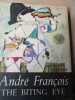
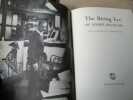
très bon étatintroduction ronald searle
Et nunc manet in te suivi de Journal intime
Ides et Calendes 1951 119 pages in12. 1951. broché. 119 pages. Ce volume rassemble deux textes autobiographiques d'André Gide : 'Nunc manet in te' un récit poignant sur sa relation conjugale difficile et la découverte posthume du journal de sa femme Madeleine suivi d'extraits de son propre 'Journal intime' offrant un regard complémentaire sur sa vie et sa pensée
Bon état
La Bretagne nouvelle édition mise à jour / atlas géographie de la France moderne
Flammarion 1984 300 pages 4x26x20cm. 1984. Cartonné jaquette. 300 pages.
Bon état quelques rousseurs sur la tranche intérieur propre
Andrew Amani Henry Boger Brett Beoubay Robert Bjorklund Courtney Brin Paul Boger George Mendeluk Chuck Bush Darren Arnaud Robert Carradine Edrick Browne The Terror Experiment Zombie - The Terror Experiment / The Terror Experiment ( ) Zombie - The Terror Experiment Andrew Amani
Reference : 500345712
(2013)
ISBN : 3662207003115
The terror experiment [Blu-ray] (NEUF SOUS BLISTER)
Opening 2013 13 76x1 48x18 03cm. 2013. Broché.
![The terror experiment [Blu-ray] (NEUF SOUS BLISTER). Andrew Amani Henry Boger Brett Beoubay Robert Bjorklund Courtney Brin Paul Boger George ...](https://static.livre-rare-book.com/pictures/IGE/500345712_thumb.jpg)
Neuf
Andrew Amani Henry Boger Brett Beoubay Robert Bjorklund Courtney Brin Paul Boger George Mendeluk Chuck Bush Darren Arnaud Robert Carradine Edrick Browne The Terror Experiment Zombie - The Terror Experiment / The Terror Experiment ( ) Zombie - The Terror Experiment Andrew Amani
Reference : 500352240
(2013)
ISBN : 3662207003115
The terror experiment [Blu-ray] (NEUF SOUS BLISTER)
Opening 2013 13 76x1 48x18 03cm. 2013. Broché.
![The terror experiment [Blu-ray] (NEUF SOUS BLISTER). Andrew Amani Henry Boger Brett Beoubay Robert Bjorklund Courtney Brin Paul Boger George ...](https://static.livre-rare-book.com/pictures/IGE/500352240_thumb.jpg)
Neuf
Andrew Amani Henry Boger Brett Beoubay Robert Bjorklund Courtney Brin Paul Boger George Mendeluk Chuck Bush Darren Arnaud Robert Carradine Edrick Browne The Terror Experiment Zombie - The Terror Experiment / The Terror Experiment ( ) Zombie - The Terror Experiment Andrew Amani
Reference : 500394877
(2013)
ISBN : 3662207003115
The terror experiment [Blu-ray] (NEUF SOUS BLISTER)
Opening 2013 13 76x1 48x18 03cm. 2013. Broché.
![The terror experiment [Blu-ray] (NEUF SOUS BLISTER). Andrew Amani Henry Boger Brett Beoubay Robert Bjorklund Courtney Brin Paul Boger George ...](https://static.livre-rare-book.com/pictures/IGE/500394877_thumb.jpg)
Neuf
The Bakerian Lecture. - On the Continuity of the Gaseous and Liquid States of Matter. Received June 14, - Read June 17, 1869.
(London, Taylor and Francis, 1870). 4to. No wrappers as extracted from ""Philosophical Transactions"" 1869 - Vol. 159 - Part II. Pp. 575-590 and 1 plate. Clean and fine.
First apperance of the paper in which Thomas Andrews announces his discovery of the ""CRITICAL POINT"", which states that for every gas there was a temperature above which pressure alone could not liquefy it.""This was a crucial discovery for it pointed the way toward the liquefaction of the permanent gases by demonstrating the necessity of dropping the temperature below the critical point before exerting pressure. This new view led within half a century to the work of Dewar and Kammerlingh-Onnes and the liquefaction of all known gases.""(Asimov).Magie: A Source Book in Physics, pp. 187-192. - Parkinson, Breakthroughs: 1869 C.
The Bakerian Lecture. - On the Continuity of the Gaseous and Liquid States of Matter. Received June 14, - Read June 17, 1869.
(London, Taylor and Francis, 1870). 4to. No wrappers as extracted from ""Philosophical Transactions"" 1869 - Vol. 159 - Part II. Pp. 575-590 and 1 plate. Clean and fine.
First apperance of the paper in which Thomas Andrews announces his discovery of the ""CRITICAL POINT"", which states that for every gas there was a temperature above which pressure alone could not liquefy it.""This was a crucial discovery for it pointed the way toward the liquefaction of the permanent gases by demonstrating the necessity of dropping the temperature below the critical point before exerting pressure. This new view led within half a century to the work of Dewar and Kammerlingh-Onnes and the liquefaction of all known gases.""(Asimov).Magie: A Source Book in Physics, pp. 187-192. - Parkinson, Breakthroughs: 1869 C.
On the Constitution and Properties of Ozone. Received May 16, - Read June 21, 1855.
(London, Taylor and Francis, 1856). 4to. No wrappers as extracted from ""Philosophical Transactions"" 1856 - Vol. 146 - Part I. Pp. 1-13 a. 1 lithographed plates.
First printing of Andrew's paper in which he shows, that ozone is oxygen in allotropic form.Andrews subsequently turned his attention to the problem of the constitution of ozone. This had been investigated by a number of chemists, including Schöonbein, its discoverer. Its nature was still unknown, however, and it was by no means certain that the ozone obtained from different sources was one and the same substance" it was thought by some to contain hydrogen. Andrews says his researches extended over four or five years, and he finally reached the conclusion that all the supposed varieties of ozone were identical and that it was in fact oxygen in an altered or allotropic condition.
Byzantine Liturgical Books An Introduction Stefanos Alexopoulos, Stig Simeon R. Fr yshov, Stefan Roy ,
, Brepols - Harvey Miller, 2025 Hardback, Pages: vi + 454 pages, Size:216 x 280 mm, Illustrations:2 col., 25 tables b/w., 1 tables col., Language:English, *New. ISBN 9782503607573.
The world of Byzantine liturgical book types is fascinating but also confusing. While they are central to the study and celebration of Byzantine Liturgy, no one work offers an overview of their history, contents, and structure. This volume offers for the first time an introduction to the major types of Byzantine liturgical books, their taxonomy, origins, development, and contents. TABLE OF CONTENTS Preface The Typikon: An Overview Job GETCHA The Ensemble of Liturgical Books in a Byzantine Liturgical Context: The Case of the Evergetis Typikon Joan LENA The Typikon of M r S b and its Interactive Function in the Byzantine Liturgical Context, Diego R. FITTIPALDI Liturgical Gospel Codices of the Byzantine Church Chris JORDAN The Impact of Byzantine Lectionary Readings on the Selection of Texts for Illustration in Two Byzantine Gospel Books: Athos, Iviron 5 and Paris, BnF, gr. 54 Kathleen MAXWELL The Byzantine Apostolos in Codico-Liturgical Context Samuel GIBSON Prophetologion Sysse G. ENGBERG Perspectives on the History and Theology of the Prophetologion Alexandru MIH?IL? Psalters, Georgi R. PARPULOV Euchologion Michael ZHELTOV The Palestino-Byzantine Horologion: A First Attempt at Historical Overview and Typology Stig Simeon R. FR YSHOV Triodion and Pentekostarion: Liturgical Books for the Paschal Cycle, Damaskinos OLKINUORA Menaion Apostolos SPANOS The Liturgical Book of the Oktoechos: Function, Forms and Manuscript Tradition Luigi D?AMELIA Byzantine Musical Manuscripts: A Chrono-Typological Overview Christian TROELSG RD The Panegyrikon as a Liturgical Book: a General View through the Lens of the Evergetis Typikon and the Saviour?s Typikon, with a New Typology Joan LENA Menologia and Synaxaria: Hagiographical Collections in Byzantium Christian H GEL Toward a Taxonomy of Liturgical Codices Stefano PARENTI and Gabriel RADLE Towards a History of Printed Liturgical Books in the Modern Greek State: An Initial Survey Stefanos ALEXOPOULOS and Dionysios BILALIS ANATOLIKIOTES
Traité des alimens de Caresme. où l'on explique les différentes qualitez des légumes, des herbages, des racines, des fruits, des poissons, des amphibies, des assaisonnemens : des boissons même les plus en usage, comme de l'eau, du vin, de la bierre, du cidre, du thé, du caffé, du chocolat. Et où l'on éclaircit plusieurs questions importantes sur l'abstinence & sur le jeûne, tant par rapport au Carême, que par rapport à la santé
Paris, Jean-Baptiste Coignard, 1713 2 vol. in-12, [6] ff. n. ch. (titre, avertissement, table des articles), 519 pp., [14] ff. n. ch. de table des chapitres et de privilège ; [4] ff. n. ch. (titre, table des articles), 402 pp., [11] ff. n. ch. de table des chapitres et d'additions, basane brune marbrée, dos à nerfs cloisonnés et fleuronnés, pièces de titre et de tomaison, tranches mouchetées de rouge (reliure de l'époque). Restaurations aux charnières et aux coiffes.
La première édition est de 1710, mais elle ne comportait qu'un seul volume. L'ouvrage concerne à la fois la médecine, l'observance quadragésimale et la préparation des mets.Nicolas Andry de Boisregard (1658-1742), médecin lyonnais, avait touché à la philosophie et à la théologie avant de s'engager dans l'art de guérir, ce qui explique son intérêt pour la diététique et l'hygiène du Carême. Il est par ailleurs plus connu comme l'un des fondateurs de la parasitologie (ce qui lui valut le surnom de "docteur Vermineux").Vicaire, 24-25. Absent de Bitting. - - VENTE PAR CORRESPONDANCE UNIQUEMENT - LIEN DE PAIEMENT, NOUS CONSULTER.


