 Write to the booksellers
-
Type
Book (7247)
Disk (44)
Drawings (1)
Engraving (9)
Magazine (89)
Maps (4)
Music sheets (135)
New book (2)
Old papers (1)
Photographs (19)
Posters (1)
-
Latest
Last 24h (3)
Last 3 days (2)
Last month (971)
Last week (2)
-
Language
Czech (1)
Dutch (9)
English (156)
French (7373)
German (4)
Italian (2)
Latin (3)
Russian (4)
-
Century
16th (17)
17th (43)
18th (199)
19th (881)
20th (2478)
21st (1565)
-
Countries
Belgium (1156)
Canada (32)
China (56)
Côte d'Ivoire (7)
Denmark (1063)
France (4888)
Germany (1)
Netherlands (181)
Switzerland (155)
United Kingdom (9)
United States of America (4)
-
Syndicate
ALAC (25)
CLAM (25)
CLAQ (2)
ILAB (2234)
NVVA (15)
SLACES (15)
SLAM (1026)
SNCAO (4)
The Guns of Navarone
Fontana 1959 254 pages in8. 1959. broché. 254 pages. Le livre 'The Guns of Navarone' d'Alistair MacLean est un roman d'aventure et de guerre se déroulant pendant la Seconde Guerre mondiale. Il raconte l'histoire d'une mission commando visant à détruire des canons allemands sur l'île de Navarone

The Way to Dusty Death
Fontana Sans date. Le roman suit Johnny Harlow champion du monde de Formule 1 après un accident dévastateur lors du Grand Prix de France qui a tué son meilleur ami et un autre pilote et a blessé sa petite amie. L'histoire mêle course automobile intrigue et suspense typique du style d'Alistair MacLean

Bon état
Mes petites papillotes magiques
Leduc .s 2010 192 pages 11x1 4x17 6cm. 2010. Broché. 192 pages.

Très bon état - légères marques de lecture et/ou de stockage mais du reste en très bon état- expédié soigneusement depuis la France
Mes petites papillotes magiques
Leduc .s 2010 192 pages 11x1 4x17 6cm. 2010. Broché. 192 pages.

Très bon état
Mes petites papillotes magiques
Leduc .s 2010 192 pages 11x1 4x17 6cm. 2010. Broché. 192 pages.

Très bon état - légères marques de lecture et/ou de stockage mais du reste en très bon état- expédié soigneusement depuis la France
ORFEVRERIE FRANCAISE ORIENTALISTE DU 19e SIECLE/ FRENCH ORIENTALIST SILVER OF THE 19TH CENTURY,
, Paris, Galerie Berko, 2003, Broche, couverture carton illustree, frontispice-photo, 205 x 265mm., 64pp., illustration profond en couleurs.
L'influence de l'Orient sur l'orfevrerie francaise. Catalogue. Glossaire. Bibliographie. Edition bilingue. Bon etat.
Greek Architecture
The Macmillan Company 1909 in8. 1909. Cartonné. Ouvrage académique de 1909 par Allan Marquand professeur à l'Université de Princeton traitant de l'architecture grecque antique. Le livre se concentre sur les détails architecturaux et est publié par The Macmillan Company
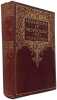
Bon état pages jaunies intérieur propre
L'Art de Batir les Vaisseaux, et d'en perfectionner la Construction"" de les Garnier de leurs Apparaux, les mettre en Funin, les Manoeuvrer, &c. avec la Coupe d'un Vaisseau du Premier Rang, les Devis de plusieurs Sortes de Vaisseaux... outre les Pav... - [THE ""L'ALLARD FRANCAIS""]
Amsterdam, David Mortier, 1719-18. 4to. Contemp. full calf. Spine defective, lacking leather at upper and lower compartment and frontcover detached from spine. Front free endpaper gone. The first two title-pages printed in red/black and both with an engraved vignette with a portrait of Erasmus. (4),82"(2),94"(2),24,(12) pp. Vol I: 1 large folded engraved plate and 1 textengraving. - Vol. II: 34 textengravings (1/2-page a. full-page) + 21 engraved plates (4 large and folded). - ""Les Pavillons"": 90 engraved plates of flags. The first flag ""Pavillon de George I"" is handcoloured. (Last printed leaf numbered 101 because the 90 engraved plates is counted as pages !). Complete. Light marginal browning, a few leaves with small closed tears.
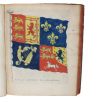
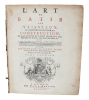
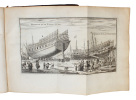
A classic on shipbuilding, finely illustrated with construction drawings and nautical instruments and equipment. It is the first edition in French of Allard's ""Nieuwe Hollandse Scheeps-bouw"", first published in 1695. Polak notes that, though known as 'L'Allard français', it was more than a straightforward translation, being augmented with chapters by Witsen and van Eyk, and with plates representing vessels and nautical instruments as well as the flags of the maritime nations.

Only Yesterday: Informal Treatment of the 1920s
HarperPerennial 1957 320 pages 10 668x2 286x17 526cm. 1957. Broché. 320 pages.
Etat correct
[Thomas Allom] - Allom (Thomas 1804-1872) et Wright (George, Newenham) :
Reference : 16305
(1843)
L’Empire chinois illustré d’après des dessins pris sur les lieux, avec les descriptions des moeurs, des coutumes, de l’architecture, de l’industrie, etc. , du peuple chinois depuis les temps les plus reculés jusqu’à nos jours, par Clément Pelle.
Londres, Paris, Fisher, (1843-1845) ; 4 tomes reliés en 2 volumes in 4, demi chagrin vert empire, dos à faux nerfs, fleurons et titre dorés (reliure de l’époque) ; (4), 68, 26 pp. ; 76 pp. ; 74 pp. ; 73, (3) pp. et en tout, 4 titres gravés avec une vignette et 124 planches hors-texte gravées sur acier, protégées par une serpente.
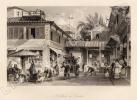
Superbe fresque de la Chine et des Chinois ; même les paysages et monuments sont animés par des personnages en situation ; les scènes de rues et de métiers sont particulièrement intéressantes. Quelques rousseurs éparses, bon exemplaire, bien complet.

Alon in the dark.
Issy les moulineau, Vents d'ouest, 1994 ; in-4, 48 pp., cartonnage de l'éditeur. Reed.
Reed.
Alon in the dark.
Issy les moulineau, Vents d'ouest, 1994 ; in-4, 48 pp., cartonnage de l'éditeur. Reed ,petit déchirure de l'étiquette sur le 4 plat.
Reed ,petit déchirure de l'étiquette sur le 4 plat.
Alon in the dark.
Issy les moulineau, Vents d'ouest, 1994 ; in-4, 48 pp., cartonnage de l'éditeur. Reed, petit usure sur la coiffe.
Reed, petit usure sur la coiffe.
Alon in the dark.
Issy les moulineau, Vents d'ouest, 1994 ; in-4, 48 pp., cartonnage de l'éditeur. Reed.
Reed.
TREASURES OF RUSSIAN ART OF THE 11TH-16TH CENTURIES.
Leningrad , Aurora, 1970 Bound, cloth, illustrated paper jacket, 200 x 280 mm., 288 pp., profoundly illustrated in colour and b/w.
Dedication from former owner on title page. Beautiful book, in good condition.
ALPES par R. MESSNER, J.-J. ROUSSEAU, J.W. von GOETHE, A.F. MUMMERY, G. REBUFFAT, L. TERRAY ...
Reference : AUB-6901
(1979)
Die Alpen, les Alpes, the Alps. Richement documenté (planches en couleurs avec légendes et textes d'accompagnement).
Sigloch 1979. Bel exemplaire relié, jaquette conservée, in-4 oblong, 208 pages.
LETTRES DE MON MOULIN
Un ouvrage de 292 pages, format 150 x 210 mm, illustrations de José Roy et G. Fraipont, relié cuir, publié en 1982, Jean de Bonnot, bon état
Phone number : 04 74 33 45 19
Privates Photoalbum mit Ansichten von Schweizer Gebirgen.
O. O., (1919). 72 mont. Orig.-Photographien in farb. Leinenalbum in Blockbindung. Bildgrössen: ca. 8 x 10 cm. Blattgrösse: 39 x 29 cm.
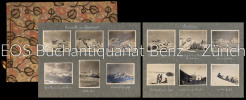
Die mit weisser Tusche untertitelten Aufnahmen zeigen u.a. Monte Rosa, Breithorn, Matterhorn, Weisshorn, Gornergrat, Gornergletscher, Triftbach, Zinalrothorn, Hohwänggletscher, Zmutt, Mettelhorngrat u. Zermatt. - Das Zwiebelpapier zum Schutz der Photographien gebräunt u. stellenweise knitterfaltig od. mit Knickspuren.
Mermaids of Venice. Fantastic Sea Creatures in Venetian Renaissance Art
, Brepols, 2010 Hardback, VIII 273 p., 234 b/w ill. 44 colour ill., 220 x 275 mm, Languages: English. ISBN 9781905375455.
The arts of Renaissance Venice teem with sea monsters. Chief among these are mermaids and mermen--graceful hybrid beings human from the waist up, but with the lower body and tail of a fish, dolphin or sea serpent. Other sea hybrids--horses, bulls, panthers, even an elephant--also swim through Venetian art in finned and fish-tailed forms. Such creatures emerge from stone in the shadowy churches and the sunlit courtyard of the Palazzo Ducale, crown the wooden frame of a Giovanni Bellini altarpiece, and encircle the bronze flagpole bases in Piazza San Marco. Their gilded sugar apparitions graced banquet tables for illustrious visitors, and their descendents still glide through the canals in the form of brass seahorses set above the sides of gondolas This book focuses on the conceptions of artists who made marine hybrids as some of the most engaging inventions of the Renaissance in Venice and its subject city Padua. The chapters deal with five functional contexts: book decoration of the 1470s and 80s; tomb monuments of the 1480s and 90s; church decoration of the same years, particularly at Santa Maria dei Miracoli; centers of political activity, including civic settings in Venice and the palaces of powerful mainland employers of Venetian artists; and finally, private homes, where owners could hold small bronze sea hybrids in their hands, often as objects for use. A prologue introduces the ?heritage of monsters? from the ancient and medieval worlds, the better to show how Venetian artists adapted these to new purposes. Exploring the ways in which artists could interpret and contemporary viewers might experience these wide-ranging sea-creatures, the book brings their best images together as a source of delight. Studies in Medieval and Early Renaissance Art History(HMSAH 58)
Horizon - Volume 3 N°1 Septembre 1960
James Parton Reliure Rigide Illustrée 1960 136 pages en format 23 - 31 cm - Nombreuses illustrations -
Bon État
Horizon - Volume II, Number 2 - November 1959
James Parton Reliure Rigide Illustrée 1959 136 pages en format 23 -31 cm + the silent traveller draws the west - nombreuses illustrations
Très Bon État
Horizon - Volume II, Number 4 - March 1960
James Parton Reliure Rigide Illustrée 1960 128 pages en format 23 - 31 cm + the comic history of england with colored etchings by John Leech
Très Bon État
Horizon - Volume II, Number 5 - May 1960
James Parton Reliure Toile Rouge Décorative 1960 128 pages en format 23 - 31 cm + through the ages in the best beds - nombreuses illustrations
Bon État
Horizon - Volume I, Number 6 - July 1959
James Parton Reliure Rigide Illustrée 1959 136 pages en format 23 - 31 cm + cities of italy - nombreuses illustrations
Très Bon État

